November race, Finnish ticks and rarities even in winter-bird count

After a week in Jurmo I decided to try to make my day-lists better as the end of October I had been so many times abroad that my lists were embarrassing. And yes, I have been listing day-lists for years while I’ve been putting my observations to Tiira which is the bird-observation archive in Finland. So I visited Siikalahti every day and several times in Härskiinmutka, Rautalahti and Kirkonkylä too to see some missing species.

In Siikalahti there were still good numbers of waterfowl; Tundra Bean Geese and White-fronted Geese still in the end of October and still in the beginning of November hundreds of Wigeons and Mallards, the best daily counts were 470 and 320, but also lots of Tufted Ducks 115, Shovelers 30 and some Teals and on one day also 3 Gadwalls. And still there were also hundreds of Barnacle Geese. I also saw some Long-tailed Ducks, Smews and Scaups. And White-tailed Eagles and Goshawks were chasing all of them.

In the end of October in Rautalahti I saw Barnacle Geese, less ducks, but 27 Canada Geese, 44 Teals, 23 Scaups, 10 Common Scoters, 8 Velvet Scoters and 6 Pintails. Most of the species were still there in the beginning of November but numbers were getting smaller quickly.

At weekend 29th and 30th of October I visited Saari on both days. In Uukuniemi Suurenjärvenliete I still saw a Skylark, 55 Snow Buntings, 2 Arctic Redpools and 3 Pheasants in Lammintaus, in Jyrkilä and Pohjanranta I saw a Rough-legged Buzzard and altogether I still saw 30 Mistle Thrushes too. Other records during the weekend were 8 Black-headed Gulls in Särkisalmi, 2 Nuthatches in Kirkonkylä, 2 Capercaillies in Soininmäki and a Pygmy Owl in Vartialahti. In the last day of the month I saw even 7 species that was missing only on that on October.

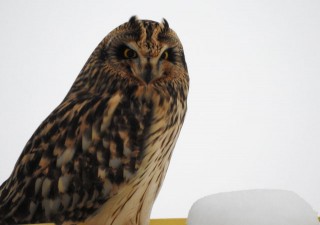
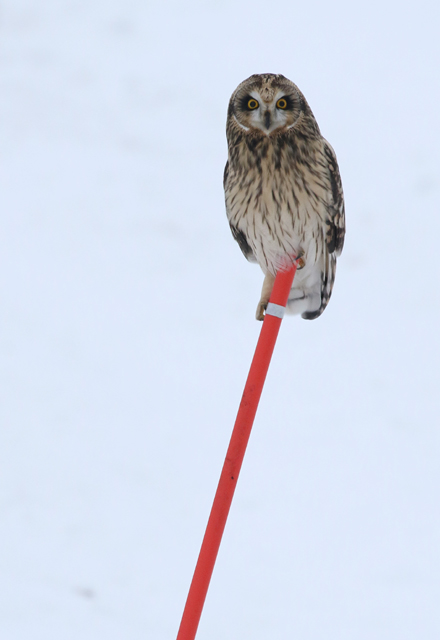
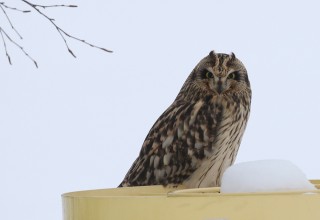
In November we had again a traditional November competition. I have never taken the race seriously and now it’d have been perfect start with a mild weather and lots of birds around, but the 1st of November was a Tuesday… Anyway I started before my work in Siikalahti where I had a Pygmy Owl and a Shoveler and so on and in Härskiinmutka I saw a big surprice, a Little Gull – my first ever on November! Then on my lunch-hour I went to Rautalahti and Kirkonkylä and saw all the species I expected. There were still Barnacle Geese flocks here and there but quite a few flocks were now migrating. In the afternoon I still twitched a Hawk Owl in Oronmylly.

On the 2nd of November the best new species were a Grey-headed and a White-backed Woodpecker in Kirkonkylä and in Siikalahti I still saw a Pintail. In the evening the Hawk Owl was still in same place.

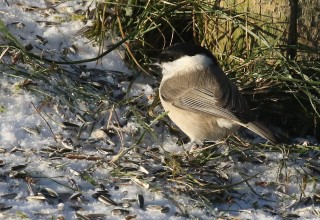
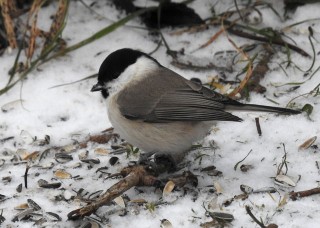
On the 2rd day I visited Tähtiniemi where I saw a couple of Pine Grosbeaks. Then I stopped in Koitsanlahti Mantkanniemi to check a flock of Redpolls and then heard a high and clear call from the top of the trees and found a Marsh Tit! It was only the 2nd ever Marsh Tit in Parikkala! It was calling a lot and I managed to get some mobile recordings of it. I had a feeling that there might have been a second bird too, but I had to hurry back to work. Twitchers didn’t manage to relocate the bird so I visited there and some places nearby in the afternoon but saw only 2 Bramblings. In the evening Hannu siitonen called me about an owl that was in one garden on the village. I went to see it and it was a very weak Tengmalm’s Owl. We did our best, but it survived only until the next evening.

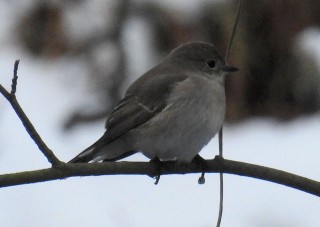
On the 4th of November I had a strange day and nothing was really going as planned but in the end I managed to leave to Helsinki early enough to get to Seurasaari when there was still some light. Luckily I managed to twitch the first Taiga Flycatcher for Finland quite easily and after some waiting it landed to a branch next to a small pond and stayed there until the last light, so I managed to get some pictures and videos too. When almost everyone else had left, the bird started to call actively and I also managed to get very good recordings.

Then I had a long drive to Nakkila where I started to sleep in my car while it was -6 degrees outside!

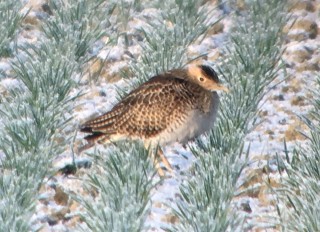
On the 5th of November I woke up after 6 a.m. when it was luckily only -3 degrees but it was snowing which wasn’t good. I ate well and then drove in the middle of Leistilänjärvi fields to a place where the first Upland Sandpiper for Finland had been mostly seen in recent days. Soon there were more and more twitchers arriving and soon there started to get lighter. The bird had been found about 8 a.m. every morning but this time it wasn’t. So after some waiting twitchers started to spread around the huge field-area. I also walked quite far along a track to the middle of the field as I expected to find the bird from the call when it is flying. Once I heard a Golden Plover calling and then with a couple of other twitchers we saw 9 Stock Doves and homeyeri-type of Great Grey Shrike. Then Mika Teivonen found a big falcon flying on the southern side of the fields. It was in bad light but when it started to soar, we managed to see contrasts on its wings and it clearly was a Gyr Falcon! Some birders saw the bird much better from the beginning of the road.

Finally before 10 a.m. I heard a call of an Upland Sandpiper from the sky and Antto Mäkinen found the bird flying high over us. We lost the bird against the sun, but I shouted so loud that Miska and Tommi Loippo heard me and they could follow the bird flying over the masses of twitchers close to the main road. Other birders hadn’t seen or heard the bird but luckily Mika Bruun soon found it perched in the middle of the field.

The Upland Sandpiper was tired and looked weak and even the sun started to shine warmer and melt the fields, the bird wasn’t feeding very much but sleeping and resting mostly. It had some ice on its feathers and a couple of times it really looked like dying in any minute but after some time it suddenly flew to the middle of the fields where it again hid on the border of the field. Then at 12:30 p.m. it flew as far south as we could follow but still seemed to land to the field-area. Then I decided to leave to Pori to do some birding with Mika and his friends. But soon we heard that the bird had still been found before it had been seen flying as far as it was possible to see towards west and after that it was never seen again!

Birding in Pori was poor so after all I left towards Parikkala where I was after 10 p.m. It had been crazy 1.5 day but I had got 2 new Finnish-ticks!

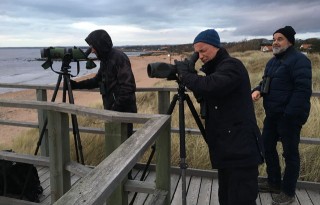
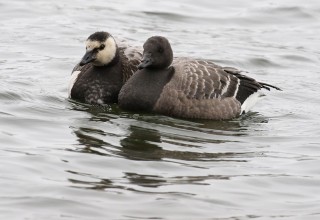
On the 6th of November I did a traditional winter-bird count around Siikalahti. It was boring that I couldn’t have done it in the 1st day of November as I had been working. Then there would have been still hundreds of birds in Siikalahti, but now it was completely frozen – it was -7 degrees now! anyway already from our garden I found an Arctic Redpoll, saw a Goshawk and on the Lake Simpele I saw a Common Scoter and 3 Velvet Scoters so the beginning was very promising. In the harbor I saw 2 Barnacle Geese that looked like completely frozen, but they had disappeared after I had visited the spit.

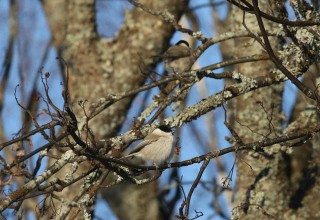
Then it was very quiet until I was walking around Siikalahti where on the eastern side there are some very difficult places to walk as the vegetation is so tall and thick. But right on the worst place I noticed a family of 4 Whooper Swans flying with a Mute Swan! And only 200 meters later I heard a familiar call and whistled a little and soon there were 2 Marsh Tits watching me from 5 meters! It was of course a new species to Siikalahti! I hadn’t got my camera with me but I got great recordingswhile one of the birds was calling very actively.

The rest of the count was almost boring, I still heard a Snow Bunting and a White-backed Woodpecker and saw a Hazel Hen. finally I was back in our garden where a Grey-headed Woodpecker was on the top of a tree. Altogether I saw 34 species and only 454 birds which was the smaller number on my autumn-counts ever.

On the 7th of November I visited in Mantkanniemi where Hanna and her brother Miika and sister Elissa had relocated the Marsh Tits and there really were 2 birds. They were visiting a feeder and after some waiting one of the birds arrived and I also managed to get some pictures. Once I was back at my working place a Merlin flew over the parking place.

Lakes are really getting frozen and forecasts are promising cold weather for the future too, so there won’t be many many birds around Parikkala. On the 8th of November I saw only 3 Velvet Scoters and 17 Common Gulls on my lunch-hour even though I visited several places. Winter is coming!

J.A.

Week in Jurmo

We had traditionally been abroad on our autumn holidays. I had been last 9 autumns birding mostly on different islands around Europe. Now we had just used too much money to a better car, so we had planned to go to some island in Finland. There are several islands with ringing-stations that we had never visited. Luckily we saw a message that Jurmo ringing-station needed a ringer and other observers to Hanna’s autumn-holiday week, so we booked ourselves to Jurmo.

On the 14th of October we started to drive towards Turku. We had planned to drive there via Sastamala, but the first Turkestan Shrike wasn’t seen during the whole day, so we drove straight to Naantali instead. We put up our tent a couple of kilometers from Sokerinmäki where had been one of the many Siberian Accentors of Finland for a couple of days.

On the 15th of October we woke up early and soon headed to Sokerinmäki. We were birding there for a couple of hours and there were more and more twitchers coming all the time but the Siberian Accentor wasn’t seen. We saw 140 Redpolls, 2 Arctic Redpolls, a Grey-headed Woodpecker, a Nutcracker, 22 Long-tailed Tits, 2 Chiffchaffs, 3 Wrens and 10 Dunnocks.

After all we gave up and continued to Raisio Raisionlahti, where with help of a local birder, we managed to see a late Spotted Crake. Also Gadwalls, Shovelers, Pochards, Grey Herons, Coots, Lapwings and so on were seen.

Then we headed to a big shopping center nearby and did all the rest shopping for the next week. And soon we were driving along Saaristotie. In a ferry-harbor to Nauvo we saw 2 Barn Swallows and finally we were in Pärnäinen harbor where we soon carried our stuff to Eivor boat. We also saw 2 Barn Swallows in Pärnäinen.

Eivor left at 4 p.m. and after watching empty sea from the deck for some time we headed inside and slept a little bit. We still visited the deck later a couple of times and saw a Long-tailed Duck, a Common Eider and a White-tailed Eagle.

Finally we were in Jurmo when the sun had already set. From the harbour we found old milk-trolleys where we packed most of our stuff and the rest we had to carry for the 1.5 kilometers to the bird-station. It was a long walk in the dark, but luckily there was only one road, so we managed to find the station easily. It was the only building in the small village with several tripods in the garden.

Inside there were 7 birders who had just started to count which species and how many they had seen during the day. So we just went to say hello to Petri Vainio, Timo K. Palomäki, Mikko Niemi, Kai Piikkilä, Soili Leveelahti, Lotta Lindholm and Jyrki Normaja. Then we went to put our tent up to the garden as the station would still be full for the next night. Once we were ready the others were still counting their birds, so soon we were ready to go to sleep.

On the 16th of October we woke up before 7 a.m. and there was a rush-hour in the kitchen. Luckily we had bought breakfast that we could eat in the tent.

Jyrki and Lotta had already opened the mist-nets near the bog and at 7:30 a.m. we were all ready to go out. Jyrki, Lotta and Hanna headed to the mist-nets, Mikko and Timo to the western side of the island and the rest of us to watch morning migration.

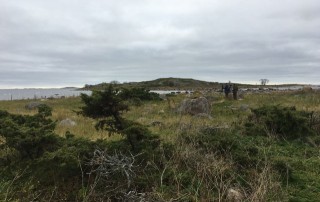
Only now when there was already a little bit light, I could see the surroundings of the station. There were quite a few building in the small village, one of them was an old wind-mill and there was a old, in 1846 built chapel with a small cemetery close to the pine-forest.

The daily routines for the birders staying in the station included 2 hours migration watching from the high rock in the middle of the island. It started from the sunrise and all migrating birds were counted. Ringers were supposed to catch birds 5 hours from the sunrise and if there were more ringers there were 13 mist-nets in 2 places, near the bog and in the pine-forest. Hanna was going to be a ringer during the week, but it was good to start getting familiar with the habits in this station with Jyrki on the first day. Then there were still walking route in the western side of the island that was supposed to walk every day and count all the local birds seen in the marked area and another one in the eastern side of the island that was supposed to count if possible. After these routines birding was free, in this time of the year it was possible to go to protected areas too. And all the birds around the island were counted outside the routines too.

The morning migrations was surprisingly good and we saw 150 unidentified and 36 grey geese that were too distant, 67 Brent Geese, 2 Scaups, 77 Long-tailed ducks, 37 Common Scoters, 6 Velvet Scoters, a Red-necked Grebe, a Black Guillemot, thrushes and different kind of passerines etc.

Once the migration-watch was stopped when Jyrki called that he had a Bullfinch with white on its tail-feathers on his hand. We of course went to see this so called Trumpeter or Komi Bullfinch that are rarely seen but more often heard in Finland during some autumns.

After 2 hours migration-watch we headed to walk the eastern count with Petri and Kai. There weren’t many birds but a Smew, a Whooper Swan, 6 Goldfinches and 3 Wood Larks were something a little bit better. Along the route I saw some archaeological stone-rings that are not known what they had been. We really walked fast and I had difficulties to follow the others , but there was a reason as after the walk Petri and Kai had to hurry to catch Eivor as they were leaving.

After a short visit to the station, I went to see the ringers that had caught a little bit more than 100 birds and better ones had been 2 Song Thrushes and a Blackcap.

In the afternoon I went to walk around the eastern part of the island again. I walked around every spit but only better bird I found was a late Northern Wheatear. Other birds I saw during the day were a couple of Bean Geese, a couple of flocks of White-fronted, Brent and Barnacle Geese, a Red-throated Diver, a Woodpigeon and a couple of Golden Plovers.

About at 5 p.m. it started to get very quiet and also darkish, so everyone headed to the station. We got a room by ourselves with Hanna and soon we had made the room as our home and were ready to prepare something to eat. In the evening all the birds were counted to the station-papers again and it was clear that there were much more birds on the western side of the island! Timo and Mikko had seen really good numbers of ducks and also some waders. But from the next morning we were going to do ringing with Hanna so it wasn’t sure that we could get to that part of the island at all.
About at 9 p.m. we were ready to go to sleep.

On the 17th of October we woke up at 6:30 and were soon opening the mist-nets in the pine-forest. Jyrki and Lotta were still ringing near the bog, but they were about to leave with Soili in the afternoon.

After the breakfast we were going back to mist-nets and started the first round. It was soon clear that there were lots of birds coming! Treecreepers, Goldcrests and Robins were hanging in every net and in the beginning we hadn’t got enough bird-bags. Luckily a Belgian-Finnish Matthias Deschrywere who was spending his holiday on the island came to help us and he even had some bird-bags with him. So in the beginning we were just emptying nets with Matthias and carrying birds to Hanna to ring and then we got empty bags from Hanna. so we were almost running around the forest for the first hours.

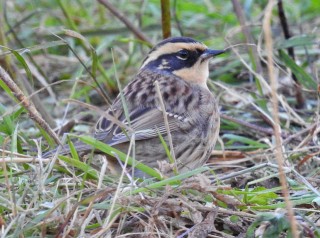
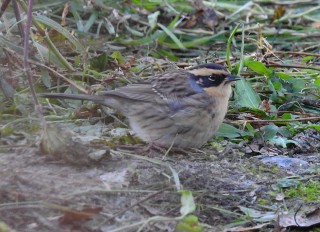
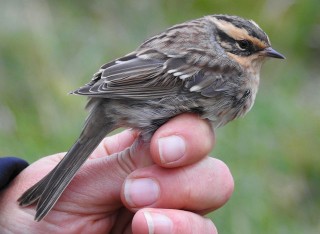
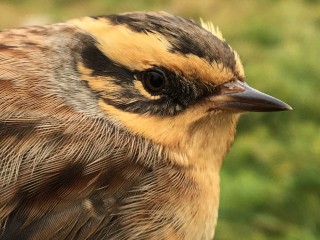
When we had almost the busiest time of the morning Jyrki called that we should hurry to the station, he made it clear that we really wanted to be there… So soon we were running towards the station and soon everyone was there. Jyrki had a surprise in one bird-bag! He went inside to make sure that the bird wasn’t escaping and we tried to see through the window what he had in the bag. Of course he showed only the tail of the bird first and I was already guessing what he had caught. Then he showed it and indeed, it was a Siberian Accentor!
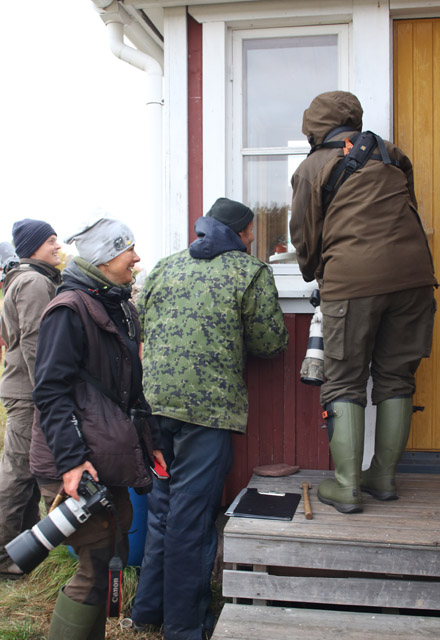
At least Hanna and Lotta got Finnish-ticks and what a nice bird it was! Soon Jyrki had ringed and measured the bird and it was time to get some pictures! Hanna had to hurry back to the mist-nets, but I stayed still for a while and took some pictures of this amazing bird! We had been hoping to find one of these sibes that had been popping out around the Baltic Sea, but still it was amazing it really did fly to a mist-net in Jurmo when we were there! After I had taken many pictures from different angles I soon had to hurry after Hanna.
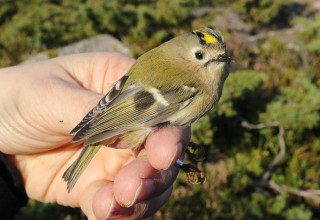
And it was still busy on the mist-nets, there were now more and more tits. Luckily Matthias was still helping us and we managed pretty well even though Hanna hadn’t been ringing this many birds ever before. And then we got our present too; there was a Yellow-browed Warbler in one of the mist-nets. Jyrki and Lotta came to twitch this pretty late individual and Hanna was surprised to see them coming as I hadn’t told her anything about a rare bird. So when Hanna started to get the bird from the bird-bag she got surprised how small bird there was and unfortunately it was a surprise it was much more active than other so small birds. So it somehow managed to escape from Hanna’s hand! Maybe we should also have gone inside the station to ring this bird… Well there was no time to worry as mist-nets were again full of birds, so we had to hurry back to work.

When Jyrki and Lotta had already closed their mist-nets, we had still many tits hanging on our nets. So with help of them we finally got all the nets empty and closed and at 2 p.m. Hanna had finally ringed all the birds. During the day we had ringed altogether 305 birds which 2/3 had been in pine-forest. The most common species had been a Goldcrest 84, Treecreeper 72, Great Tit 49, Robin 28, Blue Tit 22 and Wren 21. 18 Long-tailed Tits were ringed and other better birds were 3 Coal Tits, 1 Brambling and 4 Bullfinches which 2 of them were again eastern Bullfinches with white spots on their tail.

In the afternoon we walked the eastern route with Hanna but saw nothing better. But Jyrki, Lotta and Soili who were leaving managed to relocate the Siberian Accentor near the village! And while they were waiting for Eivor, Jyrki managed to see a Pallas’s Leaf Warbler briefly, but the bird disappeared too soon son no-one else saw it. I also biked to the harbor to twitch this rarity and searched it for some time with Sami Kiema who had just arrived to the island, but without luck. We didn’t find the Siberian Accentor either.

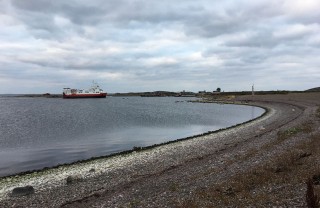
In the evening it took again a long time to count all the birds we had seen, but the most memorable moment was when a Siberian Accentor was added to the list. It was the 311th species seen in Jurmo!

On the 18th of October Hanna wanted to move to ring near the bog as there were a little bit more species coming from the mist-nets there.
After the breakfast we headed to the mist-nets and it really seemed that it would be a busy morning again. But after a couple of hours it started to get quiet and we were walking around empty nets. It seemed that the island had really got empty as we caught only 6 Treecreepers, 5 Goldcrest, 4 Robins, 1 Wren and so on.

So when Matthias joined us and Mikko, Timo and Sami were ending their migration-watch, I decided to follow Mikko and Sami to the western route while Timo headed to east. Hanna and Matthias would easily handle the ringing.

It was only now when I realised how huge Jurmo Island really is! It was a long walk to west before we started the counting-route. Already on the moorland we saw a couple of Black Grouses and once we reached the southern bay, we found lots of ducks and some Golden Plovers. And surprisingly I found 3 Shore Larks too! And soon we saw a Peregrine flying over us and it was followed soon by a young Goshawk. So the count had really started well!

We walked around the southern bay towards the western reef and saw a Jack Snipe, 6 Barnacle Geese, 16 Golden Plovers, 5 Grey Plovers, 7 Dunlins, Skylarks, Meadow Pipits and so on. And once we reached the reef, we saw good numbers of ducks. There were plenty of Mallard, Wigeons, Teals, Pintails, Shovelers, Tufted Ducks, some Scaups and amazing numbers of Goldeneyes on the sea. Most of the birds were outside the daily counting area but they were counted anyway.

We stopped the count to visit the end of the reef and Heinäsaari but found nothing better even it was a long walk again. Of course when we were as far as possible Hanna called and told that they had mist-nets full of birds! Mikko called Timo and luckily he had already finished in the east and hurried to help Hanna and Matthias.

Once we were back on the route, we saw nothing better either anymore. But while walking along the north-eastern coastline towards the station, we visited the harbor and saw a Black Redstart briefly.

Once we were back in the station Hanna had arrived a little bit earlier. They had caught a bit more than 100 birds but most of them had been on the mist-nets in the same time! She had ringed 50 Long-tailed Tits, 21 Great Tits and so on.

Even though no big rarities had been found, the atmosphere was good in the evening. I had also got 2 new year-ticks.

On the 19th of October the day was already going routinely. It was again more busy on the mist-nets in the morning, then quiet for a couple of hours and then more busy again. At 1 p.m. we started to close the nets and after all we had caught only 75 birds. 22 Goldcrests, 20 Robins and 10 Treecreepers were the most numerous birds and better species were 2 Chiffchaffs, a Blackbird and a Blackcap. During the day we walked the eastern route with Sami but saw only the familiar Wood Larks.

In the afternoon we still visited harbor with Hanna and Sami but found only a couple of Chiffchaffs. The day was after all pretty lame even though we had once again walked a lot!

On the 20th of October it was again a bit better morning on the mist-nets. Robin 34, surprisingly Siskin 16, Great tit 14 and Goldcrest 12 were the most ringed species. Altogether 103 birds were ringed, which some of them Hanna ringed in the afternoon from the feeder of the station. During the morning we saw a couple of flocks of Stock Doves with some Woodpigeons and heard a Wood Lark and a Chiffchaff. During the ringing we visited alder forest but found no birds there, but it was nice to get some pictures there too.

After the ringing, I took a bike and cycled to the harbor from where I walked around the whole western side of the island! Mikko and Timo had been counting the counting-area already but I really tried to find something they had been missed. I did find a Ringed Plover and saw a single Purple Sandpiper from the end of Heinäsaari, but other birds were the same as counters had seen. Best ones were Golden and Grey Plovers, 3 Dunlins and a Lapland Bunting.

After all I had been walking 23 kilometers and I was exhausted once I biked back to the station. Anyway we still hadn’t found anything rare on the field…

On the morning of the 21st of October Mikko had left the island with Eivor very early. It was very windy so it wasn’t a surprise that the island was even quieter. 9 Bullfinches and 9 Long-tailed tits were caught, but altogether only 60 birds were ringed even though Hanna ringed again some tits in the garden too. But still there were some nice birds to study. Most of the small number of Redpolls we caught were clearly Lesser Redpolls, but some weren’t so easy to judge and one of the Long-tailed Tits had clearly genes from europaea -subspecies. We also still saw a couple of snakes along the mist-net path. During the stay we saw a couple of Vipers and a single Grass Snake.

During the morning we had some flocks of Parrot Crossbills and a couple of Common Crossbills and the first Snow Bunting of the season. After all we closed the mist-nets and started to walk towards the station. Then I saw a Peregrine flying over us and surprisingly it attacked towards a bigger raptor that was a young Golden Eagle! I called to Sami and luckily they managed to see the bird extremely well while they were counting the birds in the west.

During the day I walked the eastern route quickly and then headed also to west to see some more birds, but found nothing new. I walked again 22 kilometers during the day!

On the 22nd of October the weather was even stormier! So we didn’t put up the mist-nets at all. We were leaving after 11 a.m. anyway. Timo was going to stay on the island for a couple of days alone before the next group was arriving.

Sami was birding around the station while Timo left to make the routines. With Hanna we left early to the harbor with all our stuff. There we saw a Goshawk chasing a Woodcock over the sea! Then we headed to walk around the best parts of the western side as Hanna still hadn’t got possibility to see the area at all.

The wind was very hard but we managed to see Golden and Grey Plovers, lots of ducks, Common Snipes and so on. A flock of Barnacle Geese was seen on migration.

Finally Eivor left and together with Sami we stayed for some time on the deck but saw almost nothing. So after all I went to sleep inside.

In Pärnäinen we said goodbye to Sami and started to drive towards inland. We headed now to Sastamala where the Turkestan Shrike still was after all!

We ate in Huittinen and after a long drive put up the tent in some forest in Sastamala.

On the 23rd of October we wake up early and walked a little bit in the forest first and then drove to Vanerinranta. We met a local birder there and soon understood that the shrike was sleeping in a big pile of branches. Shrikes are not waking up very early so we just started to wait.

Another local birder arrived soon and he found a Hawk Owl from the wire behind us. It was my year-tick number 250.

Soon after that I found the Turkestan Shrike that was perching on the branches! It was showing extremely well for 5 minutes but then disappeared behind the pile. And of course after that many twitchers started to arrive!

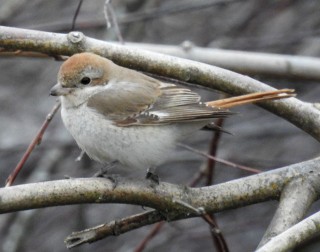
We waited for an hour to bird to show up again but then decided to walk around the area a little bit with Hanna. And after a few minutes walk I found the shrike about 150 meters from the pile close to the lake. Luckily the bird stayed there and everyone managed to see it! Now we just hope that it will be confirmed as a Turkestan Shrike from the DNA-samples that were taken when the bird was ringed and it will be a split and a new species for the country soon.

It was again a long drive back to Parikkala where we finally were in the evening. But it had been a great week holiday in a new destination in Finland! I am sure this won’t be the last island we visit in Finland…

J.A.
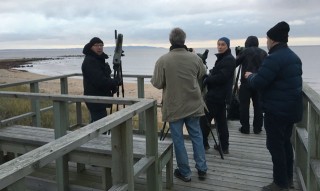
Finally a self-found Finnish-tick

This was my first late autumn in 9 years that I wasn’t going abroad for birding. I had been birding quite a lot and I started to feel that I had seen too many Barnacle Geese, I really needed something different. So I booked myself in to Luvia Säppi birding station for the weekend.

I was a long drive and I had to hurry to make it to Pori on Friday the 8th of October and catch the ferry at 6:30 p.m. On the harbor I met Petteri Mäkelä, Juha Sjöholm and Pasi Alanko who were going to stay on the island for longer and Matti Mäkelä, Teppo Lehtola and Sebastian Andrejef who were going to stay only for the weekend.

We carried our luggage to the boat and soon left to Säppi where we were about 30 minutes later. It was already getting dark, so we just carried our things to the station and started to plan which birds we were going to find on the next day. . Petteri mentioned a Booted Warbler which has never been seen in Satakunta, but I was hoping for anything else… On the station we met also Kari Mäntylä, who had been ringing on the station for a week already

On the 8th of October we woke up before 7 a.m. and after breakfast and wearing lots of clothes, we walked to do the morning migration watch, which starts at sunrise and lasts for 2 hours. It was quiet on the sea, just some flocks of Common Scoters, some Long-tailed Ducks, Velvet Scoters, Common Eiders, a big flock of Barnacle Goose looking geese (I was happy they were too far), 8 Razorbills, a couple of Red-throated Divers and a Brent Goose. Lots of corvids and passerines were also migrating and they included 3 Rooks, lots of tits and quite a few flocks of Parrot Crossbills and Bullfinches. Best local birds were 3 Purple Sandpipers, 3 Lapwings, 2 Black Guillemots and a Grey Heron.

Afer 2 hours we left to walk around the island. There were lots of tits and even Long-tailed Tits, Goldcrest and Chiffchaffs feeding on the ground and after some time we found a Yellow-browed Warbler. Later we still found some Dunnocks, Wren, Blackcaps and a Common Redstart.

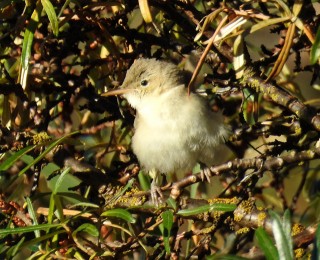
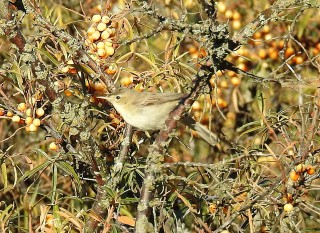
Finally we arrived to Prakala where we once again started to check every single bush very carefully. While some of us were walking almost through the bushes others were on the both side watching if there are any birds moving. Once again one bird was moving in front of Pasi and Petteri managed to it first and immediately noticed there was something strange in it. The bird disappeared too soon and Petteri told me to watch to the bush where he had seen it. And then the bird flushed again and we could see it flying to the next bush. We could see a strange way of flying with almost hanging tail and the coloration which was pale sandy brown. We both immediately said: “It is an Iduna warbler”. I even continued that: “It wasn’t a Booted Warbler”.

We shouted to the others and soon were checking the bush where we had seen the bird landing and soon found it again. Pasi managed to get a couple of pictures of it and even though I managed to see it only very briefly, I could say that this bird was not a Syke’s Warbler. Then we checked Pasi’s pictures and we could easily see that it was an Olivaceous Warbler! We had found the 6th Olivaceous Warbler for Finland!

We put a mist-net up and tried to catch the bird but very soon gave up and decided not to disturb it anymore. I had also managed to get some really good pictures and we had all seen the bird extremely well. The bird had also started to call pretty much and it was lowering it’s tail a lot.

We know that there was the first group of twitchers coming after 1.5 hours, so we left the bird and went to check a couple of other places. We found another Yellow-browed Warbler but soon walked back to Prakala just when the boat was arriving to harbor. When we were closing to the bushes, we could already hear the bird calling and soon the whole group of mostly local twitchers saw the bird too.

When the twitchers left we walked back to the station and counted the birds we had seen during the day. We had seen 73 species and some of the best numbers were 200 Goldcrests, 402 Long-tailed Tits, 335 Great Tits, 250 Blue Tits, 288 Redpolls, 178 Parrot Crossbills and 351 Bullfinches.

The rest of the evening we were celebrating! But after all we were all thinking that after we had found the Olivaceous Warbler, we hadn’t had time to check some of the best areas of the island and there were more rarities to find. So we went to sleep surprisingly earl.

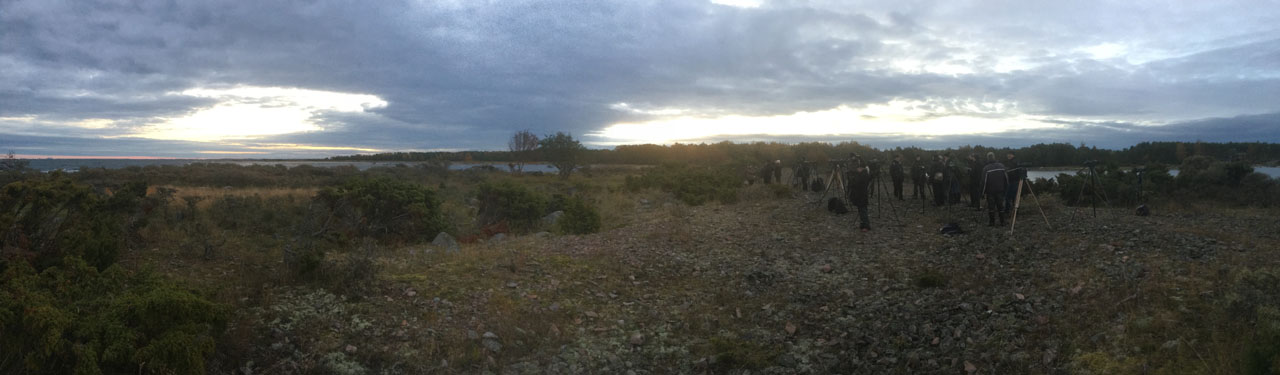
On the 9th of October we woke up before 7 again and this time we went to do the morning migration-watch to Prakala. There were 7 boats of twitchers coming so we wanted to see if the bird was still there and the twitching was going smoothly.

The first group of twitchers was already in Prakala when we got there and luckily soon the bird was calling and also seen very well again. Even Pekka Komi got a lifer and he is now number 1 twitcher in Finland. Most of the other top-10 twitchers had seen the only twitchable bird in Lemland Lågskär in 1996.

There was again quiet on the sea but even more tits and Parrot Crossbills were on the move. The Olivaceous Warbler stayed well visible until a couple of photographers pushed it almost to the sea and then we had to shout them to get further from the bird. And soon the bird was again on the same bushes where it had been almost all the time. One Purple Sandpiper was on the islet again and all the twitchers managed to see it too.

Soon arrived the second boat full of twitchers and after 9 a.m. the third. Everyone saw the bird easily, so we continued to walk around the island again. We decided to go to the places where we hadn’t been at all on the previous day.

But we didn’t find much. Tits and Parrot Crossbills were on the sky all the time but only better birds we saw were a Grey Plover, 3 Blackcaps and 2 Arctic Redpolls. After all during the whole day 305 Long-tailed, 14 Willow, 21 Coal, 1106 Blue and 237 Great Tits, 165 Bullfinches and even 508 Parrot Crossbills were seen!

After all we were back in harbor and we weekend visitors had to go to pack our things. At 3 p.m. we said goodbye to the friends who still stayed on the island and left back towards Pori by boat which had just arrived with the last and 7th group of twitchers.

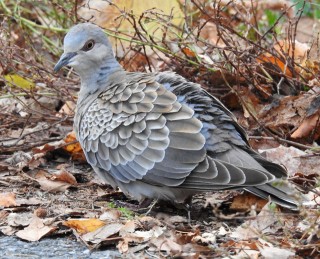
Sampsa Cairenius was coming with me so I didn’t have to drive alone. In Pirkkala we twitched a tame Turtle Dove that we could photograph from 2 meters. I dropped Sampsa to Joutseno and finally after 10 p.m. I was back in Parikkala.

It had been really amazing weekend in Säppi! And I had got exactly what I had wanted – amazing self-found lifer! This was also the 300th story on this caligata blog – maybe I should change the name to pallida?

And Olivaceous Warbler stayed in Säppi until Tuesday evening. Then it was also caught and ringed. On Wednesday morning it wasn’t found anymore. I wonder where it continued?

J.A.

Siberian Accentor in South Karelia!

On Tuesday evening on the 4th of October I got a message that a Siberian Accentor had been found only 130 kilometers from Parikkala in Savitaipale. But the message came so late that it was almost dark outside, so I had to hope the bird stays at least for the next afternoon as I had to go to work next morning. There had been one wintering Siberian Accentor in Finland in winter 1998-99 but since that all the records had been from only one day, so I didn’t expect this bird to stay either.

I had seen Siberian Accentors on our trip to Polar Ural in summer, but still I really wanted to get a Finnish-tick and of course a South Karelia-tick. So on the morning of 5th of October I was checking if there were any news about the bird while I was working. And surprisingly it was first seen only by one twitcher and heard by the others, but then it was first seen very well on the top f a tree but then seen flying high towards south, as far as it was possible to follow… So I could forget my twitching plans…

But luckily some twitchers stayed on the place and it was heard again after 20 minutes and finally also seen again! And then there were new messages coming about every 1.5 hours and they all had the same message; the bird was extremely difficult to see!

So I had to quit my working day an hour early so I could stay in Savitaipale for long enough before it gets dark. On the way I picked up Sampsa Cairenius who had already seen the bird, but wanted to get pictures too. It was good to have him with me, as he knew the place and how the bird had been acting.

Finally we parked to the sewage-ponds of Peijonsuo and soon found about 15 twitchers that seemed to be looking to a bush just in front of them. I could see that they were actually just trying to see the bird. So I walked to my old friend Olavi Kemppainen who had been there already from early morning and he told me where the bird had just been seen. And soon I got instructions where another birder was seeing the bird – and there it was a stunning Siberian Accentor! It was showing extremely well under very dense vegetation, so I couldn’t get any pictures. Most of the birders still didn’t see it and I heard it hadn’t been seen at all for 1.5 hours! When everyone was moving and trying to see to the small area, where the bird was, it moved under the vegetation again. But soon it jumped to a small willow and was seen extremely well but again flushed too soon and flew pretty far inside the bush.

One of the twitchers decided to go around the bush and surprisingly found the bird along a small track where it was finally seen extremely well for about 5 minutes! Now everyone saw it well and we even managed to get really good pictures! But soon it disappeared to the vegetation again and after some searching it was found from the ordinary place again. We still saw it a couple of times but after all we were happy to start driving back to home.

J.A.

October begins with good birding

On the 1st of October we were having Siikalahti autumn birding day. It was the 5th time we tried to see as many species as possible in Siikalahti by walking around and watching from the bird-towers. I decided to get to Siikalahti early in the morning by bike. On the way I heard a Pygmy Owl calling in Muttelinmäki and I got to Siikalahti dam-road already at 6 a.m.

I walked a little bit along the road and soon heard another Pygmy Owl! It was till dark, but I managed to see this little owl pretty well while it was calling very actively. There were amazing numbers of Barnacle Geese on the southern side of the bay and their calling sounded amazing! They were all flushed a couple of times and it sounded like a bomb! Unfortunately too many flocks left to fields too early, so I couldn’t count them at all.

At 7 a.m. Hanna arrived and we walked to the northern side of the bay. It took 2 hours to walk to the end of Raikanniemi and back, but we had altogether 51 species. Some of the better species were a Wren, a Hen Harrier, Goldcrests, Treecreepers, Dunnocks, Willow Tits, 6 Parrot Crossbills, a White-backed Woodpecker, 2 Lesser Spotted Woodpeckers, Great Crested Grebes, Goosanders, Black-throated Divers, a Black Grouse and already the 3rd Pygmy Owl of the morning! This bird was enjoying sun on the top of a dead tree and Hanna got some nice pictures of it.

We were back on the dam-road tower at 9 a.m. and Harri Partanen had already been walking on the other side of the tower for almost 2 hours. He had seen 2 Coal Tits and heard a Grey-headed Woodpecker, a Water Rail and a Chiffchaff. Two latter ones were heard again soon. Merja Laari had stayed on the tower and she had seen 2 Grey Herons. Soon also Matti Lötjönen arrived.

The morning had been nice calm and sunny but it started to get windier and cloudy. The wind was from south-west but anyway we saw quite an amazing selection of bird-species in next few hours. We had 6 Bewick’s Swans, 12 Long-tailed Ducks, 3 Smews, 4 White-tailed Eagles, a late Marsh Harrier, 7 Common Buzzards, 4 Rough-legged Buzzards, a late Osprey, a Kestrel, a Peregrine, 110 Cranes, a Golden Plover, a Ruff, a Jack Snipe, about 900 Wood Pigeons, 100 Waxwings, 30 Long-tailed Tits, a Great Grey Shrike, a Gold Finch and 4 more Parrot Crossbills.

When others had left we moved to the main bird-tower with Hanna and were checking the masses of Barnacle Geese and found 2 Pink-footed Geese but also 2 Scaups, a Long-tailed Duck and another White-backed Woodpecker.

I had a break in the afternoon but came back after 2 hours and stayed until the sunset. The last couple of hours Miika Soikkeli and Matti Lötjönen were also enjoying the Barnacle Geese masses coming to roost on the bay with me. We estimated 17000 of them, which was for sure less than there had been in the morning. The only new species for the day was a Coot, but we also saw the same Peregrine again and another Osprey was migrating towards south even though it was already getting dark.

After all we had 83 bird-species during the day in Siikalahti. One more species, a Cormorant, had been seen but it was seen while using a car.

On the 2nd of October I decided to get to the main tower early in the morning to see the masses of Barnacle Geese. There were incredible lots of them and I estimated 20000 birds on the bay and 8000 birds more flying around. Unfortunately there weren’t any Goshawks or White-tailed Eagles before 8 a.m. when my recorder was out of batteries.

Other birds seen were 43 Parrot Crossbills, a Grey-headed Woodpecker, a White-backed Woodpecker and a Gold Finch.

After breakfast we were photographing 2 Nutcrackers in Kangaskylä and then continued to Saari with Hanna. The first bigger flock of about 2500 Barnacle Geese were seen in Rautalahti. In Akanvaara Tetrisuo and in Pohjansuo were no interesting birds, but in Pohjanranta we saw 2 Lapwings and a Ruff. In Suurenjärvenliete we saw 3000 Barnacle Geese and in Jyrkilä about 7000. There we found also the best bird of the autumn; a Red-breasted Goose! It was showing pretty well in 150 meters.

In Tarassiinlahti we saw 8000 Barnacle Geese and also 2 Pink-footed Geese. In Karinmäki we had a late Northern Wheatear and in Kuposenmäki at least 5000 more Barnacle Geese. Altogether we saw 7 or 8 White-tailed Eagles and 3 flocks, 118 birds, of migrating Cranes in Saari.

In the afternoon I still stayed a couple of hours in Siikalahti and saw 3 White-tailed Eagles, a nice 2nd year Golden Eagle, a Hen Harrier, the same Marsh Harrier again and 3 Goshawks.

J.A.

Birding without surprises

After Azores pelagic trip on the 4th of September I did a short afternoon trip in Kirkkonummi where I had been sleeping and resting after night-traveling. In Saltfjärden there had been both Greater and Lesser Spotted Eagles, Pallid Harriers, a Peregrine, a Great white Egret and so on, but I saw only a too brief eagle, that might have been a Greater Spotted Eagle, 2 Hen Harriers and a Bar-tailed Godwit. I also visited Espoo Laajalahti where were lots of birds as almost always. I counted quickly 15 Dunlins and found also a Little Stint, before I had start a long drive back to Parikkala.

It seemed that many birds had left to south already and some northern species were on the move. On the next days I saw in Siikalahti and its surroundings still some Lesser White-throats, Hobbies and Ospreys and so on and some Hen Harriers, a Merlin, some Lapland Buntings and Bluethroats and every day more and more Bramblings and Chiffchaffs.

On the 9th of September the first flocks of Barnacle Geese started to migrate and there were already 348 birds in Särkisalmi with the first strange looking hybrid of the year. A couple of days later the flock was a little bit bigger and then there was also a nice leucistic Barnacle Goose.

On the 10th day we finally went to catch 2 Nuthatches. We had planned to color-ring the local birds already for some years, but finally we had time to do it. We had always been wondering if these birds were breeding successfully, but now we found out that one of the birds was an adult male and another one was a young female. And already a couple of days later we got the information we had hoped. 2 unringed birds were visiting a feeder only a couple of hundred meters from these birds. We had always thought that they were the same birds visiting these feeders! So a couple of days later we managed to ring another young birds which probably was a male. But another was more tricky and we are still trying to catch it.

I did quite a few trips to fields and I tried to find any better species while walking a lot, but once again I had to disappoint. Parikkala is a really bad birding are in autumns! I do understand that huge Lake Ladoga is the reason why we can’t find any eastern rarities, but why on earth I can’t find any single Red-throated Pipit or any northern candy either!?

I visited also Saari a couple of times and walked a lot on the fields, but the best birds I saw were a migrating flock of 8 Grey Plovers, 19 Dunlins and one single a Jack Snipe.

After a couple of Quiet days on the 14th of September the Barnacle Geese migration started really. I a couple of visits to Siikalahti I saw already more than 4000 of them, also 100 Brent Geese, one some kind of Snow Goose hybrid or strange looking Blue Goose was seen a bit too distant and already 4 Rough-legged Buzzards were migrating too.

On the 15th day I finally had something better when early in the morning I found a Rustic Bunting in Siikalahti. It wasn’t a good bird in the past but in recent years it had become a true rarity in South Karelia too.

On the 16th in Saari we had already more than 10000 Barnacle Geese, but nothing else really. During my lunch-hour I had seen already 3000 migrating in Siikalahti with 800 Brent and 50 Bean Geese too, but then it had started to rain and I actually expected to find even more birds landed to fields in Saari. The first Great Grey Shrike of the autumn was seen and soon they were found in several places.

On the 17th day I stayed in Siikalahti for whole morning and day and counted about 10000 Barnacle Geese in Siikalahti only and 3000 more were seen migrating. Again 2 flocks of Brent Geese were seen, 784 birds altogether. 4 White-tailed Eagles were chasing the geese together with a young Goshawk. 6 Rough-legged Buzzards and a Peregrine were also seen.

During the night we tried to catch migrating owls and got 2 Tengmalm’s Owls in Tarvaslampi.

On the 18th day we were again in Siikalahti for whole morning but there was almost no migration. I saw a late Honey Buzzard and also a Bewick’s Swan, a Grey Heron, 5 Rough-legged Buzzards, a stunning Golden Eagle were seen and 32 Waxwings were seen and another Rustic Bunting type of bird was heard calling but unfortunately it wasn’t seen at all.

On the 19th day there were about 11000 Barnacle Geese in Siikalahti and in the evening we tried to catch owls again but only a Pygmy Owl was heard calling back to the tape.

During the next days there was almost no migration, so we tried to catch the unringed Nuthatch but still without luck. We have to wait for colder days, so it will visit the feeder more often. There were about 15000 Barnacle Geese in Siikalahti and there was a probable Cackling Goose seen but I couldn’t find it even though I tried pretty much. It’s not easy to find one bird in a mess like that. Geese are flying to fields and back all the time and Goshawks and White-tailed Eagles are chasing them time to time.

Only interesting observations were a Bittern on the 22nd day, 2 Lesser Spotted Woodpeckers and a Grey-headed Woodpecker on the 24th day in Siikalahti and 2 Nutcrackers in our own garden.

On the 25th of September there were still 14000 Barnacle Geese in Siikalahti. Also 80 Brent Geese, a Scaup, 2 White-tailed Eagles, an Osprey, 98 Cranes, a Grey-headed Woodpecker, 15 Waxwings, a Bluethroat, 12 Chiffchaffs and 3 Parrot Crossbills were seen and a Tree/Olive-backed Pipit was heard. In the afternoon we went to Saari and after checking all fields and lakes we estimated that we had seen 51500 Barnacle Geese! 40000 of them arrived to Lake Pien Rautjärvi in the late evening. Only very few other geese were seen and only other birds to mention were a Marsh Harrier in Kirjavala and a Long-eared Owl in Pohjanranta.

During the week the low depression made birds to stay where they were so there were mostly Barnacle Geese to see, but I started to get bored to them. Only other birds to mention were a Grey Plover that I heard from a cloudy sky in Siikalahti on the 28th day and the flock of 29 Canada Geese on the next day. In the end of the week there started to be also Tundra Bean and White-fronted Geese by tens and even a few Pink-footed Geese were found.

J.A.