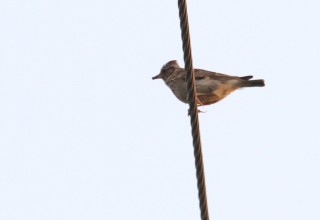
The beginning of geese-autumn

On the 16th of September we left early to do some birding with Pekka Punnonen. We started from Siikalahti dam-road where we heard a couple of strange Chiffchaffs. The first one was not so rare “e-ly” but another sounded like Siberian Chiffchaff. Unfortunately we didn’t see it. We also heard a Rustic Bunting shortly but didn’t see it either. Only birds we saw on the bushes were 2 Sedge Warblers and some Goldcrests.
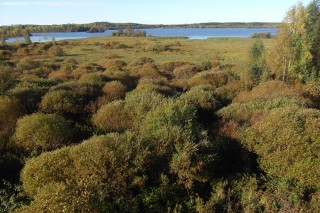
We continued along the border-road towards Saari and first 2 stops were quiet. In Tyrjä we heard a Wren calling and Kanavalampi was almost empty. In Tarassiinlahti we stayed for an hour and saw 2 Sedge Warblers, a Bluethroat, at least 5 Willow Warblers, a Chiffchaff and again we heard a Rustic Bunting. Some flocks of Geese were migrating and a White-tailed Eagle was soaring on the sky.

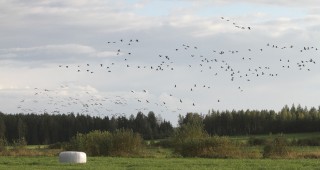
In Jyrkilä we found about 400 Cranes, 123 Whooper Swans, a Bewick’s Swan and even 1100 Barnacle Geese. Only about 10 Tundra Bean Geese were on the fields but some flocks were seen migrating. Also some hundreds of Barnacle Geese were seen on the sky. A Hen Harrier was hunting along the fields.

Pohjanranta was empty and so were Ratila and Pohjasuo fields. In Akanvaara Tetrisuo we walked a lot in the fields but found only a Whinchat, 3 Northern Wheatears, Meadow Pipits and Skylarks. Another White-tailed Eagle was seen too. The best bird was seen when we were already leaving when a Nutcracker was migrating towards north. Then we left back towards Parikkala.
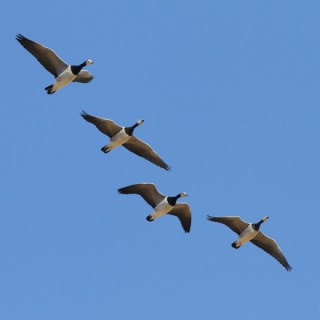
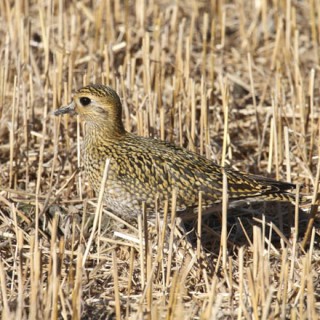
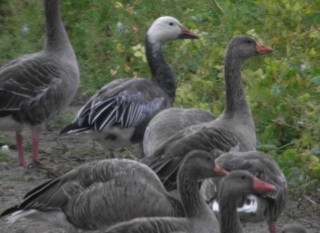
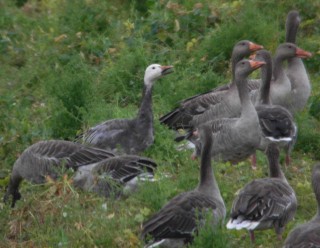
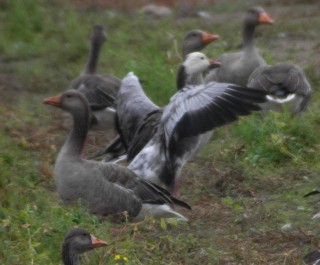
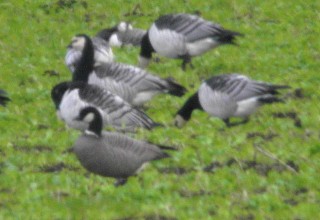
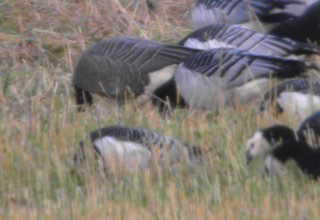
valkoposkihanhet, Barnacle Geesekapustarinta, Golden Plover

After lunch Hanna left with us too and we drove towards Tetrisuo fields. On the way I found a Peregrine from the sky, but soon it continued its migration towards south-west. On Tetrisuo fields we saw Golden Plovers, Skylarks, some Snipes and Northern Wheatears and a Lapland Bunting. 80 Barnacle Geese were searching for a place where to land, a Rough-legged Buzzard and a Hobby were also seen.
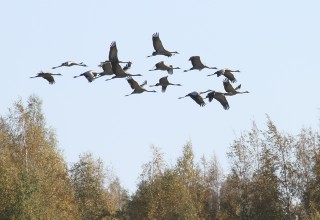
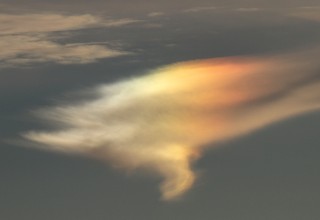
Cranes, kurkiahaloilmiö, Sun dog

Next we stopped by the dam-road again and we saw a White-backed Woodpecker flying over the bay. Otherwise nothing special was seen, only lots of thrushes flying here and there. So we continued to Kullinsuo where 3 Snipes, a bluethroat, 13 Golden Plovers and a Ruff were seen. Last we walked in Lahdensuo where only Meadow Pipits and Skylarks were found. A Rough-legged Buzzard was soaring on the sky.

The next goose-trip we made on the 22nd of September and to Saari again. We stopped first in Tarvaslampi where we heard a Rustic Bunting. There were good numbers of other passerines too, even though it was raining. We continued to Akanvaara Tetrisuo where we walked on the fields for some time and found 80 Meadow Pipits and a Tree Pipit. Black Grouses were lekking on the fields.

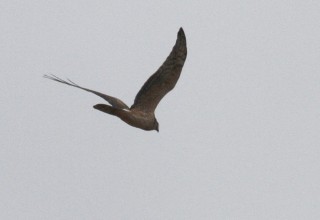
It was quiet in Ratila, Pohjasuo and Pohjaranta but in Jyrkilä we found about 2000 Barnacle Geese. When we were back in our car I found a harrier flying over us. It was a female Pallid Harrier and Hanna managed to get a couple of pictures of it even though it continued straight towards west.
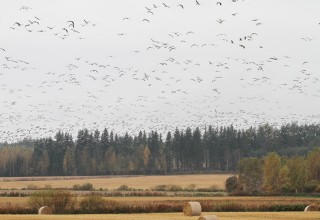
Tarassiinlahti and Kanavalampi were empty too so we continued along the border to Siikalahti where the rain had finally stopped. A flock of 80 Brent Geese, a Smew and a Pochard were the only better birds there.

In the evening I twitched together with Pekka Punnonen a Cackling Goose in Kitee Puhos. The bird was with about 2000 Barnacke Geese but luckily it was easily observed from the road. I am not quessing which sub-species it was as I don’t know where to find the right information about the sub-species, if it is even possible to find somewhere…
J.A.
Counting Cranes and walking on fields

On the 5th of September we left to count Cranes in Saari. We were three groups and together with Hanna we started at Akanvaara Tetrisuo. We saw a male Hen Harrier, 8 Red-throated Pipits, 5 Lapland Buntings but no Cranes. In Pohjasuo we saw again 2 Red-throated Pipits, but in Ratila we finally found Cranes. There was a big, 394 birds flock feeding on a field. We managed to count only 15 young birds before the flock flushed. There was also 44 Whooper Swans on the field.
In Pohjanranta we saw only a Grey Heron and then we continued to Uukuniemi Suurenjärvenliete where we though the most of the Cranes would have gone. Surprisingly there was only one family of Cranes so soon we continued to Kumpu view-tower where I left Hanna and drove back to Ratila to check if the birds were back there. The fields were still empty but Hanna managed to see 350 Cranes flying to Northern Karelia to a small bog to sleep.

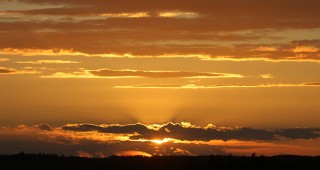
Kurki, kurkia, Cranes, Grus grussunset, auringonlasku, kurkien iltalento

On the 7th of September I left to hammer some nearby fields with Harri Partanen. There had been maybe more Great Snipes than ever (after the bird had extincted in Finland). We started near Siikalahti in Koivula fields but found only 5 Red-throated pipits, 8 Whinchats and a flock of 300 Wood Pigeons. Many fields weren’t harvested yet or then just too long to walk so we continued until Lahdensuo where we finally found a perfect looking green field. We walked for some time when finally a Great Snipe was found! And after a couple of steps more we flushed another one! We also saw a Red-backed Shrike. We calle our friend Matti Lötjänen to twitch the birds but suprisingly we never found them anymore even though we had seen exactly where another of them had dropped.
Matti continued to field-work (harvesting) and we continued to walk one more field and of course we found one more Great Snipe which was flushed together with a Snipe but also this Great Snipe managed to disappear and wasn’t found anymore when Matti was again together with us hammering the place where the bird had dropped down.

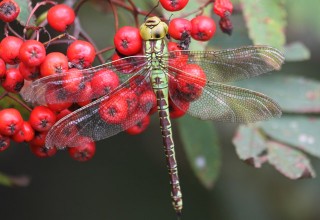
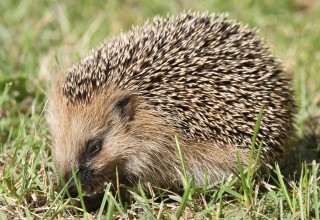
On the 8th day we were checking some fields again with Hanna, Harri and partly Matti too. We started in Siikalahti patotie from where we walked to Peltola fields and then to Kaukola fields but only observation was a Green Hawker. In Koivula fields we found a Lapland Bunting and finally we continued to Lahdensuo. We checked all the fields very well but found only the same Snipe than the day before. There was a flock of 12 Northern Wheatears, a Wood Lark was flushed with Skylarks and one more Lapland Bunting was also seen. The best bird was a young Bluthroat that was found from a bushy ditch. When we were back at home we saw a Hedgehog on our garden.

viherukonkorento, Green Hawker, Aesna viridis

On the 9th day I left to check some more fields with Harri and Matti. In Siikalahti we saw 5 Barncale Geese migrating and once I was watching the through my scope I saw a flock of 23 Bar-tailed Godwits migrating far over them. A Chiffchaff and a Water Rail were calling and a Bluethroat was seen but soon we continued to check more fields. In Kontiolampi we saw a Roe Deer which was my first ever in Parikkala outside Siikalahti. We checked some flocks of passerines and found some Bramblings and a couple of Long-tailed Tits but nothing better. In Kullinsuo we hammered some fields again but found only 3 Snipes and a Lapland Bunting. A Hen Harrier and a Goshawk were seen on the sky.
We still continued to Tetrisuo where on the previous evening Matti had flushed a Great Snipe. It had been in a middle of a field and Matti had seen it from combine harvester! We really walked a lot but found only 4 Snipes, a Lapland Bunting, 45 Meadow Pipits and 5 Tree Pipits. Another Hen Harrier was also seen.

At 7:10 p.m. I got a message that Jarmo Pirhonen had found a young Pectoral Sandpiper in Joutseno Kukkuroinmäki. I knew it would be hard to get there before it gets dark but I decided to try. At 8 p.m. I picked up Sampsa Cairenius in Joutseno and the sun had already set down. 10 minutes later we were in Kukkuroinmäki pools and luckily “Jamppa” and some twitchers were still there and they had a “Pecs” on their scopes. The light wasn’t the problem but the distance! The bird was very far but luckily it was together with a Ruff and a Ringed Plover so the size and the shape were easy to see. Luckily it was feeding on water with a dark back-ground so it was also possible to see some colours and even the breast colouration with 60 times zoom. It was my first Pectoral Sandpiper in South Karelia and only 3rd in Finland. There were also Barnacle and Canada Geese and a Greylag Goose. Soon it came too dark so we left back home.

In the evening of 10th of September we were counting Cranes in Siikalahti. A week earlier Konza, Matti and Harri had counted about 700 Cranes but now they had almost all left to migration. We saw altogether less than 100 Cranes and I saw only about 20 of them. Nothing else interesting was seen from the dam-road.

On the 11th day we counted Cranes in Saari again. I was in Kumpu where I saw about 70 Cranes that weren’t seen from pther places. Most Cranes were in Jyrkilä and they left east to Russia before the dark. Altogether we counted about 850 Cranes. I saw also a flock of 130 Brent Geese, a Rustic Bunting and 8 Golden Plovers.

J.A.

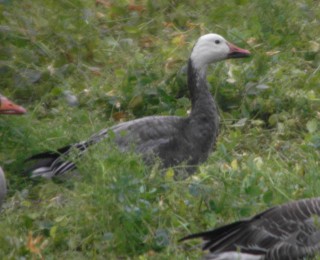
Blue morph Snow Goose

On Tuesday 21st of August I drove south to Kirkkonummi to my parents. On the way I stopped in Lappeenranta Askola where on the pools I saw only 4 Ringed Plovers, a Common Sandpiper and 19 Lapwings. Then I drove until Espoo Laajalahti where were several birders already but not too many birds; a Golden Plover, a Dunlin, 40 Gadwalls and so on. I still drove to Kirkkonummi Saltfjärden where I enjoyed a beautiful sunset with at least 120 Cranes making noise around me.

On the 22nd of August I woke up sick, my throat felt bad. Anyway I decided to drive to Helsinki Viikki but because of the rush-hour it took very long to drive there. Then I had difficulties to find the right parking place from where the path to Lammassaari started. After all it took so long that I decided to give up and drove back to Kirkkonummi where a blue morph Snow Goose had been found again in Storkanskog. The bird had been around for a week.

Luckily the rush-hour was gone and I managed to get to Storkanskog pretty quickly. I found the flock of 400 Greylag Goose easily and then it was easy to find the Snow Goose too! It was only 200 metres from the road so I got some good digiscoping pictures! After 10 minutes a tractor came and pushed the birds further to a longer field and I gave up and drove to my parents.

We had a good lunch and after that I had to go to Helsinki to a meeting that was the reason I was there. In the afternoon I drove back to Parikkala.

J.A.

Ghost Orchids

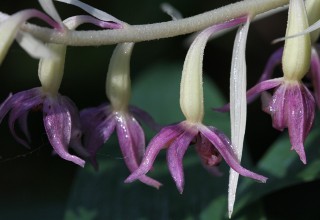
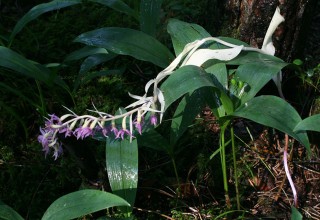
Metsänemä, Epipogium aphyllum, Ghost Orchid Ghost Orchid
Ghost Orchid is one of weirdest plant species. Most of the year, this plant grows and lives under ground stealing sugar and nutrients from fungus. If year has been good for fungus, this plant can get enough energy for flowering. Sometimes it can stay under ground for years.

We visited one location for this species. We searched for an hour and in this time we managed to find seven stems. This year was not good for this species since in good year it could be possible to find ten times more flowering stems. Plants were also pretty small.

Photographing was not easy since this plant grows in deepest spruce forest.

H.A.

Butterflies, orchids and some birds

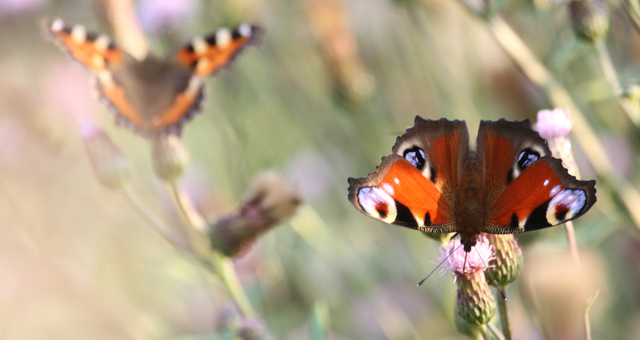
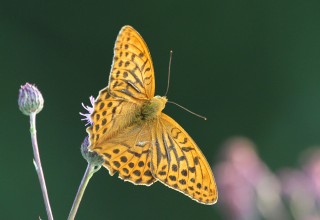
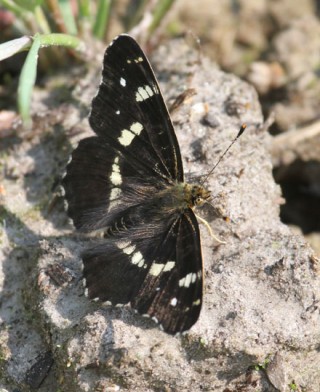
Neitoperhonen

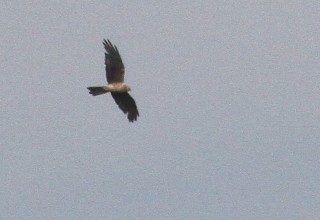
We have been lazy this summer, we haven’t been birding much in Finland. This Sunday we decided to go birding to Lappeenranta but after all we did almost as much orchid and butterfly searching too. Anyway we leaft after 9 a.m after a lazy morning – we should have awaken earlier. On the way to Lappeenranta we saw a hawk flying over the road in Rautjärvi Pirhola and we immediately realized it was a small harrier. We stopped and luckily the bird started to soar some 300 metres from us. It wasn’t an easy bird but we managed to identify it as a female Montagu’s Harrier! Hanna took several pictures and suprisingly it can be identified from them too!

Our first stop was on Askola pools were we found 31 Dunlins, 12 Ringed Plovers, 2 Green Sandpipers and a Spotted Redshank, Long-tailed Tits were calling on the forest behind us.

Next we continued to our main destination to Haapajärvi. This lake has been dried and it is now really good for waders. Hanna has been counting the birds of this lake in a couple of springs so she really had to see the lake now! On the birdtower we found out that all waders were too far and in very bad light so soon we drove to the other side of the lake, but the waders were even further from there. The light was better but after we had checked all the places we noticed that all waders were now closer to the tower. So we drove back to the tower where we met Matti Vanhapelto who had seen a Knot on the flock of waders which was now on the closest pool. The Knot was gone but we saw 35 Dunlins, 44 Ringed Plovers, 1 Little Ringed Plover, 28 Greenshanks, tens of Wood Sandpipers, 2 Redhanks, 2 Curlew Sandpipers and a Little Stint. 8 Grey Herons were also seen and an Osprey was fishing over the only deeper water.
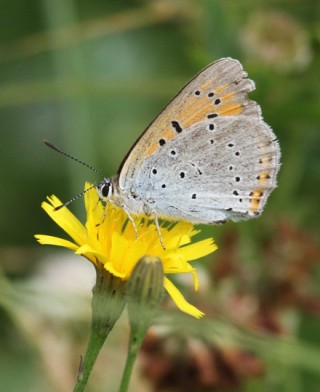
Around the lake we saw also lots of butterflies! Surprisingly the most numerous species was a Map Butterfly which still some years ago was a big rarity. We saw our first one about 10 years ago in Värtsilä. Hanna managed to get pictures of one still big rarity, a Large Copper. Many common butteflies were also photographed.

After Haapajärvi a huge thunderstorm came to Lappeenranta so we went to eat. After the rain had stopped, we decided to go again to Askola to see if the rain had dropped any new waders. Surprisingly the main road was flooding so we had to get a smaller road. There was more than a half of a meter water under the bridge! Only 5 more Dunlins were seen and 2 Common Sandpipers so soon we continued to a secret orchid place that Hanna knew.

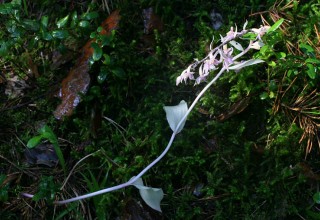
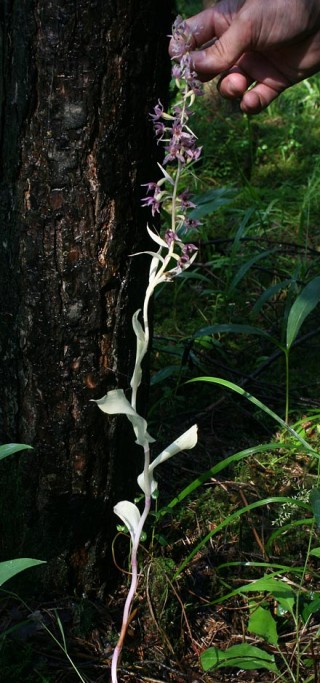
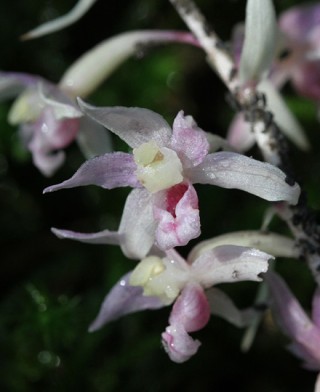
In one forest there has been Broad-leaved Helleborines that has no chlorophyl. This place is maybe the only place in the world where these flowers can be found at least almost every year. In dry summers the mycelium rests and the verso dies because of the plant can’t photosynthesize itself. But this summer we have got lots of rain and we managed to find three of these magical orchids. Of course there were hundreds of normal Broad-leaved Helleborines but only 3 white ones. These 3 were very weak and full of aphids but still flowering beautifully!


Next we visited Joutseno Kotasaari pools where we met Paavo Rantanen who had already checked all the pools. So we just checked the first one where we saw a strange Barnacle x Canada Goose hybrid, a family of Slavonian Grebes and 2 Little Ringed Plovers.
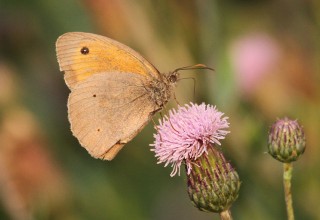
Then we still decided to drive close to Russian border where we knew some birders had seen some rare butterflies like Scarce Tortoiseshells, Purple Emperors, Lesser Purple Emperors, Great Coppers and Meadow Browns. It was probably too late, both the time of the day and also summer, so we found only a coupe of Meadow Browns, but it was anew species for us.

Finally at 8 p.m. we left back to Parikkala. On teh way we sill saw a family of Wood Larks in Rautjärvi.

On the 5th of August we saw a Grey Heron and heard a Ringed Plover in Siikalahti. On the 7th day we went to Lappeenranta with Harri Partanen. In Askola we saw 52 Dunlins, 6 Curlew Sandpipers, a Little Stint, a Temminck Stint, 42 Ringed Plovers and so on. In Haapajärvi most of the waders were hiding in a vegetation but we managed to count at least 250 Dunlins, 140 Ringed Plovers, 12 Curlew Sandpipers, 3 Little Stints, 5 Oystercatchers, 13 Grey Plovers, 18 Bar-tailed Godwits, 3 Spotted Redshanks, 18 Grey Herons etc. On the way back to Parikkala we visited Joutseno Kotasaari but only the same familiar goose hybrid and 2 younf Slavonian Grebes were seen.

Nutcrackers have came to spend autumn to Parikkala again. At least 4 birds are feeding on trees close to the railway-station.

J.A. & H.A.

Adders and Chanterelles

This Swift did hit window and it was lying against the glass. Wings were okay and there was no other visible damage. Bird was placed on brick wall. It started immediately climb higher. When it thought that it was high enough, it dropped down and flew nicely away.

We have had very rainy summer and thus mushrooms are growing well. In our forest in Punkaharju it was sometimes difficult to decide where to step. There were so many chanterelles!

Breeding platforms that were build with Parikkala Rautjärvi birding club were success already this summer. Now Tern and Black-headed gull youngsters are flying already, but still there is birds that use these platforms. Today there were several common tern fledglings and common sandpipers. Plants we planted have grown nicely and it is difficult to see that platforms are man made.

Large female Adders live under rowing boat of Siikalahti reserve. Other of them did not want to move from our way, when we were trying to move the boat. After our 3 hours rowing trip it was still waiting inside small pile of grass. It returned under the boat immediately.

kalatiirakyy, adder, vipera berus

H.A.