Arctic migration in Virolahti
To Virolahti
On the 17th of May my long-waited holiday finally started and I left to Virolahti to watch arctic migration. On the way I stopped in Lappeenranta Joutseno Konnunsuo where only 2 Short-eared Owls and a Hen Harrier were seen. In Miehikkälä I still saw a female Capercaillie and after some shopping in Virojoki I continued to Virolahti Lintulahti bird-tower. After a coupel of minutes waiting I heard a Savi’s Warbler singing – the bird had been found a couple of days earlier, but it had been very difficult to hear, so I was lucky to hear it almost immediately. Also a couple of Caspian Terns were seen as a year-tick.
Soon I continued to Lakakallio where many birders that come to see arctic migration every spring already were. In the evening there was almost no visible migration but in the darkness we could hear almost continuous calling of Common Scoters from the sky.
Ristisaari twitch
On the 18th of May the weather was very bad. The fog was very thick so there was less than 100 metres visibility. Only a tailless Wood Lark and a small flock of Common Crossbills were seen in the first hour. So when a message came about an Iberian Chiffchaff that had been found on the previous day but was still in Ristisaari, it was an easy decision, we’re going! With Matti Sulko and Markku Lund we managed to get places to the first boat to this island and soon we’re driving towards Kotka Sapokka harbour.
In a harbour there were 65 twitchers and soon we were on a big boat and going towards my first ever big island twitch! The sea was still foggy but still we managed to see an Arctic Skua and a Razorbill on the way.
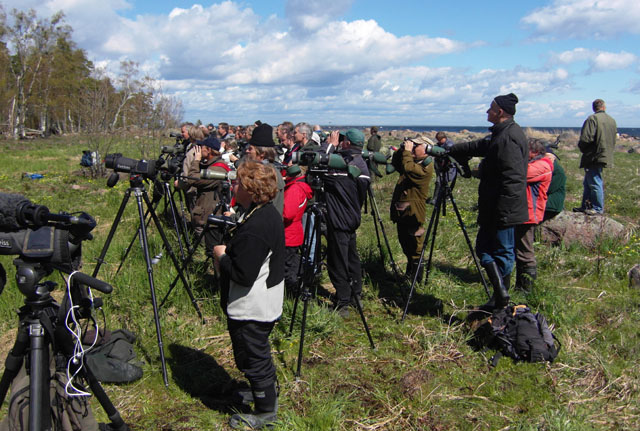
Close to Ristisaari there was a smaller boat waiting for us so we managed to get to the shore easily. First half of the twitchers were already going towards the place where an Iberian Chiffchaff still had been singing. We had about a kilometre walk to a place where one of the founders of the bird told where the bird was and there the first group had already heard the bird calling and then they had stopped about 30 metres before the edge of the trees to wait and listen.
But then it was silent. A Chiffchaff, a Lesser Whitethroat, a Wood Warbler and a Garden Warbler were seen and some maybe saw the right bird too, but it was always behind the branches or something. A Wren was singing and also 2 nice male Red-breasted Flycatchers were making similar calls than Iberian Chiffchaff, but finally I was sure I heard the right bird calling too and soon some twitchers saw it on the top of one tree. But still I couldn’t find it but now we knew in which tree it used to come, so we started to plan mist-netting it. We all knew that it was necessary to catch the bird to make its identification sure, so after some planning we were putting up the mist-nets with two other Twitchers association executive committee members. Soon we were ready and had also a mp3-player playing under the mist-net. I was on the one end of the mist-nets and Jörgen Palmgren, the ringer, on another end. Soon the bird came to the tops of trees just over us and started calling and singing! It started to fly over the mist-net but always too high, but slowly it came lower and finally it was in the mist-net! “Jösse” ran faster than anyone expected and soon the bird was in his hand! And very soon he was taking the measurements and I was writing them down. As every good birder know many measurements are needed to make sure the identification of an Iberian Chiffchaff, but “Jösse” made it very quickly, actually I had problems to write all the information down that quickly. DNA-samples were also taken (3 feathers) and then the bird was of course photographed well. The whole situation lasted about 30 minutes which is less than a normal ringing takes time in a ringing station for example. But like many times when all the measurements have been taken the bird was not able to fly when it was released. I was sure it was because of the many maximum measurements of the flight feathers and of course a small bird can be a little bit shocked. Anyway I was sure it was flying again soon.
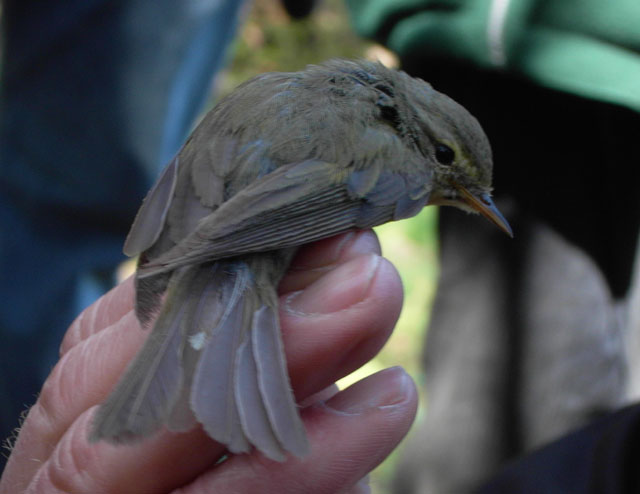
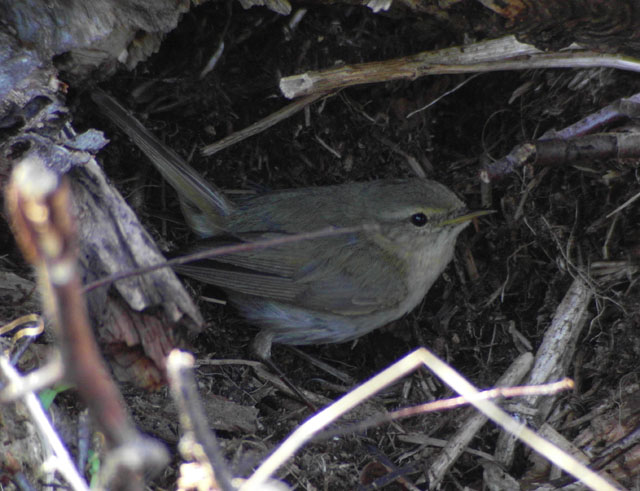
Unfortunately we couldn’t stay following the bird as our boat was coming to get us back to the bigger boat, so we had to hurry.
Of course we all felt uncertain about the birds wealth while we were walking back to the boat but I had seen this many ties before and this time the bird didn’t really look any weak so I was sure it was ok. A Greenish Warbler was singing no the way and soon we’re on the boat again. On the way back to Kotka Sapokka we still saw a Black Guillemot.
After the twitch there was a headline in newspapers that twitchers killed a rarity and so on! But I think this was just imagination of the people that never saw the bird – it wasn’t found on the next morning again – I am sure it had just continued its migration and was singing somewhere else.
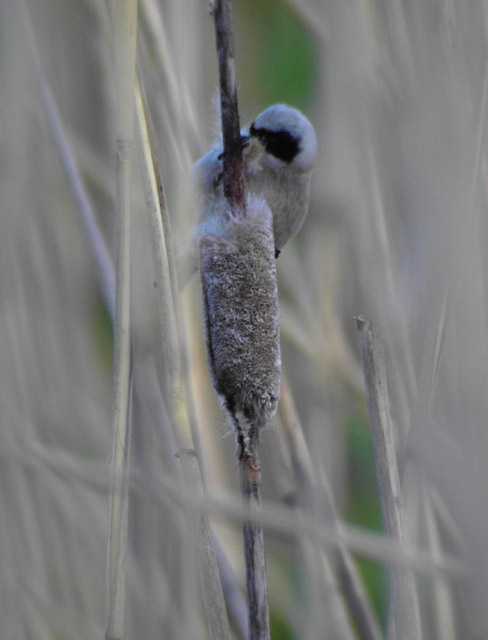
We still drove to Hamina Kirkkojärvi where we twitched a Penduline Tit that was building its nest. Also a Common Whitethroat was singing there.
The evening migration in Lakakallio was quiet: only a Whimbrel and a mixed flock of Whooper and Bewick’s Swans were seen and Eiders were seen as a year-tick.
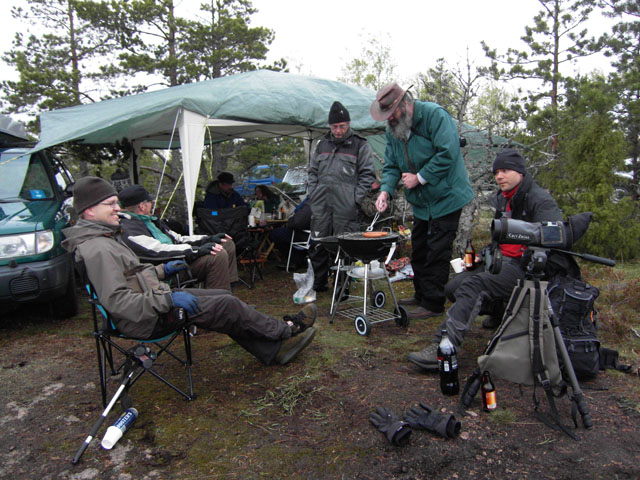
Late in the evening we of course had a fire in a camp and had sausages, drinks and many good laughs. Anyway I was once again one of the first ones to go to sleep.
In Virolahti
On the 19th of May we started watching arctic migration at 4:15 a.m, but the migration was still pretty weak. In 4 hours we saw 4774 geese and 2679 of them were identified as Barnacle Geese. 68 divers, mostly Black-throated Divers, a couple of Scaups and a Short-eared Owl were also seen.
During the day I was in Kurkela bird-tower which is the best place in a coutry to see rare raptors. In several hours trying the only better bird was a Black Kite.
On the 20th of May we started at 4:15 a.m. again. A Common Rosefinch was already singing but again there was almost no migration at all. Only 750 Barnacle Geese, 21 Brent Geese, 2 Velvet Scoters and so on were seen. A Rook and a flock of Common Crossbills were seen too. Almost all other birders went to sleep but me and “potu” Suojarinne who had just arrived and a couple of others stayed on the rock which was good as I found a flock of waders that migrated just over us and there were 3 Greenshanks, 3 Knots and a Marsh Sandpiper in a flock!
During the day we were again in Kurkela with ”potu” and Kalle Larsson. The day was extremely hot so it was very hard work to scan the sky for hours while the first Spotted Flycatcher of the year was calling next to the tower. Anyway a couple of White-tailed Eagles, 2 Black Kites, a Hen Harrier, a Merlin, 3 Arctic Skuas and a nice White Stork were seen.
In the evening we went to see a Penduline Tit again. A Thrush Nightingale and 2 Great Reed Warblers were singing in Kirkkojärvi too. On the way back to Lakakallio we still saw a male Capercaillie close to Virojoki.
On the 21st day we started at 4:30 a.m. the geese migration was stronger. First there were only smaller flocks of Barnacle Geese but soon the flocks came bigger and there started to be mixed flocks between Barnacle and Brent Geese and in the afternoon there were almost only big flocks of Brent Geese migrating. So we stayed in Lakakallio until 7:45 p.m. (only an hour shopping trip was made in the afternoon). We counted altogether 34174 geese and 20501 of tem were Brent Geese! Also a nice flock of 105 Knots, 70 divers, 4 Arctic Skuas, 75+45 middle-sized waders, 40 Dunlins and so on were seen – and again a nice White Stork too.
On the 22nd day we started at 4:30 a.m. but again there was nothing happening on the sky. In 4.5 hours we saw just a little bit more than a thousand geese, 35 divers, 4 Dunlins and a nice mixed flock of 4 Bar-tailed Godwits, 22 Knots and 40 Grey Plovers.
During the day with “potu” we visited Kolsinpohja bird-tower, but nothing except 6 singing Wood Warblers along the track were found and in Lintulahti where a Reed Warbler and an Icterine Warbler were heard. Then we still drove to Hurppu because of a Brent Goose flock with a Red-breasted Goose was coming but even though we saw the flock it was too far to identify a Red-breasted Goose from the others.
During the afternoon I drove to Parikkala to rest as I was going to have an extremely tough next week touring around “Southern” Finland with a British group! In Parikkala we still had to go to ring a nestlings of one Tengmalm’s Owl with Hanna and then Matti Lötjönen called that he had found an adult male Black Redtstart in Kukonkanta and of course we had to go to twitch it. There was also a Little Ringed Plover.
Then I had to go to sleep, I was going to have a long journey: Tampere-Oulu-Kuusamo-Lieksa-Parikkala-Tampere – and many good birds to find for the Ornio group!
J.A.