Sicily 4th to 10th of April 2012

After a very long winter the spring was coming too slowly, so we planned to go somewhere south in Eastern. Hanna had always dreamed of seeing active volcanoes, so we decided to go to Sicily. We were very busy but we managed to do some preparations before the trip. I ordered A birdwatcher’s guide to Italy book, contacted a local birder Andrea Corso and booked tickets to one football match and Hanna ordered tickets to Stromboli and a guided tour to a volcano there. So we had a full schedule as Sicily is not a small island and we had only a week there.

On Tuesday on the 3rd of April we left driving towards Tampere. On the way we stopped in Rautjärvi Simpele Kokkolanjoki where I was a Pygmy Owl that landed to a branch for aa couple of seconds before continued somewhere. In Imatra Vuoksi we saw 5 Canada Geese and a Black-headed Gull and in Lappeenranta Toikansuo we twitched a Twite that was in a flock of 28 Linnets. Then in Lempäälä we stopped in IdeaPark where we also had pizza in a restaurant. They were playing Eros Ramazotti there so we really started to get to right mood. Soon we continued to Pirkkala airport where the parking place was still under almost a half meter of snow – there had been a real snow-chaos in Tampere area on the previous day. Luckily we managed to park our car and went to wait for our RyanAir flight which left after 2 hours waiting at 9:05 p.m. 40 minutes late from the schedule.

We landed to Trapani airport at midnight still half an hour late from the schedule. Hanna went to pick up our luggage and I went straight to get our rental car from Europcar office. Luckily I managed to get there first so I got the car-key soon. After I had bought a good map of Sicily Hanna came with our luggage and we went out to search for our car. After 10 minutes of searching I found it and it was almost a brand new Fiat Panda. There was only 500km on the meter.

It was already more than 1 a.m. when we found to our bead and breakfast Tradanisla where one of the owners was still waiting for us. Luckily our navigator was working so it didn’t take too long to find there from the airport. A couple of Scops Owls were calling on the garden when we went to sleep.

On the 4th of April we woke up at 7 a.m. and the breakfast was made ready already in the evening. There were lots of cakes and pies so goodbye diet! We walked some 15 minutes on the garden and saw lots of Italian Sparrows (which looked very much like Spanish Sparrows to us), Tree Sparrows, Collared Doves, Wood Pigeons, Magpies, Serins, Gold Finches, Blackbirds, Blackcaps, Sardinian Warblers, Swifts, and so on common birds and also a male Redstart was seen before we left towards some birding places nearby.

First we drove to Marsala Lagoon and saltpans, which was a perfect place to start. There was a good selection of birds! On the first pool there were lots of waders: Ruffs, Wood Sandpipers, a Green Sandpiper, Black-winged Stilts, some Marsh Sandpipers, Little Stints, a couple of Temminck Stints, Little Ringed Plovers, a Common Snipe, Shelducks and so on. Spotless Starlings, Crested Larks and Corn Buntings were singing, Zitting Cisticola calling and some Swallows and Sand Martins were flying over us. We also found a flock of Yellow Wagtails where were several subspecies. Very Nice!

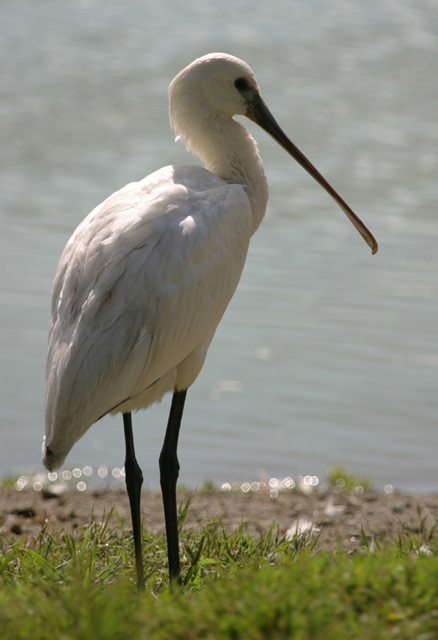
From the bigger saltpans we found some bigger birds: Flamingos, Spoonbills, Little Egrets, 3 Great White Egrets, Cormorants, Yellow-legged Gulls, Curlews, Grey Plovers, Turnstones, some Avocets, 2 Oystercatchers, Dunlins and we also heard a Red-throated Pipit.

On the sea-shore we still saw some Great Crested Grebes and some Cory Shearwaters that were flying further on the sea. Soon we continued towards north to our next place.

Trapani saltpans were a huge complex, but the water-level was far too high. So there weren’t many waders, just some Common and Green Sandpipers and Redshanks. Other trip-ticks were Marsh Harrier, Kestrel, Common Buzzard, Sandwich Tern, Coot, Cetti’s Warbler and so on.

Saltpans

Then it was time to start a long drive along the whole island. After an hour driving the motorway ended and we drove straight through a big Palermo city. Luckily the biggest traffic-jams were on the opposite line so we made it back to the motorway pretty easily. Then we still had 250 kilometres left to Siracusa.

The motorway was very fast but boring. In every bridge there were bumps because of joints in every 50 metres. So after a half way we decided to move to the old road that was much slowlier but then we could stop whenever we wanted. And the first stop was very good when we stopped to watch the river that went under the motorway. After we had found a couple of Stonechats we saw a Lanner on the sky! We knew this species wasn’t easy to see, so we were really lucky!

We drove past Enna which was amazing city! It was on the top of high mountain. There were very high buildings that were almost on the edge. It really wasn’t a place for little children. After less than an hour we drove back to the motorway and soon we were driving past the second biggest city, Catania. And after an hour more we finally arrived at Siracusa. We drove straight to Pazzo di Mazza from where we had a room in this nice old vineyard. After we had got our room, we still decided to go to the closest good birding place to Capo Murra di Porco.

While we were walking towards the lighthouse, we noticed there was a huge flock of shearwaters on the sea. There were several hundreds of Yelkoyan Shearwaters, some 20 Cory Shearwaters, Yellow-legged Gulls, some Auduoin’s Gulls and also some Mediterranean Gulls were flying close to the flock. Hanna noticed a migrating Arctic Skua too. Soon it started to get dark so we soon drove back to Pazzo di Mazza where we had a meal waiting for us. Unfortunately we hadn’t met the English speaking owner yet, so there was almost nothing Hanna could eat (she is very allergic to almost everything). But Janne got even more to eat and the food was delicious! After all we got the meal free anyway as it was the first meal of the season, which was very nice 😉

On the 5th of April we woke up before 7 a.m. again and drove straight to Capo Murra di Porco. I had sent a message to Andrea Corso that the breakfast was at 8:30 as I remembered that we had made an agreement that we would meet during the breakfast. But I hadn’t got any reply from him, so we decided to come back already at 8 a.m. From the lighthouse we saw again a huge flock of Shearwaters and we found a Balearic Shearwayer from the flock. There were also more Auduoin’s Gulls now.

After we had found a couple of Northern Wheatears from the rocky shore we walked to the bushy are where we found more wheatears. And soon we found an Isabelline Wheatear too! Capo Murra di Porco is probably the best place in Europe to see this species? We also found a couple of Subalpine Warblers, 2 Tawny Pipits, and first Marsh Harriers were arriving from the sea with 2 Montagu’s Harriers and a Bushchat Shrike was perched on one tree. But soon we had to leave back to Pozzo di Mazza.

We had just left to drive when a big Peugeot drove towards us and stopped us, it was Andrea. He had been searching for us for whole morning! He had been in Pozzo di Mazza at 7 a.m. and visited another bed and breakfast too and asked from the people where we were and finally got an idea that we must be gone birding – so he had driven to Capo Murra di Porco and finally found us. I had somehow read or understood his email wrong. I had probably read it at work in a hurry. And for some reason Andrea had newer got the SMS I had sent in the evening (actually he got it in the evening when we had been birding together for hours already!).

I of course apologized even though I wasn’t then sure had I been wrong or not. But luckily it was soon clear that Andrea was a very kind and funny person, so soon we had forgotten what had happened. And we were already in a really good birding place which we really hadn’t been checking almost at all, so it was time to start real birding! And Andrea showed right away that he was really a good birder! Of course it is always so that if you go birding with a good local birder, you see much more! Soon we had seen Hoopoes, House Martins, an European Red-rumped Swallow, 2 Baltic Gull looking Lesser Black-backed Gulls, a Pheasant was calling and soon a big pipit was flushed in front of us – a Richard’s Pipit! Actually Capo Murro di Porco is the best place in Europe for this species too in autumn but there had been now already a couple of years a couple of birds staying around the year! Soon we found another Richard’s Pipit too but unfortunately they were too shy to get good pictures. They were also very silent; we heard them calling only a couple of times. Anyway this was the first time we saw Richard’s and Tawny Pipits in a same place.

We continued checking the bushes and walked towards the shore where we tried to find another wintering speciality but unfortunately a calidus Peregrine Falcon wasn’t found. It had been wintering on this beach for almost 10 years. A couple of Isabelline Wheatears were found and on the flock of Yellow Wagtails we heard calls of a feldeggi, Black-headed Yellow Wagtail which sounds almost like a Citrine Wagtail. Also a couple of Stone Curlews were seen in flight and a Little Owl was perched on a stony wall far from us

Next we decided to have a breakfast. We were almost in Pozzo di Mazza when I noticed a strange dove perched on the post over the road, but unfortunately the traffic was far too heavy so we couldn’t stop. When we were on the parking place I asked from Andrea, if it had been a Laughing Dove and Andrea had also seen it and it had been one! It is a rarity in Sicily main island but there are more and more birds in southern islets every year. And the last observation of the species in the main island was exactly in the same place last autumn. So probably it had a territory there?

After a quick breakfast we drove towards the biggest wetland in Eastern Sicily, Venticari. Surprisingly the main road was under construction and so was the second biggest road. Luckily we had Andrea with us and after some searching we found a right way to this very good wetland. A big bus full of tourists was just parking to the parking place so we hurried to the first bird-hide before them.

From the hide we saw Little Egrets, Great White Egrets, Spoonbills, 10 Glossy Ibises, a Squacco Heron, Slender-billed Gulls, Black-winged Stilts, Spotted Redshanks, some Marsh Sandpipers and other waders. Penduline Tits and Cetti’s Warblers were calling on the reed-beds and many ducks, Mallards, Shovelers, a Teal, a Pintail, Ferruginous Ducks, some Pochards and Black-necked Grebes were seen on the water. Soon the tourist group came and we had to continue to the other side of the area. There we watched more insect and dragonflies that had just started to fly. Andrea knew them all extremely well too. Not many new birds were seen but on the sea-shore we saw a Shag which was only second for Andrea ever in main island of Sicily. We also saw a Gannet on the sea.

When we were walking back to our car we heard several big booms, like a thunderstorm or a bomb. It took some time to realize that it was Etna which was again erupting! We heard it booming for more than an hour and we heard it very clearly even though we had almost 100 km to Etna!

Next we continued to the biggest pool of Venticati where the water-level was very high so there weren’t many waders. Some Flamingos and egrets but nothing new was found. We also visited an old tuna-factory briefly.

Then we continued to the south-eastern corner of the island to Longarini and Cuba wetlands. Also there the water-level was higher than Andrea had ever seen. Unfortunately there weren’t any Marbled Ducks yet with Coots and Moorhens. A Reed Bunting flew over us; a Reed Warbler was singing and a Sedge Warbler calling. Again we saw plenty of dragonflies and Andrea was teaching some local kids a lot about nature meanwhile we were birding. He really seemed to do a lot of for the future of the local nature!

Next we hammered one bigger meadow where we didn’t find anything new. And on the next small pool one of the only birds was a Whiskered Tern. Then we continued to the check a couple of spits which were good for migrant passerines. From the first spit we found 3 Eastern Black-eared Wheatears which one of them was a stunning adult male. On the next spit we were even luckier when we found an Orphean Warbler! The bird was extremely shy so we saw it only for a couple of seconds but we saw it well enough to say it was a Western Orphean Warbler. This was a species that we had seen a couple of times in Spain but even worse so now we could finally count it as a new WP-tick!

We still continued to one big meadow area higher to inland and it really was a good looking place. This like many other places in Sicily was in danger because of a big hotel resort was planned to the area. Andrea and a few birders that live in the island are really busy to work to save these places. Tree Pipits, a Common Whitethroat, a Wryneck and a couple of singing Nightingales were found. Andrea was turning around all rocks and after some hard work he found a nice Ocellated Skink that he had been looking for. There were also lots of both Italian and Sicilian Wall Lizards and also their hybrids.

Soon it started to get dark and we drove a surprisingly long way back to Pozzo di Mazza. We had planned to go birding together with Andrea also on the next morning but during the day we realized that we were out of time. So Andrea gave us some instructions where to go on the way of our rest of the trip. Luckily one of the places was even better place for our main target species Sicilian Rock Partridge than the place where we had planned to go on the next morning. While we were watching a map, we heard several Scops Owls calling and once a Barn Owl too.

We said goodbye to Andrea and paid for his services (normally he takes 75€ per person per day + gasoline). I must still say that if any birder or just any person who is interested about nature goes to Sicily he really should book Andrea at least for a day. We had really enjoyed our day with him. It would have been possible to visit one or two places during the day without him, but with him we had visited almost 10 places and seen so much more. And what was the best we had got a possibility to find a new good friend again! For sure we will meet Andrea some day somewhere again

With Hanna we still drove to Siracusa to eat. We were absolutely tired so we stopped to eat in McDonalds (don’t tell Andrea ). After we had visited an ATM, we were ready to go to sleep.

Good Friday, 6th of April. We woke up early again and decided to go once more to Capo Murra di Porco. The sea was still full of shearwaters but otherwise we didn’t see much. Both Richard’s Pipits were seen again but when they had been flushed they landed after several hundred metres. On the sea we saw a huge Peregrine flying, it was probably the calidus, but we didn’t see it very well. At 8 a.m. we drove back to Pozzo di Mazza to pack our luggage.

After the breakfast we still walked a little in the garden and found a Turtle Dove “singing” on the wire. Then we started to drive towards the biggest volcano in Europe, Etna!

We passed Catania again and soon started to climb higher towards the mountain. After some small cities and villages we saw the first snowy tops and at 10 a.m. we finally parked to the touristic place on the southern side of Etna. We wore all the clothes we had with us and it seemed we had much more than most of the other tourists. Then we first walked to a small crater nearby before bought tickets to a cable-elevator to 2200 metres. Up there we just missed a mountain truck that was taking tourists even higher so we decided to start walking higher; so we saved 60€ too.

We walked higher along the road and soon there were several trucks coming back down. Anyway there weren’t many people up yet, so we continued walking. Soon the road had amazing 4 or 5 metres high snow-walls! When we had a possibility, we got out of the road so we could see some views and continued higher walking on the snow. Finally we found a nice place from where we had a great view to the top of 3329m high Etna. We could see one of the tops smoking so there was the crater that had been erupting recently – also yesterday! Unfortunately today it wasn’t that active and when we noticed that there were more clouds coming to the top, we decided to start walking back.

Once we were back on the elevator, we took a ride back to the parking place where were still lots of tourists and more was coming all the time. After a small pizza slice we continued to our car and started to drive to the northern side of the mountain.

On the way we photographed the mountain views and also old magma-falls. On the forests we heard a Cuckoo, some singing Willow Warblers, Chiffchaffs, Coal Tits, Chaffinches, a couple of Wood Larks and saw 2 Pallid Swifts in a flock of Swifts. Lower we still heard a Short-toed Treecreeper, a Dunnock, Robins, Great and Blue Tits and saw some Cirl Buntings.

We continued until a bed and breakfast that Andrea had advised to us, Quota Mille. We got a room there easily and soon we were ready to start the most important bird-project of the trip, we were going to search Sicilian Rock Partridges!

We had difficulties to find a track that Andrea had pointed to our map but after some searching we thought we had found the right one. It was just in so bad condition that after 100 metres driving we started climbing up towards the mountain. And we had walked only some hundreds of metres when I saw 2 Sicilian Rock Partridges flying along the hillside. Luckily Hanna managed to se them too before they landed to a bushy rocky area some hundreds of metres from us. We of course planned to go after them but like everywhere in Sicily there were several fences between us and the birds. So we had to walk down a little to a landslide area which was really difficult to walk but we managed to get over it to the bushy area where the birds had landed. But there it was even more impossible to walk.

We just sat down and waited if the birds would show up somewhere but nothing happened. So I took my mp3 player where I had in hurry put only one call – Rock Partridge. I played the tape for some time and soon we heard a response. And soon there were at least 2 couples and 2 lonely birds calling around us! But even though we waited and called the tape again and waited again, we couldn’t see there birds anymore. The closest pair was calling just behind and in the closest bushes but never showed up.

Soon it started to get cloudy and after some time a thunderstorm was coming. Luckily we managed to walk back to our car before it started to rain. We still drove to a city of Randazzo to eat. After some searching we found a pizzeria that was just opening at 7:15 p.m. It seemed that everyone else was in church or somewhere else celebrating the Goo Friday. Luckily the heavy rain stopped and local people were shooting fireworks when we walked back to our car.

In Quota Mille we heard again several Scops Owls and also a Tawny Owl was calling. Hanna tried to photograph the owls for some time but we had really had a long day so soon we went to sleep. We had managed to get our main target bird and also been on Etna – what a day!

On the 7th of April we woke up at 7 a.m. again and it had been raining almost whole night. Anyway we drove to the Sicilian Rock Partridge place again, but only 2 birds were responding to our tape. Soon we left to drive around Etna and then back towards Catania. On the way we heard some Firecrests and Wrens and saw 2 Great Spotted Woodpeckers.

Near Catania we turned to motorway and drove next 210 along it to Palermo. We were in Palermo much earlier than we had expected so we had good time to do everything ready before the evening. So we drove straight to Stadio Renzo Barbera and to northern ticket-office where we got our tickets to the evening match Palermo – Juventus.

Luckily there were already doormen at the gate of the stadium and they told us to leave our car far enough from the stadium as some of the roads would be closed because of the match. We also got certainty that Hanna could take her camera with her to the match.

After we had parked our car about 10 minutes walk from the stadium we started to walk towards the city. We walked and walked for 3 hours. Most of the shops were closed but finally we found a restaurant that was open. We had a good lunch and then started to head back towards the stadium. Surprisingly there were already lots of people heading towards the stadium and once we got there we saw already big lines behind the gates. Luckily the gates opened soon and we got in and found our seats easily.

The atmosphere was great even though the teams hadn’t even came to warm up yet. On the opposite corner there was a stand for visitor team’s fans and it was full of Juventus fans. The stand was surrounded by 4 metres high fences; also the field was surrounded similarly. Palermo’s Ultras were sitting behind us on the upper stand and these pink fans were really making some noise. Another Finnish couple was sitting behind us. This man was a huge Juventus fan but now he had to sit still wearing a Palermo scarf to avoid getting smuggled. A couple of big bombs were exploding and soon the teams came to warm up. After some warming they were away only for 10 minutes before coming back and soon the match started at 6:30 p.m..

It was soon clear that Juventus was a better team on the field. Palermo had only a couple of changes; at least Fabrizio Miccoli was dangerous every time he got the ball. But Juventus controlled the match and especially Andrea Pirlo was dominating with his good passes that strikers Mirko Vučinić and Fabio Quagliarella got. After all, the first half was still pretty boring with no really good changes for scoring.

The second half started with even clearer Juventus dominate and on the 56th minute Leonardo Bonuccis header from Pirlo’s corner kick went by the post to Palermo’s goal. On the 69th minute Quagliarella made it 0-2 with a nice shot to back-corner. Juve fans were celebrating very hard and some of the Palermo fans were getting aggressive. Luckily there were enough doormen.

The end of the game was boring; Juventus was just controlling the ball. The legendary Alessandro Del Piero was jogging around the field the last 12 minutes he was playing. When AC Milan played draw on their game the result took Juventus to the lead of Serie A.

After the match we walked quickly to our car but unfortunately the traffic-jam was already big. So it took 30 minutes to get out from Palermo to the motorway. There were still lots of traffic there too, but when we got to a chargeable motorway towards Messina, we could start driving faster.

We drove 200 km until Milazzo where we found easily to our hotel and it was already 1 a.m. when we got to bed.

8th of April – Eastern Sunday. We woke up before 6 a.m. and 20 minutes later we were out and in a taxi that took us to harbour. There we walked to a ticket-office which wasn’t open yet. There were also others waiting for the office to open. At 7.m. the office opened but soon we understood that something was wrong. And after some waiting we got very bad news; the boat was going only until Lipari because of there was a storm on the sea. And we were going until Stromboli which is the furthest island. It was difficult to understand the decision as the weather was really good, but meanwhile we were waiting for a taxi, it started to blow very hard and soon it started to rain hard too.

On the hotel there were all plantings fallen down because of the wind. Luckily we got the same room from the hotel so soon we went back to sleep.

After a couple of hours sleep the wind was still very stormy but the rain was getting weaker. So we decided to go to see the famous raptor-watching places to Messina. Of course we knew that we wouldn’t see any raptors in this weather but it was nice to go to see the places anyway.

After we had first checked Capo di Milazzo where we decided not to get out from the car at all because of the stormy wind, we continued along the coastal road towards Messina. The road went through long cities so it was very slowly, but finally we got to Messina.

First we checked a couple of empty lakes, but soon continued to mountains and followed the instructions that we had on our A Birdwatcher’s Guide to Italy book. Dinnammare was a stunning place indeed. On the way there we saw some Mistle Thrushes and while we were driving back down, a huge hail-rain hit us. The other places weren’t that gorgeous but it was easy to imagine how the raptors were migrating along the hillside towards Italy that was visible easily behind Messina bay.

Only other trip-ticks were a Grey Wagtail and a Black Redstart. Soon we continued back towards Milazzo and somehow we missed the only cross to the motorway so we had to drive along the coastal road again. Luckily there was much less traffic now so we got back to our hotel easily. In the evening we went to walk to Milazzo city but it started to rain very hard again, so we came back to our hotel and went to sleep early.

9th of April – Eastern Monday. We had a breakfast at 7:30 a.m. and soon we started to drive towards west. The motorway cost 8:10€ again which is not too much because of there is 47 tunnels and at least as many bridges on the way! There were still 4 more tunnels before we were in Palermo again. And after a few tunnels more we turned away from the main-road towards Scopello and Lo Zingaro. Lo Zingaro is a protected area along the coast where are small mountains. It had the best hiking roads of Sicily but it is also a good birding place.

We parked to a surprisingly full parking place and paid 3€ for entry. After a small tunnel where we saw a Little Owl hunting close to it we cam to an information centre and right after it we turned climbing up towards the mountains, all other people followed the main track along the coast.

The wind was still very strong but luckily the mountains protected from it pretty well. So the climbing was very enjoyable. There weren’t many birds but Hanna started to find different kind of orchids. And when we had climbed almost straight up for almost 45 minutes I found a Bonelli’s Eagle from the sky. The eagle landed to the top of one peak and we could watch it with a scope.

We continued along the hill-side and some hikers were coming towards us; so not everyone else had chosen the easier track. From the moister parts Hanna found more different orchids so even thought we still didn’t see almost any birds, was Hanna enjoying. Luckily soon we found some birds too and almost all birds were new trip-ticks for us; 2 Rock Buntings, 3 Rock Sparrows and 2 Spectacled Warblers were the best ones.

We had been climbing up and down along the track for 3 hours when we finally landed to the coastal track and turned back towards the parking place. We walked still more than 2 hours but didn’t see anything special anymore. Lots of both wall lizards and one skink were seen but no birds at all. But anyway it had been really fun to walk for more than 5 hours in a beautiful landscape, we had been driving car enough already.

It was already 6 p.m. when we continued towards Trapani. We decided to drive along smaller roads to see some new views. Then we drove to the same bed & breakfast where we had been on our first night.

Luckily we got a small cottage and there we packed our luggage and relaxed the rest of the evening. White Scops Owls were starting their calling, we went to sleep.

10th of April. We woke up at 7 a.m. and the breakfast was again ready. So soon we were going towards south where we wanted to visit some new places. We drove through the cities of Marsala and Mazara del Vallo towards a tiny village of Granitola. We checked some small lakes on the way and they were really good for birds. The biggest of them, Lago della Priola had lots of ducks: Ferruginous Ducks, a Pochard, a Black-necked Grebe, Garganeys, Gadwalls etc. The best birds were10 Purple Swamp-hens. Also a Wood Warbler was seen. The smaller pools weren’t that good but we heard several Nightingales singing.

In Granitola we tried to find out which of the roads was the one that was mentioned on our Birdwatcher’s Guide to Italy, which we should follow towards Campobello di Mazara. We tried first a couple of wrong ones before we decided to follow much longer main-road. There we found the sign to Cavo di Cusa archaeological site which wasn’t the right turn but we had to turn back and take the previous one (not very good instructions in the book you see). There was a sign Cave del Capitello, and after 500 metres (not 100), we found small Pantano Leone lake. This was the best place to see Marbled Ducks, but unfortunately they hadn’t arrived yet. Anyway we saw some waders and maybe now made it easier to the next birder to find the lake.

We still had some time left, so we drove to Marsala Lagoon and checked the places that we had seen most birds almost a week earlier. Again we saw plenty of waders, a flock of Curlew Sandpipers were new. On the biggest pool there were again flamingos, egrets and Grey Herons but also 2 Little Terns and a Gull-billed Tern which was our last 160th species of the trip.

On the beach we packed the rest of our luggage and soon drove to the airport which was very close. We had been driving more than 1800 kilometres around Sicily in one week.

After a couple of hours waiting our plane left at 3:15 towards Tampere. After 4 hours tired flight we landed to a snowy airfield. A Red Fox was running scared away from the airstrip to the snowy open.

We still had a four hours drive to Parikkala where we finally were after 1 a.m. After a short sleep it was time to start a new week at work.

J.A.

Azores trip 7th to 23rd of October 2011

Azores trip from 7th to 23rd of October 2011

As we have been listing Western Palearctic bird-species for years, it was just a question when it was time to do our first trip to Azores. We had already been in all other island-groups of Macaronesia, but now it was time to go to the westernmost islands to see some American birds. Our friends that were with us in Kuwait, Petri Kuhno, Tero Linjama, Tero Toivanen and Janne Kilpimaa had also been planning to get there so we decided to go together. Also Mika Bruun was coming so we had a group of seven birders, Hanna wasn’t able to spend all 17 days there but she was coming for 9 days. The timing was easy to decide as most of the American birds have been seen in autumn, so we booked our flight from 7th to 23rd of October, Hanna was coming a week later than the rest of us and Mika decided to stay a couple of extra days.

7th of October

I had already driven to Kirkkonummi on the previous evening and at 3 a.m. I woke up when the alarm was calling. My father drove me to Helsinki-Vantaa airport where the rest of our group already was. Our flight was supposed to be at 5:35 a.m. but it left half an hour late. So after 5 hours we landed to Lisbon at 9:00 a.m. at local time. Our luggage were on their way straight to Azores so we just got Renault Megane that we had rent and left to birding (all except Mika who had an earlier flight to Azores). After a morning coffee, we were soon driving along a long Ponte Vasco da Gama bridge over Setubal and towards Benavente and Barroca d´Alva which situated 30 km from Lisbon.

We parked next to a small bridge and started to search for “cage-birds”. Marsh Harriers, Kestrels, a Green and a Common Sandpiper, a Kingfisher, some 30 Glossy Ibises, a Squacco Heron and then the first flock of Common Waxbills were found. Some of our group got their first lifer. A couple of female-plumaged Weavers were flying over us before I managed to see one beautiful yellow and black male Black-headed Weaver which just flew in front of us but nobody else saw it. But soon we found some female and young Black-headed Weavers perched on the reeds and we all got a lifer.
After we had walked a little but along the river, we found more male weavers too but one of the target birds was still missing. So I decided to walk a little bit longer to the middle of the fields to the place where huge flocks of House Sparrows were flying around. It’s common that other birds join this kind of big flocks. And there they were- first I just saw a flock of some 80 smaller birds flying under the sparrows and when I got closer I identified them as Yellow-crowned Bishops. I shouted to the others and seen we all were watching these smaller black and yellow birds that had a bright yellow crown.

My tripod was packed to my luggage that were already going to Azores so I couldn’t even try to digiscope these cage-birds, but probably I wouldn’t have succeed anyway, they were so fast. Only some of us managed to get any pictures with their real digital cameras. We still walked a little bit around and found more Common Waxbills and Black-headed Weavers and also 2 Spoonbills and a Water Rail before we decided to keep on going.

Next we drove 50 km to the other side of Lisbon to Carcavelos, where a castle was on the sea-shore. There we walked along the road and started to check grassy areas next to the road and the castle but first we couldn’t find any other birds than some Gannets and 2 Mediterranean Gulls from the sea. It was very hot – even +26 degrees and we were walking for some time when I finally heard a weak singing from a date palm next to the road. And there it was – a young Crested Myna was singing very quietly and once we saw it with Petri, it disappeared inside the dense tree. Luckily it soon came back to the same branch and we all managed to see it before it flushed and flew to the other side of the road and disappeared. Some of us got already their 4th cage-bird lifer and I got already 3rd! After we saw a Zitting Cisticola we decided to drive back to the airport where Mika’s plane had just left.

We ate on the restaurant upstairs and spent a couple of hours waiting for our next flight. Then we drove by bus to the other terminal and at 7:10 p.m. our flight to Azores, island of Sao Miguel and its capital Ponta Delgada left.

After a couple of hour’s flight we landed to Ponta Delgada at 8:15 p.m. (already 3 hours different time than in Finland). Mika was already there with one small car and soon we got another one too. So soon we were driving towards out hotel Barracuda which situated on the other side of the town. There we went to sleep very soon; we had been travelling for long time already!

8th of October

We woke up early in the morning with Tero L. and Mika and went to have a breakfast at 7:25 a.m. The sun started to rise and the first bird we saw from the window was a Hudsonian Whimbrel flying along the shore! Soon some Turnstones, a Sanderling, some Azorean Yellow-legged Gulls and Rock doves were seen too. When we got out and were packing our luggage to the car, we saw the first House Sparrows and Starlings (granti).

While we were driving through the village of Relva, we saw a couple of Collared doves and soon also some Common Buzzards (rotschildi), Blackbirds (azoricus), Grey Wagtails (patriciae), Atlantic Canaries, Azores Chaffinches, some Goldfinches (parva) and 3 Greenfinched (aurantiiventris). When we had climbed quite high to the mountain, we checked one lake which was empty.

After some driving we drove down to the bridge between the lakes Lagoa Azul and Lagoa Verde. And right away we found a couple of flocks of Coots, a male Pochard, some Grey Herons, some Common Terns and Woodpigeons (azorica). On the shore of Verde we saw a Common Sandpiper and 5 Moorhens were hiding on the reed-beds. Also 2 Sanderlings landed o the bridge where we photographed them.

I continued searching the shores close to the reed-beds as we knew there had been a Pied-billed Grebe for a long time and even Mika had seen it there in August. Azores Chaffinches, Blackcaps (gularis), Robins and Goldcrests (azoricus) were singing on the trees nearby and a small flock of Common Waxbills was flying over us. I was checking the shores once again when I finally fount the Pied-billed Grebe – there it was suddenly swimming with the Coots! I walked closer and managed to get some pictures and video of this lifer!

We continued along the coast of Azul to the village of Sete Cidades and managed to locate a Sandpiper I had already seen from the bridge – a Spotted Sandpiper! The bird was very shy so I managed to get only one video of it.

Pretty soon we had to start driving back to Ponta Delgada where the rest of our group had decided to do birding as they wanted to sleep a little bit longer. They had been photographing the Roseate Terns that Mika had already found on the day before and of course we had to see them too. I had been searching this species already in several countries without luck. Actually I had already thought that I just couldn’t identify it, at least in Madeira we had seen so strange looking terns and after all they had all been Common Terns!

But when we parked to Ponta Delgada harbour we immediately heard a strange call, like a Spotted Redshank and Sandwich Tern hybrid – and there were several Roseate Terns flying around with Common Terns! They were flying also very differently with stiffer and lower wing-beats, a little bit like Little Terns. Of course we could see some differences in their plumage and shape too but after some photographing we had to keep on going to the airport again.

In the airport we met the others and at 12:50 p.m. our plane left towards Terceira. A short flight was over soon and at 1:20 p.m. we landed to Terceira. We got a big space-car under us and drove to Praia de Vitoria to our hotel Varandas do Atlantico. After we had left our luggage to our rooms, we continued straight to Cabo da Praia to wader paradise!

Cabo da Praia is a small tide-pool close to the shore and the water is coming to the pool under the ground. In this place there had been almost more American waders than in the rest of the Western Palearctic together! When we had parked our car and got our telescopes up, we started to scan the numerous waders. Tens of Sanderlings, Kentish Plovers and Turnstones and right away the first rarities too: the closest plover was a Semipalmated Plover and while we were still identifying it someone found a Semipalmated Sandpiper! Of course we wanted to get the another lifer as soon as possible and when we had seen the sandpiper we started to search where did the plover went but we couldn’t find it anymore. Actually these plovers were a problem to a birder that is used to see only Ringed and Little Ringed Plovers. Even the Kentish Plovers were difficult but then these Ringed Plovers and Semipalmated Plovers were a nightmare! I already started to worry has the first bird been a Semipalmated Plover at all but then I remembered that I had taken a short video of the bird and it really was one. But now we just couldn’t find it anymore.

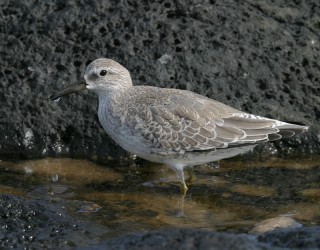
We really enjoyed this afternoon with wafers in Cabo da Praia pool! We were studying and photographing for hours! There were 2 Semipalmated Sandpipers, 47 Kentish Sandpipers, 6 Ringed Plovers, 50 Turnstones, 40 Sanderlings, 3 White-rumped Sandpipers, 5 Knots, 2 Curlew Sandpipers, 5 Pectoral Sandpipers, 6 Whimbrels with already the second Hudsonian Whimbrel of the trip, 4 Grey Plovers, 13 Black-tailed Godwits, a Bar-tailed Godwit and 2 Common Snipes. And then a small greyish plover landed just in front of me and I identified it immediately as an American Golden Plover. It called a couple of times and then flew in front of the others. This bird had been identified as a Pacific Golden Plover a couple of days earlier and also now it started to call a bit like a Spotted Redshank when it was perched but anyway all the identification marks fitted to the American better. Later we listened to recordings of both species and found exactly similar calls from American Golden Plover.

We also heard a couple of Quails (conturbans) calling, saw a Black-headed Gull, a Northern Wheatear and again a Collared Dove. Then we decided to drive to a pool where had been a Killdeer a couple of days earlier. We found this tiny pool which was in the middle of huge fields with good instructions that we had got from the birders we met in Cabo da Praia, but there was only 4 Pectoral Sandpipers, nothing else. We still drove around the fields for some time as it really seemed that the Killdeer could have been anywhere there, before we drove back to Praia da Vitoria

We still stopped by the pool of Paul do Praia where were tens of different kind of feral and Muscovy Ducks but also a Blue-winged Teal.

In the late afternoon we went to a restaurant nearby where we had to wait for our food for more than an hour and a half. So after that we were ready to go to sleep.

9th of October

After the breakfast we headed again to Cabo da Praia. The tide was now low so there was less water now. But the waders were there again and mostly all the same birds than last afternoon. An Oystercatcher flew over us and now (after some studying) it was easy to find. There was also 4 Semipalmated Plovers (maybe they were also colser now), 4 Semipalmated Sandpipers, 2 Pectoral Sandpipers, 3 White-rumped Sandpipers, 7 Knots and 5 Curles Sandpipers. A Hudsonian Whimbrel was again with Whimbrels and it was possible to identify as it had much wider and more contrastic eye-brows and crown-stripe (also the call was different). After we had checked the waders we started to search passerines from the bushes and soon Mika found a Common Whitethroat that had been found a couple of days earlier – it was the first for Azores! I climb to the shore with Tero T. and soon we found some shearwaters. First 2 were Cory’s but then the 3rd bird was a Great Shearwater! We alarmed to the others by walkie-talkie and soon most of them were running as it was a lifer for them. We saw altogether 8 Great Shearwaters but soon there were only Cory’s anymore.

After a mid-day we continued to the southern part of the island to Angra de Heroismo harbour where we started to search for another Pied-billed Grebe. Of course another half of our group hadn’t seen the first. After some searching Petri found the bird sleeping on a jet ski with a Muscovy Duck. The bird was very co-operative and we got plenty of good pictures of it while it was swimming just 10 metres from us.

The rest of the day we were checking several ”lakes” close to the Killdeer place but all of them were very dry. 9 Snipes were seen but they were almost all too shy so we couldn’t really try to identify any as Wilson’s Snipes. In Killdeer place we saw now 2 Pectoral Sandpipers. Then we still went to check some forests close to a golf-course. There were lots of Azores Chaffinches, Goldcrests (inermis in Terceira and Flores), Canaries, Blackcaps, Grey Wagtails and Blackbirds but they weren’t very interesting, at least not a birder who has already visited many other Macaronesian islands.

In the evening we stopped at Paul do Praia again and I flushed a Black-crowned Night Heron from the reed-bed. It was only the 26th record for Azores. Then in the restaurant we gave interviews to a local nature research officer and managed to get to sleep before midnight.

10th of October

Again after the breakfast we drove straight to Cabo da Praia where we again checked all the waders first. American Golden Plover was also back and Mika managed to find again the Common Whitethroat but also 2 Willow Warblers and a Chiffchaff. New birds started to be from the wrong direction unfortunately! Photographers were again photographing the waders for a long time.

So with both Teros we decided to go to check the harbour nearby and also some shores. With hundreds of Yellow-legged Gulls there was a young Great Black-backed Gull and also a couple of new Quails were heard.

After all we drove back to the hotel and at 1 p.m. we packed our luggage and drove to the airport. At 3:15 p.m. our flight left, half of an hour too early to Flores which was our main destination of the trip! The flight was also faster that it was supposed to be so we landed to Flores early. The island really looked big when we saw it! I really started to worry how on earth it’s possible to find any American passerines there? In the airport we got our luggage pretty fast but then we lost lots of time in the line of a rental car office as we somehow managed to be the last on line.

We got 2 cars rented, Teros, Petri and Kilpimaa took the bigger and we took the smaller one with Mika and his camera-arsenal. We drove straight to the northern part of the island to Ponta Delgada where had been a Baltimore Oriole seen briefly earlier during the day and an Upland Sandpiper in several days. Even though we spent the rest of the day there, we couldn’t find anything special. Of course many Flores-ticks were seen, but only better bird we saw was a Sanderling.

In the evening it started to rain so we drove back to the eastern part of the island to the capital Santa Cruz to do some shopping. After shopping we decided to visit a hotel Occidental, which has been favoured by birders, to ask if there was any opportunity to get some day to Corvo where plenty of birders had been finding many really good rarities recently. And surprisingly we managed to arrange a boat already for the next morning! And even the price was cheap, only 30€ per person! Luckily it wasn’t a problem for us that there had to be at least 6 participants. Anyway I still sent an SMS to Daniele Occhiato, an Italian birder that we had met in Terceira and who had also just arrived to Flores, if he wanted to join us and he wanted. Then I sent also SMS to my old friend Keijo Wahlroos who was in Corvo and he promised to be our guide next day! I also sent a message to another old friend Pierre-André Crochet who was also there.

It was already late when we drove to our apartment Aldeia da Cuada which situated in the western part of the island between the villages of Faja Grande and Fajazinha. We found the apartment surprisingly easily and it was a huge apartment! We all had an own room on the upstairs and the first floor was also very comfortable! I got the biggest room as Hanna was also coming pretty soon.

Unfortunately all the restaurants nearby were closed so we had only very light dinner. But we didn’t mind at all, we were really happy that everything seemed to go very well now!

11th of October

We woke up very early – too early, but we were just too excited. At 7 a.m. we left towards Santa Cruz harbour where we were a little bit too early but Daniele was already there and soon also Carlos, our captain came with his big inflatable boat. Soon we were on the sea and the sun was just rising. Pretty soon we started to see more and more Cory’s Shearwaters but soon also Great Shearwaters, also a couple of groups of dolphins – 2 different species – were seen. Photographers started to think about photographing them as the weather was good for photographing as there was almost no wind and waves were small, but we didn’t want to lose time, we had so many things to do in Corvo – and it wasn’t a small island either!

After 9 a.m. we were in Porto Novo harbour where Keijo Wahlroos and Hannu Palojärvi were already waiting for us and when we were stripping some clothes off we got the first rarity messages. Keijo had informed everyone in the island about a Finnish twitchers so all the resident birds were already been searched from the early morning and now the first one had been found from the coast behind the airport. So we started to walk there, but on the way we met another group of birders that called us that they had just relocated a Yellow Warbler! So we rushed there and soon saw this bright yellow bird moving inside a bush. It disappeared soon, but we found it again as it was calling. And then I managed to get even a digiscoped picture of this first ever American warbler for me!

Soon we had to continue towards the coast behind the airport where Swedish birders were still waiting for us with a bird that they had been searching from every single place where it had been seen earlier and then it had been found from the last possible place. We walked to the rocky shore and there we could watch a bird that they had on their scopes – a Yellow-crowned Night Heron! Thanks Swedes!

We still stopped at Yellow Warbler place but the bird was moving even more rapidly now so we didn’t even try to get more pictures of it. Soon the only taxi of the island came to pick us up and we drove up to the rock and as far as it was possible to get to north. From there we started to follow Keijo along a small patch that was going up and down inside thick bushes. Finally we landed to a valley close to the lighthouse where a couple of birders had just relocated a Northern Parula. We were very close when they still saw the bird but then it just disappeared! We waited and searched for the bird for an hour and a half but we couldn’t find it. Then we had to start walking back, because of we still had plenty to do. And of course the Parula was found again when we were far enough not to hear anything from our walkie-talkies anymore.

We climbed back up to the middle part of the island and it was a hard walk. The weather was maybe even too good! In Coroa do Pico we met a group of birders that were twitching a Red-eyed Vireo that had been seen in the place only 15 minutes earlier. Even though it was even on Keijo’s list, we decided to keep on walking down to green valley of Ribeira da Ponte.

There in Ribeira da Ponte we had our main target species of the trip, a Blue-winged Warbler waiting for us. Once we were there we go info that the bird had been seen in the morning but in last hour or so it had been only heard once 20 minutes earlier. We were waiting and waiting and maybe after an hour the Finnish WP-top Markku Santamaa, who was already familiar with Blue-winged Warbler’s call, heard it again. And soon the rest of us heard it too but we couldn’t see it. Soon one Danish birder decided to walk up to the forest to search it and as nobody of us expected it to happen, he managed to find it! We climbed after him but of course the bird was gone again. And soon it was heard again on the bottom. So we decided to walk back down and stay there quiet as long as is needed to see the bird. After a half an hour waiting we heard a familiar buzzing call again and soon this absolutely bright yellow bird flew over us! It was moving extremely fast on the top of the trees but luckily it flew several times over us so everyone managed to see it! The second Blue-winged Warbler in WP – Great!

Some of us still decided to stay there on Ribeira da Ponte and try to see the Blue-winged Warbler better but some of us including me decided to continue to the next target. Keijo was leading us to the upper meadows which were over Vila Nova where a Tennessee Warbler had still been seen in the morning. Now the bird had been missing for a couple of hours, so we started to hammer the meadow. We walked in the hays and bushes that were full of sharp needles but could find only some Willow Warblers. I once heard a similar ”tic” call that Yellow Warbler had called but again we found only a Willow Warbler. And of course this bird was found again when we were already on the boat and going back to Flores. Well you can’t get everything and anyway we had got 3 from 5 of hour target-species – thanks to all that had helped us! We had also learned a lot! It really seemed that American passerines were extremely difficult and they were acting very differently than we have used to passerines to act. They were flying a circle on the top of the trees and coming back to the same trees in some time again. So if you can’t see it on the first round, you have to wait for the next one.

At 6 p.m. our boat left back to Flores. We said goodbyes and thanks to Keijo, Markku, Hannu and Swedish-Finnish Seppo Haavisto and Swedish Bosse Karlsson and others and promised to help them in Flores as soon as possible!

On the boat our plan was to get pictures of the shearwaters. Our captain Carlos was extremely good and he really knew how to drive if we wanted to get good pictures. The first stop was made not because of birds but because of Mika who was sitting on the bow of a boat was making the balance of the boat bad and he was getting wet! Once Mika was sitting with the rest of us the balance was good so could continue hunting shearwater pictures. On the first flock there were mainly only Cory’s Shearwaters but on the second flock there were also lots of Great Shearwaters! Carlos was telling that the shearwaters were following flocks of tuna-fish and for a while he was also shouting from which direction the birds were coming. It was probably him who first called that there was a dark shearwater coming and once everyone of us saw it some were calling Sooty, some Bulwer’s but I had seen plenty of them before and I had no idea what it was! I just shouted to the photographers to take #)((|=@ pictures! Petri noticed that the bird had a bill like petrels and I saw the under-wing which had two pale markings well. It was Daniele who first said that it must be a Herald Petrel. Tero L. managed to get his book from the bag and there it was a picture of dark morph of a Herald Petrel – exactly similar bird! Petri had somehow managed to get a good picture of the bird and so the identification was sure!

We still tried to find a Herald Petrel for some time before continued to the next big flock of Shearwaters – there were really hundreds of them! We were still moving when someone shouted again – Petrel! But this bird wasn’t that dark at all, but anyway darker than what I was expecting a Fea’s Petrel type of a bird look like! I remembered that the birds in Cape Verde had a W-shaped dark marking on upper-wings like a young Little Gull but this bird had all dark upper-wings. Its neck-sides were also extremely dark. I also remembered that Bugio Petrels in Madeira weren’t this dark and the bill was far too thick for a Zino’s. So what was this? “Tertsi” took his book again and there in old book “A field guide to the rare birds of Britain and Europe” there was a picture of exactly similar looking bird – a Soft-plumaged Petrel. The bird was lost again soon but we had again got good pictures of it, so we could finish the identification when on land. Anyway I send an SMS about both of the birds to Corvo.

We still photographed Great Shearwaters that were feeding right next to our boat but soon the sun started to set so we continued to Santa Cruz harbour. After shopping we still went to pizzeria. There I received an SMS from Pierre-André where he asked if our second petrel had had a full neck-collar. We were sure it hadn’t but we still checked the pictures when we were back in our apartment and found a picture of a Soft-plumaged Petrel from a book “Birds of the Atlantic Islands” and also checked our Bugio Petrel pictures from Madeira and it was clear that our bird had been a very dark Fea’s (probably Bugio) Petrel. Soft-plumaged Petrel should have had a full neck-collar. I also found a Finnish name for Herald Petrel (“Mauritius Petrel”) and found out that it was only the 7th ever in WP – amazing! We were really happy – it was difficult to go to sleep.

I must still mention that on the way from Santa Cruz to our apartment we saw 2 Woodcocks with
Mika.

12th of October

It was raining very hard in the morning se we slept a little bit longer. When the rain wasn’t so continuous anymore, we went to explore the surroundings of our apartment. There were lots of Blackcaps! A flock of cats were following us wherever we walked and they were annoyingly noisy! Smallest cats didn’t really have any idea how they should walk as they were all the time in front of our feet. These cats were pretty cute anyway.

At 10 a.m. we left again to Ponta Delgada. On the way we stopped at Lagoa Branca where were one maybe real American Black Duck and one clear hybrid.

In Ponta Delgada we first stopped on the old soccer field, where a White-rumped Sandpiper was feeding on a small puddle. A Grey Plover was feeding in the middle of the soccer field. We met an older German birder who had identified the sandpiper as a Semipalmated, but we told him it wasn’t. Next we continued to try to find an Upland Sandpiper again, but even though we walked through all the fields near it favourite are, we didn’t find it. Only better birds were 4 Whimbrels.

We continued to Lagoa Lomba where a Wood Duck was found hiding under the trees on the other side of the lake. There were also a couple of European Wigeons and a Coot. From Craveiro Lopes miradouro (view-watching place) we checked a distant lake, Lagoa dos Patos, and saw some Morhens and a couple of Coots. Some other new Flores birds were Goldfinches and Wood Pigeons.

In the afternoon we continued to Faja Grande to twitch a Bobolink that we now had got recent instructions as Daniele had seen it. First we were waiting for it in the exact place but we couldn’t find it. So we started to walk around the small plantations that were surrounded by stony walls. Finally the bird flushed in front of Tertsi and before we heard him shouting, we could hear the bird that was calling very actively and came to fly just over me and Petri. The Bobolink was flying around a couple of times and then landed to a stone wall where we could photograph it very well!

We were photographing the Bobolink for a half an hour and the bird was changing place several times but mostly it landed to the walls or to the tops of bushes. We all were happy to see this American bird so well! After all we drove back to our apartment pretty early.

13th of October

We were extremely tired in the morning and we were having a breakfast a little bit late, but we got a really good wake up when we got a message that Daniele was watching a Common Nighthawk flying around the old soccer field in Ponta Delgada! It took only seconds that we were out with Mika, but the other guys had a little bit more problematic start – Tertsi was still upstairs in the bathroom when the message came and before he came down someone locked the outside door and the door didn’t open without the key. Luckily another door opened and Tertsi got out too.

It took 28 minutes to get to the soccer field with Mika. There we found Daniele who had seen the bird flying around only for 5 minutes and then the bird had probably landed somewhere between the soccer field and the coast. We waited for the rest of our group to some and when everyone was out from the car started to think how to work the area. I noticed a good looking place just next to our cars where bushes had been cut down and there were some branches and roots on the ground. It somehow looked like a good place for a dating nightjar. I started to walk through the area and had taken only 3 or 4 steps when the Common Nighthawk flushed in front of me! I was shouting like a Hyena and luckily everyone was still close and they all managed to see the bird flying around and then landing to or behind the bushes on the shoreline.

Surprisingly the bird wasn’t found from the bushes or nearby so we spread around to look for it as we knew that a big group of twitchers were coming from Corvo. Actually they were coming to twitch a Dicksissel that the German man, we had met earlier, had seen. We had warned them not to come but at least this bird was very interesting for them. Luckily we flushed the bird again more than 100 metres from we had thought it to be and now it landed in the middle of the grass and visible. So we managed to get good pictures of it. We tried not to flush it anymore but anyway it still once more got frustrated because of the photographers and flew towards the sea and landed to the meadow.

We now tried to do everything not to flush the bird anymore but of course we had to find it one more time. There were more than 20 twitchers coming soon and they would flush it for sure. Mika walked through the area where the bird had landed but the bird had disappeared again. He walked it again, and again and then just accidently noticed it on the long grass just some tens of centimetres from his feet! The bird was so tired that it didn’t care anymore. So Mika found a place from where the bird could be seen as far as possible and soon the twitchers arrived and they all could see the bird resting on a long grass.

Because of we were once again in Ponta Delgada, we decided to continue to search for an Upland Sandpiper. Luckily we finally found it from the usual fields. The other group of us found it but luckily we managed to drive there soon and saw it with Mika too. The bird was on the field maybe 300 metres from the road and we were planning to walk closer to see it better and get some pictures when we got a message that Daniele had just found a Ring-billed Gull close to the lighthouse! We were only 1 or 2 kilometres from the lighthouse and the lifers come always first on my list, so with both Teros we continued towards the light house immediately. We could always get a lifer and then come back to photograph “bartramia”.

We found Daniele and Ring-billed Gull very soon as the gull was on the field on the half way to the lighthouse. The gull was very easy to find as it was the only smaller and only young gull on the flock. It was still in young bird’s plumage and it hadn’t changed any feathers at all yet. I digiscoped this gull for some time and soon Daniele came to tell that he had seen a possible Upland Sandpiper flying over us with Starling. So we thought that the rest of our group had flushed the bird and we were not in a hurry to go back there. So we studied this lifer gull carefully and started to search for an Upland Sandpiper from the fields nearby. Soon the rest of our group came and they had seen the Upland Sandpiper leaving but landing to a field far from here! It had been too shy to get any photos. Anyway we couldn’t find the Upland Sandpiper anymore from anywhere so soon we continued to Moinho valley where we walked through the bushes and the river valley very carefully but we couldn’t find anything else than a European Wigeon.

On the way back to south we went to check if the Common Nighthawk was still alive. At least we hoped that a cat hadn’t caught it. But there we heard that some heroic twitcher had come from Corvo alone by a small rubber-boat and had flushed the bird again. It was good to know it was still alive anyway. The only bird we saw there was a Northern Wheatear.

We then checked several miradouros before we continued to Faja de Conde where we walked in the bushes from a couple of hours but couldn’t find anything else than common birds, I saw a migrating Pomarine Skua on the sea.

In the afternoon we went to Santa Cruz to do some seawatching. With Mika we saw one very distant Sooty Shearwater and an Osprey came to soar over us. After some shopping we still visited Faja de Conde where we checked the last wall as the German guy told that he had seen a Philadelphia Vireo there. He seemed to see everything everywhere even though we never saw him using his binoculars – so we really didn’t care about his birds anymore. Anyway the place looked good so we decided to come back some morning.

14th of October

On the next morning we woke up early, which wasn’t a surprise, we all remembered the previous morning. Actually I think Mika was never sleeping – he was always awake, or actually just going to update Tarsiger blog, when we went to sleep and always up first in the morning.

After a short walk in our own forest, we drove to Faja Grande, Ponte, where we walked in the forested area for a couple of hours and checked every single place as carefully as we could but still we weren’t sharp enough! Experienced Flores-veteran Staffan Rodebrand was walking after us and he found a Swainson’s Thrush from a place that probably all of us had checked already. I had stayed in that particular place for a long time! We rushed there and the place was really too good looking place for a catcharus-thrush! There were just too mane shadows and bushes where to disappear and never show up again. I got a message that Daniele, who had fallen down very badly on previous day, had difficulties to find the exactly right place, so I went to help him to find the place. And of course then the thrush came to visible, probably because of Mika’s mp3-player was playing Swainson’s Thrushes song and calls. We almost ran there and Daniele managed to see a glimpse of the bird disappearing to the woods. But I missed it, shit!

We were waiting and waiting for the thrush to come back again, but without success. Only I and Kilpimaa hadn’t seen the bird at all. We walked along the closest ditches and valleys and then Linjama found it close to the first place eating small red berries in a dense bush. But before we got there it had disappeared again. Again we waited for a long time it to come back and after an hour Petri saw it, but they were with Mika on the bottom of a dry river and with Kilpimaa we couldn’t see the bird from where we were. So we tried to climb down to the ditch but the land fallen under my feet and I felt down to the bottom with a big noise. Surprisingly the bird didn’t get scared but again it disappeared when we saw it! But then after some time I saw the bird a little bit further in the bush for a couple of seconds and soon after that it flew straight towards us, landed right over us to a branch for a couple of seconds and then disappeared to the bushes again. It had really taken time to see this bird, but finally also we saw it!

Finally we could keep on going and we decided to go to see what kind of place is northern of the closest villages Fajazinha. Our bigger car group stopped to check some forests just before the village opened under us on the valley but with Mika we decided to continue to the village. We were driving just to the village when I noticed a big white bird flying against the sky straight towards us. I immediately realized it was a Tropicbird, I had seen plenty of Red-billed Tropicbirds in Cape Verde. I shouted to Mika but he couldn’t see the bird because of the wind-screen corner-beam. So he stopped the car in the middle of the road and we got out. I knew it was possible that the bird wasn’t the species I was familiar with, so I shouted to Mika to look at the bird’s bill, I just remembered that another possible species, White-tailed Tropicbird had a yellow bill. I already saw that the bill was yellow indeed but I couldn’t believe my eyes, so I shouted to Mika to take pictures and watch if the bill still looked yellow in the pictures. The bird was still just flying over the village and then I realized that I must alarm the other group of us and by walkie-talkie I contacted them and soon I could see and hear that they had also found the bird. Soon the bird left straight to the sea, so then I sent an SMS to Daniele that the bird was probably flying towards Faja Grande, but after only some minutes the bird came back so I sent another SMS and Daniele came very soon. Mika had sent an SMS to Staffan who surprisingly was already in Fajazinha, he had been checking the green valley just behind the village so he was also watching the bird soon.

Surprisingly the White-billed Tropicbird still stayed all the time close to the village, sometimes it was flying along the edges of the valley and it tried to land to the wall a couple of times but soon it arrived to the village. It was chasing Rock Pigeons and then started to search a place to land. It landed to a ground once and then a couple of times it tried to land to the roofs of the houses, but then it started to try to land to the roof of the church. It was flying against the church windows a couple of times and finally it landed to a rain gutter that was between the church bell-tower and the wall!

The bird was standing on the rain gutter with its wings spread and it started to squeeze itself to the small hole. Somehow it fit there with its wing still pointing up and finally it managed to place itself to a better position and it crawl deeper to the whole so that only the long tail-feathers were visible. I walked a little bit further and managed to see the bird still and then I got a couple of digiscoping pictures of it. Of course the others had already taken good quality pictures of the flying bird. When the church bell was hitting 4 times the bird flushed and left straight towards the sea, but less than a half an hour later it came back again and landed almost straight to the same hole. But again at 5 it left to the sea and didn’t come back even though we waited for a long time.

Kilpimaa had been talking to some local man who had told that the bird was coming to the village every evening and it had been there already from August! So I sent all information to Corvo too and there they started to organize another twitching trip again for the next morning.

Some of us stayed still in the village but some including me went to check the tree-area behind the village where Staffan had seen a possible Northenrn Parula shortly. We couldn’t find anything special so after all we decided to drive to our apartment. We still went to check that we needed to walk only some hundreds of metres to the shore where we could see Fajazinha valley and even the church. But the White-tailed Tropicbird wasn’t seen but we were sure it would come back again tomorrow.

15th of October

We woke up early again and at 8 a.m. when the sun was rising we headed to Faja do Conde. We really tried to find something but in 2 hours we couldn’t see anything better than several Wood Pigeons. When we already had left with Mika the rest of our group saw a Garden Warbler which was the 4th for Azores!

At 11 a.m. we picked up Hanna from the airport (Hanna had been travelling whole previous day until Sao Miguel where she had managed to see a Roseate Tern in a heavy rain). After we had seen a Wood Duck in Lagoa Lomba again, there were also 2 European Wigeons, a Shoveler and a Coot, and American Black Duck looking bird and the hybrid from Lagoa Branca, we headed to our apartment to get rid of Hanna’s luggage. Then we continued to Fajazinha where the twitchers from Corvo had already been waiting for White-tailed Tropicbird for hours. Soon we decided to leave towards north and drove to Ponta Delgada. From the old soccer field we found a Snow Bunting. Then we continued towards the lighthouse and Ponta Albarnaz but we couldn’t find anything better there. Then we got a message that 24 twitchers had finally got their price and the White-tailed Tropicbird had arrived to fly over the Fajazinha village at 3:39 p.m. so about at the same time as I had found the bird on previous day!

We continued west along the mountain road which was surprisingly fast. So we were soon in Fajazinha but neither twitchers nor the tropicbird was there anymore. The bird had left again to the sea about at 5 p.m. and twitchers were in a hurry to get to their boat that left at 6 p.m. They were anyway more than lucky as at least some of the twitchers saw a Northern Harrier on the way in Ribeira Grande! Soon it was getting dark again, so we went to our apartment and had pasta meal again.

16th of October

Sometimes there are bad day in paradise too. This was one of those days. So there are nothing much to tell, but – I dipped in wet place a couple of times, we dipped several birds and we weren’t in a best mood because of all that.

In the morning we spent time in Faja Grande where we checked several fields and Ponte. Swainson’s Thrush wasn’t found nor nothing else either. We had to visit Santa Cruz where we bought gasoline and of course we visited the harbour but nothing was found. In Faja Grande we checked the Bobolink place and surroundings but without any better observations. Our another group found saw the best looking American Black Duck so far in Moinho where we tried to relocate it but even though I really walked in every deep ditch of the meadow, we couldn’t find it either. We also tried for hours to see a Northern Harrier that Daniele had seen again in Ribeira Grande, but even though I went to hammer the wet bog where he had seen it landing, it wasn’t there anymore. Only bird I flushed was a good looking candidate for a Wilson’s Snipe.

While the rest of us were trying to see the harrier Hanna was spending quality time with the White-tailed Tropicbird in Fajazinha so there was at least one happy person in our group in the evening.

17th of October

We started early and walked to the Lagoa dos Patos. The views were stunning and once we reached the lake there were also some birds. We found 4 Shovelers, a European Wigeon, Teal/Green-winged Teal, 3 Moorhens and 2 Coots. Then we had an arranged meeting in Moinho, where we checked the American Black Duck place again. The bird wasn’t there where it had been seen already twice by our other half, but Mika found it from another ditch. And it really was a good looking bird – for sure the darkest female we had seen. Soon it flushed and we could see perfect wing-marks, similar than another of the birds on Lagoa Branca had too. But for sure now we could count this duck to our lifers.

Then we continued again up to Ribeira Grande marshes to try Northern Harrier, but up there the weather was extremely foggy and soon also rainy so we decided to continue towards Lajes. We birded in Lajes and then continued to Lajedo where only interesting thing was a huge basalt wall.
In the afternoon we decided to go to Fajazinha once again. There we waited for more than an hour before White-tailed Tropicbird finally arrived at 3:45 p.m. It was again flying around the valley before it came to the village where it finally landed to the rood of the church. It didnot stay there fo long but at 4:45 it left to the sea again.

In the evening we went shopping to Santa Cruz and we had planned to go to eat too but as it was Monday, all the restaurants were closed, at least still this early. So we drove back to our apartment and had pasta again. Meanwhile another half of us were having a gorgeous dinner in the closest restaurant. But they managed also to reserve Carlos for us and next morning we were heading to Corvo again.

18th of October

In the morning we were up early and at 7 a.m. started to drive to Santa Cruz harbour. Carlos came early and he had some girl, maybe his girlfriend with him. While we were wearing all our gore-tex clothes they still were wearing t-whirts and shorts. Soon we were heading towards Corvo again.

The waves were much sharper and also bigger now so at least on the back-seat we got some water over us. Kilpimaa was getting wettest but he didn’t seem to bother at all. The sea was too rough to photograph anything but actually there was almost nothing to photograph. We saw only handful of Cory’s Shearwaters and only some Great Shearwaters. When we were very close to Corvo, we saw more shearwaters but we already wanted to get on land.

All birders were already spread around the island so we tried to remember the right way up towards the first miradouro. Somehow we managed to find the short-cut and were soon climbing up to the rock.

The weather was very warm again so we were extremely sweaty when we reached the miradouoro. There it was time to start the day’s project which was swallows – there had been a Purple Martin and an American Cliff Swallows flying around the island on previous days. They had been extremely difficult since the first day but still on previous day someone had seen a Purple Martin with a smaller swallow shortly up on the rock over the Vila Nova. So we took our Finn-sticks and started to work.

After an hour we had seen only a Kestrel and a Grey Heron, so with Mika and Hanna we continued to the power station, which had been the most regular place to see the swallows. We continued an hour there but still couldn’t see a thing. Then the rest of our group climbed there too and they started to think about to continue to Ribeira de Ponte to try to twitch a Red-eyed Vireo which had been seen there on previous days. Hanna was also keen to see a Swainson’s Thrush which had been in the same place. So we all except Mika decided to keep on climbing up towards the middle part of the island.

After a hard climb we landed down to the Ribeiro da Ponte which was the same place where we had twitched a Blue-winged Warbler. Hanna was walking first if the thrush would’ve been somewhere on the patch, but it wasn’t. Then we heard from walkie-talkie that Daniele (who was now spending 3 days in Corvo) was watching a Red-eyed Vireo just a hundred of metres in front of us! We hurried there and Daniele was pointing to the top of trees, but I only managed to see some movement behind the branches and leaves. Then Hanna and Kilpimaa saw the bird dropping down and they could see it better for a second before it disappeared to the forest. I had seen the bird too badly and most of us hadn’t seen it at all so we decided to wait it to come back.

After an hour waiting it suddenly was back on the same branches, Hanna and ”Kilppari” had seen it. I saw it extremely well but some had difficulties to see it. It moved from branch to another but stayed visible for some 20 seconds. Finally all had seen it but some still wanted to see it better, so only I and Hanna left back to continue the mission swallows and the rest still stayed in Ribeira da Ponte.

We walked back to Mika who still hadn’t seen any swallows or nothing else interesting. We again continued scanning the sky and the hill-sides for a couple of hours in an extremely hot weather before we decided to walk to the miradouro again. Then we still continued to a hill on the other side of the village next to the rubbish tip from where we had even better views to the village and to the hillside.

After an hour we had seen now 2 Kestrels ant then we heard some chattering from the walkie-talkie and after some asking we got an answer that there was an American Herring Gull in the rubbish tip – and we were only 100 metres from there! We ran there and found a well known British birder there but he was just watching his camera, so the bird seemed to be gone. He came to show us the pictures, but I must say (even though I really am not good with gulls) that the gull seemed to be much paler than I expected. He told about the id-marks that he had seen and soon thought that one of the gulls perched behind the rubbish tip might be it. We started to watch the bird and it was different than the others but really didn’t fit to that what I expected an American Herring Gull to look like. Then Pierre-André Crochet climbed up there and saw the pictures and said what I should have said already – it was a Lesser Black-backed Gull.

After the gull-episode it was already 5 p.m. so we decided to climb down to the harbour where some birders were seawatching. They still hoped to see a Herald Petrel or something like that. We still continued scanning the hillside and then at 5:35 I found a strange pale thing flying very fast and turning and storming all the time. It was very pale underneath with no contrast between primaries and secondaries. Then suddenly there was another, much bigger and darker bird on the same picture – swallows! I saw the both birds only for a couple of seconds when they made a couple of turns together and shouted to the others that there were two swallows over the miradouro. Only Mika and Hanna found the birds right away and while they started to follow the darker bird I decided to follow the paler one – maybe because of American Cliff Swallow hadn’t been identified for a couple of days for sure. We all tried to get these birds to our scopes but they were too fast and they disappeared many times behind the hill-tops. I managed to see once the smaller bird (either by scope or binoculars) storming against the hillside so that I could see well a pale at least somewhat reddish rump – it was an American Cliff Swallow for sure. Also the shape of the bird and the colouration of underside were something I had never seen before. Meanwhile at least Hanna but also Mika could see some id-marks of the bigger bird and it was all dark from upperside but they saw some paler on the underside, but the shape and power in flight made it sure it was a Purple Martin. We saw these birds only for some seconds each time and the rest of us group weren’t there at all and came there when the birds had already disappeared behind the hills. But altogether I had followed the smaller bird for maybe a minute and seen it more than half of that time so I was sure of the identification. Of course it would have been great to see these birds better and that everyone had seen them, but they really were difficult. We had been trying for 9 hours and this was what we were offered.

At 6 p.m. we had to leave as Carlos had everything ready. Now it was my turn to seat on the worst place so soon I was completely wet! It was impossible to breathe in worst part of the trip as I got so much salt-water to my face. But luckily soon we were close to Flores and there we got some “girl-friend extra”! Carlos drove the boat close to the shore and then suddenly to a cave! After all we visited a couple of caves and saw a couple of beautiful waterfalls and many different kind of geological marks on the walls. Carlos was driving amazingly well and we passed some rocky island only by centimetres! It was very nice! Only better bird we saw was a Greenshank.

After shopping and pizzeria we drove back to our apartment and soon went to sleep.

19th of October

We woke up early again and with Mika and Hanna we started to head towards Ponta Delgada when it was still dark. We were on the last highlands a little bit North from Santa Cruz when Hanna noticed a harrier flying next to the road. We stopped and there were 2 young Northern Harriers flying and playing together. Mika and Hanna managed to get some pictures of them even though the sun was still behind the hills. I sent an SMS to the rest of our group but got an answer that some of them were still sleeping! So we continued following the harriers that were very close indeed! They soon crossed the road and started to soar and got higher and higher and seemed to start migrating but then they decided to drop down towards a valley over Santa Cruz. We sent this information and surprisingly after an hour the rest of our group had relocated the birds in Ribeira da Cruz. They had also seen a Kestrel and a Merlin there!

We continued to Ponta Delgada where on the old soccer filed we saw a Snow Bunting again and then we continued to walk to the fields again. Luckily we found an Upland Sandpiper again when it came in flight, called a couple of times and then landed next to us to a field. So finally managed to get some pictures of this amazing wader – and Hanna got a lifer of course. 2 cats flushed the bird soon and it flew towards the lighthouse.

When we were back to our car we met a Norwegian birder Jan Kåre Ness who told about a Ring-billed Gull that was only a couple of hundreds of metres from us. And we found the bird soon walking on the field alone. We photographed this one more lifer for Hanna from the car for some. It had beautifully Corvo on its back-ground. It was probably the same bird than we had seen earlier but now it had changed some pale feathers to its back.

Close to the lighthouse we found the Upland Sandpiper again. It was now feeding on a shorter grass so we managed to get even better pictures. Jan Kåre was hammering the fields not far from us and he saw us photographing and came to see the bird too.

After all we drove to Santa Cruz to search for the raptors but couldn’t find them anymore. In Lagoa Lomba the Wood Duck was still present and in Lagoa Branca we saw now 6 different kinds of American Black Duck lookalikes, a Eurasian Wigeon and 2 Teals.

In the afternoon we were in Fajazinha again and we planned good places from where to photograph the White-tailed Tropicbird differently than earlier. Mika was also watching to the sea when the bird would arrive and he picked up an owl migrating over the sea. We first thought it was a Short-eared Owl, but from the picture Mika took when the bird was as close as it ever was (which wasn’t close at all), it was possible to identify as a Long-eared Owl.

We were waiting and waiting but the tropicbird never came! So the well planned pictures never happened. At 5 p.m. we gave up and continued to Faja Grande where we couldn’t find anything better. After one more pasta-dinner we were ready to go to sleep.

20th of October

After we had awakened, we packed the rest of our luggage and with Mika nad Hanna we drove to Conde. Only better bird was a familiar Osprey.

At 10 a.m. we filled the tank and drove to the airport. We paid the cars and Mika who was still staying a couple of days in Flores managed to keep the small car for him. At 11:25 a.m. our flight left and after a short stop in Faial we continued to Sao Miguel where we landed at 1:25 p.m.

We rent two small Fiat Puntos from AutAtlantis again and with Hanna and Tero L. we packed to one of them. Then Tertsi as a co-driver we drove to Faja de Cima where we parked and continued by feet towards a farm. We opened the gate and walked to the pool that was behind the cow-shed. Tertsi had visited the place and met the owner of the farm and he had been very kind for birders. There on the pool were again ducks and Muscovy Ducks, one male Mallard and then one wader – a Killdeer! Now this bird we had been searching fo hours in Terceira was so easily in front of us! It was washing itself and walking by the pool just some 20 metres from us.

After we had photographed and watched Killdeer for some time we decided to start driving towards east. First we stopped at Lagoa de Sao Bras where only Waxbills and a Coot were found. Then we continued to Furnas where we first watched and photographed geological hot springs and strange landscape around them, before started to check the lake. On the beach there were again many feral ducks but also Coots, 2 Shovelers, 2 Teals, a Barnacle Goose and a Spoonbill amongst them. In the middle of the lake there was a Black-necked Grebe swimming. Furnas was a pleasant place to do birding at least now when there were no tourists at all.

We still continued until Nordeste, the notheatern village of the island where we found a hotel after some searching. The sun had already set down. We ate at the hotel restaurant and were soon ready to go to sleep.

21st of October

We were having a breakfast right away when the restaurant opened and before 8 a.m. we left towards inland. The road we were searching left almost behind our hotel so soon the landscape started to change more hilly and wooded. We were going to Serra de Tronguieira to find the only endemic bird of Azores!

After some driving we stopped to listen if there were any birds in the dense hillside forests and heard a couple of weak whistles of a bullfinch but couldn’t see a thing. We continued and after some driving left behind another car as they were driving a little bit too fast. But soon they had found Azores Bullfinches so we had drive to them. The birds weren’t visible anymore so we decided to continue and pretty soon found a young Azores Bullfinch! It was feeding small red berries in a bush but it was still too far to photograph. I tried to get out of the car and digiscope it but it was too shy and flew in to the woods. Then Petri came to tell us that the first bullfinches were still present so we decided to drive back a little. Actually we had to turn back anyway as there was a big forest cut going on in front of us. Once we were in the right place there were at least 5 Azores Bullfinches flying between the bushes and trees and after some trying I managed to get some digiscoped pictures.

Hanna wasn’t that lucky and she didn’t get any pictures but when we were already driving back towards Nordeste we still found one Azores Bullfinch which landed to a branch just next to our car and then Hanna managed to get a couple of pictures too. Altogether we had seen 13 Azores Bullfinches during the morning.

We started to drive back towards west and stopped in Povoacao and Vila Franca do Campo harbours but saw nothing else except Common Terns. We also stopped again in Furnas where mostly the same birds than on previous day were still present.

Next we changed direction towards north and headed to Lagoa do Congro. It was a long walk down to the crater-lake and then there were not a single bird on the lake. When we had climbed back up to our cars it was very hot first time after a couple of colder days.

Our next destination was Lagoa dos Espraidos, where was only a single Coot but then close to the lake we accidently found a couple of pools. On the first pool there were only some feral ducks but on the second there were lots of birds! There were 5 Teals, 5 Blue-winged Teals and a winter plumaged Red-necked Phalarope! On the field next to the pool there were 2 Lapwings and at least a couple of snipes were feeding by the pool, so we decided to go to walk a little bit to a wet field close to the pool. And we flushed 9 snipes which at least 3, probably even 6 were Wilson’s Snipes!

Finally we drove until Ponta Delgada where we got rooms from hotel Barracuda again. Then we headed to the harbour where we photographed the rest of the evening Roseate Terns. There were six birds and they were very active. They were now also perched on the rocks so I could digiscope them too. We also found a Cattle Egret that was in a big flock of Yellow-legged Gulls. Nearby on another rocky shore we saw a Spoonbill that was together with a more common Little Egret.

In the evening we had a great dinner in a restaurant near hotel.

22nd of October

After the breakfast that once again started at 7:30 we headed towards Lagoa Azul. When we reached the lake we stopped again to the bridge and found Coots, Moorhens and a male Pochard, but the Pied-billed Grebe was missing. We searched it for a long time but couldn’t find it. The same Common Sandpiper was still on the shore of Lagoa Verde. We still stayed searching the grebe while the rest continued to Sete Cidades to search for a Spotted Sandpiper. They hadn’t been on this place on the beginning of the trip se it was still a lifer for at least one of them. Soon we got a message that they had heard the sandpiper so we gave up with the grebe and went to see the Spotted Sandpiper too. It was a bit too far to get any pictures and we didn’t bother to get any closer anymore. A flock of 11 Mallards and 2 Pintails landed to the lake. Some of us had fun with floating pumice rocks that previous eruption had scattered around crater lake.

Next we drove to Lagoa dos Afferes which was again a crater-lake. We found 2 Spoonbills and 3 Teals but nothing else even though the lake looked very promising and we walked almost around it. There were amazing numbers of frogs on the wet parts!

We still continued north until Mosteiros where we did some seawatching in a hard wind. In an hour or so we saw plenty of Cory’s Shearwaters, some Great Shearwaters, a Great Skua, a Pomarine Skua and I saw shortly a Manx Shearwater looking bird disappearing behind the waves. We also photographed a tame Knot and saw a Greenshank, Black-tailed Godwit and a couple of Whimbrels before started our way back towards south.

We still stopped at Lagoa Azul but the Pied-billed Grebe wasn’t found. Then we drove to Faja de Cima where Killdeer was still by the pool.

It was too windy on Ponta Delgada harbour so we didn’t photograph Roseate Terns for long before continued to our hotel to pack our luggage. At 7 p.m. we went to eat and got back to our rooms to sleep already before 10 p.m.

23rd of October

After 7:30 breakfast with Tero L. and Hanna we left to check the pools near Lagoa dos Espraidos. We had heard that there had been a Lesser Yellowlegs on previous day. Because of the motorway renovations we got lost once but after all found to the pools easily. The Lesser Yellowlegs was found immediately! The Red-necked Phalarope was also still there and a flock of 2 snipes – 1 of both species were flushed on the duck-pool. From the lake we found a Shoveler and the same Coot again. Then our second car had also arrived at the pool so we drove back there.

Lagoa dos Bras was again as empty as on the first try, again just some Waxbills.

After all we drove back to Ponta Delgada where a Spoonbill was still present and on the harbour we still saw an adult and 2 young Roseate Terns. Now there were much more Common Terns than earlier.

We packed our luggage ready and after filling the tank we drove to the airport at 1 p.m. After we had paid our rental cars, we started to wait for our flight to Lisbon. The weather was getting worse all the time and now it started to be extremely windy. Because of the wind our flight was delayed and left an hour late 4 p.m.

At 7 p.m. we landed to Lisbon where the weather was horrible! We drove by bus a long way to terminal where rain was coming through the roof! With Hanna we checked in and went to international side to McDonalds to eat.

Our last flight left also more than 1 and half an hour late at 10.15 p.m. and extremely tired flight was over at 5:50 a.m. when we landed to Helsinki-Vantaa airport.

We said goodbyes to our friends while we were waiting for our luggage. And we had to wait for a long time, and after all Hanna’s bag never came! So it was already 7 a.m. when we got out from the terminal and found my dad who had been waiting for us for a couple of hours already. With him we drove to Kirkkonummi to my parents.

After a few hours sleep we chatted some time with my mom and then drove to Helsinki to visit my grandma, before started a long drive back to Parikkala. We were finally back at home at 10 p.m. But our trip was over only on the next day when Hanna’s luggage was brought to us.

Altogether I had got 21 WP-ticks, 18 from Azores! In Azores I had seen altogether 97 species which 25 of them were American species. Probably some species that we have also in Europe were from America too?

J.A.

Finland tour from 23rd to 30th of May 2011

The trip begins

On the 23rd of May I started my way to Tampere at 6:00 a.m. and I drove straight until Hervanta where I left my car to a garage and then took a taxi to Pirkkala airport. After some waiting the British group, that I was about to guide for the next 8 days around “Southern” Finland, came with their luggage and after they had got their rental Opel Astra, we were ready to go.
The group was Sean Minns, who had contacted Hanna and then gathered a group from BirdForum users, David Bruce, Dave Bywater and Robert Ulph. The age of the group was from 39 to 64 years.
The weather was very bad, windy and rainy, so we after some shopping we started to drive straight to Oulu.

On the way we didn’t really see many birds: of course some Whooper Swans, Cranes and Black-throated Divers and so on, but the first stop was made only when it was necessary. So we stopped in Kärsämäki just for a leak, but it was a good stop as there was a Hazel Hen singing on the closest trees. I used my mp3-player and soon the Hazel Hen flew over us and landed to a tree where we could see it pretty well! It was already getting late so we hadn’t got any serious plans for the day except to get to Liminka. So we decided to try to twitch a Whiskered Tern in Utajärvi Ahmasjärvi as it would have been a Finnish lifer for me. But unfortunately the bird had disappeared once we got there. Anyway we saw some birds like a flock of Bean Geese and of course many birders that had also came there too late. Soon we continued to Oulu.

In Oulu we drove to Terek Sandpiper places where we met my old friend Antti Vierimaa who gave us a key to old information centre of Liminkabay. Antti was working as a guide in Virkkula, so he helped us to get a roof over us as the weather was still very bad. After some waiting the Terek Sandpiper started to call and soon we found it perched on a small hill. What a good bird! This species is so rare nowadays that you never know when it is the last time you see it! Soon we continued to Liminka where we went straight to sleep to the floor of the information centre. Of course we all had good mattresses and sleeping bags as the group had wanted to camp during the trip and so keep the costs down.

On the 24th of May part of the group had awaken early and they had seen some good birds like a Peregrine, Short-eared Owls, Common Rosefinch, Bluethroat, Bean Goose and so on. Luckily most of the species were found again with the rest of us too. A couple of Barnacle Geese, Black-tailed Godwits, 4 White-tailed Eagles, a Garganey, 2 Smews and so on were also seen before we continued our way.

On the way to Oulunsalo we found the first singing Ortolan Bunting and in Letto we tried to find a Hawk Owl that had been seen on the previous morning. But the wind was still extremely strong so it wasn’t a surprise that only a Sparrowhawk and a Common Rosefinch were found. In midday we met Pentti Hukkanen in Oulu and we continued with him to Kiiminki to see owls! Pentti is an old friend of my parents so he is always happy to help me with the owls that he and his son Markku really love!
On the way we saw a male Hen Harrier and surprisingly already our first Reindeers! After some walk in a deep spruce-forest we found the nest that we were looking for – a stunning Great Grey Owl female was looking at us from the nest! It was one of the main target-species of the trip!

After some time Pentti asked me to use mp3-player if the male would come to visible too and I carefully played a couple of tunes of a Great Grey Owl, first nothing happened, but then we noticed a raptor flying right over us – a male Pallid Harrier had came to see the owl! Amazing! And this wasn’t yet enough; soon we noticed that a male Great Grey Owl was also perched just on one of the closest trees! So after some photographing we were happy to leave these owls and walked back to the cars.
Then we walked some hundreds of metres to another direction where we checked a hole in the tree where a Pygmy Owl was breeding, but it was impossible to see to the nest and the male wasn’t found – we only heard female calling from the nest. So we had to continue to another nest of Pygmy Owl.

On the way we saw a Pheasant and checked one old Eagle Owl nest which unfortunately was empty this year but soon we were walking in a forest again. Now we had a Pygmy Owl nest-box and there was a female with 5 nestlings and still 2 eggs.

Soon we said thanks and goodbyes to Pentti and continued towards Kuusamo. We had planned to visit Ahmasjärvi and Whiskered Tern again as it had been again in the lake whole day but unfortunately soon it disappeared again so (luckily) we could stay on the main road on keep on driving. We stopped shortly in Ylikiiminki Hirvisuo where only a female Hen Harrier was seen before continued to Taivalkoski Lampilehto where a ringer I didn’t know had reported a family of Hawk Owls on the previous day. It was a long way but luckily we managed to find the right place with help of a GPS I had. The weather was still very windy but soon we found the first adult Hawk Owl and soon also another one and after some waiting we started to hear calls of youngsters too.

So we photographed these amazing birds and while we were photographing youngsters the adults were carrying food for the other youngsters. We found 3 youngsters from the trees and one was still in the nest-hole high on the tree. What amazing birds! But it was already getting late so we had to continue towards Kuusamo.

Kuusamo

On the way we still saw an Elk and more Reindeers and in Kuusamo Ruka we found a couple of Willow Grouses along the road! It was already very late and it was again raining but still I decided that we should overnight in Valtavaara. On of us decided to sleep in a car but the rest of us climbed up to Valtavaara and camped there. Luckily it wasn’t raining too heavily so we managed to go to sleep dry. Even though the climbing was a little bit too hard, I was sure it was the right place to wake up next morning!

25th of May. The night was very wet but luckily it wasn’t raining at all when we woke up. And why we woke up – a Red-flanked Bluetail was singing just above our tent! Unfortunately the bird was very mobile and it stopped singing soon, so we didn’t manage to see it at all. With Sean and Dave we packed our tents soon while Rob decided to sleep a little bit more. David was up also when we were back in Konttainen parking place. He had managed to see Willow Grouses just in front of the car earlier. Soon we found a family of Siberian Jays and some Parrot Crossbills were heard too. I climbed back up to Valtavaara to help Rob with his packing. When we were again down Sean and Dave had seen a female Capercaillie and Dave and David had seen a Pygmy Owl! We still continued birding around the hills as the group had different interests and different styles of birding and we found a couple of more families of Siberian Jays, 3 Red-flanked Bluetails, but only David managed to see one female well, a Red-throated Diver flew over us and other birds were a Wren, a Chiffchaff, a Dunnock, Bullfinches, singing Hazel Hens and so on.

After some hours birding in Valtavaara and Konttainen we continued to Vuotunki bird-tower which is a good place for buntings and also many other birds. We found 23 Velvet Scoters which one of them looked amazingly just like a Steller’s Eider until it finally woke up and showed its wings! A Lesser Spotted Woodpecker and an Osprey were seen and a Rustic Bunting heard “ticking” but then it started to rain very heavily, so we decided to continue towards Oulanka National Park.

On the way to Oulanka we saw a Dipper and in Oulanka we first walked to Kiutaköngäs rapid where a Grey Wagtail was heard once. Then we spent an hour in forest where we after some searching found beautiful Calypso Orchids. Sean saw a Ural Owl briefly but it wasn’t found again. A couple of Crested Tits were also heard before we continued back towards Kuusamo city.

In Ruka we saw a Waxwing perched on the top of a spruce and then we continued to a traditional area to search a nest-box of a Siberian Tit. We had met Pentti’s son Markku who was leading a Finnature group and he had his own Siberian Tit studies in Kuusamo so he could give us notes how to find the right nest-boxes and after some searching we finally found one where was a female Siberian Tit still incubating its eggs. We left the Siberian Tit soon and found a stunning Black Woodpecker while walking back to our car

In the evening we still checked Kuusamo rubbish tip where we found lots of Lesser Black-backed Gulls, 6 Heuglin’s Gulls, a Great Black-backed Gull, a Temminck’s Stint and a young White-tailed Eagle flew over us.

In Säynäjäperä we stopped to check a traditional Little Bunting place and surprisingly saw a Tengmalm’s Owl flying to one of the Smew nest-boxes with a prey – it was breeding there! Also a Marsh Harrier and some Red-necked Grebes were seen.

It was again very late when we were heading to our camping place to Iivaara. On the way we saw 2 male Black Grouses but finally we were in Iivaara parking place where we made a camp to the forest and started to sleep.

26th of May. Some of the group had again awaken earlier and already seen and heard a Rustic Bunting on the Rajalampi river but luckily the bird stayed active and we all managed to see it well.
Soon we started to walk towards Iivaara hill. The forests were surprisingly quiet, only several big flocks of Common Crossbills with some odd Parrot Crossbill were heard. I was the first one to reach the top of Iivaara while the rest were resting a little bit lower along the track. And almost the first birds I found were a male and a female Two-barred Crossbill!

I whistled and shouted and luckily Rob managed to hear me and ran to see the birds and while Rob stayed there I went to find the rest of the group. Luckily the birds stayed there long enough that we all managed to see them well.
Later we found also the fledlings of Two-barred Crossbills and these sleepy birds let us photograph themselves from just some metres. While we were photographing them we heard a Pine Grosbeak singing and soon we were photographing a young male singing on the top of a spruce! What a visit to Iivaara again!

While we were walking back down to our camp a heavy hail-storm hit us! All but Rob managed to get tents and other stuff to a car before getting absolutely wet and luckily Rob had very good quality equipments so getting them wet didn’t really matter.

North Karelia

Then we had another long drive in front of us. We started do drive towards North Karelia and Lieksa Kitsi. The weather was again very rainy so we didn’t really have any opportunity to do any birding on the way. We did stop to watch a funny Silent people -artwork and of course did some shopping for the next 2 days as we knew there were no shops where we’re going.

Finally we parked to Loma-Kitsi where we had rooms in an old school building. From the garden we found a male Red-backed Shrike and a couple of Common Rosefinches before we had a good Elk-soup, good Finnish sauna and went to sleep.

On the 27th of May we woke up before 6 a.m. again. Just outside the building we found a couple of Wood Warblers, a Hazel Hen and a Blyth’s Reed Warbler which unfortunately left to continue its migration. Soon we were on our way to our next target Hemminvaara.

When we had parked our car and were taking all our equipments out, we already heard the first Greenish Warbler singing. This bird we also managed to attract closer to get photographed. We walked in the forests for a couple of hours and found 2 more Greenish Warblers, one more Red-flanked Bluetail that we didn’t manage to see, a nice singing adult male Red-breasted Flycatcher, several Three-toed Woodpeckers, a Honey Buzzard, a Goshawk, Wood Warbler and much more. So we got several important target species again!

Our next place was long Teretti path which lead to a bird-tower into the middle of big bogs, but as we didn’t have enough time we decided to walk just as far as we had time. Waders were surprisingly quiet so we heard only some Wood Sandpipers and Whimbrels, but some of us saw briefly an eagle flying low in a haze and disappearing soon – it might have been a Greater Spotted Eagle – for sure not a White-tailed Eagle but an Aquila. We also 3 Willow Grouses which one of them was defending its territory very aggressively! It was really attacking to us!

Its main targets were Rob’s shoes so we all managed to get good pictures and videos and of course good laugh before we let this poor bird to its territory. But soon we had to turn back, before we had reached to bird-tower, as we had to hurry to Erä-Eero where we were supposed to be at 3 p.m.

Erä-Eero hide

We were just in time in Erä-Eero cottage where we met Eero and another guide. After some coffee and Karelian pies we got information about the hide and how to act there. Eero luckily remembered me and it was ok that we didn’t need any other guide than me. So soon we drove to the hide following Eero who still had to come to hide all the meat for large beasts.

Just after 5 p.m. Eero left and we stayed in photographers hide and started to wait something to happen. First we practised our camera-settings with Common and Herring Gulls and a pair of Great Spotted Woodpeckers that were feeding with meat just in front of us.

But already before 7 p.m. a Wolverine came slowly visible to another side of the lake. It stopped to the shore and watched and sniffed to the air but soon it continued to a tree that lead over the river towards us! It came slowly closer and closer and finally started to search for food from the places it had used to find the meat that Eero had hidden. It didn’t take long when it found some meat and carried it back to where it had come from. But surprisingly it stopped under a spruce and started to eat the meat and after some time it came to get another piece of meat. Now it had to come even closer so we managed to get very good quality pictures of it!

I had given very strict instruction how we should act in a hide but anyway we were maybe a little bit too noisy so Ravens never came to get their pieces of meat. Maybe that was the reason that Brown Bears didn’t come either. David maybe saw one Bear briefly but too far in the forest to make sure what it really was. We had to also wait for Wolverines for several hours before the first visit but finally at 11 p.m. a Wolverine came to get its meat. This Wolverine was much smaller than the first one but it was already too dark to get any pictures.

28th of May. At 1:00 a.m. another Wolverine came to search for food but after that it was very quiet for a long time. Every one of us slept for some time – some longer and me only a couple of hours. There was a good snoring in a hide so it wasn’t anymore possible to see any bears. But Wolverine came still once at 4:30 but after that I also went to sleep again. Sean had still seen a Wolverine once at 6 a.m. so altogether we had seen a Wolverine 6 times – we weren’t sure if there had been 2 or 3 animals.

The group had been sleeping so well that I decided to change the plans as I was maybe the only almost too tired to continue, so we drove to Autiovaara. We walked around this 3 kilometres long path and finally found a 2nd calendar year Red-flanked Bluetail that we managed to see well. We also found 3 Red-breasted Flycatchers, 2 Wrens, a Hazel Hen and so on.

After finishing a breakfast in a parking place, we had a long drive to Tohmajärvi Värtsilä Sääperi. It was raining again very heavily but when we reached Sääperi it stopped. So we continued straight to a Great Snipe place as I had got information that they had been lekking during the day too. We were just walking along the field-road when 3 Great Snipes flushed some 30 metres from us and flew just over us and continued to different directions. Right after this it started to rain again, which was probably a reason why the birds had left – they probably wanted to get somewhere under a willow to escape the heavy rain or something. We still heard a Thrush Nightingale and a Grasshopper Warbler singing but the heavy rain forced us back to the car. We had seen the Great Snipes much easier than I had expected and the heavy rain was causing that they weren’t coming back to lek very soon, so we decided to start driving towards Parikkala right away and save some time for the rest of the trip.

In Parikkala

Our group started to be extremely tired so I made a decision and called to Hanna that she’d ask a cottage for the next 2 nights we still had left. None of the group looked like that they’d like to be in a tent any more nights. So Hanna arranged a big cottage, or maybe more like a villa, from Loikonsaari. We managed to keep the costs down as we didn’t take any bed-clothes or towels. The villa was the biggest and best in whole Parikkala and it is the one where Russian politicians are staying when they visit Parikkala on their holidays. So it’d have been much more expensive than it now was, but we have good contacts to the owner.
On the way to Parikkala David wasn’t too tired yet as he found a perched Ural Owl while we were driving 100km/h. The bird stayed there long enough that we all managed to see it, but not enough to stay photographable.
We also stopped in Parikkala Saari Akanvaara Tetrisuo where we saw 29 Black Grouses, 2 Ortolan Buntings and 2 female Hen Harriers and in Pohjanranta bird-tower where we saw a flock of Barnacle Geese before we continued to Loikonsaari.
The owner Matti Kähkönen still showed us some things in a villa and then I left the group there and drove to home to sleep.

29th of May. We were back in Loikonsaari with Hanna at 6 a.m. and the group was already ready (which surprised me ;-)! Soon we were on our way to Siikalahti, but on the way we stopped in Särkisalmi where we heard several Thrush Nightingales and Blyth’s Reed Warblers and a Marsh Warbler. In Siikalahti dam-road we heard a couple of Spotted Crakes and surprisingly we even saw one bird flying from a reedbed to another. Also a Bittern flew over us. A Canada Goose, Slavonian Grebes and Pochards were of course seen and Water Rails heard too.
Soon we continued towards Sammallampi which is always a good place to find the first Corn Crakes of the year and the first Corn Crake was heard in a couple of minutes. A Golden Oriole was also heard. Unfortunately we couldn’t see a Corn Crake so we continued towards Suurisuo where we found another one but it also came quiet when we tried mp3-player and even more quiet when we tried to flush it.

Next we continued to a nest of a White-backed Woodpecker that Hanna had found a day earlier. Big nestlings were begging food from a couple there! We also saw and heard a Grey-headed Woodpecker very briefly in same place.

Next we continued to a Tengmalm’s Owl nest-box from where we had already ringed 3 bigger nestlings but there had been still one more, too small nestling to ring. But now the sisters had eaten the smallest one so there was nothing to ring anymore. In Tyrjä we checked a Ural Owl nest-box where surprisingly was a female still incubating an egg! The nesting must have been destroyed for some reason as there had been 2 eggs a month earlier.

Then we all started to feel too tired to continue so we drove to Loikonsaari and arranged to meet there again at 4 p.m. I must say that during the morning we had heard 25 Blyth’s Reed Warblers and 7 Thrush Nightingales and of course we had managed to see some of them well.

After some sleeping at 4 p.m. we were birding again. We headed again to Siikalahti where we had an Ortolan Bunting singing in a parking place and a Wryneck next to an information centre. But it was surprisingly quiet in a bird-tower. So soon we continued to ring some more Ural Owl nestlings. Our old crazy Ural Owl mama was as aggressive as always but I managed to get the nestlings to the car where we ringed them easily. I also managed to get the nestlings back to the nest-box easily but when I was closing the roof of the nest-box the mom-owl hit to my soft fireman-helmet very hard. Luckily we both were uninjured, but at least the group believed me as I had told that the most dangerous animal in Finland is a Ural Owl – not a Brown Bear! At least Ural Owl is the only animal I am afraid of…

In Rautalahti we counted 80 Whooper Swans and saw the first Long-eared Owl of the trip and also for the year. On the next Ural Owl nest the mom-owl was very shy so we hardly saw it at all. 2 nestlings were ringed but 2 were still too small to ring.

We still continued to Punkaharju to one small lake where a Red-throated Diver was again breeding. We didn’t go close at all as the breeding seemed not to be in the island it usually is. So maybe the nest was on the shore? So we just enjoyed good views of another adult swimming on the lake by telescope before we left back to Parikkala. We still twitched a pair of Long-tailed Tits that surprisingly was in the same place than a couple of months earlier when we had been checking the owl nest-boxes. After we had seen a couple of male Red-backed Shrikes we were ready go back to the villa. We warmed up the good wood-sauna for the group and left them to do packing and have sauna and sleep and drove to our home to sleep.

The end of tour

On the 30th of May we were ready to leave again towards Tampere at 6:15 a.m. We had planned only one stop on the way which was made in Lappeenranta Joutseno Kotasaari. After walking 1.5 kilometres from the main road to the pools, we found first 2 Little Ringed Plovers and after some searching also 11 Broad-billed Sandpipers! So David had got a lifer for each day of the trip!

At midday we were in Tampere where we got my car from the garage and continued towards Pirkkala airport. After seeing 167 species, including all target owls, woodpeckers, grouses, Red-flanked Bluetail, Siberian Tit, Siberian Jay, Great Snipes, Blyth’s Reed Warblers, Thrush Nightingales, Pallid Harrier and much more in a week it was time say goodbye to the group. Only target species that we had missed were Little Bunting, Arctic Warbler and Red-necked Phalarope – the 2 first ones hadn’t been seen in whole country yet and the last one I didn’t know any place where to see it easily without wellingtons – thanks to Ryan Air the group didn’t have them. So it wasn’t a surprise that at least some of the group said that this had been the best birding trip they had ever done – and these guys had been travelling a lot!

But after all, I had still a long holiday to do birding! And staying in Tampere wasn’t a part of my plan – so I hit the road again!

J.A.

Morocco 25th of February to 8th of March 2011

Morocco and Western Sahara from 25th of February to 8th of March 2011

We had been planning a trip to Morocco for many years. We had tried to find other birders to join us because of we thought it’d be safer to travel in a bigger group but we couldn’t find other participants to the trip. So after all we decided to go just together. Birders have been travelling to Morocco for ages but only in recent years birders have been able to go to the southernmost part to Western Sahara and many good places and birds have been found the recently. We knew that it’d be impossible to cover the whole country in one trip so we decided to go to south first. When we got the cheapest tickets to Casablanca we decided to do birding for a couple of days also in Casablanca area before heading south. We also thought we might make a short visit to Atlas Mountains in the end of the trip if we just had time left. So we did a lot of planning and luckily there is lots of information in internet and also several our friends helped us to plan the trip. Finally it was time to go!

Time to go

On Thursday the 24th of February after the work we still packed some luggage and relaxed a little before we drove to Imatra where Janne had his last rink-bandy game of the season and maybe whole career. After the game we continued to Helsinki-Vantaa airport where we decided to sleep on the hallway benches.

The 25th of February. After some hours bad sleeping we woke up at 7 a.m. and went to leave our luggage and soon we were shopping on the international side of the airport. At 9:25 a.m. our Finnair plane left towards Paris. In a quiet plane we managed to sleep a little bit more and finally we landed to Paris a little bit early and at 11:30 a.m. we were already walking from the terminal to another one. Our Air France plane was about to leave at 12:55 p.m. but finally it left at 13:10 p.m. towards Casablanca. In Paris airport we saw some birds: Magpies, Fieldfares, Skylarks, Starlings, Carrion Crows, Rock Pigeons and House Sparrows.

The second 3 hours flight of the day was also pretty easy. Again we managed to sleep an hour or so and when we were flying over southern Spain the sky cleared and we could see the views under us. Finally we landed to Mohammed V airport and saw already the first birds from the plane: Cattle Egrets and Marsh Harriers which seemed to be on their peak migration. The next hour was spent on the passport queue. Luckily we found our luggage even though there was no sign to tell in which line they were. Next half an hour was spent in money exchange where officers had just changed and they were all counting money. Finally we were free to go to Sixt car-rental which was surprisingly easy and about 5 p.m. we finally had our Renault Kangoo and were ready to hit the road.

Driving was surprisingly easy! Luckily Mohammed V airport was close to big roads and far from the Casablanca city. Pretty soon we turned to smaller roads towards north-east and right away we started to see more birds. Collared Doves, Kestrels, Blackbirds, Spotless Starlings, Yellow-legged and Lesser Black-backed Gulls, House Sparrows, Common Swifts, Thekla Larks and Swallows were some of the most common birds. After we had driven through a couple of small village where driving was much less comfortable with many motorbike, bikes, pedestrians and animals, we saw a small passerine flying across the road and landing to a roof of one building – a House Bunting – the first lifer of the trip!

The sun was already setting down when we still saw a couple of Little Owls, a Black-shouldered Kite, Black-winged Stilts on one small pool and on a couple of stops we heard Cetti’s Warblers, Corn Buntings and Stone Curlews. It was already dark when we finally found the right crossroad in Sidi Bettache city towards Sidi Yaya Zaër. After 17 km driving we knew we were on the right place and soon we found a good place where to park and stay overnight in a car. We still went out to listen to many calls of different kind of frogs and also Coots, but managed to hear a couple of calls of double-spurred Francolin too! Soon we’re ready to go to sleep.

Morning with francolins

On the 26th of February we woke up early, before 6 a.m. It was still completely dark but anyway a Great Tit started to sing like crazy. Soon also Stone Curlews started to call, a couple of Song Thrushes were ticking and when the sun started to rise and the thick fog to clear away started also Robins and Sardinian Warbler to sing. We heard again a couple of distant calls of Double-spurred Francolin too.

We changed a place where we were listening to a couple of times but couldn’t find any francolins any closer, but then first Hanna and soon later Janne saw a single bird flying across the road. Then we also heard them calling a couple of times very close but they weren’t active enough to sound-record. Right next to Sidi Bettache 17 km sign, behind the fence we heard a strange whistling and Janne identified it right a way – a Black-crowned Tchagra! We also managed to see the bird briefly on the top of one bush before it continued further – already the 3rd lifer!

There were too much traffic on the road so we continued to a place we had found early in the morning where we could drive away from the road (33.709561 07.432247). It was the best place to record birds if they just start calling actively. After we had seen a couple of African Blue tits (ultramarinus), African Chaffinches, a flock of Common Crossbills, a Wren, a Jay, a Western Olivaceous Warbler, a Wryneck and some more common birds like Wood Pigeons, Common Bulbuls, Blackcaps, Greenfinches (voousi), Goldfinches, European Serins, Linnets and so on, we finally heard a couple of francolins calling in the bushes nearby. I decided to play the mp3 for them and soon one of the birds flew to a dead tree in front of us and Hanna managed to get a couple of pictures of it before it flew away again. I decided to keep on playing and soon the bird came back and now Janne managed to digiscope it very well. It was a female or young male but still it was calling so actively that Janne managed to record it too.

We were happy when we continued towards Sidi Yaya Zaër. After a short driving we found a small pool next to the road and right away noticed a couple of Black-shouldered Kites displaying in the air over it. They were calling and attacking each others. From the lake we found Red-crested Pochards, Shovelers, Gadwalls, Mallards, a Great Crested Grebe and a Little Grebe. Also a Great Spotted Woodpecker and a Southern Grey Shrike (algeriensis) were found nearby. Pretty soon we found another bigger lake which was also full of ducks. There were also Teals, about 20 Marbled Ducks, Pochards, Tufted Ducks and a male Ferruginous Duck with a male Ring-necked Duck! Not bad!

After some searching we found the right road (this was the first but not last time our map was wrong) and continued north. On the way we saw Black Kites, funny Maghreb Magpies, Jackdaws and a Short-toed Eagle and so on. We continued until the Lake of Sidi Bourhaba where we managed to park the car to the end of the lake and there we found immediately Crested Coots, White-headed Ducks, Moorhens, a Purple Gallinule.

Owls and other surprises

Soon we continued to the motorway and we continued north until the crossroad to Moulay Bousselham, where we turned towards the big lake of Merja Zerga. Because of we still had a couple of hours light; we decided to turn to the southern side of the lake. The road was absolutely horrible; it really seemed that someone had tried to destroy the road so that nobody could drive along it. Anyway we managed to get through the worst part and then continued along the sandy road that had some pieces of asphalt here and there. After a half an hour driving it was no point to turn back anymore even though we still hadn’t seen the lake almost at all. Finally we found a place where we could see the lake distant behind the fields. We stopped and started to scan the lake with a scope and right away we a couple of locals came to hang up with us but we didn’t really mind them. Shelducks and Flamingos were possible to identify but the birds were still too far so almost all waders and other smaller birds were impossible to identify. We still continued until the end of the road but the lake never came any closer.

We had lost too much time because of the awful road so we had to make a decision that we couldn’t go to the northern side of the lake anymore. In Moulay Bousselham there would have been a Cafe Milano restaurant where a local birder that leads trips to see a Marsh Owl could’ve been found. Luckily we knew the best place where to see the owls; we even knew that one bird had been seen there only a week earlier. We had a gps-point to the place, so soon we turned from the road to follow a small river towards the lake. There actually was almost no road but anyway we managed to drive along the river to the forest for a couple of kilometres before there started to be too many fallen trees along the track. We managed to go around the first fallen trees but finally we parked to the forest took all our important things with us, hid the big luggage to the trunk and started to walk along the river the last 2 kilometres to the right point.

We walked a couple of kilometres and again had a couple of followers. One older man wanted to be our guide but we didn’t really need one. Anyway he followed us and talked Arabic and some French but we didn’t really listen. We did understand that he didn’t like about that we had left our car to the forest, but he also told that he was the guard of the place and only he was aloud to get people to the lake – he even told that he owned the place, so we didn’t really care about him too much. We knew we were already in a bit hurry too as the sun started to set.

Finally we reached the place which looked good and also the gps-point told we were in a right place (34.814383 06.298692). There was a big grassy area which looked perfect but unfortunately there were still many local boys playing football next to it. The man wanted to hire himself to walk to the grass and flush the owl, but it was exactly what we didn’t want to do – the owls in this one of the last area where they still somehow survive are already under too much disturbance which was easy to see! We knew that owls would start to fly sooner or later, at least when the sun had set down in the dark. The place was perfect anyway, there were several similar grassy areas on the shore of the lake further too.

We got some common waders, gulls and terns and so on to our trip-list before it started to be so dark that the footballers stopped playing. Some of the players walked through the grassy area towards the village but most of them went along the river. It became dark and the man who was still hanging around us started to get nervous, he still wanted to go to walk to the grasses but we didn’t let him to do that. We acted like we knew exactly what we were doing and when the the first bigger brown bird was found flying over the marshes the man went crazy – but we stayed calm, almost cold – it was a Bittern. When we finally found the first Marsh Owl flying along the grasses we tried not to celebrate too much as we wanted to act like we were just counting them, we really didn’t want the man think about that he could anyhow help us. Unfortunately the owl landed very soon to the grass, but soon we heard strange calls just in front of us and then we realized that was an owl which was calling exactly on the place where the man had wanted to go all the time – he knew the nesting place. Good that we had told him not to go there! Now the owl managed to stay there as long as it wanted but soon it got up and when the another owl was again flying and flew towards it and these two birds were both calling and fighting a little bit just in front of us! Soon they continued towards the forest but luckily another of them landed to a post not too far from us and I managed to get some digiscoped pictures and video of it before it disappeared to the night.

We still scanned the marshes until it was too dark and we gave up. We started to walk towards our car and still saw one more owl leaving the forest pretty close to our car. So we had seen 3 owls which is not much! We really hope there won’t be any disturbance from birders in the area in the future. The locals are causing enough troubles to these endangered birds! The man was still following us even though we thought he might have understood that we really didn’t need him.

When we got to our car we noticed that someone had broke the side glass of it! The car was full of glass, but luckily we noticed that our luggage was still on the trunk and the car-radio was ok. All important things were of course on our back-bags with us but we remembered that we had left something on the back-seat too. The plastic-bag full of rubbish was gone. There had been lots of empty cola cans and other rubbish. The full cola cans were still under the seat! I also had lost my only trousers that could be shortened as shorts. I had planned to change them because of I was still wearing jeans that I had already on the plane. We also remembered that there had been also another plastic bag but we didn’t really remember what had been in it. Later during the trip we remembered that there had been Hanna’s belt, my long underwear, 2 pillows that are good in flights and all Hanna’s camera plugs and covers. So the robbers hadn’t really got anything useful except my trousers. So we weren’t very worried. Of course Janne knew he’d miss his shorts in Sahara and his long underwear in Oukameïden.

We weren’t very kind to the man when we left him standing to the forest and drove back to the village where we know to find a policeman from the roundabout. There was always a policeman in every single roundabout in Morocco! Of course the police didn’t speak any English but anyway he was very helpful and soon we had somehow managed to explain to him what had happened and that we wanted to get some kind of report from police about it for insurance and also for car-rental company. Finally the police called to another police that was speaking English and I once again explained what had happened while Hanna was calling to Sixt and was telling what had happened and trying to get a new car for us as soon as possible somewhere. Finally she managed to get us a car to Casablanca airport for next morning at 8:30 a.m. WE also managed to arrange a meeting with the English-speaking police to the closest police office where we could get a report. After some half an hour waiting, we had told our story of rubbish-robbers for maybe dozen times already, we followed one police for about 20 kilometres to the police station. We thought that everything would be easy now because of the English speaking police but it wasn’t. Hanna had to stay in a car because of the window, while Janne was again telling several times what had happened and the policemen were writing everything down, first to a computer and then by hand to a book. Again all our papers were checked and all information about us was also written down. And again we were laughing for what the robbers had managed to get.

Finally we were ready and the kind policemen taped the window shut extremely well. We still had a long drive to Casablanca so we couldn’t drive with an open window. Then they still realized that we might have problems to find the right way to Casablanca so they lead us to the bigger road. So we followed 3 policemen in a police-car that had all alarms on for maybe 20 kilometres! Then we found a road that we had in our map and policemen told us to continue until Casablanca without stopping because of the road to there might be dangerous by night-time. The road was extremely long but finally we managed to get to the motorway. The weather was the foggiest we have ever seen, in worst parts of the motorway the visibility was less than 20 metres! Once the traffic stopped completely because of one driver couldn’t see if the road really continued after one bridge at all.

After a couple of hours slowly driving we were finally in a place where we had started the trip – in Mohammed V airport in Casablanca. It was about 2 a.m. when we parked the car to the rental car park and after we had asked about the guard that it was ok, we started to sleep in a car there.

To Agadir area

The 27th of February. We woke up after 5 hours sleeping and realized that the fog was still very thick. That was the reason why we had been able to sleep so well – there had been no planes leaving at all. We took all our bags and walked to the airport where we tried to buy something to eat but all we gat was some chocolate and crisps, but still it was a good breakfast – we hadn’t eaten much for a long time!

Surprisingly we found out that Sixt office was already open, a couple of hours earlier than we had been told. So soon we had a Peugeot Partner and we were driving along the motorway towards south.

We had a long way to drive but the motorway was perfect, only places where to stop were some road-tolls. The road went through huge farming areas so there weren’t many birds except Calandra Larks, some flocks of Short-toed Larks, Kestrels, Cattle Egrets and White Storks. After several hors driving we turned to a road that followed the suburban of Agadir and then followed the coast towards north. It was already late afternoon so we didn’t stop even though we saw a small dark swift with Common Swifts – a Plain Swift! While we were following the coast along the deep cliffs we saw the first Blue Rock Thrushes, Black Wheatears (syenitica) and soon also the first Moussier’s Redstart! But because of the heavy traffic we couldn’t stop, but we knew we’d see more of these beautiful redstarts later.

On the sea we still saw a lonely Gannet flying with gulls before we finally were in the mouth of Oued Tamri. We walked to check the river-mouth but found only a flock of Spoonbills and an Osprey. So we soon continued about 8 km north where there were some small fields along the road. There we found what we were looking for – we were still driving when we saw 2 black birds flying over the cliffs towards north, we stopped and put the scope up and yes, they were Northern Bald Ibises! Soon we found a bigger flock of them flying around and they continued towards the fields. So we followed them and parked the car and managed to find them from the fields. We were walking with sheep so the birds didn’t care about us and so we managed to get pretty good pictures of these ugly but extremely rare birds! Soon we left the birds to feed and drove a little bit back south to Cape Rhir where we tried to do some seawatching but the wind was far too strong. There was too much sand in the air so after we had seen an Arctic Skua and some Gannets we decided to continue towards Agadir.

It was already dark when we were in the southern side of Agadir where we tried to find a couple of hotels that had been told to be good in other birders trip-reports, but it seemed that they didn’t exist anymore. The traffic was horrible so Janne got extremely frustrated soon and really wanted to leave to city as soon as possible – no matter which direction. And that’s how we ended up to the mouth of Oued Souss and to Royal Palace. Janne remembered that there were observations of Red-necked Nightjar nearby, but he remembered that some walking and permits from guards were needed. Anyway we stopped along the road before the gates and guards of the Royal Palace and surprise – soon there was a Red-necked Nightjar calling! We also heard several Stone Curlews but soon we tried to find a way to get out from the city and continue driving south.

Somehow Hanna managed to find a way away from the city and we decided to continue towards the National Park of Souss-Massa. Janne didn’t really want to try to find any more hotels or restaurants in the city. After some driving we finally found a small restaurant along the road in a small village and we stopped to eat. The food was ok at least for Janne, but Hanna thought that her chicken had been made in the same place than fish earlier so she couldn’t eat a lot as she is allergic to fish.

Finally we turned towards Massa village which we drove through and continued along the small road until Souss-Massa National Park parking place, where we again started to sleep in a car at midnight.

In Souss-Massa National Park

On the 28th of February we woke up about at 6 a.m. and while we were packing our sleeping bags and mattresses we heard a couple of calling Little and Scops Owls. Also a Night Heron and a Snipe were heard. When the sun was rising Moussier’s Redstarts started to sing in the closest bushes and soon we heard also whistling of Black-crowned Tchagras. Soon we started to walk towards the mouth of Oued Massa along a couple of kilometres long track. On the way we found plenty of more Moussier’s Redstarts and Black-crowned Tchagras but also Spanish Sparrows, some Laughing Doves and some other trip-ticks, also a couple of Ruddy Shelducks flew over us. From the river mouth we found lots of gulls. In a flock there were mostly Yellow-legged and Lesser Black-backed Gulls but also many Audouin’s Gulls, which many of them were colour-ringed and a Mediterranean Gull. Some nice local white-breasted form of Cormorants were also perched on the sandy island. When we were walking back to the car-park we met a local guide who didn’t speak any English but anyway we talked with him for a long time. A nice flock of 18 Cranes came to soar over us while we were talking. Hanna also saw a Mongoose briefly.

When we were back in the parking place we found a couple of Little Owls perched on a tree before the closest buildings. There were also a House Bunting and Barbary Ground Squirrels. Common Bulbuls, European Serins and Goldfinches were singing still very actively but Moussier’s Redstarts and Black-crowned Tchagras were already quiet, we saw a couple of them only briefly. After all the Souss-Massa area was very pleasant place to do birding but soon we had to continue.

Soon after we had left to drive towards Massa we met a couple of German birders that had just been in Western Sahara. While we were talking we saw a couple of House Buntings and a Great Spotted Cuckoo. After some searching we found a small road that seemed to go towards our next gps-point, but soon we realized that it couldn’t be the right road because of it was getting smaller and smaller. We stopped a couple of times to think about turning back and found a Moustached Warbler in the reeds along the river. Anyway we followed the road and after all found the bridge that we were looking for. And of course now it was easy to tell which would have been the right way from the main road. We parked the car and continued walking along the river-bank. After a couple of hundreds of metres we found the birds – Brown-throated Sand Martins were flying over the river and catching insects. There were about 10 birds and the seemed to be still breeding as some of the birds flew to their nest-holes on the river-bank. After some photographing we got enough of some local kids that started to beg too annoyingly. So we continued back to Massa where we followed notes that we had in one trip-report to another bridge where we easily found a local race Reed Warbler from the reeds just next to the bridge. Actually nobody knows what Reed Warbler lives here, but for us it looked at least a little bit paler than normal Reed Warbler. Soon we were continuing our way towards south again.

Again small problems

In Tiznit Hanna was shopping in silver-jewel shops, but some of the shops were closed during the siesta so we kept on going soon. We drove until Goulimine and through it until 6.5 km after the city where we turned to Oued Sayed. The road was in bad condition but we managed to drive until greenhouses. We played cd for Fulvous Babblers but nothing was found. The time of the day wasn’t the best so nothing else was found either even though we walked for some time along the dry river. While we were driving back to the main road we hit the bottom of the car to something and after that the driving was impossible because of the deafening noise! Somehow we managed to drive back to Goulimine where we found service-station very easily. Soon a couple of men were looking to our car engine but they weren’t sure what was wrong with it, so we still drove to the other side of the road to a garage where an another man was found soon. He seemed to know what he was doing and soon he knew what was wrong with our car. The bottom shield had hit the ground ant curved towards the engine so that the engine was hitting it while driving. So soon the shield was off and the man was hitting it back to its shape with a big hammer. After some resting and a couple of cigarettes he started to work the shield back. Meanwhile Hanna was photographing a couple of Desert Wheatears, a Black Wheatear and a couple of 2nd calendar year White-crowned Black Wheatears next to the garage. There were also House Buntings flying around the buildings. After a half an hour or so, the car was ok again. The man didn’t want us to pay anything but of course we had to. So after all we gave him 200 Dirhams (20€ – no idea was it enough or his whole day earnings, but he had really saved our day!), in Finland it’d been same in Euros anyway.

The sun was already setting down when we continued to 9km south from Goulimine to Oued Boukila, where just a week earlier had been 2 pairs of Scrub Warblers. We were walking along the dry river and checking all bushes nearby while the mp3 playing until the dark but no Scrub Warblers were found. Only several Subalpine Warblers, Chiffchaffs, a Long-legged Buzzard (cirtensis) and a couple of Trumpeter Finches were seen. After giving up we still started to drive south and we decided to drive as far as we could after a hard day. Before Tantan was the 1st the police check-point. Luckily we had prepared to them and we had all info already in a paper. The 3 first stops were easy but then on the 4th a police started to ask the questions and then we gave him the paper where we had all info from passports, professions, mothers’ and fathers’ names, the sex of pets and all the other wisdoms they wanted to know. It really helped us a lot and after this we always gave the paper to police immediately we had been stopped.

After all we managed to drive until the city of Akfennir where we found, with a help of our Lonely Planet book, a comfortable Auberge Pêche et Loisirs Hotel from where we got a room with 40€. After a relaxing warm shower we still managed to ask the permits to the Khnifiss lagoon before we went finally to sleep!

Khnifiss Lagoon

On the 1st of March we woke up at 5:45 a.m. and at 6 a.m. we were already driving towards Khnifiss Lagoon where we were too early. So we waited in a car that the sun started to rise. The wind was again extremely hard so there was sand in the air. When there was enough light we walked to the patch that landed to the harbour, the cliffs gave some cover from the wind. We started to scan the lagoon with scope and found flamingos, 2 Pintails, lots of distant waders and of course gulls. Most of the gulls were still coming from the sea and flying around and only some of them were already perched on the islands. Mostly they were Yellow-legged and Lesser Black-backed Gulls but soon we found the first Great Black-backed Gull too. But then we found much more interesting looking gull flying pretty close to us. It was very much like a Great Black-backed Gull but it had only very tiny white patches on one, 10th primary, the feet were greyish green and the trailing edge of the wing was boldly white both in secondaries and primaries – a Kelp Gull! The bird landed to swim a couple of times but soon continued to the other side of the lagoon. We had been lucky, we hadn’t expect to see this species as we knew the only reliable records of this species had been made later in the spring or in summertime. Soon more black-backed gulls started to land to their breeding island and there were at least 7 big black-backed gulls now, but they all looked similar. Of course it was impossible to tell if they all were Great Black-backed Gulls or not because of the distance and the wind.

After we had been searching for gulls of the lagoon for an hour or so, we met 3 British birders that had arranged a boat-trip to see the gulls closer. Only 3 of their 6 birders group were joining the trip so there was still space for us, so soon we were walking to the harbour where we stepped to a fisherman’s boat and soon we were going towards the gull-island. Also other birds were no much closer and soon we picked up some Knots, Lesser Ringed Plovers and Turnstones, a Little Tern flew over us and soon we saw the first Great Black-backed Gulls in flight. One interesting looking gull was perched on one island but the lagoon was too shallow in that place that we couldn’t get any closer, but soon we were getting close to the gull-island where was at least 6 big black-backed gulls. 5 of them were easy to identify as Great Black-backed Gulls but one was more interesting looking. Of course it was a little bit behind some rocks so we couldn’t see its wing-tips or the trailing edge of the wing. The Brits were almost sure it was a Kelp Gull but we weren’t really happy with it, so Hanna just took as many pictures of it as possible. The eye-colour and leg-colour were good, but somehow it was too similar to the other gulls. After all we had to give up and go back to the harbour.

On the car-park we met the rest of the British group and their leader Lee GR Evans was our old friend that we had met in Finland and in Kuwait. Of course they had seen a Kelp Gull flying around them while we were in the boat. Later we checked all our pictures we had taken from the boat and there were only Great Black-backed Gulls.

We decided to spend some more time watching gulls from the shore after the Brits had left and now there were at least 13 big black-backed gulls on the island – 9 of them looked like Great Black-backed Gulls, one couple looked very good-looking Kelp Gull candidates with their greyish-green legs and a little bit smaller size but then there was a couple of gulls that were about the size of Great Black-backed Gulls but clearly paler – whatever hybrids? Of course there were also graelssii Lesser Black-backed Gulls and Yellow-legged Gulls too se there is quite a gull-mess in Khnifiss Lagoon. Anyway we were still happy with the bird that we’d seen in early morning – if it is possible to identify a Kelp Gull in Khnifiss Lagoon, we had seen one.

After we had still seen a Red-throated Pipit that flew over us calling, we decided to keep on driving south. We were still driving around the lagoon when we picked up a big falcon chasing a Long-legged Buzzard. We stopped and got it to a scope and it was a Lanner Falcon! Finally this species to our lifer-lists!

To Western Sahara

We continued our long way while the wind was blowing very hard and sand was flying in the air. After some driving we saw the first Brown-necked Raven and Hoopoe Lark and after several Desert and Black Wheatear finally the first beautiful Red-rumped Wheatear!

Just before the capital of Western Sahara – Layone, we stopped to a river-mouth were also Lee Evans’ group was scanning the birds. There were 74 Ruddy Shelducks and some Little Stints with Dunlins and so on. Somehow we managed to drive through Layone city-centre and find the right road towards south even though the city was very difficult to drive through – there were no signs at all and several turns and roundabouts. We had read that one group had got lost to the city and found a way to south after 2 hours searching, even though they had tried to ask help many times!

The road was all the time much better than we had expected. It was a little bit too narrow in some parts and sometimes the sand-dynes were blocking another line, but we did see tractors sand-ploughs working the sand away. The biggest dynes were soon after Layone.

After the dyne-area the road was just straight so we were driving pretty fast. There was very few traffic so we decided to try to get until Dakhla before the dark.

After some more driving the views started to change – there were more and rockier hills. And soon we were in Tchoucan village which had almost nothing else than 2 service-stations and a rubbish tip. Actually there was no rubbish tip but the village was one. There we stopped and started to scan the cliffs behind the stations and soon Hanna found what we were looking for – a couple of Pied Crows were having siesta far on the edge on the shadows. These birds are the only couple in whole Western Palearctic so Janne decided to try to walk closer to get some digiscoped pictures. Between all the rubbish there was one small wet part where were 5 Bluethroats and some other migrants but unfortunately the crows were very shy and left already when Janne was still hundreds of metres of them. They flew calling to the other side of the road and landed to search something to eat from the rubbish. So when Janne had walked back to the car we drove to find the birds and we found them pretty easily. But again they left too soon and one bird flew directly to the cliffs on the other side of the road than where they had been found but another bird flew straight over us and Hanna managed to get some good pictures of it before it followed the first bird to the cliffs. We had got one of our best WP-tick ever! We still saw a couple of Barbary Falcons that were playing with the wind but the crows were again having siesta.

We filled up the tank with diesel and it was very cheap as we were now in tax-free Western Sahara. If it was maybe 40€ to fill the tank in Morocco, it was now only 30€! We still had last 169 km to drive until Dakhla and the sun was already setting fast.

So we drove fast and managed to get to our next target-place before the sun set down completely. We stopped first 18 km before Dakhla but the tide was extremely low so we hardly saw any water. So we continued a couple of kilometres more and stopped again. Now we had good views to Dakhla bay and even though the sea was still far we saw lots of birds! The light was already getting bad but we started to scan gulls and especially terns carefully. Janne was just checking a big flock of Caspian Terns when he noticed a small black bird flying in front of them – a British Storm Petrel! Hanna managed to see it also before we had to continue with terns. We found a big flock of a little bit smaller terns and even though the light was already very bad and they were extremely far we managed to see their orange bills. And a couple of them started to fly and they were West African Crested Terns! There were at least 20 of them, but soon the light was gone so we could drive the last kilometres to Dakhla.

We still had a couple of police’s check-points and the last one was the 21st between Goulimine and Dakhla. There it took a little bit longer, but as the policemen spoke more English in Western Sahara than in Morocco, we were told that it was because of they wanted to get all info now so they wouldn’t have to stop us later anymore.

In Dakhla we drove through the city and found easily the Hotel Erraha that had been told to be good in other birders reports and in Lonely Planet. The room was 35€ per night and we took it for 3 nights. After some shopping we went to the hotel restaurant where we had to wait for our food for a long time but when we finally got it, it was good and enough! We were finally ready to go to sleep at 10:30 p.m.

To main target-place Aossard road

The 2nd of March. We woke up early at 4:30 a.m. and soon started a way towards our main target-place of the whole trip, Aossard road. Aossard road is a 230 km long road that leads to Aossard which is in the middle of Sahara desert. We knew that we should have a full tank when we leave to Aossard road, but unfortunately we didn’t know that the Aossard road started about 80 kilometres from Dakhla. We had thought that we’d have enough diesel, but once we realized that we’d need to drive at least 650 kilometres during the day instead of only Aossard road, we weren’t so sure anymore. Of course there was no service-stations open yet, so we just decided to drive as fast as we could and then turn back when half of the diesel was spent. We had filled the tank in Tchoucan, so we had driven about 180 km already when we left.

We had planned to drive the first 100 km of Aossard road in the dark because of we knew the best places started after that, but we hadn’t thought that there was 80 km before the road started, so the sun started to set up when we were just on the beginning of the Aossard road. We had planned to drive until 41 km sign to Aossard and start birding there as that was the most important place for us and then continue to Aossard and a little bit to the other side of the village and then start coming slowly back but now we had to change plans.

We had driven 78 km from the beginning of Aossard road when we saw the first bird and it was a Brown-necked Raven. After 102 km we saw a Long-legged Buzzard and after 131 km the first 2 Cream-coloured Courser. When we stopped to look at these amazing birds well we noticed a couple of small passerine that were licking sugar-water from the surface of yellow melon-like plants. Desert Sparrows! Soon the birds flew to an acacia nearby and we heard the nestlings calling actively – there was a nice roundish nest made of sticks. Soon 2 males and a female flew back to lick the melons and Hanna managed to get good pictures of them.

We continued driving slowly and after 139 km we saw the first Hoopoe Lark that were pretty common later. Aloud whistling of Hoopoe Larks was able to hear even when we were driving.

Our first target-place was after 159 km and on 68 km to Aossard sign. One week earlier a British group had heard one of their two African Desert Warblers here. Soon we heard a promising song from the bushes and I took my mp3-player and compared the songs and there it was! I played some song back to it and soon we saw the bird perched on the top of one bush – African Desert Warbler! The bird never came any closer but we heard at least 5 of them singing in the same area!

We continued soon and saw some more Hoopoe Larks, Cream-coloured Coursers, Brown-necked Ravens, first Desert and Northern Wheatears and Desert and Bar-tailed Desert Larks that were very difficult to identify from each others. Also some big flocks of Short-toed Larks were seen when the better-looking bushy desert started.

We decided to continue as fast as possible to our main target-place 41 km before Aossard where we knew was one of the best places for Cricket Warblers. The German birders we had me a couple of days earlier had seen several birds there easily. When we got out from the car we realized that the wind was almost stormy, but we had to start trying! We had read all the English trip-reports but none of them really gave an answer was it ok to walk in the desert along Aossard road. We knew there would be mine-fields somewhere because of the war less than 20 years ago, but we had no idea where. On some reports it was said that it was absolutely not aloud to leave the roads but in some reports people had been walking in some areas. After some walking on the road we decided that at least this bushy and grassy area was so full of footprints of sheep and camels and there were no big holes or pieces of camels that we decided to go to the field! I took my mp3-player with me and started to play Cricket Warbler, but the wind seemed to blow the sound away.

A couple of Brown-necked Ravens came to check if we’d find mines and be eatable soon but after some walking we had found only some bigger flocks of Short-toed Larks, 2 small flocks of Black-crowned Finch-Larks and several Subalpine Warblers and Chiffchaffs and a couple of Sardinian Warblers and one Common Whitethroat from acacias. Also 4 Quails were flushed one by one under our feet before finally Janne found a small, long-tailed bird flying towards his player! A Cricket Warbler flew straight in front of him and landed to the closest bush to call angrily for the mp3-bird. Janne shouted Hanna to see the bird and she managed to see it shortly before the wind blew the bird away and it disappeared. We were walking in the bushes for some time and found a couple of Hoopoes before we continued towards Aossard.

We had driven only a kilometre or so when we saw a flock of big larks that had white on their wings, and they weren’t Hoopoe Lark, they were Thick-billed Larks! 13 birds landed to a desert pretty far from us but we managed to watch them for a couple of minutes with a scope before wind blew them to flight again.

We had been checking the declining level of the diesel in our tank and counted that we could drive a little bit to the other side of Aossard and still be able to drive back. A British group had seen a couple of Dunn’s Larks there so we needed to try as the local subspecies might be a species in a future. But 25 km before Aossard we still had one more place where to stop – Oued Jenna. And this big bushy and grassy area with some bigger acacias really looked promising! Again we decided to go to walk there and we found some Southern Grey Shrikes, a Bushchat Shrike, 3 Great Spotted Cuckoos, a Cuckoo, a Redstart, a couple of Quails and again just one Cricket Warbler that disappeared immediately. Soon we continued towards Aossard and saw about 100 Desert Sparrows on the small area with lots of acacias. There were also big flocks of Short-toed Larks and Black-crowned Sparrow-Larks. The village itself was just an army-base for local army and UN so we didn’t really want to stop there even though we saw a nice adult White-crowned Black Wheatear on the fence there. There were no shops or service-station on the village. The road was still good on the other side of the village but the desert changed much poorer. We also thought that now we were in the area where it was not clever to step outside the road at all. After 20 kilometres driving the desert was still looking bad and we hadn’t seen any birds at all so we decided to turn back. The diesel-level was also showing that we had to turn.

Once we were back in Oued Jenna we saw a couple of birders having a break under the closest acacias. We went to say hello to them and they were surprisingly Moroccan! We seemed to have seen mostly same birds (or at least species) but they told that they had seen a strange dove in acacias 10 km before Aossard. They told some id-marks and it really sounded like an African Collared Dove! So soon we were driving towards Aossard again! Luckily we remembered that the first service-station would be already 40 km before Dakhla.

The site wasn’t exactly where Moroccans had told not 10, but 8 km before Aossard and the building on the right-hand-side of the road wasn’t pale but red, but the tamarisk-forest was easy to find anyway. We stopped the car and walked to the acacias and immediately 3 doves were flushed from the closest trees – and 2 of them were clearly Collared Doves but 1 was smaller and paler! We walked after them and flushed them again and now managed to see that this smallest bird clearly had white under-tail coverts – an African Collared Dove! We still wanted to see it better and maybe get some pictures as we wanted to make sure that it wasn’t anything rarer or a feral version from Canary Islands. But we walked through the forest many times but could find only 1 Collared Dove. There were also plenty of Black-crowned Sparrow-Larks and Desert Sparrows and at least one Savannah Hare, a Great Spotted Cuckoo and finally one Cricket Warbler that let us to watch itself better. But after all we had to give up and start our long way back. We didn’t want to run out of diesel when it was already dark. We were a little bit disappointed as we already had one observation of African Collared Dove from Israel that nobody really knew what the bird had been, a hybrid or some own subspecies?

After we had passed Oued Jenna again we met the Moroccans again and we told about our observation and then Janne realized that another of them got a good camera – and he did have pictures of the dove. Actually there had been 2 Collared Doves and 2 of these African Collared Doves and they had pretty good pictures of these together! Now we were happy too – they had been real African Collared Doves! So we started a way back towards Dakhla but we still had birds to find on the way. We still hadn’t seen any Dunn’s Larks so we decided to check every single lark on the way.

After some driving we met Lee Evans’ group again. They had started on Gleb Djiane water-pump where they had been waiting for the sandgrouses until 9:20 a.m. before they had arrived. They had seen Spotted and Crowned Sandgrouses very well. They had also been already on 41 km sign and seen plenty of Cricket Warblers, but they had still Oued Jenna to go and of course the doves now that we told about them. They had also seen a couple of Dunn’s Larks with a fledling along the road 75 to 76 km before Aosserd and a Tristram’s Warbler in the same place! These guys seemed to have almost too good luck!

We still stopped on the 41 km sign and as the wind was now a little bit weaker, we managed to find several Cricket Warblers pretty easily. Finally we found one bird that stayed photographable too. Janne also managed to get some kind of recordings too.

Slowly we drove until the place where Lee’s group had seen their Dunn’s Larks and Tristram’s Warbler and we walked at least a kilometre on the both sides of the street but didn’t find anything else than a couple of Bar-tailed Desert Larks, Hoopoe Larks and Subalpine Warblers..

In the end of the day we still drove to Gleb Djiane to see if any desert birds would come to drink to the pool. But only 5 Little Ringed Plovers, a Green Sandpiper and a couple of Trumpeter Finches were seen.

While we were driving back to Dakhla many buses full of soldiers were driving towards Aossard. We were absolutely out of diesel but somehow managed to get to the service-station, there we filled 51 litres to probably 50 litres tank. In Dakhla we drove straight to our hotel and after Hanna had bought something to eat and drink for next day we were ready to go to sleep even thought it was only 9:00 p.m.

Another day in Aossard road

On the 3rd of March we woke up at 5 a.m. and slowly started a way towards Aossard road again. We drove straight to Gleb Djiane which situated 78 km and were there already when the sun started to rise. We started to wait for the birds to come to drink but it was very quiet for a long time. Most of the Little Ringed Plovers and a Green Sandpiper also left to continue their migration. 6 Trumpeter Finches landed to the desert not far from the pool but we never saw them coming to drink, but part of the pool wasn’t visible from the car. A Sedge Warbler and another warbler, maybe a Savi’s were seen briefly on the vegetation. But no sandgrouses were seen or heard yet.

It was already 9 a.m. when a Long-legged Buzzard landed to a top of the closest tree of the pool. It seemed to be waiting for the sandgrouses too. Soon we heard calling from the sky and saw a lonely Spotted Sandgrouse flying over us, but turning back to direction where it had came. Then we saw a flock of 11 Crowned Sandgrouses flying extremely fast very low and landing far to the desert. We started to think that sandgrouses were afraid of the buzzard because it was too close to the pool. Soon we heard calls of Spotted Sandgrouses again and saw a bigger flock that had a Lanner after them! Somehow they managed to escape the Lanner but also they landed very far to the desert. Then we lost nerves and decided to flush the buzzard away, we really wanted to let the sandgrouses to think – they had probably youngsters waiting for some water that adults would carry on their feathers tens of kilometres to the desert – and of course we wanted to get some pictures too! Luckily the buzzard left almost immediately when we got out from the car and flew some hundreds of metres to a sand-dyne. After less than a minute the sandgrouses were in flight again and now they landed much closer, and soon 20 of them continued and landed straight to the pool!

The sandgrouse-show lasted about 20 minutes and altogether 60 Spotted Sandgrouses came to drink but Crowned Sandgrouses had probably waited for too long and decided not to drink today at all. Luckily we waited some extra because of we saw a couple of Temminck’s Horned Larks flying over us – the lifer for this day too!

Before 10 a.m. we left again towards Aossard but now we concentrated almost only to larks. Of course we still tried to find other birds like Fulvous Babblers too so we had the mp3-player ready. When we were driving we passed a truck that had felt down and all the sheep that had been loaded to aboard had flight around the desert. Lee’s group had seen the truck already in the evening when there had been still many sheep alive and wounded. The accident had probably caused because of the stormy wind?

We drove almost straight to the place where Lee’s group had seen the Dunn’s Larks and walked again on both sides of the road but couldn’t find anything interesting, just Brown-necked Ravens, Short-toed Larks and Hoopoe Larks. When we were walking on the desert at least 30 big cars full of soldiers were driving towards Aossard. So we weren’t very hopeful to find anything from or close to the road on the way when we continued. Soon we were passing these cars and trucks wondering where on Earth they were all going.

We stopped a couple of times and found for example a couple of African Desert Warblers, but then drove until the 41 km to Aossard sign. There we first saw a flock of 10 Thick-billed Larks that flew fast past us and then several Cricket Warblers, a Great Spotted Cuckoo, a Spectacled Warbler and maybe the best an Iberian Chiffchaff which we identified already on field but luckily it started to call too.

At 2 p.m. we started to drive back towards the Dunn’s Lark places, the higher area where all the most reliable observations have been made, was worth to check one more time. We walked there in several places but found only Bar-tailed Desert Larks and Desert Larks in very small flocks. Probably the windy weather wasn’t good for larks? Cricket Warblers were found almost in every place where was any of this grassy vegetation, the last ones 79 km from Aossard and almost immediately after that there wasn’t any grass anymore. Bar-tailed Desert Larks, Desert Larks and Hoopoe Larks were seen still on the drier desert and finally we found 2 Temminck’s Horned Larks that Hanna managed to get only one picture before they left. It really seemed that all larks, except Black-crowned Sparrow-Larks, were also very flighty in this wind. We also found a dead Red-rumped Wheatear lying on the road; it had just died maybe just minutes before. It was only our second Red-rumped Wheatear, Northern and Desert Wheatears had been common along the road.

We were already passing Gleb Djiane because of the tried to get close to Aossard to see the terns when there was still some light, but we saw a familiar car next to the pool so we turned there. The Moroccan birders were there next to the pool and they clearly had something there. We drove carefully next to them and they told that they had a Baillion’s Crake hiding in the vegetation. After some waiting we also saw it briefly and Hanna even managed to get some kind of picture of it. We decided to leave soon and continued until 16 km to Dakhla and managed to get there again only just before the sun was setting down.

Unfortunately the sea-level was again very low – the tide was exactly same than on our previous visit. Anyway we managed to identify at least 50 West African Crested Terns from the masses of Caspian Terns but again the wind and the light were too bad for digiscoping. Anyway we had planned to come back on next day.

We were back in our hotel before 8 p.m. and again we ordered the same food (we think that there was actually nothing else available) and after a long wait we finally it and pretty soon we were ready to go to sleep.

Towards north again

The 4th of March. We woke up at 6:14 a.m. and soon started to try to find the road that leads to the tip of Dakhla peninsula. After some searching we found the right road and drove until the fishermen’s village where we parked the car and waites for some time the sun to rise before we walked some hundreds of metres to the shore. We got followers again, but this time a family of dogs. One of them was very aggressive but the rest of them were very nice, especially the puppies and their mother. From the shore we did some seawatching and it was very good! After some gulls and Caspian Terns we picked up a storm-petrel, which finally came close enough so we could identify it as a Madeiran Storm-Petrel! And soon we found another bird which was easy to identify as a Leach’s Storm Petrel and the next one was British Storm Petrel! In a less than an hour we saw still one more Madeiran and on more British Storm Petrel and some Gannet but nothing else interesting. When the fishermen started to wake up, we decided to leave. In big flocks of gulls there were lots of Audouin’s Gulls and on a couple of big pools there were hundreds of waders but nothing very interesting. Soon we were back in our hotel where we took our luggage with us and left Dakhla towards the bay.

We stopped again 16 km from Dakhla but the water-level was totally something else than we had thought – it was even lower than on our earlier stops. Also there were almost no birds on the sea, so pretty soon we decided to start a long drive towards back to Morocco.

So soon we were driving fast along the road almost straight road in a middle of the desert. On every check-point the policemen still wanted to get the papers from us and we didn’t have many left anymore. Of course we stopped in Tchoucan but we couldn’t find the Pied Crows in a couple of minutes searching. We also stopped a couple of times nearby on the rocky areas so Hanna could check if there were fossils, but nothing very interesting was found. The wind was now much lighter so there were now plenty of wheatears everywhere and not only Northern and Desert, but also Black and Red-rumped Wheatears. We also found an African Desert Warbler, a Sedge Warbler and a couple of Bluethroats.

When we finally reached Layone we somehow managed to find the right road towards Oued Lemseyed. Of course there was soon another police check-point where the policemen where extremely strict. The wanted to see passports and even the car documents ant then they found out that one paper was missing. Of course they didn’t speak any English and we had no idea what paper was missing – of course we didn’t understand anything about those Arabic papers that we had go from car-rental. Polices were asking tirelessly about some paper and finally somewhere came one more police that spoke English and he told that an insurance paper was missing. But what can we do about it? After some 30 minutes we finally were free to continue but after 3000 metres there was another check-point of military-police! We were now going closer to Mauritania than we had been, but anyway – why can’t these polices work together in same check-point? After another 30 minutes or so we finally managed to continue the last 6 kilometres to Oued Lemseyed. But unfortunately the sun was already setting down soon.

Oued Lemseyed was a beautiful palm-oasis but the time of the day was totally wrong so we couldn’t find almost any birds. We weren’t very keen to go back to check-points or extremely messy Layone so we were happy when Hanna noticed that it was possible to continue the road and go around the city back to the main-road to the northern side of the city. So we continued driving along the narrow road to the semi-desert. The sun was already setting down but we still stopped several times on a good-looking bushy area where we played both Scrub Warbler and Fulvous Babbler from the player. Once we were playing Scrub Warbler when we heard familiar calls of Fulvous Babblers from the small forest-area nearby (27,050760 13,051184) and there were at least 20 birds! These funny birds were really attracted by the player and soon Hanna was photographing both adult and very young birds just next to us.

Finally the road turned towards the main road and we managed to get there just before it came dark. And we had managed to go around the whole Layone city and all the check-points too! Perfect!

Of course we were a little bit worried that now we had been wanted because of we had been lost to the road that leads to Mauritania. Anyway we knew that there will be more check-points soon. We had only one paper left so Hanna started to write more papers, but when the next check-point came we weren’t stopped anymore. And after that we weren’t stopped at all in any of the check-points along the road. We were already very tired but we decided to drive as far north as possible, so we could start in Goulimine area in the morning. We hadn’t searched that area well on the way south because of the car problems.

After a long driving we had already passed Tantan and we were absolutely too tired to continue. So we turned to a small road the lead to hills and just parked along the road and started to sleep about at midnight. We had driven more than 1000 kilometres during the day!

Still towards north

The 5th of March. The night was very cold so we slept pretty bad and woke up already at 5:30 a.m. We drove the last 50 km close Goulimine to Oued Boukila where we again tried to find a Scrub Warbler for more than an hour but with out luck. A Lanner was flying over us and landed for a short time to a electric-pole before continued further. We found also Subalpine Warblers, a couple of Spectacled Warblers but no Scrub Warblers. After all we drove about 20 km back towards south and stopped in a semi-desert area exactly 30 km south from Goulimine. There we went to walk to the desert and tried to find larks. There were many Short-toed Larks, 8 Thick-billed Larks flew over us and a Temminck’s Horned Lark was also seen in flight and many wheatears were seen again, also Red-rumped Wheatears.

We continued walking to a bushy area which looked really good for Scrub Warblers. Janne started to play mp3 and soon a family of Scrub Warblers (theresae) flew towards us. Finally we saw this local sub-species too. In the same area there were several Fat Sand Rats that were calling funnily on their nest-holes.

We still continued to check an area 22 km before Goulimine but didn’t find anything interesting. So soon we decided to keep on driving north. Just before Goulimine city we still saw a Fulvous Babbler crossing the road. We weren’t stopped on the last check-points either – altogether we had been stopped 15 times between Dakhla and Goulimine.

Soon we crossed the border between Western Sahara and Morocco, then passed Tiznit and finally turned away from the main-road just before Agadir. We followed along Souss Valley towards Anti-Atlas Mountains. The road was long and curvy but even though we stopped to eat in a small restaurant, we still managed to get to east-side of Taliouine to high plateau 48 km to Tazenakht which is one of only few places where to find Dupont’s Larks.

Because of there was still some light we still went to walk to the rocky plateau where were some grassy areas. We saw 2 Thick-billed Larks that Hanna managed to get some pictures before they left. Thekla Larks and Black Redstarts were common and a couple of Desert Wheatears were singing but Dupont’s Larks weren’t found at all. We were still listening to when it was already completely dark but no Dupont’s Larks were heard even though we tried to attract them with the mp3-player. A Little Owl was heard calling and some barking mammal was also heard before we walked back to our car where we prepared to an extremely cold night. So we wore all our clothes and went to our sleeping bags to sleep.

In mountains

On the 6th of March we woke up before 5 a.m. and it was really cold! The ground was frost! Janne had been sleeping well but Hanna had awakened a couple of times because of the cold. After we had warmed up in the car we got out and started to listen if any larks were singing. The sky was amazing clear so we watched stars and planets with scope. A couple of Little Owls were calling on the mountains, but otherwise it was quiet. After a half an hour Hanna heard a bird calling in the sky and soon it came closer so Janne also heard it. The bird flew very high over us, but the call was very easy to identify – a Dupont’s Lark! Soon it was quiet again and even though we played the mp3 nothing was responding. Soon Thekla Larks started to sing and then the sun rose. We still went to walk to the closest hills but all we found were 10 Thick-billed Larks in flight. Finally we walked back to the car and went to listen to a couple of good looking places nearby but nothing was found, so soon we started to drive towards Tazenakht. Trumpeter Finch was the most common bird on the mountains, there were some bigger flocks. Also several Black and White-crowned Black Wheatears were seen.

We continued along the mountain-road close to Ouarzazate but there we made a decision that we skip machorhynchos Crested Lark and Western Mourning Wheatear and turned straight to Tizi-n-Tickha road towards north and Atlas Mountains. We knew that we should come back to Morocco anyway sooner or later because of some summer birds and its better if we have more things to do when we come. Of course we checked all the good-looking places and checked all wheatears but didn’t really stop too many times because we wanted to get soon to Oukameïden – the only skiing resort in Africa. Actually we were now in area where we weren’t supposed to be at all during this trip, but we had managed to make Western Sahara trip one day faster than we had planned so of course we had to get to mountains more than only a visit to Oukameïden which we had planned to do anyway.

Tizi-n-Tichka road was the first tourist-place during our trip. There were souvenir-sellers in every corner and it was impossible to stop without someone selling fossils, fake-fossils or ceramics. Maybe that was one more reason that we didn’t really stop too many times. The views were of course great, we were already getting close to the highest peaks of Atlas Mountains.

Of course we saw some birds too: a Short-toed Eagle was soaring in the sky and after we had driven over Iriri River we saw several Little Swifts, Crag Martins, an European Red-rumped Swallow and a stunning Bonelli’s Eagle on the electric pole. There we were also stopped by a funny police that wanted to test Hanna’s camera. We were discussing for a long time about the camera, of course without common language, before we continued.

Again we stopped a couple of times to check if there were any fossils or something else interesting but the only interesting observation were 2 Black-bellied Sandgrouses that left just in front of Janne. Hanna found some carnelian-agates but we made a decision that on our next trip to Morocco we have to spend some more time on searching the geology.

When the road had climbed once more a little bit higher we found a flock of Red-billed Choughs feeding close to the road and soon we saw a big flock of them in the sky. On the valleys there was some rivers from where we found some Grey Wagtails. Soon there started to be more and more trees and even small forests. On the first stop in the forest we found Coal Tits (atlas) and a flock of Common Crossbills and already on the 2nd stop we heard a Levaillant’s Woodpecker (31,47301 07,432247). We started to whistle back to the bird and soon we found it from a branch where it kept on calling and soon there were at least 4, maybe 5, different birds calling around us! We managed to get good pictures of the woodpecker and soon we continued driving. We still stopped a couple of times and on one stop we heard Barbary Partridges.

Later we still saw a Rock Bunting (africana) that flew over the road before we got an idea to try to take a short-cut to Oukameïden. Luckily I had put some coordinates that I had got from Andreas Uppstu to gps and surprisingly they were showing the way how to get to Oukameïden without going to Marrakesh. Actually the road was pretty clear but as we were here without any plans we had thought that we should drive until Marrakesh to get to Oukameïden, but now we’d save a lot of time and nerves.

And the way to Oukameïden was very easy even though the road looked very small in a map. So small roads on them map would have been awful near Casablanca or Rabat but here in the mountains all roads were surprisingly good. Before Oukameïden we still saw a flock of Cirl Buntings and when we finally were in Oukameïden and we had paid the small parking fee we immediately found a huge flock of African Crimson-winged Finches on the wires next to the parking place. We rushed out to photograph them and there were a British group of birders with Spanish and Moroccan leaders too photographing them. There were also lots of Rock Buntings (barbara), but African Crimson-winged Finches were much more numerous than we had thought – there were about 150 of them! While Hanna was still photographing I changed a couple of words with the tour-leaders and got some info for the next day. Soon the light started to get bad and then we realized that the hotel Chez Juju that had been told to be good was just the closest building. We got the room easily and soon we were in the restaurant having a good meal. The rest of the evening we just relaxed, took a shower and went to sleep early.

In Oukameïden

On the 7th of March Janne woke up already at 5 a.m. and soon Hanna was awake too. So it was still dark when we were out and walking towards the closest hills next to Oukameïden. We decided to climb a little bit higher so we could see the highest peak of North Africa to Jbel Toubkal 4167m. On the grassy areas we found a flock of Shore Larks (atlas), which we photographed but the light was still pretty bad. Black Redstarts were singing on the roof of mountain village and on the rocks when the sun started to come up behind the mountains. Soon we were on the closest top and there were amazing views to the snowy peaks of highest mountains of Atlas Mountains.

We still climbed a little bit so we could touch African snow and then we also saw a Peregrine Falcon that flew over us and also a big flock of Alpine Choughs that was flying fast around the top of mountains. Later we saw this Peregrine chasing the flock of Alpine Choughs and we could hear a pretty loud voice from the wings of Alpine Choughs.

Soon we were landing down towards the village and saw more Shore Larks and Black Redstarts with one male Moussier’s Redstart on the way. It was very difficult to try to photograph them in a rocky hill-side but Hanna managed to get something.

In the village there were big flocks of Alpine and Red-billed Chouhgs on the grassy area. Hanna went to photograph them while Janne was watching a group of trial motorbikers that were practising just next to our hotel. A couple of Mistle Thrushes (deichleri) were seen in the village too.

We were still waiting for some time if the African Crimson-winged Finches would come to the village but we didn’t see any. Rock Sparrows were here and there but they were very active so we didn’t really try to photograph them. So soon we packed our luggage and started to drive towards Marrakesh.

We didn’t follow the Oukameïden road for long but soon turned left to a small but good road towards Tahanaout. The road climbed back to the mountains and again there started to be some forests. So we were driving with open windows and soon we heard some calls and stopped and found several Firecrests and also some Hawfinches from the trees. In the next village (Sidi Fares) we turned left towards Asni (there was no sign) and soon the biotope started to look good for our project-species. Last evening the Moroccan tour-leader had told to Janne that the area close to Asni village was very good for Tristram’s Warbler. He had told that they liked junipers and they had been photographing one bird just next to Asni village. We had been driving one third of the road to Asni when we found the first good-looking area (31.25168 07.899832). We stopped the car and climbed up to the junipers and soon Janne saw a small bird in front of him flying from juniper to another. The bird stayed still for a couple of seconds and that was enough so Janne could identify it as a male Tristram’s Warbler! Janne thought that it stayed in the bush and called Hanna to come quickly, but the bird wasn’t found anymore.

We spread to the bushes to try to find it or more birds but after 15 minutes hard climbing we hadn’t found anything at all. We still decided to check one dry river area wherever denser bushes and finally Hanna found it! Now Hanna saw it briefly but when Janne climbed there it was gone again. Unfortunately we hadn’t planned to try this species so we hadn’t got its song on mp3. Happy to have one more lifer we continued towards Asni.

In Asni we turned to the 17 km long road to Imli, where were told to be nice views to Jbel Toubkal. The road was very bad in a couple of places and we hit the bottom of our car a couple of times pretty bad but managed to get to Imli. There were lots of tourists so Hanna could finally do some shopping while Janne was waiting in a car.

Towards Casablanca

Soon Hanna was back from shopping and we started to drive towards Marrakesh. After about an hour driving, we had the last difficult part of the trip when we had to find a way towards Casablanca through Marrakesh suburban. Luckily in the beginning there were some signs but soon we lost Casablanca signs and kept on following Agadir signs to get away from the town. The traffic was of course awful but somehow we managed to get to a road that was clearly leading towards the motorway.
Finally we found the motorway and started a long way towards Casablanca. We had a lot of time but we wanted to drive as close as possible to Mohammed V airport when it was still some light. About 70 km before Casablanca we stopped in a service-station, counted our last Dirhams and decided to eat something. The problem was that we didn’t really have many Dirhams left and Visa-card wasn’t accepted in this Shell service-station. Anyway we ate a pizza half and tiny french-fries. We hoped that the 50 Dirhams we had left would be enough for the last road-tolls along the motorway.

We still drove about 20 kilometres and stopped again to a service-station that had a huge parking area behind it. We decided to try to sleep a little. We just laid on the car-seats and started to sleep.

Back to home

The 8th of March. After all we slept 9 hours in a service-station’s parking place and woke up at 5 a.m. We decided to drive straight to Mohammed V airport. But then on the road-toll we had an unpleasant surprise – the payment was 70 Dirhams! Luckily we had some Euros so we managed to pay some extra Euros so the officer put the missing 20 Dirhams from his own money. But then there was still another road-toll – and we hadn’t got any Dirhams left! The officer wasn’t letting us to go at all! I don’t know what she was thinking, should we just stay the rest of our lives on 1 km long motorway? It was impossible to get out from there without Dirhams! There were already several cars in line behind us and luckily one woman took some extra Euros from us and paid our huge 10 Dirhams (1 €) toll-payment! Before we continued we still made it sure that this has been the last toll.

Finally we managed to drive to the airport where we parked to familiar rental-car parking, took our luggage and walked to the car-rental offices. The offices were still closed and after all they opened after 8 a.m. While waiting we saw a Pallid Swift in a flock of Common Swits. When the Sixt office finally opened we heard that we had to pay only 40 € because of the broken glass of our first car. So we had spent hours in police-office for nothing but at least we had more funny memories from the trip.

After we had left our luggage and again filled some papers and queued in passport-line we walked for some time checking the unpretentious shops but couldn’t find anything interesting. Our Air France plane left at 10:35 a.m. towards Paris where we landed at 2:25 p.m. We hadn’t got too much time and a long way to walk from terminal to another so after all we walked straight to our Finnair plane. After all we sat for some time in a plane before it left at 3:25 towards Finland.

We landed to Helsinki-Vantaa airport at 7:20 and the weather was very different than when we had left! It had been still very cold when we left but now it was 0 degrees. We had a long walk to our car but soon we were driving towards home. We drove without stopping to Simpele where we ate well while watching 2nd half of Barcelona-Arsenal Champions League match. We were home in Parikkala at midnight.

What a trip we had experienced! In 10 days we’d been driving 6100 km in Morocco and Western Sahara (and then 700 km in Finland). The trip had cost the flying tickets, car-rental and then only about 6000 Dirhams (600€) + 140 € to hotels. So we had spent a half less money than we had thought. But maybe the reason was that we had spent 6 nights in a car and one in an airport and only 4 in hotels. We had also eaten proper food only every 2.5 day. We had seen altogether 210 bird-species which 21 were new WP-ticks for us! We hadn’t got any really big problems but anyway we had been in contact with police much more than ever! But we must say that the policemen in Morocco are surprisingly helpful and kind! We might have been the first group ever that has been driving this much without having any tickets from police! We are still planning to go back maybe already next spring but a little bit later and then we’ll focus to the eastern parts of the country. We need to get Atlas Flycatcher, Atlas Wheatear, Western Mourning Wheatear, African Houbara and many local sub-species to our lists. So see you soon Morocco!

J.A.

Spain Catalonia 16th to 24th of October 2010

Spain Catalonia 16.-24.10. 2010

To Barcelona

After we (me and Miika “potu” Suojarinne) had spent already 4 weeks birding in Britain, we had in this day already travelled from Shetland Sumburgh to Scotland Edinburgh and from there to London and there by 4 metros from airport to another, finally got our flight tickets that Iberia had somehow lost, we were now finally in a right gate waiting for our flight to Barcelona. We were a bit worried because it was already time the plane to go but nothing was happening. Soon the gate opened and we got into the plane. But then we sat in the plane for ages and nothing happened! Time was passing and I started to get really nervous, our schedule was extremely tight! We had spent too many pounds to change to this flight so I could make it to Barcelona-Valencia football match in the evening. After all the plane was already an hour late when it finally left, so I thought it’d be in Barcelona airport only 30 minutes before the match!

Even thought the flight seemed to take long it surprisingly landed a half an hour earlier than we thought and I still had an hour before the match – but then we had to wait for our luggage for ages! My bag came after some 20 minutes but then it took still at least 10 minutes before potu’s bag finally came! So after all we were out and calling a taxi just 22 minutes before I had to be in Camp Nou stadium!

Luckily we got the taxi right away but of course the driver didn’t speak any English. So I used all Spanish words I knew to tell him to get to Camp Nou gate 18 and quickly! On that gate my friends from Parikkala were waiting with my ticket and also the key to an apartment where potu could go because he wasn’t coming to match.

It was exactly 8 p.m. when we made it to Camp Nou, but we were on the wrong side of this huge stadium. Somehow the driver managed to get through a couple of closed roads and finally we got to gate 18. But my friends were already inside. I called them and pretty soon one of my friends came with my ticket, but unfortunately he didn’t have the key for potu. So another call to another friend and soon potu could continue with the same taxi to La Rambla where we had our apartment and I could run to Camp Nou! Finally I was on my place when only 8 minutes had been played and luckily the result was still 0-0.

The match itself was pretty boring in the beginning. The biggest star of the field Leonel Messi was almost invisible and actually the whole Barca team was in big troubles with Valencia. And the first goal was made by Valeancia and it was very close that they didn’t lead 0-2 before the half-time. In the last minutes of the first half Barca started to take control of the match and the in the second half there was only one team playing! Word cup hero Andrés Iniesta made it 1-1 in the beginning of the second half and finally the captain Carles “tarzan” Puyol made 2-1 in middle of the second half. After this goal there was a great atmosphere in Camp Nou, I had thought there’d be like that all the time. When the match ended we took some pictures of us in the Camp Nou and then started to walk towards our apartment. But my friends had been celebrating already for a couple of days so after all they had no idea which direction to walk. So we asked some help and then went a couple of stops by a metro and finally found our apartment. Potu had got big problems to get into the apartment as the keys weren’t really working. After some 45 minutes trying he had finally managed to get in and then managed to see the second half of the match in a pub nearby with a well deserved cold beer.

After a short visit in our apartment we went to eat to the closest small pub and after that continued to see nightlife to La Rambla. I was absolutely too tired after an extremely long and stressful day, but anyway we were back into our apartment only at 4 a.m.

Walking in Barcelona

On the 17th of October we woke up at 9 a.m. even though the previous day had been one of the longest and toughest in my life! We took it easy for a couple of hours and then decided to go to have a long walk to see all the most important tourist places of Barcelona. My old Catalan friend Oriol Clarabuch had been in a bird-race in Baski-country, so we had decided to stay this day in Barcelona and then travel to meet him in the evening. About at 11 a.m. when my other friends started to wake up, we left to the city with potu. We had been walking enough in Shetland so we were ready for a long walk!

First we walked to harbour and from there through the old town to gothic town. Of course we went to see Sagrada Familia and then walked down along La Rambla where many Gaudi buildings were. We also saw some birds: 40 Monk Parakeets that were a lifer to potu and also 2 Serins and Yellow-legged Gulls, but not many other birds.

After 6 hours walk we were back in our apartment where we talked with my friends for some time and then packed our luggage and took a taxi to Sants railway station. Oriol had called and told us to take a train to Girona from where we’d continue to his place to Olot with him. The train to Girona was fast and we were there at 9:36 p.m. Oriol had send me an SMS that he’d be a little bit late but soon he walked to the station and it was very nice to see him again! Outside the station there were also Oriols partner Maria and another couple that had been in the race. So Oriol had just arrived from Baski-country. Of course they had won the race there.

Somehow we managed to get our luggage to Oriol’s Peugeot and soon we were on our way to Olot. After a half an hour driving we were in Oriol and Maria’s apartment and after a Catalan evening meal we were ready to go to sleep.

Relaxed day

On the 18th of October we slept long. We had been extremely tired and of course we had to let Oriol to sleep as much as he needed after a bird-race and before a longer race with us. We had planned to go to PNAE (Park Natural del Aiguamolls Emporia) to do bird census, but the weather forecast had told that there would be more than 120 km/h wind, so we had decided to stay near Olot. So in the morning we walked on the hillside forests near Oriol’s apartment with his dog Sula (Gannet). Potu got his first lifer already on the balcony when a Short-toed Treecreeper was calling in the closest trees. On the hillside we found some Short-toed Treecreepers more. A Mandarin Duck that had been on the river nearby wasn’t found but Nuthatches, a couple of Cirl Buntings, a Wood Lark, Sardinian Warblers, a calling Iberian Green Woodpecker, Marsh Tits and Stonechats etc. were found. Also a Firecrest was heard which was another lifer for potu.

During the mid-day we visited a ringing station nearby where a local ringed had just done a round and we got an opportunity to see some common passerines in hand. Robins, Chaffinches, Dunnocks, Blue Tits, a Song Thrush, a Blackbird and so on were of course photographed too. We still made another round but nothing new was caught, so soon we continued back to Oriol’s apartment.

In the afternoon we went to La Vall de Bianya where was a small pool with reed-beds and nice forests. Sula flushed a Red-legged Partridge which was again a lifer for potu, and soon Sula was swimming in a pool and walking in a reed-bed where it flushed a Water Rail – a good dog! Also Serins, some Reed Buntings, a Kingfisher, a Black Redstart and again a couple of Firecrests were seen. In the late evening Maria offered us the best meal of the trip. It included some mushrooms that we have also in Finland.

PNAE bird-census

On the 19th of October we woke up soon after 6 a.m. and headed towards the coast and PNAE. It was really freezing outside, only +2 degrees! While we were driving towards PNAE the wind started to rise and near the cost there was still very windy. We were there when the sun started to rise and it was still really cold. So we had even more clothes than on Foula in the coldest days!

Right behind Estany del Cortalet information centre there was a hide from where we found quite a lot of birds and one of the first waders was a Lesser Yellowlegs that Oriol had found a week earlier. Other birds seen were 22 Flamingos (lifer for potu) and many common waders and ducks. From the next hide we saw the same birds in better light, but there were some horses that had escaped from the owners and they were disturbing birds, so I couldn’t get any good pictures of the Lesser Yellowlegs. Fom the other side of the area we saw a Spoonbill (lifer for potu) together with the Flamingos, a couple of Western Swamphens (wp-tick for potu), 3 Pochards and on the sky we saw some Pallid Swifts. We continued to Depuradora d’Empuriabrava sewage ponds where we saw a Mute SWan, Green Sandpipers and a Common Sandpiper and more Pallid Swifts. I also saw a Turtle Dove flying with a flock of Wood Pigeons.

After we had done the bird census the weather had warmed up and now it was really hot! We headed to Rose to Vall de Muntjoi valley, where we were checking the bushes and trees for vagrants but found only big numbers of Blackcaps and Sardinian Warblers, a Great Spotted Woodpecker, a Crag Martin and a couple of Firecrests. The wind was almost stormy but it was good because we were going to do seawatching to Cap de Creus. The drive to Cap de Creus was long and on the way we saw some very nice birds when the road was climbing on the high hills. In Pla de Gates we saw 3 Alpine Accentors (lifer for potu), a Ring Ouzel and also briefly a couple of Thekla Larks (lifer for potu).

In Cap de Creus we parked next to the restaurant and then walked the last couple of hundred of metres to the rocky shore. The wind was extremely hard but luckily we found a sheltered place for seawatching. And there were amazing numbers of bird on the sea! Balearic and Yelkoyan Shearwaters were moving all the time in big numbers! Also some Gannets and Yellow-legged Gulls were seen but in the beginning we counted 100 shearwaters passing us in a minute and about 70% of them were Balearic and the rest Yelkoyan Shearwaters. Also some Mediterranean Gulls and a lonely Shag were found. There were also plenty of shearwaters swimming and we really didn’t need anything else to be very pleased! After an hour I found a strange looking skua coming towardds us and it immediately looked like a Long-tailed Skua with only white in the bases of two outer primaries. But it somehow looked too white-rumped. Otherwise the bird looked very dark. It was flying with a couple of Black-headed Gulls and it seemed to be smaller. When it was closest I decided to get some video of it through the scope because Long-tailed Skua would have been the first ever in Cap de Creus and a lifer for Oriol. When the bird was gone we were sure it was a Long-tailed Skua, but when we looked the video I had got, it really looked different! In my video there was a pretty pale looking young Arctic Skua-like bird! I have no idea how the bird had looked so different in live? Without the video we’d been misidentifying the bird! I once again learned how important it is to get some kind of documents of difficult birds like this!

When it was already getting darker and there were only 20 shearwaters passing us in a minute, we decided to leave. When we were back in Olot we just ate and went to sleep.

On the 20th of October the morning was similar than on the previous day and we were again in PNAE when the sun rose. On the way we had seen a Little Owl (a lifer for potu) in St. Pere Pescador. It was perched on a roof of one building. We started the census in La Masrona where were much less birds than on previous days places. The weather was still windy and the morning was extremely cold again. In El Matá pools we found Greylag Geese, Pheasants, 6 Red-legged Partridges, a Peregrine, a Sparrowhawk and a Goshawk. While we were walking on a sandy beach in Platja Can Cornes it started to get really hot. We were stripping our clothes but it didn’t help because it was soon more than 20 degrees! On the shore we saw some Grey Plovers, Kentish Plovers, Ringed Plovers and a Curlew, a Black-necked Grebe, Fan-tailed Warblers, a Bluethroat and a couple of Southern Grey Shrikes (again lifer for potu). The most common bird on the reeds was a Cetti’s Warbler and they were singing loudly. When we were walking back along the beach we saw a Hen Harrier migrating over us. We walked back towards our car along a garden of a camping area but only vagrants we found were a couple of Goldcrests. We still climbed to a high view-tower from where we had nice views to the area that we had been counting for two days. A Lesser Spotted Woodpecker was calling nearby on the trees.

After we had eaten a really good lunch in a small village restaurant we had 3 still places to count. We did it so that Oriol dropped potu to one place, me to one place and went by himself to count the third place. So we managed to count these places in a little bit more than 30 minutes. After that we managed to start our way back to Olot earlier. And we needed time because we had planned to go much further in the evening.

In Olot we packed our luggage and soon started a long drive to west. We dropped Sula to Maria’s parents and then we still had a 3 hours drive to the border of Catalonia ans Aragon. We were finally in Mequinensa late in the evening and there we went straight to Oriol’s friend Juan. Potu tried to find a Barn Owl from the village while we were discussing (unfortunately in Catalan) with Juan. Juan arranged us a nice place to stay overnight in 2 small bungalows. The small buidlings weren’t really good-looking outside but inside they were very comfortable. So soon we were sleeping and dreaming of semi-steppe birds!

Different kind of birds

On the 21st of October we woke up at 8 a.m. and there was a typical weather to Catalonia and Aragon border area, a fog. Anyway it was much warmer than in earlier mornings and many Mistle Thrushes and Spottles Starlings were flying over the plantations. Soon Juan arrived and after a coffee break in a village we continued to La Granja d’Escorp to dry hills. On the first stop we found some Black Wheatears and Thekla Larks. Unfortunately our guide was hurrying a little bit too much to the next “better” place where was no birds at all, so we never got any pictures of these birds. Anyway it was also good to hurry as my only project bird was still coming so we soon continued to a dry semi-steppe area in Secá Granja. We stopped a couple of times but found only a Dartford Warbler and a Southern Grey Shrike, but then when we were driving again we picked up a flock of 4 Black-bellied Sandgrouses flying over us. We stopped quickly and potu managed to get a couple of pictures of these 2 males and 2 females flying. A lifer for me too! Almost in same time we heard a call of a Red-billed Chough and a couple of birds landed to a roof of a building behind us. From a field nearby we still found 4 Calandra Larks in a flock of Skylarks (already the 4th lifer for potu this morning). Later we still found a flock of 7 Black-bellied Sandgrouses that also left immediately, they were probably so flighty because of the Red-legged Partridge hunters that were a lot. I hope these last Black-bellied Sandgrouses of Catalonia survive!

Soon we said thanks and goodbyes to Juan and continued to Aitona to Arrossars Fondo Lliteras wet fields where a Long-billed Dowitcher had been found about a week earlier. On the first fields we had only lots of Snipes and Lapwings, but in the middle of the area we finally found a field with other waders. There were Ruffs, Black-tailed Godwits, some Dunlins and the dowitcher! Potu had his 5th lifer of the day! These waders were pretty far and the haze was really bad so we tried to get closer but the waders were very flighty! Even thought we tried to get some kind of pictures of them for more than an hour, we really didn’t succeed. We found also a Purple Heron and 11 Little Ringed Plovers and there were some Griffon Vultures soaring on the sky.

Still to mountains

Soon we left towards the mountains; we still had one project species left for the day. We drove a little bit more than an hour towards the mountains and then stopped next to beautiful cliffs along the river, but soon Oriol decided that we’d continue still to a better place. So we climbed higher and higher to the mountains and were surrounded by amazing high and steep cliffs. We continued still 45 minutes and saw a party of Griffon Vultures along the road before we stopped to a valley.

When we finally stopped we were in the middle of huge cliffs. We started to walk and all the time watched up to the cliffs. Many Griffon Vultures were flying over us. After about 15 minutes our necks started to hurt but then potu saw a sparrow-size passerine flying very high on the cliffs, but it disappeared behind the ledge. We walked after it and now I saw it flying behind the next ledge. We ran after it and then I found it landing to a steep wall. I put my scope up and there it was – a Wallcreeper! We all managed to see the bird shortly through the scope before it disappeared. Another lifer for potu, 300th Catalonia year-tick to Oriol and my second ever Wallcreeper!

We still tried to find the Wallcreeper for some time but we saw only many Griffon Vultures, a Red Kite and a flock of Siskins and several flocks of Chaffinches that were migrating along the valley. I just wonder how many passerines there might be migrating in a good morning.

Soon we left again as we still had a long way to drive to south-east. We headed towards Ebro-delta and it meant we had to drive through whole Catalonia. Oriol was driving the whole way and somewhere we saw an amazing flock of 4000 Cattle Egrets going to roost!

Finally at 9 p.m. we were in Ebro-delta where we parked to El Canal Vell ringing-station. We carried our luggage to visitors room and then it was time to say thanks and goodbyes to Oriol who still had to drive to Barcelona to sleep to his parents before he’d continue to work at morning.

We walked a little bit outside and checked some of the places in the station before the ringer Pep came from shopping. I had met him 10 years ago in the same place and also in Vic where we’d been ringing too and it was good to find out that we were going to have a good time even though he didn’t speak English well. But he was a funny guy! We decided that Potu was going to communicate with Pep so the language was going to stay simple enough.

Pretty soon we were ready to go to sleep even though Moorhens, Western Swamphens and different kind of egrets were calling on the reeds. I almost stayed up and went to record the calls, but I was absolutely too tired, maybe next night?

Ringing in Ebro-delta

On the 22nd of October we woke up at 7:15 and soon we were out and looking up to the sky where were egrets and herons flying all the time. Surprisingly there were lots of Great White Egrets. Some bats were still flying around us even though the sun was already rising. We also checked the cages where we found several birds and in the first one was the same Black Kite than 10 years ago. On the next cage there was an Eagle Owl and then there were still 4 Griffon Vultures, a Kestrel and a Little Owl and also lots of turtles and tortoises. The first mist-net round was at 8:15 a.m. and we walked it together with Pep. The night had been warm and dry so it was the first and the last time that we were wearing wellingtons in Catalonia. There were quite a few birds in the mist-nets: Cetti’s Warblers, Robins, Chiffchaffs, Song Thrushes and a Reed Bunting. On the station Pep was ringing the birds and we of course wanted to take pictures of all species as it was far too long time since I’d been in a ringing station and handled almost any birds. Soon it was time to make the next round and now Pep took nets of one side of the station and we took the another side. Again we had nice selection of birds and when we were back in the station we could easily see that Pep got something better with him. Of course he left that one bird-bag last and while we were photographing a Reed Warbler and a Blackbird he carried us a nice Moustached Warbler! And when we were photographing this potus lifer he still carried a couple of Penduline Tits for us, I have no idea where he had them hidden. And soon it was again time to another round.

We had a good time walking the mist-net rounds and then photographing our catches until the mid-day when it started to be much quieter. But now we had time to walk around a little bit and also climb up to the bird-tower of the station to see some more birds. I was also digiscoping an Audouin’s Gull that was perched on a pole while other Audouin’s Gulls were calling on the background with their strange call. During the day we still had another Moustached Warbler which was even more beautiful than the first one, also a locally rare Sardinian Warbler, a late Redstart and the first Goldcrest and a Wren of the season were caught.

Before 3 p.m. we closed the mist-nets for a couple of hours and went twitching. Oriol had called to Pep that there had been a Black Stork found on the other side of the delta. We drove there and found the stork easily but unfortunately it flew too far to the fields to get photographed. On the pools nearby we saw lots of Whiskered Terns (do I need to say – a lifer for potu) and also a Black Tern.

When we were back in the station we put up the mist-nets again and then checked them every hour until the dark. We didn’t catch many birds but now there were lots of bigger birds in the air! We climbed up to the tower from where we saw amazing numbers of ducks gathering to the bay. There were for example 220 Red-crested Pochards! The next lifer for potu was a Glossy Ibis and when we were doing another net-round we saw the first Little Bittern (again a lifer for potu) and then a huge flock of big black birds flying around the bay. I told to potu that they were Glossy Ibises but he didn’t believe me. He said that they must be Cormorants because there can’t be so many Glossy Ibises in the whole world! But when we climbed up to the tower and saw the flock with the scope he had to believe his eyes, there was a flock of 1500 Glossy Ibises flying around! Also other egrets and Grey Herons were seen and some big flocks of Ruffs too, I also counted more than 100 Little Grebes from the bay. When it came dark the war started! There were loads of hunters shooting all the time. Pep told that they were hunting Moorhens, but we think that they were shooting everything that moved, they were shooting so much! Anyway we managed to see the first Night Heron and soon there were plenty of them. We saw maybe 40 of them and when it was absolutely dark we still heard them between the gunfire. Yep – it was again a lifer for potu. The war continued whole night so I had to forget the recordings. It also seemed that Western Swamphens were now very quiet. On the last round we caught a nice white-spotted Bluethroat. Before 10 p.m. we were ready to go to sleep.

Another day in Ebro-delta

On the 23rd of October we woke up early and I went soon out to record Western Swamphens, Moorhens, Little Grebes and also Night Herons. There were still some gun-shots, but I managed to get some recordings. Unfortunately Western Swamphens were still very quiet. Maybe all Moorhens and similar birds were already shot?

We made the first mist-net round with potu so that he did the easier side. I got almost 20 birds but potu only 4, but of course one of them was very badly stuck, so we were in the station in same time. I got one surprise in a bird-bag and I told to Pep to ring it last. Potu tried to guess what it was, but even though he could easily see it was a bigger bird he didn’t get it right. It was a Moorhen. So at least one had survived from last night.

The next rounds were surprisingly quiet; a Great Reed Warbler was anyway very nice. So we walked a little bit around the station but found only a Bluethroat and some Audouin’s Gulls.

We knew that Pep was going to leave to a ringer meeting to Barcelona (where Oriol was also going to be) during the morning and we had planned to leave in the evening, but when Pep was still around in mid-day we asked if we should leave in same train than he. It’d be easier to everyone. Of course it was ok, so at 2 p.m. we closed the mist-nets and packed our luggage and soon left with Pep’s Pajero towards Deltebre city.

To Barcelona again

From Deltebre railway station we took a train to Barcelona. From the train we saw nice views to the coast and lots of tunnels. After Tarragona we saw some Rose-ringed Parakeets flying over a reed-bed area (lifer for potu again).

The train was late but we weren’t in a hurry at all. Finally we were in Barcelona and we jumped off the train in Sants, Pep was going to the next station and change to another train there. We said goodbyes and walked to the station. There we took a taxi and asked the driver to get us to the nearest cheap hotel, but it wasn’t that easy! He told that all hotels were absolutely full because of the season and some kind of diplomatic meeting. He promised to take us to La Rambla where we should find hotels nearby and whole way there he tried to get us a hotel by phone, but everything was full! So soon we were in my worst nightmare, in La Rambla with our luggage and no idea where to go. So potu stayed there with our bags and I started to visit every hotel, hostel and so on. The first one had an empty room, but the price 210€ wasn’t what I wanted. The next 3 hotels were both expensive and full so I started to check only hostels. First 6 were full and then I found a Youth Hostel where they got space, but I didn’t really want to get into a big room with 6 other people that could do anything when we wanted just sleep. I continued along the smaller roads until the edge of the old town where I found a ridiculous small and awful hostel where I got a room for 40€. I took it even though the room was really awful. But I didn’t care anymore! The price was good and all we needed was a lock to the door, so we could leave our luggage there while we were out. I should have taken a picture of potu’s face when he saw the room, but he couldn’t complain either. We were now free to do something in the evening and also next morning.

In the evening we were walking around La Rambla and of course went to eat. We came back to our room when we were absolutely tired so we could immediately get to sleep at 11:00 p.m.

One more lifer before the end

On the 24th of October we woke up at 7 a.m. and at 8:00 we were walking to the end of La Rambla to Plaza de Catalunya station. There we took a train to Baixador de Villadrear. After a half an hour we were there and got out to the station which was surrounded by hills with pine-forests. We had got the info from Oriol to take the first road right and keep on walking towards the hill. There were some Crested Tits and Firecrests calling and after some walking we heard a birdsong which sounded like a Garden Warbler. We knew that there weren’t any Garden Warblers anymore so it must have been the bird that we were searching for. And soon we found the first red-billed bird from the tree, what ever Leiothrix? The story how we were there twitching this strange bird is so funny that I must tell it. When we were in Oriol’s apartment on the first evening he told me to have a look at his books if there was any book I wanted to read in the evening. I immediately noticed a new Birds of Catalonia book and opened it and on the first page I opened there was a strange green red-billed and red-breasted bird. “What the hell is this?”, I asked and Oriol answered: “it’s Leiothrix, a common bird in some places nowadays and you can tick it!”. Well anyway we forgot the bird but when we had decided to come to Barcelona, a night before our flight back to Finland, we had asked Oriol to find out where we could tick this bird. And there they were now at least 5 birds in front of us in the tree! Unfortunately the only camera we had was potu’s and only with the view-lens. Anyway he managed to photograph these birds. Soon we took the train back to Barcelona where we ate a good breakfast, got our luggage from the hostel room and took a taxi from La Rambla to the airport.

Our Baltic Airlines plane left at 1:55 p.m. and we landed to Riga at 6:00 p.m. in Finnish time. We spent a couple of hours in the airport queuing and eating pizza. At 8:10 p.m. left our plane to Helsinki. We landed to Finland at 9:30 p.m. and from the airport we found my father and potus companion Kirsi. We said goodbyes to each others and Potu and Kirsi started a long drive to Mikkeli and I got my fixed car and started even a little bit longer drive to Parikkala. My father wanted to try how he can get to Kirkkonummi by public transportation. Finally I was at home at 2 a.m. Potu and my father had been at their homes about in same time an hour earlier (there hadn’t been many trains or buses for my dad).

In Catalonia we had seen 158 species and 2 od them had been lifers for me, potu had got 24 lifers. I have to thank Oriol, Maria and Pep one more time! You made our trip unforgettable! During the last 5 weeks we had seen altogether 260 bird-species, 8 of them had been new wp-ticks for me, 38for potu!

J.A.