Georgia and Armenia 14th to 27th of July 2006

Georgia and Armenia 14th to 27th of July 2006

Before the trip

We had been planning a trip to Caucasus for a long time, but we had had problems because of we couldn’t find enough information about birding in the area (there aren’t enough tripstories available in internet) but also local travel agencies had been far too expensive. First we thought to go Azerbaijan, but travel agencies there were totally unable to organize anything cheap. When we were in British Bird Fair in autumn 2005 we met Georgian Ramaz Gokhelashvili, who was easy to believe that he really could help us to organize a trip to Georgia. Ramaz gave us a book about birding places in Georgia and we also read all the tripstories we found in internet and we noticed that Georgia and Armenia would be a perfect combination for a birdtrip.

The next thing we had to do was to find a contact from Armenia. Surprisingly someone was telling about a good travel agency in Eurobirdnet, and when I contacted him everything seemed to be perfect! But soon our Catalan friend Oriol Clarabuch managed to get contact with an Armenian birder Vasil Ananian who told he had never heard about the person that was going to be our guide. Luckily I knew (thanks to Sandgrouse magazine) the only places for a couple of species in Armenia and I realized that even thought our guide has told us we could see these species we weren’t going to those places! We had only month to our trip and we had already bought the flying tickets when we fired our guide!

We had now found out that Vasil was the person, who had been a guide in all trips that had tripstories in internet. So he was our only hope. He knew already that he couldn’t be our guide but he told us to contact to Zhanna Galian, who had been organizing the trips he had guided. After all we managed to organize the second best and cheapest choice for us – we got a driver who had been a driver for all Vasils groups! So he knew all the birding places! At least now we had a better possibility to find the birds as we knew we were going to right places!

Everything seemed to be ok! In Georgia the visa is not needed and we found out that the visa to Armenia would be easy to buy (30$) from the border. In Georgia Ramaz had organized a mountaineer guide with a 4-wheel drive, who’d come to pick us up from the airport, would guide us for 5 days in Caucasus and Lesser Caucasus and then drive us to Armenian border. He would also have 2 tents, mattresses and a gascooker for the mountain days.

In Armenia there would be a driver waiting for us and also a translator, because the driver wouldn’t speak English. In Armenia we’d do birdwathing almost around the whole country staying mostly Yerevan, but during 4 days trip also in other places. 2 last days were supposed to spend with Vasil Ananian and ring some birds. But there was a possibility that Vasil wouldn’t be able to join us so we had anyway the driver and the translator booked. We could do something else if Vasil couldn’t come.
The returning flight would be from Tbilisi so on the border there would be someone to pick us up and drive to the airport.

The story begins

On the 13th of July I could end my work early and after the midday we started our way to Kirkkonummi, where we were at my parents at 4 p.m. We ate and after a couple of hours my father drove us to Helsinki-Vantaa airport. Our Air Baltic plane was a little bit late but finally at 8.45 p.m. our small plane left to Riga. An hour later we landed to modern but small airport of Riga. Sun was setting down but we had our flight to the capital of Georgia, Tbilisi quite soon. We left 11.35 p.m. – again a bit late.

To Kazbegi

On the 14th of July we landed to Tbilisi at 3.45 a.m. (+ 1 hour to Finnish time) and after we had found our luggage we managed to find our old friends from Catalonia Oriol Clarabuch and Toni Alonso! They had had their flight from Barcelona via Munich and they had arrived only a half an hour earlier. Soon we met also our mountaineer guide Giorgi Rajebashvili and we packed our luggage into a Pajero 4-wheel drive and started our way to Kazbegi!

In the beginning we were just driving towards north and at the early morning all the bird observations were just regular: Wrens were singing, Goldfinches flying around, Blackbirds were crossing the road quickly, Swifts were screaming on the sky and so on. We made the first stop when it was necessary to get to the bushes and not only because of the birds. From the rocky hill forests we heard a Green Woodpecker, somewhere higher on the top of the hill were Chuckars calling, Robins and Green Warblers were singing and Nuthatches calling, also a Rock Bunting was found.

On the second stop we heard a Black Woodpecker and saw Coal Tits, a Common Buzzard and so on. The third stop was made by Giorgi to the yard of a beautiful old Ananuri fortress. A huge flock of Swifts were flying, again we heard a Green Woodpecker, Black Redstart was jumping on the shadow of the fortress and Blackcaps were hiding in the bushes. Behind the Ananuri there was a beautifully light blue man-made lake but the only bird there was a Grey Heron which was standing on the beach.

The road started to get higher and much worse. But we had noticed that even the mainroads in Georgia were in bad condition. Many new birds were seen when we got higher: Red-backed Shrikes were everywhere, Hoopoes, Wheatears, Rooks and so on. Song of Green Warbler was already very familiar. We stopped a couple of times to look at the views – Common Rosefinches (kubanensis) were surprisingly common and still singing all the time, 2 young Menetries’s Warblers in a bush together with some Stonechats were a big surprise on this altitude, a Red-billed Chough and a flock of Alpine Swifts were flying over us.

From the car we saw the first couple of Red-fronted Serins, but they left before we managed to get closer. But we managed to photograph an Alpine Accentor on the next stop. Then the next stop was made to a strange place where minerals had made to bedrock pale. It was like frozen! Maybe that’s why there were a couple of Snow Finches. 3 of us managed to digiscope and Hanna to (digi)photograph them.

We arrived at the village of Kazbegi at 11 a.m. and we were really tired. We had 2 rooms from Yago Kazaligashvilis guesthouse, and after eating we went to sleep. We had been travelling the whole night and morning.

We slept until 3 p.m. and then we were first just watching the views from the balcony, the views were incredible! The Mt. Kazbegi had snow on the top and around it we could find soaring Griffon Vultures, Common Buzzards and a Kestrel. In the garden was a Redstart singing.

In the afternoon we had to go to do some birding so Giorgi drove to a very green bushy area nearby. A Corn Crake and a Quail were calling on the field, Grey Wagtails were on the ditches, a Cuckoo flew over us, Mistle Thrushes were calling from the mountain forest and the bushes held many Green Warblers, Common Rosefinches, a couple of Mountain Chiffchaffs and Marsh Warblers and also an Icterine Warbler.

We still drove as north as it was possible to go to the border of Russia (North Ossetia). Nothing interesting was found, but we visited our first border – plenty of borders were to come later during the trip.

To Mount Kazbegi

On the 15th of July the alarms woke us up at 5 a.m. but when we got out we were shocked – it was raining! Luckily the weather turned better and the rain stopped at 6.30 so we were started to drive up to Tsimda Sameba church that situated 2170 meters high on the slope of Mount Kazbegi.

At 7 a.m. we were near the church and we continued to climb higher towards the top of Mt. Kazbegi. Mountains were still in the clouds and a fog and it was still raining for a while but we had lots of clothes in our backbags so we didn’t care. We all had heavy bagbacks with sleeping bags, warm clothes, food and lots of drinks but Giorgi had the heaviest with 2 tents and a gascooker and so on – but he was an expert. Of course 3 of us had also telescopes and digiscoping equipments and Hanna had her big camera. Even though Giorgi was an expert mountaineer, he had forgotten his good boots to Tbilibi, the reason was that he had only 4 days earlier arrived from 4 months trip to U.S. and he had heard about the guiding only 2 days before we arrived!

In the beginning the climbing was very easy – much easier than we had thought. Slopes were grassy and there was a good track leading towards the top. The track was easier to walk because of the grass was now slippery. There were all the time lots of birds around, much more than we had used to see as high on the mountains: Water Pipit was really common, Mountain Chiffchaffs and Green Warblers were singing on the bushes, Wheatears were jumping on the rocks and Linnets were flying over us. Soon we found the first family of Ring Ouzels (amicorum). Also Twites (brevirostris – Turkish Twite) were found. First they were just flying over us but soon we found many young Twites begging for food from their parents so we got some good pictures too. Red-fronted Serins were again just flying quickly. All the birds gave us more power to climb higher – we wanted to see more.

Climbing became harder when we started to get close to 3000 meters. The air was very thin so we had to stop just to breathe many times. But in the same time birding started to get more and more interesting. Alpine Choughs were calling on the sky, Dunnocks were singing on the last bushes and Water Pipits were still everywhere. Now we were happy it was cloudy and some little rains were more than welcome because of we couldn’t have been able to climb this easily in a very hot weather. Giorgi was hurrying up because he thought that it would be good to get up and put the tent ready before we are all wet.
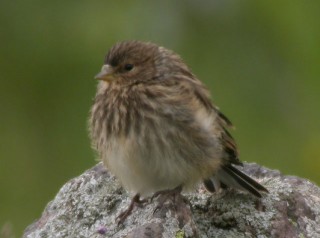
After almost 4 hours of climbing we reached the first top from where we had only 15 minutes walk to our tenting place which was on a grassy place a little bit lower on 2950 meters. We had planned to rest a little on the top but Toni noticed a beautiful male Great Rosefinch. The bird was very shy so it disappeared quickly but we all managed to see it well. And we forgot to rest.

So the last walk to our tenting place was easy. It started to rain again but we managed to see a couple of Great Rosefinches more. Soon we had the tents up and water, that Giorgi brought somewhere pretty far, boiling. Giorgi had really showed us he was exactly that kind of a guide we needed. He wasn’t that good on identifying birds but he really was at home in mountains! He had also been working with some mountain birds so he did know where to find some species for example Caucasian Black Grouses. And which was the most important thing – he was really good company!

Our tenting place was amazing! In front of us was 5134 meters high top of Mt Kazbegi, but still there were some clouds in front of the highest top. On the other side of canyon, that was between us and the top, was a big glacier which came down to 2900 meters. The grassy area where we were was full of different kind of flowers and lots of birds: a flock of Shore Larks (penicillata) was feeding close to our tent, Alpine Accentors were singing all around us and flying from rock to rock, Twites were flying around and Water Pipits were still everywhere.

After a short lunch break we heard the first Caucasian Snowcocks which were calling behind the closest tops, which were still inside a fog. Soon we heard and saw more Great Rosefinches too. Because of the weather was getting better we decided to walk higher. We left the luggage to the tents and took just scopes, cameras and drinks with us. We hadn’t walked long when we found the first Güldenstädt’s Redstarts! Two families were found from a rocky area and we managed to get really good views and also some hundreds of photograph of these really beautiful birds! It was interesting to notice that young males already had a white patch on the wings. Also local Black Redstarts were found in the same place. In the same time the last clouds moved away and the top of Mt. Kazbegi finally came visible. We were really having a great time! Perfect!

After one hour photographing the Redstarts, the mountain and the glacier we realized how tired we were. So we walked back to our tents at 5.30 p.m. to rest, eat, talk and finally when it started to rain again to sleep.

Hard walking

The 16th of July. The night was very windy and rainy but when we woke up at 5 a.m. it was nice to notice that there were almost no clouds and wind had stopped. But it was cold – only 9 degrees! Another tent was completely silent and because also birds seemed to be still quiet we decided to stay inside the tent and rest a little bit more and have some breakfast. Finally at 6 a.m. we had to get up because of a Great Rosefinch landed to a rock just 7 meters from our tent and started to sing! Unfortunately it left before Hanna had her camera ready.

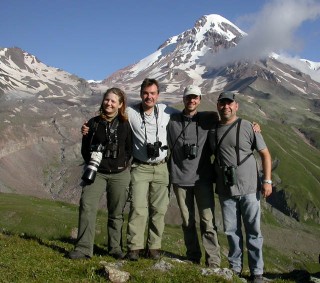
A couple of hours we were birding near our tents but all the birds were the same as in the evening: Shore Larks, Twites, Great Rosefinches, Güldenstädt’s Redstarts, Alpine Accentors but Caucasian Snowcocks were silent! So when the sun had dried our tents we packed everything and started to walk back down. On the highest place we saw a Great Rosefinch again and also heard a couple of Snowcocks calling behind the closest tops, but we couldn’t find any even though we tried to scope the rocky mountainsides carefully.

We walked some hundreds of meters down where the rhododendron bushes started and there we started to try to find Caucasian Black Grouses. We walked through all the bushes we found and all rocky areas near them but couldn’t find any grouses. Giorgi and I were walking most and we did find something else: a Wallcreeper was a lifer for me and Hanna! This amazing bird was seen several times in flight while it was moving higher and higher between the rocks. Also gorgeous Lammergeier flew pretty close to us, several calling Red-billed Choughs and flocks of Red-fronted Serins were seen too. But anyway we were disappointed not to find any Caucasian Black Grouses, but we had known that this species could be really difficult in this time of year!

But we had to give up because of we had to still walk a long way down to the church. We still walked some extra kilometres because of we checked some more rhododendrons on the way down but we had no luck. Walking was now extremely hard because of the heat! Sun was burning and at least we had some problems with Toni, Hanna and Oriol hadn’t got any problems. I think I had been running too much in rhododendrons.
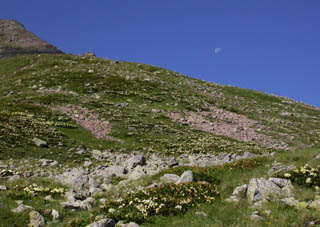
Finally we managed to get down to the church which was absolutely full of people! All the locals and for sure many from other places too had climbed to the church to celebrate the day of love! All the time there were more and more people coming by feet, by horses or by car. There were even some normal cars which I didn’t understood how it was possible! Our Pajero was already waiting for us and despite of all the people coming up we managed to get down to the village in 30 minutes. We got again some local food and then went to rest.

After a couple of hours sleeping we went first to the pineforest nearby to try to find a Kruper’s Nuthatch but we saw only some Tree Pipits ans a Rock Thrush. Then we continued to the same bushy area we had visited before. We put a mistnet up and a cd-player to attract Mountain Chiffchaffs. Oriol had promised to take measurements and handpictures of this species for a paper on identification of the Chiffchaff complex. First bird in the net was a Blue Tit but soon we had a Green Warbler, a Mountain Chiffchaff and a Marsh Warbler in the same time! Later we got another Mountain Chiffchaff.

At 8.45 p.m. we were back in our guesthouse and we ate again, had a shower, packed all our luggage and went to sleep!

Through the Georgia

On the 17th of July we woke up once again at 5 a.m. but the breakfast took some time so we left an hour later. We drove through the pineforest to the valley where Giorgi had heard many snowcocks and seen many grouses at spring, but we had no luck even though we really tried to scope all the possible places. Great Rosefinches were singing so we found a place where this species is possible to find without walking at all. Meadow Pipits and Red-fronted Serins were easy to photograph when they were sitting on a fences, but – no Caucasian Black Grouse from Kazbegi.

Soon we started our long drive through the country to Lesser Caucasus mountains. First 30 kilometres we drove again in the mountains and saw all the same birds as when we arrived: Snow Finches, Red-fronted Serins and so on, but nothing new. Now the weather was very hot and Pajeros backseat was really bad to sit!

We continued driving fast and the only tripticks were Skylark, Crested Lark, Crag Martin, Tree Sparrow, Honey Buzzard and Booted Eagle. When we turned to the mainroad between Tbilisi and Kutaisi there were quite a lot of traffic. Landscape here was more flat and there were lots of fields. The weather was hot and sunny so it wasn’t a surprise that we started to see some raptors. We found some Lesser Spotted Eagles, Long-legged Buzzards and an Eastern Imperial Eagle – Toni got 3 lifers in a couple of minutes! Also 2 Turtle Doves and some Bee-eaters were making our tripticklist longer.
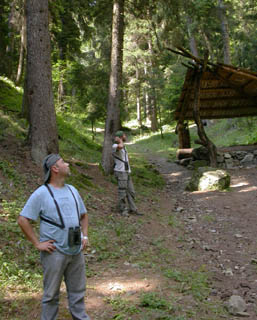
When we got out of the mainroad, and had seen the first Armenian Gull of the trip, we started to feel hungry. Tony was probably still satisfied because of his 4th lifer of the day, but anyway we had lunch in an idyllic restaurant along the road. After the lunch we continued driving and soon the landscape changed to mountainous pine and spruceforests. Soon we arrived at Borjomi nationalpark where we stopped again. Giorgi had asked his friends where we could find a Kruper’s Nuthatch and soon we parked to a parking place of one public park that was absolutely full of people! We almost gave up but then we heard a singing Kruper’s Nuthatch even though we were still sitting in a car! We jumped out as fast as possible but we only heard this bird a couple of times more before it disappeared. We tried for some time to play cd and attract the bird to came back but soon there were too many people looking at what we were doing so we had to give up. But it’s good we heard it! We don’t have to see a species to get a lifer, for us Finns hearing the bird is as good.

We tried to find Kruper’s Nuthatches in some other places in the national park and visited really good looking forests but we found only some Goldcrests and a Goshawk.
At 5 p.m. we were finally in the city of Akhaltsikhe (“New Castle”) where we had two rooms in a really nice guesthouse. We were relaxing in our room when we heard a call of a woodpecker outside and soon we saw a Syrian Woodpecker flying in front of our balcony. 2 hours later we went to have a really good dinner in a local restaurant (5 different kind of meat, fried potatoes, vegetables and bread was about 20€ for all five of us.) About 9.30 p.m. we were ready to go to sleep.

It rains in Zekari

The 18th of July. We woke up at 4 a.m. and a half an hour later we were on our way to Zekari – Lesser Caucasus. It was raining and even flaming but we managed to see 2 Nightjars and a Scops Owl from the car. Giorgi was driving quite fast even though the roads were again really bad! The first 30 kilometres were still ok but when the road started to climb up to the mountains the road was extremely bad! And in a map it was told to be a mainroad! In Finland that would be marked as a ditch!

At 6.30 a.m. we thought that we had reached the place where we could try to find Caspian Snowcocks, but after 1 kilometer walking Giorgi realized we were in a wrong place. We haven’t driven high enough yet. Anyway the forests underneath us were productive: we heard a Black Woodpecker and a Great Spotted Woodpecker calling, Common Crossbills and Bullfinches were flying around and the views were beautiful.

When we were walking back to the car it started to rain and soon a thick fog surrounded us. Anyway we tried to keep on going higher but very soon Giorgi realized we were on a wrong road! When we finally found the right road (so called main road) it was raining so hard that we had to give up and drive lower because of we were afraid of the road could wash out behind us.

After an hour of waiting the rain stopped, so we drove back to the place we had been and continued by feet. Now we could finally see the highest top which was the place for the snowcocks. It was hardly visible behind the clouds. But while we were walking the fog covered again everything and we had no idea how far the cliffs were or where we were. When we had walked about 3 kilometres, Giorgi thought that we had reached the place where we could try to find Caspian Snowcocks.
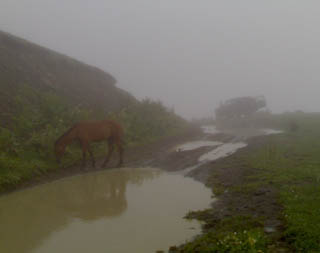
We found some birds even though the fog was so thick that we could see only some meters: Whinchats, a Garden Warbler, Red-fronted Serins and Alpine Choughs but Caspian Snowcocks were quiet and it was impossible to go to try to find Caucasian Black Grouses because of we couldn’t see anything – not even rhododendrons.

So we were just waiting for the weather getting better or snowcocks to call. We were all in pretty bad mood because of we had been driving whole last day only to reach this place and this was the only day here. After a long waiting I got frustrated and decided to go to walk to the slippery bushes to find at least something. Hanna came with me and Giorgi decided to have a look around to make sure we were in a right place. It was still so foggy that we couldn’t see the mountain which was supposed to be very close to us! We had walked maybe 50 meters, just behind one cliff when we heard a Caspian Snowcock calling somewhere quite far! We shout the Catalans to come quickly, but the bird stopped calling! Next 2 hours we were waiting for the snowcock to call again but it never did even though the weather was a little bit better.

But then the rain started again and very hard. Also the fog became so thick that it was impossible to see anything. So we had to start walking back to the car because of the road was getting very wet and muddy. So after all we couldn’t even try to find the Caucasian Black Grouse from the rhododendrons.

Lower in the forest the rain stopped again so we stopped several times to try to find some forestbirds, but nothing interesting was found – some Rock Buntings. Down in the valley we found some Dippers from the river and before Akhaltsikhe we had a short stop in the middle of a big field where we saw 2 Stock Doves and a huge flock of Jackdaws. Finally we were in our guesthouse at 6 p.m. We had had really unlucky day!

To Armenia

On the 19th of July we were sleeping until 6 a.m. and a half an hour later we were ready to continue our journey. Our first stop was made to the river in the centre of Akhaltsikhe where Oriol and Toni had been walking last evening. They had seen some tripticks and also now we heard a Kingfisher, a Common Sandpiper and saw a Hobby and several Olivaceous Warblers. But we had a long drive to Armenia border and we had to drive to the easternmost border crossing place because of the roads to the closer place weren’t drivable.

We stopped again in Borjomi but we couldn’t find a Kruper’s Nuthatch. Now there were almost no people in the park so we used the cd-player in many places but we could find only some Nuthatches, Coal Tits, a Marsh Tit, Treecreepers and so on.

From the mainroad we saw again some Lesser Spotte Eagles but we had no time to stop. We had to be on the border in the afternoon at 3 o’clock. A Middle Spotted Woodpecker was crossing the road somewhere but we didn’t stop before Giorgi turned to the lake Dzendar. We had been driving so fast that we had time to check this lake.

Giorgi drove along a small track and also on a field and soon we noticed that the bushes around us were full of birds. We stopped and saw many Lesser Grey Shrikes and Black-headed Buntings on the top of the bushes and Golden Oriole families were calling in the trees. We got some really good pictures. But soon we had to continue to the lake to see if there could be more birds and there were: Armenian Gulls, some Ruddy Shelducks, Green Sandpipers, Crested Larks and some Isabelline Wheatears were found right away, Black-winged Stilts were flying around us, Little Stints, Wood Sandpipers and a couple of Greenshanks were found from the shore and 3 Pochards were swimming on the lake. Over the marshes there was a Marsh Harrier soaring and Kingfishers were flying over the lake. A Great Reed Warbler came to the nearest bush and a big flock of Wood Pigeons and smaller flock of Starlings were also seen. Very nice, but soon we had to continue to the border!

We reached the border crossing place about 3 p.m. and everything was easy (we got the visa easily once we had paid 30$) so we were soon in Armenia. It was easy to notice that we were going south, it was really getting hot! When we had walked to Armenia we realized our driver and translator weren’t there even though they had called to Giorgi that they should have already been there some time ago. Finally at 3.40 a green local type of minibus arrived and we met our driver Artur Asryan, who didn’t speak English (but hopefully knew the birding places) and translator 21-years old Artak Galayan.

We left directly to drive towards Yerevan and our driver told (Artak translated) that there were no birding places on the way. Anyway we started to keep Armenia list and some of the first species were Red-backed Shrike, Golden Oriole, Lesser Grey Shrike, Bee-eater, Hoopoe, Common Buzzard, Booted Eagle, Jay, Stonechat, Collared Dove, Turtle Dove and even Blue-cheeked Bee-eater!

After an hour driving we stopped to a viewplace to eat something that Artur and Artak had with them. We Finns weren’t able eat cold meat so we didn’t touch them but the “lavash” bread and cheese were good.

We stopped again when we were on the highest place on the mountains and saw some Red-fronted Serins, Dippers (caucasicus), Grey Wagtails and Common Rosefinches, but soon we had to keep on going – we had still a long way and our car wasn’t very good with uphills.

Finally we arrived at Yerevan and after some shopping we parked in front of a high building. We went by an elevator to 7th floor where we had two rooms in Artur’s brother’s apartment. Food was already on the table and it was really good! But after eating we had hoped to go to sleep but Artur decided to do all the business first. Even though everything should have been organized with Zhanna by email we had to do everything again! It took several hours so my watch was already 00.30. a.m. but when I checked the time from the wall I understood it was even 1 hour more! In Armenia they had a summer time which they didn’t have in Georgia! (Nothing was told in any tripreports or Lonely Planet book!) But now we realized that our guides had been almost 2 hours late on the border, so we were little worried… Well, finally we had done the business and we told to Artur and Artak that we’d like to leave very early on the next morning because of we knew the next day would be one of the most interesting days of our trip! We wanted to leave at 6 a.m.

Armash fishponds are full of birds

On 20th of July we woke up at 5.30 a.m. and managed to leave at 6 a.m. Even though Artur had told, with help of Artak, that it wasn’t possible to get in to privat Armash fishpond area before 8 o’clock, we had decided to get as close to the place as possible. On the way we got also explain why our guides had been late on the border – they had had some problems to get us a permit to get in to the Armash fishponds. And that was sure the best reason to forgive them – it was so important to get in this place! We knew this could be the most interesting birding place of the whole trip.

Before the fishponds the views were changing radically: dry halfdesert ended and first there were lots of fields but later just big reedbeds and some water pools. Turkish border was only a couple of hundreds of meters from the road and further there was Mt. Ararat which is the highest mountain of the Turkey (5165 meters). We stopped to one bridge from where were good views over the reedbeds and fields. There were amazing numbers of birds: Pygmy Cormorants were flying to all directions, White Storks were standing on the fields, Glossy Ibises were flying around, Purple Heron flew over the reeds and Savi’s Warbler was singing in the middle of insects that had very similar, but not that strong, voice. In the bushes in front of us there were a family of Ménétries’s Warblers and a Rufous Bushchat was fighting with them. Moustached Warbler was singing on the reeds and the wires were full of Bee-eater. Many flocks of Starlings were flying and in some flocks there were Rosy Starlings. It was difficult to decide where to watch because of there were birds everywhere! And we weren’t yet on Armash fishponds!

After buying something to drink and seeing a Syrian Woodpecker we reached the fishponds at 8 o’clock when it was possible to get in. Fishponds were a big complex of pools so we were a little bit worried because of we had no idea what to do – how to handle the place? And then Artur just stopped and told us that now we were on the place where all the groups of Vasil started to walk. Artur had just been a driver for the groups and he did know the birding places, but now we realized that was all he could do. He had no idea about how to find the birds and what birds to find.
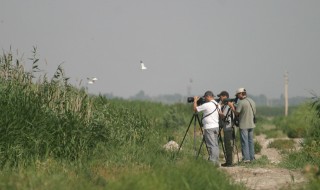
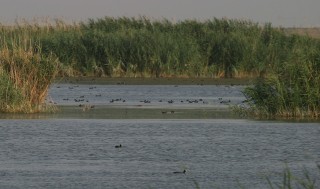
So we just started to walk to that direction where we saw the first pools and then we planned to continue as far as it was necessary. The first pools were full of Coots, Little Grebes, Ferruginous Ducks, Red-crested Pochards, Great Crested Grebes, Gadwalls, Moorhens and so on. Whiskered and White-winged Black Terns were calling and flying around and also all wires were full of terns. Little Bitterns were flying over the reeds and landing back inside the reedbed soon, Marsh Harriers were soaring and Purple Herons, Cattle Egrets, Little Egrets, Great White Egrets and Night Herons were seen too. Soon we saw a warbler landing to the reeds in front of us and luckily it was a Paddyfield Warbler! The first project species was found! While we were watching the wp-tick warbler another warbler was found from the same place and it was identified as a Moustached Warbler.

And the next pool was as good: We found the first female White-headed Ducks and Marbled Teals, reeds were full of Bearded Tits, Great Reed Warblers and Reed Warblers. Lesser Grey Shrikes, Ménétries’s Warblers and Rufous Bushchats were also really nice to watch. Soon the pools started to be dryer and there were not many birds so we decided to walk back to the car because of we had no idea how many places we had still to go in the area. But now we tried to solve out what was the plan for the place so Artak was busy to ask more information from Artur. Soon we drove only a couple of hundreds of meters and Artur told that now we were on the another place where the groups have used to walk.

Fishpools had still the same species, some Marbled Teals more but on the right side of us was a dry semideserted area with some dryer pools and the birds were totally different. Greater Short-toed Larks and Turkmenistan Short-toed Larks were running between the low plants, Collared Pratincoles, Avocets and Black-winged Stilts were flying around us. Kentish Plovers and Lesser Ringed Plovers were running on the waterline with Common Sandpipers, Redshanks, Wood Sandpipers, Little Stints and some Ruffs. Some Black-headed Gulls passed us but also here the only common gull was an Armenian Gull. Some Little Terns were also seen, an Osprey was carrying a fish and on the left side of us on the pools there was an albino Little Grebe swimming and diving. Also a strange duck was digiscoped but we haven’t identified it yet – it could have been a hybrid between a Marbled Teal and a Mallard or something like that.)

The weather was getting very hot and the temperature had rose up to 37 degrees, but we kept on going. With scopes we could see that about 2 kilometres from us there was a sandy dyne that was full of nests of both bee-eaters. So we decided to walk until the dyne to get some pictures of Blue-cheeked Bee-eaters. After some walking we finally found what we had been looking for – a White-tailed Lapwing youngster was standing just some 30 meters from us on the dry mud. We managed to get a couple of pictures before it flew around us and landed further. We had been expecting the species to be found but we had thought that it could have been easier – there should be 15 pairs breeding in the area! Probably the breeding season was over so the birds were somewhere else. We saw only this and soon another young bird. Later we saw still some Rollers, a Stone Curlew, a Short-toed Eagle, a couple of Penduline Tits, a Woodchat Shrike and some Reed Buntings (caspia).
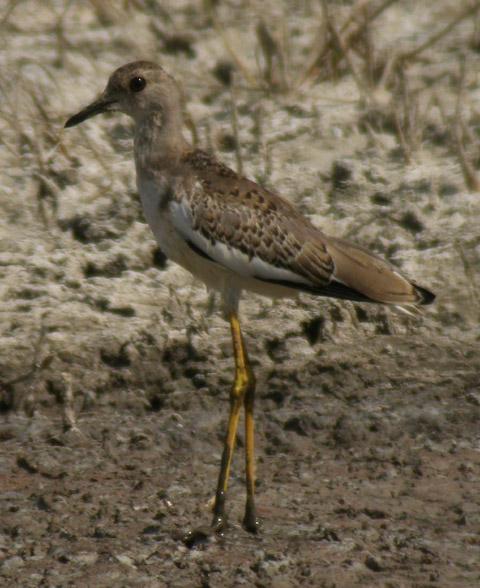
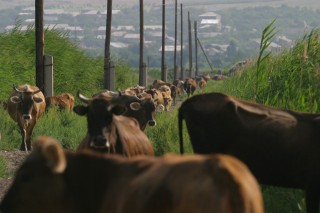
After all we had to turn back before the dyne because of there were several too wide ditches between us and the Bee-eater nests. So we had to walk back to the car. Even though the sun was burning very hot we were happy – we had seen all the important species that we had known to be possible to find!

And more lifers

It was only a mid-day so we had still another very important place to go, Vedi. Vedi was even more important place for wp-ticks and lifers than Armash. After less than an hour driving we turned to a small sandroad, which led us to a dry valley. Already from the car we saw the first couple of Finsch’s Wheatears and some Isabelline Wheatears, but we wanted to go directly to the main place. The main place had steep cliffs on both sides and a small stream was going down on the road. The spring was in front of us inside the bedrock. This was a drinking place for several wp-rarities – the most important species was a Mongolian Trumpeter Finch. This was the only place to see this species in Armenia.

Lots of Crested Larks were flying around and calling weirdly. Many Crested Larks were also running on the road and drinking. Several flocks of Rock Sparrows were found, and soon we got a lifer when the first Grey-necked Bunting was found. The bunting came to the cliff but soon it flew down to the road to drink. Soon we found also a couple of Eastern Rock Nuthatches that were flying around and calling very actively. The excitement rose to the next level when some Trumpeter Finches landed to the rocks where they were really difficult to locate. We were checking them really carefully but they were all just normal Trumpeter Finches – males, females and young birds. But we got a lifer again a little bit lower along the valley when we found a Pale Rock Sparrow from the flock of Rock Sparrows that were in a shadow. But somehow Toni was late when the bird left with some Rock Sparrows and a couple of Black-headed Buntings. From the bushes nearby we found several Upcher’s Warblers which were also lifers for Toni and Oriol.
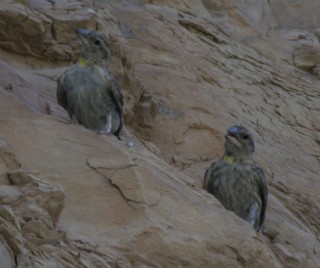
When we were again watching the cliffs near the spring, Oriol found a passerine perching on the cliff. We got it to our scopes but first we had no idea what we were watching: the bird was clearly a trumpeter finch but smaller-billed and paler-billed and a little bit streakier from the breast. I started to digiscope it but then it landed down to the spring so we couldn’t see it. We shouted to Hanna and Toni to come and look at the bird and started to walk closer to see it again. Soon the bird was flying and we could see big white patches on the tail and 2 clear wingbars – there it was – a young Mongolian Trumpeter Finch! While we were celebrating we realized Toni wasn’t there, we hadn’t realized he had gone earlier to get something from the car and he hadn’t heard our calls! Shit!
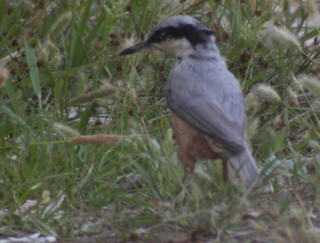
So we were waiting for the Mongolian Trumpeter Finch to come back but even though we tried for several hours it never came again. The weather was really hot and all the other birds were coming to drink: Eastern Rock Nuthatches, Blue Rock Thrushes, a couple of Tawny Pipits, Rock Sparrows, a couple of Finsch’s Wheatears and of course many Trumpeter Finches. Also some Chuckars were calling on the top of the cliffs and a Long-legged Buzzard was soaring on the sky. Finally at 6 p.m. we gave up – we were already really tired. But we were sure we would come again. When we were leaving and driving in the end of the valley we saw a pale bird on a rock – a Pale Rock Finch! We all were smiling again, when Toni got this lifer he had missed earlier. Also a Golden Eagle was flying over the valley so an amazing day had got a good end.

After an hour driving we finally arrived at our apartment and after a shower and lunch it was good to go to sleep at 9.45 p.m. The day had really been great, I had got 7 wp-ticks.

Lake Sevan and many mountains on the way to south

On the 21st of July we woke up at 6.30 a.m. and after the breakfast we packed almost all our luggage to the car because of we were leaving for a 4 days trip to southern parts of Armenia. But first we started to drive north to Lake Sevan. Our trip almost ended before it had really started because of there was something wrong with our car. Luckily Artur managed to fix the problem and we could keep on going.

After a couple of hours driving we stopped to Sevan city to get some more money. Surprisingly the bank couldn’t give us any, neither with the Visa nor by changing dollars or euros! What a bank! Luckily we managed to change some money with the help of some locals on the street. A bigger surprise was that one of the men was Artur’s wife’s brother.

The first birding stop was made on the coast of Lake Sevan that is a big lake 1900 meters high. This is the lake that has most of the Armenian Gulls of the World. So on the first stop we saw many Armenian Gulls but also a couple of Caspian Gull type of gulls. A Ruddy Shelduck was flying far on the lake, a Little Ringed Plover was running on the shoreline, Coots and Great Crested Grebes were swimming, a couple of Mountain Chiffchaffs, at least one Chiffchaff (was calling – hiiit, whatever race?) and some Penduline Tits were found on the forests and Black-headed Yellow Wagtails from the bushes. Again we weren’t sure which birds could be found on this place but the smell of dead fish that came from the shore (which was full of dead fish), hard wind and that there weren’t really interesting birds made us to leave pretty soon. The next place was the place where was the biggest colony of Armenian Gulls of the World. So we were photographing gulls as long as was needed. Some Ruddy Shelducks were feeding on the shore but nothing else was found.

We continued to Lake Lick, which we had never heard. It hadn’t been mentioned in any tripreport, so we had no idea what to find. Anyway the place looked good – there was a small lake surrounded by fields and some small forests and many good looking bushes. So we decided to walk around and try to find something.
From the lake we found some Pochards and Tufted Ducks, a flock of 8 Garganeys were flying around the lake but they never landed, 5 Grey Herons were flushed from the shore, a Penduline Tit was found from the reedbed; but nothing really interesting was found. We also walked through the bushes but only Common Rosefinches, a Marsh Warbler, Golden Orioles, Common Whitethroats and many Red-backed Shrikes were found. The forest was even quieter: a Treecreeper and some Mountain Chiffchaffs only. While Hanna was photographing Sand Martins on their big colony a Goshawk flew over us. Soon we were ready to continue our long way.

Soon the road climbed up to the mountains again. Highlands were full of Skylarks, Wheatears and so on, but even though we tried quite a lot we couldn’t find anything better. I started to have bad stomach-problems so the others got some extra stops in good lark-biotopes. So Oriol and Toni managed to see an Asian Crimson-winged Finch flying, also some Shore Larks were found. When we continued all the buzzards were now Long-legged Buzzards. On Selim Pass we stopped again, like all the groups had done before us, but there weren’t that many birds – some Whinchats, a Black Redstart, a Blue Rock Thrush, an Ortolan Bunting and a Peregrine Falcon. But those groups that had been there on spring had seen more.

Lower we managed to find a couple of Finsch’s Wheatears and Syrian Woodpeckers, but finally at 8 p.m. we arrived at Yeghenaghor where we had rooms from a nice guesthouse Gayane. We had a great lunch and 10.30 p.m. we were ready to go to sleep.

And more south

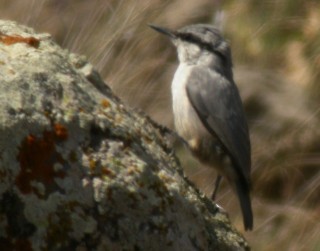
The22nd of July. The breakfast was at 7 a.m. and soon we were in the car and driving south again. The first stop was made when Artur told that we were in a place for some bird. The place looked like a rock nuthatch and that’s what it was: right away we heard calls of both rock nuthatches and when we had first found 5 to 6 Eastern Rock Nuthatches we finally found 2 Western Rock Nuthatches too. All the nuthatches were flying high on the cliff and from rock to rock very fast. We also found a couple of rock nuthatches nests that were only a couple of meters from each others. The size of the holes told that the neighbours were probably different species but we saw one Eastern Rock Nuthatch and one Western Rock Nuthatch having a good look into another of the nests. Probably the nests were already empty but these birds were just checking them. On the same place Oriol and I saw a male White-throated Robin briefly but the bird and the bush where it disappeared were very high and far on another side of 2 big rivers, so we couldn’t get closer.

The next stop was made to a man-made lake in Goraik. Many Long-legged Buzzards and Lesser Kestrels were seen and we found also a building where the Lesser Kestrels were breeding. Unfortunately it wasn’t possible to go to photograph these birds because of the building was surrounded by fences. A Cormorant was perching on a rock on the shore of the lake and some Armenian Gulls were flying but nothing else was found. Artur told that in spring the lake was always full of ducks.

The next stops were made because of raptors that were soaring above the road: Long-legged Buzzards were common but some Lesser Spotted Eagles, a couple of Short-toed Eagles and higher on the mountains also 6 Egyptian Vultures were seen. Between Sisian and Goris we made a stop to a historical place where was a local “Stonehenge” that had been build during the stoneage – many rocks that had a hole on the top of them and some star or planet could be seen through each holes on exact time of the year. In this place we saw also 2 Lammergeiers and 2 Griffon Vultures but also 2 Western Rock Nuthatches.

When we were having a break and eating some bread, cheese and fruits we heard some Blackcaps singing and saw some more vultures soaring above the rubbish tip of Goris. Later we had a short stop to a small forest where Green Warblers were singing. A Spotted Flycather and some Long-tailed Tits were also found as a tripticks.
After driving a long time following the borderline of Azerbaijan we finally arrived at Kapan. At 6 p.m. we parked to our hotel which was some kilometres south from the city. The hotel Gandzasar was on the side of a forested hill, and it normally was a private resort of a mining company. We were warmly welcomed and got the keys to our rooms but the locks were really complicated! The numbers in our keys and the room numbers weren’t the same. And sometimes the locks were easy to open and sometimes not. The rooms were ok, but the toilets weren’t working – there was just water going through.

After a couple of hours rest we went to have a lunch to a restaurant nearby. It was already dark when we came back to our hotel. Quite near the hotel in the forest there was a Tawny Owl calling.

To Megri and the border of Iran

The 23rd of July. Again we had an important day. The reason why we had been driving south had been to get to Megri which is on the border of Iran. So we woke up 5 a.m. because of we had still a couple of hours drive to Megri. I was feeling really sick! It was very hard to sit in a car when we drove again up and down over a couple of mountains. When we finally were driving down from the last mountain and the landscape was getting green I had to get out of the car and do a little walk to the bushes on the riverside. When I started to feel a little bit better I realized there was a Semi-collared Flycatcher on the next bush! All the others were sitting in a car so I had to whistle very hard that they understood I had really something interesting. Oriol and Hanna were almost running so they managed to see the flycatcher but Toni missed it – the bird flew inside the bush and somehow it disappeared and wasn’t found again.

At 7 a.m. we arrived at Megri. We met a local man who came with us because of without him we couldn’t have been able to go to the border area where our target birds were. I think he came also to watch that we wouldn’t do anything stupid on the border area and that somebody wouldn’t do something for us. Soon we parked after him to a dry valley and Artak translated that this was the place to find a “small chicken”.

When we had got instructions which way to go and where it wasn’t aloud to go, we started to walk up to the valley. Soon we heard some Western Rock Nuthatches and Chuckars and saw the first Blue Rock Nuthatches. And soon we found the first Persian Wheatears! While we were trying to photograph the wheatears we heard a Spotted Crake-like call somewhere up from the top of the mountains – a See-see Partridge!
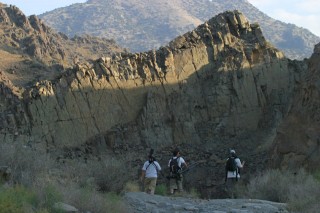
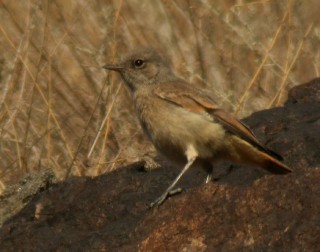
Even though the morning was still early we realized that we could never walk to the See-see Partridge that had been calling – the mountain was too steep and the bird was too high, we should try to find another one. At least I was in too bad condition to climb very high.

We were walking in the valley for a couple of hours more and we found several Persian Wheatears, some Eastern Orphean Warblers and Eastern Black-eared Wheatears, a Short-toed Eagle was eating a snake, but again we just heard a See-see Partridge a couple of times – again very high from the top of the mountains.

About at 11 a.m. we changed to the next place which was a tree that Artur told was a nesting tree of some bird. We guessed the bird must be a Levant Sparrowhawk but we couldn’t find any birds. The breeding season was already gone but luckily we managed to find the family of Levant Sparrowhawks about a kilometer from the right place. I saw also briefly a strange bird flying across the road, it was probably a Black Francolin, but I didn’t see it well enough.

Then we continued to the next dry valley, but now also Toni had became sick. So we just had a short walk in the valley and saw a Chuckar with its chicks, some Eastern Black-eared Wheatears and a couple of Lesser Whitethroats. We were really burning and drying it was so hot and we were really sick with Toni, so we decided to start to drive back to Kapan.

We made several stops in the beginning because of we tried to find a Sombre Tit, but we had no luck. But Toni found a Semi-collared Flycatcher which was really good because of he had missed the first one. We were joking that the best biotope for the Semi-collared Flycatcher seemed to be that bush where you were going because of the stomach flu.

The weather was getting extremely hot so Artur advised us to leave before it would be too hard to climb up the uphills for his car. And he was once again right, Artak had to pour cold water to the cooler that was boiling several times. Luckily we managed to get back to our hotel but now also Oriol had became sick. We were all so tired that we just went to sleep while Artur and Artak left to have lunch to the restaurant.

After 3 hours sleeping we drove to Kapan to try to find a place where we could eat something light. But all the restaurants had some kind of parties or then they were offering just barbeque. So we drove back to our hotel to sleep – I think I couldn’t have eaten anything anyway.

Long way back to Yerevan

On the 24th of July we slept long. Well I woke up an hour earlier at 6.30 a.m. and had a short walk on the forests around the hotel. Green Warblers were everywhere but otherwise it was very quiet: some Nuthatches, Chaffinches and Tree Pipits. Hanna saw a Semi-collared Flycatcher from the balcony.

An hour later we started our very long way back to Yerevan. Oriol and Toni were already feeling better but I was still sick and we were all extremely hungry! We saw again quite a few raptors on the way but we stopped only if they were close enough to photograph.

Finally at 1.45 p.m. we stopped to eat to a quite horrible restaurant which had nothing else to offer than barbeque – but we were too hungry so we had to order. Of course chicken, sheep and pork barbeques with fried potatoes were really good but too heavy for us.
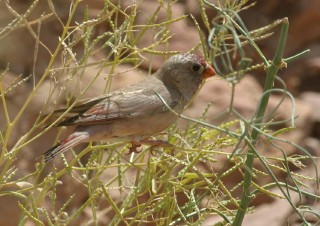
After the lunch we all were in a better mood and we continued following the Nakhichevan (an exclave autonomous republic that belongs to Azerbaijan) border to Vedi. We spent 3 extremely hot hours in Vedi suffering the heat and dehydration. Of course we saw many interesting birds like Eastern Rock Nuthatches, Grey-necked Buntings, Finsch’s Wheatears, Eastern Black-eared Wheatears and about 20 Trumpeter Finches but no Mongolian Trumpeter Finch. The only triptick for the day was a Little Owl that we saw when we had just started to drive to Yerevan.

When we were finally at our apartment, nobody was hungry but we ate something to be polite. Soon we were all ready to go to sleep. We had had a long and hard day!

To Mount Aragats

On the 25th of July we woke up late and because of the breakfast was also late we managed to leave only at 8 a.m. We started to climb by car up to Mt. Aragats only an hour later so we really afraid to be late! Artak had told us it would be cold up on the mountains, but it was easy to notice that the day would be really hot – so we really were late.

Artur drove higher and higher and we had no idea where we were going and what was the right biotope for birding because of it looked like a good biotope everywhere. Finally Artur stopped and Artak translated that we were on the main birding place.
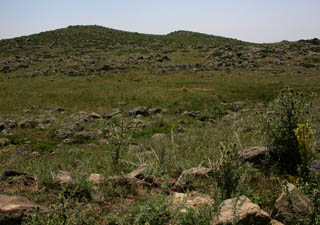
The area had lots of low junipers and those had lots of birds: right away we found several families of White-throated Robins, many Ortolan Buntings, Wood Larks, some Bluethroats and Tree Pipits. White-throated Robins were really beautiful but almost all were females or young birds. Only a couple of mails were seen briefly. Soon we started to walk between and through the junipers because of our target bird was a Radde’s Accentor and usually Dunnock-kind of birds are not easy to find if they aren’t singing and now it was probably too late. The first Radde’s Accentor was found by Hanna who was walking along her own patches like usual – so we couldn’t find it anymore when we reached the place. The second was found by Toni but again the bird disappeared. Finally I heard a short birdsong from the juniper that I didn’t identify. I told the others to come and soon a Radde’s Accentor came visible to the top of the juniper and we could see it well!

A couple of hours more we walked in the junipers but nothing new were found. We were a little bit disappointed because of we had came so late, birds might have been singing in early morning. And when the bird is singing its not only easier to locate but also to photograph. Anyway we decided to put up the mistnet and try to catch a White-throated Robin to get measurements of this species. Oriol and Toni put the cd-player to attract the species. After 30 minutes there were just several White-throated Robins close to the net but not in it. Then we decided to try to push the birds to the net. Hanna was on the one side of the net and I was on the another side and tried to push birds to the net and after 5 minutes we had 5 White-throated Robins in our hands – one adult female and 4 young birds!

We found also a couple of Radde’s Accentors from the bushes near the mistnet so we tried to catch those too. We had only Dunnock on our cd so we played it. Surprisingly soon there were a couple of Radde’s Accentors close to our mistnet, but we didn’t catch them. 2 Asian Crimson-winged Finches were seen again flying very fast and later one more from the car when we were driving a little bit higher.

We drove as high as it was possible to drive by Arturs car – we had thought to get even higher to see some mountain species as Armenia-ticks, but this place where we went wasn’t high enough. Only a big female Peregrine Falcon was seen. It was good we had been in Georgia where we had already seen these species – otherwise we would have missed them. Normally the groups had a 4-wheel drive arranged for the mountain days.

While we were driving down we saw the same species as when we had come: Ring Ouzels, Rock Thrushes and a Booted Eagle but even though we stopped several times in good biotopes we couldn’t find the bird that Toni and Oriol desperately wanted to see – a Barred Warbler.
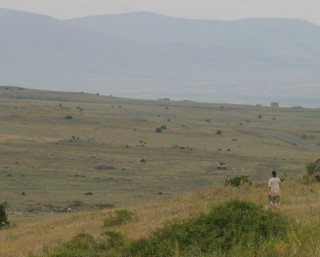
We were almost down when Artur’s phone rang – it was Vasil Ananian, that real birdguide we had tried to contact for entire visit to ask some advices of which places were for which birds… But we had tried to contact him also because of we had planned to do some ringing with him on the next 2 days. Now Vasil told that he couldn’t make it because of he had to keep on fieldworking in Kapan mountains. (We knew beforehand that it might be possible that he couldn’t join us.) Even though the line was really bad Oriol managed to ask Vasil about the places where to try to find a Barred Warbler and also a place for a Bimaculated Lark which was also still missing. And luckily both birds were possible to find in Aragats.

So we turned back to the mountains and drove just some kilometres further than the place where we had been the whole morning. There was a valley with many wild rosebushes. This was the place to try to find Barred Warblers. Vasil had even told they should be easy! Well I was quite sure a Barred Warbler can’t be easy if it isn’t singing, so it wasn’t a surprice that it took some time to locate one. But when we found a Barred Warbler we found several. They were again, like always, with Red-backed Shrikes! Also a male White-throated Robin was seen.

Next we drove again down and then turned to a different road that was leading to Yerevan. There were several places to try to find a Bimaculated Lark, but Vasil had told that the species is really early migrant so it might be migrating already. So we walked for 2 hours around different kind of meadows and fields but saw only Skylarks, Wood Larks, Corn Buntings and Tawny Pipits.

Finally we gave up and continued to drive to Yerevan. Surprisingly we saw on the way the first flocks of Rosy Starlings all flying to same direction. We had been wondering where these birds were because we had thought them to be common. In Yerevan we still saw a couple of Laughing Doves from the car. And at the apartment we had again a great lunch before went to sleep.

Once again – Vedi

The26th of July. Even though the plans had changed because of Vasil wasn’t able to join us, it wasn’t difficult to find something to do. We still needed to get the Mongolian Trumpeter Finch for Toni. We woke up early and were driving towards Vedi already at 6 a.m. It was the first time we were going to Vedi at good birding time. We saw the same Little Owl again but in Vedi there weren’t as many birds as we had expected. Actually there were much less birds than on our previous visits. More than 3 hours we tried to see the Mongolian Trumpeter Finch – we were really just standing still and waiting for it to come to its favourite place where we had seen in with Oriol and Hanna and where also Vasil had said it uses to come to drink. But we saw only all the other species we had seen before and the number of individuals were smaller. But we were lucky to see a flock of 16 Bimaculated Larks that flew a couple of times around the valley, landed shortly and then disappeared. These birds were really migrating!

A Little bit too late we put up the mistnet to catch an Upcher’s Warbler. Anyway we managed to catch 2 Upcher’s Warblers and an Eastern Orphean Warbler. Earlier we might have caught also Grey-necked Buntings and Eastern Rock Nuthatches? I must say I don’t really like disturbing birds and catch them without ringing, but this time Oriol and Toni had really reasons to catch all these species we caught.

So the Vedi was this time a disappointment because the Mongolian Trumpeter Finch wasn’t found. When the temperature was 33 degrees we gave up and decided to drive back to Yerevan. We visited a tourist information centre and bought the books Birds of Armenia (which is really good) and soon we were resting in our rooms.
We slept until the evening and then we had a really good parties – it was our last day but also a 18th birthday of Arturs oldest son. So we ate a lot and drank Armenian cognac, wine and vodka. Artak drank like a bigger man and there was a time we had to survive without a translator – but we didn’t care. Toni was speaking Catalan and Artur Armenian but they both understood each others well enough! Soon Artak was back and we celebrated late until the midnight. Then we birders were too tired and we really had to go to sleep.

Back to home

On the 27th of July about at 7 a.m. we started our way towards Georgian border. We had planned to stop near the Lake Sevan to some forests to find a Chiffchaff. Some people had asked Oriol to catch not only a Mountain Chiffchaff but also a Chiffchaff and take measurements of it because it wasn’t known were the local Chiffchaffs an own race or not. And Vasil had told some places where we could possibly find Chiffchaffs. So we stopped many times but couldn’t find any – they had stopped singing and were really difficult to find. So we gave up pretty easily and because of that we were on the border far too early at 3.50 p.m. On the way the only observations had been a Sparrowhawk and a Hawfinch – both tripticks.

We crossed the border easily but it was really hot again! There was no place to go to shadow. So I who had been really sick for many days, started to feel really bad. Luckily Giorgi arrived early and we started our way to Tbilisi with all windows open.

We had lunch on a really good local restaurant in Tbilisi (I was just drinking several litres) and then we went to Giorgis friends apartment. This friend wasn’t there but his girlfriend was and she didn’t speak English at all. Well only Oriol and Toni were staying there one night, we were leaving back to Finland already at night.
At 10 p.m. we said goodbyes to Oriol and Toni and continued to Giorgis temporary place (he was just looking for a new apartment because of he had just arrived from U.S.) and we managed to sleep 2 hours before Giorgi drove us to the airport at 2 a.m.

At the airport we still talked for an hour with Giorgi who was waiting for his friend to arrive from Germany by our plane. Our flight to Riga left at 4.30 a.m. once again a little bit late. We landed to Latvia at 7.10 a.m. (already Finnish time). There we had to run to our plane to Helsinki which left only 15 minutes later! Finally at 8.45 we landed to Helsinki. Luckily our luggages had also managed to change the plane and soon we were on our way to Kirkkonummi to my parents.
Meanwhile in Georgia Oriol and Toni were going to do some ringing to some lake with another Giorgis friend. So Giorgi had really saved our last days because of nothing else had been arranged than the drive to the airport! Thanks again Giorgi! Everything had gone perfect!

Some advices

Together in Georgia and Armenia we observed 213 birdspecies, which was a good number this time of year when most of the birds were already quiet and autumn migration hadn’t yet started. We also hadn’t got a real birdguide helping us to find the targetbirds, we had the second best choise for us but I am quite sure it isn’t enough for most of the birders!

In Georgia we observed 124 species and in Armenia 186. Only real targetbird we missed was a Caucasian Black Grouse and from Catalans list we missed a Sombre Tit too. We got both 19 lifers and 21 wp-ticks. Oriol got 19 wp-ticks and Toni got 38!

We managed to stay easily in our budget which was 2000€ per person – I think we were closer to 1500€. Of course the most expensive part were the flying tickets (about 500€ person), guiding and car in Georgia weren’t cheap either (altogether 1400€), guiding in Armenia was cheaper but the biggest reason was that we were now having a driver and a translator – not real guides. Overnight with a breakfast and a lunch was everywhere about 20€ per person.

The trip was really superb, even though beforehand we were really worried about the level of guiding. But after all everything went pretty well. But for sure everything would have been many times easier with real birdguides. We really advise all the groups that travel to these countries to have a real guide! For sure Ramaz can organize a guide to Georgia and for sure Giorgi is a perfect guide to mountain, but in Armenia for birdwatching visits Zhanna Galian (Armenian Ecotourism Association) or Vasil Ananian (Ornithologist) should be contacted.

We felt that both countries were really safe, usually locals just let us be. Of course in Armenia on the borderline with Azerbaijan we saw some marks from the wars they have had. Some villages near the road were bombed only 20 years ago and still there were at least one mined area along the road but it was well fenced. Conflict areas in Georgia were far from the places we were.

Thanks to Oriol and Toni for their good company! I am sure we all can guarantee that Georgia and Armenia are good birding destinations, but I really think the right way to do birding trip to these countries is to do the trip in spring or early summer and with a birdguide. The birds are for sure much easier to find then!

J.A.

India, Goa 6th to 22nd of December 2005

India Goa 6.-22.12. 2005

To India!

On the 6th of December, on the Independent day of Finland, at 7 a.m. my dad drove us to Helsinki-Vantaa airport. After some waiting our plane left towards Frankfurt.
11.05 a.m. we landed to Frankfurt, where we waited for a couple of hours before we continued towards Mumbai with huge Boeing 747 400 -plane.

The flight was extremely boring! We were sitting in the middle places of all ten seats and the movies were horrible. I haven’t seen many worse movies than Charlie and a chocolade factory or that Bollywoods love-comedy that were played.

On the 7th day at 2 p.m. we landed to Mumbai airfield. After many long queues and waiting for our luggage we found out that there was a free bus to local flights terminal.

After a short Mumbai sightseeing the second terminal was our Air India terminal. And after a couple of hours waiting our flight to Goa left at 5.20 a.m.
First problems

Right away when we had landed to Mumbai I got a textmessage from our old catalan friend Oriol Clarabuch where he told he and his girlfriend Maria had problems with their flights. Because of fog they hadn’t been able to land to Milano from where they had their flight to Mumbai. They had landed to some other airport and they were badly late from Milano. It was already clear they would miss their flight and the next one would be after 24 hours.

It was bad news, we had planned to meet in Mumbai. But the worst thing was that Oriol had also our flight tickets to Goa. And now even Oriol sent all the important information from the tickets, Indian Airlines workers weren’t letting us to their flight – just because we had no print of the email ticket! And of course Indian Airlines had no internet and the internet bar was opening too late. Luckily we realized to go to ask help from Kingfisher airlines! They had internet and a printer so we were able to print the tickets by using the information that Oriol had sent. So we managed to get our flight to Goa and officers of Indian Airlines weren’t happy.

Finally in Goa!

At 7 a.m we landed to Dabolim airport. After we had found the luggages we took a taxi that was waiting for us. We started our way to Baga and our hotel Riverside.
It was directly clear we would have a good time in Goa – there were so many birds everywhere! Even though our driver was driving like a lunatic (more on the right than on the left line), we managed to identify many tripticks even though many birds weren’t identified. House Crows, Rock Doves, House Sparrows, Cattle Egrets, White-breasted Kingfishers, Brahminy Kites, Black Kites, Little Egrets, an Oriental Magpie Robin, a Large-billed Crow, an Asian Koel, Swallows, Stork-billed Kingfishers, Little Cormorants, Red-whiskered Bulbuls, Indian Swiftlets, a Purple Heron, Red-wattled Lapwings and Indian Pond Herons were seen. It was really good we had studied the local birds beforehand.

After one hours rallydriving we finally parked to Riverside hotel. We took our room and rested a little but soon we had to go for a walk to see some birds to the Baga fields.

Lifers everywhere

We had hardly started walking on the field when a small bird jumped to the air just underneath my feet. The first really good triptick has been found, a Barred Buttonquail! It was extremely hot and we were absolutely tired because of travelling but anyway we managed to find Black Drongos, Hoopoes, an Indian Roller, more White-breasted Kingfishers, House Crows, House Sparrows, Little Green Bee-eaters, Rosy-ringed Parakeets, Plum-headed Parakeets, Little Swifts, Spotted Doves, Common Sandpipers, Little Ringed Plovers, Red-wattled Lapwings, lots of Brahminy and Black Kites, a Booted Eagle, Cattle Egrets, Long-tailed Shrikes, Golden Orioles, Oriental Magpie Robins, Stonechats, Common and Jungle Mynah, Eastern Red-rumped Swallows, Purple-rumped Sunbirds, a Crimson-backed Sunbird, a Malabar Lark, Richard’s and Paddyfield Pipits, a Tree Pipit, a White-cheeced Barbet and a Plain and a Grey-breasted Prinia. Soon the heat was too much and it was difficult to walk because we were so tired. We had to walk back to the hotel to rest even though we had walked only some hundreds of meters!

To Anjuna fleemarket

So we slept for 4 hours before we decided to start walking to weekly (only on wednesdays) fleemarket to Anjuna. We walked some 4 kilometers following the coastline which was the easiest way to find the Anjuna beach where the fleemarket was. The rocky coastline was beautiful. Bushes held some Greenish Warblers but also a White-throated Fantail was found. A Western Reef Heron, 2 Turnstones, a Grey Plover and a flock of Lesser Sand Plovers were also seen on the shore. Blue Rock Thrushes were flying from the rock to rock as were 2 White-browed Wagtails too, Wire-tailed Swallows were circling up on the sky.

The fleemarket was huge! Luckily we were there in the evening, so there were not so many people all the sellers were already tired. Of course it was a pity it came dark before we had managed to see a half of the market. Anyway Hanna managed to buy several souvenirs and I managed to see a Brown Fish Owl flying from a palmtree to another. When it was too dark we took a taxi to Calangute (it took 40 minutes to drive that 3 kilometers because of the traffic) where we bought something to eat and then walked another 3 kilometers to Riverside.

Learning the forestbirds

On the 8th of December we woke up a little bit too early, but when the sun started to rise at 6.45 we were walking on the other side of the river towards the Baga hill. The first observations were made on the river where we saw a Common Kingfisher, a Greater Flameback, an Asian Coucal, Spotted Doves, a Grey Heron and Plum-headed Parakeets. Baga hills forests were full of strange birdcalls and we hadn’t yet idea what they all were. It was really difficult to find the birds from the dense trees but Ashy Drongos, 2 Asian Brown Flycatchers, Common Tailorbirds, Blyth’s Reed Warblers, Green and Greenish Warblers, a Large-billed Leaf Warbler, White-rumped Munias and a flock of Puff-throated Babblers with 1 Tawny-bellied Babler and 1 Brown-cheeced Fulvetta were identified. Also one red Asian Paradise Flycatcher was seen flying.

Oriol and Maria arrived at 8 a.m. and we finally met on the Riverside. They were of course even more tired than we had been the day earlier because of the 24 hours too long journey, so they decided to go to sleep. We walked back to Baga hill.

A couple of hours trip was really good even though the birds were even more difficult to find than in early morning. New tripticks were Black-rumped Flameback, Coppersmith Barbet, White-bellied Drongo, Shikra, White-bellied Sea Eagle, Grasshopper Warbler, Red Spurfowl, Spotted Owlet, Indian Swiftlet and Asian Palm Swift.
At 2.30 p.m. we woke up still tired catalans and walked to have a late breakfast at Lila’s Café. At 4 o’clock we started to walk to the legendary Beira Mar hotel. On the way we saw some Striated Herons, a White-breasted Waterhen, Common and Jungle Mynahs, Rosy Starlings with a beautiful Brahminy Starling, a couple of Fan-tailed Warblers and a Malabar Lark.

Legendary Beira Mar

When we reached Beira Mar we walked straight to the restaurant from where we knew opened a good view to Baga fields. There were already a couple of birders who told that the area wasn’t as good now as it has been in the past. There weren’t much water for the crakes and snipes. Anyway there were a lot for us: a Black-capped Kingfisher, some common waders, a Coot, a Purple Heron, Marsh Harriers, Intermediate Egrets, Chestnut-tailed Starlings, White-rumped, Scaly-breasted and Black-headed Munias, Indian Silverbills, Plain Flowerpecker and later in the dusk a Spotted Owlet, a Ruddy-brested Crake, 50 Small Preticoles and some Night Herons. And all these were seen while chatting and drinking lemonade or Kingfisher beer!

Taxibirding

On the next morning we woke up 6 a.m. and the taxi came to pick us up 6.30. We drove to Arpora where behind the Club Cabana opened really good Arpora hills forests. The place was absolutely good and there were already other birders even one Finnish, Pasi Laaksonen. I had never been that confused with birds in my life. There were lots of birds in the bushes and trees, too many different birdcalls and many colourful birds were flying around. But we were doing quite well, some of the identifications were made with the help of other birders: a Black Eagle, an Oriental Honey Buzzard, Common Ioras, Black-hooded Oriols, Alpine Swifts, Golden-fronted Leafbirds, a Blue-winged Leafbird, Small Minivets, a Scarlet Minivet, Orange-headed Thrushes, Tickel’s Blue Flycatchers, a Rufous Treepie, a Black-headed Cuckoo-shrike, Bronzed Drongos, a Little Spiderhunter, a Black-lored Tit, a Yellow-crowned Woodpecker, Red-whiskered, Grey-headed, Red-vented, and White-browed Bulbuls, Grey-breasted Prinias, Thick-billed, Plain and Pale-billed Flowerpeckers, Purple-rumped, Purple, Loten’s, Crimson-backed and even a Crimson Sunbird. One of the funniest observations was sitting on the top of one big three – a big black-faced monkey, a Hanuman Langur.

When it started to be hot we walked to Marinha Dourada pools where we found some common waders but also a Pacific Golden Plover, Marsh Sandpipers, 50 Small Pratincoles, Little Cormorants, a Striated Heron, a couple of Pied Stonechats, a White-browed Wagtail and a couple of Oriental Honey Buzzards.

After having breakfast we had a short siesta before we took a taxi again. First we drove to an old Portuguese fortres to Chapora, where we climped up to the fortres to watch views to the Morjim Beach. On the Morjim there was one place full of gulls and waders so that was the place where we were going next. We saw also some other birds: a White-bellied Sea Eagle, an Osprey, Curlews and lots of Black and Brahminy Kites.

So we continued to Morjim by taxi. There was now a new bridge over the river so it took only some 20 minutes to reach the beach. Even though the timing and tide were both bad for visiting Morjim we saw lots of Greater and Lesser Sand Plovers, Kentish Plovers, 2 Bar-tailed Godwits, Oystercatchers, Small Pratincoles, Brown-headed, Slender-billed, Black-headed, Heuglin’s, Caspian and Barbary Gulls, one Great Black-headed Gull and some Gull-billed and Lesser Crested Terns, a Caspian Tern and lots of funny crabs and nice sunset.

At the evening once we were back in the Riverside we had lounch and enjoyed the warm evening until 11 p.m when we went to sleep.

Baga, hills and fields

On the 10th of December we started again 6.30 a.m. and walked to the Baga hill. Now we climbed up by using the eastern path. In the beginning it was very quiet but soon many different birds started to call on the top of the trees. Many calls were already familiar, we had been listening Hannus Jännes CD in the evenings. Common Ioras, Coppersmith and White-cheeced Barbets and bulbuls were singing, Greenish Warblers and Blyth’s Reed Warblers were calling. But it was much better when we reached the top of Baga hill – Jungle Babblers, a Blue-faced Malkoha, Indian Robin and finally a couple of Indian Peafowls were found. Other nice birds included Black-headed Cuckooshrikes, many bulbuls, Orange-headed Thrushes, a Tickell’s Blue Flycatcher, Black-hooded Orioles and a Black-lored Tit. A family of monleys were also nice to see very close.

During the day we had a short walk on the Baga fields. Maria was having a bad flu but she came with us more crazy birders. The best observation was made right in the beginning when a Small Buttonquail was seen twice. It really left under the feet! The pipits included now also Blyth’s Pipits and other nice birds were Ashy Prinias, Asian Coucals, Asian Coels, Indian Rollers, Siberian Stonechats, a Booted Eagle and lot more.

At 4 p.m. we went to Beira Mar again and it was really good! A Lesser Whistling Duck, a Black-capped Kingfisher, a Stork-billed Kingfisher, Blue-tailed Bee-eaters, a Shikra, a Rufous Treepie, an Asian Brown Flycatcher, 2 Black-lored Tits, Chestnut-tailed Starlings and lots of munias. When the sun set the White-breasted Waterhens started to keep strange voices, a Ruddy-breasted Crake was seen breafly and we were lucky to twitch a Painted Snipe female that a Welsh birder Tim found behind the neighbouring hotel.

To Backwoods!

On the 11th of december we woke up 4.50 a.m. and the bus to Backwoods camp to a jungle came 5.15. Tim and his partner were picked up at Beira Mar and another couple of British birders at Marinha Dourada. After that we started a long drive to Backwoods.

I think everybody were sleeping in the beginning of the drive, but when the sun started to rise and the landscape changed more forested atleast I was unable to sleep. I was hardly woken when I saw 2 enormous birds flying quite close to the bus – Great Hornbills! Unfortunately only some of us managed to see these birds.

Soon we stopped and met Leio who was our guide for next 3 days. After a short drive we stopped again and that bridge was our first birding place. Crows were now Large-billed Crows, soon we found some Spangled Drongos, Asian Fairy Bluebirds, an Indian Cuckooshrike, a Changeable Hawk Eagle, Black-crested Bulbuls and one Kestrel were seen too.

Next stop was made to a dry rocky meadow that was surrounded by nice forests. Chestnut-shouldered Petronias were calling, we saw a Common Woodshrike, Black-headed Cuckooshrikes, Greater Racket-tailed Drongos, a Brown-capped Pygmy Woodpecker, a Common Rosefinch, an Indian Peafowl, Scarlet Minivets, Brown-headed and Crimson-fronted Barbets, Pompadour Green Pigeons, Grey-headed, Yellow-browed and Black Bulbuls, an Asian Paradise Flycatcher and the first crazy looking Malabar Grey Hornbill.

Soon we continued to the camp to have a breakfast at 9.50 a.m. The breakfast was great, some spicy potatos and crisps with mango and pineapplejam – good!

Walking in the jungle

After the breakfast the birding really started! First we drove a little and saw an Indian Peafowl and a Chestnut-headed Bee-eater from the bus. Then we had a long walk following a dry riverbank. A Crimson-fronted Barbet was seen right away but then it was very quiet. Of course there were different calls everywhere but we were walking pretty fast following Leio who had clearly something better on his mind. Soon Leio started to whistle a short tune and after a couple of minutes we heard an answer – a Malabar Trogon! This really amazing bird was also seen briefly and soon there were atleast 3 of them calling for us. It was really hot and we really walked a lot before we headed to a dry river again. But there Leio was upset because there were people. This was the place to find a Blue-eared Kingfisher but now there were locals fishing, with explosives! So the Kingfisher was somewhere as far as possible.

So we continued even further following the river and now we were lucky – we found an Oriental Dwarf Kingfisher which was hiding extremely well inside a vegetation. But we saw it – that was enough for us.

When the jewel of the Kingfishers was found we could concentrade to more common birds too. Malabar Whistling Thrushes, Orange-headed Thrushes, White-bellied Blue Flycatchers, Western Crowned Warblers, a Forest Wagtail, a Red Spurfowl and Yellow-browed and Black-crested Bulbuls were all seen. After a hot walk at the camp we ate delicious vegetarian food.

After the lounch we had a couple of hours free, but we all walked to the closest river to do birdwatching. White-naped Woodpecker female was something rare, but we were happy to see also a Striated Heron, Brown-cheeced Fulvettas and lots of different bulbuls.

More birding

After tea and coffee we gathered at the parking place from where we had a short walk to twitch one of the strangest bird in the whole World – a Sri Lanka Frogmouth. After some searching we found only one bird sitting inside a bamboobushes. Another of the couple had been disturbed from its sleeping place. So we walked away as quietly as possible away even without taking any pictures. We continued by bus to Tambdi Surla temple and there we walked to a dry river which was behind the much smaller temple than we had thought. Next three hours we walked and tried to find the Blue-eared Kingfisher. Crimson-fronted Barbets were calling, a Stork-billed Kingfisher, Chestnut-headed Bee-eaters and Brown-breasted Flycatchers were sitting on the branches that bend over the river and Vernal Hanging Parrots were calling when flying over us. When we again reached the Kingfisher place we were again disappointed – there were now people cutting trees! So we kept on going and soon Oriol and Maria found a beautiful rarity, a Grey-headed Canary Flycatcher! This greenish yellow and grey headed bird was absolutely beautiful and a big surprice for Leio too. Other birds were already familiar: Tickell’s Blue Flycatchers, Orange-headed and Malabar Whistling Thrushes, bulbuls, Dark-fronted and Puff-throated Babblers, Brown-cheeced Fulvettas and Black-naped Monarchs. Only other ticks were a Large Woodshire which was singing shortly and a Grey Wagtail.

When we had walked back to the temple we scanned shortly to the sky above the hills because of many birds used to fly there in the evening, but nothing interesting was seen.

At 7.15 p.m. we had lunch (vegetable soup) and after listening a Brown Hawk Owl calling we continued to the evening trip to see nightjars. On the drive we saw some Indian Hares and when we reached the open area where the nightjars used to be we found the first one immediately. Leio and some boys had a big torches and they used them very well so we could get really close to the first nightjar which was a Grey Nightjar. All together we saw 2 Grey Nightjars and 2 Jerdon’s Nightjars. When we were walking back to the bus we accidently walked very close to a flock of Gaurs (Indian Bisons) that were resting on the open area. We also heard a couple of calls of a Brown Fish Owl. Then the long but really good day was over and soon we went to sleep to our small cottage called Malabar Trogon.

Breakfast Pitta

On the 12th of December we had breakfast behind the kitchen because that was the place to see an Indian Pitta in very early morning. At 6.30 we were all sitting silent and waiting the bird to come. First some Orange-headed and Malabar Whistling Thrushes and Blacbirds came but soon the pitta came visible too. It was funny to have tea while the pitta was jumping in 4 meters.

To a birdwalk again

At 7 a.m. we saw some Black-throated Munias from the bus while we were driving to do birdwatching behind a local school. We had a short walk but found only one birdflock but it was a good one: Asian Paradise Flycatchers, a Heart-spotted Woodpeckers, Black-naped Monarchs, bulbuls and Jungle and Dark-fronted Babblers. A couple of flying Malabar Parakeets were also seen shortly. When we were back in the bus Maria noticed a cute Red-breasted Flycatcher just 2 meters from the bus sitting on a fence. A little bit later we found a Red-headed Bunting sitting on an electic wire.

Our second walk was made near the camp. We walked first to the fields where we saw a Brown Shrike and then from the river to different kind of forests than before. We saw babblers and bulbuls, a Scarlet Minivet, Brown-backed Needletails, a couple of Heart-spotted Woodpeckers and then a real rarity a Dark-sided Flycatcher. It was also good to see a local tractor, an elephant, that was having a real good shower – two men were really doing their best to make the elephant shiny!

An hour free was spent again on the river. Hanna decided to try to do some photographing so I was the first one to get there. After some 10 minutes I saw 2 Malabar Pied Hornbills flying across the river to the other side and that was it, we never saw them again. Later we saw an Oriental Honey Buzzard, White-rumped Needletails, an Ashy Woodswallow and a House Martin. Meanwhile Hanna had found a good flock of birds where were many common ones (thrushes, drongos, babblers and bulbuls) but also Tickell’s Blue Flycatchers, Asian Paradice Flycatchers, Black-naped Monarchs, Asian Fairy Bluebirds, a Large Woodshrike, a Rufous Treepie and a White-rumped Shama. There were also two different kind of monkeys Bonnet Macaques and Hanuman Langurs and a couple of huge Red Giant Squirrels (about 1 meter long) in the camp area so there were lots to see and photograph.

At last!

After the dinner we drove again to the river behind the temple to try the Blue-eared Kingfisher. We had walked only some meters when Leio shouted loudly! Everybody knew now there was something good, and there was – an Indian Blue Robin! This absolutely fabulous bird was hiding well underneath the bushes but we all managed to see it quite well. It was the most beautiful passerine I had ever seen!

Now we walked harder walk than ever: Malabar Trogons were heard and seen again but all Kingfishers were the common ones (Common, White-breasted and Stork-billed). Anyway we walked also backwards following the riverbank not the path even though Leio gently asked us to use it. When we were almost back on the bridge I found a dark Kingfisher hiding in the shadows underneath some roots that were growing over the dry river. But only Leio managed to see this Blue-eared Kingfisher before it flew to the bushes. We waited for it some minutes but then we decided to walk to the bridge to have a look if it had flewn there, and there it was! This beautiful kingfisher was really far from its normal places!

We scanned the hills from the temple again and now we saw a Crested Treeswift and also a Fork-tailed Swift amongst other swifts.

When we were walking the last hundreds of meters to the camp we heard an Indian Pitta calling and a little bit later when we were having a dinner (really good curry chicken), we heard 3 Oriental Scops Owls calling.

Goodbye Backwoods

On the 13th of December after the morning tea we walked to the closest river to check to check if the hornbills would have been there. There were some indeed but only Malabar Grey Hornbills. Then we had a couple of short walks in the forests where weren’t too many birds: a Black Eagle, Asian Paradice Flycatchers and so on. From the bridge behind the temple we saw now two Blue-eared Kingfishers which had some problems with Common Kingfishers. They were now so easy! On the way back to have a breakfast we saw a Black-headed Bunting.

After having breakfast we drove to do raptorwatching. On the way we saw a flying White-rumped Shama and once we had reached the place we found a flock of Common Rosefinches, Plum-headed Parakeets and a couple of Black-headed Buntings. A couple of Besras were soaring on the sky shortly, 3 Oriental Honey Buzzards were flying high over us and then we still saw a Hobby and a Crested Goshawk but that was it. Even though we tried still a couple of hours no more raptors were seen. The weather was misty and windy so it wasn’t the best day for raptorwatching.

When we were back at the parking place of the camp we found a couple of singing Black-hooded Orioles. Sri Lanka Frogmouths weren’t found anymore – a pity we never got the pictures. Then we had to pack all the luggages before the lunch, but of course we had some time to spend on the river too. But only better bird was an Ashy Woodswallow. At 1.45 p.m we sat on the bus which was driving us back to Baga. 3 days in Backwoods jungle had been absolutely great!

On the way we saw plenty of egrets on the rivers, a couple of Spotted Eagles flying and a Peregrine sitting on a big bridge.

We parked to our new hotel, Ronil Royal, 4 p.m. and after an hour we were ready to go to Beira Mar again. We had now less than 100 meters to Beira and it was really good we went there: a Paddyfield Warbler was just the beginning, because we saw also a Watercock and an Isabelline Shrike! And it was good to see Blue-tailed Bee-eaters, Rosy Starlings, Pied Stonechats and so on again.

Short trip to Baga fields and to Anjuna again

On the 14th of December we had some kind of lazy day. Anyway we woke up early with Oriol and walked to Baga fields. It was absolutely beautiful light for photographing but I forgot my camera to hotel. We had also promised to be back in hotel before 9 a.m so we hadn’t too much time. So we just tried to find a good path through the fields. And we managed to find a path but in some places it was wet.

From the flocks of Swallows and Eastern Red-rumped Swallows we found some Streak-throated Swallows, a Sand and a Plain Martin. Malabar Larks and pipits were common, a couple of Yellow Wagtail were flying, a Clamorous Reed Warbler and some Pintailed Snipes were something we had been expecting.

Finally we had to walk through the whole fields until we were in Riverside, that was the only place to cross the river. Then we took a taxi to Ronil where girls were already waiting for us.

Then we took a taxi to Anjuna, but of course we stopped in Marinha Dourada pools on the way. Only Pacific Golden Plovers, Small Praticoles and a White-browed Wagtail were interesting so we continued soon to Anjuna fleemarket. We did shopping for several extremely hot hours!

Finally at 2.30 p.m we were back in our hotel. Then we just relaxed a couple of hours before we had a short visit to Beira where nothing new was found. We ate at the hotels own restaurant which was pretty good and at 9 p.m. we were ready to go to sleep.

To Carambolim!

On the 15th of Decmenber the taxi driver which we had contacted by text messages, Abhi Naik, came 6 a.m to pick us up and we started our way towards Carambolim Lake. First we drove to the pools that were on the eastern side of the lake. And Abhi really knew that was a good place to start: a Ruddy Shelduck, Terek Sandpipers, Indian Cormorants, Black-headed Ibises, Dunlins, Curlew Sanpipers, Little Stints, a Grey Plover, Lesser Sand Plovers, a Greater Spotted Eagle, Yellow Wagtails, Plain Prinias, Streak-throated Swallows, a Plain Martin, Gull-billed Terns and a Banded Bay Cuckoo that wasn’t identified before we asked Abhi to help us, he knew the bird directly as he knew all other birds too.

From the pools we drove to a small village where Abhi found easily the birds we were searching for – two Brown Hawk Owls were sleeping in a palmtree. We also tried to find Jungle Owlets but they weren’t found.

Next we drove to a meadow that was little bit too overgrown so the larks and pipits weren’t easy to find. Only Malabar Larks and Paddyfield Pipits were found, so we had no luck with Rufous-tailed Lark. Anyway we were happy to see 5 Asian Openbills that were flying over us.

Then we continued to the Carambolim Lake which was easy to see it was a perfect birding place! It was very overgrown but there were some open places which were absolutely full of Lesser Whistling Ducks, some Cotton Pygmy Geese, Garganeys, Bronze-winged and Pheasant-tailed Jacanas and Grey-headed Swamphens. Lots of egrets were walking on the shores, in the bushes there were a huge flock of Baya Weavers, a couple of Ashy Prinias, in a closest palmtree there was a Rufous Woodpecker eating some insects from their nest and over the lake there were 3 Asian Dartes flying! When we checked the lake more carefully we found still some Moorhens and when we were walking back to our small bus Abhi realized there was a Jungle Owlet calling. And soon Abhi also found another Jungle Owlet from the palmforest, the caller had moved further.

On the southern side of the lake there were pools that were absolutely full of egrets, but there were also lots of waders, all the common ones but also some tripticks, Temminck’s Stints, Spotted Redshanks, Black-winged Stilts and Ruffs. An Indian Spotted Eagle was soaring above us and an Osprey fished an Argus Fish (a fish that looks like a football) infront of us.

On the way to the next lake, Mershim, we saw a really important triptick when Abhi found a flying Lesser Adjutant from the sky. The only good place to see this species has been Giba Geigy factory area which was now not worth to go because the pools aren’t visibly anymore. Mershim wasn’t that good, there were just 2 Pied Kingfishers and then some ducks and jacanas to photograph.

At midday we drove to Saligao spring, where Abhi showed us a Brown Wood Owl that was sleeping inside a big dense tree. We had never found the bird without Abhi!
At 12.30 p.m. we were back in Baga and in our hotel. After the breakfast we relaxed until 5 p.m. when the rest of us went to do shopping to the streets. I had to stay in the hotel because I had some stomach problems.

To Velim

On the next morning Abhi came at 6 a.m. and this time we headed to south. First we drove to Batem Lake where we were a little bit before the sun started to rise. The lake was full of ducks and there were not only Lesser Whistling Ducks and Cotton Pygmy Geese and jacanas but also Teals, Garganeys, Pintails, Shovelers, a Mallard, a Gadwall, a couple of Little Grebes and a Ferruginous Duck. With Common Kingfishers there were White-brested, Stork-billed and Pied Kingfishers.

We continued more south until Lake Velim, where we did raptorwatching for several hot hours. When we arrived there were only one Great Spotted Eagle sitting in a tree and some Black Kites in the palms. But otherwise there were nice birds for us. The badly overgrown lake held lots of egrets, mynahs were on the fields with cows and a Wild Boar, with Swallows and Eastern Red-rumped Swallows we saw again a Plain Martin, a couple of Alexandrine Parakeets flew over us and a Pied Cuckoo landed to a bush next to us.

When the day was warming up there were more and more raptors on the sky – a couple of Besras, a Kestrel and soon also bigger birds. First there were hundreds of Black Kites but soon also some Indian Spotted Eagles and a Booted Eagle, 3 Asian Woolly-necked Storks, an Oriental Honey Buzzard, a Crested Goshawk, a White-bellied Sea Eagle and when it was really hot also Greater Spotted Eagles. When it started to get too hot we found the first Crested Serpent Eagle which started to call loudly and soon there were 3 of them calling and soaring on the sky. But none vultures were seen! They are probably instinct from whole Goa?

Tired birding but good species

On the way back north we stopped at Santa Cruz pools even though it was extremely hot. There were good numbers of Little and Temminck’s Stints but no Long-toed Stint that a couple of Belgians had seen earlier. Pacific Golden Plovers were nice to study and with Yellow Wagtails there was a female Citrine Wagtail, an Oriental Honey Buzzard was seen again. But the birding ended sadly when Oriols telesope falled to the ground and went broken.

After an hour siesta we walked to Beira with Hanna. Pasi Laaksonen who had also stayed in Ronil was also there but there was also our old friend William Velmala!
So next couple of hours it was nice to chat with good friends in Finnish. But we saw also some birds: a couple of Black-rumped Flamebacks, a Stork-billed and again the same Black-capped Kingfisher, Chestnut-tailed and Rosy Starlings, Plum-headed and Rosy-ringed Parakeets, munias, a Baillion’s Crake which only I saw and when it was almost dark we saw 2 Cinnamon Bitterns!

Boat trip to Zuari River

On the 17th of December we woke up 6.25 a.m. and the Backwoods bus picked us up 6.50 a.m. Soon there were our old Backwoods group in the bus and we were on the way to boat trip to Zuari River. We drove directly to Panaji harbour, where we had a riverboat waiting for us.

The morning was cold and we drove quite fast a long time befere we started to see birds. First there were just Brown-headed and Slender-billed Gulls and Gull-billed Terns but soon also Lesser Crested and Crested Terns and also 1 Sandwich Tern. Under the big bridge there were some Western Reef Herons that flight away when we went under it.

The Crested and Lesser Crested Terns were easy to photograph from the boat, but we were lucky to get close to a White-bellied Sea Eagle too. It was sitting on a pole and we managed to get really close!

After one and half hour boating we had seen some Common, White-breasted, Stork-billed and Black-capped Kingfishers but now we a turned to a small sideriver and from the mangrove we tried to find Collared Kingfishers.

Clamorous Reed Warblers and Greenish Warblers were calling in the bushes, a Spoonbill flew over us, but finally one of the boat drivers found a pair of Collared Kingfishers that were hiding in a mangrove. The drivers were really good and we managed to get quite close to the birds so Hanna could make some pictures of this 8th kingfisher species for our trip.

Later we took another small sideriver where we found one more Collared Kingfisher but unfortunately we couldn’t find any crocodiles. An Osprey let us get really close so Hanna could get good pictures of it. Then we drove back only to the halfway where the bus was waiting for us and we continued to the Batem Lake by bus. This time it was very bad light and there weren’t so many ducks than a day before. Pied Kingfishers were the 6th kingfisher species for the day.
At midday we were back in our hotel and after the breakfast we just relaxed a couple of hours. Then we went to the Baga fields with Hanna. Oriol and Maria had to get some medicines because they had got some problems with their malariapills. We had a short but very good walk: a Common Buzzard, a Painted Snipe male with a chick, a Collared Dove and a couple of Blyth’s Pipits were found.

To Bondla!

On the 18th of December we woke up to a knockig to our door. The hotel guard was standing there a and saing: “Your bus is here!”. And it was only 5 a.m. Then we realized Abhi had became too early. We had thought he would come 5.30 a.m. So we had to be very quick and 5.12 we were all in Abhis bus and ready to go to Bondla.
At 6.40 we arrived at Bondla, where we had first a short walk to a temple. It was really cold – maybe 18 degrees but we were absolutely freezing! Anyway there were lots of birds: Grey Junglefowls were calling, a couple of Changeable Hawk Eagles, Serpent Crested Eagles and Spangled Drongos were sitting on the top of the trees. An Oriental Honey Buzzard was flying on the top of the hill, a Brown-capped Pygmy Woodpecker, a Heart-spotted Woodpecker and a Black-rumped Flameback were climbing in the trees, Dark-fronted Babblers, Asian Paradise Flycatchers, bulbuls, a Rufous Treepie, Common Woodshrikes and some Malabar Grey Hornbills were on the bushes and trees.

We drove higher to the hill where Abhi dropped us to walk some kilometers to the best looking forest. And the forest was really good! More lunaticly laughing Malabar Grey Hornbills, Tickell’s and White-bellied Blue Flycatchers, Black-naped Monarchs, many Bar-winged Flycatcher-shrikes, Western Crowned Warblers, I saw a Hume’s Leaf Warbler and with Hanna we saw a male Grey Junglefowl. We also heard strange drumming of a woodpecker but couldn’t find the drummer.

Soon we reached Abhi and we continued by bus to a parking place of the zoo (the tickets were 5 rupees and a camera 25 rupees – so we paid only Hannas camera). We walked around the whole zoo area and then behind it in a good forest for some hours. The best observations were 3 Speckled Piculets, many Asian Paradise Flycatchers (also beautiful white morph birds!), White-rumped Shamas, many common blue ones, bulbuls and babblers, I saw also a Forest Wagtail. One of the funniest observations was a Wild Boar that had an appointment with 2 Large-billed Crows. It really wanted to get to a sunny spot where we were standing and when we realized to let it come there 2 crows flew immediately there and started to eat insects from it.

When we were back in a parking place we drove a little bit downwards and stopped to try to find a Blue-capped Rock Thrush which we hadn’t found from the zoo. First Abhi found a beautiful Velvet-fronted Nuthatch and soon also a female Blue-capped Rock Thrush! Great!

From the bus we saw a male Grey Junglefowl and down near a small lake 6 Crested Treeswifts before we went to have a breakfast to a restaurant nearby. The omelet was pretty bad but there were really funny cats in the restaurant.

We had decided to continue our trip for whole day so our next target was a Merck meat factory. We found 6 Oriental Skylarks and some White Wagtails easily. Then we had a lunch in Sahakari spice farm where we also had a tour to world of spices.

After Sahakari Hanna and Maria wanted to get to a shop where local women buys their clothes. And Abhi found a good shop at Ponda. Of course bying these dresses wasn’t very easy, but surprisingly quickly they found local “salwar kamees” dresses. The right ones were found after the seller had shown some 200 hundred differend ones.

We were back in Baga at 5.30 p.m. and after relaxing and dinner we were ready to sleep at 9 p.m.

Arpora and Marinha Dourada

On the next morning when the sun was rising we were already at Arporas Club Cabana. We tried to see some pigeons, because I had seen a couple of brown and green pigeons that I couldn’t identified in our first visit. Now we had luck when we saw a Nilgiri Woodpigeon with Hanna. A couple of Crested Serpent Eagles were soaring and calling on the sky and there were many birds to photograph: Golden-fronted Leafbirds, sunbirds, bulbuls, some Jungle Babblers, but nothing very special.

At 10 o’clock we took a taxi to Marinha Dourada where we tried to find an Oriental Praticole which we had got a message from Abhi. (At the evening Pasi and William told they had seen the bird and it had been a difficult Collared Pratincole.) An Osprey, Wire-tailed Swallows and Small Praticoles were easy to photograph.
Relaxing and the horrible end for the day

We had a late breakfast at Lila’s Café before we continued to our hotel to rest. We even took some sun with Pasi, who was really getting brown. In the evening we walked to Beira Mar with Oriol, girls went to do shopping. It was pretty quiet in Beira but the only real observation was really amazing! I found an Eastern Barn Owl which landed to a telegraph pole. I hardly had time to say to Oriol about the bird when an Indian Pond Heron landed next to the owl to the wire. The Owl got scared, turned around when its wing touched the wire, we heard a strange sound and saw a flash, and the owl dropped to a ground dead! Horrible! A little bit later we saw a Spotted Owlet on the same pole and we could just hold our breath and hope nothing happens!

Its about the time to spend a morning in Baga fields

On the 20th of December we went to Baga fields and walked the same paths than earlier. It was pretty quiet in the beginning, one Booted or Syke’s Warbler was seen breafly but only Clamorous Reed Warbler was found better visible. Other birds were just the same than always in the area.

When we had walked around one pool we saw a small bittern kind of bird flying in front of us. Luckily we found it again and saw it in flight very well and could identify it as a Yellow Bittern!

From the dry parts of the fields we found some singing Oriental Skylarks, big flocks of Short-toed Larks, some Malabar Larks, pipits and a couple of Pintail Snipes.
At 10 a.m. we walked back to hotel and after having breakfast we took the rest of the day easy. We did some shopping and we even spent an hour or two in Baga beach. Of course we had to swim in Indian Ocean.

And last visit to Beira Mar

At the afternoon we had to pack all our luggages but at 4.30 p.m. we went to Beira Mar one more time. A Shikra was sitting in a closest palmtree, munias were in a big flocks with a small flock of Baya Weavers. Hanna managed to see a Baillion’s crake and we saw a couple of Ruddy-breasted Crakes breafly and a couple of Spotted Owlets were sitting in a tree, but then it was time to go the say goodbyes to this amazing place.

Last birding

Next morning was our last in Goa. We should have had a wake up at 6.10 a.m but again we woke up to a knocking to our door. The taxi had arrived too early – 6 oclock. So we had to pack everything in hurry but it took 30 minutes before we were ready to go.

First we drove to Dona Paola which we knew was a dry and ugly deserted area with lots of rubbish and shit everywhere. That was the reason why we hadn’t been there yet. After all it wasn’t as ugly place as we had thought but the smell of burned rubbish was really bad there. Anyway we found easily 3 more tripticks which 2 of them were lifers. First we found about 10 Yellow-wattled Lapwings and 2 small flying flocks of Ashy-crowned Sparrow Larks. In dry sandy area there were also some Tawny Pipits, Malabar, Short-toed and Oriental Skylarks and a couple of Indian Robins. A White-bellied Sea Eagle and a Shikra flew over us.

Because we still had some time we continued to Santa Cruz pools, where were almost the same birds than last time. A Greater Spotted Eagle, an Indian Cormorant, a Pheasant-tailed Jacana, a couple of Paddyfield and Clamorous Reed Warbler were something better.

We had still time before we had to continue to Dabolim airport, so we visited the Mershim lake again. But as we knew there were nothing intersting, some Bronze-winged Jacanas, Lesser Whistling Ducks, Purple Swamphens and Pied Kingfishers were good to see anyway.

Then we had to drive to Dabolim airport because Oriol and Maria had their flight 1.30 p.m. On the way in Cutalim I found a Darter sitting on a dry branch in the middle of a river. It was our last bird observation in Goa and it was really good to get this amazing bird digiscoped.

Oriol and Maria had their flight to Delhi where they were going to spend last 5 days of their holiday. After their plain had left We had still some hours to wait for our flight to Mumbai.

To Mumbai

Now we, of course, used Kingfisher airline and it really was worthy! The plains and all services were from different planet than with Air India or Indian Airlines! Even the food was good! The flight was in schedule and in Mumbai all luggages came without waiting.

At Mumbai airport we walked to hotel booking and took a room from Hotel Benzy Palace, where we got the transportation too.

In the evening we did some shopping in the shops opposite our hotel, Mumbai wasn’t that kind of city I wanted to see more. After the dinner we went to sleep early because next day would be long travelling day.

Very long flights!

On the 22nd day of December we woke up too early again because the hotel phone alarmed 4.50 a.m. The taxi came also 10 minutes too early at 5.20 a.m. We packed all our luggages to the taxi and soon we were driving to the Air India terminal.

After one hour waiting we realized our flight wasn’t on the screen at all! Only flight to Frankfurt was after 20 hours! And when we asked we heard our flight had been delayed!

We managed to change our fligh so that we had to run to a plain that was just about to leave to Delhi and then going to continue to Frankfurt. At 7.30 we stepped in the plane and then we realized that was a plane that should have been left already 5 a.m. There was something wrong. I sent a message to Oriol if there was something wrong in Delhi. And there was a thick fog in Delhi, so that was the reason nothing was happening, but the officers never said it.

So we sat down in an extremely hot plane for more than 3 hours but nothing happened! Captain said several times that we would go in 10 minutes but nothing happened before some local people really came angry! It was really chaotic but luckily the plane started to move before the fight really started. At 11.15 the plane finally left towards Delhi, after some people had been sitting in a plane for more than 6 hours!

At 1.10 p.m. we landed to Delhi where we just sat in the plane while the officers were cleaning. Only good thing was that we saw a Black-shouldered Kite from the plain window. This was the 296th species for us in India!

Finally our plane left towards Frankfurt at 3.15 p.m. The flight was extremely boring and the service was really bad! Again the movies were horrible (Surviving Christmas and so on). At 6.50 local time we landed to Frankfurt, where we realized we were already 40 minutes late from our next (already once changed) flight to Helsinki.
Luckily we got the last 2 places to the last plane to Helsinki and after eating in MacDonalds we ran long way to our port. At 9.15 p.m. we finally left towards Finland where we landed 1 a.m. And 2 a.m. our trip was at its end when we finally were in my parents house in Kirkkonummi. It was good to go to sleep to a bed with soft mattress!!!

J.A.

Corsica and Sardinia 4th to 14th of August 2005

Corsica and Sardinia 4th-14th of August 2005

In the beginning there was…

Work, work and work… But finally there came a holiday. We had been planning a trip to Azerbaijan but we had to cancel that, so we hadn’t too much time to arrange a new trip. After all we decided to make an easier trip and our destination became Corsika and Sardinia. In these islands there were a couple of endemics to get as a lifer. So I had found all the information from the internet, contacted to some birdwatchers who had visited these islands and then Hanna ordered us the flying tickets – the cheapest ones from Ryan Air. The cheapest way to get to Corsica was to fly first to London Stansted and then to Sardinia Alghero. So we could do some birding in Sardinia too.

While planning the trip we knew our schedule will be tight. Our holiday wasn’t too long and then we didn’t know if Hanna has to start working. We asked ”Potu” (Miika Suojarinne) to join us, and he was ready to get some lifers.

After we had came bach home from Lapland and Varanger where we had lead a nature course, we had only a couple of days before our flights. Somehow we made it and on the 4th of August on 10 a.m. we started our way towards Tampere. First we drove to Mikkeli to pick up Potu and then we headed towards Tampere.

Again not the easiest way

Because we weren’t in hurry we did some birdwatching on the way to Tampere. Kangasniemi Pukkiselkä and Joutsa Keskisenlampi birdtowers were places we had never heard before. Well there were nothing special. In the evening we spent half an hour also in Tampere Tarastejärvi rubbish tip where were thousands of gulls. We couldn’t find any Caspian Gulls only some Heuglin’s. We were early at Tampere-Pirkkala airport and our flight to London Stanstediä left 10.35 p.m.

At 11.30 p.m we landed to Stansted where we slept on the floor until our flight to Sardinia Alchero left 6.25 a.m. Well we didn’t sleep very well so, we managed to see a couple od English-ticks, for example Pied Wagtail and Carrion Crow.

After a long trip to Corsica

At 9.40 a.m we landed to Alghero, and from the good information point we got the information how to get north to Santa Teresa de Gallura which was the place to catch the ferry to Corsica Bonifacio.

Soon we were sitting in a bus which drove through the nice costal landscapes towards the most northern tip of Sardinia. Of course we started to keep the list of the birds and it was not only Hooded Crows, Italian Sparrows, Goldfinches, Collared Doves and Yellow-legged Gulls but we saw also an European Red-rumped Swallow, Lesser Kestrels, Eleonoras Falcons and a Mediterranean Shrike.

In the afternoon we arrived at Santa Teresa and we walked with all our luggages, after we had watched some spotless Starling, to the harbour. We bought the tickets to next ferry and after an hour we were on our way to Corsica.

We did seawatrching during an hour ferry trip and we managed to see 25 Scopoli’s Shearwaters.

In Bonifacio we ate a little in harbour café and then walked to the city. We walked immidiately to car rental but we couldn’t get the car which we had ordered from Finland because we hade became a day too early. We hadn’t been sure to get to Corsica this quickly. So we had to walk to the nearest camping area – the local hotels were far too expencive.

In the evening we walked to Bonifacio which was a beautiful town. Up on the hill there was an old city where we ate a local food in a small but confortable restaurant. Of course we saw some birds too: Crag Martins, Alpine and Pallid Swifts, a lifer Mediterranean Flycatcher and many new subspecies like Blue Tit, Blackbird and Blackcap.
After a long day we slept very well in our tent.

Birding starts – well

On the 6h of August we woke up because of the flock of Long-tailed Tits that were calling. A Wren was singing when we packed our tent and walked to the car rental. We had a big Renault Megane and while filling the trunk with our luggages we saw a Sardinian and a Subalpine Warbler. Soon we were driving north – it was about the time to start the real birding.

In the beginning we did some stops because of the trip-ticks. Some of the birds were lifers for Potu and other were new subspecies for us all: Cirl Buntings, Red Kites, Common Buzzards, Sparrowhawks etc.

We tried to get to the mountains to Restonica Valley, but we had planned to do some birding on the way. We had some information where to stop, but after all we didn’t need any information. After we had found the first Corsican Pines we decided to stop to when we found a nice forest place in Col del Sorba. And it took only a couple of minutes to find the couple of endemic Corsican Nuthatches. We used the CD-player to find these birds which were all the time moving on the top of the Pines, so they were really difficult to photograph.

We were happy to watch these endemic Nuthatches for some fifteen minutes which were hiding very well inside the top of the Pines. Hanna managed to get pictures but these birds were too quickly for me and Potu to digiscope.

Our next stop was made when we realized what was the maquish that was told to be the biotop for a Marmora’s Warbler. We checked carefully these first good looking, less than 1 meter high, dence bushes and soon we found the young Marmora’s Warbler. With the CD we managed to see this bird extremely well and again Hanna managed to get pictures. The bird was also calling all the time which made the identification easier. So we had already found 2 of 3 endemics! We also found a family of local Treecreepers.

We had another stop for Marmora’s Warblers in Vizzonia that was told to be good for them but we couldn’t find any. Soon we continued towards the Restonica Valley.

At Restonica Valley

The road to Restonica Valley was something amazing! Even though I have been driving very narrow and curvy roads before, this was the worst ever! I am happy Potu was driving. The road was so narrow and there was lots of traffic. We saw only one car losing its side-mirror ans ones sombody lunatic came towards us friving our line in a curve. Actually there was only space for one line but he was on our side. Somehow Potu managed to drive through the Valley and after an hour driving we were in the end of the road.

We decided to climb higher to the mountains. In the beginning of the walk it seemed there were almost no birds at all but when sun started to set birds started to show up. First good observation was really good one: I found aBearded Vulture flying towards the mountains! We could see this bird only for a couple of seconds before it flew behind the edges. After a couple of seconds we saw an eagle coming exactly from the place we thought that the Bearded Vulture would come visible again, but it seemed to be so small… It was a Golden Eagle – what the §U{{! Luckily Hanna realized that our Bearded vulture had turned and was flying to totally different direction, and we could see it quite well. It is really the most beautiful bird in Europe.

A Little bit later we found a flock of Alpine Choughs – a lifer for us. After all we saw a hundred of them and also a couple of Water Pipits, a Grey Wagtail, another Golden Eagle and when we were back in the parking place we saw a Bonelli’s Eagle. So our first evening in mountains had been much better than we had expected.

It was nice to drive back from Restonica when there was no traffic at all. We ate at Corte where we also saw atleat 6 Nightjars catching butterflies on the top of church.

It was very late when we continued to Haut Asco. The valley-road was not so narrow, so we drove to the end of the road. On the way we saw a Quail that left from the road and a funny family of Scops Owls. Finally we reached the Camping place at the end of the road but there were no good places left. So we had to sleep in our speeping bahs at the parking place. The night was cold and windy so some of us managed to sleep, I didn’t. Well I could listen Scops Owls calling.

Mountain climbing

In the morning our sleeping bags were wet because of the moisture. The sun was rising when we warmed up in car and soon we were ready to go mountain climbing. We decide to climb up to the nearest mountain by different route that most of the birders had walked before. So we took the steepest patch behind the hotel.

Right a way we reached to Corsican Pine forest we heard several Coal Tits and some Goldcrests. a Grey Wagtail flew over us and up over the mountains we saw a couple of flocks of Alpine Choughs. After 20 minutes climbing we saw a small bird flying to the top of one big Pine and there it was again – a Corsican Nuthatch. Soon we realized there were several Nuthatches – a family. Again they were hiding very well in the top of the trees.

The climbing was really hard! There were almost no birds, but we knew any bird there should be a good one. After three hours climbing the landscape was just rocky. Only birds were Alpine Choughs and now we saw them close. Ones we saw a possibly Rock Sparrow flying over us but it was a little bit too far.

After four hours climbing Hanna decided to turn around because she had some problems with her knee. Anyway we decided to continue to the top with Potu. Soon we saw a female Rock Thrush and after an hour we reached the top of the mountain. There on the top we suddenly heard saome Linnet-like calling and three Corsican Citril Finched passed us. The wind was really hard so the birds just disappeared.

The way back down was quick. So Hanna whi had seen a flock of Common Crossbills didn’t have to wait too long. Soon we were driving towards Ponte Leccia.
We passed Ponte Leccian, where everything were closed because of the siesta. We continued to western coast, passed Basta and reached Etang de Bigulgia lagoon. And there we could add lots of new species to our trip-tick list.

Lagoon had hundreds of Coot and Great Crested Grebes, lots of Little Grebes, some Grey Herons, Little and Cattle Egrets and a couple of Marsh Harries. Fan-tailed Warblers and Cetti’s Warblers were beeping on the bushed and reeds, a Mediterranean Shrike, Oystercatchers, Black Terns and a Little Gull were also seen. But then we felt we hadn’t been drinking enough – and we were also really tired. So we did some shopping and drove to the nearest camping area.

While putting up our tent we saw an Eleonora’s Falcon flying by, in Pine trees there were some Common Crossbills with Chaffinched, Blackcaps, Great and Blue Tits, Blackbirds and Collared Doves.

Capo Corse

In the morning of 8th of August we had planned to wake up early, but it was raining so we decided to sleep a little longer. Luckily the rain stopped soon and we went again to check the best places in Etang de Bigulgia lagoon. We knew we could find some new species because we were there in the morning but we found more than we had thought: an Auduoin’s Gull, a Mediterranean Gull, a Golden Eagle, a Kingfisher, 6 Black-throated Grebes, a Marsh Harrier, Reed Warblers were singing and from the fields and its ditches nearby we found an Eleonora’s Falcon, Bee-eaters, Hoopoes, Turtle Doves, Moorhens and a couple of calling Quails.

It was still early we continued to north to Capo Corsea. Potu was already driving like in Corsican rally. The costal road was beautiful. We headed up to the most north-western part of the island to Macinaggio. On the way we saw not only views but also some Blue Rock Thrushes and Sardinian and Subalpine Warblers.
Finally we reached Macinaggio, which was full of tourists because it had a beach. Al beaches were full of people in these days. Well we had something better to do, so we walked through the beach to the rocky coasts maquish.

We knew the area good for Dartford and Marmora’s Warblers but in the beginning we found only Subalpine and Sardinian Warblers. After some walking in a bushes which were full of needles we found the first adult Marmora’s Warbler which was in full moult and the first Dartfords. We heard several of both species more but they were impossible to find from the longer bushes.

We walked a couple of hours in the coast and ebecause the weather was extremely hot we couldn’t see a lot: an Auduoin’s Gull, Scopoli’s Shearwater, 4 Tawny Pipits, Red-backed Shrike and some more warblers.

In the afternoon we decided to drive back to Haut Asco, because we had to spend one more day in the mountains. We never can get enough from mountains and we had still to find Corsican Citril Finches for Hanna.

The way to Bastia by driving the western costal road was fast. On the way we saw a couple of Gannets flying over the sea. We passed Bastia and Bigulgia lagoon and turned towards the mountanous central part of the island. We ate at Ponte Leccia and then continued to Ascon Valley road again. This time we didn’t want to sleep on the parking place so we chose the first camping site which was in Moltifao, before the half-way of the Valley road.

An another day climbing

We wake up early so we could drive to Haut Asco before other tourists. Potu got his only big cup of coffee during the whole trip in the restaurant and after that we were ready for climbing again. Now we decided to follow the old ski-elevators. We had walked only a little when we saw a flock of 7 Corsican Citril Finches flying cross the valley – so everyone of us had seen all the endemics now!

We continued climbing for a couple of hours and now we found good maquish for warblers. We found several Marmora’s, Dartford and Sardinian Warblers, Stonechats, Robins and Wrens. Coal Tits were calling in the Corsican Pines, a couple of Common Crossbills flew over us and on the top of the mountains flocks of Alpine Choughs were flying.

We climbed up to the top of old elevatoers where were excellent edges for a Wallcreeper. We were whistling and scanning the edges but only Potu heard ones something that culd hve been a Wallcreeper. We heard some voices of Corsican Citril Finches from the bushes but we couldn´t see them, only a Wheatear and some Black Redstarts. When we had walked back to the parking place we heard a call of a Corsican Nuthatch from the Corsican Pines. So Haut Asco was the place to get all endemics in one day!

We had been in contact with our good Swiss friend Mike Schaad who also was in Corsica with his girlfriend. We had planned to meet them in the evening in Propriano – on the opposite side of the island.

We decided to try if the western highway would be the fastest way to drive even though it wasn’t the shortest. So we drove directly down to Etang d’ Urbino. In this lagoon we saw a Mediterranean Gull, some new trip-tick waders, Common Tern and so on before we continued south.

While driving we realized couldn’t make it to Propriano in time, so we called Mike who also had bad news: We couldn’t stay tehere in the same camping area because the area was ran out of water- they had closed the whole camping area!

So when we arrived at Propriano and even though it was already late we had to find another camping area and go to eat in a restaurant before we could meet Mike. Finally at 11 p.m. we met Mike and Lea near the gate of their camping area. It was good to see them! We had a good time with them for a couple of hours. Mike got good instructions how to find the endemics, but soon we were all too tired so we had to move on. We had a busy morning to come. Scops Owl was calling when we said goodbyes to Mike and Lea and started our way to our own camping area.

To Sardinia

In the morning we drove early to Bonifacio, which was very crowd. Luckily our car rental was before the town so we avoided the worst traffic jam. Then we walked to the harbour which wasn’t easy because of the luggages and the heat.

We had planned to leave at 2.30 p.m ferry but luckily there was a ferry already 12 o’clock. Again we did seawatching the whole ferrytrip and now we were lucky to see not only Scopoli’s Shearwaters but also 2 Yelkoyan’s Shearwaters.

At Sardinina, Santa Teresa, our bus that was leaving 4 p.m. was already waiting for customers. So we could leave our luggages to the bus and go to have a look at the town. We ate in the seafood restaurant and the pasta was excellent.

Only Potu wasn’t sleeping in the bus when we drove to Alghero airport, so only he could see some Eleonora’s Falcons again.

At Alghero airport we went to car rental took a big Ford Mondeon for 2 days and then we drove to Fertilia village to a camping place. The camping was near a Fertilia Lagoon.

When we were in the camping area a beutiful maid told us in italy, which we of course couldn’t understand, where to put our tent and so on. Only thing we clearly understood, and which was the most important thing, was that the insects which were calling really loud would be quiet at night. My telephone told that they called as loud as 81 dezibels.

In the evening we tried to load our camera-batteries but the plugs were wrong. We ate in the camping sites own pizzeria and when we walked back to our tent we saw a nightjar. And happily we realized there was something different – the insects realy were quiet.

Birding nearby

On the 11th of August in early morning we drove about 30 kilometers to Capo Caccia, where we found easily what we were looking for – Barbary Partridges. Because of we were the first car on the road we saw several flock of these partridges running across the road to the rocks.

In Capo Caccia we disappointed because all the interesting looking places were military areas. So we just walked shortly around the area where we could walk. Even the weather was extremely foggy and dark, the views were great. A family of Peregrine Falcons were flying around, warblers were calling, Wrens were singing and Crag Martins flying in front of us.

We continued to north to Lake Baratz, which we knew was a good place for ducks. When we were walking to the lake we heard calls od Moorhens, Coots and Little Grebes and there were lots of them. We found also 5 Black-winged Stilts, 2 Grey Herons, 5 Pochards, 2 female Red-crested Pochards and a dark morph Eleonora’s Falcon was flying around.

Our next destination were salinas in Stintino. We didn’t expect too much and we found just those species we expected: Kentish Plovers and Selnder-billed Gulls – anyway lifers for Potu again.

Because the places were checked much quicker than we had thought, we drove back to Fertilia by small roads. We found a rubbish tip which was full of gulls, Yellow-legged but also a Lesser Blackbacked Gull. Farming areas had Serins, Stonechats, Fan-tailed Warblers, a Marsh Harrier, Bee-eaters and finally the first flock of Corn Buntings for our trip.

In Fertilia we checked the lagoon where were a couple of Little Terns, a Sandwich Tern, a Kingfisher and some waders. In the evening we were really tired so we just relaxed. We had only one day left.

The last birding day

We started our last birding day early and we drove through Alghero city towards south. After some 30 kilometers we reached Bosa hills. A big flock of Barbary Partridges made us stop even though we had planned to came back to Bosa on our way back. Soon we found the first Griffon Vultures gliding on the top of the hills. They are just like flying carpets.

We continued to inland and Ottana, where we knew should be Little Bustards and other birds of that kind of biotop. Well we all had seen a Little Bustard also in Finland so we were even more interested to see other species.

After a difficult way we found Ottana but we never found the bustards. Mediterranian Shrikes were everywhere, warblers were calling and I managed to see a Spectacled Warbler briefly. Later we searched also some farming areas nearby and we found Hoopoes, Stonechats and Bee-eaters but soon we decided to drive back to Bosa. We wanted to photograph vultures and partridges.

We decided to drive different roads and luckily we found a feeding place of Griffon’s Vultures. Hanna managed to get good pictures while we were trying to do binoscoping with Potu. Three species of Swifts were also present.

The Griffons weren’t in Bosa now, but soon the birds which we had seen leaving the feeding place arrived. But the birds were all the time flying on the top of the hills, so we couldn’t get pictures anymore. So we drove back to Fertilia to have another look at the lagoon. There we found, as our last tick from Sardinia, an Osprey which was extremely pale.

We drove to the airport early and waited for our flight to London that left 8.40 p.m.

Some more waiting and then to twitch

We landed to London 10.10 p.m. and there we had 17 hours wait before our flight to Tampere! Se we slept again on the floor in our sleeping bags and we weren’t disturbed even 5 a.m. there were atleast 400 people in check-ins!

We spent the day also in the airport. Hanna was reading the new Harry Potter in English, so we could slip out with Potu. We left Hanna to keep eye of our luggages and had a short walk around the Stansted airport. Abd we were surpriced to see quite a lot of English-ticks: 29 species. Green Woodpecker, Cormorant, Stock Dove ja uuttukyyhky were amongst them.

On 13th of August at 5.20 p.m. our flight left to Tampere where we landed 10.10 p.m. We were already so tired that we could have never driven to Parikkala. Luckily we knew there had been a Roller in Pori so we decided to drive 100 kilometers to opposite direction so we could twitch this Finnish-lifer in the next morning.
After an hour driving we bought something to eat from a grill and drove to Toukari birdtowers parking place to sleep.

Quality birding

I woke up before Hanna and Potu because my bad sleeping bad was again wet! But before the sun rose we were driving to twitch a Roller. It took some time to find the right place but when we found it the Roller was already waiting for us. It was perching on an electris line.

The weather was bad so we just took the document pictures and we decided to go to do some more birding and then come back to try to get better pictures. First we went to Kirrinsanta which was told to be the best place for waders because of the high tide.

There weren’t many waders in Kirrinanta but Caspian Terns and Little Terns were year-ticks. Next we continued to Preiviikki where had been Montagu’s Harriers breeding. After some waiting we found 4 young Montagus Harriers. We tried to get some pictures of them but we couldn’t get very good ones. A flock of Barnacle Geese were easier to photograph. After all we went back to photograph a Roller and we managed to get some good ones before we ran out of batterys!

In the afternoon we started our long drive to across the Finland to east. Soon we passed Tampere again where we had to come back again after a couple of days because we were going to British Bird Fair to England.

In Lahti we saw a Red-footed Falcon crossing the road but the place was impossible to stop – so we just continued. In the evening we dropped Potu in Mikkeli, went to see my grandmother for a half an hour and continued to Parikkala. 11 p.m. we finalle arrived at home and we were extremely tired! We had had good trip again and we had seen everything we had hoped. But now it was good to get bed to sleep – first time for 10 days!

J.A.

Norway Lofoten 31st of July to 6th of August 2004

Forewords

Ilkka Jarva had done a great work: he had managed to talk his parents caravan for our trip and done lots of preparations for our trip, so the rest of us – Janne and Hanna, Ilkka’s girlfriend Marisanna and our friends from Oulu, Juha Heimovirta and Paulus Tulppo – could just jump to this summers adventure to Norway Lofoten.

Ilkka had planned the schedule, ferries and also together with Janne an accommodation in our target place in Røst island. These two had also found out that we could join with a Swedish group to their Storm-Petrel trip, so everything was well planned.

Everything ready to go

Ilkka and Marisanna started their trip from Imatra already at 31st of July after midday, a lot of earlier than rest of us. The rest of us were already in Oulu, Janne and Hanna on their friends wedding. So Ilkka and Marisanna drove the whole Saturday up until Liminka, where they slept over night on the parking place of Virkkula information center.

On Sunday the 1st of August after Ilkka had visited the birdtower they drove to Oulu where they picked up Janne and Hanna. Next we picked up Juha and finally it was Pales turn. The clock was less than 6 a.m. when our journey really begun!

We bought gasoline in Ii and Ilkka who had been driven enough let Janne to continue. We crossed the Swedish border before the shops were opened and started to collect Sweden-ticks. We did see lots of birds. All bushes along the road were full of young passerines and many of them really tried to make suicide and fly under the car. The best species were a Marsh Harrier, a Red-backed Shrike and a Sparrowhawk. Little bit northern we saw also Cranes, Common Buzzards, couple of Short-eared Owls, Bluethroats, Common Crossbills and heard a Black Woodpecker.

We continued driving 89 km/h through the whole Sweden. Only longer stop was made in Kiruna, where we again bought gasoline. Marisanna and Ilkka even managed to visit Marisannas aunt. Little bit after Kiruna the landscape changed, the road climbed up to the mountains. We didn’t see lots of birds but some Waxwings, Black- and Red-throated Divers were seen. Otherwise the driving was easy because there wasn’t quiet moments in a car, all the time someone was joking or telling stories. So we really had fun.

Driving and driving

We crossed the Norwegian border of course celebrating. Norway, Norway -shouts would have scared any Norwegian nearby. Janne started to write down Norwegian-ticks.

Like always when we have crossed the Norwegian border we haven’t seen almost any birds before the view to the sea had opened. Now we reached the sea near Narvik and right away we saw some birds but much more interesting were the beautiful views! Mountains were rising straight from the azure-blue sea, and even the weather was really good – 25 degrees and no wind at all! We really started to think that winter jackets and hats and other winter clothes wouldn’t be so necessary on this trip.

The most common birds on these “fjords” were Oystercatchers, Redshanks, Herring, Common and Great Black-backed Gulls, Common and Arctic Terns, Cormorants, Eiders, Goosanders and Red-breasted Mergansers. Also Grey Herons were everywhere! Not so common species were Black-headed Gulls, Arctic Skuas, Black-throated Divers, Whimbrels, Curlews, Black Guillemots and Mallards. Also a Slavonian Grebe, White-tailed Eagle and Spotted Redshank were seen on pretty soon. The passerines were mostly Pied Wagtails, Fieldfares, Redwings, Redpolls, Meadow Pipits, Willow Warblers and Willow and Great Tits. Some Wheatears, Greenfinches, House Sparrows, Swallows, Sand and House Martins, Magpies, Feral and Wood Pigeons were seen.

We stopped couple of times because of the great views but we had to keep on going, we had still long way to drive. We waited 20 minutes for the ferry that crossed Hadselfjorden and then we finally were in Lofoten. This ferry from Melbu to Fiskeböl was right in a schedule and from the ferry we saw the first Porpoises.

It was already getting dark so we tried to find a place to stay for a night as quickly as possible. We managed to find a good place along one small road. Soon we all were trying to fell asleep.

There was only one problem. It was an unnamed person from Northern Oulu. I think none of us had ever heard so terrible snoring! Janne even thought to go to sleep outside, but there was so humid that his sleeping bag was wet in one minute. Even Willow Grouses were laughing for this situation.

Finally all of us managed to sleep at least a little. And after all we slept longer than we had planned. Outside there was a deep fog, so we didn’t have to hurry.

Some seawatching

After the breakfast we continued to our first seawatching point to Henningsvær. When we reached the place we first tried to park to an old football pitch, but two local women came to tell us friendly that it wasn’t the right place to leave the car. They said that someone will kill us if we do so! Nice! Well we found a good parking place and walked to the shore.

We climbed up to the hill with our equipments and soon we found out that there were nothing moving on the sea. Luckily there were some nice local birds like Shags and Twites, which both were new Western Palearctic year ticks for Janne and Hanna.

Our second seawatching point was in Eggum. While driving there we saw some Scaups on one small lake. There was one nice Scaup family too. At Eggum we found the first Rock Pipits and also one Kittiwake was seen. After all the fog made seawatching useless, so soon we continued driving.

We had still a long way to the Southern end of Lofoten, Å. We drove couple of hours in deep fog and we saw just some Ducks in one lake. During the evening we found out that the weather was getting much better on the Southern side of the mountains. So little bit before Måskenes we had couple of stops before we continued to the edge of Å to do seawatching until the dusk.

The most Southern edge of Lofoten had colonies of Kittiwakes. Some of them were breeding on the houses too. We also saw the first sub-adult Gannet and some Puffins. Black Guillemot was really common, but Razorbill and Common Guillemot weren’t found at all. After a beautiful sunset we drove to Måskenes harbour to sleep. On the next morning we would get on a ferry to Røst.

Finally some real seabirds

3rd of August we woke up about 7.50 a.m. While eating breakfast we heard a Chiffchaff, saw several flocks of Waxbills and a flock of Common Crossbills.

Soon we climbed to the ferry’s deck and started to do seawatching. Now we thought we could finally see something better too. We knew other birders had seen Storm-Petrels on this ferry trip. Soon we saw the first Puffins and little bit later first Storm-Petrels. First Janne saw a Storm-Petrel which might have been Leach’s, but the bird was too far. Next Storm Petrels we managed to identify as European Storm-Petrels.

Before the island of Værøy we saw the first Fulmars. First they were just flying or swimming far on the sea but soon some of them came to fly just next to the ferry. So our photographer unit got something to do. Near the Værøy we saw thousands of Puffins and also first Common Guillemots and Razorbills were seen. The ferry stopped shortly on Værøy but soon we were on the way to Røst.

We did see hundreds of Fulmars and Puffins, a Gannet, a Great Skua and some more European Storm-Petrels, but when we came close to Røst we saw only Black Guillemots and Kittiwakes anymore.

After 3.5 hours ferry trip it was nice to get hard ground under our feet. On the harbour there was one worker of Rorbukamping and by his boat we reached our hotel which was on own small island. This Rorbucamping was something amazing! Kittiwakes were breeding everywhere on the roofs and walls. We got two rooms: room for 4 and room for 2, so boys and girls had own rooms. The price was 125 crowns/night/person.

Birding on a island

After a short rest we were ready to go for a walk to the best birding areas of the island. So we rowed to the main island and started to walk towards the airfield. After couple of kilometres walk we climbed over a sheep fence and walked around the airfield to the shore. Rock Pipit and Arctic Skua were common. There were much less waders than we had excepted, anyway some Dunlins, Turnstones, Ruffs, couple of Sanderlings and one Little Stint Temminck’s Stint were found. We also met the Swedish bird group and they had been already searching the closest places. They hadn’t seen anything special, but one dead Sperm Whale. (This was the group that we would join in the evening.)

Pretty soon we were back in our rooms. And after a short rest and dinner we were ready to go for the Storm-Petrels. 9 p.m. there were 13 Swedes, Hanna, Janne and Ilkka ready for the highlight of the trip (rest of our group weren’t birdwatchers).

To the sea

The Swedes climbed to the roof of the boat, so we went to the back and started to use our Finn-sticks right away we were out of the coastline. Surprisingly Janne found a female Eider, which seemed to smile – also all other id-marks told that the bird was a King Eider.

When we reached the first islands south from Røst we saw amazing numbers of Puffins and Kittiwakes which were breeding on a huge cliffs. It was weird to find out that there were almost no Razorbills and Common Guillemots, almost just Puffins.

We continued and passed Trenyken which had at least 50 White-tailed Eagles! They were sitting on the rocks and flying high above the cliffs. We also saw couple of Purple Sandpipers, but soon we passed the last island and continued to the sea. That was the place for Storm-Petrels!

The crew started to fish which was the way to get the birds closer, and right away Fulmars came up. Soon there was tens of Fulmars. We climbed to the front where a Norwegian group leader was and started to search for Storm-Petrels. Soon we found the first ones, but they were again all European Storm-Petrels. Some of these tiny birds flew pretty close to us. It was wonderful to see these birds well!

There was couple of darker morph of Fulmar amongst the others, couple of Gannets was also seen, but Leach’s Storm-Petrel was still missing. Swedes frustrated first, (but I think they wouldn’t have seen any Storm-Petrels without their guide or us). Some of them promised to buy a beer for the person who can find the first Leach’s. We were laughing because we knew that we will find it, and in a minute Ilkka saw first one promising looking bird and a little bit later Janne found a Leach’s Storm-Petrel flying towards the boat.

Everyone but the guide got a lifer, so the atmosphere rose quickly. We still had a last look to the Fulmars which were eating all the small fish that the crew had caught with only a hook. The biggest 12 kilos catfish they decided to give for the Hernyken bird stations crew.

On Hernyken bird island

We landed to Hernyken and met both 2 ringers of the station. Janne had contacted another ringer, Thomas Arvaak, before the trip. The ringers told about the history and projects of the station, but unfortunately on their own language. So the Swedes did understand but we understood only something. Tomas brought a young Puffin from a trap (couple of fences which were leading downhill to a box), so we had an opportunity to see this funny bird really close, some on hand.

Soon we walked to the shore to wait the Storm-Petrels to arrive. The ringers went to set up the mist nets and put the cd-player on. They had both Leach’s and European Storm-Petrels calls. We waited only couple of minutes before the Storm-Petrels arrived. First there were European Storm-Petrels which started to fly up to the mountains, and soon the first bird was caught. While Tomas was releasing the bird from the net, we found the first Leach’s Storm-Petrel flying with the Europeans. This one also came to fly really close to us so everyone saw it extremely well.

We did catch several European Storm-Petrel soon so we managed to get this bird also to hand. (Of course not all, but Tomas knew that we had had birds in our hands before.) We managed to get some kind of pictures too.

Totally we caught 15 European Storm-Petrels but we couldn’t catch any Leach’s. We did see them realy well and also heard them displaying, so we were more than happy.

The sun started to rise when we closed the mist nets and started our way back to Røst. We were all extremely tired but still the White-tailed Eagles and Puffins were nice to see again. But it was also nice to get to bed!

Just relaxing

We woke up about midday. Of course Pale, Juha and Marisanna were already woken. Probably the reason why we woke up was that the smell in our room was something horrible! We had been travelling some days already, so it was nice to go to the shower! We were all so tired that we decided just to take it easy. So we were photographing the Kittiwakes. The funniest pictures were taken through the kitchen window. There were all the time couple of Kittiwakes watching through it.
During the day we really didn’t do anything important. Of course just going to shop wasn’t that easy. First we had to raw to the main island and then walk couple of kilometres to the other side of the harbour. After this the ice-cream was even better than normally in the heat.

In the evening we were again on the deck of the ferry. All the Swedes were also watching to the sea with us. We did see again some 15 European Storm-Petrels, Gannets, 3 Great Skuas, amazing numbers of Fulmars and as the best 3rd year Glauscous Gull.

When we were back on Lofoten we still drove couple of hours before we stopped to Flakstad to sleep next to the beautiful beaches. Our photographers Pale and Juha still went to do some photographing but soon we all were asleep.

Way back

On the 5th of August we all knew what we had for the day. We had a long drive to do again. Anyway our group was so great that the atmosphere stayed good all the time (even Janne was the only who had met everyone before).

Anyway we decided to do some seawatching in Eggum, because now there was no fog. The sun was shining and it was almost hot, so it was nice to watch to the sea with an English group which had our Norwegian friend as a guide. We saw 9 Gannets, about 20 Fulmars, a Great Skua and some young and local Peregrine Falcons.

When we continued our drive it was nice to see some places which had been in a fog last time. Fiskeböl – Melbu ferry trip was like a new experience. Now all of us managed to see Porpoises. Also the only Rough-legged Buzzard of the whole trip was seen.

Ilkka drove as long as the roads came little bit wider and then Janne started his turn. Janne drove more than 12 hours continuously while Pale was keeping him awake. All the rest were sleeping well. The last observation in Norway was a family of Willow Grouses and a family of Whooper Swans.

In Sweden the speed stayed similar. Janne drove through the whole country and saw 5 Short-eared Owls which 3 of them tried to get killed under the car. All 10 Willow Grouses and a big surprise on the mountains a Great Snipe passed the road earlier.

In Tornio Janne was already too tired to drive so Ilkka continued again. We arrived at Oulu already in the morning. Janne, Pale and Juha stayed left there. Marisanna continued driving until Paltamo where Ilkka and Hanna could also eat with Marisanna’s family before these too continued to South-Karelia.

J.A.

Israel 1st of March to 22nd of April and Egypt 22nd to 26th of April 2004

To Israel!

After 5 weeks in Greece we were again continuing our journey. Our birding trip was continuing in a different kind of volunteering, birding at the International Birdwatching and Research Centre, Eilat (IBRCE).

At the airport of Athens where we had arrived from Alexandropoulos, we had to wait 6 hours for our next flight to Cyprus Larnaca. The airport was really good and we even had the possibility to spend time on the Internet. Check-in was a taster of where we were going: all of our luggage was checked really carefully before our Cyprus Airlines plane left towards Larnaca at 6.45 p.m. Our flight was on schedule, so we landed in Cyprus pretty soon.

The airport of Larnaca was really awful! We also had to wait for our luggage far too long. And when they finally came we were already in a hurry to go to the check-in. This check-in was something horrible! A young girl interviewed us with her teacher for one and half hours! They asked everything about our trip at least 4 times. We had to show our pictures from the computer to prove we had been in so many places. The biggest problem seemed to be that we couldn’t prove that we had enough money to live in Israel for 1.5 months. They probably thought we couldn’t get away from the country.

After the hard interview we really had to hurry to get to the plane. The interview took all of the time that we were in Cyprus!

At 10.45 p.m. our flight to Tel Aviv took off. Air Israel flight took only 50 minutes, so we landed to Tel Aviv 11.35 p.m.

Again we were interviewed, but quite soon we were at the information desk asking when there would be buses to Eilat.

To Eilat

We spent our night at the beautiful airport of Tel Aviv. Hanna managed to sleep some hours before 5 a.m. We then took a taxi to the bus-station.

At the bus-station we managed to get tickets for the first bus to Eilat and we even found the place where the bus was supposed to leave. We had to wait only for an hour.

When the sun started to rise, Janne tried checking all the Swifts because of Little Swifts, but without luck. Then one young man came to talk with us and we soon found out that he was also a birder and he was even going to stay at the IBRCE for almost the same time that we were! This is how we met Paul French! While waiting for our bus we saw Caspian Gulls, Palm Doves and cool looking white-headed subspecies of Jay. While waiting for our bus we saw Caspian Gulls, Palm Doves and cool looking white-headed subspecies of Jay.

Bus left on time and we of course tried to see birds from the windows. Soon Janne and Paul got their first lifers: Tristram’s Grackles, Yellow-vented Bulbuls and Blackstarts were seen. (I must say that the whole city of Tel Aviv was closed only one hour after our bus left, because terrorists had told that there is a bomb in a bus!) During our 6 hours drive we saw Steppe Eagles, Desert Larks, Pale Crag Martins, etc.

Finally at midday we arrived at Eilat bus-station. There we called Dr Reuven Yosef who is the leader of the IBRCE (International Birdwatching and Research Centre, Eilat), and he soon came to pick us up in his huge car. We were quite easy to find because we were looking up in trees where there were some Indian House Crows. First we drove to the office where we were told all the rules and everything else important, but soon we continued to our accommodation. On the way we saw Sand Partridges at the cemetery. At the apartment we met all the other volunteers: Marco was from Eastern Germany, Matan from Northern Israel and ringer Misha was from Russia. Soon we continued to eat to Jackni’s where we would eat every day.

After the lunch we relaxed for a while, but soon we had to go and do some birding! We (Janne, Hanna and Paul) walked to the North Beach of the Red Sea to see what we could find. And we did find some birds: Slender-billed Gulls, a couple of Great Black-headed Gulls, 12 White-eyed Gulls, Black-winged Stilts, Little Egrets, Arctic Skua and the best observation – an immature Brown Booby.

To the work

The 2nd of March was our first day at the ringing station. We woke up 6 a.m., and at 7 a.m. Reuven picked us up and we drove to the station. On the way we got several Israel-ticks, but in the station area we got much more. Our whole team (which had grown by one member, namely a French girl called Severine) went to do the first trap round. There were 8 Heligoland traps and 7 nets in the area.

During the day we ringed Chiffchaffs, Lesser Whitethroats, Sardinian Warblers, Tawny Pipits, Palm Dove, Yellow-vented Bulbuls and Graceful Prinias.

The girls were making the trap rounds while the boys set up a couple more mist-nets – and it was hot work! 360C were far more than normal, so we had to drink all the time!

After midday it was already so hot that birds weren’t moving at all. So we closed the mist-nets and went “home” via the Jackni’s.

We rested for couple of hours but then we and Paul managed to join Reuven on a guided tour for an English couple. First we drove to the station where we made the evening round. Then we drove to the Northern saltpans (km 20). There we saw lots of ducks, waders and for Greater Flamingos. Also two White Pelicans and Little Gulls, several Avocets, Pochard and plenty of Black-winged Stilts were seen.

From the pools we continued to the sewage ponds to wait for dusk to fall and the Lichtenstein’s Sandgrouse to come and drink. While we were waiting, we heard jackals and wolves calling together for couple of minutes. Great!

It was already dark when the Sandgrouse finally came. We saw only 16 Lichtenstein’s Sandgrouse, but we were lucky and saw them pretty well.

At night we had the possibility to spend more time with our team. It was really great to find out that we had an amazingly good and funny team!

First better bird which we found

Our second workday was easier because we knew the routines. Chiffchaffs and Lesser Whitethroats were the most common species from the traps this time but we managed to catch different races of Stonechat (maurus, rubicola, variagatus), Tawny Pipits, Spanish Sparrows and even Hoopoe and Arabian Green Bee-eater. We also saw male Citrine Wagtail. We had to stop quite early again because it became so hot.

At the afternoon we went with Paul, Matan and Marco to search for Striated Scops Owls in the closest wadis. We found out that we were there only a few days too late, so we couldn’t find any of them. The latest records ever are just in these first days of March. Anyway we found some interesting species like Great Spotted Cuckoo and Blackstart. On the way back Janne managed to see a male Palestinian Sunbird passing us.

After some hours hard walk in extremely hot weather we took a taxi with Paul and Matan and drove down to the Northern beach to check if Southern wind had blown any good species there. Almost immediately we found more White-eyed Gulls than last time, a Kingfisher was flying along the coast and Sandwich Terns were flying over the sea. Soon we found big yellow-billed Tern, which was fishing just offshore; a first summer Crested Tern!

The 16th Crested Tern ever in Israel was flying for one hour along the coast between the fish farm and Eilat. It passed us several times really closely. When the wind died down, the bird flew south out to sea from where it had come. Later, before the sun set, we saw Cory’s Shearwater, Pied Kingfisher and Desert Wheatear.

Life at the ringing station

The rest of the first week in Eilat continued at the ringing station. The weather turned cooler to a pleasant 20’C, and the wind turned to the north.

At the station we caught lots of birds: of course there were lots of Chiffchaffs and Lesser Whitethroats but also Indian Silverbills, a female Dead Sea Sparrow, Cretzschmar’s Buntings, some Greenfinches, a Great Reed Warbler, Collared and Palm Doves and one Feral Pigeon, a rare ringing tick! One nice subspecies was the desert race of Lesser White-throat – “minula”.

Every day there were more and more hirundines in the station area. At the end of the week there were Swallows, House Martins, Red Rumped Swallows, Pale Crag Martins and Sand Martins. Also, one Crag Martin was seen. Lots of Swifts were constantly circling in the sky: Common Swifts and Pallid Swifts and even one Little Swift passed through! Two White Pelicans, Long-legged Buzzard, Steppe and Booted Eagles, Black Kites, Rose-ringed Parakeets and singing Savi’s Warbler were all observed. Many other animals were also seen: near the traps we had an Egyptian Dab Lizard living in a hole in the gravel, and there was also a little Skink which really enjoyed eating oranges.

Some bigger groups were also visiting at the IBRCE. Luckily Reuven and Matan were their guides. Hebrew was little bit too Hebrew for us!

After the mourning ringing we often made bird-trips to the closest places. The best observations were made again at the Northern Beach, where we also met some unlucky Crested Tern twitchers. Striated Heron, several Western Reef Herons and two migrating Common Cranes were seen. From the parks we found Eastern Black-eared Wheatear, some Tee Pipits and a Redstart.

During the evenings we discussed with the days events with the others. Misha told us a lot about his work with wintering Bluethroats in Eilat. He had found lots of information!

The second week in Eilat

Second week started well but soon the northern wind started to blow too strong and we caught very few birds. In the beginning of the week, eagles were migrating, but not so numerously. Steppe, Booted and Short-toed Eagles were seen every day and the first early Lesser Spotted Eagle was seen too. The best species from the traps were two Squacco Herons, several Water Rails, Quail, Woodchat Shrike, Penduline Tit and Eastern Bonelli’s Warbler.

Marco and Matan were flick netting the hirundines. They caught lots of Swallows and House Martins but also a couple of Sand Martins, European Red-rumped Swallows and Pale Rock Martins.

One nice observation was when a couple of Cream-coloured Coursers flew over the station, followed by migrating Purple Heron, some Night Herons and a couple of Great Black-headed Gulls which were in with a flock of fuscus Lesser Black-backed Gulls on their way to Finland!

Our best trip to the closest bird-places was made on Monday. We walked with Paul to the cemetery. As soon as we arrived, we saw Woodchat Shrike in the car park. Inside the cemetery, we found a Syrian Serin that was initially very mobile and elusive, but then it started to sing on the top of one tree and was eventually very approachable. We also found some Sand Partridges and a female Cyprus Warbler. From the Wadi behind the cemetery we found an Eastern Orphean Warbler, so we all got 3 lifers in 30 minutes! Also eagles, White Storks and Tristram’s Grackles passed us when we were in the Wadi. So we really had a good short trip.

On Wednesday we managed to join Reuven and an American professor to visit the Hai Bar “zoo”. There were many desert animals in the cages, but also in a really big fenced area, which it was possible to drive through by car. Ostriches and many kinds of deer were living there roaming semi-free. In future these species will be re-introduced to Israel. We also saw some birds: Arabian Babbler, Lesser Kestrel, Great Spotted Cuckoo, Palestine Sunbird and Corn Buntings were the best ones.

On km 23 we tried to twitch Thick-billed Larks but they weren’t there anymore. Some Indian Silverbills were found anyway. Also the northern pools were quite boring: more of the same species from last time.

At night we had lunch at Reuven’s home. It was the last evening for Misha. We really had a great time! It would have been a weeks worth of work to check all the interesting bird-books that Reuven had in his library.

Empty traps and an escaper

At the end of the week we caught even less birds. We still saw some Steppe Eagles and also Long-legged Buzzards and Marsh Harriers but Steppe Buzzard was becoming the most numerous.

Traps were almost empty for much of the time, so we spent time repairing them – there were lots of holes in the nets. We had a lot of much needed help – an Israeli family was helping us for couple of days, and the children were amazing! They made everything with or without us.

The most common bird of the week was Lesser Whitethroat, but we also caught some Olivaceous Warblers, Rüppell’s Warblers and a Chiffchaff that had a Hungarian ring. It was also funny to find out that we had already ringed 15 Greenfinches, which was more than in all the previous 19 years of the station.
We had also put some wader-traps to the salt-pools, but we caught only a couple of Little Stints.

We saw also the same White Pelicans, 3 Great Black-headed Gulls, a flock of Garganey and some Gull-billed Terns.

Sunday 14th of March was really busy day because we had several big groups visiting, but anyway we had time to celebrate Hanna’s birthdays. Hanna had to be the waitress so everyone could get a piece of cake, and the Israelis were singing several birthday-songs in Hebrew. At least Hanna had a different kind of birthday!
We had a short trip again to the cemetery and we saw a male Blue Rock Thrush. In Ofira Park we saw an Alexandrine’s Parakeet that was with Rose-ringed Parakeets. When we went to the internet-bar that was in the bus station we saw a Barbary Falcon sitting on the roof of the bus-station.

No need to go to Cyprus anymore

3rd week: Monday and Tuesday were still quite easy. On Monday, the quality of trapped birds was really good: Eastern Orphean Warblers, Rüppell’s Warblers, Quails, Olivaceous Warblers, more Greenfinches, samamisicus Redstart and 3 out of a flock of 4 Desert Finches which we saw! From the wader-traps we got a Redshank. We also saw Citrine Wagtail, Great Black-headed Gulls, Alpine Swifts and Indian Silverbills.

On the afternoon round Janne and Marco managed to see the Jackal that Paul had seen really well one day before.

After we had got to sleep that night, the latest member of our team arrived. Swiss Mike Schaad came to stay for couple of months.

At the station we worked with a deal that we would work 6 days every week, but if we worked more we could collect free-days. So now, when we had been working for almost 3 weeks, we decided to have 3 days birding holiday. On the Tuesday afternoon we started our first bird-tour. We rented a car (Mazda 323), packed and drove first to check all the closest places.

Our main target was to go again to the sewage pools to see Lichtenstein’s Sandgrouse. When we were almost there we remembered we had seen a good looking manure “hill”, so we drove there first. With the Red-throated Pipits, Black-headed Yellow Wagtails (feldegg), Isabelline and Eastern Black-eared Wheatears there was a beautiful Cyprus Wheatear! Also a flock of Short-toed Larks was nearby.

When we finally reached the sewage ponds, we found out that there was a big group that had arrived by bus. They had come to see the sandgrouse. They weren’t birders at all; children were eating candies, phones were ringing and parents weren’t silent at all! We were sure that the sandgrouse wouldn’t come at all. Surprisingly, eight sandgrouse came, even though it wasn’t totally dark. So Janne managed to digiscope them. But then the tourist-group made the worst mistake. They started to move and they all started to talk and leave before the sandgrouse had managed to drink! They should to drink only once a day and obtain their water after a flight of tens of kilometres!

We were happy when we drove back to eat at our apartment. After the lunch we started on our way towards Northern Negev and Nizzana, where we had planned to sleep for a couple of hours before starting to do birding in a totally new kind of landscape.

After a couple of hours drive, we arrived at Nizzana and the big desert areas near to Ezuz. There we tried to find a good place to spend the night. Finally we parked our car beside one small road and got into our sleeping bags in the middle of the desert.

Lifers and new places

The night was just horrible! The temperature went down to couple of degrees, which wasn’t the problem, but the humidity! After the rainy winter the whole desert was very wet, so the humidity made our sleeping bags extremely wet! Janne was really in trouble because he had the thinnest sleeping bag. Somehow we all survived, but Janne slept only for an hour.

The morning was really beautiful! The first birds we saw were migrating Hen and Pallid Harriers. We drove a couple of kilometres (mainly to get warm) to a good-looking site, and started to walk around the green desert. Every place was full of flowers and there were big green areas, which made finding the birds really difficult.

A couple of Cream-coloured Coursers flew over us, Desert Larks were singing, some flocks of Short-toed Larks were feeding on the ground and Isabelline Wheatears were everywhere. Soon we heard an unfamiliar voice and we started to search for the caller. We found the bird quite easily and it was a Chukar. Only a couple of minutes later Paul found the first Asian Houbara too! This species was number 500 for Janne’s Western Palearctic list.

We walked around the green desert for couple of hours, but we couldn’t find anything else good. We did saw one more Asian Houbara that was displaying over a small hill but very far. Janne also saw one Spotted Sandgrouse flying.

Soon we continued to the sewage pools at Nizzana to wait and see if any sandgrouse would arrive to drink. On the way we saw some gazelles passing the road jumping. We stayed at the sewage ponds for an hour but we couldn’t see any sandgrouse. A Southern Grey Shrike, a flock of Skylarks and one lonely Crane were seen, as well as a flock of 20 Spur-winged Plovers.

We failed to find any Finsch’s Wheatears on the ancient Nizzana fortress, and were probably too late for them. We did manage to see a singing male Mourning Wheatear. Also a Little Owl was living in the fortress. A couple of pairs of Chukars were also found. Down in the Wadi there were some Palestine Sunbirds and Quails. Some raptor-migration was also passing over, for example Short-toed Eagle and female Pallid Harrier were seen.

We continued stopping for a while on the drive east from Nizzana along the “back” roads, and we did found several interesting species. Several Arabian Babblers, a Scrub Warbler, Desert Warbler, several Sand Partridges, and flocks of 42 migrating Cranes and 10 White Storks.

At Ben Gurions grave, we found quite a few Desert Finches, a couple of Syrian Serins, Blackbird, Palestine Sunbirds and samamisicus Redstart. From the edge overlooking a huge canyon, we saw a couple of Griffon and Egyptian Vultures, female Black Redstart and 3 male Mourning Wheatears.

While driving towards the Dead Sea we saw some more Chukars and Sand Partridges, Southern Grey Shrikes and our first White-crowned Black Wheatear. Neot Hakikkars fishponds produced Alpine Swifts, Purple Heron, Arabian Green Bee-eaters, Kingfisher, a few singing Clamorous Reed Warblers, Little Bittern and several Dead Sea Sparrows.

We finally arrived at the Dead Sea late in the afternoon after we had passed the ugliest factory buildings in the whole World! Our first Fan-tailed Ravens were found quite soon, flying over the main road, but we still tried to get to the Ein Gedi cliffs to search for some new ticks. Unfortunately we found out that Ein Gedi had been closed only about an hour earlier, so we had to do something else.

So we continued 20 kilometres more to the north, and turned up into the mountains. We tried to find Hooded Wheatears. On the way we saw some Griffon Vultures that were soaring high above the mountains. We also saw a Bonelli’s Eagle soaring with them. When we had driven almost up to the top of the mountains, we found a sign that told us we were now at sea level! Funny!

Before sunset birds were pretty active, so we managed to see several White-crowned Wheatears, Sand Partridges and Fan-tailed Ravens. Steppe Buzzards were still migrating even though it was already dark. One of the funniest observations of the whole trip were a small herd of Nubian Ibex which let us stop and look at them pretty close.

After such a busy day, we had to think where we should spend the night. We decided to drive all the way south to Eilat. All of the next days birding places would be closer to Eilat than where we were now. We also all wanted to sleep as well as possible! Janne fell to sleep in the car, so Paul had to learn what it is like to drive on the “right” left side!

Hard trying but…

When others were leaving to the ringing station, we started again to drive towards north. Our goal was to find a good drinking place for sandgrouse that Reuven had told us about. But we never found it. On our way we found our second Cyprus Wheatear at the 59 km post, and also some White-crowned Wheatears.
Soon we continued to the sewage pools at Shizzafon, where we found a male Trumpeter Finch, our first Ortolan Bunting and a beautiful male Rock Thrush. We also saw Grey Wagtail and a flock of Skylarks but we couldn’t find any better wheatears or larks for which we had hoped.

Then we continued to km 77, where the desert was extremely green. The place had clearly been even better, but nevertheless we walked around the green places for couple of hours. We couldn’t find any Bimaculated, Thick-billed or Temminck’s Horned Larks or Pale Crag Sparrows that had all been there earlier. But we did find a Desert Warbler, Lesser Kestrel, a couple of mobile Short-toed Lark flocks, Eastern Black-eared and Isabelline Wheatears, Cretzschmar’s Buntings, many different warblers and so on. There were lots of birds to study and digiscope.

We also paid Kibbutz Lotan and Jonathan (a local bird-guide) a brief visit before we continued to Yotvata. We tried hard to find Arabian Warbler but still we had no luck. We did check lots of acacias, but we found only Arabian Babblers, Palestine Sunbirds and almost all other warblers. A big flock of Tristram’s Grackles were whistling in the picnic park behind the petrol station. Also Nubian Ibex were seen under the acacias on the western side of the main road.

During the afternoon we still had time to visit Amrams Pillars in the Eilat Mountains. We tried for a couple of hours to find Sinai Rosefinches or Hooded Wheatears but with no luck. The place was really beautiful, and some birds which we saw were: a flock of Black Storks, some Brown-necked Ravens, Sand Partridges, Trumpeter Finches, White-crowned Wheatears, Desert Larks and a lonely Egyptian Vulture.

At last light we still had a look to Eilat Pumping Station, which we knew wasn’t a site for Lichtenstein’s Sandgrouse anymore, but someone had seen House Buntings there, and Jonathan had seen an Arabian Warbler there only couple of days previously. We did find a pair of Palestine Sunbirds and Arabian Babblers, but only Janne managed to identify one bunting that flew over us as a Mountain Bunting.

But again it goes better

On the 19th of March during the morning we again went to the ringing station. We still had our car because it had been cheaper to take the car for 3 days (then we got unlimited kilometres) than for 2 days (then there was a restriction on the amount of kilometres).

All 7 volunteers from our apartment and also an American lady, Anita (who had paid for the construction of Lake Anita) were at the station. So there were far too many workers, because traps were still quite empty. So Reuven told us to use our opportunity; we still had a car and some species were still missing.

We started to drive towards Ein Netafim spring. On the way we saw a lonely Black Stork standing on the top of a hill. It was probably waiting for a flock of friends to join. Also White-crowned Wheatears, Arabian Babblers and Tristram’s Grackles were found. While walking one kilometre to the spring, we finally found a female Hooded Wheatear. It was flying around very quickly, so it was impossible to digiscope, but at least we got a lifer. Above the spring there was also a nice surprise waiting for us, because two female types of Sinai Rosefinch were feeding just near the edge. So again everything was going better!

We wondered for some time how small the only natural spring in the area was, before we continued to the Eilat Mountains to watch raptor migration. After one hour we had found out that there was almost no migration, even though 220 Black Storks and about 100 Steppe Buzzards were seen. So we continued to the Pumping Station because of House Bunting, which we couldn’t find.

After spending some time in cemetery, we desided still to visit the Northern saltpools, where we knew were always something to see. Cyprus Wheatear was still present in the sewageplace and on the pools we saw 400 Flamingos, 5 Avocets, 2 Desert Wheatears and Short-toed Eagle which landed to walk to the road.

We were on our way back to Eilat when we found our 3rd Cyprus Wheatear. It was very close to the army post, so we didn’t dare to watch it very well.
At the afternoon we had again a good lunch at Jackni’s, then made the evening round at the ringing station where we ringed a Ruff and couple of Water Rails.

And one more lifer

On Saturday and Sunday we went to the ringing station and it was still pretty quiet. The wind was still from the north. Two interesting captures were a couple of Swifts that Reuven had picked up from the hotels. These birds had flown in through the open windows. Best species from the traps were an amazingly beautiful dark-breasted Barn Owl, a male Masked Shrike, Dunlin, several Little Stints and Wrynecks, a couple of Eastern Orphean Warblers, some Cretzschmar’s Buntings, Graceful Prinias, Quail and a female Desert Finch. So the quality was pretty good but the numbers were small. We also saw a couple of White Pelicans again, Spoonbill and some migrating raptors: Steppe Buzzards and quite a few eagles were flying north.

On Saturday, Janne, Mike and Matan had a long bird-walk. It was quiet in the parks but the North Beach once again held Western Reef Herons, Striated Herons, White-eyed Gulls and so on. Nothing was moving over the sea, so we decided to walk to the date palms, where we hadn’t been yet. This was the place for Namaqua Dove.

On the way we had to walk really near to the Jordanian border, and we were a little bit afraid when the border guards started to call out that somebody had passed the border illegally. It was so nice to carry a huge machinegun looking tripod in the middle of bushes that near to the border!

When we reached the date palms we soon found some Arabian Green Bee-eaters, several Rose-ringed Parakeets and again the Alexandrine’s Parakeet was with them. Pretty soon we found what we were searching for – a pair of Namaqua Doves were feeding on the ground behind some palms. They were just extremely shy and flew inside the bushes when we tried to get a little closer.

When we were walking back still inside the palms, we saw two young men walking with a marijuana-plant. They just planted it in the ground and walked away!
But not everything went smoothly, and several distressing events did occur. Hanna developed several rolls of film, but 3 of them were stolen and all of the others were of pretty bad quality! Someone also stole several mist-nets from the ringing station! And at Jackni’s we couldn’t eat our salads and soup there at lunch time and take just the main course away with us due to a “change of management policy”, so we had to take everything away at lunch time. That was a real pity because the views (waitresses) in the restaurant were great!

Fourth week

Our fourth week in Eilat was really the quietest! The wind was changing between East and North, and at the end of the week it was really strong. Then we did see lots of migrating raptors: some thousands of Steppe Buzzards and of course also some other raptors. The beginning of the week was really boring. At the end of the week we started to get some new birds, not only re-traps. Tree Pipit was the only new ringing species. Also a couple of Short-toed Larks were caught.

On the Friday we saw the first migrating flocks of Bee-eaters and straight away a couple of them were caught in the Heligoland. The wader-traps also started to work a little bit better when we had cleaned and replaced them several times because the wind was moving them. Kentish Plover, Wood Sandpiper, Green Sandpiper and couple of Little Stints were caught.

The best observations of the whole week were: a flock of migrating Bimaculated Larks which only Janne managed to see, a flock of 14 Spoonbills, Little Bittern and a Stone Curlew.

On one evening Tzadok (a worker of Reuven’s) invited all of us to have barbeque at his place. We really had a great time, with lots of good food and drink! Victory of bird-pictionary slipped surprisingly to the smaller and more drunken team.

At the weekend the weather changed for the better, and it became hot (about 350C). Also the wind stopped, so we started to catch more new birds in the mornings. Lesser Whitethroat was still clearly the most common species, and Blackcap had overtaken Chiffchaff as the second commonest. But also many interesting species were caught: Quails, Green Sandpipers, Little Stints, Collared and Palm Doves, Short-toed Larks, Common Swifts, Tree Pipits, Wagtails, Yellow-vented Bulbuls, Great Reed, Reed and Sedge Warblers, Common Whitethroats, Rüppell’s and Eastern Orphean Warblers and Cretzschmar’s and Ortolan Buntings.

Reuven received some phone calls from the hotels and a birding group telling him of some injured birds, so he picked up one very badly oiled Steppe Buzzard and one Black-headed Gull that was also in bad shape. A Quail and a Little Bittern were just ringed and released.

At the weekend the best observations were Rufous Bush Robin, 2 Stone Curlews and a Barbary Falcon that was flying above the central Park where there were lots of different races of Yellow Wagtails and a Masked Shrike. It was also nice to see Egyptian Dab Lizards and many different kind of big insects, including Oleander Hawk-moths that were found in the traps and Monarch-type butterflies.

Nice selection of species

Our fifth week started hot, it was about 350C! During the last few days of March we caught a really nice selection of species from the traps. Blackcap was now the most common species, and Lesser Whitethroat the second. The number 3 was probably as interesting a species as Wryneck! Anyway we didn’t catch any new species. Most interesting birds were extremely small Reed Warblers, which had shorter wing than Blyth’s Reed Warbler! It was also nice to get the first White-spotted Bluethroat. Of course Eastern Orphean Warblers, Eastern Bonelli’s Warblers and so on were always nice birds to handle.

On the IBRCE area we got some new year-ticks: Little Tern was flying around over Lake Anita, Red-necked Phalarope was swimming on the salt-pools, Marsh Warbler was hiding inside a bush 10 meters from the station and one lonely Glossy Ibis was migrating high between the clouds. Other nice birds were Purple Heron, Little Bittern and Great Black-headed Gull. Near the station there was also lots of more common birds: the pools had lots of waders like more than 100 Little Stints, tens of Dunlins, Ruffs, Green Sandpipers and Redshanks, some Greenshanks and Marsh Sandpipers, Wood Sandpipers, Kentish, Little Ringed and Ringed Plovers, Black-winged Stilts and the always present Spur-winged Plovers. Lots of raptors were also migrating. With hundreds of Steppe Buzzards we saw more Booted and Short-toed Eagles and again also some Steppe Eagles.

Bird-walks at the afternoon were also really good! First we found a female Semi-collared Flycatcher in Ofira Park. Wrynecks were everywhere and Yellow Wagtails were of all possible races. From the southern salt-pools we found a flock of pipits, and at least two of them were Buff-bellied Pipits and 1 Water Pipit. Together there were 10 birds but it was already getting dark so we just tried to identify one Pipit as well as possible. Meanwhile Paul and Mike found a Thick-billed Lark at the Eilat Hospital and some local Lichtenstein’s Sandgrouse, but unfortunately none of these good birds were twitchable to anyone, and were only seen by their finders.

April starts promisingly

The beginning of April was pretty quiet, but we caught some new species, so it was promising better times. On the first day we saw Turtle Dove and caught a Nightingale, Curlew Sandpiper and Wood Warbler. Also a nice male Montagu’s Harrier was seen flying over the ringing station and Snipe was added to our Israel lists. We also found some better birds in the reserve area: Indian Silverbills, Little Bitterns, Night Herons, Arabian Green Bee-eaters, Desert Finches and Egyptian Vulture were seen at the ringing station. A nice surprise was a Blackcap that had been ringed in Turkey!

On the 1st of April we had a nice walk again. The pumping station held no surprises but some Palestine Sunbirds, Sand Partridges, Tristram’s Grackles, Blackstarts and White-crowned Wheatear were found. Then we took a taxi to the North Beach were we met Mike and Paul. We saw 2 Pomarine Skuas, 7 Arctic Skuas, a Cory’s Shearwater, more than 100 Night Herons that were migrating in two huge flocks, a female Red-breasted Merganser (a local rarity) and of course same of the traditional birds from before.

Also during the next day we walked to the North Beach, but the wind was again from the north, so we didn’t see a lot. Anyway it was nice to see a flock of 80 Black-winged Stilts trying to find a place to land. Also a beautiful Barbary Falcon (that had a ring) was soaring above the high hotels.

Matan’s father came to pick him up to spend Pessah with his family in the north of Israel. We twitched the familiar Red-breasted Merganser that had moved to the sewage-pools. It was a lifer for Matan. Also at the pools we saw Osprey, 2 Desert Wheatears and Stone Curlew.

At Sunday we ordered 3 meals from Jackni’s because during Pessah all the restaurants would be closed. In the afternoon when Janne was going to the Internet cafe, he found a male Semi-collared Flycatcher in Central Park.

Pessah made our life pretty difficult! All the restaurants were closed and shops hadn’t any bread, milk or bear. Also, an amazing numbers of Israeli tourists came to stay in Eilat! So the ringing station was also full of tourists all the time.

Now it begins to happen!

Our 6th week in Israel started very well. We caught birds very well and the selection of species was really good. The only pity was that we didn’t catch any rarities and the only new species trapped was a Wood Warbler. Other observations included 4 flocks of Glossy Ibises (totalling 100 birds), some Purple Herons, more than 300 Bee-eaters and good raptor migration. We had all the time a feeling that something better was coming soon.

On Monday afternoon it was Janne’s turn to be a guard on the reserve area. We had to keep on eye out that people who were celebrating the Pessah didn’t do anything stupid in the area. Then Janne saw thousands of raptors (mostly Steppe Buzzards) some Collared Pratincoles, Hobby, 2 Lesser Kestrels and several Booted Eagles.

We also celebrated Pessah with the Yosefs. We had traditional food but the drinks weren’t that traditional, I think! Again, we had a really great time! So we were back at our apartment after midnight, ready for our 5 hours sleep before we had to get up to go the station.

Tuesday was the day that we will all remember. Already the morning was promising. When we drove throught the salt-pools we saw 2 Spoonbills. When we were finishing the first trap-round we found 3 beautiful Blue-cheeced Bee-eaters which were with a big flock of European Bee-eaters. These Blue-cheeced Bee-eaters were just sitting on the top of bushes while the others were catching bees, so they were easy to photograph.

We set up some mist-nets next to the beehives to try and catch Bee-eaters. While we were setting up the nets we saw two Pratincoles flying past us. They flew just over us and we managed to see they were different species: Collared and Black-winged Pratincole! Later we saw an amazing 90 Pratincoles, there were even 75 in one flock! But they were all in Jordan, so all we could say was that they were of course mostly Collared Pratincoles.

After all we effort of setting the nests, we only caught two Bee-eaters because the wind was little bit too strong.
But this wasn’t all, not even close! A beautiful Bonelli’s Eagle was seen on migration, a Little Crake was swimming(!) into the reeds of small Lake Anita, 90 migrating Glossy Ibises went over, a Kingfisher and 7 Purple Herons were also seen. Also the species selection from the traps was good.

The biggest surprise was still to come! We were washing our oily Steppe Buzzard Christina, when Paul took a Collared Dove, which he had caught in the last heligoland, from a birdbag. He noticed that bird’s under-parts were absolutely white, and for example, the head shape was really weird. The bird was an AFRICAN COLLARED DOVE!
We had had such a good day, we still had the power to check all the closest places in the afternoon. From the parks we found 2 male Semi-collared Flycatchers, finally our first Willow Warbler, a Wood Warbler, Masked Shrikes and a Rufous Bush Robin.

Hurry and action

In the middle of the week we were still catching lots of birds in the traps. We were quite busy because we started to catch also Bee-eaters pretty well. Henk (Dutch raptor ringer) was working with nets, that were placed around the other beehives. Hanna was working with the original Bee-eater nets. We caught 50 Bee-eaters including altogether 11 Blue-cheeced Bee-eaters! In the 19 year history of IBRCE there had been only 2 of them ringed.

We caught the Bee-eaters also because the kibbutz had ask us to do so. Bee-eaters were eating so many bees, that the kibbutz workers wanted to shoot them. They were obliged to call us first and let us attemp to catch as many birds as possible before they were allowed to think about shooting any. So when we caught them and released them 10 kilometers from the hives they didn’t need to shoot them.

We caught some other interesting birds like a male Little Bittern, a female Desert Finch and our first Ortolan Buntings. A Couple of Steppe Buzzards were also caught with the mice-traps. One Buzzard (Britney) was also brought to us because it was oiled. A Grey Plover was migrating, a surprising Merlin was still hanging around, several Ospreys went through and a Turtle Dove was getting common.

Tzadok prepared food for us all with help of Henk and Severine. So even though the restaurants were closed we had really delicious food, and a lot of it.

Janne and Paul managed to go birding with two birders from Jerusalem. The northern salt-pools were still really empty. Sewage pools had 2 male Namaqua Doves and a female Little Crake. From the fields they found again some Blue-cheeced Bee-eaters and Hobbies. The Northern Beach had all the normal birds and also a Black Tern.

At the weekend there were far too many people on the station! Pessah was coming to an end, so we had amazing numbers of visitors. We also had several Israeli “helpers” who weren’t much a help so it started to be frustrating, because there was nothing for us all to do. It was good that we saw some good birds anyway. On Saturday we caught a Barred Warbler, and Henk had an amazing surprice for us when he came back from the vineyard where he was catching Blackcaps – Rock Thrush! He also caught couple of Crested Larks. One really nice thing was that our Steppe Buzzard, Christina, was already in that good shape (805g) that we could let it go free. It was a miracle that she survived! It was in such bad shape when we got it.

On Sunday on the first trap round we got a male Semi-collared Flycatcher and a Red-backed Shrike. On the second round we got several more Semi-collared Flycatchers with more being caught through the course of the morning! Altogether we caught 11 Semi-collared Flycatchers (equalling the grand total for the IBRCE), 1 Pied Flycatcher and several Rufous Bush Robins.

We all had some extra heartbeats when a hungry Booted Eagle desided to catch a Dunlin that was inside a wader-trap as a meal. Fortunately for the Dunlin, the eagle wasn’t clever enough to unlock the cage and it was eventually flushed off the trap by a rapidly moving Mike. Not before some interesting photographs were taken though!

Another surprice was a late Cyprus Wheatear that was sitting on a roof of one trap, but ofcourse it flew over it and we never saw it again.
When we were walking to the North Beach in the afternoon, we found a Lesser Grey Shrike in the Central Park. The beach was extremely empty. Only the same Black Tern, 8 Little Terns, 2 Arctic Skuas and a Striated Heron were still there.

Good ticks

The new week started quietly. Still, we caught lots of Blackcaps, but not as many as last week. We still caught 7 Semi-collared Flycatchers, a pair of Trumpeter Finches, a Red-backed Shrike, 2 Redstarts and Indian Silverbills, our first Willow Warbler (it was about time!) and a Steppe Buzzard.
We got again one more bird to our bird-hospital, when we found a tired Slender-billed Gull from the salt-pools. A Honey Buzzard was seen as a year-tick, when one was seen flying over the station.

At the afternoon we went to get Egypt visas, because we had only 10 days left in Israel.

Tuesday-morning started with a big surprice. Matan was talking about a bunting and when we checked the birdback he had – it was a Mountain Bunting! We were still celebrating the bunting when one Israeli girl who had been volunteering for a couple of days came to ask where the the butterfly-net was. Soon she came back with a female Little Crake! She had caught it next to the tarck with the net!

To car trip

After the morning we went to get a rental car from Sixt (an Opel Corsa). This time we took the car for one week because first our-selves and Paul would use it for 3 days and go North, and then Mike, Severine and Matan would go to the places in Southern Israel where we had been already.

We started our trip in the afternoon. Something (Paul!) made us stop at the cemetary, even though we had thought to drive much further. We just checked from the car if there would be something in the trees at the parking place. And there was! Beautiful, cosmic mind-fucker, which we hadn’t even dreamed about – a male White-throated Robin! It was jumping in one tree and for a while it was also on the ground.

We called to Mike and Matan, and they almost ran to look at this beauty. The bird was in shadow for most of the time, and the weather was too hot, but Janne managed to get some kind of pictures. While looking at the “Irania” we found a Corn Crake, some Blackstarts and Sand Partridges. Finally, White-throated Robin flew to the cemetary so we were free to continue our way North.

Getting ironic!

Next stop we had was Yotvata again, where we were again in totally wrong time of day. So, as before we couldn’t find Arabian Warbler, just some Arabian Green Bee-eaters and Palestine Sunbirds.

We managed to get to Lotan just about an hour before sunset. Right away we found Spotted Flycatchers from the car park, and in the kibbutz area we saw several Semi-collared Flycatchers, Palestine Sunbirds, Nightingales, a Goldfinch and the best one – an elusive Upcher’s Warbler.

The sun had already set down and it was pretty dark when we walked back to the parking place. Suddenly we noticed a familiar looking bird jumping towards us – a male White-throated Robin again! Amazingly we then saw another bird back iat the car park! The third one wasn’t that colourful, but was our third male Irania of the afternoon!

Before we were leaving the Lotan bird-guide, Jonathan, drove into the parking place. It was nice to talk with a really good birder while a White-throated Robin was jumping around just some meters from us!

Our long drive started. We drove some hours without through the length of Israel without stops, but when we made the first stop somewhere in the middle of fieds, we heard several Black Francolines and a Corn Crake calling!

We were extremely tired when we reached the place where we had desided to drive to for the night, the Hula-valley. We went to sleep in an orchard close to the Hula Nature Park.

Jackals, Barn Owl and Long-eared Owl were calling when we felt asleep. We were really happy how well we had managed!

In Hula-valley

Around 3 a.m Janne thought that Hanna had (again!) hit him with her elbow in her sleep. Janne woke up and turned around and realized that Hanna was sleeping on the other side of him. Then he saw a Jackal running over the road! Propably this Jackal had been checking what was that big smelly and warm thing which was laying down in the middle of the orchard at night?

At the morning we were again totally frozen! Our sleeping bags were again really wet because of the water in the air, so again Janne felt himself as a frozen vegetable.
We started birding by driving around the fields north of the Hula Reserve. We tried to find some pools but we never found them (Shirihai’s book was little bit old). But the fields were really good anyway: Black Francolines were calling and couple of them were seen too. One ditch held several Pied Kingfishers and some White-breasted Kingfishers. The most surprising observation was a couple of Marbled Ducks which that flew over us and landed on an old rusty metal sluoge gate which was one meter above the ditch. They were sitting like Crows!

While driving towards the famous re-flooded area, we found nice colony of Herons and Egrets. The roadside trees were full of Night Herons, Cattle Egrets and Little Egrets. They were making their nests while some of them were already nesting, and they were easy to photograph. The voices were ridiculous!

The re-flooded area was really worthy of its fame. Even though the bird-hides were closed, we saw lots of different kind of birds such as 50 White Pelicans. More than 10 Marbled Ducks, Spotted Crakes, a Baillion’s Crake and singing Clamorous Reed Warblers were seen. The meadows held plenty of Purple Herons, 10 Cranes and some more Black Francolines. On the surrounding agricultural fields we saw Black Kites and Pallid and Hen Harriers. Also several mammals were found: on the water we saw several coypu, and along the road we saw really funny Mongoose that gave excellent views.

Our next stop weas at some fishponds, but they were really poor. So we continued towards Gamla Vulture reserve. On the way we saw some Egyptian Vultures and we got Great Tit as a Israel tick – yahoo! At Gamla we watched the Griffon Vultures soaring around for couple of hours. They are just amazing! We also saw lots of Little Swifts and some Alpine Swifts. Palestine Sunbirds and gorgeous Bonelli’s Eagle were also seen. The eagles were nesting somewhere in the valley.

Lake Kinneret (Sea of Galilee) offered a lifer for Paul when we found some Pygmy Cormorants in a marshy area on the northern shore of the lake. I think Paul thought Janne had became crazy when he was atleast as happy when he found Great Crestes Grebe! (Janne and Hanna had seen hundreds of Pygmys in Greece couple of weeks previous, so they were both just Israel-ticks).

Our destination was the Arbel Mountain where we really tried hard to find Long-billed Pipit on the Mount Arbel, but without luck. We climbed the mountain for couple of hours but we saw just Syrian Woodpeckers and some Blue Rock Thrushes.

Because of the Long-billed Pipit we also walked a lot in Wadi Ammad, but after an hours walk we didn’t believe they existed at all. Again we saw lots of Little Swifts and really cute family of Rock Hyraxes!

While we were driving North again, we saw more soaring Black Storks, couple of Great White Egrets, Pallid Harrier, some Chukars, Linnets and lots of Southern Grey Shrikes.

We had managed to get free accommodation thanks to Reuven. He had contacted a friend of hiswho had been several times to the IBRCE, and who owned a holiday village with many houses. Our house was really great, but we were extremely tired so we went to sleep.

On the top of Israel

We woke up again before the cockerel and soon we were going towards the very top of Israel. Mount Hermon is situated on the border of Syria and Lebanon. We stopped several times while we were driving north along the climbing roads and we saw Chukars, (atricapillus) Jays, Wrens, at least one Dunnock, (semirufus) Black Redstarts, Syrian Serins and couple of Sombre Tits. There was no sign of the hoped for Pale Rock Sparrows.

While driving to the lifts we saw a Jackal standing on the middle of the road, two Rock Sparrows and we heard a Shore Lark. When we reached the top we bought the tickets to the highest area, which included the chair-lift tickets (34 Sheckels). Of course we went directly by lift to the top of Mount Hermon. The lift was something really horrible!

The way to the top was one of the scariest we have ever made. But it had something really good too! We had just started to move and had literally not left the base area, when Paul started to shout: “Asian Crimson-winged Finches!” There were three birds that were flying very actively near a small snowy area (yes, really snow!). Two male and one female Asian Crimson-winged Finches were just what we were searching for. But we only had a minute or so to watch them as the lift was climbing higher and higher.

The end of the lift trip was amazing! The wind was so hard that we were almost preying! It was also minus degrees, so it was really freezing! Even Paul who has seen some windy days in Scotland said:” Its pretty windy”. We walked couple of hundreds meters on the top of the mountain and had only one Israeli soldier disturbing us. The wind had blown away the signs where it was not aloud to go, so we were walking in the army areas. On the top we saw only a Northern Wheatear and female Asian Crimson-winged Finch.

Soon we were on the way back down. Luckily we saw that the Finches were still chasing each other near the snow. So we walked to see them better and Janne even managed to digiscope these pink birds even though they were really active and fast. A couple of times, another male stopped and sang shortly.

While driving back down we heard a Cuckoo calling, but we had to hurry, again.

Next we tried to find Bimaculated Larks, and tried to find an area in the Golan outlined in Hadoram’s site guide, but we found just lots of Crested Larks. Luckily we later found one newly ploughed field where there were several Calandra Larks, but no Bimaculated.

Our schedule was tight so we had to continue. We had to pass through the West bank before it was getting dark. (We had been told to do so.) But anyway we decided to make one more try for Long-billed Pipit. So we drove to Mount Gilbao, where we stopped in several good looking places without any pipits. The last stop in last good pit of habitat was worthwhile! First we saw a Sparrowhawk flying over us and then we heard a pipit-like warning call. Soon we saw a pipit flying and also singing before it landed on a big rock about 60 meters away. And there it finally was – a Long-billed Pipit!

We drove through the Palestinian areas before it came dark. Only better Palestine ticks we got were Jackdaw and Barbary Falcon. We are propably not the top Palestine listers!

We tried to camp for the night in Yotvata, so we could have woken up to the sing of Arabian Warbler A Humvee full of soldier-girls didn’t let us to do that. So we desided to drive again to Eilat, where we arrived at 10 p.m. (Then we heard that others had ringed female White-throated Robin, Night Heron, Marsh Sandpiper and Corn Crake). Soon we were already sleeping.

Really good birds

We woke up 5.30 a.m., and before the ringing team had woken up we were driving towards Yotvata again. Sun was rising when we reached the acasia areas where we knew the Arabian Warbler had its territory.

We didn’t know the exact place where the warbler had been so we started to search all the bushes.

After 5 minutes searching we found (again) male White-throated Robin. Also Garden Warbler and Barred Warbler were found, but we checked all the bushes without finding the Arabian Warbler.

We were just going to move to check the acasias little bit further on, when we heard an unfamiliar singing from the bush Janne had just checked. The song was little bit like a Blackbird, but clearly a warbler’s song. And soon we found the singer and it was an Arabian Warbler! It was a bit of a skulkier in the middle to top reaches of the acasias, but eventually gave good views.

We continued towards the place in Yotvata where there had been a Cinereous Bunting. Janne had got the information about the bird from internet, so we hadn’t got very good instructions to the place. We managed to find the circular fields pretty easily and we started to drive towards the sewage-place. We had driven only some hundred meters alongside when we saw a plover walking on the road in front of us. We stopped the car carefully and, YES, it was a male Caspian Plover! Caspian Plover was pretty much like a Dotterel, in as much as it was very easy to photograph. So we photographed it really closely from the car. Even Paul managed a couple of shots with 90mm lens! On the fields we also saw a Whinchat, 2 Lesser Spotted Eagles, a female Pallid Harrier and a male Montagu’s Harrier.

We did eventually find the sewage-place but there was nothing else than amazing flocks of Spanish Sparrows! Acasias were totally full of them!

We continued to the traditional Black Bush Robin-place but we walked two hot hours without any other rarities than our sixth White-throat Robin. They were starting to becom common! We also saw some Araban Babblers, Golden Oriol and a Semi-collared Flycatcher. There were plenty of Rufous Bush Robins that were singing on the top of trees or on a display flight. They were really beautiful, but we would have liked to find a black one.

At Lotan we checked to see if there were lots of Flycatchers, as had been earlier, but we saw only our old friend White-throated Robin and a Stone Curlew.
Still we wanted to check the bird-places in Eilat. So we drove to km 20 salt-pools. On the way we had a bit of amazing luck when we found a pair of Lictenstein’s Sandgrouse resting under a palm. Now Janne managed to digiscope these fabulous birds in daylight. The haze was just horrible, but we were of course happy to see these birds. Also the pools finally had some better birds: with Black-winged Stilts, Greenshanks and other common waders there were 2 Black-tailed Godwits, 2 Turnstones, 3 Greater Sand Plovers, Terek Sandpiper and Curlew Sandpiper.

After we had driven through the Eilat fields we still went to the sea at the North Beach for a couple of hours. Whiskered Tern, 10 Pomarine Skuas and a Sooty Shearwater were really nice to see.

Before the sun was setting down we were too tired to continue anymore. So we slept until the next morning and we didn’t notice at all when Mike, Matan and Severine left on their three day journey towards central Israel.

Back to the routins

On the 17th of April there were only the three of us and Reuven at the station. Marco and Henk were on the vineyards with the mist-nets. Every hour someone picked up their birds, which were almost all Blackcaps.

The first trap-round showed what the day would be like. The traps were totally full of Blackcaps! The best box had more than 50 of them. This meant that Paul and Hanna were ringing all the time and Janne was making the trap-rounds alone, and it wasn’t easy at all! When you think it was taking approximately one minute to ring one bird, the time was soon flying by!

When also Marco and Henk got lots of Blackcaps we ringed in total 500 birds of which 450 of them were Blackcaps. The best bird we caught was a young Arabian Babbler but also 3 Barred Warblers, 2 Nightingales and some Rufous Bush Robins were ringed.

At night we heard that in that time we had been in Israel already second Hamas-leader was killed. This caused some scary moments for our friends who where sleeping in the desert at Nizzana. They were sleeping near the Palestinian jail and also near the border of Egypt inside an old abandoned house. At night when the prisoners heard about the killing they started to shout and riot, hitting the prison walls. Of course our friends hadn’t heard anything about the reasons behind the disturbance. So at least Mike who hadn’t felt asleep yet was thinking were the prisoners had escaping or were the Egyptians attacking!

At next morning we had again lots of Blackcaps. In total we ringed 400 birds. In the stations backyard, we saw a possible Upcher’s Warbler, but nothing else interesting happened. We were busy and it was hot!

Again one nice surprice

19th April – the birds were mostly gone. Until midday we had almost nothing to do. When Lynette (who has been at the station many times and is 75 years old British birder birder, and a lady!) arrived everything changed. The last round we made was extremely good! The first bird of the whole round was in mist-net and really badly tangled! Janne started to release the bird from the net and thought first that the bird was again just one of the weird pale White-throats (whatever subspecies?). When Janne turned the bird so he could see it better, he realized it wasn’t a Whitethroat at all – it was a female Ménétries’s Warbler!

Ménétries’s Warbler was really badly stuck so while taking it off Janne had time to think how to show the bird to the others. He desided to keep the bird as a secret and show it after the round.

Janne felt the round went on for ages when he had the secret in a bird-bag. But finally we were all back at the station, and Janne gave the bird-back to Paul insisting that he did this one first. Paul also looked first that the bird was a Whitethroat, but the plain sandy tertials, dark tail and all other details quickly made him realize the bird was a female Ménétrie’s Warbler.

In the afternoon we walked through the parks to the North Beach. In Central Park we briefly saw a female Collared Flycatcher that propably continued its migration staightaway. At Ofira we found our first Thrush Nightingale, and from the beach 3 Pomarine and Arctic Skuas, 60 Little Terns, Whiskered Tern and Sooty and Cory’s Shearwater.

At night Mike, Matan and Severine came back from their trip. They had had good trip with Asian Houbara etc, and even Pin-tailed Sandgrouse at Nizzana. They had also found that Sandgrouse place which we hadn’t found and had seen several flocks of Spotted Sandgrouses.

Twitching the Sandgrouses

Luckily fo us, we still had our car for one more day, so the three of us started to drive to the Sandgrouse place that we had missed already ones.

Still we had problems to find the right place even though we had Mike’s instructions. Finally we found a couple of small pools and started to wait for something to happen. We had sat down for less than 5 minutes when we heard strange “koit-to” calls from the sky. Easily we found a flock of 15 Spotted Sandgrouses that landed on the stony desert a couple of hundred meters from us. We looked at these birds for some minutes and suddenly we heard totally different calls. Two Crowned Sandgrouses flew over us and one of them landed only 50 meters from us. So both target-species were found even though we had been there less than 15 minutes!
Janne managed to get a little bit closer to the Crowned Sandgrouse so he got pictures. On the pools were a couple of Temminck’s Stints too.

We were already packing the car and leaving back to Eilat when we heard loud voices, machine gun fire and saw sand-clouds coming towards us. Soon we saw that a couple of tanks were driving just towards us! We didn’t want to wait for them, so we just drove away as quickly as possible! We were in the middle of tank firing range, which is propably not the most sensible place to be, but Crowned Sandgrouse is a good Israel tick, so it was worth it!

On the way back we stopped a couple of times and saw a pair of Scrub Warblers opposite Shizzafon. The male was even singing.

Everyone was busy at the station when we went there. We finally caught the first Thrush Nightingale. There was again 4 Blue-cheeced Bee-eaters near the bee-hives. Anyway we didn’t have a lot to do when we were all at the station. We had been used to working so much harder the couple of days.

At the afternoon we went to do the afternoon rounds with Matan. Surprisingly we caught lots of birds! So Hanna and Matan were really busy with ringing. When we also caught a difficult female Flycatcher which wasn’t easy for us to identify as a Collared Flycatcher, we had still birds in the bags when it was totally dark.
At night we went to Underground-bar because we were soon leaving. We had only one whole day in Israel!

To Egypt

Our last day in Israel was extremely quiet! There was sand in the air, so birds were in the bushes. Henk, who was again at the vineyard, called us that there were 3 Levant Sparrowhawks coming towards us. We managed to see these birds but they were pretty far. Lifers anyway!

We stopped the ringing earlier than ever, so we had plenty of time to clean our room and pack everything. At the afternoon we made the evening-round, but it was also boring.

At night we went to Gill (Reuven’s office-worker) where we had the last evening with all our friends.

On the 22nd of April at 6.30 a.m. Reuven and Tzadok came to collect all volunteers to the ringing station but Eldad drove us to Taba border crossing place.
We passed the border surprisingly quickly! So soon we had Yellow-vented Bulbul and Blackstart as Egypt ticks!

We walked one kilometre to Taba bus-station and luckily we had to wait only 10 minutes for the next bus to Suez. So already at 7.30 a.m., we were on our way to Suez.

We drove through Sinai, but mostly we were up on the highland where views were quite boring. So we didn’t see birds either, we could sleep some hours.
We arrived at Suez at midday. We took a microbus (aluguer) to Ain Sukhna, where we were planned to do some raptor watching over next two days.

We asked our driver to drive little bit longer than normal to the Portrait hotel, which our old friend Tom Collins had said to be good. We easily got a good (even too good) room (280$/night) with a balcony from where we had nice view to the Red Sea.

We spent about an hour looking with telescopes to the sea and surprisingly, the first bird we saw was a Lesser Crested Tern. Later we saw more Lesser Crested Terns and also Crested Terns but other birds were just Common Terns and White-eyed Gulls.

Finally time for raptors

Our first morning in Egypt started with hotel breakfast. By 7.30 a.m., we were already walking towards Ain Sukhna raptor watching point. We were about halfway when a familiar blue Peugeot stopped and our old friend Gamal picked us up. Gamal had passed us with Tom and other raptor-watchers and he came to give us a ride.
Tom was already setting up the watching point and he really had everything with him. It was nice to see Tom after some years. When we were in Egypt before, he helped us to find Painted Snipe and get Gamal as a driver and so on.

Soon we could start watching the sky, and the days first Steppe Buzzard flocks started to migrate. Also Black Kites, Lesser Spotted Eagles, Booted Eagles and Short-toed Eagles were soon coming. Janne managed to see a local rarity, Goshawk, which was also flying North with others.

For the whole day we watched raptors migrating high near the top of mountains. We didn’t see very big numbers but a total of 22 raptor-species were seen! Egyptian and Griffon Vultures, Bonelli’s Eagles and fulvescens Great Spotted Eagle, Honey Buzzard and Pallid Harrier were Egypt-ticks for us. Also Bee-eaters were migrating in their thousands and also some Blue-cheeked Bee-eaters. White and Black Storks, Citrine Wagtail and Sooty Shearwater were also country ticks.
In the afternoon about 4.00 p.m., we stopped thought there was still some migration. Probably Tom arranged us a ride back to the hotel with some local man. At the hotel we just relaxed and had a really good lunch.

Raptors, Cairo and home

Another Ain Sukhna day was almost similar to the first one. In the morning Mary (lady from the raptor-watching team) came to pick us up to the watching point. This time we saw more raptors. Best observations were huge flocks of White Storks, more than a thousand in one flock, Imperial Eagle, Great Spotted Eagle, some Levant Sparrowhawks, female Pallid Harrier and Alpine Swift.

We finished a little bit earlier and started our way to Cairo with Gamal. In our car there were also a Canadian couple who come to watch raptors for a day, so we didn’t have to pay the whole bill ourselves (Gamals prices were doubled!).

On the way we saw just couple of birds, but two male Hooded Wheatears were really nice.

At Cairo we tried to get accommodation in the hotels where we had been couple of years ago (Pension Roma and Berlin), but they were full. So Gamal drove us to Zamalek where we finally got a room in the hotrl May Flour. The room was really good and cheap (65$/night) and we took it for those 2 nights we had left.

In the evening we took a taxi and drove to the Khan Al Khalili bazaar, where we went shopping for a couple of hours. By 11 p.m., we had found most of the souvenirs and we drove back to the hotel.

On our last day of the whole 4,5 months trip, we mostly took it easy. In the mourning we had a short walk around the island of Zamalek. In the Parks we saw some Rose-ringed Parakeets and also here we saw one Alexandrine’s Parakeet. On the Nile we saw Night Herons, Little and Cattle Egrets and one Little Bittern.

Janne relaxed the rest of the day but Hanna still wanted to go to the bazaar to make some shopping. At the afternoon we had a nostalgic lunch in a boat-restaturant where we had been with Oriol some years before. It was nice to celebrate the end of our fabulous trip while Night Herons and Pied Kingfishers were flying on the Nile just under our eyes.

At midnight a taxi that we had arranged came to drive us to Cairo airport, where we had our Czech Airlines flight to Prague about 3 a.m. On the way to the airport we saw one Senegal Thick-knee by the road.

At Prague we landed about at 7 a.m., and our Finnair flight to Helsinki left at 11.40 a.m. We landed in Helsinki-Vantaa at 2.50 p.m (Finnish time) and our amazing trip had come to the end!

THANKS FOR PAUL FRENCH FOR HELPING TO MAKE THIS TRIPREPORT IN BETTER ENGLISH!

J.A.