On Friday the 4th of July I finally had a week off from work. We left right away towards north with Hanna. We had a tight schedule as I didn’t want to miss a WC football match, so we drove straight to Pudasjärvi Syöte to my brother Rikus summer-cottage. Riku had left the key for us so 15 minutes before the first match of the evening started, we were ready there.
In Syöte
On the 5th of July we slept long and during late morning we went to walk to Vattukuru, but it was quiet. Only a goshawk with a prey was seen. During the day we slept again until Riku arrived with his daughters. In the evening we were eating, chatting and of course watching football again.
Confirmation
On the 6th of July we left early towards Kemijärvi and one the way in Taivalkoski we saw a couple of female Capercaillies and in Posio a Short-eared Owl. During the day we celebrated my other brother Pirkkas son, our god-children Tuukkas confirmation. There were only most of the closest relatives so the day was very nice. In the evening we put up a tent outside and went to sleep.
Pallas
On the 7th of July we slept long again and didn’t hurry at all as we hadn’t been together with Pirkkas family for too long time. But finally we did some plans and after 10 a.m. left towards Finland’s arm. It was a long drive but finally in Muonio we turned to Pallas. We drove up to the hotel and soon we found a couple of Grey Wagtails! They were probably breeding on the hotel roof?
We ate very well on the restaurant and celebrated our 14th anniversary which was on the next day. The food was really excellent! Hanna had Reindeer and I had a Pallas-steak. Then we left to walk 8 kilometers long track up to Taivaskero. There were surprisingly many insects but we managed to find 4 families of Dotterels, 4 Snow Buntings, 6 Northern Wheatears and 2 Bluethroats. There were also many Reindeers on the top of Taivaskero where was more wind to keep insects away.
After that we still walked a little bit in a forest along Pallas-river but found nothing special; only a couple of orchids were found. We still went to see Pallas-lake but didn’t find a good place to overnight so we continued towards north.
In Muonio Kätkäsuvanto we stopped to twitch a Little Bunting that had been heard a couple of days earlier. Surprisingly the bird started to sing right at midnight and we even managed to see it shortly. We still drove a long way and then finally stopped to a place where we found a good place to put up the tent. Hanna saw a couple of Ring Ouzels briefly but they vanished too soon. But when we were going to sleep a Ring Ouzel started to sing and soon there were 3 of them singing nearby! But there were so many mosquitoes outside our tent that we stayed in and started to sleep.
Twite and Ptarmigan
On the 8th of July we woke up when it started to be too hot inside the tent. We still had some driving to Kilpisjärvi but most of the drive we had something to do as our car was full of mosquitos, even though we tried to get in very quickly. Finally we turned to biologic station and there we soon found the famous feeder where has been a couple of Twites visiting in previous summers and also this summer. We met a worker who told that some birders have been trying to see the Twites for a couple of days and sometimes they have been lucky sometimes not. But only after 30 minutes or so first a couple of Redpolls arrived to the feeder and soon after them one Twite came too!
So soon we were ready to go to try to find an accommodation for the next 2 days as I wanted to see the semi-finals. Luckily we found a nice enough cottage from Arctic Polar.
We slept a couple of hours and then went to walk to Saana. First we walked on the willow-forest on under the cliffs but found nothing interesting. Then we started climbing up to Saana. On the way we heard a couple of Ring Ouzels. Hanna of course photographed also some flowers.
Once we got high enough, we walked to the rocky plateau which looked perfect for Ptarmigan. We had to walk quite a lot before we finally found one. When Hanna arrived to take pictures of it, she flushed 4 tiny chicks that probably left from the nest. So we just took a couple of pictures and let the mom collect her babies that luckily had stopped only 1 meter from us.
Once we were back in our cottage I watched the beginning of the first semi-final but there was no need to stay up for too long as Germany really beat Brazil bad.
Malla
On the 9th of July we slept long and then did a short morning trip and saw a Merlin, a Rough-legged Buzzard and heard one more Ring Ouzel. After we had eaten, we left to walk to Malla. We walked 12 kilometers in very hot weather until Kitsi water-fall. The landscape was beautiful but not many birds were found; a Rough-legged Buzzard, a Merlin, a Ring Ouzel and some Bluethroats. In the evening I watched the second semi-final where Argentina won Holland in penalties.
Hiking
On the 10th of July we slept only until 3:45 a.m. and at 5 a.m. we were on the parking place of Halti hiking tracks. We had packed everything with us and soon started a long walk towards the wilderness. Right away we heard some birds calling from the birches and realized that there was a flock of Two-barred Crossbills – 10 birds. Also lots of Redpolls, Bramblings and some Bluethroates were heard while we started to walk in a hard rocky path. Once we were walking pass the first small lakes we found 2 Redshanks, 2 Greenshanks and heard a Wood Sandpiper. After 2 hours walking we found the first Lapland Buntings and soon there were quite a few of them around. After one more hour we found a couple of small pools and found a Red-necked Phalarope and soon after that we found 3 Long-tailed Skuas which at least a couple seemed to be breeding.
After one more hour walking we started to follow very faint patches that were mostly made by Reindeers. Unfortunately we had chosen to go under one mountain and close to one lake which was a mistake. The ground was extremely wet from the water that was coming down the hillside where still was quite a lot of snow. After an hour we somehow managed to get through without getting our shoes completely wet.
Then we still climbed a little bit higher and finally after 7 hours and 15 kilometers walking we decided to put up our tent. We cooked and while eating we saw a Dotterel in flight. Soon we were ready to go to sleep.
Purpe Sandpiper
We woke up about at 8 p.m. and ate again. Then we packed only something to eat and drink into our back-backs and left to another long walk to the mountains. We still had a long way to walk to our main destination.
After some walking we found a Dotterel that had nest very close to us. So we continued soon. After a couple of hours walking we had found a Ringed Plover, 2 Dunlins, a Temminck Stint and 7 Whooper Swans. Finally we climbed up to the top of mountain where we found 2 small lakes. We first checked the rockier one but there were only 3 Long-tailed Ducks swimming. Then we walked to the shore of another one and right away we heard some strange wader calls. There it was – a Purple Sandpiper! Not many birders have seen this species in its breeding grounds in Finland! It was clearly having its nest nearby so we just took some photographs and left it. We had planned to stay along the lake for some time, but there were so amazing numbers of mosquitos that we had to start walking back right away.
Soon we found a flock of 21 Long-tailed Skuas but then only 1 new Ringed Plover was seen later. Somehow we managed to walk the way back to our tent very fast, so about at 2 a.m. we were going to sleep again.
Hard walking
We had been sleeping only a few hours when we woke up to a thunder-storm that was coming straight over us. When the lightning was getting too close to our tent we had to rush out as we were afraid of the lightning hit the tent. Of course we were soaking wet soon but luckily the storm moved away soon and it stopped raining. Anyway we had no idea if there were more rains coming as there was no phone or internet connection. So we decided to eat just a little and then wait for some time to get our clothes and tent dry and then packed everything and started a long way back at 8:15 a.m.
We decided to climb up to the mountain tops to get the connection and to avoid the wet part. Luckily it seemed that there were no more rains coming soon so it was ok to go high to the open tops. We heard a Dotterel calling somewhere and then ate well before started to walk down to the valley. There we heard the same breeding Long-tailed Skuas again and later we saw 3 Ringed Plovers and a Dunlin. After a couple of hours walking our feet started to hurt a lot! Sols were really in pain! The ground was so hard and rocky all the time that we really suffered so we had to start having breaks after every walked kilometer and I also did put my feet to extremely cold streams.
So after all it took much longer to come back even though we were walking quite a lot downhill. We saw one Redshank again and then once we got to the birch-forest there were some Bluethroats again. Finally we were back to our car after 4 p.m.
We did some shopping and soon started to drive towards south. On the way it started to rain very hard so we stopped to sleep in a cooler car for a couple of hours. In Hietajänkä we saw a female Peregrine hunting and then in Vähäniva we saw a completely wet Hawk Owl on the electric-wire. We stopped in Sotkajärvi but it was still raining and all the ducks were so far that we couldn’t identify most of them. There were also so many mosquitos that we really wanted to keep on going soon.
We had great pizzas in Olos in Restaurant Kammari and after all we drove until Sodankylä where we stopped to the driest-looking forest to put up the tent. Anyway there were so many mosquitos that we had to be quick to get in and soon we were asleep.
Peregrine ringing
On the 12th of July we continued driving at 7 a.m. and at 9 a.m. we met Pirkka in Kemijärvi. With Pirkkas car we continued to a bog-area where we saw a Black Woodpecker before we stopped. We walked for some time into the middle of the bog and soon had a Peregrine alarming over us. It really looked good that it was breeding! After some more walking we realized that there were even 3 adult Peregrines on the sky but one of them was chased away. After some searching we finally found the nest and there were even 4 white furry nestlings! Pirkka ringed them while we were helping him – what a great moment!
We were happy when we drove back to Kemijärvi where we ate, chatted for some time and then we had to start driving again. We drove to Kuusamo where Hanna realized that there might be some orchids flowering in Oulanka. So we drove there and managed to find several species! Of course we visited Kiutaköngäs rapid too and saw a Siberian Jay and a Short-eared Owl before continued towards south.
While listening to the bronze-medal match we drove until Sotkamo where we decided to drive to Losonvaara to sleep. There had been even 6 Red-flanked Bluetails in spring but still one singing one week earlier. So after some time we had the tent up in the middle of nice spruce-forests and were ready to sleep.
Back to home
On the 13th of July we woke up at 5 a.m. when a Red-flanked Bluetail started to sing just over us. Anyway we were too tired to get out so we continued sleeping until 10 a.m. when the forest was quiet already. We cooked some food and saw and heard a Rustic Bunting while eating. Soon we were ready to start the last drive of the trip.
In the afternoon we were finally back at home after 2700 driven kilometers and 75 hiking in the wilderness. We hadn’t got any plans when we had left from home but we had really had a quite amazing trip after all! Our only hope had been to experience something new but after all Purple Sandpipers and a Twite had been species that we had never seen in summer in Finland before and ringing the nestlings of Peregrine had been really nice too. And I must say that we had also seen a Gyr Falcon on its nest but I won’t tell you anything more about it.
On Saturday 7th of May in the afternoon we left with Hanna towards Lappeenranta. 4 Scottish birders were landing to Helsinki airport in the same time. One of them was my old friend Ken Shaw that I had met in Scillies. We had been in contact and planned that we would guide him and his 3 friends for a week. Their biggest target was a Wolverine, but also Great Grey Owl and Flying Squirrel had been mentioned to be in their wish-list. Then of course everything else was extra and of course I had thought to make them familiar with many Finnish song-birds that were not common or were very rare in Scotland. Anyway, once we got to Lappeenranta we started to check some of the places. First we managed to twitch a Caspian Gull in Joutseno Kivisaari which was a Finnish-tick for Hanna. Then in Kotasaari we saw 4 Slavonian Grebes and heard a Grey-headed Woodpecker and a Great Reed Warbler. Then we checked Vapo-pools where we saw 8 Barnacle Geese, 17 Spotted Redshanks, 5 Ruffs and a Red-necked Phalarope. But then we finally got a message that 2 of Scots hadn’t got their bags, so they were still in the airport and waiting for the next flight which might have their luggage. So we continued to Lappeenranta and as we already knew that we wouldn’t have time to visit many places, we went to check a field that had got lekking Great Snipes. Then we decided to sleep a little as we were extremely tired. Finally we got another message that the group was 50 kilometers from Lappeenranta, so we still made a short stop in Askola pools, before continued to Lauritsala ABC-service where we soon met the group Ken, Keith Morton, Stuart Benn and Chris Rollie.
After we had eaten and done some shopping we continued to Haapajärvi as we still had some time before the Great Snipes would begin. There we saw some common Finnish species, better ones were Little Gulls, 2 Icterine Warblers and a couple of Gadwalls. After 10 p.m. we continued to Lipiälä where we stayed for a couple of hours but only a couple of us heard Great Snipes and a couple of us saw one or two birds very briefly. Of course several Corn Crakes, Thrush Nightingales and Blyth’s Reed Warblers were heard. After all we had to give up and continue to Parikkala. Scots had been travelling more than 24 hours already!
So we drove straight to Pistonniemi where we had arranged a nice cottage along the Lake Simpele. A Long-eared Owl was seen on the garden and soon everyone was ready to go to sleep – we of course at home.
Easy start
On the 8th of June we slept long and I met the group at 10 a.m. We had planned to start easy and get familiar with common song-birds and birding places nearby. We started in Argusjärvi where we already heard and saw some Blyth’s Reed Warblers and many other song-birds. Then we continued to Siikalahti where a Great Reed Warbler was showing well in dam-road. Many common species like Hobbies, Ospreys, Marsh Harriers and so on where seen and then Ken found a Black Tern flying with Little Gulls on the northern side – a very good bird, only the second this year in Siikalahti. Soon we continued to bird-tower where more common species like Red-necked Grebes were seen, a Garganey was the best one. On the way back some of us saw and heard a Long-tailed Tit.
At 1:30 p.m. I had to go home but Hanna continued with a group. After they had eaten they continued to Saari where many good birding places where visited. Best birds were Ortolan Buntings and a Hen Harrier in Akanvaara Tetrisuo. In the afternoon everyone was very tired again so we let the Scots to relax and enjoy the nice place they were staying.
A bit harder birding
On the 9th of June we met at 3 a.m. A Golden Oriole was singing in Pistonniemi, but soon we drove to Siikalahti. We heard 2 female Little Crakes and a Spotted Crake easily but Savi’s Warbler was quiet, or then we just couldn’t hear it behind numerous Sedge Warblers and a noisy Great Reed Warbler. In Liuharanta we stopped to listen to a Marsh Warbler before we continued to Melkoniemi forests. We walked in the best forests for a couple of hours and found 3 Greenish Warblers, a Red-breasted Flycatcher and many other more common forest-birds. A Black Woodpecker was heard drumming and a Goshawk were seen too. Then we continued to another forest where a female Capercaillie was seen briefly and checked a nest-box where 3 young Pygmy Owls were already so big that they would leave the nest soon. But Siberian Jays weren’t found. After 7 I had to go to work but Hanna still continued with the group and they went to see Black-throated and Red-throated Divers and orchid-bog with butterflies and dragonflies.
After work I had to wake up at 6 p.m. when the lost luggage finally arrived to a bus-station. We of course drove them to the cottage where we also warmed up sauna for Scots. They really enjoyed it!
At 11:30 p.m. we met again and left to a night-trip. Already in Pistonniemi we heard the first River Warbler and soon we were listening to a Tawny Owl family nearby in Kasuri. In Sammallampi we saw a Nightjar and soon we heard another one in Kolmikanta. In Kullinsuo we didn’t hear much but saw 8 Barnacle Geese, 3 Greenshanks, a Green Sandpiper and a Ringed Plover. In Kontiolampi we heard 2 River Warblers, a Grasshopper Warbler and a Marsh Warbler. Of course Blyth’s Reed Warblers, Thrush Nightingales and Corn Crakes had been heard in every place. Also 2 families of Long-eared Owls had been heard. Savi’s Warbler was singing only very shortly so only I heard it, but a Quail was heard in Ristiharju. But then it was time to go to sleep again.
To North Karelia
I was at work during the day but Hanna left with a group towards Lieksa. They drove along the border but hard wind made birding difficult. Anyway many nice places and of course some new common birds were seen. Once they finally arrived to Kitsi there was much to see on the garden and area nearby.
I had also taken the rest of the week off from work so after I had slept a few hours I still went jogging and then left towards Lieksa after 9 p.m. I drove straight to Patvinsuo where I saw a Brown Bear crossing the road! It even stopped to a road-side to watch me but when I opened the window to take a picture, it disappeared into the forest. Soon I stopped in Autiovaara and after I had waited for 30 minutes the sun started to rise and I went to walk around the trek. It was surprisingly quiet. I heard 3 Wrens and a Red-breasted Flycatcher but nothing really good. I had hoped to find a Red-flanked Bluetail. Soon I had to hurry to Kitsi where the others had woke up and at 3 a.m. we left to Hemminvaara for forest-birding. We stopped a couple of times on a good Rustic Bunting habitat, but only I managed to hear one bird ticking as I walked deepest into the bushes. But the bird disappeared too soon. Just a little bit before Hemminvaara we saw 2 Hazel Hens on the road which was very nice as it was a lifer for some of the group.
In Hemminvaara we walked a couple of hours along the roads and then one more hour in the forest and found 4 Greenish Warblers, 3 Red-breasted Buntings, heard at least 2 Black Woodpeckers but otherwise it was again very quiet. There were already lots of mosquitoes, but luckily we had right equipment for them.
Erä-Eero
We had breakfast in Kitsi at 8 a.m. but I was already sleeping then. We all woke up at mid-day to eat well and soon we were driving towards Erä-Eero which was the main target place of the whole trip. At 2 p.m. we met Eero and after some tea and bread and long chatting we left towards the hides at 4 p.m. We went into the bigger hide and 2 Italian photographers went into the small one.
After Eero had hidden lots of meat to the landscape in front of us we started waiting. In the beginning it was very quiet so we were photographing a Great Spotted Woodpecker, a Common Gull, a Herring Gull, a Goldeneye and a strange Mallard family that had a very weird-looking mom and also 3 of the 7 ducklings were darker than normally. When it started to get dark we started to hope the Wolverine arrive soon so we could get some pictures. But then on the best time those stupid Italians started to speak in their hide! After 30 minutes I told them to shut up, but it didn’t help! So it wasn’t a surprise that we didn’t see any mammals when there was any light left.
Finally just before midnight a small Brown Bear arrived in front of us. It really run from the forest so that we could hear its footsteps well. But the Italians started to photograph too soon and the Bear escaped back into the forest. Luckily it soon came back and then it stayed visible for 20 minutes. Once we saw a bigger Bear, maybe its mom visiting it further in the woods but it never came closer. Once the Bears had left we soon saw a Wolverine coming towards us. But it probably got scared of the Bear that was still somewhere near and rushed back to the shadows. I think Italians newer saw the Wolverine at all. But we were delighted as our main target species had been seen!
But after that it came as dark as it gets and when nothing happened we started to sleep so that two of us were all the time awake. But nothing happened before morning when a Red-throated Diver was heard and a Jay and a Lesser Black-backed Gull came in front of us and were of course they were photographed. Finally at 7 a.m. we left towards the Erä-Eero.
After a breakfast we left to visit Patvinsuo bogs. We first checked one hole that unfortunately didn’t have any Tengmalm’s Owls inside anymore. Then we walked some kilometers along Susitaival and saw many bog-species like Whimbrels, Wood Sandpipers, Yellow Wagtails and a flock of geese that had 14 Taiga Bean, 1 Tundra Bean, 1 White-fronted and 2 Barnacle Geese. Also an adult White-tailed Eagle, many butterflies and dragonflies were seen. But soon we had to turn back as we had to get some more sleep as we were still going to stay in the hide for another night.
After some sleeping we ate again and at 4 p.m. left again to the hide. We had chosen to stay in the same hide but now it was only us there. So we knew that now we had better possibilities to get some pictures too. But we were still very tired so soon there was some snoring in our hide. Anyway in the evening we all woke up and tried to be as quiet as possible. So it wasn’t a surprise that at 9:40 p.m. a Wolverine came right in front of us and started to collect meat. And we got really good pictures! It first ate a couple of meats and then took 2 pieces with it and went to a hillside and into one of the holes – it probably took some meat to its family. Soon after that a Brown Bear arrived and really put up an amazing show! It stayed in front of us for almost an hour and it really checked every tree and hollow before it walked back into the forest.
I was absolutely knocked out so I had to start to sleep but anyway I woke up a couple of times when I realized that the Wolverine was back. It visited at least 4 times and we really saw it well! Scots were really happy! Then the morning was very quiet, a Red Fox visited once but after all we all managed to sleep pretty well. Of course at least one of us stayed up all the time. At 8 a.m. we left back to Erä-Eero.
Eero was happy that we had enjoyed our night and after breakfast we were ready to go birding again. After 9 o’clock we met Hannu Lehtoranta with whom we went to check some Great Grey Owl nests. Unfortunately Hannu had already told that in a last visit the nests had been empty. So we walked around in the forests and Hannu even climbed to another of them but no owls were found. Hannu still told us one more place where he had ringed a young Great Grey Owl on the previous day, but it was far in Juuka. Anyway we thought that we might visit the place later on our way back to Parikkala.
Flying Squirrels
After we had said goodbye to Hannu we went to Erä-Eero to sleep some more. At 5 p.m. we said goodbye and thanks to Eero and drove to Lieksa to eat. At 7 p.m. we met Esa Muikku that I had heard first time 3 weeks earlier from my friend and Finnature-guide Antti Vierimaa and now we had managed to get in contact with him by help of Eero. He had found a nest-hole of Flying Squirrels on the previous summer and he had visited the place for many times and even with a couple of groups and he had seen the animals every time. But for some reason he hadn’t got enough groups so he had almost given up with going there. But now he was very happy to get another group and soon we were following him to an open area with a couple of big aspen-trees that had some holes. Soon we knew that the squirrels were living on the closer tree and on the lowest and highest holes. But then we still went to see a nest-box where the squirrels had been staying in winter and to see some droppings of them. Then Esa put up camouflage netting and a roof as it was raining a little. And then we started waiting again.
We hadn’t been there for a long time when I saw a strange looking bird on the sky. I watched it with my binoculars and realized that it was an adult Pomarine Skua! Unfortunately it disappeared behind the aspens before the rest of us saw it. It was migrating towards North-East. Then we waited and waited and waited until finally I saw something moving on the lowest hole. I checked it with my scope and there it was – a Flying Squirrel! It soon climbed out from the hole and disappeared behind the tree and climbed up to the top of the aspen. But soon there was another one coming out, then a third one and then even a fourth one! Two of the Flying Squirrels stopped to the trunk so we managed to get good pictures of them. And one of them was seen flying from the top of the tree into the forest! Amazing! After all we realized from our pictures that there had been a fifth squirrel watching from the highest hole.
Some more ticks in Parikkala
Esa still gave us something to eat and drink and then it was time to say goodbye and thanks and start a long drive. We drove around Lake Pielinen to Juuka and after more than an hour we followed the notes we had got from Hannu and parked to a forest-cut and started to walk to the forest behind it. We soon found the empty nest of a Great Grey Owl, but again there were no adults or young nearby. I walked 200 meters in the forest and finally saw an adult in flight. I called to the rest and soon we found the bird perched in front of us! It was a lifer to all Scots! We soon left the owl and started to drive towards Parikkala where we were finally in Oronmylly at 5 a.m. Group stayed in Myllytupa and we left to home to sleep.
We slept long and after all I met the group at 1 p.m. Hanna had left to Rantasalmi to collect her paintings from an exhibition. But the rest of us, we were soon ringing 8 nestlings of a Pygmy Owl! Then we continued to Melkoniemi forest where we again tried to find Siberian Jays without luck. Well we weren’t completely out of luck as we finally found a Tree-toed Woodpecker. We also put up a fire and had delicious sausages and just enjoyed our time in the forest where weren’t too many insects now as the weather was quite cold and windy.
After all we had to give up and we met Hanna who had managed to get some sleep after coming back from Rantasalmi. Then it was time to say goodbye to our new Scottish friends and they started a long drive to Helsinki. They had really enjoyed Finland and Finnish nature. We hadn’t been very lucky with birds as the summer was too long already and voles and mice had crashed in spring and there were not many owls. But I have always said that it is impossible to see everything in Finland in one or two trips. Anyway we had been extremely lucky with all the most important targets – especially with mammals! And what is most important we had really had fun!
On the 17th of October we woke up at 5:30 a.m. and soon my father was driving us, me and “Potu” Suojarinne to Helsinki-Vantaa airport. In the airport we met Ilkka Sahi with whom we were going to Azores.
Ilkka had booked a room from Corvo already a year earlier when he had been there. He had planned to go there together with the same friend than then, but this friend wasn’t able to go this year, so Ilkka decided to ask me to join him. I still had my holidays left so I was ready to join him. Once I had contacted to this Comodoro where we had the room, I found out that there was a possibility to ask a third person to join us and naturally I knew immediately who to ask – Potu.
During the autumn we planned the trip and finally the plans were ready. We’d fly via Frankfurt and Lisbon to Terceira, where we would have 2 days, then we’d continue to Flores for 2 days before getting to Corvo. We’d stay on Corvo for 9 days before getting back to Flores for 2 days and then we’d still have a short stop on Terceira before our flight to Lisbon and then on the morning of 2nd of November we’d fly back to Finland.
Now we were ready to begin our journey. Our luggage were booked straight to Terceira but we had to stand in several long lines before we got to right gate and soon after that to our Finnair plane that left towards Frankfurt at 8:00 a.m.
After 3 hours flight we landed to Frankfurt at 10:10 a.m. local time. Again we had to line for some time before a long transition by sky-train and walking to the right terminal and gate. Then we had to wait for 2 hours to our next flight to Lisbon that left at 1:25 p.m.
I managed to sleep a bit in TAP plane that finally landed to Lisbon at 3:30 p.m. local time. We ate in Pizza Hut and then checked us in again and finally at 6:20 left our plane towards Terceira. The flight was long but finally after 16 hours traveling, we landed to Lajes airport. We found our luggage soon and got the car I had booked very easily. We got even bigger car than I had booked so we managed to squeeze our luggage in easily. Soon we were driving towards Praia da Vitoria from where I had booked a room from Hotel Varandas do Atlantico. It was the same hotel we had used 2 years earlier. Ilkka was driving as he knew the roads of Terceira very well, he had been there plenty of times – this was already 8th year in a raw that Ilkka was on Azores. We got a nice room and soon we had carried our luggage there. Then we left to the nearest restaurant to eat. Finally at 10:30 p.m. (1:30 Finnish time) we got to sleep.
Wader-hunting on Terceira
On the 18th of October we woke up at 7 a.m. and after a half an hour we were having a delicious breakfast. Soon we were ready to go birding and walked towards our car that we had parked pretty far from the hotel. While walking we saw a heron flying over us and landing to dock – a Squacco Heron, nice Azores-tick. On the sea we saw lots of Cory’s Shearwaters, some Yellow-legged Gulls and Common Terns and House Sparrows, Starlings, Blackbirds, Rock Doves and a Honey Buzzard were also seen.
First we stopped to Paul do Praia pool where we saw a couple of Coots and Moorhens, a Shoveler, a Pintail and of course feral Muscovy Ducks. Soon we continued to Cabo da Praia wader-paradise. There we took our scopes and cameras and were ready to a lifer-hunt. There were lots of waders but I was concentrated to try to find only one bird, the most interesting one – there had been a Short-billed Dowicher for weeks already, even on the previous day.
But after 15 minutes I still hadn’t found the dowicher. So I started to check all the other waders and found Turnstones, Sanderlings, 11 Black-tailed Godwits, 4 Grey Plovers, Kentish Plovers, Ringed Plovers, at least 4 Semipalmated Plovers, 2 Ruffs, a Snipe, 9 White-rumped Sandpipers, 2 Semipalmated Sandpipers, a Little Stint, 2 Dunlins, 3 Curlew Sandpipers, a Pectoral Sandpiper, a Red-necked Phalarope, a Redshank, a Greenshank, a Lesser Yellowlegs and a flying Whimbrel. Some Collared Doves were seen and heard, a Wigeon, a Teal and 2 Pintails were swimming on the pool. On the bushes we saw some Blackcaps and Robins that were also singing and some Grey Wagtails were seen along the pool. A small flock of Waxbills was found from the bushes, but the dowicher was still missing. But then I found it feeding in the middle of the pool! Where it had came from? The first lifer of the trip was true! It was pretty far but I got some digiscoping pictures and videos and soon I could start photographing the other waders. I managed to get some pretty good pictures but I couldn’t get any from Semipalmated Sandpipers. Well at least something was left to the next visit.
We visited the airport where we booked a car to the Flores and soon continued towards Lagoa do Junco. We found a couple of pools from the fields but only birds we saw were a young Moorhen and a couple of Grey Herons and Little Egrets and of course Azores Chaffinches, Canaries and some Buzzards and so on.
We had planned to visit Lagoa do Ginjal too but Ilkka wasn’t sure how to drive there so we decided to go to check Cabrito pool. The pool was empty but when we continued driving uphill we both with Potu saw a tiny pool just behind the stony walls and there was a bigger wader on the pool! We parked the car and walked closer and when we saw the bird it was a Greater Yellowlegs!
We took lots of pictures and videos but a Buzzard flushed the bird and it flew towards the Cabrito pool. We checked the pool again but couldn’t find the bird there. We had found the first self-found lifer of the trip!
Next we went to walk around Paul do Praia pool but found only 4 Coots, 2 Moorhens, a Shoveler, a Pintail and a Wigeon. Then we drove to check the harbour-area and from the flocks of Yellow-legged Gulls we found a young Great Black-backed Gull, saw an Arctic Skua on the sea, flushed a Quail from a grassy area and saw 2 Canada Geese on a field almost in the middle of the town.
In the afternoon we still drove to Cabo da Praia to study and photograph waders. There were no new birds, but I managed to get much better pictures of the Short-billed Dowicher. On the way back to the hotel we still checked the sea from harbour and managed to find a Surf Scoter that had been found a couple of days earlier. On the hotel we packed everything, loaded some batteries and then left to eat to a little bit better restaurant nearby. I took “a Steak on a rock” as we were soon going to Corvo, to the “Rock”. After all we got to sleep at 10:30 p.m.
To Flores
On the 19th of October we woke up already at 5:15 a.m. and soon were having a breakfast that was served just for us. Soon we were filling up the tank and driving to the airport. We were there too early so we had to wait for the car-rental office to open. Then at 8:10 a.m. our plane left to Faial where we stopped for an hour before continuing to Flores.
Before 11 a.m. we landed to Santa Cruz, Flores. While Potu and Ilkka were waiting for our luggage, I went to get our Ford Fiesta. Soon we had squeezed our luggage in but then we started walking towards the control-tower which was only 200 meters from the parking place. On the previous day we had met a Dutch birder Thierry Jansen that had told us instructions to the place where he had managed to twitch a Mourning Dove. So we walked to check the small garden behind the tower. There were some people in the garden so soon we started to walk around and found a couple of good looking fields a little bit further. We had stayed in the area for an hour and Potu was once again going to check the garden when he saw a dove in flight. It landed to a fence behind the garden and there it was, a Mourning Dove. Potu shouted and waved for us and I had at least 200 meters to run but luckily the bird stayed there for long enough! When I started to digiscope, it flew behind the wall. Luckily Potu had managed to get a couple of pictures. It was another wp-tick for me and Potu, Ilkka had seen it last year on Corvo.
We still waited for a half an hour but the dove didn’t come back. We did some shopping nearby and when we were walking towards our car, we saw the dove in flight over the town. We thought it landed behind a couple of houses but we couldn’t find it anymore. So soon we continued to find a hotel where to stay.
We drove to a new Hotel das Flores that Ilkka had used a year before and managed to get a room with an extra bed. The room was pretty small but we managed to get our luggage in. So soon we were out and ready to go birding again. From the closest shore we found the first Goldcrest of the trip and saw a Sandwich Tern passing by.
Soon we were driving north towards Ponta Delgada. Once there we went straight to old soccer field and we decided to drive around it to find out if there were any waders. Soon we found a Sanderling, a White-rumped Sandpiper and a Semipalmated Plover. I was trying to get as close to the birds as possible while Potu and Ilkka were taking pictures from the car. Soon I parked the car and continued to take some pictures by myself too. But pretty soon we started to walk around the area.
We found lots of Canaries, House Sparrows and Azores Chaffinches and finally also 2 Lapland Buntings and a Wheatear, but nothing better. Then we continued to Ponta de Albarnaz but the wind was so strong and soon it started to rain too so there was really no way to get out of the car almost at all. So nothing was found there.
We decided to drive back and check the best lakes on the top of the mountains. So we checked Lagoa Branca and Lomba but they were both empty. The wind was so strong that I think it was impossible for any bird to stay on the lakes anyway. After all we got back to the hotel and in the evening we went to eat to HotelCafe nearby. After the dinner we were soon ready to go to sleep.
No passerines but…
On the 20th of October we woke up after 7 a.m. and after a poor breakfast we left birding. The hills were covered by thick fog so there was no visibility to the lakes at all. When we got to the western parts of the island, we stopped first in Moinho. It was again very wet on the meadows and it wasn’t a surprise that soon both I and Potu had managed to get our boots soaking wet! And of course no birds were found at all.
In Faja Grande we walked all the paths and checked every possible bush and fruit-tree well but we couldn’t find anything else than lots of Blackcaps. In a beginning a very heavy rain made us extremely wet but luckily it stopped soon. On the shore we saw a Little Egret and a Whimbrel but nothing was found on the other side of the village either. Then we continued to Lagoa dos Patos where we had to climb along a very slippery rocky path that took about 30 minutes. The view around the lake was amazing but only bird we found there was a young Moorhen. We didn’t walk to check the other side of the lake as the forest was too wet and slippery.
Next we continued to old abandoned village of Caldeira, which had nice paths full of fruit-trees but the wind was again getting so strong that even Blackcaps were hiding very well. Then we drove to Fajazinha where we hoped to see a white angel-bird that I had found 3 years earlier in same time of the day. We did find a familiar whitish bird but unfortunately it wasn’t a White-tailed Tropicbird but a similar or even the same albinistic House Sparrow than 3 years ago.
On the way back to east we checked extremely windy Branca before drove down to Santa Cruz. While we were driving around the airfield I found a Glossy Ibis that was feeding on a grass just behind the fence. We stopped and started to take pictures of it and then I saw a wader landing just 20 meters from the ibis. My first thought was that it was a Buff-breasted Sandpiper. We walked closer but the bird flushed with the wind and I immediately identified it as an Upland Sandpiper! It landed to the other side of the road to a field and we of course followed it there. Soon we had surrounded the place where the bird had hidden but soon it flushed again and wind was really throwing it back down to the field. We still didn’t see it well, so we surrounded it again and started to get closer very carefully as we wanted to see it on the ground. We still had seen it only for a couple of seconds altogether. But again it flushed too early, called a couple of times and continued with the wind towards the harbour. Now we had seen it well enough -it was a good lifer to Potu and Ilkka and another good self-found wader for me!
We continued to the harbour but we couldn’t find the Upland Sandpiper there. Lots of Cory’ Shearwaters were seen on the sea and Potu found a Sandpiper from the rocky shore. It was very far and it was already getting late, but the bird looked like a Spotted Sandpiper. Soon Potu found another one and soon even the third bird. And they all looked like Spotted Sandpipers! We drove around the bay and managed to get down towards the rocky shore. The sun was already setting down but we managed to see the flock of three Spotted Sandpipers well enough!
Once we were back at hotel room we finally got our wet shoes away. With Potu we still walked in the town and tried to find an open restaurant, but on Sunday evening nothing was open. So soon we were back in our room and waiting to fall asleep.
Potu finds a Mega
On the 21st of October we had bread and ham breakfast again and at 8 a.m. we headed to Faja do Conde which was very close to Santa Cruz. I dropped Ilkka and Potu up and drove down along the narrow road and started to check trees and bushes there. Once Potu and Ilkka got down, we continued together checking the fields and meadows before at the end of the road we took different paths again. There were lots of birds but only common ones; Canaries, Blackcaps, House Sparrows, Starlings and so on. Some Wood Pigeons were seen flying along the mountain.
Then we headed back to Santa Cruz where a Glossy Ibis was still on the airfield. The harbour was empty and soon we had to continue to hotel to pack our luggage. With car full of luggage we continued just somewhere as the wind was again so strong that we really had no ideas what to do before we had to be back in the airport. So we turned to Florestral Park where we saw only Peacocks and other cage-birds. We also took some pictures of the views from the hills before we decided to go to check some lakes we hadn’t visited yet. We turned towards Lagoa Rasa and after 1.9 kilometers I realized that we were on the open bog-area where we had tried to see a Northern Harrier 3 years earlier. We stopped there and started to scan the area. Soon we heard angry Goldcrests that were having a fight behind us. They were really calling a lot. Then we realized that there were deeper and lower “tweet” calls also coming from a flock. We heard different kind of harsher calls too but I thought that they were all just Goldcrests and continued scanning the area. Potu kept on follofing the flock and soon he saw some Gold crests crossing the road. One of the birds stopped to a top of a bush and then Potu shouted: “Why this Goldcrest has only bright red on its head!” I turned and saw the bird and realized that it had no markings on its face except a white eye-ring. I saw it only from the side before a couple of Goldcrests chased it for some 10 meters from the road. The bird I had seen had looked strange – like a tiny flycatcher. I somehow understood what I had seen and what Potu was talking about what he had seen and shouted: “Ruby-crowned Kinglet!” Ilkka had been reading the map in the car but he was there with us soon. But the bird wasn’t found anymore. Probably angry Goldcrests had been chasing it further to the area where it was impossible to go because of dense blackberry-bushes. We waited and pished but only Goldcrests were seen. These Goldcrests were still fighting but they had only yellow or some orange on their crowns.
Soon we had to leave to the airport where we waited for an hour before we were told that the wind was too strong for the plane. So it would have been ok to go to Corvo but because of the direction of the wind it was not ok to land on Flores. So many birders left Corvo but the plane skipped Flores. SATA offered to pay us the next 2 nights and also foods on the same hotel where we had been as the next flight to Corvo was only after 2 days. So once we had continued the rent of the same car, we decided to go to try to find the Kinglet again. We stayed there for an hour and then visited Lagoa Rasa and Funda with Potu but only a grey heron species was seen briefly in flight.
After we had checked empty and extremely windy Lagoa Lomba again we were soon driving back down to Santa Cruz. In the evening we got a dinner on the hotel and it was good to go to sleep next to full stomach.
Must get to Corvo
On the 22nd of October had simple breakfast again and we were all pretty bored as we didn’t like the idea to do birding on windy Flores for 2 more days. We had found great birds already but Corvo had been our target place. Luckily I mentioned about our frustration to a lady in reception and she told that there were 2 boats going to Corvo during the day – the first one already in 2 hours! She told us to go to Riac office to try to buy the tickets. The weather was ok now but she also told that the wind was getting stronger in the evening and after that several days would be extremely windy! So our only possibility to get to Corvo was today and by boat!
We packed everything and headed to Riac office already before 9 a.m. The office wasn’t open yet, but because of the doors were open, we went in to ask about the tickets. Soon we found out that there were only 2 empty places in the 12 people morning boat. There were more tickets for the evening but we decided not to buy any tickets yet. We headed straight to the harbour as we wanted to ask straight from the captain of the boat, if there was any possibility to squeeze all 3 of us in?
We were in the harbour early and soon locals started to arrive too. The boat came at 9:55 a.m. and 2 Belgian birders were coming away from Corvo. They also stayed there and waited if we could get in or not. We were waiting and waiting but nobody spoke any English or really noticed us at all. Finally I found a man who spoke some English and he was kind to help us. He found the captain soon but he told there was no way to get extra passengers in. Actually there was even a police officer checking everything went legally. But when the boat was leaving the captain waved us in! We had to pick up our luggage from the car and I asked if the Belgians could drop our car key to the office to the airport and just after some tens of seconds we were heading towards Corvo! And there were even more empty places than we needed, not every ticket-owner had arrived.
When the boat left I started to send text-messages; first to another boat-owner that I had contacted via Hotel Occidental; she could have taken us to Corvo with 250 € or maybe much cheaper if there was some group coming and if they were going to visit Corvo. Then I send some messages to the Finnish birders on Corvo that we were coming and if they could tell to Hotel Comodore too. Then I called to the reception of Hotel das Flores and told that we had managed to leave and if she could call to SATA that we didn’t need to fly there anymore or any accommodation or food from them anymore. When I had finished, I realized that the boat was swinging quite a lot and it was also extremely hot in the boat! So soon I started to feel very sick! I tried to watch the horizon where some Cory’s Shearwaters were flying almost all the time, but it didn’t help. Soon I started to throw up… Luckily then someone managed to open the window and I got some fresh air and the temperature dropped down. And soon “the rock”, Corvo started to get closer and closer and after 53 minutes travelling we finally were in the harbour.
We got a Hiace-taxi ride to Comodore where we met Kathy. “Katt” was surprised to see us, she hadn’t got any message from our friends that were up on “the rock” and in the valleys where is no phone connection. Luckily our room was empty now as the Belgians had left. So we had a very comfortable big room for three. Soon we were ready to go birding!
Twitching on Corvo
I got a message from Mika Bruun where were instructions to our first target-species White-crowned Bunting. We climbed to the second floor of Comodore and got out and started to follow Ilkka. Soon we found out that we were heading to a wrong direction, but luckily we managed to take a shortcut through a area that was full of wrecks. Then we headed to the village and asked help and soon we had found a shop and were heading up, out from the village. After some walking we found the right bend where was a car and a boat in a garden, and in the corner of the building there was a sand-pile with a tiny feeder in front of it. Some House Sparrows left from the sand-pile when we sat down to wait for a sparrow to arrive. After about a half an hour Potu saw it landing to a pile and soon we all had it – a White-crowned Sparrow! The bird walked behind the pile soon but after some waiting it stopped to the top so we could get some pictures of it before it flew away with some house Sparrows.
Soon we met David Monticelli who was walking down along the road and he showed us the place where had been an Indigo Bunting and Rose-breasted Grosbeak on the previous day. Both birds had been seen only very briefly, but anyway that was a good place for us to spend some time. David told us that there had been nothing new on the top or on the valleys, so we had nothing else to do anyway.
We were staring at the figtrees and bushes and walking around in a small area but we saw only Rock Doves, Starlings, House Sparrows and Blackcaps. I saw briefly a Glossy Ibis in flight but it disappeared immediately behind the ridge. Then we heard a call from our walkie-talkie that we had tuned to channel 4 that was used by birders, there was a young Gannet flying on the sea near wind-mills. We didn’t have much visibility to the sea, but luckily we saw just to the right direction, once we had found the wind-mills, we soon found the Gannet too. It was a good Azores-tick.
We had been in the area for about 3 hours but we hadn’t seen anything special. Well Ilkka had seen some strange-looking bird briefly in flight. Anyway we decided to go shopping as we had heard that the shop was closing already 5 p.m. After shopping we visited the White-crowned Sparrow place but all other birders had stopped there and were trying to get pictures of it. Even though the bird was just seen by one birder they hadn’t got any pictures yet. So we left then to try and walked back to try to find Indigo Bunting or Rose-breasted Grosbeak.
We had waited for more than an hour again and it started to get late, when we decided to give up. I had already my scope on my back and I just took the first steps downhill when I saw a bigger passerine, a little bit like a Yellowhammer, flying over me and landing to a figtree in front of us. I told to Potu and Ilkka to check the tree carefully and soon Potu found it, a Rose-breasted Grosbeak was perched almost on the top of the tree! He managed to get a couple of pictures of it before it flew away. We celebrated a little bit as our 5 hours persistent trying had been rewarding! But then I saw the bird again and it landed to a wire in front of us and I also managed to get some pictures of it before it left towards the village again.
We were walking towards the hotel where we had planned to drop our shopping-bags when we got news that the Indigo Bunting had been found on the Middle fields! We hurried there but the bird had been seen landing to a field just 5 minutes earlier. We waited to everyone to arrive and then a small group walked to the place where the bird had landed, but it wasn’t there anymore. We checked every field nearby, but the bird wasn’t found anymore.
After an hour rest we left to eat to a Snack Bar nearby. David had organized the dinner for all. There we met all the other 15 birders: 5 Polish, 3 British, 2 Swedish, 2 Belgian and Petri Kuhno and Mika Bruun. Most of them I knew earlier but for example Polish guys were new faces. After the dinner we still got to the upstairs of Comodoro with Potu, Mika and Petri and we surfed in the internet, made some pictures and so on. We were really tired when we got to bed; it had been quite a day – but the most important thing was that we were now on Corvo!
Getting familiar with Corvo
On the 23rd of October we woke up too early but soon we were having bread, cheese and ham again. At 8 a.m. Joao, the taxi-driver that we had already met, came to take us up. Also Mika and both Swedish guys were going up. With Mika we went to Cantinho forest-valley, where we walked around and just waited something to be found for a couple of hours before we started walking towards the village. On the way Mika told about the places we passed and after some walking we walked down to Da Ponte valley, which I was already familiar with. There had been some good birds 3 years earlier so we had visited the place on both days we had visited Corvo. We stayed there for 1.5 hours but found nothing else than Blackcaps and Azores Chaffinches.
Once we had climbed back to the road we realized that the wind was very stormy (our plane wouldn’t have arrived) and occasional rains made us to take cover in different kind of places while we were slowly walking down towards the village. Mika wanted to go down fast because he had his huge camera-bag on his back, but Ilkka had some problems with walking downhill on asphalt, even though he had walking-sticks with him, so we were slower. The wind was really strong and there were sand, small stones and branches flying in the air.
Finally we managed to get down to the village where we did some shopping and then Ilkka decided to go to rest a little bit as his knees were hurt. With Potu we headed to Middle fields to try to find an Indigo Bunting or anything. The wind made it impossible to find anything so soon we decided to try to get to the wind-mills to do some seawatching. We had no idea how to walk to the other side of the airport, but soon we saw Mika walking on the other end. We followed him and the wind was amazing strong – it was really difficult to walk against the wind. Soon we found Mika photographing the storm-waves and he had just been hit by a huge wave that came over the rocks almost to the road. Luckily he had managed to keep his camera safe. We also stopped to photograph the waves but there was so much water and salt in the air that it was really difficult!
But while we were photographing, we got news that the Indigo Bunting had been found again and exactly from those fields we had just checked! With Potu we started to run and it was really difficult in that back-wind. I am sure I broke my own records but they were wind-results. Luckily we remembered to take a shortcut through the wrecks and soon we close to the right place. Ilkka was already there with other birders and when we were only 20 meters from them, we saw a small passerine flushed in front of them and flying just over us – there it was an Indigo Bunting! Surprisingly the bird landed to a top of a reed and stayed there. I saw it pretty well with my binoculars but soon I tried to get it into my scope, but its lenses were totally salty. I tried to clean them and then managed to get a couple of pictures of the bird, but the lenses were still foggy and also the light was pretty bad. Soon the bird dropped down to the field but again it just disappeared. It wasn’t found from the ground anymore even though soon some birders walked through the area. But now we had seen all the birds that we knew were still on the island, we could really start to concentrate finding new rarities!
We still walked around the airfield but now from the other side, which was much easier and faster way and continued until the wind-mills. There we saw a sandpiper in flight and managed to identify it as a Common Sandpiper. There had been a Spotted Sandpiper earlier, but this was a different bird. Also Mika came to do seawatching and together we saw lots of Cory’s Shearwaters and about 100 Dolphins.
In the evening we gathered to eat again at 8 p.m. We were still 17 birders as British birders plane hadn’t been able to arrive. After the dinner we went to help local people to collect Cory’s Shearwaters from the street. Young Cory’s were leaving their nests and on their first flight some of them were hitting to the lights and even walls. They were collected to boxes, ringed and weakest birds were taken care, but after all they were all released to the sea in the harbour. The locals weren’t very talkative so we had no idea where they had been walking already so after a half an hour walking we hadn’t found any birds. So we decided to go back to hotel to sleep.
Mega Warbler!
On the 24th of October we woke up before 7 a.m. and after “breadfast” that Manuel once again offered, we were ready to go up by taxi. Only Mika and another Swedish birder, Stefan joined us. We got out on Fojo where had been a Red-eyed Vireo for many days and it had been last seen only 2 days ago. We climbed up along the ribeira and it took about 30 minutes to climb to the right area. There we stayed about an hour but saw only Azores Chaffinches and Blackcaps. Ilkka took the easiest way down while I and Potu walked down along the Southern slope where we saw a couple of Woodcocks.
We were continuing to walk along a couple of southern ribeiras when we heard that there had been a Mourning Dove near the Power Station. We realized that we were only some hundreds of meters from the place, so we hurried there. Polish and Swedish birders and Vincent Legrand were there already and they were carefully walking to the place where they had seen the dove landing. But the bird was gone. They walked around the fields when I saw a dove flying pretty far but coming straight over towards them – and it was the Mourning Dove! I shouted to them and luckily all managed to see the bird. And surprisingly it was a lifer to Swedish guys so soon we were shaking hands with them.
We still continued towards the village where we had seen the bird disappearing. Other guys were walking so fast that we thought that someone had found it already. But they were walking further and further, so after all we were almost running after them. Then we saw Manuel’s car coming with full of birders, British guys and David were in. And they told that Mika had found a Mega on Pico! So maybe we had been hurrying down because of guys had heard something on their walkie-talkies but they had no idea what. So we had been running towards better connection. But now we had to turn around and start running up again – towards Pico and Black-throated Green Warbler!
We were in a fastest group with Stefan and Potu and soon Petri joined us, so when Manuel came back, he picked us up and soon we were in Pico. We had no idea which part of Pico the bird was so we asked some more information and soon David gave us instructions. Soon we turned into the forest and found the others. And very soon we heard some ticking calls from the tops of the trees and after some waiting Ernie Davis saw the bird. I was standing next to him, but the bird seemed to be far. Luckily he pointed the exact place to me and I managed to see the bird briefly before it continued to the next tree. I still saw the bird continuing so all we could do was to wait it to come back. Anyway I had seen this pale-stomached, stripy-flanked and yellow-headed bird already!
Soon the rest of the birders came but one of the Polish guys was still on the top, on Caldeira. And there was even no phone-connection. Soon we saw the bird moving quickly on the tops of the trees again and it stopped just above us. Then most of the birders saw it, and I saw it very well. But some were too nervous or excited to find it before it was gone again. And then it started what I had been afraid of – the photographers started to run after the bird and of course also those birders that still hadn’t seen it. I decided to stay on exactly same place as I was sure it comes back sooner or later. The Swedish guys decided to stay with me. So soon we heard ticking again but after that noise when birders were chasing the ticking. After some waiting I heard it well again and soon the bird landed just over us! It stayed on the same top of a tree for a long time and I told about it to everyone with my walkie-talkie. It took some time before everyone was there again, but finally almost everyone saw it. But when it continued again it was followed again. With Potu we thought that we had seen it well enough and we decided to go to try to find something new. We still waited there for a moment and heard that Mika had found the bird again and finally even the last birders had seen it, so then we left away from the forest. On the way we met the last Polish guy and could give him instructions to find to the right place and later he had seen the bird too.
With Potu we walked to small part of Aqua forest and then walked down to ribeira of Lapa. But only interesting observation was a cat-like yelling that probably was a cat, but also Grey Catbird was in our minds, but nothing was found. So hopefully it was just a cat… After all we walked down to the village where we still checked the harbour, where only Turnstones were seen, before we headed back to Comodoro. When we were having the dinner, Mika got his food free as he had found so good bird. The funny thing was that Polish Birding Team were wearing T-shirts with a picture of a Black-throated Green Warbler – it had been they logo-bird for their Corvo-T-shirts! And they had seen the bird on their last day! After the dinner we still walked a little bit in the village and tried to find some shearwaters but we didn’t find any. So we went to sleep at 22:30 p.m.
A quiet day
The morning of 25th of October was normal but when we got out, we noticed that it was extremely foggy on the slopes of Corvo. So we didn’t call taxi at all, but decided to walk around the airfield and saw a Northern Wheatear in the village and 2 Glossy Ibises on the airfield. Then we continued through Kapverde-fields to Middle fields and then took a shortcut towards the miradour, vantage point. Petri had told us about a Cory’s Shearwater nest that was nearby and after some searching we found it. There was a big young bird in! After some photographing, we walked back down to the Middle fields but found nothing. After some shipping we walked to Comodore to rest a little bit, as the weather was getting even worse.
After some resting we climbed up to the rubbish tip but the wind was so strong that there was lots of rubbish flying in the air. So soon we were walking on the fields again. After some walking we continued to the wind-mills for seawatching with Potu. After some time I found a Great Shearwater which was a lifer for Potu. It was following Dolphins with many Cory’s Shearwaters. Later also Mika came there and he managed to see a shark briefly. We also laughed to the young Cory’s Shearwaters that were flying poorly; some hit the waves and dropped down with somersaults. But soon I started to feel cold as I was wearing only walking clothes and my shoes were absolutely wet, so we headed back to Comodoro where I wore some more clothes and we still went to check the closest fields. But soon it started to rain and the fog was getting to the village too so soon we were back in. At 8 p.m. we had the dinner again and now there were much less people as Polish, finally also British but also Petri had left Corvo. In the evening we stayed for some time on the upstairs before we went to sleep.
And the fog gets worse
26th of October was the day that couldn’t have come. During the breakfast Manuel (72) told that there was the worst fog he had ever soon on the island! So it was no point to get up. We were walking around the airport and found a Ruff with 2 Glossy Ibises. We had no idea that it was a good Corvo-tick but told about it when we met some other birders that were shortly out from their rooms. It was even the 100th Corvo-tick for Ingvar. Mika had gone up anyway and at midday he sent a message that the weather seemed to be getting better. We took a taxi with Belgians and 3 Norwegians that had surprisingly managed to get to Corvo by boat from Flores and were going to twitch a Black-throated Green and also White-crowned Sparrow that Mika had seen in the morning. Belgians dropped out near Lighthouse Valley and it really looked better on that side of the island. So we got out in Cancelas but there the weather was getting worse again. It was pretty soon clear that Cancelas was too difficult to walk fro Ilkka, at least now when it was extremely slippery there. The steepest parts were really dangerous, when Potu was climbing on the other side and I was on the other side of the ribeira on the slopes. Somehow we managed to get up to the road but it wasn’t a surprise that we hadn’t seen anything; we had been concentrating not to fall down, not watching up to the tops of the trees.
We still walked down to Da Ponte but then it started to rain very heavily. We really got ourselves wet! So after all we were walking back to the village in very heavy rain and fog that was again getting even worse! So the highlight of the day was the dinner. We heard that Norwegians had been successful and even managed to get back to Flores.
Hard work
On the 27th of October we took a taxi up again, even though the fog was still very thick on the hillside. This time we headed to ribeira of Cantinho, which was even more difficult to walk than Cancelas had been. Anyway we had planned to visit every single good biding place with Potu. We wanted to get familiar with them so we’d know where to go if there is something found; or actually we wanted just to get familiar with the places so we could do birding as well as possible in the future visits to Corvo. And of course we wanted to find something good as soon as possible! It was again impossible for Ilkka to follow us, so he stayed lower in the area and then continued towards south, while we walked again up until the road. There we followed the road north and continued until the Lighthouse valley. We followed the paths all way to the coast and it was again very slippery! But all we found were 2 nests of Cory’ Shearwaters with big nestlings and one Woodcock.
We had walked already a lot when we were heading towards south again. In upper Da Ponte we met Stefan and together we decided to head up to the Reservoir. It was situated on the top of the southern hills so it was a long way to climb up there. We were almost on the top when we met Ingvar who had already been there on the Reservoir. He hadn’t seen anything, but we decided to go there anyway as we were already so close. We walked in a couple of hillsides and valleys and along the muddy road with some tiny pools but found only about 20 Turnstones and lots of Canaries and Azores Chaffinches. Only interesting looking bird was a partial albino Blackbird with all white head.
On the way down we showed the Cory’s nest to Stefan, the huge nestling was still there.
In the afternoon we still walked around the fields but found nothing. On the way to eat, we heard lots of calls and shouts of Cory’s Shearwaters, the youngsters were leaving their nests now when the weather was finally getting better. Soon we saw some of them flying above us, and then one bird flew straight towards the wall and dropped down to the street. Of course I caught it but I didn’t know the right way to handle a bird like this, so it really managed to use its bill to my hands. I carried the bird to the Snack Bar where one boy immediately knew how to make a cardboard box suitable for the bird. After we had eaten, with help of Vincent we carried the bird to the place where the villagers were meeting before they headed to the streets to find the shearwaters. Now we met also a ringer and then joined a young maiden and went to walk around the village. We found 5 more Cory’s in 40 minutes, but again we felt that people weren’t really talking to us, even though this girl really spoke English well. Altogether there were already at least 15 Cory’ on the boxes, but we were too tired and really out of orders what to do, so we headed to sleep.
Caldeira – an amazing place
On the 28th of October after the bread, cheese and ham, we were waiting for a taxi again. When it didn’t come we called to Joao and soon got a ride to up. Joao hadn’t noticed that the weather was now really good. Everyone else was leaving from Corvo in the afternoon, so only Mika was going with us. Actually Mika was already walking up and he had seen the White-crowned Sparrow again. We picked him up along the road and then dropped him to Aqua. We continued to the top to Caldeira. It was finally good weather to go there! We got a ride until the edge of the crater and once we got out from the taxi we saw a stunning view down to crater and to lakes on the bottom of steep edges of the crater! We saw immediately a flock of ducks on the lake but they were still too far to check well enough. Most of them were Mallard but there were at least 7 dark birds with them and also a Wigeon. 4 Teals were seen in flight and a pale wader was walking on the shore.
We started to walk down towards the lake but stopped several times to take pictures of the view. Once we got down we started to walk around the lake. First we flushed a couple of Common Snipes and found 2 Barnacle Geese that had stayed on the lake for some time already. Then we flushed a darker and higher-voiced snipe but Potu managed to get a couple of pictures of it and it was just very dark Common Snipe – whatever Icelandic or Greenlandic bird, which I’ve seen also in Shetland.
Soon we found a flock of 18 Teals which one of them looked more interesting but soon they flushed to flight and we never found them again. Anyway I think the interesting-looking bird was just a Teal too. There was also a Cory’s Shearwater swimming in the middle of the lake and it looked that it could have been stuck to something. Anyway it was moving towards the shore, but it was using only its wings to swim. When we were walking along a thin neck of land towards the path we had landed down, we found 3 waders from the shore. 1 of them was much smaller than 2 White-rumped Sandpipers. With binoculars it looked very interesting so I put my scope up and indeed – it was a Least Sandpiper! After I had taken some digiscoping pictures, we started to get closer to the birds. And they let us to get very close and after all we managed to get very good pictures. After some days we had finally found a lifer for me and Potu, Ilkka had seen the species once before on Azores.
We were already in hurry to get back up, as we had told Joao to come to pick us up at mid-day. Anyway with Potu we still climbed to one hill from where we had a visibility to the place where the flock of ducks had been. We got to the place but when I put my scope up, the birds flushed. Potu took some pictures and I followed them with scope and there were at least 16 Mallards, 1 or 2 good-looking American Black Ducks, 5 or 6 hybrids and a Wigeon. On the shore we saw 3 more White-rumped Sandpipers but then we had to start climbing up. After all we climbed the deepest hill in 12 minutes and while we were waiting Joao, we saw a flock of 10 Snow Buntings. When Joao arrived right on time, I still checked the lake once and couldn’t see any ducks, also the Cory’s Shearwater was gone but there was a black-backed gull which looked like an adult Great Black-backed Gull but it was too far to make sure identification. When we got to the taxi we could just tell to Joao how we had enjoyed our visit in amazing Calreira!
Birders leaving
Ilkka headed down to hear what other birders had seen and also welcome the new arrivals, two British birders Rich Bonser and Le Gregory. With Potu we dropped out in lower part of Vinte and started to climb back up. It’d have been much easier to walk in other way but we didn’t know the right place to start walking down.
Vinte was a nice place but all we found were 2 Woodcocks. Once we got to the upper-road we continued along a tiny path for 100 meters to hydrangea-bushes. We had got really good instructions to the exact place where had been a White-throated Sparrow before we had arrived. There hadn’t been anyone visiting so we wanted to check if the bird was still there. But in an hour we found only Canaries and Azores Chaffinches.
When Ilkka sent us an sms that they were heading towards Pico with Rich and Lee, we started walking down towards them. We took the fastest way and walked along the fields and climbed many stone-walls. From one field we flushed 3 Quails.
Once we got to Pico we met Ilkka and Lee, Rich was somewhere deeper in the forest trying to find the Black-throated Green that had been heard still on the previous day. We also walked around Pico for some time but found nothing. Then we realized that we had to go shopping as we had absolutely nothing to eat or drink anymore. When we got back to the road we had only 20 minutes to get to the shop, so we hitchhiked ride from the locals. So we managed to get to the shop in time before it was closed again too early.
We still did some seawatching but saw only huge numbers of Cory’s Shearwaters. We also got news that Rich and Lee had managed to find Black-throated Green, so we were extremely happy! At 8 p.m. we went to eat to the same Snack Bar again and after the dinner we carried a Cory’s Shearwater that we had found from the street to a meeting place. On the way we found another bird too. Now the ringer was ringing the birds, which was nice to see. Then we walked for some time on the streets and found a couple of shearwaters more but again we didn’t get any instructions where we should walk, so we went soon to Comodoro to use internet before going to sleep.
a href=”https://www.caligata.com/tripreports/azorit-17-10-2-11-2013/wp_000543-copy” rel=”attachment wp-att-3024″>
Something good again
On the 29th of October we had an early breakfast and already before 8 a.m. we were walking around the airfield while Rich and Lee were checking the Middle fields. 2 ibises and the Ruff were still there and while we were checking the tamarisks near the shore we saw a Whimbrel flying over us. After 9 a.m. we walked to the airport and asked if they knew what the weather would be on the next days as we had started to plan to delay our flight for 2 days until Friday so we could stay on Corvo a little bit longer. But the weather didn’t look good. It seemed that the wind was turning to north on Friday which meant that the plane couldn’t land on Corvo but it could land on Flores. Anyway we planned to come to check the forecast again on the next day.
At 10:10 a.m. we took the taxi up and we headed to Fojo while British guys went to Cantinho. It was again very foggy and also the wind was getting very strong again. So we walked up to Fojo along the bottom of the ribeira which was pretty easy. When we got up to the deepest forest, we stayed there for some time, but then we heard Rich saying something on our walkie-talkies. I had to climb higher to the fields to ask what he had to tell as the connection was better there and then Rich repeated: “There is an American Bittern along the road between Fojo and Cancelas!” We had just seen Ilkka lower on the valley but now he was gone. I told the instruction in Finnish and told him to get down to the road and then we could ask more instructions. He didn’t answer at all, so I repeated again, but still no answer. So we decided to start running down with Potu. We really ran along the bottom of the ribeira which wasn’t easy or safe but once we were heading to the road we surprisingly saw Rich standing on the road. Soon we found out that Rich had seen the bird flying over him on this place! We told new instructions to walkie-talkie but no answer again. Then we heard Lee on walkie-talkie that he had found the bird perched on the tree just under us along the field. We once more called Ilkka but got no answer before heading towards Lee. Lee hadn’t seen the bird before so he had hurried after it and had been trying to find the bird all the time we had been walking down with Potu. And the timing was perfect to find it! So soon I found the bird on the top of a tree and I started to digiscope it.
The tree was swaying in the wind but the bird stayed still. Once the bird had to open its wings to stay there but it stayed. We called Ilkka again but only after some time we heard him on the walkie-talkie. Potu climbed back to the road and soon he heard Ilkka’s walking-sticks clicking to the road. But then came a huge foggy wind-blow and even though we were all watching the bird, it just suddenly weren’t there anymore when the blowing stopped and the fog cleared! We were sure it couldn’t have flown anywhere; it had probably just stepped inside the tree. But even though we stayed there for a half an hour and Rich tried to see inside the tree from under it, we couldn’t see the bittern anymore. Ilkka of course decided to stay there and he also explained that he had heard only the first messages fro his walkie-talkie, then he had been walking down along the fields and then started heading towards Cancelas. He hadn’t got the news that the bird was indeed in lower Fojo at all. When he had got to the road, I don’t know why he hadn’t asked any instructions then.
So Ilkka stayed there while the rest of us went birding. With Potu we headed to lower parts of Aqua but found nothing. Then I started to feel very sick, too many days wearing wet shoes had exposed myself to the contagious disease that almost all birders had been suffering on Corvo. It also started to rain very heavily so we headed down and straight to Comodore where I took a warm shower and went to bed. Potu woke up up an hour later and he was very worried, there was still no sign of Ilkka even though it was already completely dark and still raining. We send a couple of messages and after some time I called him. He answered that he had just stopped waiting for a bittern – he had been standing on the exactly same place all the time! Finally he came down by taxi and pretty soon we were leaving to have the dinner. Ilkka decided to stay in Comodoro and eat his packed lunches, so we went together with Rich and Lee, only 4 of us. After all we went to sleep after 11 p.m.
Life is Black-and-White
On the 30th of October I felt much better already. After the breakfast we were checking the fields while Rich and Lee were walking around the airfield. After 9 a.m. we met in the airport and unfortunately got bad news. Even Rich had to change his flight for this afternoon – there was no way to get out from Corvo on Friday.
Once we had walked back to Comodoro, we called taxi and headed up even though it was again foggy there. We drove up to Caldeira to check if there was any visibility to the lakes so Lee could have seen the stunning view and Rich could have tried to get Barnacle Goose as a Corvo-tick, but fog was too thick.
While we were driving down we dropped out in the upper end of Lapa with Potu. Then we walked all the way down to the road in wet river-bottom or even more wet fields and saw only 3 Snipes, but managed to wet our shoes again.
When we had walked to upper-side of Da Ponte, we met Rich and Lee. Ilkka was still down in the ribeira. We ate some packed lunch (bread, ham and cheese) when we heard Ilkka shouting something. Soon Ilkka had climbed closer and shouted again: “Black-and-White Warbler!” We started to run down with Potu and Rich and Lee were following us. Soon we found Ilkka and he explained that he had seen the bird a little bit lower in a small open area, so we continued there. Once we got to the right place, there was no sign of the bird. Ilkka had seen it with bare eyes climbing on some dry branches in front of him. Luckily Lee had Black-and-White Warblers calls on his player and soon he was playing it. And after a minute Potu found the bird right behind us. It moved very quickly, but soon landed just 10 meters from us and stayed there nicely before continuing to a deeper forest. It had been one of the most beautiful birds I had ever seen! We waited for it to come back and Lee played the player again, but it didn’t come. Soon we had to climb back to the road as Joao was picking us up and soon we were driving back to Comodoro. It had been amazing find for Ilkka who had really had a bad time on the previous day – Ilkka said it well: “Life is Black-and-White!”
On the hotel we talked with Katt for some time before she drove us to the airport. Lee was still staying in Corco, as he wasn’t in hurry to get back to England. Lee had an honour to be the last man on Corvo this year.
Again to Flores
At 3:15 p.m. our plane left to Flores. The flight took some 10 minutes and soon I was renting a car. Luckily we were given a car, even though the last car we had left to the harbour a day too early. Soon we were driving with our luggage to Hotel das Flores, but there we found out that they were closing it for the next 3 months. So we continued to Hotel Occidental and got 2 nice rooms for the next 2 nights. Potu and Rich were walking from the airport, so we called them to walk to Occidental.
Soon we were ready to go birding again. We headed to check the lakes but once again it was so thick fog there that we couldn’t see the lakes. So we continued to Lajes harbour where had been reported 2 Sandwich Terns and a Caspian Tern. We wanted to check the Sandwich Terns if they were European or American? But it was so foggy in the harbour too, that even though we saw 3 bigger terns flying towards the sea and disappearing to the fog, we couldn’t really tell what they were. There was a Cory’s Shearwater swimming on the dock, which we photographed. In the evening we ate in HotelCafe and after all we went to sleep before 11 p.m.
Flores giving its best
On the 31st of October we woke up at 7 a.m. and had a breakfast again at 7:30. We had hoped to get better breakfast but it was even worse than on Corvo. Potu had become sick and he wasn’t feeling very well. He was really in a need of coffee when he swallowed the first gulp – and the coffee was cold! I should have got a picture of his face! Luckily the coffee was heated up soon.
Soon we were heading to Ponta Delgada. We drove straight to the old soccer field and I decided to drive around it again. We had hardly got to the field, when we noticed some waders, a Ringed Plover, a Semipalmated Plover, 2 White-rumped Sandpipers and one smaller sandpiper. It was a little bit too far so I drove closer and soon we realized that it was again a Least Sandpiper! I drove next to it and Rich and Potu started to take pictures, Ilkka had forgotten his camera to the trunk. While boys were photographing I scanned the rest of the soccer field with binoculars and found what I was searching for – a pipit which was just against the sun. But soon it turned and it was clearly a Buff-bellied Pipit! It had been seen some days earlier, so I knew to expect it. Soon we continued to photograph the pipit which was a lifer for Potu and a race-tick for Ilkka.
After some photographing I parked the car and Ilkka decided to drive to take pictures now. I took my scope and also went digiscoping. Ilkka was probably too excited as he almost broke the car to atoms while driving around a soccer-field!
The wind was amazing strong again, so I really had difficulties to get any kind of pictures. But after some trying I was happy – I knew I would get Potu’s pictures to this trip-story anyway.
Potu was very sick but he also joined us when we started to walk around the area. First we found only Canaries and House Sparrows and so on but when I was climbing to one of the hills, I saw a bigger wader flying over me. Even though it flew straight against the sun I was sure I didn’t see white on its back. I shouted to the others and they also saw it but also in bad light. Soon we saw it dropping down to a bay behind the edges. We ran after it and luckily soon found it on the rocky shore – it was my second self-found Greater Yellowlegs of the trip! Soon the bird was flying again and it landed soon back to the shore. Rich managed to get a couple of pictures before it flew again and then Potu managed to get some pictures. But soon the bird continued against the sky and flew inland. It had clearly just come to the island and was still searching a place where to stay longer.
Soon we were heading back towards our car but again walking through different meadows and fields, when I flushed a bigger passerine that called “bssst, bssst” and again flew straight against the sun with the wind. I immediately thought that it looked like a Bobolink and shouted to the others and ran after it, but I lost it behind one hill. Soon the others had come to me and I told them what I had seen and heard. Rich remembered that the call might suite better for Dicksissel, so we really needed to find it again. I knew the bird hadn’t gone far as it had been flying so low. We went to check the fields and meadows from that direction but we couldn’t find it. After some searching I had to go to check a book, as I wanted to know what I had seen and heard. From Sibley I found out that the call had really been better for Dicksissel, but the size and coloration of the bird fit better for Bobolink. It hadn’t been as yellow as the only Bobolink that I had seen on the same island a couple of years earlier that I was sure.
So I had to keep on searching like the others were all the time doing. Luckily Rich soon called us that he had seen and heard the bird. We ran to him and he had seen it landing to a meadow in front of us. He was sure it had been a Bobolink but the call had still been exactly like I had described. Soon we were walking towards it and when we were 10 meters from it, it flushed. It was clearly a Bobolink – a lifer to Potu and Ilkka. It was calling again, but later I listened to Bobolink calls in the internet and found exactly similar flight-calls. It had been written wrong to the books.
Soon we continued towards the lighthouse and there we walked for some time on the fields but the wind was again so ridiculously strong that we soon realized that there was no point to walk there anymore. At 1 p.m. we headed to Faja Grande and there we walked in this amazing-looking place for the rest of the afternoon but found absolutely nothing. The place is just too big!
In Santa Cruz we checked the harbour and found a Spotted Sandpiper, a Whimbrel, a Grey Heron, a Little Egret, 7 Black-headed Gulls and of course lots of Cory’s Shearwaters on the sea. After all we got back to hotel. We ate again in HotelCafe and I ordered fish which was not a good choice. It really wasn’t fresh or good. Ilkka and Potu, who was still feeling worse, went straight to sleep but with Rich we still worked in the internet and with pictures almost until midnight.
Still time to find something
On the 1st of November we woke up at 7 a.m. and after some packing we were going towards Conde. I dropped the others on the top and drove down. There I took a small path that went straight down towards the shore. It was a nice path with lots of fruit-trees but all I saw were too many Blackcaps. When I got back to the road the others had passed me already. I picked up sick-looking Potu and we continued until the end of the road. There Potu stayed nearby but I started to climb up along a path. Soon I chose the path that headed towards the shore and I walked almost a kilometer down to the shore.
I was just taking view-pictures when I got an sms (we had packed the walkie-talkies) that Rich had found a White-throated Sparrow! I tried to call to Potu but there was no connection. So I started to run up. I was sweating like a pig when I finally found Potu and Ilkka and together we continued to Rich that was only 100 meters from them. Rich had been shouting but they hadn’t heard him.
Rich had seen the bird briefly on a rock but soon it had moved behind a stone-wall. Soon we walked there but didn’t find it. We waited for about 15 minutes but almost all other birds that had been there were gone too. So we spread around to search for it. I had been walking around for 10 minutes when I got an sms that Rich had found it again. Soon we were all back but the bird was gone again. Now it had flight behind some bushes, so after some waiting I started to sneak under the bushes. And there I found it from the ground. I waved to the others but only Potu managed to see the bird flying to the bushes. Ilkka saw soon some bird flying away. But luckily Rich found it again and soon we all saw the bird on a fence! Then finally Rich managed to get pictures of it – I had got a lifer with Potu!
Short stop on Terceira
Then we had to hurry to the hotel to have a breakfast that was ending at 10 a.m. And then after an hour we were packing our luggage to a car and soon we’re heading to the airport. Ilkka wanted to walk as there was room only for 3 of us.
The officers in a car-rental office were happy when they saw me. I had told them that if we aren’t coming the car can be searched from the highest place of the island as we had been planning to take a space-shuttle.
Our plane was almost an hour late but finally it left towards Terceira. We said goodbye to Rich who was continuing until Sao Miguel. Anyway there was a possibility to meet again next morning in Lisbon airport.
After an hour we were in Terceira airport where we packed our luggage to a storage, took only everything we needed for birding (except Potu who forgot his binoculars) and then took a taxi to Cabo da Praia. We spent almost a couple of hours on the pool and managed to get really good pictures of the Short-billed Dowicher. There were fewer waders now and nothing new really. The best birds were 13 Black-tailed Godwits, 7 White-rumped Sandpipers, 2 Semipalmated Sandpipers, 4 Semipalmated Plovers, Lesser Yellowlegs and so on.
When we had photographed waders enough we decided to start walking towards the town. We checked the harbour from different places and found a young Great Black-backed Gull again. But then it started to get foggy and rainy again. We kept rain in a small Snack Bar but when the rain stopped, we continued to the other side of the harbour. It was getting really dark when I saw an interesting looking 2 c-y gull but it was too far to identify. Then it started to rain again so we went to another Snack Bar where we ate a little bit and then called a taxi.
We drove to the airport and finally at 8:30 p.m. our flight left to Lisbon. The flight was long but at 11:30 p.m. (local time) we landed to Lisbon. We had booked our luggage to Helsinki already so soon we took a taxi to a cheap hotel that Ilkka had booked before the trip. After 15 minutes we were in Hotel Chile where we got a room and Potu and Ilkka went straight to sleep. I did a short walk around the hotel, but the area nearby wasn’t very nice, so I came back and to sleep after 20 minutes.
To cold Finland
On the 2nd of November we woke up at 6:40 a.m. and soon we were in a taxi towards the airport. In the restaurant are we met Rich shortly but soon he had to go to his gate. We still ate some pizza and did some shopping before we had to go to our gate. At 9:25 a.m. our flight finally left to Helsinki.
The flight was very long but the food was good and we managed to sleep at least an hour. Finally at 3:55 we landed to Helsinki. Our luggage was found soon and then it was time to say goodbye to Ilkka. With my father we drove to Kirkkonummi where we had our cars. And soon we started our long ways back home with Potu.
The end
After all trip had been really good! The weather could have been better in many days but maybe we wouldn’t have seen this many birds in a good weather? I had got 12 WP-ticks, Ilkka 10 and Potu 20. And the best thing had been that we had found many birds by ourselves: Ruby-crowned Kinglet, 2 Greater Yellowlegs, 2 Least Sandpipers, Upland Sandpiper, 3 or 4 Spotted Sandpipers, Black-and-White Warbler, Bobolink and White-crowned Sparrow had been found by our group. And at least I believe now that those 2 weeks that everyone is going to Azores are not the only ones to see rarities. There are lots of them also later! And also it is possible to find rarities in other islands than Corvo too. We found good birds in Terceira and Flores too. I wonder what would be found if there was more birders in these islands too? What I think is that at least those WP-birders that haven’t been on Azores before; they can really begin on the other islands. Thanks for a great trip to Ilkka, Potu, Rich and Lee and of course Mika and Petri and all other birders we met! And I will go back to Azores sooner or later again…
After the inner-ear surgery that was made in Wednesday evening on the 26th of June, I stayed in the hospital for the next night. And the next day I was mostly sleeping in my parents’ house. The rest of the time I was getting familiar with my new Nokia phone and Samsung tabloid.
On the 28th day I left towards Parikkala even though I still didn’t feel so good. Anyway I did a short stop in Espoo Laajalahti where I saw some common waders, 5 Dunlins were the best as it was a new year-tick.
The next day I was still taking easy. Hanna was preparing to leave to Georgia where she was leading a tour again. When I started to feel better I started to plan what I could do during my sick-leave. I had been calling earlier to my brother Pirkka and also to my friend “Potu” Suojarinne and as there were a couple of lifers for Potu in Bothnia, we had decided to go twitching there at least.
So on the 30th of June I woke up at 4 a.m. but it was raining so hard that I left towards Mikkeli when the rain stopped at 6 a.m. 2 hours later I parked to Potu’s parking place and soon we were continuing with Potu’s van. In Laukaa we saw a Merlin and in Perho 10 Whimbrels. Then we decided to turn towards Evijärvi, where were the only breeding lakes for Black Terns in Finland. I had never been there so it was interesting to see these places. First we went to Jokisuunlahti bird-tower where we saw Red-throated Divers dance, which was something I had never seen before. After some waiting we saw only 2 Black Terns that were clearly breeding somewhere further. So we continued to Haapajärvi Vasikkaniemi where we saw 10 Black Terns but also they were very far on the other side of the lake. So we didn’t see them very well either.
So finally we continued towards Kokkola where we parked to Lohtaja Lahdenkrooppi tower. We first checked the nearby area from the tower but soon left to walk to huge Vattajanniemi sand beach.
The beach was very long so after all we had to walk several kilometers to find the Kentish Plover, but finally we found it. It was extremely shy and first we saw it only very far. There were also some other twitchers and we helped them to see the bird too.
After some time we started walking back towards our car. The plover was running in front of us and even though we really tried we didn’t manage to go around it. So after all it was going at least 2 kilometers in front of us. Once we thought we had managed to leave it behind but again it was just in front of us. Then I managed to get some better pictures of it. Other birds we saw in Vattajanniemi were 8 Dunlins, a Turn Stone, 4 Whimbrels, 2 Arctic Skuas and a couple of Redpolls.
We still went to see Halkokari which was too crowded so soon we continued towards north. In Kalajoki we turned to Letto and somehow we managed to find Letto bird-tower even though the path to the tower was almost impossible to walk. From the tower we saw a White-tailed Eagle, thousands of Black-headed Gulls and I managed to see a Little Tern briefly. It was already getting late when we continued towards Oulu.
In Oulu we drove to my brother Riku. Potu hadn’t been sleeping well on the previous night so he went soon to sleep. My brother Pirkka came also there and together with my brothers and Riku’s son Eetu we waited until very late night when the Confederations Cup football final Brazil – Spain started. Luckily Brazil crushed Spain and we could go to sleep before the match ended about at 2:30 a.m. And after a couple of hours we were driving towards Lumijoki with Potu and Pirkka.
We had some breakfast in Tupos and once we continued it was raining pretty hard. Anyway we saw 3 Short-eared Owls and soon we turned towards Sannanlahti.
The weather was changing a little bit better and when we parked our car we saw there were already plenty of twitchers. It was the 1st of July and not a single birder had ever seen a Gull-billed Tern in July in Finland. It had been seen still on the previous day, so now there were all serious month-tick listers already in the tower.
But the weather was far from the last week’s weather. It was cold and rainy now. We managed to get good places from the full tower and started to scan the bay and to the sea. The visibility was excellent and we could see the island Lamukari where the terns probably was when it was not catching insects. Anyway the island was too far so we couldn’t identify the gulls and terns that were perched there. So we had to wait and see the tern when it goes hunting. But due the rainy and quite windy weather there were no insects in the air. Dunlins were on the move and during the day I counted 312 of them, I also counted 120 Greylag Geese that were swimming on the sea. 3 White-tailed Eagles, 6 Black-tailed Godwits, 3 Arctic Skuas, 4 Caspian Terns, a Bittern, a Red-necked Phalarope and a female Red-backed Shrike were also seen.
In the afternoon it started to rain very hard and the rest of the birders decided to leave to Kokkola to twitch the Kentish Plover. We went to eat to our car and once we had eaten the sky surprisingly cleared so we quickly walked back to the tower. Little Gulls starts hunting insects soon and it really looked promising. A Peregrine, 3 Bar-tailed Godwits and 5 more Red-necked Phalaropes were seen but the Gull-billed Tern wasn’t. At 4 p.m. it started to rain again constantly so we decided to leave to Oulu.
Pirkka left to Kemijärvi and we went to sleep with Potu. In the evening we watched a movie with Riku and ate well before went to sleep again. The weather forecast wasn’t good for the next day either so we had no other plans than to go again to Sannanlahti to try to see this bloody tern.
On the 2nd of July we woke up at 6 a.m. and at 7 we had again had some breakfast in Tupos and seen a Short-eared Owl and were parking to Sannanlahti parking place. The most serious month-listers were back from Kokkola and they had started already at 4 a.m. again. The weather was not rainy but quite windy now. There were less birds around so nothing new was really seen. A couple of Ospreys, the same Peregrine which was seen much better now and was an adult male, about 30 Greenshanks and so on. Siskins were on the move and also some Chaffinches and even some Bramblings and 3 Parrot Crossbills were seen too. Finally at 10:37 a.m. Mika I. Koskinen found a good looking tern was from the east. It took some time to find it but when I found it I was soon sure that it was the right bird! The wind was pushing the tern towards Lamukari but it was catching something from the water. Luckily everyone managed to find it and all got different kind of ticks – Potu even a lifer! Finally Gull-billed Tern landed to Lamukari and soon after that it started to rain again. So everyone decided to leave.
I had go a phone call from the South-Karelia hospital earlier that I was supposed to go there on the next day’s afternoon, but as the weather forecast was still bad, it didn’t really matter. We still had something to do but we could do it right away. So we continued to Pitkänokka together with some other twitchers. After some walking we managed to find a Lesser Grey Shrike that had stayed there some days. We also saw the same Peregrine again and also a Stock Dove that was breeding in a nest-box there. Then we continued to Liminka Virkkula with Potu but once we got to the tower it started to rain again. So we went to eat into the information center where we met some friends too. When the rain stopped we walked to the tower again and it didn’t take long once we saw a male Pallid Harrier that was chasing a flock of 300 Wood Sandpipers.
We still visited Tyrnävä briefly but saw only a Hen Harrier before it started to rain hard again. So we decided to start a long way back to south-east. We were in Kuopio when we got a message that a Stilt Sandpiper had been found in Pori. We turned towards Suonenjoki which was still towards Mikkeli but also towards Pori. Once we got there the sandpiper had left already so we could continue towards Mikkeli again. We stopped in Haukivuori Hirviniemi where we saw a family of Slavonian Grebes but soon we got a message that the the sandpiper had come back, so once we were in Mikkeli we started to drive towards Pori which was about 450 km away. But after a half an hour the bird had left again. I had been sure it would stay as it was almost midnight already but now when it had left again we decided to give up and turned back to Mikkeli again. We stopped near the airport where we heard some Corn Crakes and 2 River Warblers but soon we continued to Potu to sleep.
On the 3rd of July we had late breakfast in Mikkeli and then I started to drive towards Lappeenranta. In the hospital I did some work things in x-ray department and before 3 p.m. I had a control for the ear-specialist. About a half an hour later I was driving towards Parikkala.
Already on the way I tried to find out the weather forecast for the next week and it looked pretty good. So I called to Potu again. We had been talking that it would be nice to do a trip to Lapland and as I still had 6 days free and I really thought that it was the best way to spend the rest of my sick-leave, we decided to go. So already before I was in Parikkala Potu started to drive to there too. At home I had plenty of things to do and when Potu arrived we still did some planning before we left.
The first stop we made pretty soon to a field where a couple of Booted Warblers had been seen about a month earlier. We walked around the bushes and managed to see one Booted Warbler very briefly. But we couldn’t find out if it had been breeding or not.
Then we continued towards Joensuu and turned to Kontiolahti and soon parked to Kylmäsuo. There we met some birders and soon found the right place where we could se 3 Ruddy Shelducks that had stayed there for a couple of days.
We still saw a couple of Short-eared Owls in Kontiolahti but then continued until Sotkame where we managed to twitch a Quail in Vaarankylä. Then we continued to Ristijärvi Saukkovaara where we were about at 3:30 a.m. We were extremely tired but as the timing was perfect we still decided to walk a little bit. The best forests had been cut down but anyway we managed to find 2 singing Red-flanked Bluetails. It was almost 5 a.m. when we finally went to sleep into Potu’s van.
We slept until 11 a.m. and then we woke up as it was absolutely too hot in the car. We still saw a Hen Harrier before we continued towards north. In Hyrynsalmi we visited Komulanköngäs where we tried to find a Grey Wagtail but there was none. Then we decided to turn towards Puolanka where had been one Grey Wagtail in Hepoköngäs. But we couldn’t find it there either and after all we realized that it had been seen pretty far from the waterfall. So we gave up and continued our way.
In Taivalkoski we saw a Honey Buzzard abd in Suomussalmi we took pictures of the Quiet People. Once we got to Kuusamo we saw an Osprey and in the city we did some shopping. In the rubbish tip of Kuusamo we saw 2 Black Kites but in Peurasuo we didn’t find a Siberian Stonechat nor an Arctic Warbler in Matolampi where only 2 Smews were seen. So pretty soon we were drivig towards Kemijärvi. In Kemijärvi we visited my brother Pirkka’s family. After a relaxed hour we still had to continue as we really wanted to get as north as possible during the night.
After all we managed to drive until Inari Saariselkä where we parked to a parking place to sleep. We woke up after 3 hours and left to walk to a trail to Iisakkipää. There had been reported 3 singing Arctic Warblers along the trail so wanted to be there early. After some walking we heard and saw a Two-barred Crossbill flying over us and soon after that we heard promising tit calls. I whistled a couple of times and soon we were surrounded by Siberian Tits. Later we found some more Siberian and Willow Tits but nothing else was found along the 6 kilometers trail.
We continued to Kaunispää where we met a couple of other birders. Soon Potu found a Dotterel far from the hillside and we walked closer to get some pictures. This beautiful male had 2 youngsters with him so we managed to get pretty good shots. But soon we left the birds and continued towards north.
On Kaamanen we stopped in 4 tuulen tupa where we ate while watching 2 male and 1 female Pine Grosbeaks visiting the feeder just outside the window.
Once we got to Utsjoki the first better bird was a Smew in Basijávre. Finally we got to Karigasniemi where we took a familiar track up towards Ailikas. We drove as long as it was possible and parked our car. We were ready to a good mountain walk. While I was packing my staff Potu found a 2nd calendar year Golden Eagle soaring on the sky. While a family of Bluethroats was feeding next to our car we left to climb towards the top of Ailikas.
First we were walking along the road and saw some Golden Plovers and a couple of Lapland Buntings and soon Potu found a Long-tailed Skua that I managed to see only briefly before it disappeared behind the mountain. Luckily it soon came back and started to attack to another one. They were chasing each other and came shortly right over us – nice!
Later we got out from the road and started to climb straight towards the top along the rocky hillside. We met a couple of butterfly collectors, but they told that the windy weather hadn’t been good for them. They hadn’t seen any Ptarmigans either.
When we were almost on the top we found the first families of Snow Buntings. Altogether we saw at least 10 birds. We also found 3 Dotterels, later one alarming bird and also a flock of 2 more birds. But even though we walked the whole top and around the top once we couldn’t find any Ptarmigans until we were just going to start climbing back down towards our car we flushed one! We had also found the Long-tailed Skua feeding on the groun and we had managed to get some good pictures of it so we had once again had great time in Ailikas!
We climbed down and walked a little bit on the tree-line but found nothing else. After that we put up a fire, had some sausage and talked until we were too tired to continue and went to sleep.
On the 6th of July we woke up early again and drove to Piesjänkä which is very close to Ailikas. There we start walking in a wet bog and saw Bluethroats and a Spotted Redshank right away and Red-necked Phalaropes, Temminck’s Stints, Wood Sandpipers and Ruffs on the first pool and soon also Ringed Plovers, Golden Plovers, Lapland Buntings and after some walk also a Broad-billed Sandpiper that was calling and flying around actively. We walked around there for 3.5 hours and still found an Arctic Redpoll, a Red-throated Diver, Yellow Wagtails and heard a couple of Cranes. Once we were back on the parking place, we found another Arctic Redpoll that was with a flock of Common Redpolls.
Then we start driving again and drove west until Nuvvus where we parked our car next to another Ailikas mountain. It was time for the hardest walk of the trip – maybe too hard for me as I was still on a sick-leave but it’s not a real trip to Lapland without some serious climbing – is it? So we followed the valley and started climbing. First it was a little bit wet in a mountain birch forest but soon it was just rocks. It was very hot so I was really sweating – and it was not allowed to me. So we had to stop many times. After some climbing we heard promising calls in front of us and soon saw a female Ring Ouzel flying over the valley. Soon we saw also a male and it had its bill full of food. So the nest was close. We sat down and waited if the birds would come sp we could get some pictures, but they were very shy. So after some time we decided to continue climbing.
When we were on the steepest place which was only loose rocks a family of three Ptarmigans ran into sight in front of us. So I managed to get pictures of these birds.
Soon we climbed to the highest top where we surprisingly had more mosquitos around us than anywhere during the trip before. Far on the top of the closest mountain we saw a lake and managed to identify 5 Long-tailed and 5 Tufted ducks and a male Scaup from there. But soon the insects forced us to start climbing back down. The Ring Ouzels were still there and now I managed to get some better pictures of them. Once we were down we ate a little bit and enjoyed the beautiful Teno River in beautiful weather.
Soon we continued towards Utsjoki and saw a Great Black-backed Gull in Yläjalve and a Merlin in Kuoppilasvaara. After some shopping in Utsjoki, we turned towards south and soon turned towards Skalluvaara reindeer round-up place. On the pools we saw 2 Little Gulls and a Red-necked Phalarope, but soon we drove a little bit back towards the main road and parked our car and put up a fire. Bluethroats were hiding on the closest bushes while we ate the rest of the sausages and soon we were ready to go to sleep again.
On the 7th of July we woke up at 5 a.m. and soon we were walking on the bog. Meadow Pipit and Yellow Wagtail were common and soon I managed to get some good pictures of a Lapland Bunting too. But we had to walk a long way to find anything better but when we did, we really had a good time: First we found a couple of Red-throated Pipits and while we were photographing them, a Red-necked Phalarope flew over us and a Jack Snipe was calling just over us a couple of times. Again we walked for 3 hours but found nothing else better.
Pretty soon we were driving towards south again. In Mieraslompola we saw a Great Grey Shrike perched on a dead tree and in Inari Lihavakalajärvet (fat fish lakes) we saw a couple of Red-throated Divers, Tufted Ducks, Red-breasted Mergansers and 4 Velvet Scoters and soon after that in Sestjuvieggi we saw a male Pine Grosbeak flying over the road.
While we were driving we planned which way to drive back down to South-East. We decided to make a short Eastern Lapland journey as I had never really been there. After one crepes eating stop, we continued a long way until Pelkosenniemi Kairanaapa. Once we had parked there we heard aloud ticking calls – a family of Rustic Buntings were calling on the nearest bushes. From the bird-tower we saw only several families of Cranes, but nothing else really. On the way back we had to pick up the youngsters of Rustic Bunting safe from the road.
In Mullakkoaapa we tried to find Little Buntings along the main road but again found only some Rustic Buntings. Soon we turned to Sokanaapa where we walked along a really good track to the tower. The scenery was nice but we didn’t see anything special on the bog. We still went to walk a little bit to the other side of the bog but maybe because of it was already a late evening, we found only a family of Smews.
Finally we continued to Savukoski where we tried to see as many species as possible as I had never been there before so we stopped a couple of times but saw nothing interesting. Finally we were in Salla where we drove to Kotola and turned to a small road where we stopped and started to sleep. The last bird we saw there was a Short-eared Owl.
On the 8th of July we woke up very early, again after only about 4 hours sleeping. We went to walk along the main road where we knew some other birders had found plenty of Little Buntings some weeks earlier. Now nothing was singing anymore but we heard at least 4 of them but managed to see only one well.
Soon we continued to Kuusamo where we saw a young Dipper in Kitkajoki where we also heard a Chiffchaff singing. In Peurasuo we still didn’t see a Siberian Stonechat which had probably left, but found again 2 young Rustic Buntings. We started to feel extremely tired so we drove towards Konttainen. But on along the road we found a stunning Hawk Owl which gave us to get really good pictures of itself.
In konttainen we decided that it was far too windy to climb up so we drove down and turned to a small track and parked along it and went to sleep.
We woke up when it was getting too hot inside the van and soon continued towards south. We stopped to eat in the city but then kept on going. In Ristijärvi we saw a Hen Harrier but then in Juuka we turned towards Kaavi and there we turned to Outokumpu. In Outokumpu we drove to Vuonos pools where we found plenty of gulls right away from the first pool. We started scanning the gulls and in 30 seconds I found the bird we were twitching – a 2nd c-y Caspian Gull. My cameras battery died but I tried to use my new phone for phonescoping and after some practicing I managed to get some pretty good pictures and videos.
Once we had continued again we saw a strange looking bird flying across road. First we had no idea what it was, but when I saw it landing I realized it was a Quail! We went to walk to the place where I had seen it landing but it had probably ran to the next, much longer field.
We ate in Joensuu and soon continued to Tohmajärvi Värtsilä Tapiolantie where a Lanceolated Warbler had been heard for several nights. It was very cold, only 9 degrees so it wasn’t a surprise that we didn’t hear it even though we tried for several hours. A couple of Short-eared Owls were flying around the fields and calling. It was already 3:30 a.m. when we left to the last stage towards Parikkala.
We were in Parikkala finally just before 5 a.m. and after a shower we went to sleep. We slept as long as we just could and after some breakfast we visited Siikalahti where we still got some trip-ticks like a Pochard. Then it was time to say goodbye to Potu who had been driving all the time – He wanted to be my patient-driver – but he had also showed me almost every good bird of the trip!
Altogether we had seen 161 bird-species on these 2 trips (120 on the first and 127 on the second). We had got nice pictures, videos and memories! I had even managed to take pretty easy on my sick-leave – I had just been sitting – 4500 kilometers in a car…
I fell in love with mountain views of Caucasus 2006 when I visited the region first time. Now I have been there already 5 times, but still every trip produces new experiences. This year I guided a group of eight bird and nature lovers. We visited Greater and Lesser Caucasus Mountains, Jevakheti volcanic plateau and watched birds around Tbilisi.
Our tour timing had been chosen so that there was also other things to see than birds. Mountain meadows were in full bloom, there were plenty of butterflies and dragonflies and birds had fledglings. In hottest low land areas grass was however already yellow and birds had flocked around ponds and lakes.
Tour diary
1.7. Flights Helsinki-Kiev-Tbilisi
We arrived to Tbilisi late in the evening, just to found out that ours and 20 other passengers luggage had been forgot to Kiev. Staff told that next flight carrying our stuff would arrive in 20 hours… We decided to stay next day in Tbilisi region and pick our luggage from airport when flight was coming.
2.7. Around Tbilisi
After breakfast we headed towards Lake Lisi. This shallow lake has reed beds around it, vast grassy meadows and pine plantations. Due to windy weather lake seemed quite empty and only grebes were seen. Forests had lots of Golden Orioles and Lesser Grey Shrikes. We found also Mediterranean Tortoise, Seltopusik and couple of small Natrix snakes. A Short-toed Eagle, Common buzzards and Marsh Harriers played in stormy wind.
We decided to search for calmer place in a valley behind village Tsodoreti. Forested valley had beautiful stream, lots of butterflies, frogs and also passerines like Green Warblers and Blackcaps.
Afternoon was spent in older parts of Tbilisi. Best observation was 50 Armenian Gulls that were patrolling over the river. Near Baths we saw Laughing Doves and Water Pipits.
We picked up our luggage at six and drove to Stepantsminda where we arrived at 11 pm. Road was being fixed and that’s why it was in horrible shape! Our hotel was university research station where 2 other birding groups were already staying.
3.7.- 4.7. Kazbegi
During the next days we spend time in the gorges and mountain slopes. Our planned tent night up in Kazbegi slopes did not work out because very moist air was coming from Black Sea. Mornings were nice and clear but before midday sky was cloudy and rain started. A week earlier air would have been much drier.
Trip to sea-bucktorn area near village and other trip to Tsuro Gorge were productive. We observed for example one Bearded and many Griffon Vultures, 3 Peregrines, a Golden Eagle pair, 7 Alpine Swifts, lots of Water Pipits, 15 Rock Thrushes, 8 Green Warblers, 30 Mountain Chiffchaffs and 20 Red-fronted Serins. Besides birds we saw lots of different kinds of flowering plants.
Our main trip was climb to higher slopes of Kazbegi. We started climbing before sunrise. Highest peaks were behind clouds, and we climbed along trail in good conditions. Alpine meadows were very beautiful with pink, yellow, blue and red flowers. Best observations were 6 Great Rose finches, 2 Güldenstädt’s Redstarts, 3 Caucasian Snowcoks and lots of other mountain birds. Snowcokcs responded well to mimicking whistling we made. Most numerous bird species was Water Pipit that we estimated being seen 140.
Clouds surrounded us during our lunch stop and we started to walk back. Faster part of group managed to walk down in front of rain clouds, but another part of the group, me included, were forced to descend in rain.
Mountain meadows were in full bloom.
5.7. From Greater to Lesser Caucasus Mountains
During sunrise we tried to see Caucasian Black-grouse and hear more snowcocks and rosefinches without luck. After breakfast we started to drive towards our next destination in Lesser Caucasus. On the way we stopped in many birding spots. Bearded Vulture passed by and there were lots of Alpine and Red-billed Choughs. Breeding place of Snow Finches had been destroyed in road work so they were not present.
Near Lesser Caucasus large storm front filled the sky. Heavy rain and thunder forced us to drive without stops all the way to Akhaltsikhe.
6.7. Lesser Caucasus Akhaltsikhe-Abastumani-Zekari Pass (2182m) and back
Lesser Caucasus is lower and more forested than Greater Caucasus. There are tens of tree and bush species and lots of flowering plant. Many brightly colored species are now more familiar as garden plants. Road was in poor condition after heavy rains. Our four wheel drive Jeep just managed the worst places. Still conditions were better than 2006 when road resembled small river with rapids.
We stopped in few places for listening birds until we met three scientists that had photographed Caspian Snowcock from close range. When we reached treeless meadows and rocky mountain tops we decided to split group in half. Each group would search one side of the mountain with telescopes. After one hour another team radioed, that they had 3 Caspian Snowcocks. We drove to another group that kindly had birds ready at their telescope views. Other observed species were for example Green Warbler, Mountain Chiffchaff and Red-fronted Serin.
During our picnic lunch clouds surrounded us. We decided to descend back to forests. We wanted to walk few kilometres down the road. After couple of kilometres we could hear odd sound from pine tree. Source of the sound was Kruper’s Nuthatch that climbed under the branches. From next tree we could hear two more individuals. Coal Tit, Common Crossbills, Robin and Redstart were common forest birds.
7.7. Jevakheti plateau
Jevakheti plateau is a large volcanic area that lies in 2000 metres from the sea level. There are several 3000 metres high volcanic cones that can be seen in the horizon. This plateau is mostly grassland with many lakes. We visited Khozapini (Kartsakhi), Khanchali and Burnasheni Lakes.
From the lakes we found Armenian Gulls, lots of ducks and other waterfowl, several species of herons and tens of white storks. Most numerous species was a Coot that we saw several thousands. In distant shore lines we could see flocks of waders but due to distance we could not identify them all. All together we saw 160 White and Dalmatian Pelicans. Most numerous raptor species were Common Buzzard and Marsh Harrier. There were also a Short-toed Eagle, Lesser-spotted Eagles, Montagu’s Harrier and Long-legged Buzzards.
Rarest sight was however a President of Georgia, who drove past us on his way to new border crossing.
8.7. David Gareji
South-eastern part of Georgia is drier steppe area. From main road there is 50 km to David Gareji monastery (and only road signs in the start and just before monastery). We stopped on the way in most bird-rich areas. Couple of shallow lakes produced lots of Great Reed Warblers, Moorhens and some waders. In village of Udano is a breeding colony of Rosy Starlings. These birds breed together and they even fly in groups to collect insects for their fledglings.
Roadside earth piles were occupied by Eastern Black-eared, Pied and Isabelline Wheatears. In monastery area we scanned with our scopes bushy area that had lots of birds looking for shadow. We managed to see a Common Nightingale, 2 Eastern Orphean Warblers, Eastern Olivaceous Warbler, Rufous-tailed Scrub Robin and lots of Lesser Whitethroats. Climb until Azerbaijan border did not produce many new species since temperature rose up to +35°C during our stay.
After picnic we drove along the border towards Jandara lake. On the way we saw Rollers, Bee-eaters, Booted Eagle and Egyptian Vulture. Heat haze made it difficult to see far to the lake, but there was a Syrian Woodpecker in nearest tree plantation.
9.7. Flights back to Finland
Everyone else managed to have lifers or WP-ticks. I managed to get new species to my Georgian bird list and now I have 213 species.



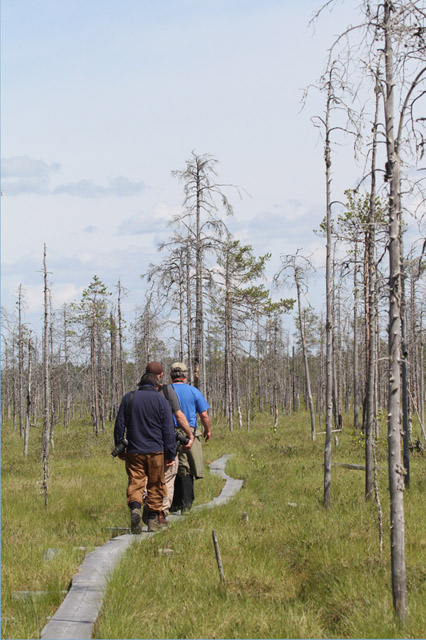


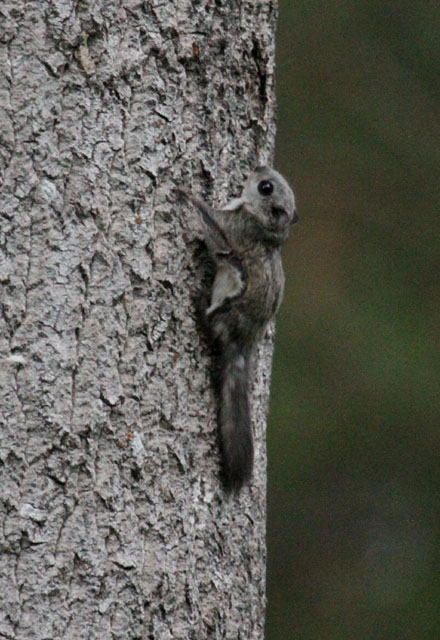








 Lesser Caucasus is lower and more forested than Greater Caucasus. There are tens of tree and bush species and lots of flowering plant. Many brightly colored species are now more familiar as garden plants. Road was in poor condition after heavy rains. Our four wheel drive Jeep just managed the worst places. Still conditions were better than 2006 when road resembled small river with rapids.


