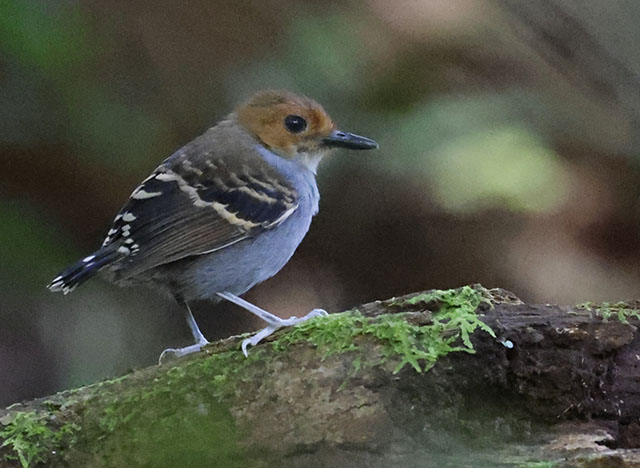
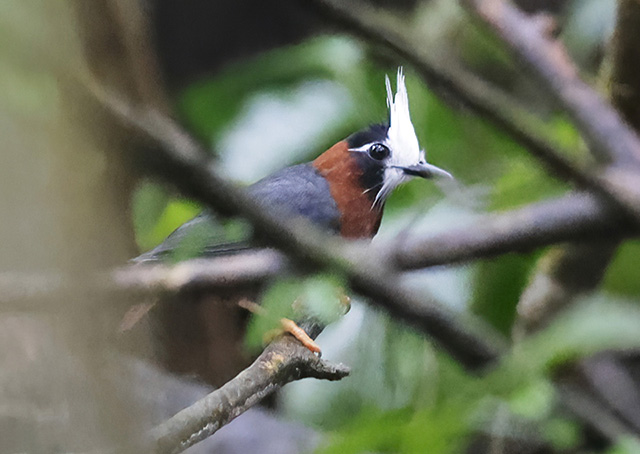
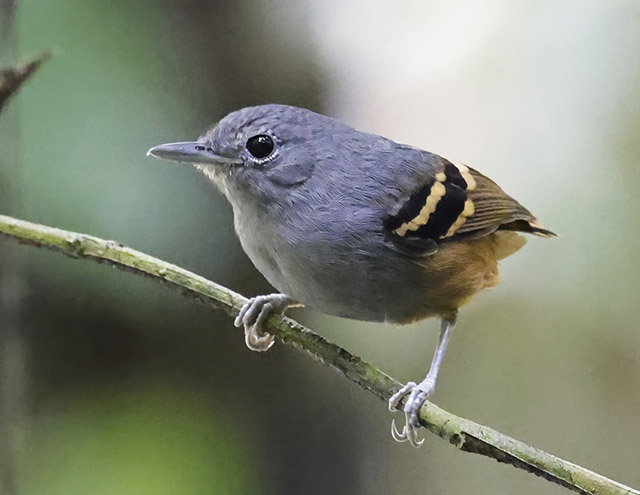
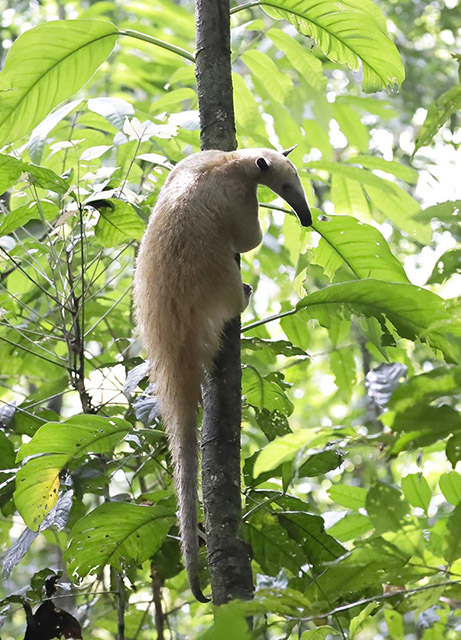
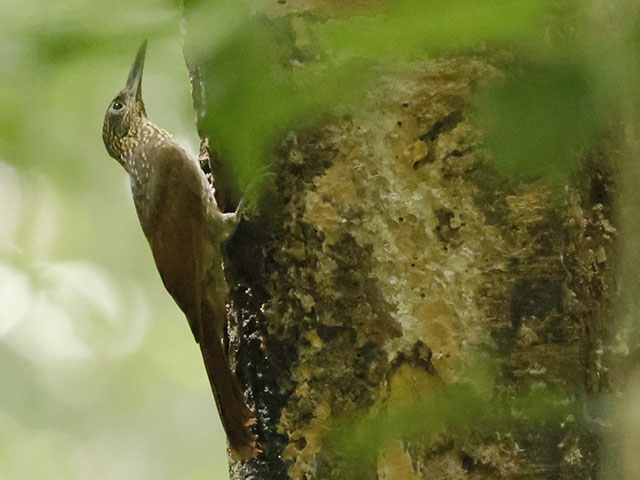
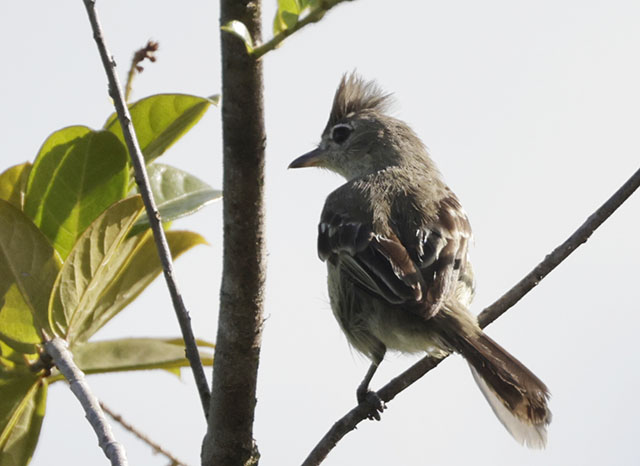
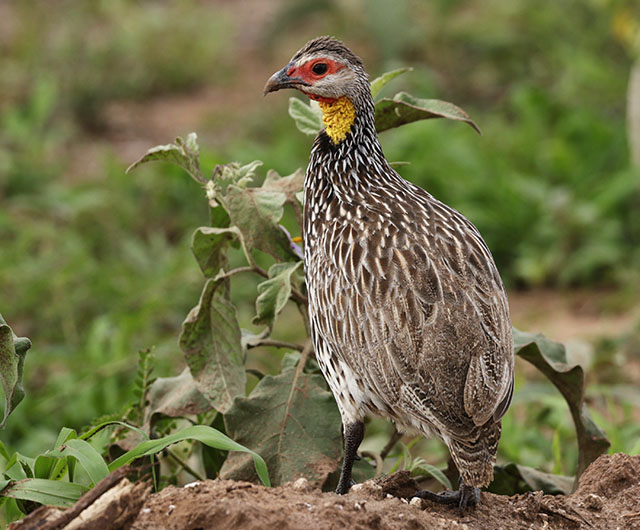
West Papua, Indonesia 7th to 25th of August 2023

Forewords

In spring I had got a phone call from my old friend Vesa Jouhki and he had asked me to join their trip to West Papua, Indonesia. Their trip had been cancelled for almost 3 years already because of the Covid and now when it seemed that the trip was finally going to happen, a couple of participants weren’t able to go anymore. So Vesa was searching for new participants and with Hanna we would have fitted well. But the trip was in August when Hanna’s holiday was already over, so I told to Vesa that we couldn’t come. But I still asked a week or so time to think. And after all I thought this would be a once in a lifetime possibility to get to this exotic place and I decided to join the trip.

On Saturday the 5th of August I walked to Parikkala railway-station and at 10:20 a.m. a train left. A few hours later I got out in Tikkurila and then took a local train to Helsinki-Vantaa airport. I was there at 1:40 p.m. so I had plenty of time but anyway I went through the security-checks and to the gate to wait.

After some waiting other participants started to get to the gate too and finally we were all there: Vesa Jouhki, Markku Vesterinen, Jyri Strandberg, Andreas Uppstu, Matias Castrén and Mikko Ala-Kojola. Because of Hanna hadn’t been able to join the trip, Vesa had asked me to try to get some friend of mine to join us and I had asked my good old friend Mikko. And it was great that he had been able to join us!

Traveling

Finally at 5:10 p.m. it was time to get to Finnair plane that soon left towards Qatar. I tried to watch some movies but it seemed that there weren’t any good movies made during Covid-years. After all I managed to sleep a little.

Just before midnight we landed to Qatar where we had to spend whole night at the airport. Both Matias and Markku had an access to different lounges and they could take a few persons with them so we all could get in. But after all we could stay in the lounge only for a couple of hours but at least we could get something to eat and drink before we had to try to get some rest in awful benches near the gates.

Finally at 8:30 a.m. our Qatar airways flight left to Jakarta Indonesia. It was another extremely long flight but finally we landed to Jakarta at 9:30 p.m. We had been flying over many time zones.

After passport-check and so on we found our luggage and then we still had to get Visas and queue in many different queues. We were absolutely tired after long traveling and it was hard to understand what was happening in the end of different queues. The strangest check was a QR-code that we had to get from internet and then it was checked. Finally we got out to the lobby and there we met our Indian tour-leader Sujan Chatterjee.

For some reason we were hurrying all the time and even the ATM was visited so briefly that I had no idea how much money to get. I took a million liras which felt like a lot of money but after all wasn’t enough. And when we finally got out and met our local contact and our drivers and started packing our luggage to the trunks, I realized that one of my bags was missing. Luckily it was just a small bag which had my pillow, vest, hat and bird-book and all papers in it, but of course I had to go back to the airport to search for it. But it was gone. Of course I had lost some money but I had also lost hours and hours of work as I had done lots of markings to my book and papers about birds, their voices and places where to see them and so on. But after all I was lucky that I hadn’t lost my passport.

Soon we had to leave to our hotel where we got our rooms. Then with Mikko we still arranged our stuff so that we had everything ready for the morning before we fell asleep.

Jakarta bay

On the 7th of August after a good breakfast we were ready to do some birding. Cars came to pick us up and soon we were driving in a surprisingly green and nice landscape towards Jakarta Bay. I had thought that Jakarta would be an awful place but it seemed quite nice actually.

The first birds we saw were common city-birds but when we reached the river, we saw some Oriental Darters, Javan Mynas and so on. And soon we climbed to a boat and left to sail along the river towards Muare Angke.

Our guide was a young man named Kalev, which had been guiding Vesa before. Actually they had done the same river-trip earlier too. Soon we started to see Black-crowned Night-Herons, Javan Pond Herons, Eastern Cattle Egrets, Striated Herons, Little and Great Egrets and Grey and Purple Herons. And after some time we saw the first Milky Storks.

Purple HeronMilky Stork

We photographed Sunda Teals that were breeding on ship-wrecks and saw plenty of Whiskered Terns, some White-breasted Waterhens and Golden-bellied Gerygones and a couple of Clamorous Reed Warblers. Lifers I got were Bar-winged Prinia, Pied Stilt and Black-backed Swamphen.

Sunda TealWhite-breasted Waterhen

Crab-eating Macaques were seen on the trees and docks and Water Monitors were seen on the shore. Pink-necked Green Pigeons and Red-breasted Parakeets were on the top of trees and then we found a coucal that we hoped to be a Javan Coucal but it seemed to be just a Greater Coucal.

Crab-eating Macaque

Finally we reached the sea and after some sailing we found the first Christmas Frigatebird that we managed to photograph well. Also a couple of White-bellied Sea Eagles gave us good views. A flock of 40 Glossy Ibises flew over us. But otherwise there weren’t many birds to see. We had hoped to find more frigatebirds and much more terns but now we saw only more Whiskered Terns and some Great Crested Terns.

Christmas FrigatebirdWhite-bellied Sea Eagle

Little Black Cormorant was numerous and after some scanning we managed to find a single White-winged Tern and a Little Tern was seen flying past.

White-winged TernJavan Plover

Once we were along the shore again, we saw a single Javan Plover and on the river we saw more herons and egrets and also a few White-headed and White-capped Munias, a Pied Triller and Sunda Pygmy and Freckle-breasted Woodpeckers.

When we were on the dock again, we jumped into our cars and continued a short drive to Taman Wisata Alam Kapuk mangrove-park. There we walked about an hour and found Brown Honeyeaters, Javan Munias, Scarlet-headed Flowerpeckers, Malesian Pied Fantails, a Cerulean Kingfisher and so on. Also a couple of Sunda Collared Doves were seen.

Common IoraBrown Honeyeater

The day started to get hot and our guide had somewhere else to go so we soon continued back to our hotel to relax. After some relaxing it was time to get back to the airport and after a couple of hours waiting our last long flight left towards Biak, West Papua.

Biak

The 8th of August. I slept very well on the plane but there was a stop in Kendar, Sulawesi where we had to get to airport for some time before our flight continued. It was an early morning, 7 a.m. when we finally landed to Frans Kaisiepo Airport on Biak.

We met our local contact and drivers again at the airport while we were waiting for our luggage. Everyone else had already disappeared from the airport when I was still waiting for my bag. When the last bags came there still was no sign of mine. I started to get very nervous but then I got information that the drivers had already taken my bag and it was already in the hotel! I have no idea how they had identified my bag.

Anyway then I walked to the hotel where everyone else had gone by car much earlier. Then we had a brief breakfast and were soon were ready to go birding! Finally we were in our destination, small island of Biak – West Papua!

Again we had a local guide with us and three cars with drivers, but it took some time to find out which one of these men was the guide as they all were very shy and none of them took any contact with us. Luckily Sujan had been in West Papua already 14 times and of course we had also studied quite a lot so we started to fill our trip-list.

The first identified birds were common and familiar birds like Tree Sparrow, Pacific Swallow, Sooty-headed Bulbul, Feral Pigeon, and Spotted Dove, but when we got out from the village, we started to see other birds too but most of the birds we saw from the car were seen too briefly, but Willie Wagtail, Glossy and Uniform Swiftlet were identified.

After some driving we stopped along a small road and started to walk along it. There were bushes and trees around us and we started to see more birds immediately. Red-capped Flowerpeckers, Black Sunbirds, Hooded Butcherbirds, a Sahul Brush Cuckoo, a Great Cuckoo-Dove, a Claret-breasted Fruit Dove and the first endemic birds, a Geelvink Imperial Pigeon and a Geelvink Fruit Dove were found.

Hooded ButcherbirdGeelvink Fruit-Dove

We also found some birds that I was already familiar with: A Sacred Kingfisher, Oriental Dollarbirds and Olive-backed Sunbirds I had seen in Bali and Java or elsewhere in Asia. But all other birds were lifers like endemic Biak Hooded Pittas that were calling, Rainbow Bee-eaters, Metallic and Long-tailed Starlings that were seen well. Then we saw briefly or only heard some other birds like Biak Trillers, Papuan Eclectus Parrots and a Biak Black Flycatcher.

Long-tailed StarlingBiak Black Flycatcher

Finally the playback produced a beautiful Biak Paradise Kingfisher that flew several times over us but didn’t let us to get any pictures. Later we heard several Biak Paradise Kingfishers more but couldn’t see them at all.

We walked until the end of the road and stayed there in a bushy area for some time and playbacks were playing. We had no idea what songs and calls were being played but after some waiting I finally heard similar calls behind us and we could see a small flock of Biak White-eyes skulking inside the bushes.

Willie Wagtail

The weather started to get hot so we drove back to our hotel. On the way we saw a Sulphur-crested Cockatoo flying in the sky. Then in our hotel, which was very nice, we just rested in our cool rooms for some time. When we woke up we did a short walk in the garden and photographed a tame Willie Wagtail and also a Sacred Kingfisher. But soon we went back to relax.

In the afternoon we headed to a forest where we could find Amboyna Cuckoo-Doves, Spangled Drongos, Shining Flycatchers, a Golden Monarch that showed very well, Biak Coucals that were only heard, a Pacific Baza, Moustached Treeswifts, a couple of Geelvink Pygmy Parrots, Black-capped Lories, Emperor Fairywrens, Black-winged Lories, Biak Lorikeets, a Biak Gerygone and a Geelvink Cicadabird. Of course we saw some species that we had seen already in the morning but still couldn’t get any better pictures of them.

Golden MonarchGeelvink Pygmy Parrot

Biak Scops Owl

When it was getting dark, we continued to a place where we started to play calls of a Biak Scops Owl. And soon we heard a response and saw the owl flying to one treetop. With torches we could see and photograph this endemic owl pretty well. In same place we played also Papuan Frogmouth calls and it also started calling further and then also another Biak Scops Owl started to call. But soon we were ready to drive back to hotel and go to sleep.

On the 9th of August we woke up early and started driving in darkness. Finally when we reached the birding spot, we started to have breakfast. This wasn’t a clever move as the sun was soon rising and it was the best time for birding. Then when we were finally walking along a small road, there wasn’t much activity anymore. So it wasn’t a big surprise that we couldn’t locate any Biak Scrubfowls.

Biak Lorikeet1

We found some Red-cheeked Parrots, a Biak Fantail, a couple of Biak Monarchs and also a couple of Large-tailed Nightjars. Then we moved to another place where our guide hurried to walk a path and everyone who was ready was following him. I had to change my shoes and so on so I wasn’t even on the path yet when someone shouted that a Biak Scrubfowl had flushed in front of the guide. Of course the last ones missed it. Luckily it gave a call when it landed. Then we played tape and waited for a long time it to come back but it only called one more time.

During the morning we found also a singing Biak Leaf Warbler and finally when we had managed to make our guide Eko to understand that we were happy also to hear some species if they were too difficult to see, we started to search for one more endemic. And after some searching and playbacking, we finally heard a Biak Whistler!

Mangrove

During the day we rested in our room again and tried to get rid of sleep debt and jetlag. In the afternoon we drove a longer way to the south-eastern corner of the island to mangrove that tsunami had deformed in the past. We walked on the road in the middle of mangrove and found Sacred and Beach Kingfishers, many Torresian Imperial Pigeons, a few Spotted Whistling Ducks and Channel-billed Cuckoos and a single Torresian Crow.

Beach KingfisherTorresian Imperial Pigeon

We also saw lots of Rainbow Bee-eaters and a Brahminy Kite and an Osprey, which was an own species in the past. Also some waders were found like Wood Sandpipers, a Greenshank, a couple of Grey Tattlers and a couple of Common Redshanks which is very rare bird in Papua.

It was getting dark when we saw some egrets flying to roost. They were all Great and Little Egrets until Mikko noticed a big grey heron flying in the distance. Only I managed to find it too before it landed to (or) behind a big tree – it was a Great–billed Heron!

It was already dark when Nankeen Night Herons started to fly, but soon we had to start driving back to our hotel.

In the evening we ate well in a local restaurant – fish and crabs and so on. It was funny that we could find beer in some restaurants but some of them didn’t have any Coca Cola, and Pepsi wasn’t found anywhere in the whole island!

Some of our group still went to swim to a pool before we kept the log. “Luckily” the number of bird-species was low so we were able to go to sleep soon.

Sentani

On the 10th of August we had packed our luggage ready and soon headed to the airport. And soon our flight towards Jayapura left.

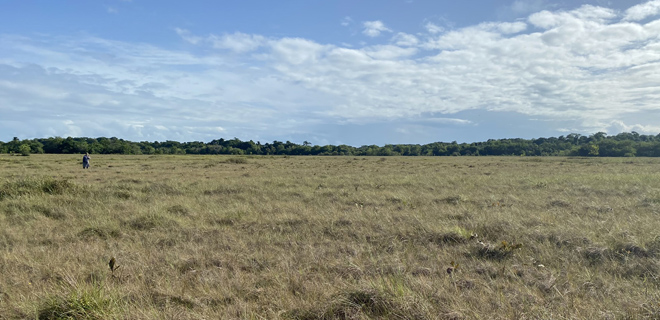
We landed to Bandar Udara Sentani airport and pretty soon we had packed our luggage to cars and left driving. After a short drive we turned to Sentani grasslands where we soon stopped when we saw a Pygmy Eagle soaring on the sky.

Pygmy EagleWhistling Kite

Soon we found also New Guinea Friarbirds, Tree Martins and saw a Brown Quail in flight briefly. Then we saw a Papuan Harrier soaring behind the grassland and a couple of Whistling Kites flew over us. Both Golden-headed Cisticolas and Rainbow Bee-eaters were seen some tens.

Crimson Finch

We walked along the road a little and still found a White-shouldered Fairywren and several Crimson Finches. Both Black-billed and Pheasant Coucals were heard and then we saw another quail in flight – this was smaller than the previous one – a King Quail.

A Fawn-breasted Bowerbird landed to one tree and a Buff-banded Rail crossed the road so quickly that only a couple of us managed to see it. Then we still found Great-billed and Hooded Mannikins, heard a White-bellied Thicket Fantail and a Pacific Koel, so we were very happy when we continued driving towards Nimbokrang.

Nimbokrang

After one and half hours driving we finally parked to Jamal’s Homestay and got our rooms. After a short relaxing we did a short walk in the village with Mikko, Andreas and Jyri. Sun was shining and it was incredibly hot so only bird to mention was a Variable Goshawk.

In the afternoon we headed to so-called KM9 view-place. We had a local guide with us but he really didn’t take any contact with us in the beginning. We had to always first find him and then ask if there was some call or difficult bird that we wanted to identify. He knew the birds well and always answered our questions but then he again disappeared somewhere to talk with locals.

Anyway we managed to find lots of birds like Orange-bellied Fruit Doves, Pinon’s end Zoe’s Imperial Pigeons, Black-browed Trillers, Plain, Tawny-breasted and Puff-backed Honeyeaters, Yellow-faced Mynas, Brown and Coconut Lorikeets, Ivory-billed Coucals, a Grey-headed Goshawk, a Boyer’s Cuckooshrike, a Rufous-bellied Kookaburra, Papuan Spinetails, a Mamberamo Shrikethrush and some already familiar birds.

Tawny-breasted HoneyeaterPuff-backed Honeyeater

Papuan Nightjar1

When it was getting dark, we continued to KM8 area where we followed a path inside the forest. Drivers carried seats for us and we sat down to wait. Soon we heard and saw a Hook-billed Kingfisher with our thermal cameras. Then after some waiting we saw a Papuan Nightjar that came to hunt insects to a small open area where we were sitting. It was very dark but I managed to get a couple of pictures of this nightjar.

Then we followed the path a little bit further and soon heard a Marbled Frogmouth calling. We found the bird with our torches but it was behind branches so pictures weren’t good at all. But anyway our first day in Nimbokrang had been excellent. Our guide Kolik had been getting better in the evening so we expected to have good next few days.

On the 11th of August we started early and soon we were walking a path that lead inside Korea Forest. After some walking we had again seats ready for us and we sat down to wait for sunrise and then something else. After we had heard Papuan Frogmouths calling the sun started to rise and pretty soon the bird that we had been waiting for arrived to a top of a trunk. It was one of my dream-birds – a Twelve-wired Bird-of-Paradise!

The Twelve-wired B-o-P was turning and twisting on the top of the trunk for a long time before it flew away. And after some time it came back to continue its lek. It was quite high up and the light was still bad but we managed to get some OK pictures.

Twelve-wired Bird-of-paradiseTwelve-wired bird-of-Paradise

When our first B-o-P once again flew away, Kolik told us to come next to him and there we saw another treetop with a couple of birds – there was a Glossy-mantled Manucode and a Pink-spotted Fruit Dove. Soon we heard also a Pale-billed Sicklebill which was visible only very briefly so we didn’t get any (except one very bad) pictures of it.

Glossy-mantled ManucodePale-billed Sicklebill

We heard also a King Bird-of-paradise, a Northern Fantail and a Black Butcherbird before we walked back to the road. Then we walked along the road for some time and found Grey-headed Cuckooshrikes and Black Cicadabirds, a beautiful Lowland Peltops, an Ochre-collared Monarch, a Large-billed Gerygone, Meyer’s Friarbirds, Streak-headed Mannikins, a Salvadori’s Fig Parrot that flew over us and the most stunning Palm Cockatoos. Another guide, or some kind of helper, Mr. Dante was very happy when he pointed us these big parrots – and they really were amazing!

Lowland PeltopsPalm Cockatoo

Blyth's Hornbill

We also saw more Glossy-mantled Manucodes, a gorgeous Blyth’s hornbill flew over us, Black-capped Lories, a distant Pale-billed Sicklebill and so on.

Next we continued to a forest-garden where we sat under a big tree and waited for Buff-faced Pygmy Parrots to arrive climbing to the trunks and branches but they didn’t come. So we went to photograph a mom and a child Papuan Frogmouths and a noisy Yellow-billed Kingfisher that were nearby.

Papuan FrogmouthYellow-billed Kingfisher

Then we walked a little around the garden and managed to find some Buff-faced Pygmy Parrots but they were mostly just heard and then seen in flight a couple of times.

Rice fields

In the afternoon we spent time in a couple of hides but neither Spotted Jewel-babblers nor pittas were visiting the feeders. In the late afternoon we headed to rice-fields that were close to the village but we were there probably too late. We heard mostly just Hooded Butcherbirds that were calling so many different kinds of calls that Sujan told that they are called 5 dollar birds amongst bird-guides. Every time someone asks: What bird is that?” and it is a Hooded Butcherbird, 5 dollars should change owner. At least one of us would have got much lighter wallet after this trip…

On the 12th of August we headed early to walk a path inside a forest and after some walking we went into a hide to wait. While walking we had heard a Collared Brushturkey and to the hide we heard a New Guinea Scrubfowl and a couple of Papuan Pittas. We were waiting for a Magnificent Riflebird but it was just calling nearby and didn’t show itself.

When we had given up waiting for Magnificent Riflebird, we continued walking along the path and soon heard some Lesser Bird-of-paradises and then managed to find them on the top of one huge tree. They were quite far and high so we couldn’t get any good pictures but at least something.

Lesser Bird-of-paradiseLesser Bird-of-paradise

Then we walked to sit and wait close to trees where we soon saw some movement. It was an absolutely beautiful King Bird-of-paradise! Also this bird was quite high up and almost all the time in the shadows, but after some trying we managed to get some OK pictures.

King bird-of-paradiseKing bird-of-paradise

The forest-walk was a success as Kolik had understood that we really wanted to know all the birds that were calling. So we managed to find an Ornate, a Coronated and a Dwarf Fruit Dove, a White-crowned Cuckoo, a couple of Papuan Dwarf Kingfishers, a Pesquet’s Parrot, another Salvadori’s Fig Parrot, Papuan Babblers, Long-billed and Streak-headed Honeyeaters, a Bar-tailed Cuckoo-Dove, Golden Cuckooshrikes, a Rusty and a Northern Variable Pitohui, a Sooty Thicket Fantail, a Rufous-backed Fantail, a Hooded Monarch, a Black Berrypecker and an Olive Flyrobin.

In the afternoon we headed to Korean Forest again to walk to the road between the bridges. For some reason Kolik wasn’t with us but only Mr Dante. He was a former hunter who had started to search birds for birders. He was also some kind of chief in the village so everyone knew and respected him. But he didn’t speak any English and he always disappeared into the forest with his machete. He clearly tried to find some extremely difficult birds for us but unfortunately we weren’t lucky. Earlier there had been some Victoria Crowned Pigeons in the area but nowadays they seemed to be impossible to find.

Anyway we managed to find some birds by our own. a Wompoo Fruit Dove, Green-backed Honeyeater, Jobi Manucodes and a Spectacled Longbill were found. We also saw a couple of Twelve-wired Bird-of-paradises that were quite distant on the top of trunks on the forest edge.

Salvadori's Fig Parrot

On the 13th of August we started the morning with a long path-walk to a tree where Salvadori’s Fig Parrots were living. Some of us had missed the species earlier so we had to go to see them better. On the walk we already found nice species like a Tan-capped Catbird, a Black-sided Robin, a Sahul Cicadabird, a Grey Crow, a Dwarf Koel and a Spot-winged Monarch.

Once we reached the tree, we got better views of Salvadori’s Fig Parrots but the birds were directly above us and very high. On the tree-top we saw at least 6 parrots and also a Brahminy Kite was perched there for some time.

Eastern Hooded Pitta

When we were walking back we observed many already familiar birds and then stopped again in pitta-hide. This time the wait was worthy as a beautiful Eastern Hooded Pitta came to feed with mealworms. We got nice pictures but of course we hoped that also Papuan Pitta would have shown up. It was just calling nearby.

Next we continued to the best organized photographing place so far. There was an open area with a branch in the middle of it and Kolik and one of the drivers started to hang earthworms to the branch. Then Kolik started to play tape and soon we heard a response. And then a stunning Common Paradise Kingfisher came to feed with worms.

After the kingfisher had eaten a couple of worms it dropped down to the ground and caught one more worm and ate it just in front of us. So we had finally started to get some good pictures!

Common Paradise KingfisherCommon Paradise Kingfisher

When the day was warming up, we headed to a view-place to do some raptor-watching. Sujan was laughing a little bit as he said that local raptors are hunting inside the forests. Most of our group was sitting under a roof in a shadow but with Jyri we were standing under a tree and watching to a different direction. And soon we saw an enormous raptor flying over the forest! I shouted to the others but only Mikko managed to see this bird gliding low down and disappearing inside the forest – it had been a Papuan Eagle!

Soon we saw also a couple of Long-tailed Honey Buzzards and Whistling Kites and a Variable Goshawk so it was possible to see raptors with some effort.

In the afternoon we walked a little bit in a forest edge near the village but saw only a couple of White-bellied Cuckooshrikes.

Dwarf KoelWhite-bellied Cuckooshrike

For some reason we left back to our hostel too early and walked to a bridge nearby. There were absolutely no birds so we asked if we still could go back to the first place. It was already late so only bird we found was a calling Pale-vented Bush-hen – the same species that we had tried to find from the bridge.

In the evening we got bad news – our next flight had been cancelled. It was hopefully going to fly 24 hours later. So we had to stay in Nimbokrang for an extra day – and we already had a feeling that there wasn’t much to do anymore.

On the 14th of August we started again in Korea Swamp Forest. Mr Dante was our guide and even though he didn’t speak any English, he was the funniest person we had got with us. Again he disappeared to the forest with his machete while we stayed birding along the road. We saw and heard plenty of familiar birds and got good practice with them but only new species was a Mimic Honeyeater. We also saw a Pale-billed Sicklebill again and got some distant pictures.

Boyer's CuckooshrikePale-billed Sicklebill

When it was getting hot, we decided to go to try to see Buff-faced Pygmy Parrots again. We really had no idea what else we could do. Birding in Papua is difficult because of all land is owned by someone. So you have to get a permit to go anywhere. So you have to be ready to bribe locals to get some places and to most of the places you can’t go at all.

Papuan Frogmouths were still on their nest and now we saw more Buff-faced Pygmy Parrots but again only in flight. Pretty soon we decided to go to rest a little.

In the afternoon we headed to a view-place once again. We saw familiar birds and finally we saw a few Grey Crows that we had only heard earlier. Unfortunately we didn’t see any Brown Lorikeet that some of the group had missed earlier. We photographed all parrots that flew over but they were all the common ones.
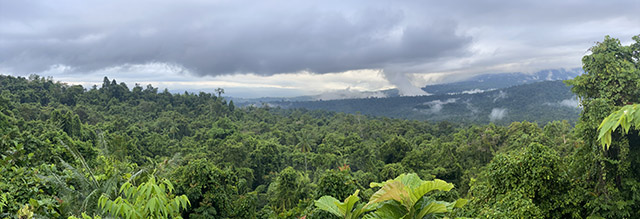
View

It was getting late afternoon when I heard a call from distance that I immediately identified – or at least though I identified. It was one of the only calls that I was sure that I had learned when I had been listening to many calls and songs of Papuan birds at home. I went to ask both Kolik and Sujan to listen to the call as I thought it was a Papuan Eagle. They both laughed at me and told that it was just an imperial pigeon. Well I hadn’t heard any that aloud and far-carrying imperial pigeon that could be heard from kilometers away and was always calling only ones in every 30 seconds, so I kept on listening to it and started to take sound-recordings too. After some time I went to ask Kolik to listen to the call again as I was sure that it wasn’t a pigeon. This time he concentrated to listen to it and it was funny to see his look change – and after some listening he said: “I was wrong – it is a harpy!” Then he told that actually he had seen a pair of Papuan Eagles in exactly that direction close to KM8 several times. And he had also heard the bird calling there. He just couldn’t believe that it could be heard this far – but after all it was only a couple of kilometers to KM8.

Sentani again

On the 15th of August we left towards Jayapura airport very early. We wanted to do some birding in Sentani grasslands again. And right away when we arrived to the familiar place, we saw a Black Bittern in flight. Then we walked along the road for some time and saw many familiar species which some of them we saw now better and got some pictures too. We also found some Chestnut-breasted Mannikins, 4 impressive Channel-billed Cuckoos flew over us and I also found a very distant Australasian Darter flying on the sky. So the morning was pretty good.

Hooded MannikinChannel-billed Cuckoo

And traveling again

Soon we had to continue to the airport and luckily our flight to Manokwari left in time. We landed to Bandar Udara Rendani airport where drivers were soon found and then we packed our luggage to the top of three 4-wheel cars. Then we headed to shopping.

Sujan

We ate well at the restaurant in a big shopping mall and then did some shopping. Sujan had a huge work as he had to buy all food for all of us for next few days. It took some time but after all we left driving towards Arfak Mountains.

But soon we met some problems as police stopped us and asked to see passports from our first car passengers. Of course Andreas had his passport in his bag and it was on the roof of our third car that was missing. This third car’s driver had some problem with car papers so when he had seen the police; he had turned to another road.

Luckily we managed to get through the police after we had taken some selfies and joked with them. But soon we had to stop again as there were lots of children dancing in the middle of the street. There was some kind of dance-competition between school-classes and these children were walking and dancing in big groups along the street. Unfortunately local women paid more attention to us than the serious-looking dancers and shouted loudly and with red smile (many of them were biting some red narcotic plant). Finally we got through the traffic-jam and could continue driving.

Arfak mountains

It was already late afternoon when we had climbed up to the mountains and the asphalt-road ended and soon we turned to a very bad and extremely steep uphill-road that went through a small village and in the end of the road were our Syoubri Guest house cottages.

Group

It was still light so we did a short walk in the village but saw almost no birds at all. Then the dinner was ready. We got 2 cottages and luckily with Matias, Sujan and Mikko we got own rooms in our cottage. We also got a big hall with a big table where it was good to keep the log in the evening.
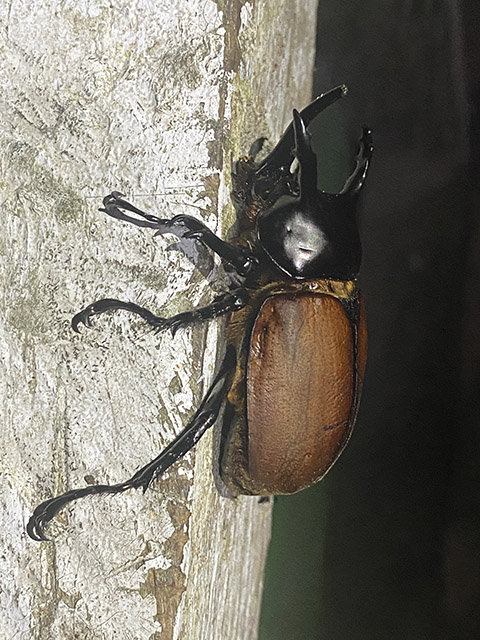
Beetle

On our porch railing we found a huge beetle that everyone had to get some pictures. When it came dark we listened to a distant Papuan Boobook calling and after everyone else had gone to sleep, we still heard a Feline Owlet-nightjar calling with Mikko.

On the 16th of August we woke up early and after the breakfast we were ready to follow our guide Chet. When we were walking downhill to our cars, we heard a Greater Sooty Owl.

We drove a short distance and then started to walk in a dark forest following Chet who was walking very fast. After some walking we arrived to a hide and again started to wait for morning and birds to come.

While walking we had already heard an Arfak Catbird and now another one was calling behind the hide. There was a big fruit in front of the hide and we waited for the target-bird to come to feed.

After some waiting a Black-billed Sicklebill arrived and soon it started to eat the fruit with its long and curvy bill. The light was still quite bad but we got some pretty good pictures of it. When the bird left we kept on waiting for it to come back or other birds to visit the feeder. But only bird that arrived was a young Great Cuckoo-Dove. It was very shy and it didn’t start to eat at all and soon disappeared to the forest.

Black-billed SicklebillGreat Cuckoo-Dove

Feline Owlet-nightjar

Soon we were walking along the path again. A couple of younger local men had been walking along the path before us and soon they came back and started to discuss with Chet. Then Chet told us to follow these men and told it will be a tough climb. So not everyone from our group followed them but of course most of us climbed very steep uphill while our guide was making the path with his machete – and it was worthy! Finally he pointed to a bush and first we couldn’t see anything but then we realized that there was very well camouflaged Feline Owlet-nightjar openly in the middle of the bush.

Mountain Owlet-nightjar

Soon we were back on the path and saw a funny-looking Black-breasted Boatbill before we turned to walk inside the forest again. It was again very steep uphill but now shorter climb until we were inside a bush and our guide pointed straight above us – and there was a Mountain Owlet-nightjar perched on a branch just a couple of meters above us. The bird was too close for Mikko’s 600mm lens but close enough to take picture even with a phone.

When we were again following Chet on the path he showed us that he was clearly the best guide we could have. We got amazing numbers of new species but most of them were just heard or seen briefly, so not many pictures were got. But lifer-list got bigger with White-bibbed Fruit Dove, Papuan Mountain Pigeon, Moluccan King Parrot, Plum-faced, West Papuan and Fairy Lorikeet, Vogelkop Bowerbird, Rufous-sided and Marbled Honeyeater, Red Myzomela, Ornate and Vogelkop Melidectes, Goldenface, Rusty and Mountain Mouse-warbler, Grey-green Scrubwren, Mid-mountain Berrypecker, Pygmy and Yellow-billed Longbill, Mottled Berryhunter, Black-bellied Cuckooshrike, Rufous-naped Bellbird, Vogelkop and Sclater’s Whistler, Hooded Pitohui, Black Fantail, Drongo Fantail, Slaty and Green-backed Robin and we unfortunately only heard a couple of dream-birds a Vogelkop Lophorina and a Magnificent Bird-of-paradise.

Once we were back on the road we found Black-fronted and Capped White-eyes, Mountain Myzomelas, a Brown-breasted Gerygone and a Mountain Honeyeater. Swiflets that were flying on the sky were Mountain Swiftlets.

Capped White-eyeMountain Myzomela

After the lunch we drove to the highest point of the road and started walking back towards the village. Unfortunately weather was cloudy and it seemed it was going to rain soon.

Red-collared MyzomelaArfak Honeyeater

Black-breasted BoatbillBlack-breasted Boatbill

We found a Black-breasted Boatbill with a young bird, a Friendly Fantail, Red-collared Myzomelas, Arfak Honeyeaters, Vogelkop Scrubwrens, a White-eared Bronze Cuckoo and a singing Island Leaf Warbler. One Papuan Mountain Pigeon flew over the road and finally we got some pictures of some birds too. But still many species were just heard or seen briefly.

And then it started to rain very hard, so we had to hurry to our cars and give up for the rest of the day.

In the evening when we were keeping the log I did some sort of record as 26 species that were called in a row were lifers. During the day I had got 50 lifers! I wonder how many more we might have got without the rain?

At night the rain had stopped for a short time and I went out to listen and heard the Feline Owlet-nightjar again. With Sujan we managed to find it with our thermal-cameras but soon it flew away and we went to sleep.

On the 17th of August it was still raining when we woke up. We had been sleeping a little bit longer as we were going to have a tough day. Luckily the weather started to look a little bit better so we decided to stay in ordinary plan. So we packed everything we needed during the day’s birding to back-bags and what we needed for sleeping and for a couple of days trip to other waterproof bags. And after breakfast we were ready to start climbing to a mountain. People from the village were joining us and carried the rest of our stuff and food and so on.

Papuan Leaf Warbler

I still photographed an Island Leaf Warbler in the garden before we started walking. The path started just in front of our cottage. Then it started to rain again so I had to pack my camera to a waterproof bag.

It was raining pretty hard so we just kept on walking. Luckily the rain stopped just before we started to climb very steep uphill. We climbed for a long time and it was so hard that we really couldn’t find many birds. Modest Tiger Parrots were seen but Brehm’s Tiger Parrots were only heard. A couple of Papuan Treecreepers were seen as they came to playback, Yellow-billed Lorikeets were mostly just heard but also seen briefly while they were flying above treetops.

Modest Tiger ParrotPapuan Treecreeper

The climbing was hard and partly dangerous so I was a little bit worried how our group would survive. Again our guides were hurrying so the last ones were leaving behind all the time. Then we had to wait for them and once they had caught us and were able to have a short break, guides were running again.

Cinnamon-browed Melidectes, Perplexing Scrubwren, Black Monarch, Lesser Melampitta, Lesser Ground Robin, Chestnut-breasted Cuckoo, Fan-tailed Berrypecker, Spotted Jewel-babbler, Black Pitohui, Regent Whistler, Ashy Robin and Black-throated Robin were species that we either heard or saw again briefly. Birds that we also saw briefly were Crescent-crested Bird-of-paradise and Western Parotia females. One of the main reasons to climb to the mountain was Black Sicklebill and a couple of birds were first heard and then one bird was also seen a couple of times in flight.

Cinnamon-browed MelidectesBlack Pitohui

We also saw some familiar birds like a very friendly Friendly Fantail and West Papuan Lorikeets that were hiding on the top of tree.

Friendly FantailWest Papuan Lorikeet

Finally the uphill got gentler and then we got to German Camp where we rested a little and then did a short walk nearby before lunch. At midday there weren’t many birds to find but a Mottled Berryhunter was heard.

After the lunch we walked around the top but it was surprisingly quiet. I managed to photograph a Voglekop Whistler, a Black Pitohui and a Cinnamon-browed Melidectes and Andreas found a funny Reclusive Ringtail Possum hiding on a treetop.

BirdingReclusive Ringtail Possum

Then we had probably the most insane episode of the whole trip as Chef and a couple of other men started to build a hide for us – and we just stood there waiting for them to finish. Of course it was important to build another hide for us as we weren’t going to fit to one small hide but now it was very good time for birding – and it wasn’t even raining…

Luckily Sujan was with us so we could identify a Smoky Robin and a Moluccan King Parrot landed above us so I could get a couple of pictures before it flew away. Also a Black-throated Robin stopped for a second to one tree and a Canary Flyrobin was singing and a Rufescent Imperial Pigeon calling.

It took more than an hour before the hide was ready and we kept on walking back towards the camp. We passed one old hide that had an old Vogelkop Bowerbird nest in front of it but soon the first half of our group went into another hide with inhabited nest. Chet moved one decoration which actually was a small blue plastic funnel. He told that it shouldn’t take long before the owner of the nest comes to fix the decoration. We of course waited it to come and move the funnel to the ordinary place, but when the Vogelkop Bowerbird came, it changed the whole decoration of the veranda! It moved all the red chip-bags but also this blue funnel but to a new place. Sujan told that earlier there had been one bowerbird that had decorated its nest garden with spoons. And it had stolen lots of the spoons from the village. Actually also now it had been stealing all the rubbish that it was using as decoration from the village as there was really no rubbish in the forests. And village was quite far away.

Vogelkop BowerbirdVogelkop Bowerbird

It was already quite dark but we managed to get some OK pictures of this Vogelkop Bowerbird. And once we got out from the hide, it was time for the rest of our group to get in – and the same show was repeated.

Finally we were back in our camp and after the dinner we were ready to sleep. We didn’t have the log as none of us had taken any paper or pen with us.

The 18th of August. I slept well in a shack where we all slept on the floor. I had my new very light mattress and sleeping bag with me and it was good as it was pretty cool at night.

We woke up very early and started walking towards the hides. On the way we heard a Papuan Boobook but soon we photographers crawled into the new hide and the rest went to an old one which actually was closer. If someone had told us anything about the hides we had of course done the opposite. The new hide was absolutely awful! It was situated in a steep hill and the bench was tilted and too high so it was impossible to sit. There was also a tree-trunk in the middle of the tent which made everything even more difficult. Somehow Mikko managed to put his tripod up but the lens-hole was too far even for his 600mm lens. Anyway we soon had to keep it quiet and start waiting.

Black Sicklebill

It wasn’t a surprise that Black Sicklebill didn’t come to its lek-tree. It had been calling all the time when men had been building the hide and it sure was wary. We waited for as long as it was possible to sit in the hide even the bench collapsed and made it even more difficult. After all we had to give up as we still needed many other birds too.

We photographers needed some time to pack everything, so all others had left already when we got out from the hide. And then the Black Sicklebill flew to the closest treetop! It was in bad light but at least we saw it well and got some kind of pictures.

While we were taking pictures of the Black Sicklebill a Black-mantled Goshawk flew over us. We had just heard it calling earlier. But soon we had to hurry. The best time of the morning was over soon.
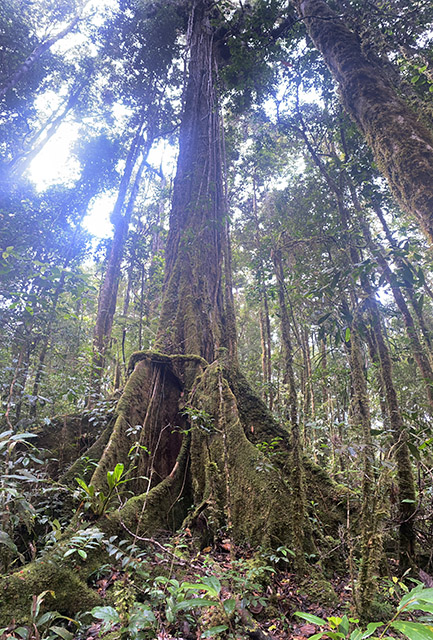
Rainforest

Next we took a long and steep uphill again and climbed to try to see Arfak Astrapias. They were supposed to visit one fruiting tree every day.

Once we reached the tree we found out that the visibility to the tree wasn’t very good as it was behind other trees. We waited and waited for our target-bird to come but saw only several already familiar birds. After a long waiting we heard an Arfak Astrapia calling a few times with its strange clopping voice but we never saw it.

Then it started to rain very hard so we had to walk back to the camp. And soon we had packed everything again and were ready to start walking back towards the village.

In heavy rain the steep path was extremely slippery and dangerous! So we were walking slowly but of course some of us where again much slower. We really didn’t need to worry about birds in this weather at all. Luckily after a long walk the weather started to get a little bit better. Then we found some Dimorphic Fantails, a Black-throated Honeyeater and a couple of Garnet Robins. Then on a flatter part it was raining again but before the village the weather was getting better again and we still heard a small flock of Blue-faced Parrotfinches. Luckily these birds were very close so I also managed to hear their extremely high and thin calls.

Once we were back in the village we had to wait for some time before the last ones arrived. Luckily everyone had survived without any worse accidents and injuries. There had been some close shaves.

The rain had finally stopped and as we still had some time before the lunch, we decided to go somewhere with part of our group. We had been walking our feet death already but anyway we wanted to do some more birding. Chet and Sujan thought that only place to see any new birds was to climb back uphill. Luckily Chet joined us and we still climbed up to the other side of the farmland to the river and still managed to find a couple of new species – a Grey Thornbill and a Crinkle-collared Manucode.
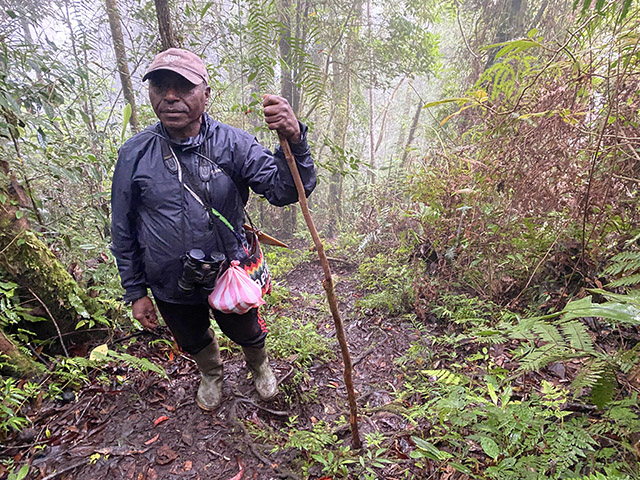
ChetGrey-headed Goshawk

When we were back in the village I still managed to photograph a Grey-headed Goshawk that landed to a tree in our garden. Then it was time to keep a couple of days log and eat well. And then it was good to go to sleep to a proper bed.

On the 19th of August we were very early. When we got out from the cars we thought that we were going to walk 300 meters to a hide. So I took only my camera and head-light with me. I left my poncho, umbrella, mosquito repellent and water to the car. Luckily I changed my sandals to light boots. Mikko of course took his whole camera-equipment with tripod.

Soon it was clear that we hadn’t been told anything about what was going to happen – again. We walked a long time to steep downhill until we reached a river which we crossed by a narrow bridge.

Andreas

Then we were told that we were going to walk to a fruiting tree which was still a long way away. So it was clear that not all could make the walk as we had been walking quite a lot in the previous days too. The sun was already rising so we observed the first birds and a Superb Fruit Dove was a lifer. So a couple of our group stayed in the riverside while the rest of us started to climb steep uphill again

This was the steepest and longest uphill so far and once again our guides were walking too fast. We were sweating a lot and I really started to miss my water-bottle! Luckily we soon heard a Mountain Peltops that I had missed a couple of days earlier and along the path we saw droppings of a Dwarf Cassowary!

It was really a hard climb and again the last ones were far behind when we surprisingly, without any warning, were there next to a fruiting tree. Then Chet’s son who was now leading us, started to point up to treetops and tug from our arms so we could see something there. He didn’t speak any English but we thought that there were Masked Bowerbirds somewhere.

I am probably too kind person so I kept on waiting for the others to come and tried to tell them what was happening and so I missed a beautiful male Masked Bowerbird that at least Mikko managed to see. Soon I was free to start scanning the treetops too and luckily I still found a female Masked Bowerbird and also a female Magnificent Bird-of-paradise which I both managed to take pictures too.

Luckily these bowerbirds were still calling so everyone managed to hear them, but soon the treetops were empty – and I am sure the reason was our chaotic coming. We could have stopped before the place, wait for the whole group and then someone should have explained what was going on, but this is clearly not how things happen in West Papua. It was also easy to say now that we should have started much earlier in the morning as we were now too late.

Masked BowerbirdMagnificent Bird-of-paradise

We waited for a long time for birds to come back but all we saw were some fruit doves and mostly unidentified passerines on the top of high trees.

As there was nothing really happening, we decided to try to see a Spotted Jewel-babbler that was somewhere 400 meters along the path. Of course it was again extremely steep uphill and for sure it was a longer walk than 400 meters but finally we were there. Tape was playing but nothing came or responded.

Grey Whistler

So soon we walked back to the fruiting tree which seemed to be empty again. We were too tired to keep on walking, so we stayed there for some time and surprisingly it was good! Slowly we started to find new birds around us and a Forest Honeyeater, an Arafura Shrikethrush, a Grey Whistler, a Green-backed Gerygone and a Papuan Scrub Robin were observed. And when we were walking back downhill towards the river we still found a Trumpet Manucode, a Fairy Gerygone, a Black-winged Monarch and a Chestnut-bellied Fantail.

Finally we were down by the river and there we immediately saw a couple of black and white birds flushing in front of us. Luckily another one landed to a branch nearby and we could wait for everyone see this stunning Torrent-lark!

Torrent-larkMikko

We rested a little next to the river before started to walk extremely long uphill towards our cars. It was crazy hard walk as it was very hot and sun was burning! Once we were almost up, one of our cars drew down past us. And soon it drove back up with the last ones of our group. It was very good as I am sure they wouldn’t have survived from the walk as I was absolutely tired! But Goddamnit they could have stopped for a second so I could have taken my water-bottle from the back-seat!

Syoubri

When we finally reached our cars I was really badly dehydrated and also sunstroke. I would have loved to know beforehand that we were going to have a morning like this. And after all we hadn’t visited the hide at all – and Mikko had been carrying the tripod all the time. But luckily we had seen some unforgettable birds so there was no reason to complain too much.

We still drove back to Syoubri where we packed our luggage and ate before started driving towards Manokwari. But we managed to drive only 100 meters or so downhill when we got a flat tire! Luckily we just had to park in front of the closest house and soon there were several men changing the tire. And after 10 minutes we were on the road again.

While we were driving up and down on the mountain-road it was soon clear that there was something badly wrong with our car. The brakes weren’t working! So our driver had to drive very slowly and do all braking with the engine. Somehow we managed to get down and finally in Manokwari we parked in front of an exclusive Aston Hotel.

In the evening we got once again bad news as our next morning flight had been moved several hours later. And that wasn’t all – our next destination Malagufuk had informed Sujan that they are not taking any visitors on Sundays. Everything had been agreed already a long time ago but it seems that anything is possible in West Papua! Later I heard that Malagufuk had started to ask visitors to pay 650 dollars per night which probably was the real reason that we had to change our plans. It really wasn’t going to fit into our budget.

But there was no reason to start sulking. We had to adapt the situation. Luckily Sujan had lots of contacts and he is extremely good in solving problems. But it was clear that the next day was anyway going to be a holiday from serious birding as we were going to stay in Manokwari.

Manokwari

Manokwari and Sorong

So the 20th of August was an easy day which was probably more than welcome to some of our group that had been pushed to their limits on our mountain walks.

After a good breakfast we did a short an hour walk near the hotel and beach and managed to find several Scrub Honeyeaters but all the other birds were just familiar species.

During the day we headed to the airport and there we really had to stress if there was going to be any flight for us at all. First there was a sign telling that our flight was late but when some of us checked from the internet, there was no this flight at all – it hadn’t ever left from previous airport. After a long wait there was a call – in some other language than English – that there was a plane coming from Biak for us. And finally at 3:30 p.m. we left towards Sorong.

After an hour flight we landed to Sorong to Domine Eduard Osok airport. While we were rolling on the runway some of our group that were seated on the other side of the plane managed to see a swamphen.

Even though the schedule had changed a lot Sujan had managed to get a local contact and cars to pick us up and soon we drove to Fave Hotel. There all rooms weren’t ready yet so we left our luggage behind the reception-desk and soon headed to eat to Sujan’s contact’s own restaurant. And we had the best seafood that I have ever eaten!

Pipa forest

On the 21st of August our local guide was Absalon and soon we were heading to Pipa forest. When we got there, we started to walk along the road. Pretty soon was it clear that our guide was again something different. He didn’t know some of the calls and did some quite strange mistakes but what was the most important, he knew the real target-birds and of course he had the permit to do birding in this forest. And he was also quite a character!

Right away we heard calls of Red-billed Brushturkeys and soon a couple of Black Lories flew over us calling. A couple of pigeon calls were giving us problems but soon we saw a couple of Stephan’s Emerald Doves that flew across the road.

Roadside birdingSulphur-crested Cockatoo

Absalon was playbacking a lot and after some time we heard an answer of a Red-breasted Paradise Kingfisher. We also heard plenty of Yellow-billed Kingfishers that sounded very similar and a single Hook-billed Kingfisher. We also saw a female King Bird-of-paradise, heard a couple of Magnificent Riflebirds and saw a Pesquet’s Parrot flying over us.

Absalon managed to talk us through a guarded gate deeper inside the forest which was good as soon we found several Yellow-capped Pygmy Parrots climbing on trees and a Spotted Honeyeater was seen very briefly. A couple of Brown Orioles were singing and another one was also seen, a Spotted Jewel-babbler was only heard and two couples of Frilled Monarchs were showing well.

Superb Fruit DoveBrown Oriole

Blyth's HornbillFrilled Monarch

Soon we had to walk back to our cars and drive back to Sorong where we ate at Pizza Hut. Then we went to take our luggage from the hotel and drove to the harbor. There was quite a hassle but luckily we drove straight next to the boat and carriers took our bags to the VIP-cabin.

Waigeo

We were in the boat too early but after a long wait it finally left the harbor. We of course climbed to the front-deck to seawatch. Already in the harbor we saw a plover that looked like a small sand plover, so it could have been a Siberian Sand Plover but it was too far.

In the beginning we saw only Great Crested Terns and some Whiskered Terns and lots of Lesser Frigatebirds but after an hour we saw the first Bridled Terns and then altogether 6 Bulwer’s Petrels.

Lesser FrigatebirdBulwer's Petrel

We also saw a Brown Booby, a Red-necked Phalarope, a couple of Wilson’s Storm Petrels and more Lesser Frigatebirds. Just before Waigeo we still saw a pack of dolphins.

Red-necked PhalaropeWilson's Storm Petrel

Finally we got to Sapokreng, Waigeo to Waisai harbor. There were again cars waiting for us and our luggage was carried for us. Then some kinds of tourist-visas were bought for us before we could start driving towards our accommodation which was Scuba Republic diving resort.

We got nice cottages and then walked a little bit in a yard before it started to get dark. We had a log before the dinner and soon we were ready to get some well deserved shut-eye.

On the 22nd of August we woke up early and soon we were driving along a very small road uphill inside the forest. And soon we were marching along a small track to a hide. On the way we heard calls of a Dusky Megapode. Finally we were in the hide and sat down to wait something to happen.

We didn’t need to wait for long time until we saw a colorful flash behind the vegetation and soon a legendary Wilson’s Bird-of-paradise came to perch to a branch in front of us! It was all the time behind other branches so it was frustrating to take pictures.

Soon there were more Wilson’s Bird-of-paradises coming to lek and there were altogether 3 males and one female-looking bird. We even saw a copulation. It was still very dark and the birds were amazing quick on their movements so taking pictures was incredible difficult. Finally one of the males landed to a branch and stayed openly visible for a long time so I could take some nice shots of it!

Wilson's Bird-of-paradiseWilson's Bird-of-paradise

Then it still landed to a stump to lek and I got some action pictures too.

Wilson's Bird-of-paradiseWilson's Bird-of-paradise

After we had heard a Brown-headed Crow calling distantly and the lek of the Wilson’s Bird-of-paradises had stopped, we started walking back towards the road. Then we drove a little bit and soon started to walk along the road. And then we turned to a small path inside the forest. Our guide Yopi was a former hunter and we were following him and it was the first time during the whole trip that we were really walking slowly and carefully. We were trying to find a very elusive bird. With Andreas we were using thermal cameras and scanning the ground but it was Yopi who first saw the bird we were searching for. Luckily I was right behind him with a couple of others and we managed to see a big blue bird with a crest disappearing behind some trees. I started to show direction to the others and at least one still managed to see it. But unfortunately the last ones didn’t see it. We hurried behind the bird but this Western Crowned Pigeon had disappeared. Usually they flush and fly up to the trees where they can be seen by all but this time it was just running and somehow managed to disappear.

We still tried to find the Western Crowned Pigeon for some time but without luck. But we heard the first Red Bird-of-paradises and saw a smallish Boa that left right under my feet. And almost everyone else had been walking over it already. Then we still photographed a bat and a Marbled Frogmouth that Andreas found with his thermal camera before we continued to the road to walk.

BoaMarbled Frogmouth

Along the road we still managed to see a Raja Ampat Pitohui and finally found a Papuan Pitta visible so that we could also take some pictures of it!

Papuan PittaRaja Ampat Pitohui

When we were back at our accommodation we saw a few Pied Imperial Pigeons flying over us. During the hottest time of the day we stayed inside our room and enjoyed the air-condition.

In the afternoon we had booked a boat and we left to sea. We drove more than an hour to a small Merpati paradise-island. The stranding was made using a strait that led us go through a reef.

Right away on the beach we found Moluccan Starlings, Olive and Varied Honeyeaters from the trees. A few Violet-necked Lories flew over us and soon we heard and saw the first Spice Imperial Pigeons and Island Whistlers.

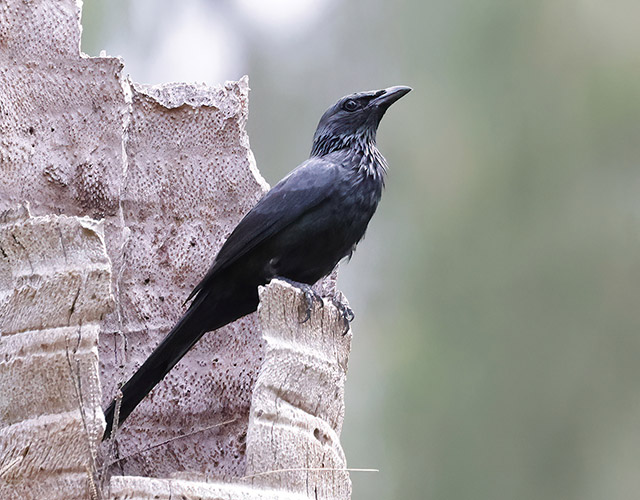
Beach KingfisherMoluccan Starling

Olive HoneyeaterVaried Honeyeater

We walked along a path inside the forest and found some White-bibbed Fruit Doves and suddenly a Dusky Megapode dropped from somewhere in front of us and stayed in a bush so we could take pictures of it. After some searching we found also Arafura Fantails and while we were walking on the beach we still found a couple of Lemon-bellied White-eyes. Then it started to rain very hard so we had to get under the roof of local people’s hut. Luckily the family let us stay there. One of our group members was feeling quite sick but luckily it was nothing serious and he started to feel better after some time.

Island WhistlerDusky Megapode

Fruit-BatCrab

On the way back we stopped on another paradise island where amazing numbers of fruit-bats were hanging on the trees and flying above the island. We took lots of pictures of bats and walked on the beach where we saw some Bridled Terns and a single Black-naped Tern. In the trees we saw some familiar honeyeaters before we had to hurry to the boat again.

We still saw a distant buoy where were some terns and a Pacific Reef Heron. We asked the driver to get closer to the buoy but he told that we were running out of fuel. And soon the engine started to work badly. It seemed that already our second island-stop had been too much for the well calculated amount of fuel but somehow we managed to get back to our dock.

On the 23rd of August we were again early and driving along narrow and steep roads. Finally we stopped at Warkesi Forest Camp bird-trail parking place and soon started to walk along the path.

Again nobody told us that we were going to walk a long way and very steep uphill. And once again we were walking extremely fast. Even though everyone was feeling OK again the last ones were leaving behind. Somehow we managed to make a local guide to understand that we had to climb slower but once we reached a high hide-tower, we had to wait for some time again before everyone was there. And actually we had been told that there was no hide at all but luckily Mikko had taken his tripod with him anyway.

We climbed up to the tower and of course then it started to rain hard. We soon started to hear calls of Red Bird-of-paradises but because of the rain their lek was cancelled. After a long wait the rain was getting weaker and I put my camera ready and was ready for something to happen. And in a minute a Red B-o-P flew to a branch and started lekking. But then the local guide saw it and started talking and waving his hands and even put his hand out through my photographing-hole and pointed towards the bird and of course the bird got scared and flew away! And I had seen the bird already some time earlier and calmly told about it to everyone else and they were slowly and carefully getting towards their photographing-holes. But now some missed the bird and I was the only one to get a couple of pictures.

Red Bird-of-paradiseRed Bird-of-paradise

After some more waiting one Red Bop flew to the tree but it just perched on the branch and soon it started to rain again and it moved inside the top of the tree so it was hardly visible. And it kept on raining for a long time.

After all we had to start walking back towards the parking place. While we were walking the rain finally stopped and we started to play different kind of playbacks. A couple of Pale-billed Scrubwrens were heard but a Waigeo Shrikethrush came so quickly to playback that only I managed to see it well enough – and then it disappeared.

Once we were back at the parking place we drove next to a small pond and walked to the shore. First we saw a couple of Spotted Whistling Ducks but soon we found also a nice Radjah Shelduck.

Spotted Whistling DuckRadjah Shelduck

The weather was getting warm so soon we saw some raptors flying on the sky. After a couple of Pacific Bazas and Brahminy Kites we saw a Collared Sparrowhawk and then a stunning Gurney’s Eagle! I had managed to get some moist inside my camera so my pictures were really bad. Luckily I got the moist away when I took my lens off.

Collared SparrowhawkGurney's Eagle

In the afternoon we did a boat-trip again. We headed straight to the buoy that we had seen in the distance on the previous evening. On the way we saw a small flock of Red-necked Phalaropes and soon we saw that there were still terns on the buoy. And once we got closer we could see that the birds we had guessed from the bad-quality pictures to be noddies were in fact Black Noddies! There were also Great Crested Terns and Bridled Terns which all were good to get some pictures of.

TernsBridled Tern

Black Noddies and Bridled TernBlack Noddy

Then we still headed to the bat-island to enjoy the beautiful place and warm weather – at least those of us who know the word enjoy – as there were no more new birds to find.

Bat IslandIsland

When we were back at our accommodation we spent some time on the deck and saw Pied Imperial Pigeons, Moustached Treeswifts, Lesser Frigatebirds, Papuan Eclectuses and a Striated Heron and so on.

Moustached TreeswiftPied Imperial Pigeon

On the morning of the 24th of August we still made a short walk near Scuba Republic and it was worthy. We saw a flock of 16 Rusty Pitohuis, heard a singing Waigeo Whistling Thrush and saw 2 Great-billed Parrots flying over us.

Soon we had to pack our luggage to cars and leave towards the harbor. We still stopped at the airport bay as it was a low tide and saw a Grey-tailed Tattler, a Eurasian Whimbrel and a couple of Common Sandpipers.

Soon we were at the harbor again and then in a same VIP-cabin. When the ship left we went to front-deck but now it was very quiet on the sea. The wind was very hard and all we saw were some Lesser Frigatebirds, terns, a Brown Booby, a Bulwer’s Petrel and some flying fish.

Sorong mangroves

Finally we were back at Sorong and there we headed to eat and then to our hotel to relax. In the afternoon we were ready to go birding. Absalon was guiding us again when we headed to huge Sorong mangroves.

Absalon was again walking quite far from us and playing just one call from his phone while there were also some other birds to find. But we managed to find and identify Orange-fronted Fruit Doves and Brown-backed Honeyeaters but some other species were missing. Finally the resilience of Absalon was rewarded when we all heard a Blue-black Kingfisher calling back. And soon I found the bird perched inside a big bush and then after some trying I managed to find one spot where it was possible to get good pictures.

Orange-fronted Fruit DoveBlue-black Kingfisher

We also managed to see a Little Kingfisher in flight before we decided to move to other part of the mangrove. There we were walking along the road when an over-keen guard came to shout to us. There was a gas-pipe next to the road so we probably weren’t allowed to be there. Later we noticed that our cars were missing license plates – they had been removed before the visit in this part of mangrove. After some waiting another guard came and this man looked more like a real guard, but he also was behaving much calmer. But anyway we had to leave this place, but luckily not before we saw an Australian White Ibis flying over us.

Then we headed to our hotel, went to eat to the same restaurant where we had excellent seafood again. And the rest of the evening we just relaxed and packed.

Towards home

On the 25th of August we headed to the airport very early. While waiting for our plane I remembered that some of our group had seen a swamphen from the plane in a ditch near the runway. I checked Merlin and realized that it was a different species here than in Java, it was Australasian Swamphen here. Thanks to determination of Andreas, after checking every corner of the airport, he managed to find a place where he could see the right area and after all he found several Australasian Swamphens.

Finally at 10:45 a.m. our flight left towards Jakarta. And I slept almost all the flight. Then in Jakarta we first had to take a train to the right terminal and then we had crazy long wait for the next flight.

Some of our group went out to see if there were any birds in the parks near the airport but I decided not to go, as I am sure that I will one day come to do real birding in Java anyway. So I decided to rest and do some shopping instead. And after all they saw only familiar species but one lifer I missed as a Spotted Kestrel was seen by a couple of our group through the terminal windows.

Finally at 1:10 a.m. our flight left towards Doha. And again I was sleeping almost all the time. We were in Doha at 5:25 a.m. and there I bought some more souvenirs and at 8:10 a.m. left our last flight towards Helsinki. In the afternoon at 3:15 p.m. we landed to Helsinki-Vantaa airport.
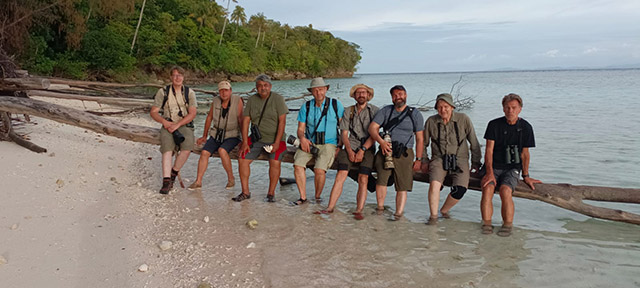
Group

Then it was time to say goodbye to our group and I still had a couple of hours wait for my train. Finally I took a local train to Tikkurila and there I changed to Joensuu-train. I was in Parikkala before 10 p.m. And after a few hours sleep we were going to do some ringing with Hanna.

J.A.

Northern Finland and Norway Varanger 6th to 21st of June 2023

On the 6th of June my holiday finally started. On my lunch-hour I had already packed our car ready and once I got from work we were ready to start driving towards north. Like always, we started to keep trip-list when we got out from Parikkala.

We kept on driving and saw some ordinary birds and in the beginning the only bird to mention was a Goldfinch in Kitee Puhos. Then in Juuka we saw a male Capercaillie that was walking on the main-road. But still we didn’t stop at all – we just kept on driving.

Twitching

We started to get close to Kajaani when we decided to go first to Sotkamo to twitch a Sociable Lapwing that my brother Pirkka had found already when he was driving north after our bird-tower competition a month earlier. But then we got information that there had been birders searching for this bird for a couple of hours without finding it, so we decided to keep on going to Kajaani. And after all our timing was perfect, as we found out that our friend Allan Hamari was just arriving to Kajaani railway-station. So we picked up “Allu” and continued straight to Koutaniemi where we immediately saw some birders in one garden and soon saw a stunning Blue-cheeked Bee-eater that had been in this garden for a couple of days.

Blue-cheeked Bee-eater

Blue-cheeked Bee-eater was flying a couple of times and catching some wasps and finally landed to a better place so we could get some pretty nice pictures of this beautiful bird. We could have spent much more time photographing this bird but once we got a message that the Sociable Lapwing had been found again, we decided to go to try to see it too.

Arohyyppä

Right before the border of Kajaani and Sotkamo we saw a Great Grey Owl catching some prey from the side of the road. Unfortunately the owl disappeared to the forest too soon so we couldn’t get any pictures. Soon we were in Huuskonniemi where were any birders but soon we found the Sociable Lapwing in flight. It landed behind the field invisible but soon it was flying again. It landed to the road but too far and I couldn’t get close enough for better pictures before it was flying again.

Pretty soon we decided to keep on going as we still had a long drive. And after all it was about 1:30 a.m. at night when we finally arrived to Kemi and parked to Allu’s garden. And soon we were ready to go to sleep.

In Kemi and Tornio

On the 7th of June we woke up before 7 a.m. and soon were ready for birding. We started the trip well when we heard a Terek Sandpiper song from one closed factory area. Then we continued to Tuhka-allas where we saw several earthmovers destroying this great birding plce, We passed the machines and continued to an area that was still untouched and soon found some Little Ringed Plovers, Oystercatcher, Arctic Terns, 20 Gadwalls, some Shovelers and after some searching we found a male Citrine Wagtail too. We also found some late migrants that were just arriving to Lapland like Garden Warbler, Lesser Whitethroat, Sedge Warbler and Common Rosefinch.

Citrine WagtailPunavarpunen

We continued to Rytikari where was saw immediately a Caspian Tern flying over the sea. Then in a short raptor-watch in Holstinharju we saw a couple of White-tailed Eagles and then a visit in border of Simo in Matinaapa bog we saw a surprise a Black Kite! While walking on the bog I found out that my wellington was leaking so next we visited Hankkija-shop in Keminmaa and bought new pairs of boots with Hanna.

In Tornio we headed first to dump where we saw both Baltic and Heuglin’s Gulls and some Greater Black-backed Gulls. In Ala-Raumo we saw a couple of Rough-legged Buzzards and heard Greylag Geese, in Oravaisensaari we saw a White-tailed Eagle and in Kaupunginlahti a Coot, some Great Crested Grebes and a Canada Goose. Then around the golf course we saw plenty of more Canada Geese and a single Barnacle Goose but unfortunately the famous Bar-headed Goose was missing.

Then we crossed the border to Sweden and visited a huge candy-store before headed back to Tornio where we still managed to get one more Lapland-tick in Kiviranta where we saw a Collared Dove briefly in flight. Then it was time to head back to Allu’s home to eat, have sauna and catch an early sleep.

Towards north

On the 8th of June we left at 7 a.m. to drive towards Kemijärvi. We did a stop in Rovaniemi Paavalniemi where we twitched an Icterine Warbler which is extremely rare in this north. We also heard a couple of Chiffchaffs.

Finally we arrived to Pirkka’s apartment and our Lapland bird-race team was now together. Pretty soon we had packed all our stuff to Pirkka’s car and kept on driving towards north.

In Pelkosenniemi Sokanaapa we climbed to a bird-tower that was in very weak condition and actually closed but anyway we managed to find a breeding Taiga Bean Goose and hear a singing Rustic Bunting. In Sodankylä we checked Moskujärvi where we saw a few Velvet Scoters, a couple of White-tailed Eagles and Golden Plovers and so on and then in Sompiojärvi 4 White-tailed Eagles and a couple of Willow Grouses along the long road there. Then in Ilmakkiaapa we saw Common Scoters and a Great Grey Shrike and in Porttipahta a couple of Great Black-backed Gulls. But after all we hadn’t found many interesting birds for the coming race.

We still had a long way to go but of course we had to stop in Kaunispää where we found quite easily a Dotterel. We also met our old friend Juha Tuomaala there and he had just seen another Dotterel behind on the top. So it seemed that Dotterel might be quite easy in the race.

Keräkurmitsa

Taviokuurna

Finally we were in Inari Kaamanen and Neljän tuulen tupa where we had booked a couple of cottages. There we met several bird-ringers that were on their Lapland ringing-trip and of course we saw some Pine Grosbeaks that were visiting the feeders. But pretty soon we had to go to sleep as on the next day we still were going more north. I think any other team would have used the last day before the race checking places that they were going to visit but not us – we were going to do birding to places that were north from the area where we were going to race. We just wanted to see more bird!

Preparing to race

Willow Grouse

But on the 9th of June the weather was really awful. It was very windy and also raining a lot. Anyway we started birding quite early and already in Kaamanen we found a Siberian Tit and then in Kenespahta we saw a Rough-legged Buzzard in nest. Then we headed to Skalluvaara where a couple of Red-necked Phalaropes, 5 Long-tailed Skuas and some Bluethroats were seen. But the weather was so bad that soon we kept on driving.

On the top of Utsjoki Ailigas we tried to find Ptarmigans but the only grouse we found was suprisingly a Willow Grouse. Also a White-tailed Eagle and a couple of Long-tailed Skuas were seen.

We stopped several times along Teno-river but saw only some Rough-legged Buzzard and Common Kestrels and then a single Merlin. But then we found a nice Hawk Owl and stopped to see that there was already a big young Golden Eagle in nest.

But after all the weather was so poor that we didn’t much else and finally we were in Utsjoki Karigasniemi where we went to familiar hotel.

While we were having dinner we planned our race a little but after all there wasn’t much to plan as it was going to be very similar as it has been already for years for Pirkka and Allu. We would be birding from almost the northernmost until southernmost Lapland and see lots of nice bird on the way!

Lapland bird-race

On the 10th of June we slept long and woke up to have breakfast at 8 a.m. Soon we had packe our car again and then still went shopping at 9 a.m. Then we were ready to drive to Piesjänkä and on the way we saw a Smew in Basijärvi.

In Piesjänkä we agreed that Hanna would stay near the reindeer round-up as she had been in bronchitis and it was going to be a tough walk to start the race.

We walked more than an hour towards our starting point that was on the shore of Lake Ailigas. We didn’t see many birds while walking on the border of the bog-area but luckily there were many birds on the lake and on the surroundings.

Tunturikihu

We started our race at 10:49 a.m. when we saw a flock of 10 Bean Geese and a flying Rough-legged Buzzard. Then it was easy to tick all the birds that we had already found like Velvet and Common Scoter, Long-tailed Duck, Red-necked Phalarope, Ruff, Long-tailed Skua (25 birds), Bluethroat, Lapland Bunting, Yellow Wagtail and so on. Then I found a distant 2nd year Golden Eagle and a Jack Snipe was lekkiing over us so the start had been good!

We walked back toward our car though the wet parts of the bog but found nothing really. When we finally got to Hanna, there were Temminck’s Stints, Common Ringed Plovers and after some waiting also a Dunlin but unfortunately a Willow Grouse and a Bar-tailed Godwit had already disappeared a long time ago. But we knew we were going to struggle with our schedule so we had to keep on going.

A couple of stops along the road produced more Red-necked phalaropes, a Spotted Redshank and finally after a hard work also a Broad-billed Sandpiper. Or actually Allu made the hard work as he is the toughest 71 years old man alive. He put his orientation trousers and shoes on and ran to the wettest bog. After about 10 minutes of running finally the bird was found.

We crossed the border to Inari and soon saw a Smew, Black-throated Divers, a Hen Harrier, Pine Grosbeaks, a Waxwing and so on. A Siberian Tit was twitched from next to a nest-box that we had got GPS-points, Thanks Juha! Surprisingly we saw a female Capercaillie flushed behind the nest-box. Then in Lake Inari we saw Red-throated Divers, a Cormorant and a Heuglin’s Gull (our only Lesser Black-backed Gull).

In Ivalo Pikku-Petsamo we weren’t lucky and also in the city we saw only a Rock Dove and a Blue Tit. And then the worst was still to come as there was no Dotterel to be found in Kaunispää – only new species was a Whimbrel. But luckily in Laanila we saw a Dipper easily.

We hadn’t planned to go to Kiilopää but as we hadn’t been able to go to Karigasniemi Ailigas and we still missed all mountain-top birds and we had saved quite a lot of time passing some places that had been empty a couple of days earlier, we decided to go climbing.

Riekko

Again Hanna stayed searching for anything while we started climbing up towards the top of Kiilopää. It was a tough climb but right after the last steps we found a Ptarmigan! It was my 270th species I have seen in a bird-race in Finland. Then on the top I found a couple of Snow Buntings. I found them when I put my thermal camera on and just looked through it and there were a couple of bright spots right in front of me. These birds were hiding in the middle of rocks so well that we might have missed them without my camera. Then we walked around the top for some time and still managed to find a Dotterel! So the climb had really been worthy!

We jogged all the way down to Hanna and again she had seen a few Willow Grouses but again they had disappeared.

We knew that we had lost time in Kiilopää but anyway we made a decision to go to Sompiojärvi. A couple of days ago there had been a road roller fixing the road so it was faster to get there, but anyway it was a long drive. But we thought that at least White-tailed Eagles would be there and maybe something else too as now the weather was perfect! But there were no eagles to be found or nothing else either! Luckily on the way back I finally found a Willow Grouse and also another Capercaillie.

In Ilmakkiaapa we saw a Black Grouse on the road and in Korteaapa finally some Common Cranes. In Porttipahta there were no gulls at all but soon we managed to hear a Siberian Jay calling.

The day changed while we were arriving to Sodankylä-city where the only new tick was a Jackdaw. A long and tired drive continued through Pelkosenniemi where we finally saw a Short-eared Owl and then in Kairala some Curlews, a Woodcock and a Whinchat. When we were driving again we saw a Blackbird flying across the road – we had clearly arrived to an area where more southern species were.

Rallissa

In Kemijärvi we were in early hours and in sewage-pools we found a Gadwall, a Shoveler, Pintails, a Sedge Warbler, a Chaffinch and a Common Rosefinch. Then we checked some more places in Kemijärvi and found a Little Ringed Plover, a Garden Warbler, a Skylark, a Tree Pipit, Common Crossbills, Tree Sparrows and a Northern Wheatear. But Red-necked Grebes that Pirkka had been prepared for us from at least 4 different places were completely missing.

Then we had again a long drive to Rovaniemi. In Vikaköngäs we heard Parrot Crossbills and in Viirikangas we found surprisingly a Garganey swimming in a tiny pool and twitched a Wood Warbler in the cemetery. In Harjulampi we ticked Great Crested Grebes and a Lesser Whitethroat, in Niskanperä a Common Whitethroat, in Paavalniemi the same Icterine Warbler, in Hirvas a Dunnock and a Chiffchaff and then in Matkajänkä a Little Bunting.

Then we hurried to Muurola beach where Allu used his scope and found a Canada Goose extremely far from the opposite side of the lake. In Suksiaapa we spent some time as it really is a good spot. And we found several Slavonian Grebes, a Honey Buzzard, a Black Woodpecker, a Common Redshank and saw also a Garganey and a Shoveler. But we knew we were really late on our schedule so we really had to keep on going.

Pohjansirkku

We still had the craziest part of our race to go which was Posio Korouoma. It meant that we had to drive south for more than an hour to get there and we counted that we might have less than 30 minutes left when we get there.

Once we finally got to Korouoma we had to almost run towards the bottom of the gorge. But anyway we were in one of the best forest-areas in whole Lapland so quite easily we found new species like Goldcrests, a Sparrowhawk, a Willow Tit, some Wrens and then a couple of pairs of Rustic Buntings. We couldn’t make it until the tipi-like hut before the race-time was full.

We were tired but happy when we rested a little bit and ate some cookies while Hanna was photographing Rustic Buntings. Allu had been keeping the species-list and he thought that we had managed to break the race-record by one species! But once we were back at our car and driving towards Kemijärvi I checked the list again and immediately found that the count was wrong. I also noticed that Allu had checked one too good extra-species, Surf Scoter, but then forgot Little Bunting. But anyway I managed to count 129 species and we had broken the record by 5 species. But later Allu still noticed that Slavonian Grebe hadn’t been counted so we had managed to reach Allu’s dream-result – 130 species!

Towards north again

After a long drive we were in Kemijärvi and Pirkka’s wife Anitta had prepared perfect lunch for us all. Then we were ready to go to sleep to our tent that we had put up to their garden. And once we woke up Allu had already left to Kemi by train. In the evening we spent time with Pirkka’s family but quite early we were ready to go to sleep again.

On the 12th of June we slept long but then started the next part of our holiday and started driving towards north again. Ion Pelkosenniemi I saw a Great Grey Owl flying across the road and then in Inari we stopped to photograph the same nesting Siberian Tit. We saw a fat Goshawk flushing from the ground so maybe it had eaten the female Capercaillie?

In Neljän tuulen tupa we saw familiar faces and Pine Grosbeaks again but soon we were on the road again. In Silmänkaivamanjänkä we saw a Willow Grouse and once we got more north, we started to see some Rough-legged Buzzards. We didn’t have any exact plan what to do but after we had been on the top of extremely windy Njallavaara and seen only a single Dotterel, we decided to continue towards Pulmanginjärvi. Along the road we saw some Golden Plovers, Long-tailed Skuas and a Dunlin.

Pulmankijärvi

In Pulmankijärvi we continued to the southern side of the lake but there along the river there were already so many mosquitoes that we decided to drive back towards the lake to find a place for camping. We stopped a couple of times along the lake and found some Black and Red-throated Divers and a Short-eared owl and so on. Finally we put up our tent to a sandy beach and soon we were asleep.

On the 13th of June we slept long and after a good breakfast we still checked the lake but saw nothing new and then headed towards north again.

Varanger

Before the Norwegian border we saw a Willow Tit but then in Norway we of course started new tick-list. Nothing better was seen until we got to Varangerbotn where we stopped in Nyborg where a Surf Scoter had been seen for about 10 days.

From the sea we found ordinary species like Black and Red-throated Divers, Common Shelducks, Bar-tailed Godwits, Black Guillemots, Kittiwakes and then after some scanning I found a very distant flock of Common Scoters and we could see that there was at least probably some white on one birds head. We had to drive closer and soon we parked to a local health centers parking place and found a good shelter behind the buildings and there we could see the Surf Scoter a little bit better. We also saw a male Greater Scaup and heard a Common Redstart.

Our next stop was in Nesseby church but the wind was so awful that it was impossible to do any birding. We tried to get some pictures but soon decided to give up. We saw some Arctic Skuas, Greylag Geese, Wigeons, Dunlins, Common Eiders and Red-necked Phalaropes.

Vesipääsky

In Vadsö we first checked a flock of Eiders but they were all Common Eiders. Then we walked to the pool where we spent some quality time with Red-necked Phalaropes. We took too many pictures and saw also some Red-throated Pipits, Ruffs and so on.

In Eckerö we checked the Kittiwake colony and of course took some pictures but saw also a couple of Razorbills and a flock of 10 Sanderlings that flushed from the beach along the road.

Suosirrejä

The first better self-found observation was a female Steller’s Eider that we found in Skallelv village. It was with a flock of Common Eiders and Goosanders and of course the latter ones were too shy and flushed immediately and then all eiders followed them and the Steller’s Eider wasn’t found anymore. In Skallelv spit we met our old friend Jukka Könönen who told that there were some photographable waders on the shore but unfortunately it was low tide so birds were getting further all the time. But after some trying we managed to get some pretty good pictures of Bar-tailed Godwits, Turnstones, Sanderlings, Dunlins and Little Stints. We also saw the first Gannet of the trip.

We still tried to follow a road inland in Komakväer but after some kilometers I thought the road was in too bad condition so we turned back and tried to find a place for our camp somewhere along the main road. And after some searching we found a good spot.

On the 14th of June we saw a Common Ringed Plover that had been lekking nearby all night but also a Long-tailed Skua and a Rough-legged Buzzard from our camp. Soon we had packed everything again and continued to Vardö. In the harbor Hanna went to collect the tickets to a boat to Hornöya and then also make sure that our booking to Hornöya lighthouse was OK. We had tried for a couple of days to book a room from the lighthouse by calling but when Hanna had reserved the tickets to the boat she had been told that the room had to be booked by email. Luckily we had got the response to our email in a couple of hours so we had been able to stay in our ordinary schedule.

Hornöya

At 9 a.m. we left with about 10 other ”tourists” towards Hornöya. And soon we were in this famous bird-island! Immediately we could find out that there were nowadays Shags everywhere on the lower part of the island. They were in the buildings, under the rocks and one was pecking our ankles under the stairs. It seemed that they had moved lower because there were nowadays so many White-tailed Eagles soaring over the top of the island. Here Shags managed to breed safer.

KarimetsoArctic Puffin

There were amazing numbers of Common Guillemots both in flight, on the sea and on the ledge. It was far more difficult to find any Brünnich’s Guillemots than it had been on our previous visits 15 and 20 years ago. Puffins seemed to be just beginning to choose where to nest so they weren’t very numerous. We also tried to find a nest of Fulmar that we had found on our previous visits but it seemed that the ledge had been collapsed and it wasn’t there anymore. We knew there was still a couple breeding somewhere but it is not easy to find as there are amazing numbers of birds on the ledges.

First we stayed on the lower part of the island and got an opportunity to follow a couple of local scientists while they caught a few Shags and put rings which another one had a transmitter. After a year they would try to catch the same bird and get lots of information what the bird had been doing. We also saw some Rock Pipits and a couple of Twites.

When other tourists had spread around and most of them had climbed up to the lighthouse, we started to get more pictures of alcids. I tried to get flight-shots while Hanna took all kind of pictures.

Atlantic PuffinCommon Guillemot

Pohjankiisla

Pretty soon I found out that if I wanted to get any decent picture of Brünnich’s Guillemots I had to climb higher as the few Brünnich’s Guillemots, that were flying in the middle of thousands of Common Guillemots and hundreds of Razorbills and Puffins, were flying higher as they also had their nests quite high on the ledge. It wasn’t an easy project as the wind was very hard and it was very difficult to stay still at all. And then I still had to identify a lonely Brünnich’s far enough to be ready to take pictures of it when it passes me very quickly. And if I missed, which happened quite a few times, I had to wait and wait to get another opportunity.

I got plenty of pretty good pictures of Common Guillemots, Razorbills and Puffins and finally managed to get some OK pictures of Brünnich’s Guillemots too but of course I wasn’t happy yet. But anyway we were already so covered with bird-shit and our arms were so tired that we decided to get our bags from the harbor and carry them up to the lighthouse.

We were sweating badly once we reached the lighthouse and got in to lighthouse keepers building. There we met the scientists who showed us our room. Unfortunately we also found out that there was so little water in the island that we couldn’t get our long-awaited shower.

After we had relaxed a bit, we headed back down to get more pictures. All tourists were soon gone and probably because of the wind there were no more boats coming in the afternoon. So we could concentrate to take pictures by ourselves. And we really took lots of pictures and stayed photographing until the evening.

The night in the lighthouse keeper’s house was unforgettable. The building had been fixed up recently and rooms and kitchen were like new. We slept extremely well in our comfortable beds and woke up quite late and after heavy breakfast we were our again.

There was now storm outside and it was really difficult to stand in windy places. Anyway we first tried to photograph Puffins on the cliffs from the top but soon walked back to the lower parts to get flight-pictures and nice posing pictures of alcids.

I still wanted to get a better picture of a Brünnich’s Guillemot but now they were even fewer than on the previous day. Wind made photographing very difficult and soon the light started to get worse too.

Ruokki

We stayed on the lower part and I walked quite a lot around and tried to find something new like the Fulmar nest. There was nobody else on the lower part at all as the scientists were having the day off because of the safety reasons – the wind was too dangerous. So we could stay together with birds and some of them came very tame. While I was once sitting down on the oath and photographing perched alcids, one Razorbill and one Puffin came to stand right next to me – there they got some shelter from the wind. I scratched the neck of the Razorbill a couple of times and I can’t say if it enjoyed it or not but still it kept on standing next to me. It started to be a problem that several birds were too close to photograph.

After a few ours photographing we started to climb up as we planned to have some breakfast. Then along the trail we flushed a Grey Wagtail that soon flew down to the other side of the valley. On the upper parts of the island we saw again some coupled of Red-throated Pipits.

Etelänkiisla

After the breakfast we took our bags and carried them to the mid-part of the island where it was still shelter and then headed back to the wind to get more pictures. While I was again taking flight-shots I noticed a completely white Common Guillemot and somehow I managed both to shout to Hanna where it was and to get some pictures of it even though it was quite distant. From the picture we could tell that it was an albino bird with red eyes.

In the afternoon I walked around the lower part again and surprisingly found a female-plumaged Black Redstart but unfortunately a Northern Wehatear was chasing it away and they both disappeared before I managed to get any pictures of it. I also saw a couple of Twites and Rock Pipits and White-tailed Eagles seemed to enjoy playing with the wind.

Finally we carried our bags to the harbor but still we had time to get the last photographs. I climbed higher to get the last flight-shots in quite different light but soon I saw Hanna waving and pointing that the boat was already coming. I had to hurry to harbor and after all the boat had arrived 30 minutes early. And soon we were back at Vardö harbor again.

Hamningberg

When we were packing our car we met a surprise friend again – we knew that Sampsa Cairenius had been ticking year-ticks in Lapland but he had continued to Varanger too and there he was asking if we were going to continue towards Hamningberg. That was our plan and after we had visited a shop that was once again difficult to find in Vardö, we soon drove out from the city.

We soon stopped in Svartnes where in harbor-pool there had been a tame White-billed Diver still a few days ago and on the shore there had been a Pectoral Sandpiper in the beginning of June. We tried to find both but weren’t lucky. All we found were a couple of Purple Sandpipers, a Sanderling, a Long-tailed Skua and some more common species.

Soon we started driving towards Hamningberg. On the way we stopped only a couple of times but soon continued driving in the middle of moon-kind of landscape. Finally we were in the end of the road where we planned to do some seawatching Sampsa hadn’t got enough clothes but he managed to use his scope quite well while sitting in his car. With Hanna we were wearing almost all our clothes so we had no problems at all.

Because of the windy weather there were lots of birds on the sea and soon we found more Fulmars that we had ever seen in Hamningberg. Also lots of Kittiwakes, flocks Common Guillemots with quite a few Brünnich’s Guillemots, Razorbills, Puffins, Gannets and so on were seen. After short time Sampsa found a stunning White-billed Diver that seemed to be migrating towards east. And soon I found 2 female King Eiders going to the same direction while all the other birds were going towards west.

After about an hour seawatching Sampsa decided to leave back towards Finland and we started to put up our camp and pretty soon were were ready to go to sleep.

On the 16th of June the wind was still very strong. We seawatched for a half an hour or so but there were less birds on the sea. Still there were quite a few Fulmars and so on but only better observation was a leucistic Razorbill.

On the opposite side of the fjord we could see Syltefjorden cliffs and even the Gannet-colony was found. We had visited this Gannet-colony 20 years ago and as we were now so close to it, we decided to go there again. But even though it was close, it meant that we had to drive 350 kilometers and walk a very long and hard walk to get there – but we were ready!

Long drive around

So soon we were driving through rocky landscape again. Wind was so strong that there was no point to make almost any stops and no interesting birds were seen.

In Barvikmyran we stopped to check a lake that was high on the mountain-area. There was one of those funny shelters that were made for birdwatchers. From the lake we found a few Greater Scaups, Long-tailed Ducks, a couple of Red-throated Divers, Dunlins and a Pink-footed Goose that soon flushed and flew towards Vardö.

In Svartnes we checked the waders again but saw nothing new and while we were driving again we saw a Long-tailed Skua. After Domen viewpoint we saw a Shore Lark flying across the road and stopped and followed it to a meadow and soon found two couples of Shore Larks. We managed to get pretty good pictures of one of them before they all moved further. And once we were driving again we saw a Willow Grouse and a Rough-legged Buzzard.

Tunturikiuru

In Skallelv we found a flock of Common Eiders with a male and a female King Eiders. Then I decided to sleep a little while Hanna went to photograph waders. There weren’t many waders after all so soon Hanna was back and we kept on driving and soon saw a Short-eared Owl.

Pilkkaniska

The next stop was in Nesseby but still the wind was too bad so soon we continued to Nyberg. There was a roadwork going on so we couldn’t stop until we were on the other side of the village and from there we could see that the flock of Common Scoters with a Surf Scoter was swimming right in front of the health center. We walked there but the flock had moved a little bit further but anyway we managed to get some kind of flock-pictures. There were some other birders too and we also showed the scoters to a Finnish nurse that was working on the center and she told that the health center have always open doors for everyone, including birdwatchers.

After we had been driving a while inland we turned towards Teno river delta. In Harrelv we saw a Hawk Owl which felt like a déjà vu as we had seen one there 20 years ago on our first trip to Varanger too.

Lapinsirri

In Teno delta we enjoyed the views but also managed to get pictures of a Common Shelduck family and displaying Temminck’s Stints. But soon we were driving high up to mountains where the road stayed for some time. Long-tailed Skuas, Red-throated Divers, Golden Plovers, an Arctic Redpoll, Ruffs, a Snow Bunting, Temminck’s Stints and so on were seen before we were finally in Syltefjorden where we parked our car to the end of the road.

Syltefjorden

We had planned to eat and then camp near the parking place but as we still felt so strong, we decided to pack our big backpack for me and Hanna’s camera-back for Hanna and start walking. We knew that we were going to walk mostly in very rocky and hard landscape so it was good to start walking as soon as possible. It was also good to walk at night as the weather was nice and cool and wind also was keeping us cool. We decided to walk as long as we just could and then put up the camp.

RoutePtarmigan

Right away we had to climb up to the top of the mountain and then continue up and down in very rocky landscape. We remembered that we should follow sticks in the beginning and later rock-piles but soon we realized that after winter and snow most of the sticks were broken or just disappeared. So we just kept on trying to find the shortest and easiest way by ourselves.

There seemed to be Ptarmigans on every top and they were displaying a lot but they didn’t let us get very close. But then the second couple of Bar-tailed Godwits were posing well and I managed to get some nice photos. We also saw lots of Arctic Skuas, some Red-throated divers, Golden Plovers, a few Common Eiders that were swimming on a lake that was up on the mountains, some Long-tailed Ducks, Whimbrels, an Arctic Redpoll and a few Snow Buntings.

Finally we landed down to old Ytre Syltefjorden village that was reachable only by feet or by boat. We crossed the bridge and then we were so tired that we just put up the tent and soon were asleep – it was already more than 3 a.m.

Kiiruna

On the 17th of June after 4 hours sleep, we ate well and I had got an idea that we would leave our camp here and pack just everything we needed to take pictures and some food and drinks with us and kept on walking the last part lighter.

Sepelrastas

Soon we were trying to follow rock-piles but again we found out that tourists had been piling up stones to every top so after all kept on walking as straight as possible towards the colony. Pretty soon we straightened our way by keeping distance to one bay and kept on walking a bit further from the cliffs. We checked the map and we were quite sure that we could identify the colony-islet and kept on walking towards it. Some Ptarmigans were seen again but much less that at night when they seemed to be active, also a couple of Ring Ouzels were found and they really were living in rugged landscape.

Syltevuono

We had been walking for a long time and we started to feel very tired when we finally reached the top where we thought that we could see the colony under us, but it was shock! The colony wasn’t there! Hanna stayed there trying to get an idea where the colony was on a map and even found some GPS-coordinates while the internet was working a short time but it was easy to see that those coordinates were wrong. I decided to walk more than a kilometer more to see if the right place was still further but after all I saw only more amazing cliffs but no colony! It also seemed that there were only some thousands of Kittiwakes on the cliffs as 20 years ago there had been more than 100 000 of them. So I walked back to Hanna and then walked a kilometer backwards until I finally saw the colony far in front of me – it had been right on that bay we had been skipping on the way! I saw some Snow Buntings and Twites but they really didn’t make me any happier. I had to walk back to Hanna again and then we had to walk at least 2 kilometers up and down in the worst possible rocky terrain to finally see the colony under us.

Route down

When we finally saw the colony under us, we started to wonder how on Earth we could’ve gone down 20 years ago! The cliffs were extremely high and steep and there was no way down to be seen. We had to walk some hundreds of meters more and then it still took some time to find a very narrow gap in the rocks that looked familiar.

Now 20 years and kilos later the gap looked extremely dangerous! But it had been so long drive and awful walk to get until this point that we couldn’t back up anymore. So I just took my camera and spare-battery and landed to the gap and started to get down. The hillside was extremely steep and in some points I had to walk on stones and I really had a feeling that I could start a landslide in any second.

Slowly I managed to get down to the same level with the bottom of the colony-pillar. I remembered that 20 years earlier we had been thinking that there might have been a way to continued to the same level with the colony by climbing along a narrow ledge. But then we hadn’t got so good cameras that we would have taken the risk. But now we had so soon I started to get up along the grassy edge towards the colony.

Hanna was just starting to get down when I started my way to the ledge. It was extremely dangerous to get to the end of the ledge but somehow I managed to push myself against the wall and take one step at time to get there. And once I got there I could see the colony right in front of me.

Unfortunately my legs were extremely tired and I felt that I was shaking. Maybe the main reason was that I was on a narrow ledge and I really hate high and dangerous places. But of course I started to get pictures of the Gannets that were flying around the colony. It seemed that Gannets were very bad in landing so they flew several times around the pillar and some of them came pretty close but I soon found out that they were extremely difficult birds to photograph because of their shape and color as they flew all the time against different back-ground – sky, sea or cliffs.

Suula

I took pictures for about 20 minutes and when Hanna had managed to get under the ledge I decided that it was her turn. The ledge was too narrow for two photographers. So I slowly got down and getting down was even more difficult and dangerous. But if I had been horrified to get up and down to the ledge by myself, it was much more difficult to follow Hanna doing the same. One slip and she would drop down to death.

Hanna was carrying a huge camera-back on her back and she started first to crawl up along the ledge but the most narrow part was too narrow and she had to get up. I couldn’t watch but very slowly she managed to get up and soon she was taking pictures. And as Hanna is much more experienced photographer and also has better lens than I, she managed to get much better pictures too. Probably she wasn’t shaking either up there?

Suulat

But I started to think that we still had to get back up safely and then we still had a long rocky walk back to our camp, so I didn’t give Hanna too much time and after half an hour or so Hanna started her way back from the ledge. I felt like it took ages for Hanna to get through the most narrow point and also after that but she survived. Then I got some kind of adrenaline-burst and started climbing up and I remembered that it had taken 30 minutes to get up 20 years ago but now I made it up in 10 minutes. Then I had to wait for a long time before Hanna was up too. And once Hanna was almost in safe, just under the last steep part, we heard a Dotterel calling somewhere close to us.

Finally Hanna was safe too and after we had rested a bit, we decided to cook a meal right there above the colony. The view was still gorgeous but I really couldn’t enjoy less as I was really tired – and we still had a long way t o go.

But the walk to our camp was surprisingly easy and quick. We managed to optimize the route perfectly (route marked in the map. Blue spot is the colony and single red spot is a suitable camp site with water). And soon we were ready to get some well deserved sleep while sun was warming our tent a little bit too much.

Reitti kolonialle

Punakuiri

On the 18th of June after we had awaken we cooked again and then started our way back towards Syltefjorden. It was the first warm day of our trip so we were wearing far too much clothes! On the ay we saw some Ptarmigans, Long-tailed Ducks, Arctic Skuas, Bar-tailed Godwits, Whimbrels and also some Red-necked Phalaropes and Turnstones and so on. We ate once more between a couple of lakes and rested before the last push over the mountain. Finally we landed down along the steep rocky cliff to our car where it was nice to find something to eat and drink.

Finnish-ticks again

But we didn’t rest for long before we started driving. On the way the best bird was a Purple Sandpiper that flew over the road together with a Temminck’s Stint. Then we followed Teno on the road on Norwegian side of the border until we crossed the border in Utsjoki. There we stopped to eat in Annukka’s Grill where we had excellent reindeer-burger and reindeer-kebap.

Hiiripöllö

We didn’t have any exact plan what to do next but I started to dream about waking up to Ring ouzel song which meant that we started driving along Teno towards Nuvvus Ailigas. We made a couple of stops and saw again just some Rough-legged Buzzards and Common Kestrels. We accidently saw the same Hawk Owl again and once we stopped we could hear at least two young owls begging for food. After some searching Hanna managed to find another youngster and of course we ringed it. Then we waited for a half an hour for the other youngster to call again and reveal its exact place but it kept quiet.

The same young Golden Eagle was of course still on nest and somewhere we saw a Siberian Jay flying across the road. Finally we were in Nuvvus Ailigas where a Dunnock was singing loudly. We stopped under the familiar gorge where we had seen and heard Ring Ouzels several times but the time of the day was bad as it was late afternoon. We walked along the road a little and suddenly heard a Ring Ouzel singing shortly. And then another bird started to sing well. As we had managed to get this species to our Finnish year-list already, we had one more change to our plans.

Surprisingly we got information that Hanna’s mother Helka and sister Elissa weren’t in western Lapland anymore but they were also in Utsjoki now. And they were going to twitch a Yellow-browed Warbler that had been found a few days earlier in Piesjoki. We checked where this place was and found out that we had only 30 kilometers to get there. Hanna called to Elissa and found out that they were already close to Piesjoki but they agreed to wait for us so we could go for the bird together.

In Piesjoki we had a funny family-meeting and we finally managed to change lighter clothes. Then we started to walk along a buggy-trail and after about a kilometer we followed a narrow path for some hundreds of meters before turned towards the small river. And even though it was the worst possible time of the day, we soon heard a Yellow-browed Warbler singing and also calling very actively.

Taigauunilintu

We had a feeling that there was even two birds but soon found out that it was only one hyper-active bird that was even chasing Willow Warbler away from its territory. The bird was so fast on its movements that we hardly got any poor pictures before it suddenly got quiet. But it was nice to tick this bird that we had earlier observed in Finland only in autumn. Actually we had tried to twitch one with Hanna and Elissa on our previous trip to Lapland in Kemijärvi a couple of years earlier without success – the bird had then moved on.

It was already late evening when we walked back to our car and saw a Hawk Owl flying over us. Elissa and Helka were in hurry to their cottage that they had in Kaamanen but we agreed to meet in Piesjänkä early in the next morning. We decided to drive to reindeer round-up where we put up our camp. We still checked the pool nearby but saw only some Red-necked Phalaropes and Temminck’s Stints. Also some Long-tailed Skuas were seen in flight and a Whimbrel was calling but soon we were ready to get some sleep.

Mustaviklo

On the 19th of June we were up early and at 5 a.m. we had already visited the closest pool and eaten breakfast when Elissa and Helka arrived. Soon we started to walk along the bog towards the same place where we had started the bird-race. We photographed a Long-tailed Skua couple that were on their territory on the fence-posts and saw some Golden Plovers and a flock of 5 Bean Geese before I decided to keep on walking in the middle of the bog. It was a clever move as soon I found a Spotted Redshank, a Bar-tailed Godwit and a couple of Broad-billed Sandpipers and managed to get some kind of pictures of all of them. Meanwhile a Jack Snipe was also displaying so we had a good time as also others managed to observe all the species.

Broad-billed SandpiperLong-tailed Skua

Morning was getting warm early but after we had seen a Short-eared Owl couple we finally arrived to the shore of Lake Ailigas. There we saw again Long-tailed Ducks, Common Scoters, this time a female Velvet Scoter, Red-necked Phalaropes, Ruffs and again Long-tailed Skuas flying around. A Bluethroat and a Lapland Bunting were singing and more of them were seen. Ii was hard to believe that my mother-in-law Helka was 77 years as she easily followed us in this bog.

When we walked back, we were both in the middle of the bog with Hanna and we managed to get some more pictures of the Spotted Sandpiper. We also managed to see a few Arctic Redpolls. But later we also followed the edge of the bog where it was much easier to walk but there were no more new birds. Pretty soon we were back at our cars.

Next we decided to go to eat to Muotkanruoktu where we had excellent reindeer and mashed potatoes. Of course we saw some Pine Grosbeaks too. Then it was time to say goodbye to Helka and Elissa and start driving towards south.

After some driving we parked to Neljän tuulen tupa where we had booked the same cottage again. It felt pretty good to have shower – after 8 days!

In the evening we were talking with ringers and there was our old friend Sebastian Andrejeff too. Hanna also changed position of some branches next to the feeder and at 9 p.m. we had sauna. It was refreshing to go to swim too.

On the 20th of June Hanna woke up an hour earlier and photographed Pine Grosbeaks – of course she got some excellent pictures. But then we packed our car and were hitting the road again.

Lapintiainen

On the way we visited the same Siberian Tits again and nestlings were so big that they were shouting happily when they heard us coming. In Inari Törmänen we twitched an Arctic Warbler that was singing along the airport-road. In Sodankylä Porttipahta we stopped to check gulls again and this time there was a flock on the lake and there were 2 Heuglin’s and 1 Greater Black-backed Gull with Herring Gulls.

On a short stop in Pelkosenniemi we found out that there were really lots of mosquitoes! So soon we continued to Kemijärvi to see Pirkka’s family again. Now there was the whole family present so we spent some time there.Then we still went to eat pizza with Pirkka before continued driving again.

In Kuusamo Ruka we saw a Peregrine Falcon and then we went to see Julma Ölkky canyon where we heard a Wren and a Wood Warbler. Then we decided to continue to a one hill close to the border in Suomussalmi Varpavaara which e thought might be a good place to find some interesting birds for ongoing bird-atlas. And once we parked there and opened the car-doors, we heard a Red-flanked Bluetail singing.

In the evening we tried to catch this bluetail but we weren’t lucky. Then we put up our camp but this time we were going to sleep in hammocks.

Varpavaara

Sinipyrstö

On the 21st of June we had slept like babies and woke up to Red-flanked Bluetail song. It had been singing whole night. Then we managed to catch the bird after some trying and ringed this nice adult male. We heard also another bluetail but it was so far that we didn’t go to try to catch it. A Greenish Warbler was singing close but it stopped very soon and didn’t respond to playback at all.

We did some birding along the road and found one more Red-flanked Bluetail in Pieni Housuvaara and heard both Common and Parrot Crossbills and so on. But pretty soon we were driving again.

In Ala-Vuokki we stopped to a small shop and there was a Blyth’s Reed Wabler singing on the closest bushes. Then we stopped in Kuhmo Rytijärvi bird-tower that was in very bad shape.

In a hide

Finally we turned to a stony road and then parked pretty soon to sleep some more in hammocks. After a couple of hours sleep we continued last kilometers to Kuikka cottage. In the garden we met famous wildlife photographer Lassi Rautiainen whose hide we had booked for the next night.

We spent time, ate and just waited until 5 p.m. we were ready to go to our hide. But for some reason nobody else was ready yet. And then it started to rain. After 30 minutes Lassi came to tell us that they had decided to leave after 30 minutes which we understand that it was already another delay. And finally at 6 p.m. we left towards the hides driving in a queue.

We had booked a hide from the bog and we got so called luxury-hide. Only one other photographer stayed on the bog and he had an own hide. When we had everything ready, we still had to wait for some time until Lassi came to put food for animals.

Finally everything was ready and we almost immediately saw a Black Kite in flight a couple of times but then it started to rain again. It was raining whole evening and only Common Gulls, a couple of Ravens and Hooded Crows came to eat. Also a Whimbrel, a couple of Lapwings, a Wood Sandpiper, a couple of Greenshanks and a singing Red-flanked Bluetail were observed.

It was soon clear that there wasn’t going to be much to photograph so I decided to sleep a little while Hanna stayed awake. After a couple of hours I woke up to a strange voice and I saw Hanna hurrying towards the door and toilet. She was holding hands in front of her mouth feeling ill.

I was fully awake immediately as I was worried how my wife who is allergic to almost everything was. Luckily she felt a little bit better soon so we though she was just having some kind of food poisoning. We had been eating different canned foods and I was feeling normal.

Susi

At night Hanna tried to sleep but after some time she woke up feeling sik again. And while she was in the toilet, I saw a Wolf coming towards the hide. Luckily Hanna managed to come to photograph the Wolf too, but we had been so out of focus that we both had still teleconverters on.

The Wolf was feeding only shortly but then walked around nicely in front of us so we could get some OK pictures even though it was the darkest hour of the night. Then it disappeared to the forest and didn’t come back.

Wolverine

Early in the morning Hanna was feeling better and I could also get some sleep while Hanna was awake and waiting for something to happen. Finally at 6 a.m. a Wolverine arrived but it was very foggy so we didn’t get any good pictures of it.

Already at 7 a.m. we were leaving because some foreigners were in a hurry to get to the airport. The schedule was OK for us as Hanna felt still very bad and we were ready to start driving home. And soon we were driving along bad and narrow roads towards south.

We didn’t see any birds on 4 hours drive to Parikkala. Finally I dropped Hanna to home to rest but I still had my holiday and I didn’t want to go to home yet. So I continued immediately to Imatra to twitch a Short-toed Eagle that had been seen there on a couple of previous days. But this is already another story.

Afterwords

Our 2 weeks holiday had been good even though it had been all cold, hot, windy and rainy but mostly a good weather. Altogether we had seen 189 bird-species which one of them had been a Finnish-tick for Hanna, a couple of them had been my second ever in Finland, we had seen many species that we had never seen in Lapland before, a few Norway-ticks, month-ticks and in the end we had seen a couple of very nice mammals too!

J.A.

Northern Ecuador 9th to 19th of December 2022

Forewords

We were in Joensuu at North Karelia Bird Association 50-parties and BirdLife meeting when I got a message from Mika Ohtonen where he asked if I could join him to a trip to Ecuador in a few weeks. I just couldn’t pass this possibility to get birding with keen World-lister and a good guide and a driver. Mika had visited Ecuador already 5 times so the goal was to find some very difficult birds.

Soon I had ordered a book of Birds og Ecuador and I already had a Birds of Northern South America App on my phone, but as there has been more than 1600 bird-species in Ecuador, I couldn’t learn enough. I also got a route-plan from Mika but it might change depending on how we managed to find the most important target-species. But the plan was to drive straight from Quito to the eastern side of Andes where we would stay 2 or 3 days and then move to western side to Choco forests and then drive along the coast north to Colombian border and then back to Quito in 9 days.

Finally my holiday started and on the 8th of December I drove to familiar Skyline hotel where parking place was absolutely full of snow. Somehow I managed to squeeze my car to one gap between other cars and snow and after I had eaten in the restaurant I was soon ready to go to sleep.

To Ecuador

On the 9th of December I woke up very early and soon took a bus to Helsinki-Vantaa airport. There I met Mika soon and at 7:00 a.m. our flight left to Amsterdam. Surprisingly there were some mutual birder-friends traveling to Spain on the same flight.

In Amsterdam we had only a short wait for our next flight to Quito. It was a really long flight – more than 10 hours. After I had watched a couple of (bad) movies, I managed to sleep a little.

Because of we were flying over many time-zones, we landed to Quito already in the afternoon at 4:15 p.m. Luckily we found our luggage soon and in the lobby we met our driver German who didn’t speak English almost at all. We took some money from ATM and soon were packing our stuff to German’s VW Golf and started driving up towards the top of Andes.

There was still some light so we managed to see some birds like Blue-and-white Swallows, Chestnut-collared Sparrows, Eared Doves, an American Kestrel and a White-tailed Kite.

Quite is situated even 2850m high but we were driving much higher until more than 4000 meters. But then we soon started to drive down an when we finally after an hour diving were in Baeza, we were in about 200 meters.

We parked to a motel parking place and soon carried our luggage to our small cottage. Our room smelled quite bad but the motels pizzeria was really good and at least I had one of the best pizzas that I have ever had. We ordered one extra-pizza which we could take with us next morning as we weren’t sure if there was any breakfast available anywhere as we were about to start birding very early.

Gayacamayos trails

On the 10th of December we met German and our guide Marcelo Quipo who had arrived from previous guiding trip late in the evening. Marcelo had been guiding Mika on a couple of previous trips. Soon we were driving towards South and when it was starting to get a little bit light, we stopped to have breakfast in a small cafeteria in Cosanga.

After the breakfast we still drove a little to Guacamayos where from a view-watching place a small path started to go down along a valley to the forest.

In the beginning it was very quiet and we hardly found any birds but soon we had to take our cameras from the bags as first a Rufous-headed Pygmy Tyrant and then a Chestnut-bellied Thrush were showing quite well. Marcelo was really a pro-birder and he knew all the songs and calls and he also was really good in imitating many species which made it easier to know we were listening to the right calls when he immediately imitated it.

Rufous-headed Pygmy TyrantChestnut-bellied Thrush

We weren’t concentrating too much to common birds which were mostly lifers for me but tried to find one special bird that Mika had already been trying to find in this place a couple of times. Marcelo was whistling and playing tape a lot but we couldn’t find any Greater Scythebills. There had been some records quite recently but Mika knew that many birders had also missed this very rare species.

Spillmann's Tapaculo

We were continuing lower and lower to the valley and then decided to climb back up and then again down. We walked for many kilometers and it was quite hard as we were in more than 2000 meters. It was also raining very hard for some time but anyway we managed to find some very nice species like Dusky Piha, Black-chested and Green-and-black Fruiteater, Montane Woodcreeper, Crimson-mantled Woodpecker, several different tanagers and hummingbirds, a tiny bird that was running across the path like a mouse – a Spillmann’s Tapaculo and many other species that were seen very briefly or just heard. For example a Geoffroyi’s Daggerbill was calling very long time just under one cliff behind some bushed but never came visible. Other birds that were only heard were a White-throated Toucanet, a Chestnut-crowned and Slate-crowned Antpitta, an Emerald-bellied Puffleg, a Green-backed Hillstar and so on.

Luckily we had also some pizza with us as we really climbed up and down a lot! Finally we had climbed back to the parking lot where German was waiting for us. We continued a short way to the northern side of the mountain and on the way we saw some Southern Lapwings. And soon we were climbing next to a oil-pipe very steep hill up towards the top of the mountain. The path was extremely steep and slippery but somehow we managed not to fall down. It was already midday so there weren’t much bird-activity. But we managed to see some nice birds like a Sickle-winged Guan and a Powerful Woodpecker and again hear some more new species. But still we couldn’t find any Greater Scythebills.

Our ordinary plan was to drive to eat to Baeza but Mika was still keen to keep on searching so we decided to drive back to our ordinary path. We sent German to eat and started walking down along the path once again. We didn’t walk long until Mika saw a reddish bird in flight and soon we both heard and saw it on a tree – it was a Greater Scythebill! And soon also a second bird flew to the same tree and it stayed visible for quite some time and we managed to get some pretty good pictures of this super-rare bird!

Greater ScythebillGreater Scythebill

Green-and-black Fruiteater

Because of German had just left, we decided to keep on walking and walked even to lower to the valley than in the morning. We soon met a couple of British World-listers along the path and they had been walking along the path for whole day. They had been quite low in the valley. They had crazy numbers of world-ticks, more than 8000 and more than 9000! But they still needed Greater Scythebill. We of course gave good instructions how to find the birds and quite soon they started climbing up. But later we heard that they hadn’t managed to find them.

Lower down Mika managed to hear a few calls of a rare Peruvian Antpitta but even though we tried quite some time, it didn’t call anymore when we were all there. But many other nice birds were found. Now we could concentrate also to more common birds when the main target-bird of the day (or even the whole trip) was on the bag.

Rufous-banded Owl

It was already getting late when we were driving back towards Baeza. But we still had one target on the way and it was found quite easily. Marcelo played some tape and soon we had a Rufous-banded Owl perched above us on the top of a tree. I wasn’t prepared to this easy twitch and I hadn’t got my camera ready but I was carrying my thermal-camera, so I got only pictures with that as the bird didn’t stay on the tree long enough.

In the evening we decided to stay in a different motel as we didn’t want to make our lungs sick with bad air that as in our previous room. We had already climbed so much in thin air that our lungs really needed some rest too. My watch told that I had been moving 389% of my daily goal. Also this Hostal La Casa de Rodrigo had a good restaurant and this time we ate fish. There were several rapid-paddlers staying in the motel. There for sure were good places for their hobby around.

Cosanga area

Geoffroyi's Daggerbill

On the 11th of December Marcelo arrived with a new driver Byron and soon we were having a breakfast in Cosanga again. Once we were moving again, we stopped next to a rapid but unfortunately there were no Torrent Ducks or White-capped Dippers but some Torrent Tyrannulets and Black Phoebes. Soon we continued to Rio Bemejo valley. There we immediately found a Geoffroyi’s Daggerbill that we managed to see pretty well and get some pictures too. Then we started a serious search of a Semicollared Hawk.

The views were excellent but we checked many dead trees with Marcelo’s telescope and without finding the Semicollared Hawk. But many other nice birds were of course found like a White-throated Toucanet, a Streak-headed Antbird, a Crested and a Golden-headed Quetzal, a Yellow-browed Sparrow, a couple of Black-billed Peppershrikes, a nice Rufous-crowned Tody-Flycatcher, a very beautiful Inca Jay, Blackish and Long-tailed Tapaculos, a Sulphur-bellied Tyrannulet, an Andean Solitaire and different kind of wrens, tanagers, warblers and so on.

Streak-headed AntbirdRufous-crowned Tody-Flycatcher

Inca JayGolden-headed Quetzal

After mid-day we parked next to Guango Lodge and then walked a short trail on the hillside on the other side of the road. We hoped to find some Red-hooded Tanagers but we weren’t lucky with them. We didn’t see many other birds either just several hummingbirds very briefly. Anyway a few nice birds were found like a Grey-breasted Mountain Toucan, a Smoke-colored Pewee, a Slaty-backed and a Rufous-breasted Chat-Tyrant and so on.

When we walked to the garden of the Lodge we saw an Andean Guan and a Masked Trogon immediately and in the garden I experienced my first hummingbird-feeders ever. So soon we were photographing hummingbirds like Tourmaline Sunangels, Buff-tailed Coronets, White-bellied Woodstars, Long-tailed Sylphs, Chestnut-breasted Coronets and also one Sword-billed Hummingbird. Also a Northern Mountain Cacique, a Turquoise Jay, a Capped Conebill, a Flammulated Treehunter and many other birds were seen.

Buff-tailed CoronetChestnut-breasted Coronet

Tourmaline SunangelLong-tailed Sylph

White-bellied WoodstarHooded Mountain Tanager

But soon we had to continued towards the top of Andes and soon we were searching for a Crestcent-faced Antpitta near Papallacta. But today we weren’t lucky with target-species and we could find only a few other birds like a Black-backed Bush Tanager and we also heard an Equatorial Antpitta and a Paramo Tapaculo. After some searching we had to give up and continue driving over the top.

Black-backed Bush TanagerPlumbeous Sierra Finch

Sun was already setting when we stopped on the highest top along the road and saw a Stout-billed Cincloides and a couple of Plumbeous Seirra Finches. It was freezing cold wind up there! We still made a short stop in an open area where Spectacled Bears are sometimes seen but again we had no luck.

Then we drove until Quito where we had accommodation in very nice Casa Magnolia. Wit would have been nice to stay there longer but now we had time for only a few hours sleep.

Yanacocha

On the 12th of December we were very early awake and already at 3:30 a.m. driving to our next target-place. We drove smaller and smaller roads and climbed up to Yanacocha.

On the way we saw a Band-winged Nightjar that flushed from the road in front of us. Finally just before 5 a.m. we were on a locked gate that was supposed to get opened at 5 o’clock for us. After some waiting we saw a motorcycle’s lights and soon we could continue driving along very small track higher towards the top of a mountain in this private protection area.

Mika knew that our birds were beginning their display about at 5:15 a.m. and stop quite soon so we were really in a hurry! We drove as long as we could along the track but when it got too bad we took our bags and continued by feet.

Soon Marcelo heard the first Imperial Snipe but it was quite distant so we kept on running towards the top where should be more open area so we could possibly see these snipes displaying on the sky.

We were running a kilometer or so and finally got to an open area. Soon Marcelo saw a snipe in flight but it was still so dark that we missed it. Marcelo was using his torch and I was scanning the sky with my thermal-camera. And finally I also saw one bird flying against the sky. Marcelo played some tape too and then one bird flew right over us! We didn’t have our cameras ready yet as it was still quite dark, but now we had to prepare for the similar flight. Unfortunately all at least birds all stayed further so I couldn’t get any flight shots.

For some time we heard these birds displaying but soon they stopped. It was good that we had come so early!

We were walking along the path quite some time playing the tape but heard only a couple of distant answers from the snipes. It seemed that they were already calling from the ground or trees. We of course started to find other interesting birds too so I got quite a few lifers again. Some birds to mention were Undulated Antpittas, a White-browed Spinetail, a White-throated Tyrannulet, an Ocellated Tapaculo, a Superciliaried Hemiphingus, a Glossy Flowerpiercer and so on. Again most birds were just heard or seen very briefly.

Finally we started to walk back towards our car and still Marcelo kept on playing the tape here and there. Suddenly we heard an answer about 100 meters in front of us. Mika and Marcelo climbed down to along very steep hillside into the dense forest but I decided to stay on the track if I could see something from there as it was much more open there. It really seemed hopeless as the vegetation was extremely thick but after some time I heard a whistle – the bird had been found! I climbed down very carefully and there it was – an Imperial Snipe was perched on a branch! I didn’t want to go too close ao I took my pictures a little bit further which was good as quite soon the bird started to move and then flew to another branch a little bit further. Then we decided to climb back to the path and continue to our car.

Imperial SnipeImperial Snipe

We were extremely happy as we had got really good pictures of a bird that not many birders have ever seen. Along the path there was a couple of places where were very nice view to the mountains.

View on AndesCarunculated Caracara

We drove just a little bit lower and saw a couple of Carunculated Caracaras and a Black-chested Buzzard-Eagle flying on the sky. Then we parked our car again and walked a couple of kilometers along a path to a place where were several feeders. And here we could take pictures of different hummingbirds and also some other nice species.

While we were photographing hummingbirds we heard a White-throated Screech Owl calling nearby and soon found a couple of birds perched very close to each other on one tree. We of course took some pictures and soon were back to photograph Buff-winged Starfrontlets, Golden-breasted Pufflegs, Great Sapphirewings, Masked and Glossy Flowerpiercers, absolutely beautiful Scarlet-bellied Mountain Tanagers, Yellow-breasted Brushfinches and after quite a lot of trying I finally managed to get some pictures of also a Sapphire-vented Puffleg and a Sword-billed Hummingbird too. We saw plenty of other birds too but soon we had to keep on going.

Golden-breasted PufflegWhite-throated Screech Owl

Scarlet-bellied Mountain Tanager and Masked FlowerpiercerSapphire-vented Puffleg

Buff-winged StarfrontletSword-billed Hummingbird

Shining Sunbeam

A little bit lower we ate on a small restaurant that had been opened only for us. It was very foggy so there wasn’t much activity on the feeders but luckily we found a couple of Shining Sunbeams which I managet to photograph too. It was really so foggy that my camera suffered to find the bird at all.

Bellavista area

We continued driving through Tandayapa Valley and from the moving car and a couple of short stops we could find some new birds. For example a Cloud-forest Pygmy Owl, a Broad-winged Hawk, a Flammulated Treehunter, a Narino Tapaculo, a Choco Brushfinch and so on were observed.

From Bellavista Lodge feeders we found again new hummingbirds and there we could photograph Buff-tailed Coronets, Fawn-breasted Brilliants, Speckled Hummingbirds, Collared Incas, Gorgeted Sunangels and Violet-tailed Sylphs and so on. Unfortunately light wasn’t very good for photographing.

Collared IncaGorgeted SunangelFawn-breasted BrilliantViolet-tailed Sylph

But soon we had to hurry again and on the way we saw a Plate-billed Mountain Toucan before sun started to set. We were closing places where Tanager Finches had been seen in the past and also quite recently. After one turn Mika told that: “This looks like the place where we had them last time”. We stopped and right away we found 3 Tanager Finches feeding along the road. One bird was young and they all were showing extremely well. Light was already bad but we managed to get some good pictures of this extremely rare species.

Tanager FinchTanager Finch

It was completely dark when we continued to Mindo where we still went to search for a Black-and-white Owl. Marcelo had recently seen 3 birds in same place but now we tried a long time there but heard only a funny-sounding Common Potoo. We were also walking a lot along the road and I was scanning every tree with my thermal-camera but all I found was a Sloth and an Ocelot and many sleeping passerines.

Black-and-white Owl
After long trying we still decided to drive a little and stop in one more place just a little bit further along the road. Marcelo played the tape once again and immediately we heard a response! And soon we found a nice Black-and-white Owl perching on a top of one tree. It had really been a very long day and finally we were in San Sebastian de Los Blancos where we had an accommodation.

To Rio Canande

On the 13th of December we slept a little bit longer and so when we were packing our car, we managed to see some bird in the motel-garden. Some species I was familiar with from French Guiana but of course there were some lifers too like Rufous-tailed Hummingbird, Andean Emerald, Ecuadorian Thrush, Black-winged Saltator, Pacific Hornero and Choco Tyrannulet.

We had a long drive to Rio Canande. Along the way we didn’t see much but a couple of common birds that were new for me. The most surprising part of the trip was a short ferry-trip over a river. The ferry was moving by an outboard motor but anyway it took several cars in.

Little Cuckoo

After the river crossing we started to see more birds, several different tangaras, a Little Cuckoo that was a new bird for Mika and for example a Blue-chested Hummingbird, a Snail Kite Southern Rough-winged and White-thighed Swallows and so on.

Finally we arrived to Rio Canande and parked to Choco Lodge that was together with a forest research institute. We got an own cabin that was under long stairs. There we had a room with Mika and Marcelo and Byron had their own.

Right away we started to see some nice birds like a Barred Puffbird, a Purple-chested Hummingbird, Yellow-throated Toucans with a single Choco Toucan, Rose-faced Parrots and so on.

Barred PuffbirdYellow-throated Toucan

Pretty soon we were ready to go birding. The path started just behind our cottage and soon we were climbing hills in the middle of rainforest. The paths were named after birds and first we were walking along Choco Tapaculo trail and when we got higher we continued to Banded Bay Cuckoo trail.

It seemed that all birds were again new to me so I got lifers all the time. It was hard to keep track of them. We found a Spot-crowned Antvireo, Speckled Mourner, a Brown-capped Tyrannulet, a Song Wren, a Tawny-faced Gnatwren, a Band-tailed Barbthroat, a Choco Manakin, a Western Woodhaunter, different kind of flycatcher and antbird kind of birds and so on.

Speckled MournerBand-tailed Barbthroat

After some more climbing along slippery trail we found also a singing Blue-black Grosbeak, a Black-headed Tody-Flycatcher, a Lita and a Cinnamon Woodpecker, a Yellow-margined Flatbill, a Rufous Piha, a couple of different woodcreepers, tanagers, wrens and then heard the first Great Tinamou too. But seeing any birds in this dark forest was very difficult especially when most of the birds were moving on the top of trees.

Armadillo

After one more hill that we had climbed up we found a funny-looking Armadillo that was digging something from the side of the path. It was in a very dark place but somehow I managed to get one decent picture of it even though I was walking last and I had to find a clear view behind a couple of photographers equipments and backs.

When we were climbing the longest uphill we heard calls of Baudo Guans. We tried to get closer and Marcelo managed to see one bird on a branch but then an unlucky slip of one of us scared both us and the bird that flew away.

It was getting dark when we hurried back towards the lodge. When it was completely dark we heard the first Choco Screech Owl calling and soon heard another one very close. This bird was found easily and we managed to get very good pictures of it. Meanwhile there was also a Mottle Owl calling nearby.

Choco Screech OwlSpectacled Owl

Finally we were at the lodge and went straight to eat to a restaurant building that was very close to our cottage. After the dinner we still did a short drive and tried to find Choco Poorwills but it was probably too late evening already. I was scanning the surrounding with my thermal-camera again and luckily found a Spectacled Owl perched very close to us. It flew a little bit further but we still got some pictures of this beautiful owl. Finally we drove back to the lodge and at least I was completely tired! I just went to sleep right away.

Botrosa road

On the 14th of December we woke up very early again as we wanted to drive far along the Botrosa road to start birding there when the sun rises. We had both breakfast and lunch packed well with us.

We didn’t need to make many stops until we heard the first Choco Poorwill and soon we found one bird perched on a branch. Unfortunately it was a little bit too far to get enough light to it to get any pictures.

Other early morning observations were a couple of Crested Guans, Rufous and Broad-billed Motmots, a Zeledon’s Antbird, Choco Trogons, and then first only heard Long-wattled Umbrellabirds that were first seen just distantly but then they flew almost right over us. Male umbrellabird was really amazing-looking! Also a couple of Chestnut-fronted Macaws, a Guayaquil Woodpecker, beautiful Swallow-tailed Kites, a couple of Lanceolated Monklets and a Dagua Thrush were also found.

Crested GuanLong-wattled Umbrellawing

We were doing so called roadside birding so that we were walking a lot along the road and Byron was following us with car. Then we drove a little bit and soon started to walk again.

Marcelo was all the time playing tape for a few target-species. Especially Central American Pygmy Owl and Plumbeous Forest Falcon were playing so much that our ears were almost bleeding, but unfortunately neither of them was calling back. But we did hear a Berlepsch’s Tinamou and saw Tawny-crested Tanagers and a Red-rumped Woodpecker before we finally heard an answer to one of the calls that Marcelo had been playing. We walked inside the forest to get closer to the caller and after some searching I managed to find a chicken-like shape with my thermal-camera. And then this Tawny-faced Quail was possible to find also with binoculars and even with camera. I managed to get a couple of pictures of this very difficult to find bird through branches and leaves.

Lanceolated MonkletTawny-faced Quail

While searching for the quail we managed to find also a Spotted Antbird and a Northern Plain Xenops and to listen to a Song Wren’s strange song.

It was good to find out that some species that I was familiar with from French Guiana were easy to pick up even only from the calls. But then some new species had extremely similar calls and many times I thought I had found a familiar bird but was lucky to find out that it was one more lifer. One bird I was already familiar was a King Vulture and it was nice to see 4 birds soaring together on the sky.

Grey-backed Hawk, Greenish Elaenia, Moustached Antwren, Red-capped Manakin, One-colored Becard and after a long search briefly seen Choco Woodpecker were all new birds like also White-necked Puffbird, Scarlet-browed Tanager, Orange-fronted Barbet, Purple-crowned Fairy, Snowy-throated Kingbird, Swallow Tanager and a beautiful couple of Scarlet-breasted Dacnises that we found later.

White-necked PuffbirdScarlet-breasted Dacnis

Black-tipped Cotinga

On one stop we had a nice view over the cloud-forests and with Marcelo’s scope we managed to find a couple of snowy-white Black-tipped Cotingas. Male cotingas aren’t calling at all but on their display they just perch on the top of trees and are showy.

We still stopped and walked for many times and played tape a lot but couldn’t find more target-species. Finally it was getting late and we drove quite fast back to the lodge where at least I had no difficulties to fall asleep.

Same places again

On the 15th of December we slept a little bit longer and aftre breakfast we went to walk along the same tracks on the first afternoon in Rio Canande.
We found mostly the same species as on our first walk but of course also something new. Already to our terrace we heard a funny-sounding Wattled Guan and soon we had found also a Rufous Mourner and Rufous Piha, heard a Buff-rumped Warbler, a Checker-throated Stipplethroat and seen briefly a Velvety Manakin.

Crested Guan

Weather was rainy and higher there was very thick fog so we had to keep our cameras in waterproof bags. Because of the fog we couldn’t see the flock of Blue-fronted Parrotlets that flew over us a couple of times. At the top we found a mobile flock of noisy Bicolored and Ocellated Antbirds. They probably had a swarm of army-ants to follow inside the forest. We also heard a White-ringed Flycatcher.

Because of the bad weather we were walking back down sooner than we had planned. Then we found a flock of 5 guans that at least 2 of them were Baudo Guans but they disappeared to the forest too quickly – only one Crested Guan stayed photographable.

Black Howler

A little bit lower along the path we finally heard the first Choco Tapaculo and managed to see it briefly but then one big Black Howler monkey started to make some attacks towards us on the top of tree. It didn’t come too close but it was extremely aggressive, noisy and even threw us with a meter long branch. So we started to feel quite uncomfortable and decided not to try to photograph the tapaculo but move slowly further from the monkey.

Once we were back at the lodge we had once again really good food and even relaxed a little. Byron surprised us and found a Great Jacamar perched on a tree next to our cottage.

Great JacamarPale-mandibled Aracari

Rose-faced Parrot

We also went to see the research laboratories with the young manager of the place. The lab was on the top floor and there were big windows from where it was nice view to surrounding forest. From the windows we noticed that there was a huge mixed flock on a tree next to our cottage. We hadn’t got a scope with us so we soon hurried to see the flock better and could see at least 22 species visiting the tree. There was probably a snake or some other predator hiding in the tree-top. For example Rose-faced Parrots, a couple of Violet-bellied Hummingbirds, a Blue-whiskered and a Guira Tanager were seen amongst many other colorful species. There was a sign just next to the stairs that told to be careful with snakes but we saw only one snake on the whole trip but it was exactly on those stairs.

In the afternoon we were roadside-birding again along Botrosa road but for some reason we couldn’t find many birds. When we were already driving back towards the lodge, we stopped next to a small village where was a nice view and some flowering trees. Mika saw an interesting-looking hummingbird very briefly so we decided to stay there longer. And after a long wait it come back and we immediately took pictures of it and from the pictures we could tell that it was an Esmeralda’s Woodstar – a very rare and local hummingbird that was usually seen in Southern Ecuador! I also got pictures of a Golden-hooded Tanager that visited the same bush.

Golden-hooded TanagerEsmeralda's Woodstar

On the 16th of December we went once more early to Botrosa road and drove a long way to the places for Central American Pygmy Owl and Plumbeous Forest Falcon. We were playing tape and walking, stopping, driving and so on for the whole morning but these birds weren’t found. But already early in the morning we found a Choco Sirystes which was showing well and we got some pictures too but it never came very close. On the next tree-top we saw a Snowy-throated Kingbird which also was a bit too far for good pictures.

Choco SirystesSnowy-throated Kingbird

Along Botrosa road there were forest-cuts going on as en electricity was being made to the village somewhere further in the middle of the rain-forest. Because of wee had tried everything else already we decided to walk a small path into the forest if our target-birds had moved further from the road because of the disturbance. We found a calling Berlepsch’s Tinamou but it didn’t come visible even though we tried. Then we found a couple of raptors building their nest on the top of one tree but even though they first looked quite promising, we identified them as Tiny Hawks which was of course a nice observation too but we had really worked hard to find forest falcon…

Tiny HawkSouthern Mealy Amazon

Otherwise the observations were pretty much the same as on our previous drive in the area. Of course all the new species were again lifers for me like Semiplumbeous Hawk, Choco Elaenia, Yellow-bellied Siskin and so on. We didn’t get many photographing opportunities either but of course we managed to get some pictures.

Chestnut-fronted MacawLong-tailed Tyrant

To the shore

We still ate in the lodge restaurant and then it was time to start driving first towards the civilization and then towards coast. Surprisingly soon we were on the ferry again and right away there were villages and towns. We had a long drive so we really didn’t have time to make any stops.

Once we reached the shore we saw a few trip-ticks from the moving car like an Osprey, Magnificent Frigatebirds, Brown Pelicans and some egret. But we still had a long way to go. When we finally made it to Las Peñas the first hotel that we tried to get was fully booked – or at least we were told so. Luckily the second one had room and we got a safe place to stay at night. We were now in the area where normal tourists are not coming because of it really is not very safe.

Las Peñas

On the 17th of December I woke up at too early morning when my bed and actually whole house was shaking! It took a few seconds to realize it was an earthquake! It lasted about 20 seconds but I was so tired that when it stopped I almost immediately fell asleep again. It was quite a surprise when we later in the afternoon found out that it had been the strongest earthquake of the whole year in Ecuador and only some tens of kilometers from ys but deep in the sea. It had been 5.3 magnitudes and then later another one had been 4.4 magnitudes but I didn’t wake up to that one.

In the morning we tried to find a place to eat breakfast but nothing was open so early. So we left birding. We didn’t drive long before we made the first stop and Marcelo started to play tape again and almost immediately a Dwarf Cuckoo flew to a tree next to us!

Dwarf CuckooGreen Kingfisher

We tried for some time to get good pictures of the Dwarf Cuckoo but at least I couldn’t get any good ones. We also saw and photographed Masked Water Tyrants, Mangrove Warblers, a female Vermilion Flycatcher, a Green Kingfisher and a flock of White Ibises that flew over us.

Masked Water TyrantAmerican White Ibis

Next we continued along the road past some pools to a bridge and in this river-area there were records of a rare Humboldt’s Sapphire. We were in this are for a long time but saw only a few other hummingbird-species briefly. There would have been another place for this species in San Andreas but it wasn’t safe place to go birding. Luckily we saw many other birds like a Slaty Becard, a Pacific Antwren, a White-browed Gnatcatcher and it was nice birding but first time during the trio it started to get very hot.

White-browed GnatcatcherPacific Antwren

Red-legged HoneycreeperTropical Parula
We drove back to Las Peñas to eat to a restaurant that was right next to the shore. Already in the parking place we managed to get pictures of a Croaking Ground Dove. And from the terrace we could see Royal Terns and Brown Pelicans flying over the sea and Magnificent Frigatebirds flying above the beach and a couple of times they came to soar right above us.

Croaking Ground DoveMagnificent Frigatebird

Neotropic Cormorant

Soon we passed the pools again and stopped by the same bridge again to search for hummingbirds. But still we couldn’t find the right one. A Neotropic Cormorant was swimming under the bridge and I managed to get some good pictures of it and a couple of Olivaceous Piculets were seen in a dense tree where they weren’t easy to see at all and almost impossible to get any pictures.

We also went to walk to a pathway that was in the middle of mangrove but we couldn’t find many birds there. But in the garden of this private protected area we saw a nice Gartered Trogon and heard a Blue Ground Dove. But still we found no Humboldt’s Sapprire.

Ecuadorian Ground DoveGartered Trogon

Finally we had to go to get our luggage from our hotel and now we stopped for a few seconds by the pools and managed to see some egrets, Blue-winged Teals and also a White-cheeked Pintail. For sure there would have been some trip-ticks and also lifers for me but we had a tight schedule and we had to keep on going.

Shorter stops

The next stop was made in forest area near San Francisco where we tried to find Blue Cotinga. We saw immediately some Scaled Pigeons flying and after some roadside-birding we had found also a Black-breasted Puffbird, a Five-colored Barbet and heard a Toucan Barbet and a Uniform Crake. On a couple of places there was a nice view over the rain-forest and with scope and binocula

Otherwise the observations were pretty much the same as on our previous drive in the area. Of course all the new species were again lifers for me like Semiplumbeous Hawk, Choco Elaenia, Yellow-bellied Siskin and so on. We didn’t get many photographing opportunities either but of course we manged to get some pictures.

rs we could find first a Masked Tityra and then Mika found a distant bright blue spot – a Blue Cotinga!

Five-colored BarbetBlue Cotinga

In the evening we drove to San Lorenzo which is famous drug-town. We went straight to eat so we wouldn’t have to move in the city more than necessary. I have never got so big portion of food before!

Then we drove straight to our hotel where was preparation for big parties going on. I asked for a room that was as far a s possible from the party-area and got a cheap room from a high-rise. While I was climbing the stairs up to my room I saw an American Barn Owl flying to a big tree nearby. After all I managed to sleep very well even though the parties continued until early morning.

On the 18th of December we woke up very early again. There were people sleeping here and there in the restaurant-area – the parties had been good. We soon drove to Carondelet where we soon found a Pearl Kite and a Bat Hawk.

We continued towards Awa road and still made a couple of stops on a steep hillside to play tapes. From the top we saw a steep cliff and soon we saw a falcon flying behind it. Luckily it came back visible soon and then landed to the cliff – and it was an Orange-breasted Falcon.
Pearl KiteOrange-breasted Falcon

Awa road

Because of there were nothing calling back to our tapes we soon continued to Awa road where after a couple of stops we were in a place where it was impossible to drive further as the road was so awful. So we had to keep on by feet. There were quite a few people walking towards us as they were going to work and school. We didn’t see many houses along the road so I have no idea where they all were coming from.

Soon we started to find some birds and a Crowned Woodnymph, a Stripe-billed Aracari, a Maroon-tailed Parakeet, a Stub-tailed Antbird, an Olive-crowned Yellowthroat and finally a few Yellow-green Tanagers were found. While we were photographing Yellow-green Tanagers we found also a couple of amazing Scarlet-and-white Tanagers and the beautiful male was showing quite well while the quite ordinary-looking female was hiding extremely well all the time.

Yellow-green TanagerScarlet-and-white Tanager

After some more kilometers walk we found also a few Golden-chested Tanagers and also they let us to take some pictures. And our tanager-walk came even more perfect when we were walking back all these birds were showing even better and then also an Emerald Tanager and a Slaty-capped Shrike-Vireo were showing extremely well.

Golden-chested TanagerEmerald Tanager

We had really had good time but we still had interesting times ahead. Marcelo had got a message from Byron that Argentina was leading France in football World Cup final. When we were had walked to the car the game was still 2-0 but almost immediately France made a goal. So we stuck to watch the game from Byron’s phone. And soon France equalized!

On the last minute of the normal time France got a free-kick and then the connection stopped. We had to start driving along the road back and try to find a place with a connection. And once we found it an extra-time was beginning.

Byron was sitting in a car with a shadow and the rest of us were standing outside and watching from the window to his phone. Marcelo was too nervous to watch so he kept on playing tapes. Then Messi made it 3-2 but soon Mbabbe equalized. On the last seconds French player still get amazing opportunity but Argentina’s goalkeeper Emilio Martinez managed somehow to stop the ball. So soon it was time for penalties!

While penalties we had some disturbance as Marcelo managed to attract a nice Choco Woodpecker to pose to the closest tree so we had to take some pictures. We were always hurrying to see a penalty and then back to get more pictures. We all were hoping Argentina to win and we were all really happy when they did!

Slaty-capped Shrike-VireoChoco Woodpecker

After the game we still had a long drive until Hosteria San Geronimo where we got rooms. Luckily the restaurant was still open se we managed to eat too. And then I was ready get some shut-eye.

Chical road

On the 19th of December we were once again awake very early and soon we crossed the river and started driving along Chical road towards Colombian border. When the sun was rising we were already on the mountains and in plces where to find our target-birds.

Once again Marcelo was playing tape a lot but our main-target was missing. But we found for example a Yellow-breasted Antpitta, a White-crested Elaenia, a Uniform Treehunter, a Spotted Barbtail, a Blue-capped, a Rufous-throated and a Glistening-green Tanager and then a very good Star-chested Treerunner which we also got some pictures.

Star-chested TreerunnerBrown Inca

Also a Wahite-faced Nunbird was a really good find. It was calling on a distant tree but we saw it well. And luckily after a long search we finally found one Beautiful Jay too. It came to see us very shortly and I couldn’t get very good pictures of it.

White-faced NunbirdBeautiful Jay

We also saw another Plate-billed Mountain Toucan and also a beautiful Purplish-mantled Tanager was showing very well. But then our tight schedule meant that we had to start driving back. We were driving quite fast towards out hotel but still on the way Marcelo found a really good bird when a nice Ecuadorian Seedeater was perched next to the road.

Plate-billed Mountain ToucanPurplish-mantled Tanager

Cloud forests

Back to Quito

At the hotel I did my check-in which took a long time with bad internet connection. And then we started a long drive through mountains back to Quito. Luckily there weren’t too many surprises on the way, just one truck that had fallen to the road side. Luckily it was fell off the road.

We had planned to make at least one stop on the way either on Ibarra Yanacocha or near Otavalo in San Pablo but the driving was slowly and then we spent too much time trying to find an open restaurant. Luckily a restaurant was finally found but only one more new bird was found as a couple of Andean Coots were swimming on San Pablo. For sure there would have been many new species to me but I have to come back one day.

Finally we were in Quito and San Mariscal airport. It was time to say thanks and goodbye to Marcelo and Byron. We then had a really long traveling ahead.

Group photo

To home

The airport was extremely busy and after all we had to ask people to let us in front of the queues as 2 hours wasn’t enough to get through. Luckily people were friendly and we got to our gate just in time and just to find out that the boarding hadn’t even started.

Finally our flight left before 6 p.m. and surprisingly flew first to totally wrong direction and landed to Guayaquil. There we had to get out to the airport for more than 30 minutes before returning back to the same plane. And then we had an extremely long flight to Amsterdam – 11 hours!

I was sleeping like a baby most of the flight and finally we landed to Amsterdam on the 20th of December at 1:20 p.m. local time. Then we had a long 7 hours waiting for the next flight. Somehow we managed to spend time and finally our flight to Helsinki left at 8:20. We arrived to Helsinki-Vantaa at midnight and luckily our luggage arrived. Mika had his wife and son picking him up and it was time to say goodye.

I took a bus to Skyline Hotel where snow had melted so much that I managed to find my car and even drive it out. I had been sleeping so well that I decided to start driving to Parikkala. Finally I was at home about 5 a.m. and luckily I had one more day free before going to work.

J.A.Forewords

We were in Joensuu at North Karelia Bird Association 50-parties and BirdLife meeting when I got a message from Mika Ohtonen where he asked if I could join him to a trip to Ecuador in a few weeks. I just couldn’t pass this possibility to get birding with keen World-lister and a good guide and a driver. Mika had visited Ecuador already 5 times so the goal was to find some very difficult birds.

Soon I had ordered a book of Birds og Ecuador and I already had a Birds of Northern South America App on my phone, but as there has been more than 1600 bird-species in Ecuador, I couldn’t learn enough. I also got a route-plan from Mika but it might change depending on how we managed to find the most important target-species. But the plan was to drive straight from Quito to the eastern side of Andes where we would stay 2 or 3 days and then move to western side to Choco forests and then drive along the coast north to Colombian border and then back to Quito in 9 days.

Finally my holiday started and on the 8th of December I drove to familiar Skyline hotel where parking place was absolutely full of snow. Somehow I managed to squeeze my car to one gap between other cars and snow and after I had eaten in the restaurant I was soon ready to go to sleep.

To Ecuador

On the 9th of December I woke up very early and soon took a bus to Helsinki-Vantaa airport. There I met Mika soon and at 7:00 a.m. our flight left to Amsterdam. Surprisingly there were some mutual birder-friends traveling to Spain on the same flight.

In Amsterdam we had only a short wait for our next flight to Quito. It was a really long flight – more than 10 hours. After I had watched a couple of (bad) movies, I managed to sleep a little.

Because of we were flying over many time-zones, we landed to Quito already in the afternoon at 4:15 p.m. Luckily we found our luggage soon and in the lobby we met our driver German who didn’t speak English almost at all. We took some money from ATM and soon were packing our stuff to German’s VW Golf and started driving up towards the top of Andes.

There was still some light so we managed to see some birds like Blue-and-white Swallows, Chestnut-collared Sparrows, Eared Doves, an American Kestrel and a White-tailed Kite.

Quite is situated even 2850m high but we were driving much higher until more than 4000 meters. But then we soon started to drive down an when we finally after an hour diving were in Baeza, we were in about 200 meters.

We parked to a motel parking place and soon carried our luggage to our small cottage. Our room smelled quite bad but the motels pizzeria was really good and at least I had one of the best pizzas that I have ever had. We ordered one extra-pizza which we could take with us next morning as we weren’t sure if there was any breakfast available anywhere as we were about to start birding very early.

Gayacamayos trails

On the 10th of December we met German and our guide Marcelo Quipo who had arrived from previous guiding trip late in the evening. Marcelo had been guiding Mika on a couple of previous trips. Soon we were driving towards South and when it was starting to get a little bit light, we stopped to have breakfast in a small cafeteria in Cosanga.

After the breakfast we still drove a little to Guacamayos where from a view-watching place a small path started to go down along a valley to the forest.

In the beginning it was very quiet and we hardly found any birds but soon we had to take our cameras from the bags as first a Rufous-headed Pygmy Tyrant and then a Chestnut-bellied Thrush were showing quite well. Marcelo was really a pro-birder and he knew all the songs and calls and he also was really good in imitating many species which made it easier to know we were listening to the right calls when he immediately imitated it.

Rufous-headed Pygmy TyrantChestnut-bellied Thrush

We weren’t concentrating too much to common birds which were mostly lifers for me but tried to find one special bird that Mika had already been trying to find in this place a couple of times. Marcelo was whistling and playing tape a lot but we couldn’t find any Greater Scythebills. There had been some records quite recently but Mika knew that many birders had also missed this very rare species.

Spillmann's Tapaculo

We were continuing lower and lower to the valley and then decided to climb back up and then again down. We walked for many kilometers and it was quite hard as we were in more than 2000 meters. It was also raining very hard for some time but anyway we managed to find some very nice species like Dusky Piha, Black-chested and Green-and-black Fruiteater, Montane Woodcreeper, Crimson-mantled Woodpecker, several different tanagers and hummingbirds, a tiny bird that was running across the path like a mouse – a Spillmann’s Tapaculo and many other species that were seen very briefly or just heard. For example a Geoffroyi’s Daggerbill was calling very long time just under one cliff behind some bushed but never came visible. Other birds that were only heard were a White-throated Toucanet, a Chestnut-crowned and Slate-crowned Antpitta, an Emerald-bellied Puffleg, a Green-backed Hillstar and so on.

Luckily we had also some pizza with us as we really climbed up and down a lot! Finally we had climbed back to the parking lot where German was waiting for us. We continued a short way to the northern side of the mountain and on the way we saw some Southern Lapwings. And soon we were climbing next to a oil-pipe very steep hill up towards the top of the mountain. The path was extremely steep and slippery but somehow we managed not to fall down. It was already midday so there weren’t much bird-activity. But we managed to see some nice birds like a Sickle-winged Guan and a Powerful Woodpecker and again hear some more new species. But still we couldn’t find any Greater Scythebills.

Our ordinary plan was to drive to eat to Baeza but Mika was still keen to keep on searching so we decided to drive back to our ordinary path. We sent German to eat and started walking down along the path once again. We didn’t walk long until Mika saw a reddish bird in flight and soon we both heard and saw it on a tree – it was a Greater Scythebill! And soon also a second bird flew to the same tree and it stayed visible for quite some time and we managed to get some pretty good pictures of this super-rare bird!

Greater ScythebillGreater Scythebill

Green-and-black Fruiteater

Because of German had just left, we decided to keep on walking and walked even to lower to the valley than in the morning. We soon met a couple of British World-listers along the path and they had been walking along the path for whole day. They had been quite low in the valley. They had crazy numbers of world-ticks, more than 8000 and more than 9000! But they still needed Greater Scythebill. We of course gave good instructions how to find the birds and quite soon they started climbing up. But later we heard that they hadn’t managed to find them.

Lower down Mika managed to hear a few calls of a rare Peruvian Antpitta but even though we tried quite some time, it didn’t call anymore when we were all there. But many other nice birds were found. Now we could concentrate also to more common birds when the main target-bird of the day (or even the whole trip) was on the bag.

Rufous-banded Owl

It was already getting late when we were driving back towards Baeza. But we still had one target on the way and it was found quite easily. Marcelo played some tape and soon we had a Rufous-banded Owl perched above us on the top of a tree. I wasn’t prepared to this easy twitch and I hadn’t got my camera ready but I was carrying my thermal-camera, so I got only pictures with that as the bird didn’t stay on the tree long enough.

In the evening we decided to stay in a different motel as we didn’t want to make our lungs sick with bad air that as in our previous room. We had already climbed so much in thin air that our lungs really needed some rest too. My watch told that I had been moving 389% of my daily goal. Also this Hostal La Casa de Rodrigo had a good restaurant and this time we ate fish. There were several rapid-paddlers staying in the motel. There for sure were good places for their hobby around.

Cosanga area

Geoffroyi's Daggerbill

On the 11th of December Marcelo arrived with a new driver Byron and soon we were having a breakfast in Cosanga again. Once we were moving again, we stopped next to a rapid but unfortunately there were no Torrent Ducks or White-capped Dippers but some Torrent Tyrannulets and Black Phoebes. Soon we continued to Rio Bemejo valley. There we immediately found a Geoffroyi’s Daggerbill that we managed to see pretty well and get some pictures too. Then we started a serious search of a Semicollared Hawk.

The views were excellent but we checked many dead trees with Marcelo’s telescope and without finding the Semicollared Hawk. But many other nice birds were of course found like a White-throated Toucanet, a Streak-headed Antbird, a Crested and a Golden-headed Quetzal, a Yellow-browed Sparrow, a couple of Black-billed Peppershrikes, a nice Rufous-crowned Tody-Flycatcher, a very beautiful Inca Jay, Blackish and Long-tailed Tapaculos, a Sulphur-bellied Tyrannulet, an Andean Solitaire and different kind of wrens, tanagers, warblers and so on.

Streak-headed AntbirdRufous-crowned Tody-Flycatcher

Inca JayGolden-headed Quetzal

After mid-day we parked next to Guango Lodge and then walked a short trail on the hillside on the other side of the road. We hoped to find some Red-hooded Tanagers but we weren’t lucky with them. We didn’t see many other birds either just several hummingbirds very briefly. Anyway a few nice birds were found like a Grey-breasted Mountain Toucan, a Smoke-colored Pewee, a Slaty-backed and a Rufous-breasted Chat-Tyrant and so on.

When we walked to the garden of the Lodge we saw an Andean Guan and a Masked Trogon immediately and in the garden I experienced my first hummingbird-feeders ever. So soon we were photographing hummingbirds like Tourmaline Sunangels, Buff-tailed Coronets, White-bellied Woodstars, Long-tailed Sylphs, Chestnut-breasted Coronets and also one Sword-billed Hummingbird. Also a Northern Mountain Cacique, a Turquoise Jay, a Capped Conebill, a Flammulated Treehunter and many other birds were seen.

Buff-tailed CoronetChestnut-breasted Coronet

Tourmaline SunangelLong-tailed Sylph

White-bellied WoodstarHooded Mountain Tanager

But soon we had to continued towards the top of Andes and soon we were searching for a Crestcent-faced Antpitta near Papallacta. But today we weren’t lucky with target-species and we could find only a few other birds like a Black-backed Bush Tanager and we also heard an Equatorial Antpitta and a Paramo Tapaculo. After some searching we had to give up and continue driving over the top.

Black-backed Bush TanagerPlumbeous Sierra Finch

Sun was already setting when we stopped on the highest top along the road and saw a Stout-billed Cincloides and a couple of Plumbeous Seirra Finches. It was freezing cold wind up there! We still made a short stop in an open area where Spectacled Bears are sometimes seen but again we had no luck.

Then we drove until Quito where we had accommodation in very nice Casa Magnolia. Wit would have been nice to stay there longer but now we had time for only a few hours sleep.

Yanacocha

On the 12th of December we were very early awake and already at 3:30 a.m. driving to our next target-place. We drove smaller and smaller roads and climbed up to Yanacocha.

On the way we saw a Band-winged Nightjar that flushed from the road in front of us. Finally just before 5 a.m. we were on a locked gate that was supposed to get opened at 5 o’clock for us. After some waiting we saw a motorcycle’s lights and soon we could continue driving along very small track higher towards the top of a mountain in this private protection area.

Mika knew that our birds were beginning their display about at 5:15 a.m. and stop quite soon so we were really in a hurry! We drove as long as we could along the track but when it got too bad we took our bags and continued by feet.

Soon Marcelo heard the first Imperial Snipe but it was quite distant so we kept on running towards the top where should be more open area so we could possibly see these snipes displaying on the sky.

We were running a kilometer or so and finally got to an open area. Soon Marcelo saw a snipe in flight but it was still so dark that we missed it. Marcelo was using his torch and I was scanning the sky with my thermal-camera. And finally I also saw one bird flying against the sky. Marcelo played some tape too and then one bird flew right over us! We didn’t have our cameras ready yet as it was still quite dark, but now we had to prepare for the similar flight. Unfortunately all at least birds all stayed further so I couldn’t get any flight shots.

For some time we heard these birds displaying but soon they stopped. It was good that we had come so early!

We were walking along the path quite some time playing the tape but heard only a couple of distant answers from the snipes. It seemed that they were already calling from the ground or trees. We of course started to find other interesting birds too so I got quite a few lifers again. Some birds to mention were Undulated Antpittas, a White-browed Spinetail, a White-throated Tyrannulet, an Ocellated Tapaculo, a Superciliaried Hemiphingus, a Glossy Flowerpiercer and so on. Again most birds were just heard or seen very briefly.

Finally we started to walk back towards our car and still Marcelo kept on playing the tape here and there. Suddenly we heard an answer about 100 meters in front of us. Mika and Marcelo climbed down to along very steep hillside into the dense forest but I decided to stay on the track if I could see something from there as it was much more open there. It really seemed hopeless as the vegetation was extremely thick but after some time I heard a whistle – the bird had been found! I climbed down very carefully and there it was – an Imperial Snipe was perched on a branch! I didn’t want to go too close ao I took my pictures a little bit further which was good as quite soon the bird started to move and then flew to another branch a little bit further. Then we decided to climb back to the path and continue to our car.

Imperial SnipeImperial Snipe

We were extremely happy as we had got really good pictures of a bird that not many birders have ever seen. Along the path there was a couple of places where were very nice view to the mountains.

View on AndesCarunculated Caracara

We drove just a little bit lower and saw a couple of Carunculated Caracaras and a Black-chested Buzzard-Eagle flying on the sky. Then we parked our car again and walked a couple of kilometers along a path to a place where were several feeders. And here we could take pictures of different hummingbirds and also some other nice species.

While we were photographing hummingbirds we heard a White-throated Screech Owl calling nearby and soon found a couple of birds perched very close to each other on one tree. We of course took some pictures and soon were back to photograph Buff-winged Starfrontlets, Golden-breasted Pufflegs, Great Sapphirewings, Masked and Glossy Flowerpiercers, absolutely beautiful Scarlet-bellied Mountain Tanagers, Yellow-breasted Brushfinches and after quite a lot of trying I finally managed to get some pictures of also a Sapphire-vented Puffleg and a Sword-billed Hummingbird too. We saw plenty of other birds too but soon we had to keep on going.

Golden-breasted PufflegWhite-throated Screech Owl

Scarlet-bellied Mountain Tanager and Masked FlowerpiercerSapphire-vented Puffleg

Buff-winged StarfrontletSword-billed Hummingbird

Shining Sunbeam

A little bit lower we ate on a small restaurant that had been opened only for us. It was very foggy so there wasn’t much activity on the feeders but luckily we found a couple of Shining Sunbeams which I managet to photograph too. It was really so foggy that my camera suffered to find the bird at all.

Bellavista area

We continued driving through Tandayapa Valley and from the moving car and a couple of short stops we could find some new birds. For example a Cloud-forest Pygmy Owl, a Broad-winged Hawk, a Flammulated Treehunter, a Narino Tapaculo, a Choco Brushfinch and so on were observed.

From Bellavista Lodge feeders we found again new hummingbirds and there we could photograph Buff-tailed Coronets, Fawn-breasted Brilliants, Speckled Hummingbirds, Collared Incas, Gorgeted Sunangels and Violet-tailed Sylphs and so on. Unfortunately light wasn’t very good for photographing.

Collared IncaGorgeted SunangelFawn-breasted BrilliantViolet-tailed Sylph

But soon we had to hurry again and on the way we saw a Plate-billed Mountain Toucan before sun started to set. We were closing places where Tanager Finches had been seen in the past and also quite recently. After one turn Mika told that: “This looks like the place where we had them last time”. We stopped and right away we found 3 Tanager Finches feeding along the road. One bird was young and they all were showing extremely well. Light was already bad but we managed to get some good pictures of this extremely rare species.

Tanager FinchTanager Finch

It was completely dark when we continued to Mindo where we still went to search for a Black-and-white Owl. Marcelo had recently seen 3 birds in same place but now we tried a long time there but heard only a funny-sounding Common Potoo. We were also walking a lot along the road and I was scanning every tree with my thermal-camera but all I found was a Sloth and an Ocelot and many sleeping passerines.

Black-and-white Owl
After long trying we still decided to drive a little and stop in one more place just a little bit further along the road. Marcelo played the tape once again and immediately we heard a response! And soon we found a nice Black-and-white Owl perching on a top of one tree. It had really been a very long day and finally we were in San Sebastian de Los Blancos where we had an accommodation.

To Rio Canande

On the 13th of December we slept a little bit longer and so when we were packing our car, we managed to see some bird in the motel-garden. Some species I was familiar with from French Guiana but of course there were some lifers too like Rufous-tailed Hummingbird, Andean Emerald, Ecuadorian Thrush, Black-winged Saltator, Pacific Hornero and Choco Tyrannulet.

We had a long drive to Rio Canande. Along the way we didn’t see much but a couple of common birds that were new for me. The most surprising part of the trip was a short ferry-trip over a river. The ferry was moving by an outboard motor but anyway it took several cars in.

Little Cuckoo

After the river crossing we started to see more birds, several different tangaras, a Little Cuckoo that was a new bird for Mika and for example a Blue-chested Hummingbird, a Snail Kite Southern Rough-winged and White-thighed Swallows and so on.

Finally we arrived to Rio Canande and parked to Choco Lodge that was together with a forest research institute. We got an own cabin that was under long stairs. There we had a room with Mika and Marcelo and Byron had their own.

Right away we started to see some nice birds like a Barred Puffbird, a Purple-chested Hummingbird, Yellow-throated Toucans with a single Choco Toucan, Rose-faced Parrots and so on.

Barred PuffbirdYellow-throated Toucan

Pretty soon we were ready to go birding. The path started just behind our cottage and soon we were climbing hills in the middle of rainforest. The paths were named after birds and first we were walking along Choco Tapaculo trail and when we got higher we continued to Banded Bay Cuckoo trail.

It seemed that all birds were again new to me so I got lifers all the time. It was hard to keep track of them. We found a Spot-crowned Antvireo, Speckled Mourner, a Brown-capped Tyrannulet, a Song Wren, a Tawny-faced Gnatwren, a Band-tailed Barbthroat, a Choco Manakin, a Western Woodhaunter, different kind of flycatcher and antbird kind of birds and so on.

Speckled MournerBand-tailed Barbthroat

After some more climbing along slippery trail we found also a singing Blue-black Grosbeak, a Black-headed Tody-Flycatcher, a Lita and a Cinnamon Woodpecker, a Yellow-margined Flatbill, a Rufous Piha, a couple of different woodcreepers, tanagers, wrens and then heard the first Great Tinamou too. But seeing any birds in this dark forest was very difficult especially when most of the birds were moving on the top of trees.

Armadillo

After one more hill that we had climbed up we found a funny-looking Armadillo that was digging something from the side of the path. It was in a very dark place but somehow I managed to get one decent picture of it even though I was walking last and I had to find a clear view behind a couple of photographers equipments and backs.

When we were climbing the longest uphill we heard calls of Baudo Guans. We tried to get closer and Marcelo managed to see one bird on a branch but then an unlucky slip of one of us scared both us and the bird that flew away.

It was getting dark when we hurried back towards the lodge. When it was completely dark we heard the first Choco Screech Owl calling and soon heard another one very close. This bird was found easily and we managed to get very good pictures of it. Meanwhile there was also a Mottle Owl calling nearby.

Choco Screech OwlSpectacled Owl

Finally we were at the lodge and went straight to eat to a restaurant building that was very close to our cottage. After the dinner we still did a short drive and tried to find Choco Poorwills but it was probably too late evening already. I was scanning the surrounding with my thermal-camera again and luckily found a Spectacled Owl perched very close to us. It flew a little bit further but we still got some pictures of this beautiful owl. Finally we drove back to the lodge and at least I was completely tired! I just went to sleep right away.

Botrosa road

On the 14th of December we woke up very early again as we wanted to drive far along the Botrosa road to start birding there when the sun rises. We had both breakfast and lunch packed well with us.

We didn’t need to make many stops until we heard the first Choco Poorwill and soon we found one bird perched on a branch. Unfortunately it was a little bit too far to get enough light to it to get any pictures.

Other early morning observations were a couple of Crested Guans, Rufous and Broad-billed Motmots, a Zeledon’s Antbird, Choco Trogons, and then first only heard Long-wattled Umbrellabirds that were first seen just distantly but then they flew almost right over us. Male umbrellabird was really amazing-looking! Also a couple of Chestnut-fronted Macaws, a Guayaquil Woodpecker, beautiful Swallow-tailed Kites, a couple of Lanceolated Monklets and a Dagua Thrush were also found.

Crested GuanLong-wattled Umbrellawing

We were doing so called roadside birding so that we were walking a lot along the road and Byron was following us with car. Then we drove a little bit and soon started to walk again.

Marcelo was all the time playing tape for a few target-species. Especially Central American Pygmy Owl and Plumbeous Forest Falcon were playing so much that our ears were almost bleeding, but unfortunately neither of them was calling back. But we did hear a Berlepsch’s Tinamou and saw Tawny-crested Tanagers and a Red-rumped Woodpecker before we finally heard an answer to one of the calls that Marcelo had been playing. We walked inside the forest to get closer to the caller and after some searching I managed to find a chicken-like shape with my thermal-camera. And then this Tawny-faced Quail was possible to find also with binoculars and even with camera. I managed to get a couple of pictures of this very difficult to find bird through branches and leaves.

Lanceolated MonkletTawny-faced Quail

While searching for the quail we managed to find also a Spotted Antbird and a Plain Xenops and to listen to a Song Wren’s strange song.

It was good to find out that some species that I was familiar with from French Guiana were easy to pick up even only from the calls. But then some new species had extremely similar calls and many times I thought I had found a familiar bird but was lucky to find out that it was one more lifer. One bird I was already familiar was a King Vulture and it was nice to see 4 birds soaring together on the sky.

Grey-backed Hawk, Greenish Elaenia, Moustached Antwren, Red-capped Manakin, One-colored Becard and after a long search briefly seen Choco Woodpecker were all new birds like also White-necked Puffbird, Scarlet-browed Tanager, Orange-fronted Barbet, Purple-crowned Fairy, Snowy-throated Kingbird, Swallow Tanager and a beautiful couple of Scarlet-breasted Dacnises that we found later.

White-necked PuffbirdScarlet-breasted Dacnis

Black-tipped Cotinga

On one stop we had a nice view over the cloud-forests and with Marcelo’s scope we managed to find a couple of snowy-white Black-tipped Cotingas. Male cotingas aren’t calling at all but on their display they just perch on the top of trees and are showy.

We still stopped and walked for many times and played tape a lot but couldn’t find more target-species. Finally it was getting late and we drove quite fast back to the lodge where at least I had no difficulties to fall asleep.

Same places again

On the 15th of December we slept a little bit longer and aftre breakfast we went to walk along the same tracks on the first afternoon in Rio Canande.
We found mostly the same species as on our first walk but of course also something new. Already to our terrace we heard a funny-sounding Wattled Guan and soon we had found also a Rufous Mourner and Rufous Piha, heard a Buff-rumped Warbler, a Checker-throated Stipplethroat and seen briefly a Velvety Manakin.

Crested Guan

Weather was rainy and higher there was very thick fog so we had to keep our cameras in waterproof bags. Because of the fog we couldn’t see the flock of Blue-fronted Parrotlets that flew over us a couple of times. At the top we found a mobile flock of noisy Bicolored and Ocellated Antbirds. They probably had a swarm of army-ants to follow inside the forest. We also heard a White-ringed Flycatcher.

Because of the bad weather we were walking back down sooner than we had planned. Then we found a flock of 5 guans that at least 2 of them were Baudo Guans but they disappeared to the forest too quickly – only one Crested Guan stayed photographable.

Black Howler

A little bit lower along the path we finally heard the first Choco Tapaculo and managed to see it briefly but then one big Black Howler monkey started to make some attacks towards us on the top of tree. It didn’t come too close but it was extremely aggressive, noisy and even threw us with a meter long branch. So we started to feel quite uncomfortable and decided not to try to photograph the tapaculo but move slowly further from the monkey.

Once we were back at the lodge we had once again really good food and even relaxed a little. Byron surprised us and found a Great Jacamar perched on a tree next to our cottage.

Great JacamarPale-mandibled Aracari

Rose-faced Parrot

We also went to see the research laboratories with the young manager of the place. The lab was on the top floor and there were big windows from where it was nice view to surrounding forest. From the windows we noticed that there was a huge mixed flock on a tree next to our cottage. We hadn’t got a scope with us so we soon hurried to see the flock better and could see at least 22 species visiting the tree. There was probably a snake or some other predator hiding in the tree-top. For example Rose-faced Parrots, a couple of Violet-bellied Hummingbirds, a Blue-whiskered and a Guira Tanager were seen amongst many other colorful species. There was a sign just next to the stairs that told to be careful with snakes but we saw only one snake on the whole trip but it was exactly on those stairs.

In the afternoon we were roadside-birding again along Botrosa road but for some reason we couldn’t find many birds. When we were already driving back towards the lodge, we stopped next to a small village where was a nice view and some flowering trees. Mika saw an interesting-looking hummingbird very briefly so we decided to stay there longer. And after a long wait it come back and we immediately took pictures of it and from the pictures we could tell that it was an Esmeralda’s Woodstar – a very rare and local hummingbird that was usually seen in Southern Ecuador! I also got pictures of a Golden-hooded Tanager that visited the same bush.

Golden-hooded TanagerEsmeralda's Woodstar

On the 16th of December we went once more early to Botrosa road and drove a long way to the places for Central American Pygmy Owl and Plumbeous Forest Falcon. We were playing tape and walking, stopping, driving and so on for the whole morning but these birds weren’t found. But already early in the morning we found a Choco Sirystes which was showing well and we got some pictures too but it never came very close. On the next tree-top we saw a Snowy-throated Kingbird which also was a bit too far for good pictures.

Choco SirystesSnowy-throated Kingbird

Along Botrosa road there were forest-cuts going on as en electricity was being made to the village somewhere further in the middle of the rain-forest. Because of wee had tried everything else already we decided to walk a small path into the forest if our target-birds had moved further from the road because of the disturbance. We found a calling Berlepsch’s Tinamou but it didn’t come visible even though we tried. Then we found a couple of raptors building their nest on the top of one tree but even though they first looked quite promising, we identified them as Tiny Hawks which was of course a nice observation too but we had really worked hard to find forest falcon…

Tiny HawkSouthern Mealy Amazon

Otherwise the observations were pretty much the same as on our previous drive in the area. Of course all the new species were again lifers for me like Semiplumbeous Hawk, Choco Elaenia, Yellow-bellied Siskin and so on. We didn’t get many photographing opportunities either but of course we managed to get some pictures.

Chestnut-fronted MacawLong-tailed Tyrant

To the shore

We still ate in the lodge restaurant and then it was time to start driving first towards the civilization and then towards coast. Surprisingly soon we were on the ferry again and right away there were villages and towns. We had a long drive so we really didn’t have time to make any stops.

Once we reached the shore we saw a few trip-ticks from the moving car like an Osprey, Magnificent Frigatebirds, Brown Pelicans and some egret. But we still had a long way to go. When we finally made it to Las Peñas the first hotel that we tried to get was fully booked – or at least we were told so. Luckily the second one had room and we got a safe place to stay at night. We were now in the area where normal tourists are not coming because of it really is not very safe.

Las Peñas

On the 17th of December I woke up at too early morning when my bed and actually whole house was shaking! It took a few seconds to realize it was an earthquake! It lasted about 20 seconds but I was so tired that when it stopped I almost immediately fell asleep again. It was quite a surprise when we later in the afternoon found out that it had been the strongest earthquake of the whole year in Ecuador and only some tens of kilometers from ys but deep in the sea. It had been 5.3 magnitudes and then later another one had been 4.4 magnitudes but I didn’t wake up to that one.

In the morning we tried to find a place to eat breakfast but nothing was open so early. So we left birding. We didn’t drive long before we made the first stop and Marcelo started to play tape again and almost immediately a Dwarf Cuckoo flew to a tree next to us!

Dwarf CuckooGreen Kingfisher

We tried for some time to get good pictures of the Dwarf Cuckoo but at least I couldn’t get any good ones. We also saw and photographed Masked Water Tyrants, Mangrove Warblers, a female Vermilion Flycatcher, a Green Kingfisher and a flock of White Ibises that flew over us.

Masked Water TyrantAmerican White Ibis

Next we continued along the road past some pools to a bridge and in this river-area there were records of a rare Humboldt’s Sapphire. We were in this are for a long time but saw only a few other hummingbird-species briefly. There would have been another place for this species in San Andreas but it wasn’t safe place to go birding. Luckily we saw many other birds like a Slaty Becard, a Pacific Antwren, a White-browed Gnatcatcher and it was nice birding but first time during the trio it started to get very hot.

White-browed GnatcatcherPacific Antwren

Red-legged HoneycreeperTropical Parula
We drove back to Las Peñas to eat to a restaurant that was right next to the shore. Already in the parking place we managed to get pictures of a Croaking Ground Dove. And from the terrace we could see Royal Terns and Brown Pelicans flying over the sea and Magnificent Frigatebirds flying above the beach and a couple of times they came to soar right above us.

Croaking Ground DoveMagnificent Frigatebird

Neotropic Cormorant

Soon we passed the pools again and stopped by the same bridge again to search for hummingbirds. But still we couldn’t find the right one. A Neotropic Cormorant was swimming under the bridge and I managed to get some good pictures of it and a couple of Olivaceous Piculets were seen in a dense tree where they weren’t easy to see at all and almost impossible to get any pictures.

We also went to walk to a pathway that was in the middle of mangrove but we couldn’t find many birds there. But in the garden of this private protected area we saw a nice Gartered Trogon and heard a Blue Ground Dove. But still we found no Humboldt’s Sapprire.

Ecuadorian Ground DoveGartered Trogon

Finally we had to go to get our luggage from our hotel and now we stopped for a few seconds by the pools and managed to see some egrets, Blue-winged Teals and also a White-cheeked Pintail. For sure there would have been some trip-ticks and also lifers for me but we had a tight schedule and we had to keep on going.

Shorter stops

The next stop was made in forest area near San Francisco where we tried to find Blue Cotinga. We saw immediately some Scaled Pigeons flying and after some roadside-birding we had found also a Black-breasted Puffbird, a Five-colored Barbet and heard a Toucan Barbet and a Uniform Crake. On a couple of places there was a nice view over the rain-forest and with scope and binocula

Otherwise the observations were pretty much the same as on our previous drive in the area. Of course all the new species were again lifers for me like Semiplumbeous Hawk, Choco Elaenia, Yellow-bellied Siskin and so on. We didn’t get many photographing opportunities either but of course we manged to get some pictures.

rs we could find first a Masked Tityra and then Mika found a distant bright blue spot – a Blue Cotinga!

Five-colored BarbetBlue Cotinga

In the evening we drove to San Lorenzo which is famous drug-town. We went straight to eat so we wouldn’t have to move in the city more than necessary. I have never got so big portion of food before!

Then we drove straight to our hotel where was preparation for big parties going on. I asked for a room that was as far a s possible from the party-area and got a cheap room from a high-rise. While I was climbing the stairs up to my room I saw an American Barn Owl flying to a big tree nearby. After all I managed to sleep very well even though the parties continued until early morning.

On the 18th of December we woke up very early again. There were people sleeping here and there in the restaurant-area – the parties had been good. We soon drove to Carondelet where we soon found a Pearl Kite and a Bat Hawk.

We continued towards Awa road and still made a couple of stops on a steep hillside to play tapes. From the top we saw a steep cliff and soon we saw a falcon flying behind it. Luckily it came back visible soon and then landed to the cliff – and it was an Orange-breasted Falcon.
Pearl KiteOrange-breasted Falcon

Awa road

Because of there were nothing calling back to our tapes we soon continued to Awa road where after a couple of stops we were in a place where it was impossible to drive further as the road was so awful. So we had to keep on by feet. There were quite a few people walking towards us as they were going to work and school. We didn’t see many houses along the road so I have no idea where they all were coming from.

Soon we started to find some birds and a Crowned Woodnymph, a Stripe-billed Aracari, a Maroon-tailed Parakeet, a Stub-tailed Antbird, an Olive-crowned Yellowthroat and finally a few Yellow-green Tanagers were found. While we were photographing Yellow-green Tanagers we found also a couple of amazing Scarlet-and-white Tanagers and the beautiful male was showing quite well while the quite ordinary-looking female was hiding extremely well all the time.

Yellow-green TanagerScarlet-and-white Tanager

After some more kilometers walk we found also a few Golden-chested Tanagers and also they let us to take some pictures. And our tanager-walk came even more perfect when we were walking back all these birds were showing even better and then also an Emerald Tanager and a Slaty-capped Shrike-Vireo were showing extremely well.

Golden-chested TanagerEmerald Tanager

We had really had good time but we still had interesting times ahead. Marcelo had got a message from Byron that Argentina was leading France in football World Cup final. When we were had walked to the car the game was still 2-0 but almost immediately France made a goal. So we stuck to watch the game from Byron’s phone. And soon France equalized!

On the last minute of the normal time France got a free-kick and then the connection stopped. We had to start driving along the road back and try to find a place with a connection. And once we found it an extra-time was beginning.

Byron was sitting in a car with a shadow and the rest of us were standing outside and watching from the window to his phone. Marcelo was too nervous to watch so he kept on playing tapes. Then Messi made it 3-2 but soon Mbabbe equalized. On the last seconds French player still get amazing opportunity but Argentina’s goalkeeper Emilio Martinez managed somehow to stop the ball. So soon it was time for penalties!

While penalties we had some disturbance as Marcelo managed to attract a nice Choco Woodpecker to pose to the closest tree so we had to take some pictures. We were always hurrying to see a penalty and then back to get more pictures. We all were hoping Argentina to win and we were all really happy when they did!

Slaty-capped Shrike-VireoChoco Woodpecker

After the game we still had a long drive until Hosteria San Geronimo where we got rooms. Luckily the restaurant was still open se we managed to eat too. And then I was ready get some shut-eye.

Chical road

On the 19th of December we were once again awake very early and soon we crossed the river and started driving along Chical road towards Colombian border. When the sun was rising we were already on the mountains and in plces where to find our target-birds.

Once again Marcelo was playing tape a lot but our main-target was missing. But we found for example a Yellow-breasted Antpitta, a White-crested Elaenia, a Uniform Treehunter, a Spotted Barbtail, a Blue-capped, a Rufous-throated and a Glistening-green Tanager and then a very good Star-chested Treerunner which we also got some pictures.

Star-chested TreerunnerBrown Inca

Also a Wahite-faced Nunbird was a really good find. It was calling on a distant tree but we saw it well. And luckily after a long search we finally found one Beautiful Jay too. It came to see us very shortly and I couldn’t get very good pictures of it.

White-faced NunbirdBeautiful Jay

We also saw another Plate-billed Mountain Toucan and also a beautiful Purplish-mantled Tanager was showing very well. But then our tight schedule meant that we had to start driving back. We were driving quite fast towards out hotel but still on the way Marcelo found a really good bird when a nice Ecuadorian Seedeater was perched next to the road.

Plate-billed Mountain ToucanPurplish-mantled Tanager

Cloud forests

Back to Quito

At the hotel I did my check-in which took a long time with bad internet connection. And then we started a long drive through mountains back to Quito. Luckily there weren’t too many surprises on the way, just one truck that had fallen to the road side. Luckily it was fell off the road.

We had planned to make at least one stop on the way either on Ibarra Yanacocha or near Otavalo in San Pablo but the driving was slowly and then we spent too much time trying to find an open restaurant. Luckily a restaurant was finally found but only one more new bird was found as a couple of Andean Coots were swimming on San Pablo. For sure there would have been many new species to me but I have to come back one day.

Finally we were in Quito and San Mariscal airport. It was time to say thanks and goodbye to Marcelo and Byron. We then had a really long traveling ahead.

Group photo

To home

The airport was extremely busy and after all we had to ask people to let us in front of the queues as 2 hours wasn’t enough to get through. Luckily people were friendly and we got to our gate just in time and just to find out that the boarding hadn’t even started.

Finally our flight left before 6 p.m. and surprisingly flew first to totally wrong direction and landed to Guayaquil. There we had to get out to the airport for more than 30 minutes before returning back to the same plane. And then we had an extremely long flight to Amsterdam – 11 hours!

I was sleeping like a baby most of the flight and finally we landed to Amsterdam on the 20th of December at 1:20 p.m. local time. Then we had a long 7 hours waiting for the next flight. Somehow we managed to spend time and finally our flight to Helsinki left at 8:20. We arrived to Helsinki-Vantaa at midnight and luckily our luggage arrived. Mika had his wife and son picking him up and it was time to say goodye.

I took a bus to Skyline Hotel where snow had melted so much that I managed to find my car and even drive it out. I had been sleeping so well that I decided to start driving to Parikkala. Finally I was at home about 5 a.m. and luckily I had one more day free before going to work.

J.A.

French Guiana 16th of July to 5th of August 2022

Forewords

Covid had ruined all trips that we had planned to do together for last 2.5 years. I had managed to get to Tanzania in late winter but finally it started to look positive that we could do a trip together too. Still on last winter one planned trip had been cancelled because of the whole destination had been closed for tourists. But now we started to plan a trip to French Guiana which is one of the least known areas in European Union – a French department in South America.

We had already for some years talked that we should one day visit French Guiana because of it could be the easiest way to start birding in South America but also because there is ESA international space-center. Hanna has always wanted to see a rocket launching in live but it is not easy as the launch schedule changes and there are often delays because of bad weather or so on.

A French group of birders had visited French Guiana last winter and we knew one of the participants, Paul Duforney. We got some information and all their observation from ebird. They had got a local guide for most of their trip and we also contacted to same guide but soon we got information that he was going to be on holiday in France during our trip. We contacted a couple of other potential guides too but only one that answered (because was maybe only one speaking English) was also going to France. But anyway we got some more information from both locals too which helped to plan the trip. Then we also got possibility to use local bird-observation app and of course used also lots of ebird which was easier to use as it was in English.

We did quite a lot of shopping because of we needed new clothes and other stuff that were necessary in very hot and humid Amazonia. We started to pack about one week before the trip and finally a couple of days before the trip we had managed to book all the necessary accommodations and a couple of trips and finally locked the final tour-program. Hanna had made a huge work contacting many places by using google-translation because of we didn’t get almost any answers to English emails. Excitement was getting high also because of a rocket-launch that had supposed to be much earlier had been cancelled and moved now to happen only 2 days before our trip – we just needed one tiny delay more…

To French Guiana

Finally on Thursday the 14th of July we started driving towards Helsinki. We stopped a couple of times on the way and finally were in Skyline airport hotel where we had booked a room. Our ordinary parking place was gone by covid and now we had found out that cheapest and easiest way was to book a room and then leave car to hotel parking place.

In the evening we ate well in hotel restaurant and still packed some things better before we went to sleep early.

On the 15th of July we woke up before 4 a.m. and soon we took a free bus to the airport. Our luggage was almost too heavy and luckily our carry on back bags weren’t weighed. Corona certificates weren’t asked anymore and there were almost no queues at all, so soon we were on our gate.

At 9:25 a.m. our flight Paris to left. It was late for about half an hour. The flight went by watching movies and about at midday we were on Paris. It was a long way to another terminal. We walked a lot and took a bus too. But again we were early at the gate and then we found out that again our flight was delayed. About an hour late our flight finally left to Cayenne a bit after 4 p.m.

It was a long flight and again I had a child sitting behind me who was kicking the seat all the time. So I really didn’t sleep much. We flew over many time-zones so it was still the same evening when we landed to Cayenne before 8 p.m. local time. Luckily we found our luggage quickly.

We got our car-keys from Sixt and soon we were walking towards the parking place. We had a lot to carry and it was extremely hot and humid outside. In thick fog we managed to find our tiny Suzuki which was at least number smaller than it was supposed to be. But we were so tired of all traveling that we just packed our car full and left driving.

We had our navigator with us and it had South America maps. So driving was very easy. There was surprisingly much traffic but all laws, limits and signs were like in Europe – we were indeed in France and EU! Roads were quite bad and outside the main roads they were awful. There were huge holes everywhere! And our car had extremely low ground clearance.

We stopped a couple of times to listen to evening sounds but heard only insects. At least we didn’t identify any birds.

Finally we turned to Hotel Belova parking place which was almost full as the hotels restaurant was very popular. We got our room where we unpacked everything we were going to need in the morning and soon we were ready to go to sleep.

In Cayenne

Pale-breasted Thrush

On Saturday the 16th of July we woke up at 5:30 a.m. and at 6 we were driving towards Mont Rorota which we had planned to be our first destination. There we could start getting familiar with South American birds. Just before we turned to road that led to Rorota, we saw the first birds – a Pale-breasted Thrush and soon also a nice Blue-grey Tanager was seen. And while climbing up towards Rorota we saw the first Great Kiskadees and Rusty-margined Flycatchers.

When we got to the parking place the sun was just rising and from the pond that was nearby we found White-winged Swallow, Grey-breasted and Brown-chested Martins and one Barn Swallow too. On the bushes we saw some Silver-beaked Tanagers and on the sky we saw Short-tailed Swifts and a couple of Black Vultures. We heard plenty of strange voices and calls from the trees behind the pond but we had no idea if they were mostly insects, frogs or birds. Anyway I took my sound-recorder and recorded a couple of most interesting songs and calls and at least one song was identified – it was a Cinnamon Attila.

We also saw the first ever hummingbird on the bushes. It was bright green and tiny but we didn’t have our cameras ready yet as it was still very dark. The hummingbird also disappeared almost immediately so we didn’t see it well either. Anyway this observation gave us some idea how difficult everything will be with hummingbirds also later during the trip.

When we were ready, we started to climb uphill and started to walk around a 5.5 kilometers long Mt Rorota trail. The track was in the beginning in very bad shape but it was only because of the hill was so steep, all rain had made it a river too many times. The track was much better later.

Streaked Flycatcher

It was still long time dark on the hillside and also surprisingly quiet. It was difficult to find any birds! Finally we found the first bird and also managed to take first pictures of this Streaked Flycatcher.

After some more climbing we found the first Black-headed Parrots but then we walked again a long time without seeing anything at all. And we had no idea what most of the call we heard were. Again I took some recordings and at least a Guianan Trogon and a Black-banded Woodcreeper were identified.

Little Hermit

A Pale-breasted Spinetail was seen inside one dense bush but it disappeared immediately. Helmeted Pygmy Tyrants were calling almost like Great Spotted Woodpeckers so they were easy to identify but still this tiny bird was very difficult to see. In one tree we saw a Tropical Gnatcatcher and then we saw a Chivi Vireo very briefly. Along the trail we found some flowering bushes and it didn’t take long to find a hummingbird that was visiting them. The bird visited flowers one by one but stayed only for a couple of seconds in every flower. Then after about 10 to 15 seconds it disappeared and after 5 minutes waiting it came back again. So it was very difficult to see anything that could help with identifying and it was also very difficult to get any pictures of it. But after all we got some pictures and could tell that it was a Little Hermit.

Finally we reached Lac du Rorota where the view was more open and right away we could see some raptors. There were plenty of Black Vultures but also some Turkey and Lesser Yellow-headed Vultures were seen. Also Hook-billed Kites, Crane Hawks, a Zone-tailed and a Broad-winged Hawk were seen. Surprisingly we saw also 3 Magnificent Frigatebirds on the sky.

Crane HawkGrey-lined Hawk

Anhinga

A stunning Anhinga was perched quite close on the branches and we managed to get some good pictures. We also saw an American Pygmy Kingfisher flying fast over the water.

It started to get hot very early and we were suffering from dehydration so walking was quite hard. There were more and more other people passing us as they were walking much faster than us. Soon people were coming also towards us as they had started to walk the trail other way. One couple stopped to talk with us and they told that they had seen a Pale-throated Three-toed Sloth on the way. They kindly showed us the place from the phone-map and after a couple of kilometers walking we managed to find it. Luckily sloths are not moving too quickly! There were also some Guianan Squirrel Monkeys. But none of the animals were showing very well so after we had taken some pictures, we continued walking.

View from Rorota

Pale-throated Three-toed Sloth

The second sloth we found was showing even worse and it was easy to notice that there were almost no birds at all now. Only new birds we identified were a climbing Wedge-billed Woodcreeper and a calling Fasciated Antshrike. Once we were back on the parking lot, we met a kind lady who told that she had just seen a couple of sloths that were showing well. We followed her for a couple of hundreds of meters and found a mama and a baby sloths hanging right above the trail. These were really showing nicely.

On the parking place we still saw a Southern Beardless Tyrannulet and once we were driving downhill we stopped a couple of times and found Tropical Kingbirds, a Short-crested Flycatcher, a Ruddy Ground Dove and then we stopped again once we got down to the shore. There we put up our telescope and scanned the muddy area. Water-level was very low so there weren’t many birds and they were far but we found some Little Blue Herons and Snowy Egrets and a Laughing Gull and nearby we saw also some Blue-black Grassquits, Smooth-billed Anis and Carib Grackles.

Snowy EgretLittle Blue Heron

It was really getting hot and the sunshine was very biting. So we decided to visit a shop and buy something to drink and then visit our hotel briefly so we could just relax a little and drink well before heading back out. But soon we were driving towards Lagune du Larivot sewage water area.

Boat-billed Flycatcher

In Lagune du Larivot we started to see lots of birds immediately. There were lots of Wattled Jacanas but also a Little Cuckoo, a couple of Black-crested Antshrikes, Chestnut-bellied Seedeaters, Pied Water Tyrants, Yellow-chinned Spinetails, a Spotted Tody-Flycatcher, Yellow-hooded Blackbirds, a Boat-billed Flycatcher, a Spectacled Thrush, a Buff-throated and a Straight-billed Woodcreeper and then also a familiar Osprey were seen. We also saw some birds we had already seen and then an Iguana that crossed the road quickly.

Little CuckooPied water Tyrant

Port du Larivot was a difficult place as it was surrounded by big fences and walls so we didn’t really know what to do there but we managed to twitch a Blackish-grey Antshrike that started calling actively. We also saw a couple of Bicolored Conebills and on the river we saw some Yellow-billed Terns.

Lesser Kiskadee

Our next place was Marais Le Blond which was another sewage water treatment plant but it was very good. Most of the species were same as one the previous places but we saw also some Striated Herons, Shiny Cowbirds, White-headed Marsh Tyrants, Northern House Wrens, Lesser Kiskadees, a Black-capped Donacobius, a Yellow Oriole and noisy Yellow-rumped Caciques.

Yellow-hooded BlackbirdYellow-rumped Cacique

We still one quite boring stop in Poudriere fortress but saw only a White-tipped Pigeon and a Palm Tanager before we continued to Vieoux de Port harbor where tide was just rising.

From the dock we saw amazing numbers of birds and mostly we were interested of waders but there were also lots of egrets and herons, terns, Black Skimmers and so on! Soon we found the first amazingly pink Scarlet Ibises and then noticed two different subspecies of Cabot’s Terns which the local race “Cayenne Tern” has a yellow bill. Amongst numerous waders we found Greater and Lesser Yellowlegs, Willets, Hudsonian Whimbrels, Short-billed Dowitchers, Spotted Sandpipers and thousands of Semipalmated Sandpipers. Also a Grey Plover, Yellow-crowned Night Herons and a locally rare Little Egret were seen.

Black SkimmerBlack Vulture

Scarlet IbisStraight-billed Woodcreeper

The water-level was rising very fast so soon almost all birds had left. So we still continued to Sentier de Montabo where we still saw many of the same species but in much worse light and very distant. Only one Straight-billed Woodcreeper was seen well before it was too dark. It was then nice to get into our cool room.

But we still had a long evening as we had to keep the log and identify many birds from the pictures and I had planned to listen to some recordings too but I was just too tired. And the same problem was almost every evening later during the trip too…

Montjoly

On Sunday the 17yh of July we woke up early again and before the sunrise we drove out from Cayenne to nearby Montjoly to La Levee. We stopped a couple of times along La Levee road and finally parked along the river. There we found a dock that had a good view to the rived and forest on the other side and another good place was a couple of hundred meters before the parking place where was an open area with several big dead trees. There was a burned car and quite a lot of rubbish which made the place a little bit unattractive. And later we found out that there were burned cars quite a lot here and there, so it stealing cars was probably quite common here.

We started to find birds almost immediately and heard some Little Chachalacas, saw plenty of Orange-winged Amazons, some Short-tailed Parrots, a couple of Rufous Crab Hawks, a Hook-billed Kite, a Ringed Kingfisher, a Crested Oropendola, a Blue-tailed and a Glittering-throated Emerald, Lineated and Crimson-crested Woodpeckers, both Yellow and Black-crowned Night Herons, a couple of Green Ibises, the first “toucans” Green Aracaris and so on. And still many only heard birds stayed unidentified.

Glittering-throated Emerald1Hook-billed Kite

Orange-winged AmazonRufous Crab Hawk

Harpy Eagle

When we kept on driving towards our next place on one open area we saw several Giant Cowbirds and a stunning White Hawk. Soon we continued along small roads to Paramana Sud where we had got coordinates to one of the most important species of the whole trip. On the small parking place we met older birdwatcher couple who were maybe more interested of spiders but luckily they pointed us to the exact place where we could see a huge young Harpy Eagle perched next to a massive nest on a big quite distant tree. I took our telescope so we could see the eagle much better!

Harpy EagleOrnate Hawk-Eagle

We walked in the area for some tie but didn’t find much else. White-eyes Parakeets and Wing-barred Seedeaters and an Ornate Hawk Eagle that flew over us were seen. Again we saw some hummingbirds too but they were flying quite high and extremely fast so we had no idea which species they were.

Next place was Station d’epuration Concorde, one more sewage water pool that we had to look outside and through the gate. Anyway we saw 6 Least Grebes and on the sky we saw a Greater Yellow-headed Vulture and a couple of Striped Cuckoos were singing. Other birds were the same that we had seen in other quite similar places. But when we were leaving we saw a big colorful monitor lizard and a two-meter long black and yellow Tiger Rat Snake crossing the road.

On the hottest time of the day we went shopping. We had to buy food and other stuff for several days. It was surprisingly difficult as there was almost nothing available that Hanna, who is very allergic to many things, could eat. Luckily we had brought lots of dried wood with us from Finland but we had planned to save most of these foods to the hardest parts of the trip. After lots of searching and translating we found something anyway and were able to start driving again.

We continued to our first savanna-area to Ancien Aerodrome du Galion. There we saw some Grey-headed Kites and Crane Hawks, a couple of Little and one Reddish Hermit, a Fork-tailed Woodnymph, funny-looking Green-tailed Jacamar, a Black-faced Tanager, a few Bananaquits, a Grassland Sparrow and a beautiful Violaceous Euphonia.

Green-tailed JacamarGrassland Sparrow

Towards Kaw

We made a brief stop in Roura harbor and on one pool that was completely overgrown but where we saw a Red-legged Honeycreeper to Kaw road that started behind Roura. The road was in really bad shape! Our too low car really wasn’t made for this kind of road so driving was very slow. Soon it also started to rain very hard so there was really no need to stop.

Collared Trogon

So in forests we didn’t see many birds even though we were driving in the middle of beautiful forests. One of the stops was still good as we found a beautiful Collared Trogon.

Guianan Warbling Antbird

Finally we had driven up to Mount Kaw where we parked to Tresor trail parking place. And almost right away the rain stopped. We did a short walk along the track but it had been raining so hard that the track was very wet and muddy. And of course birds were very quiet too. Anyway we managed to find a Coraya Wren, a Black-faced Antthrush, a Guianan Warbling and a Ferruginous-backed Antbird and once we were back at the parking place we saw a flock of Silver-beaked and Palm Tanagers with a couple of Fulvous-crested Tanagers.

Soon it started to rain again so we continued along Kaw road for a long time until it started to get dark. Then we found a suitable place for our camp. We put up tarps and hammocks over a small trail that left behind the place where we managed to park our car so that it was a little bit away from the road.

After we had eaten we still kept the log and then still went to try to find owls or nightjars. The weather was really good now but we made lots of listening stops without anything that sounded like a bird. Finally we stopped close to a track to Nature Lodge and met a young man who was searching for snakes. We talked for some time and when he left, I once again played some song of a Foothill Screech Owl and surprisingly a bird started to answer quite far. The owl called for some time so at least we got one owl and it was the rarest species too.

We were happy but tired when we were driving back towards our camp. Then a Common Red-rumped Agouti crossed the road. In the camp we heard a distant owl that we sound-recorded and identified as a Mottle Owl. Then we still watched nice twinkling insects flying above the road and listened to many different insects and frogs that were calling. The day had been very long so soon we were sleeping.

Along Kaw road

On the 18th of July we woke up so early that it was still completely dark. We packed our camp and soon were birding. We made a couple of stops along the road for example next to a couple of camping areas that Hanna had sent emails but one was closed and another one was told to be full and the third hadn’t answered at all.

Anyway we started to see new birds like a couple of Bat and a single Orange-breasted Falcon. We also heard several different doves and pigeons which Plumbeous Pigeon was soon more familiar. But soon we parked to Sentier de coq de roche parking place and started to walk downhill along the path.

While walking we found no birds even though the weather was good and it was still early morning. Finally we arrived at a fence that had some watching holes from where we were supposed to watch an area where Guianan Cock-of-the-rocks were supposed to be. But we had already feared that they weren’t around this time of year as ebird had no observations at and also a French sign along the path had told that the birds were around from November to April.

Anyway we stayed behind the fence for a long time and it was strange that there were really no birds at all. After a long wait we saw an Epaulet Oriole and some Crested Oropendolas on a top of one tree. I played the call of the cock-of-the-rock few times and we got a response! After all we heard the bird calling four times but we couldn’t find it. I even managed to sound-record one of the calls.

While walking up back to the parking place we were sweating a lot. The path was quite steep and slippery as it was full of roots. We heard only plenty of cicadas and no birds at all.

Kaw road as its worst When we were driving again we stopped in good-looking places and on one open area we heard harsh croaking from the top of trees. Surprisingly we found four amazing beautiful Scarlet Macaws! Soon they flew over us and disappeared. Also Green-rumped Parrotlets, Ruddy Pigeons, a Grey-fronted Dove, many Band-rumped and a few Chapman’s Swifts, several heard Green-backed and som Guianan Trogons, a Fork-tailed Woodnymph, really funny-looking Golden-headed Manakins and a single White-throated Manakin, a Green Oropendola, a Greyish Mourner, two pairs of Blue Dacnis, Swallow-winged Puffbirds, a Dusky-chested Flycatcher, a Short-crested Flycatcher, a Variegated Flycatcher, a Spotted and a Smoky-fronted Tody-Flycatcher, very noisy Screaming Pihas and a Lemon-chested Greenlet were seen. We also heard and sound-recorded both a Barred and a Lined Forest Falcon, a Cinnamon Attila, Chivi Vireos and Mouse-colored Antshrikes. But of course many voices were still unidentified. We also saw plenty of big morpho-butterflies but they were always just flying very fast so they were impossible to photograph.

Green-backed TrogonScarlet Macaw

Blue DacnisGolden-headed Manakin

Kaw marshes

Finally we were in Kaw harbor and of course it started to rain again. We were cooking under a small shelter when a local nature park service man came to talk with us. He was speaking very good English so we got some information about the area and French Guiana. We also saw some birds and luckily the rain stopped before our booked boat-trip to Kaw marshes started at 2:30 p.m.

A company named Tigdilo organized this trip with a quite small and narrow boat which was almost full – 10 persons. Our guide didn’t speak any English but some of the participants were speaking very well. Anyway our guide was really good and once he noticed that we were very keen on seeing and photographing birds, he started to show all of them and I am sure the trip became more bird-trip than usually. But I think everyone enjoyed the trip even more now as we of course told every species to other people too and soon they were also pointing every bird for us. Of course we found most of the birds first but our guide and also a man that was sitting in front of the boat very good at finding birds.

Thunder comingKaw Marshes

We made the first stop of the trip soon when we stranded to Kaw village. It is one of the 13 villages in French Guiana that is not accessible by any roads. We were walking around the small village for about an hour and birds were especially tame and so easy to photograph. Already on the harbor we saw a couple of Common Gallinules and Spotted Sandpipers and in the village we saw many familiar species but also beautiful Red-breasted Blackbirds and a Cinereous Becard.

Red-breasted BlackbirdPalm Tanager

Ringed Kingfisher

When we were on the river we started to get good photographing opportunities as our guide was driving the boat very well and managed to get close to many birds even if they weren’t on the shore but a little bit further in the vegetation. The thin boat was good at going through some vegetation. So we managed to get pictures of Anhingas, Neotropic Cormorants, Striated Herons, Great Egrets, Cocoi Herons, Wattled Jacanas and Greater Anis and we also managed to see several species of kingfishers and so on. We were following the river that was getting narrower all the time and we were surrounded by amazing views. Also the weather was great so we were really enjoying!

Smooth-billed AniNeotropic Cormorant

A lonely Muscovy Duck, Giant Cowbirds, Green-tailed Jacamaris, White-headed Marsh Tyrants, Lesser Kiskadees, Black-capped Donacopiuses, several too quick hummingbirds and many other already familiar species were seen. The best bird was a Rufescent Tiger Heron that we managed to get very close. One short thunder-storm gave some real rain but we had prepared to get wet at some point.

Muscovy DuckRufescent Tiger Heron

Finally we stranded to a bottom of a narrow river-branch and walked to the woods to wait for the dusk.

A Variegated Tinamou started to call nearby and we also heard a Pauraque and a Buff-throated Woodcreeper. When it was dark we started to boat back but very slowly and everyone had headlight and we were scanning the river all the time. At least two kinds of nightjars – Spot-tailed Nightjars and Band-tailed Nighthawks – were flying above the river with many different sizes of bats. But it took quite long time before the first glimmering eye was spotted just above the water. Unfortunately this quite big Caiman was shy and dived too soon but soon we started to find more eyes and small Caimans were much easier to get very close. We managed to get just next to some of these animals that we could have touches them but of course we didn’t do that – even the smallest ones had very sharp teeth.

Caiman

After all we found about 30 Caimans and many of them were seen well but maybe about every third dived early. Unfortunately we didn’t see any big ones well. We also found 11 very funny-looking Common Potoos which one of them we managed to get very close and got photographs too.

Common Potootropical screech owl

When we were very close to harbor we saw some white herons on the vegetation. We got closer and could identify them as Boat-billed Herons. Unfortunately it was completely dark and we couldn’t get close enough to get pictures of these strange-looking birds before they flew to the darkness.

Finally we were back at the harbor and there we said thanks and goodbye to our guide and the rest of the group and soon we were cooking some late dinner. While we were eating a Tropical Screech Owl came to call pretty close to us. We managed to find it with our headlights and got some pictures too. After we had finished eating, we climbed a little bit up to the hill and put up our hammocks next to the path. We were both pleased wiht our Eno Skylite hammocks that were supricingly pleasant to sleep in.

Second Kaw day

On the 19th of June the Tropical Screech Owl was still calling when we woke up and soon also Variegated Tinamou started to call. Once we had walked down to the parking, we found a Pauraque and heard a Marail Guan calling.

From the harbor we saw also a Slender-billed Kite, a couple of Barred Antshrikes and a Northern Slaty Antshrike, a Black-collared Hawk, a Black-eared Fairy, several kingfishers and finally a couple of Channel-billed Toucans.

Slender-billed KiteChannel-billed Toucan

Black-collared HawkNorthern Slaty Antshrike

In the morning we drove a little bit back and forth along Kaw road but the weather was again rainy so we didn’t see much. And again we ate in rain under a shelter in the harbor. Then it was time for a second boat-trip to Kaw. This time we got a bigger boat from Le Morpho. This boat was very slow and it couldn’t go close to the birds. Again we stopped in Kaw village where we also ate. We had tapir and it was excellent! Also the dessert was exotic as we had ice-cream made from local Yautia Madera fruits.

Birds in the village were the same as on the previous day and the same can be said about the whole day actually. The route of the trip was much worse as we were following the bigger river and then turned to a canal where a dredge was working. We even had a stop for swimming at the most boring place there. But maybe it was a safe place to swim – maybe there were no Caimans? The weather was also rainy but anyway we saw some new birds like a Northern Scrub Warbler and a Green-tailed Goldenthroat. Of course some birds were also photographed. But it is easy to say no that if we one day come back to Marais de Kaw, we will book a two-days boat-trip so we can go further to the river delta where Hoatzins and Agami Herons can be seen.

Cocoi HeronWhite-headed Marsh Tyrant

Finally it started to rain continuously and we headed back to harbor from where we also started to drive back along Kaw road. We stopped a few times again and saw a Channel-billed Toucan, Green and Black-necked Aracaris, a Black-faced Hawk, Swallow-tailed Kites, a Smoky-fronted Tody-Flycatcher, Black-headed and Red-fan Parrots, a White-throated Manakin, a Marbled Wood Quail crossing the road, a couple of Fulvous-crested Tanagers, a Buff-throated Saltator and we heard a Ferruginous-backed and a Black-chinned Antbirds and so on. Then it started to rain again and we drove as fast as it was possible to drive with our low car until Roura. There we went shopping as we had to buy food again for several days.

Our car had also extremely tiny tank which was problematic as there aren’t many gas-stations in French Guiana. There was a station in Roura but it was already closed. So we had to drive to Cayenne to fill the tank before there weren’t any stations on the next couple of days.

It was dark when we drove a long way inland and then turned to Belizon road. On the way we had seen Northern Black-eared Opossum, a Lowland Paca and a White-lipped Peccary crossing the road. Surprisingly we were stopped by a military as the road was closed to inland because of there were illegal gold-mines. We had just missed our turn to tiny and very bad road to Bonaventure Camp. Somehow we managed to drive the last 3 kilometers to the Camp and there we met a couple of men who told that the owner was somewhere but they could show us our accommodation. Our accommodation was big but after all only a simple hut (carbet) that had only low walls and a roof. But we had a toilet and shower with warm water even. But of course there were quite a few snails and other animals inside too. Other huts had group of young people drinking and smoking.

There were no beds in our carbet either but a large room for hammocks. Soon we had everything ready but we still needed to keep the log and also eat something. There were some youngsters partying in one of the sheds that luckily were so far that cicadas and frogs were much noisier anyway. From the distance we could hear a Crested Owl calling.

Bonaventure

BonaventureOn the 20th of July we woke up early again and right away when there was some light we started to realize how beautiful place we were! Right from our own garden there were plenty of big trees and it was absolutely green everywhere around us. We were in a valley between some rain-forested hills and fruiting trees and flowering bushes were everywhere. Behind our hut there was a small river and there was bamboo thickets growing in some places along the river. Soon there were many different kind of birds calling around us. First bird we identified was a Little Tinamou but again most calls and songs were unidentified. Mealy Amazons were flying over us when it was still quite dark.

First we were walking only on the camp area which was quite big but then we went to walk along one path to the hillside for a couple of kilometers. It was absolutely difficult to see birds inside the rain forest. But we could find a Grey-fronted Dove, a Fasciated Antshrike, a Thrush-like Antpitta, Pygmy Antwrens, Wedge-billed Woodcreepers and a Plain-brown Woodcreeper and many other antbirds, antshrikes and and-so-on that seemed to all have very similar calls. We managed to identify Guianan Warbling and Guianan Streaked Antbird and a loud Coraya Wren. But as soon we had walked back to the camp we could find more birds visible much easier. But still some of these species were extremely difficult to identify like different kind of flycatchers and tyrannulets and so on.

Green AracariBlack-necked Aracari

Both aracaris, a Channel-billed Toucan, Dusky and Caica Parrots, White-bearded, White-crowned and Golden-headed Manakins, Lineated Woodcpecker, Screaming Pihas, Crested Oropendolas, Green Honeycreepers, Common Tody-Flycatchers, a Trilling Gnatwren, Chestnut-bellied and Wing-barred Seedeaters, Chestnut-belted Gnateater, a Yellow-crowned Tyrannulet and many familiar species were seen. There was one flowering bush in our neighbor and Fork-tailed Woodnymph, Reddish Hermit and Grey-breasted Sabrewing were visiting it. And a Long-tailed Hermit came to visit our porch and was collecting some insects under the roof.

Fork-tailed WoodnymphReddish Hermit

A nice surprise was to see a Marail Guans face through a dense bush but unfortunately it disappeared too soon to get pictures. But soon it was calling with its friends in the forest. Many other small birds were seen and photographed and some were identified only from the pictures, some in the evening, some later during the trip and some at home.

White-bearded ManakinShort-tailed Nighthawk

We also saw some raptors like Greater and Lesser Yellow-headed Vultures and Double-toothed Kites and once it was getting dark a group of about 25 Short-tailed Nighhawks came to catch insect to our garden. Slowly they moved further before they disappeared to the darkness. And after that we saw only plenty of different kind of bats.

On the 21st of July we were again birding in Bonaventure Camp and we also walked the shortest about three kilometers long trail that was partly flooded. Most of the species we saw were the same that we had seen on the previous day but we also managed to find a Golden-spangled Piculet, a Chattering Gnatwren, Purple Honeycreepers, Amazonian and Mouse-colored Antshrikes, a Dot-winged and a Todd’s Antwren, Ferruginous-backed, Grey, Black-throated and Black-headed Antbirds, Grey Antwrens, a Thrush-like and a Spotted Antpitta, a couple of Musician Wrens. Also a White-throated Toucan was calling and an Amazonian Grosbeak was singing but we couldn’t see them.

Black-throated AntbirdGolden-spangled Piculet

At midday it started to rain which made leaving homely Camp Bonaventura easier. We could have easily spent a week there walking trails and just relaxing in the camp with amazing birds and nature. When we come back to French Guiana, we will for sure stay longer in Camp Bonaventure.

Along Belizon road we heard one more Thrush-like Antpitta and saw a couple of Red-fan Parrots. Then close to the crossroads we saw a tame Amazonian Grosbeak and in the crossing a stunning Red-necked Woodpecker, a Red-legged Honeycreeper and so on.

Red-fan ParrotAmazonian Grosbeak

Red-necked WoodpeckerCoraya Wren

We had a long drive and we didn’t make stops almost at all. So we didn’t see many birds either. Finally we parked to Botanique La Rosa garden where Hanna had found information that there was possible to sleep in hammock. We found the owner who was very old lady and she didn’t speak any English. Luckily there was a nurse visiting and he translated everything and soon we were showed a place where we could hang our hammocks. There really weren’t other places to go to sleep as the area was quite inhabited.

Green-and-rufous Kingfisher

There weren’t many flowering bushes in the garden so only one Little Hermit was seen in flight and then in a small pool that was next to our tiny shed we saw a couple of different kingfishers.

Other birds we saw in the evening were all familiar. In darkness a couple of Guianan White-eared Opossums were running around the carbet hut were we were staying. And once again we were asleep about at 9 p.m.

Savanna walking and zoo

Purple Gallinule

On the 22nd of July we didn’t find anything special from Botanical garden so soon we had packed everything and were driving again. Along the road we found a beautiful Cream-colored Woodpecker which unfortunately flew away too soon to get any pictures. And then another surprise was a Purple Gallinule that was found very close to the road.

We had to search for the right road to Savane Marivat for some time but finally we found to the right place. There we walked in wet swamp-like savanna for some time and found a couple of White-tailed Hawks, Plain-crested Elaenias, Grassland Sparrows, Wedge-tailed Grass Finches, a couple of Eastern Meadow Larks and Black-faced Tanagers, a big flock of White-eyed Parakeets, Fork-tailed Palm Swifts and a couple of Fork-tailed Flycatchers. We also heard a Bright-rumped Attila singing. We tried pretty hard to flush any snipes but couldn’t find any. Savane Marivat

White-tailed HawkWedge-tailed Grass Finch

Fork-tailed Palm SwiftFork-tailed Flycatcher

It was almost 9 a.m. when we started driving towards Zoo de Guiana. The biggest reason to visit the zoo was that there had been some recent reports of a Sun Bittern, but it was also nice to visit this zoo that had only local animals. It was also one of the only tourist-attractions in whole French Guiana.

We paid the tickets to the zoo and walked in. There were immediately some flowering bushes but only hummingbird we saw was just flying around very high and very fast. Otherwise there were only few birds around. There was a breakfast served to monkey-cages and also a couple of species of free wild monkeys, Brown Capuchins and Guianan Squirrel Monkeys came to get their part.

A Grey-lined Hawk, a Chestnut-rumped Woodcreeper, Boat-billed Flycatchers, a Forest Elaenia, a Brown-crested Flycatcher and a Glittering-throated Emerald were seen. We walked a longish track inside the forest too but couldn’t find the Sun Bittern.

Route de Guatemala

Next we drove towards the coast and turned to Guatemala road where was had got maybe most tips before the trip. We were birding the rest day in quite small area by mostly driving and stopping in good-looking places. In this area there were plenty of different habitats from bushy coastal forests, pastures, fields and savannas. After all we drove around the area for a couple of times.

Best observations were a rare Mangrove Cuckoo, a flock of 8 Wood Storks, a Laughing Falcon, a couple of Norhern and Yellow-headed Caracaras, Plain-breasted Ground Doves, a Plumbeous Seed Eater, a Blue-chinned Sapphire, a Plain-bellied Emerald, a Ruby-topaz Hummingbird, a Golden-collared Woodpecker, a nest of a Little Woodpecker, a Black-tailed Tityra, Mouse-colored, Barred and Black-crested Antshrikes, Black-headed Antbirds, a Spot-tailed and Todd’s Antwren, a Bran-colored Flycatcher, a White-winged Becard, a Turquoise Tanager, 3 flying Muscovy Ducks and a distant Black-and-white Hawk-Eagle. There were also plenty of waders, egrets and terns on the shore and so on.

Crested CaracaraRuby-topaz Hummingbird

Eastern Meadow LarkBlack-tailed Tityra

Sun was already setting when we drove to a place where we found big dead palm-trees. We didn’t have to wait for long before a small flock of Red-bellied Macaws arrived. It was already dark when we continued to another place that we had coordinates and we weren’t exactly there yet when we found a Great Horned Owl perched on the wire next to the road. A little bit further along the road there was a young owl calling and begging for food. To the same place we heard also funny calls of a Grey-cowled Wood Rail. But we couldn’t stay out for too long as first time during the trip there were too many mosquitoes and these little insects were much more bloodthirsty than Finnish ones. Because of these tiny animals we had taken yellow fever vaccinations that were actually necessary when travelling to French Guiana but nobody had asked to see the certificate anywhere.

Great Horned Owl

In the evening we continued to Roche Corail forests that we could found out were surprisingly inhabited. There were also some groups of people on camp-fire here and there so it was very difficult to find a place to put up a camp. It took some time but finally we found a small road the led to a construction site and we just parked in the middle of the road and put up the camp there. Whole night we could listen to a couple of distant young Spectacled Owl calling. Maybe they were still begging for food?

Roche Corail

Red-and-black Grosbeak

On the 23rd of July we woke up early and found out that there had been a camp of forest-loggers pretty close to us. They were already up and they were getting ready to cut the rainforest around us. In Goolgemaps the whole forest had still been completely uncut.

It was a little bit restless but anyway we started birding after we had packed our camp. Again some tinamou was calling distant and soon also other birds started to wake up. Different kinds of “ants” were again heard but still we felt like we hadn’t learned any calls. Luckily we soon started to see birds too and luckily some of them were easy to identify like two couples of Red-and-black Grosbeaks.

Roche Corail

We were driving along several roads in the road and stopping many times and almost everywhere we found forest-loggers. Anyway we birded there for whole morning and found Channel-billed and White-throated Toucans, many parrots like White-eyed, Dusky and Caica Parrots, Lilac-tailed Parrotlets, Sapphire-rumped Parrotlets and Orange-winged Amazons and some raptors like well showing Swallow-tailed Kites. We managed to identify some hummingbirds again: a Tufted Coquette, a Rufous-throated Sapphire and Grey-breasted Sabrewing and other species we found were for example a Plain-brown Woodcreeper, Guianan Warbling and Dusky Antbirds, Pygmy Antwrens, a Buff-cheeked Greenlet and so on. It was pretty sad to be birding in this beautiful forest while chainsaws were buzzing on the background. It made us think if we were the last birders or at least first and last Finnish birders in this place.

Plain-brown WoodcreeperSwallow-tailed Kite

We still went to walk behind a quarry where a small path was leading through a bushy area, but it was very overgrown and the weather was already getting hot so there were almost no birds at all. So soon we were driving again towards new places that were closer to Kourou city.

Around Kourou

Unfortunately our poor car was too low for some of the roads we tried but at least we were close to some places and after all it seemed that it didn’t make a big difference as there were quite a lot of birds everywhere around places that locals are calling PK11, Piste H and Piste U. We found some Striped Cuckoos, a Lesser Swallow-tailed Swift, White-lined Tanagers, a Bran-colored Flycatcher, Savanna Hawks, a White-lored Tyrannulet, a Laughing Falcon etc. Midday was once again difficult time for birding as it was too hut and noisy – cicadas and other insects were too noisy!

White-lined TanagerBarred Antshrike

In Kourou we first checked a couple of small lakes and on the first one we only saw one Common Gallinule but on the second we saw both Common and Purple Gallinules. We also visited Pointe des Roches briefly but the visibility was really bad because of the haze and also water-level was too high, so we decided to continue to see other places.

KourouLaughing Falcon

We decided to go to see what was possible to see along the road that went to the rocket launching area. We first drove to ESA museum but didn’t go in but decided to drive on along the road as long as it was possible. We weren’t absolutely sure if we were allowed to drive there as all other cars were some guardian cars and so on. We managed to see some distant buildings in the horizon that Hanna was familiar with from internet but before we could get any closer the road was closed completely. We were not allowed to stop along the road at all but of course we had to photograph one of the funniest traffic sign that we have ever seen – an anteater warning sign. We saw only some birds like plenty of Swallow-winged Puffbirds, a Common Ground Dove, a Laughing Falcon, a Crane Hawk and an Ochre-bellied Flycatcher.
Semipalmated Sandpiper

In the evening we stayed at Pointe des Roches where amazing numbers of waders and egrets and so on were seen while waiting for one rarity to start calling. Especially Semipalmated Sandpipers were a lot but I counted also for example 160 Scarlet Ibises. Other birds were a Rufous Crab Hawk, a couple of Golden-winged Parakeets, a Ruddy Turnstone, Black-necked Stilts, a couple of Common Terns, a Royal Tern and some city-birds like Carib Grackles, Rock Doves, House Sparrows and Black Vultures.

Point des RochesCabot's (Cayenne) Tern

It was already dark when we finally heard a Little Wood Rail calling. Then we immediately decided to start driving towards Cayenne and familiar Hotel Belova.

Marais de Fouillee

On the 24th of July we were driving already in the darkness. Soon we parked to a big supermarket parking lot where a Lesser Nighthawk was flying around- Then we walked a couple of hundreds of meters to a bridge and then turned to follow a small canal that was between pastures in Marais de Fouillee. And right away there were lots of birds calling and also visible.

Wattled Jacanas, a Grey-breasted Crake, a Solitary Sandpiper, Pale-vented Pigeons and White-tipped Doves, Striped and Little Cuckoos, kingfishers, Barred and Amazonian Antshrikes, Buff-breasted and Coraya Wrens, Yellow-chinned Spinetails, a Green-tailed Jacamar, a Masked Yellowthroat and many other birds were seen and heard on a short walk back and forth along the canal.

Striped CuckooYellow-chinned Spinetail

Masked YellowthroatBlack-capped Donacobius

We still continued to the city and to Pointe Buzare where we saw a Blue-chinned Sapphire and then to Vieoux de Port where again lots of waders and egrets and so on were seen but nothing new.

After we had done all shopping and packing we left one bag behind to store in hotel Belova, it was time to drive to the airport. We returned our tiny car and soon we were waiting for a flight to Saül that was in the middle of rainforest!

To Saül

There was nothing really happening in the airport for a long time. And when finally something started to happen, it was very strange. Finally everything was weighted (even us) and of course we already knew that we had too much stuff with us as normally a person should have maximum 10 kilos bag and 5 kilos hand-luggage. We had to pay 30€ for overweight. It seemed that we weren’t the only ones with too much stuff because the local people had all food and other daily necessities with them too. Even though there are daily flights to Saül, these flights are usually full and if you are going to book an accommodation in Saül, they want to see a copy of your tickets.

Flight to SaülFinally our flight left towards Saül which is in the middle of French Guiana and in the middle of Amazonas. Small propeller plane flew over La Levee and Kaw marshes and then turned inland over Amazonas. Surprisingly we flew first south-west to Maripasoula where the landing was horrible! The plane did a very radical U-turn on the Suriname side of the river so that wings were almost touching the tree-tops. Then it landed to a small airport where it was raining very hard.

Amazonas

About half of the passengers left to Maripasoula and soon we continued to Saül. On the way it was nice to take pictures of almost intact rainforest. Only human touches we saw were a couple of gold-mines in the middle of nowhere.

Finally we landed to sandy airfield of Saül and in the airport we packed our luggage to a local all-terrain vehicle taxi and then jumped to the backseat. We could have walked a couple of kilometers to the village through a shortcut that went through some forests but it was afternoon, so we thought that it could be easier to find some birds in the village.

View from balconyWe drove along a bumpy road to Saül which has about 100 residents. We were dropped to A-Ke-Nou motel that we had booked beforehand. It was a cozy motel with a restaurant. There were so many other tourists this time of year that all other accomodation we had contacted had been full – or at least they had said so. This was maybe the most expensive place to stay too but we were here enjoying, so we didn’t care. And still our double was only 40€ per night. We got our room soon and once we managed to get in as the lock really wasn’t working, we unpacked everything and soon we were walking in the village and getting familiar with its birds.

And there were quite a lot of birds! A couple of Little Chachalacas and Chapman’s Swifts, lots of Short-tailed Swifts, a White-bearded Manakin, Green Honeycreepers, Epaulet Orioles with one Moriche Oriole –type of bird (nowadays a subspecies), a Southern Beardless Tyrant, a Common Tody-Flycatcher building nest just next to a road and so on.

Epaulet (Moriche) OrioleCommon Tody-Flycatcher

We walked a little bit around the village but quite soon came back to our motel as it seemed that there were most birds around there. And after all we realized that we could see most birds from our balcony, and least from there we got the best photographing opportunities! There was a dry tree right next to our balcony and it seemed that almost all birds were visiting it in the afternoon and early evening. Different kind of tanagers, Violaceous Euphonias, Chestnut-bellied Seedeaters, a Yellow-bellied Elaenia, a Bran-colored Flycatcher, a tame Black-throated Mango and a Fork-tailed Woodnymph and so on were visiting the tree. And next to a church there were a couple of big trees that had Yellow-rumped Caciques and we saw also one Golden-sided Euphonia too. Most of the birds went to sleep inside very large bamboo bush.

Yellow-bellied ElaeniaBran-colored Flycatcher

It was nice to follow what was happening in the village in the evening too. Younger people were very active and they were playing volleyball every evening and also football in some evenings. And it seemed that the whole village gathered to watch them play, in football matches the cheering was very loud! But this evening it started to rain so they had to stop early and so we also managed to go to sleep soon.

Birding around Saül village

On the 25th of July we started the morning walking through the forest to the airport. Path was muddy and quite slippery and finding birds was very difficult. Anyway we heard a Thrush-like Antpitta, Dusky, Grey Black-throated and Guianan Warbling Antbirds and Red-fan Parrots. We relaxed a little on the grass in front of the airport where we could watch Swallow-tailed Kites flying above us and tanagers visiting trees with a single Rufous-browed Peppershrike.

Then we walked a few kilometers along Roche Bateau trail and after we had heard only plenty of very noisy Screaming Pihas, we found a small group of Brown Capuchin monkeys. While I was watching the monkeys, I realized that Capuchinbird was named after these monkeys and maybe they were following these animals. I just told about this when I saw a crow-size orange bird on the top of one tree – there it was – a Capuchinbird! Luckily the bird stayed visible for long enough that Hanna also managed to see it before it disappeared.

We also found a flock of funnily called Purple-throated Fruitcrows, a couple of Spot-throated Woodcreepers, a Red-necked Woodpecker, a Double-toothed Kite, a Yellow-billed Jacamar, Dusky-throated and Cinereous Antbirds, a Spot-backed Antbird, a White-flanked Antwren and many already familiar birds. We also heard a Amazonian Motmot that really sounded like a Ural Owl and saw a group of 10 Collared Peccaries.

Yellow-billed JacamarWhite-flanked Antwren

It came again hot during the day and we walked back along the same track to the airport and then only Screaming Pihas were calling. They maybe are the only birds with so aloud call that cicadas and other insects are not so big problem?

While walking on the forest again I saw an Amazonian Motmot very briefly and the close to the village we saw a Cocoa and a White-necked Thrush hopping together on the path. Quite a few Plumbeous Kites were soaring on the sky and in the village we met a couple of snake-watchers and they told us that there was possible to see Red-and-green Macaws in the village near a tiny shop.

Screaming PihaWhite-necked Thrush

Red-and-green Macaw

After we had relaxed a little in our room and photographed some birds again from the balcony, we continued to walk to the village. We visited the tiny store where were only about 20 different product in sale. For example there was no cola but several different kinds of beers and other alcohol products. As everything comes to the village by plain, prices were about 2 or 3 times more expensive than in Cayanne. Usually tourists are bringing their own food and snacks or then stay in accommodation with a restaurant. There was a tame Guianan Red Howler monkey living in the store and it decided to follow us when we kept on walking around the village.

Near the store we found the couples of Red-and-green Macaws. Another bird was just walking on the ground as it had a broke wing. There it was calling to its “husband” very noisily. The husband was feeding on the tree-top nearby and it was flying well and free. We didn’t ask how these birds had come to the village. Had the injured bird been found somewhere and then brought to the village to heal and get well of was the explanation darker – had it been shot and then brought to the village to stay as a pet? After all both hunting and keeping cage-birds were very popular in French Guiana. Even in this small village many people had cage-birds, but it seemed these birds had been brought from somewhere else as the most common species wasn’t a local bird. Anyway it was good to watch this healthy bird close by and take some really nice pictures. But we really thought if it was OK to tick this species as a lifer or not? Luckily later in the afternoon we saw a couple of Red-and-green Macaws flying over the village, so we didn’t have to think about it for too long.

Other nice birds we saw were some White-bearded Manakins, a Buff-throated Saltator, Turquoise Tanagers, Yellow-throated Flycatcher and Scarlet Macaw couples that were seen flying over the village for a couple of times.

In the afternoon we still photographed birds that were visiting the tree next to our balcony and got pictures of a Black-throated Mango, a Black-tailed Tityra and an Ochre-bellied Flycatcher and so on. Then we packed our backbags well so that there was only everything necessary. And before the information center was closed, we carried the rest of our stuff there to an empty room. We had managed to contact them before the trip and this was OK for them. We also told to the officer about our next few days schedule and when we were supposed to back in the village. So they knew when to come resque us if we are not back. In the evening it started to rain so we managed to get our room cooler so we could soon sleep very well.

BananaquitBlue-grey Tanager

Yellow-crowned TyrannuletOchre-bellied Flycatcher

To rainforest

On the 26th of July we started walking when it was still quite dark. I was carrying a backbag that weighted about 20 kilos and Hanna had a full-packed camera-bag that was also very heavy. We were wearing wellingtons as we were expecting to walk along muddy and wet paths.

We started to walk along Cascades trail and our goal was to walk as long as possible during the first day. We were full of energy as we were beginning the most awaited part of our trip – a trail-walk to Mt Galbao.

Rufous-rumped Foliage-gleaner

In the morning we saw both Cocoa and White-necked Thrushes and a Southern White-fringed Antwren along the trail and some already familiar calls we heard were Pygmy Antwrens, Dusky Antbirds, Plumbeous Pigeons, Green-backed and Guianan Trogons etc. We also saw a Band-tailed Antshrike briefly. As we had more zeal than reason, we decided to walk around a small extra loop, but left our bags under a huge tree between the roots. Luckily this loop was good as we heard one of the most waited songs ever when a Capunchinbird was singing its beautiful song. We also found a small flock of birds that were moving on the very top of trees and all the time behind the branches and thus they were incredibly difficult to identify. But I took hundreds of pictures of them and on from some pictures they could be identified as Rufous-rumped Foliage-gleaners. A Fulvous Shrike Tanager was watching this flock while just perching on a branch and was difficult to find from the tree but once it was found it was much easier to identify.

Yellow-throated Woodpecker

Once we were again carrying our huge bags we found Bananaquits, a Black-throated Trogon, a few Yellow-throated Woodpeckers, a Golden-spangled Woodpecker, a Common Scale-backed Antbird, Dusky and Cinereous Antshrikes, a Todd’s Antbird, a Long-winged Antwren, a Painted Tody-Flycatcher, a Golden-crowned Spadebill, Olive-backed Foliage-gleaners and an Amazonian Barred Woodcreeper. Just before Camp Roche we saw a flock of amazing-looking White-plumed Antbirds and with them there were a couple of Rufous-throated Antbirds which were also singing.

It was again very hot and moist so birds weren’t active for a long. Morning was always surprisingly short. Later most of the birds became very quiet until in the evening they were again active for a little bit longer time. Often there were also rains during the day and or then in the evening and if not then it was most probably raining at night. Now when we arrived at Camp Roche the midday rain started. So we put up one tarp and then cooked food as now we were far enough from the village to get water from the small river. We rested a little bit but after all we decided not to let the rain disturb us but continued walking along the trail towards Cascades.

Our feet started to be very tired and the trail was getting smaller and smaller and soon it was just a tiny path that was hard to follow. In some places we hard to really search for the path and we were missing a machete. We were wearing rain-jackets and carrying huge bags so we were really getting tired but we just kept on going as we still had a long way to go.

Path on its bestPath on its worst

In the hot and extremely wet conditions we didn’t find many birds but an Amazonian Motmot, Amazonian and a Fasciated Antshrike were heard and a Grey-breasted Sabrewing was seen as it left just next to a path under some big leaves where it had been keeping the rain. Later we still saw a White-bearded Manakin couple and once again these birds were just staring at us from the bush while we passed them.

The last few kilometers to Camp Cascades were walked in horrible dense spiky bushes that were scratching our clothes and skin. We really got completely wet too. There was also at least one and half meters thick trunk crossing the path and it wasn’t easy to climb over with our bags. Then we still had to climb down to the riverside and there we lost the path completely. Somehow we managed to get down in one pieces and soon we found the place to put up our camp. And luckily soon the rain also stopped.

While we were cooking our dinner we could hear the waterfalls that were nearby but still some cicadas we easy to hear over that sound. Soon we thought that we heard the loudest bird in the World, a White Bellbird but unfortunately it was another cicada again – maybe the loudest in the World! A couple of funny-looking red crabs were living in our camp and were pointing their scissors to us while the sun was already setting. Soon we climbed to our hammocks to sleep.

Mt Galbao

On the 27th of July we woke up early again and then had a proper food as a breakfast. Then we packed only light bags and left everything else to the camp and started climbing up towards Mt Galbao.

Path Mont GalbaoTiny path started to climb steeply immediately behind our camp. It was actually a surprise that the path was still marked with red plastic strips but it was easy to tell that this path hadn’t been used regularly. Anyway in a couple of steepest places there was a rope attached to trees to make climbing easier. Here and there we lost the path completely and continued climbing by following our GPS and also Maps.me that we had in our phones. W also saved marks so we could follow the same route when we were coming back.

Songs we heard were a Great Antshrike, Grey, Dusky and Black-chinned Antbirds, Northern Slaty Antshrikes, Green-backed Trogons, Purple-throated Fruitcrows, an Amazonian Motmot and so on. On one open area where we finally could see some tree-tops, we saw a colorful White-chinned Sapphire and a White-flanked Antwren and heard a sparrow-like Yellow-green Grosbeak.

Climbing was very difficult and hard. Our plan had been to climb up with all bags but we never could have done it in this tight schedule. But after all we were climbing the last steep hill that was the second highest top of Mt Galbao. It would have been still a couple of kilometers to the highest top but it was easy to decide that we couldn’t walk until there – maybe next time? After all we were already sure that White Bellbirds weren’t around or at least they weren’t active. Otherwise we would have at least heard seen this loudest bird in the World. We had already known that there were no records of this species in this time of year but we had hoped that there might be a bird or two to be found like Guianan Cock-of the-rock had been.

Once we reached the top there was a big three-top visible and immediately I found a huge Black Curassow perched there. Hanna still had a little bit to climb but luckily she managed to get to the top and see the curassow fly away from the tree. After a short rest we found another huge bird as a King Vulture was soaring on the sky above us. And surprisingly this big eagle decided to land to the very same tree-top. Soon also another King Vulture came to fly to the sky so atmosphere was really high!

Black CurassowKing Vulture

White-fronted Manakin

We still walked a little bit on the other side of the top and managed to find a well-showing White-fronted Manakin but soon we had to start walking back down towards our camp. We really wanted to get there before the afternoon rain that seemed to be coming. Going down hill whould have been very tricky if rain wets the soil. Mouse-colored Antshrikes, a White-browed Antbird, a Collared Trogon and a Buff-cheeked Greenlet were singing and a small flock of Rufous-rumped Foliage-gleaners were seen but otherwise we didn’t see much.

While we were walking own we heard some banging noise from a top of one tree-top. There were clearly some bigger monkeys and of course we tried to see them. Fruits were dropping down and soon some fruits were dropping closer and closer to us and soon some even hit at us. It really seemed that monkeys were throwing fruits towards us, but still we couldn’t find them! Soon we kept on walking and luckily the way down was much quicker than climbing up. So soon were after a couple of hours back in our camp. Surprisingly there were a couple of snake-watchers putting up their camp to the other side of the river.

In our campWe ate well again and then did a short walk on the hillside and found a couple of Chivi Vireos and a flock of Golden-winged Parakeets. In the evening we were still searching and watching for spiders and so on. Spiders were absolutely everywhere and some of them were huge. We couldn’t find any snakes. Our neighbors were still searching for snakes for some time and after all they had found a couple but they stayed up much longer than us. But when it started to rain, they also had to give up. There was thunder somewhere in the direction of Saül but luckily it didn’t hit us. In this humidity nothing dries and we had to go to sleep in wetter clothing than usual.

Back towards Saül

On the 28th of July after a big breakfast we packed our camp and started to walk back towards Saül. We planned to walk back in two days so we could do more birding on the way. At least my legs were really tired and even though we had eaten a lot, it seemed that y bag was still as heavy as everything was so moist.

Soon we heard a Guianan Streaked Antwren, Ferruginous-backed Antbirds, Pygmy Antwrens, a Thrush-like Antpitta, Plumbeous Pigeons and so on. At a couple of open areas we found lots of birds, we also saw the first bigger bird-wave with many species when they were moving from tree to tree and passed the area. Some better species we saw were a couple of Golden-spangled Woodcpeckers and a White-shouldered Tanager.

Walking was again hard but we found many interesting species like a White-browed Antbird and a Dot-winged Antwren were identified like also a Cinnamo-rumped Foliage-gleaner, a Ruddy-tailed Flycatcher, a Lemon-chested Vireo, a couple of Yellow-throated Woodpeckers, a Waved Woodpecker, a Blue Dacnis, a Short-crested Flycatcher, a Long-tailed Hermit, an Amazonian Barred Woodcreeper, Fulvous Shrike-Tanager and so on.

Cinnamon-rumped Foliage-gleanerFulvous Shrike-tanager

We were absolutely tired when we got to Camp Roche where we immediately found lot of birds so there was no time to relax. But even while cooking food we managed to find lots of birds. On the top of huge fruiting trees there was a flock of noisy Painted Parakeets and we found also a couple of species of honeycreepers, Bananaquits and so on.

In the afternoon we made a short walk around the camp and finally found an amazing Grey-winged Trumpeter! Unfortunately it was very shy and we saw it only very briefly before it disappeared to the vegetation. Also a flock of White-plumed and Rufous-throated Antbirds were found and with them there was a very showy Common Scale-backed Antbird. Once we were back at the camp the sun was already setting. Then we heard a Variagated Tinamou, a Thrush-like Antpitta, a Spotted and a Variegated Antpitta and also a couple of Barred Forest Falcon were calling noisily nearby. Also at least a couple of Grey-winged Trumpeters were heard calling and when we were already lying in our hammocks we heard some mammal walking around our camp. We just hoped that it wasn’t a Leopard or a Cougar or both…

Grey-winged TrumpeterCommon Scale-backed Antbird

When we had almost fallen asleep everything around us started to hum and we realized that it was very soon going to rain hard. Hanna was still enough awake and hurried to pack everything into our bags and put everything so that they were well covered rain-proof.

Hanna managed just to pack everything before the thunder arrived. She had managed to hang our bags and cameras to a log so they weren’t touching to the ground at all. But if everything else seemed to be safe and well, we soon found out that we had been a little bit sloppy with hanging our hammocks. I had some plants growing under me and they were touching a little bit to my back and as they soon came very wet because of the heavy rain, also my back was soon wet. Finally I had to get up and cut these plants down, but I should have done it much earlier… Hanna got wet too when large plant leaves threw water under her tarp. So we both got quite wet. But after all we managed to fell asleep – at least for some time.

Hard walking

On the 29th of July it was raining hard whole night, rougly 100mm! Luckily the rain stopped when we were waking up. We were delighted to see that our bags had stayed dry. We still did some birding around the camp again and saw many same birds than in the afternoon and evening. But still a couple of new birds were found when a Spot-winged Antbird and Guayanan Schiffornis were heard. And after a heavy breakfast we were ready to start walking towards Saül again.

In the beginning walking was easy even though rivers were flooding. Soon we found the same flock of White-plumed and Rufous-throated Antbirds were found and again there was a well-showing bird with them but soon we realized that it was different bird than in the evening – this time there was a Rufous-bellied Antwren with the flock.

We had already realized that the wet forest was very dangerous place as we had heard some huge branches dropping down and some big trees had already fell down. Trees in rainforest had surprisingly small root systems and they fall down easily.

White-plumed AntbirdRufous-bellied Antwren

After some walking we started to be exhausted after already several days walking. In a dense and still wet forest there weren’t many birds. A step by step we kept on walking and heard Grey Anwrens, Dusky-throated Antshrikes and Spot-tailed Antwrens, a Bright-rumped Attila and some other already familiar birds. Funniest observation was a Southern Tamandua that was very close to the trail and then climbed up to one tree still right next to us. It really thought that it was hiding well while it was hanging in the middle of the branchless trunk and holding its paw in front of its eyes. It maybe thought that is it can’t see us, we can’t see her.

Trail marksSouthern Tamandua

I was completely exhausted when we walked the last extremely muddy track and then finally came back to the village. I just sat down to the steps of the information center when Hanna went to ask if there still was a possibility to get a room from A-Ke-Nou. Luckily we got a room and soon carried our stuff there. It was the next room just a little bit further from the dry tree. But it seemed that there hadn’t been as many birds after the first afternoon.

During the day we visited the information center and told to the officer there that we were back and also took our bag from there. During the day we were still birding in the village where we saw plenty of familiar bird. It was nice to see many birds well as while in the forest it had been extremely difficult to see any birds! Only new birds we found were a flock of Blue-headed Parrots. We dried our wet clothes on a grassy hill above the village while we were again cooking. It is always so moist and dark in rainforest that it is impossible to anything dry. Cotton-clothes were difficould to get dry. Full hot sunlight was necessary for them.

Black-throated Mango

In the early evening we were again photographing birds visiting the dry tree. While we were sting in our balcony we noticed that all birds were flying in the sky and coughing some insects. Many passerines and some raptors were seen before we found a flock of more than 10 raptors that were flying above the forest quite far. We hadn’t got telescope with us in Saül but we got some pictures and so managed identify them as Red-throated Caracaras.

In the evening Hanna noticed that she had got plenty of tiny ticks while we had been sitting on the grass. I had been wearing bug-poisoned clothes again so I had none. The night was very warm so we had to keep balcony-door open. So Hanna woke up several times to chase a bat away from our room.

Second walk

On the 30th of July we left early walking towards the airport. We had again only necessary things in our bags and the rest we had left into our room that we had booked for the rest of the trip. Of course this wasn’t the cheapest way but it really made everything easier.

This time we walked to the airport along the road and it was much easier to see birds on forest edge. During the trip we had sound-recorded and then played birds own song for very many times but here it worked better than in dense forest. Now several birds at least visited the roadside for a second or two so we managed to see them at least very briefly. Along the road we found Marbled Wood Quails, Dusky and Black-headed Antbirds, a Northern Slaty Antshrike, Little Chachalacas, Fan-tailed Parrots, Southern Mealy Amazons, a couple of Capuchinbirds which another one was also seen and then we finally found a few Chestnut-fronted Macaws. The best bird we saw was a Red-billed Woodcreeper but unfortunately it disappeared too soon so we couldn’t get any pictures.

Chestnut-fronted MacawDusky Antbird

From the airport we continued towards Roche Bateau and in the beginning walking was easy even though the trail was going uphill for a long time. But soon our feet started to feel tired as we had already been walking for several days with huge bags. Anyway it was nice as we found birds like a Fulvous Shrike-Tanager, a couple of Thrush-like Antpittas, Grey Antwrens and Rufous-rumped Foliage-gleaners.

This trail was popular and there were good bridges over the rivers. We had a lunch-break on one of the bridges that was far enough from the village to get water. Of course we were using filters to get water or then a bottle with a filter. While we were eating, we listened and sound-recorded a couple of Amazonian Antshrikes that were calling nearby.

At midday birds again disappeared even though the forest looked really good. Spot-breasted Antbirds, a Bright-rumped Attila, a Long-tailed Hermit, Fasciated Antshrikes, again a Thrush-like Antpitta and the on one fog-like open area a Variegated Antpitta and a Black-tailed Trogon, White-eyed Tody-Tyrant, an Olivaceous Flatbill and a Brown-bellied Stipplethroat we found before we were in Roche Bateau camp.

White-eyed Tody-tyrantOlivaceous Flatbill

Surprisingly there was a group of four Frenchmen in the camp and they had really lots of stuff. We knew that this camp for made for the local people but it was ok to use it if there was nobody else. Anyway this group kindly made room for us too and soon we also had our hammocks hanging under the roof. This group was about to begin a month trip in Amazon! They had been carrying their food for the first 15 or so kilometers and now they were going back to the village where 10 more participants were coming. They had really been struggling on the rainy night as they had been sleeping close to some river and the river had flooded so that they had even lost their shoes. Luckily they had found all shoes after a couple of hours searching. But still they had got everything wet and at least one camera was broken.

It was getting dark but we still managed to find a Long-winged Antwren, a Fasciated Antshrike, a Ruddy Quail Dove and then in the darkness a Little Tinamou started to call.

Ruddy Quail DoveAnchylometes

In the evening we were cooking and watching big spiders with our headlights. Ant there really was lots of these spiders even in the camp. Also several big frogs were found. Even a couple Frenchmen came to watch spiders and after they had realized how many and how big they were, they weren’t wondering anymore why we were wearing wellingtons even in the camp.

Riverside forest

Wonderful morning

On the 31st of July we woke up early and right away I had to sound-record Guianan Red Howlers morning-shout that carried through whole forest. Then we walked a little bit along the trail backwards and soon birds started to wake up. And soon we started to hear amazing noise of Capuchinbirds! There were at least 6 birds calling and I managed to get right under them to take recordings. Unfortunately they were too high up on the tree-tops to get pictures.

We found also Amazonian Motmots, all three species of antpittas, Cinereous Antshrikes and Spot-backed Antbirds, a few White-bearded Manakins, a Red-necked Woodpecker and so on. Once we were back in the camp, we did big breakfast and from the closest big tree we found a couple of Tufted Coquettes, several Purple Honeycreepers, Black-necked Aracaris, a Black Nunbird couple, a Cinereous Mourner and so on. Also a White-throated Toucan was calling nearby and a Coraya Wren and other familias “ants” were calling. We also saw a Capuchinbird that finally showed well and we could get good pictures of this amazing bird. There were really lots of birds around the riverside-forest.

Cinereous MournerCapuchinbird

Tufted CoquetteWedge-billed Woodcreeper

Muddy paths

Finally we were ready for the last hard walk and it was after all very muddy walk! Luckily there rivers weren’t so flooded anymore and we managed to survive quite easily with our boots. A couple of days earlier the trail had been flooded with knee high waters in many places.

I was tired so walking was very hard. I would say that I was almost counting steps so I wasn’t in condition to observe many birds because all concentration went to staying up with a heavy bag on muddy trail. Anyway we managed to find a Chestnut-rumped Woodcreeper, a Black-chinned Antbird, Scarlet Macaws and Spot-winged Antbirds and so on. While we were walking very slowly we managed to see also Guianan Squirrels and many interesting-looking insects and bugs. Even a couple of small snakes were seen along the trail. I almost stepped to both of them and Hanna noticed them when they were moving after that.

Finally we were at the airport where we rested a little before continued along the road to the village. WE still saw a Squirrel Cuckoo, a Double-toothed Kite, Blue-headed Parrots, a couple of Scarlet Macaws, an Amazonian Antshrike and Green Aracaris and so on.

Scarlet MacawChestnut-rumped Woodcreeper

In the village we stopped to drink cold tap-water at information center and once again we put a couple of Dexal-pills to make water to infiltrate better and give us some electrolytes and so on. Without these pills we probably wouldn’t have managed to walk this much in just 6 days. Then we walked to A-Ke-Nou where I slept a little while Hanna was photographing garden-birds.

In the afternoon we still walked around the village and saw all the common birds again but also a White-lined, a White-shouldered and a Turquoise Tanager, a Cocoa Thrush and a tame Guianan Tyrannulet and so on. Saul village is a supprizingly good birding area and birding in village would give a good selection of bird species.

Guianan TyrannuletTropical Kingbird

In the evening we had ordered food in A-Ke-Nou restaurant. Hanna also was made a good portion and we ate far too much. In Saül it is always necessary to order the food a day before or at least during the day so cook can get right ingredients and make the right amount of food.

At airports

On the 1st of August we had packed everything in the previous evening and early in the morning we left our bags outside A-Ke-Nou from where they would be brought to the airport. And we went first to walk to the village and then started walking towards the airport.

In the village we still visited Red-and-green Macaws and saw many other familiar birds. On the road to airport we saw again familiar species of parrots, a couple of Little Chachalacas, a Bat Falcon, several Plumbeous Pigeons, a Tiny Hawk, a Dot-winged Antwren, a couple of Black Nunbirds, a Golden-geaded Manakin, a Capuchinbird, a couple of Chestnut-fronted Macaws and so on. We also saw a small young Amazonian Brown Brocket that was hopping along the road and passed us very close.

Black NunbirdLittle Chachalaca

We were in the airport early but also our plane arrived very early. We were scanning the sky towards Mt Galbao and found quite a few raptors. We saw for example a couple of Black-and-white Hawk-Eagles that were soaring on the sky. But when we were about to take our cameras an officer told us to get into the plane – and then we realized that everyone else were already there!

Mount Galbao

Our plane left much too early and after all we landed to Cayenne 45 too early too. So we were at Sixt-office 40 minutes too early and of course there was nobody there. After 50 minutes waiting the officer finally arrived and once again it was extremely difficult to rent a car with this company. Maybe one reason was that I didn’t have my driving-license as I had left it to Hotel Belova as I had somehow thought that I wouldn’t need it anywhere. But we had already rented a car from this same office so they already had all information.

Taas Cayennessa

Finally we got the keys and carried our bags to the parking place but our car had only just arrived. It took 30 minutes before the car had been cleaned. We had been told that Sixt had all their cars rented so we just had to wait. But finally we were ready to leave but when I started the engine and started driving and managed to get out from the parking place an alarm-light started to blink and indicated that one of the tires was empty. I had to drive back and tell to a man who had been cleaning our car that we had a problem. He didn’t speak any English but after some time he understood the problem. He called to someone, we of course thought that he called to the office, and then he told us that it wasn’t a problem, we just had to go to a service to fill the tire – or at least that’s what we understood from his French. So we just had to hope that the tire wasn’t a problem, maybe they knew about the alarm-light already?

We soon found a service which can be found only from the biggest cities in French Guiana. The tire was only a little bit emptier than the rest but one tire was much too hard! We balanced the tires and then started driving to Cayenne.

We drove once again to Hotel Belova where we were so early that we still couldn’t get our room. So we went to eat to a restaurant that was in the neighbor. It was good to get to internet and see what had happened in the World in the past week.
Finally we got our room and also the rest of our stuff that we had left behind. After a short break we still went birding. We first drove to Point de Buzare where we saw amazing numbers of waders and a Red Knot was seen as a trip-tick. Then we continued to Vieous de Port where we were a little bit too late. Water-level was rising quickly and many birds were already in flight. Hanna concentrated on photographing flying birds while I tried to find new wader or other species from the flocks. There were now about 10 Least Sandpipers, a few Semipalmated Plovers and again we saw a Little Egret too. Then in one flock of Semipalmated Sandpipers we saw 2 Western Sandpipers, but other birds were the same as on our previous visits.

Laughing GullWillet

Pretty early we drove back to our hotel to relax. On the next day we would start a trip to a new part of French Guaiana, so we really needed to rest.

Pripris de Yiyi

On the 2nd of August we left driving when it was still completely dark. After we had stopped in service and filled the tire again a little, we drove a long way to Pripris de Yiyi wetland. On the way we saw Crane Hawks and a Bat Hawk, Channel-billed Toucans, Green Aracaris and so on. On the way we tried to find a small pool (Lagune de Paracou) that should have Least Grebes and be a good place for photographing birds but we never found it (we found the pond site latter; it had dried). While searching for it we finally saw a couple of Guianan Toucanets, a flock of 8 Red-and-green Macaws, a Great Black Hawk, lots of Green Oropendolas, a Plain-bellied Emerald and so on.

Red-and-green MacawGreat Black Hawk

In Pripris we parked our car and climbed to a bird-tower that was next to a parking place. There was a view over the road towards savannas. But soon we started to walk along the track and there were a couple of hides along the trail. Track was muddy but I managed to survive with sandals.

Along the track we saw Black-crested Antshrikes, a Tropical Gnatcatcher, a couple of kingfisher, a Masked Yellowthroat and so on. From the first hide we saw only one bird but it was a Pied-billed Grebe. And when we continued towards the second hide, we saw a couple of Squirrel Cuckoos and a Ruby-topaz Hummingbird.

Black-crested AntshrikeSquirrel Cuckoo

Azure GallinuleWhite-fringed Antwren

Crimson-hooded Manakin

From the second hide we didn’t see much but after some waiting we found an Azure Gallinule. We still continued the rest of the track back to the parking place and saw a couple of colorful Crimson-hooded Manakins, a Cinnamon Attila and a White-fringed Antwren. And the first time there were lots of mosquitoes during the day.

Cinnamon Attila

We continued to a picnic-place (Crique Canceler) that was nearby and there we cooked food and saw a couple of kingfishers and a Slender-billed Kite. A stunning Anhinga was also seen soaring on the sky.

Green-and-rufous Kingfisher

St Elie

Then it was time to start driving through St Elie savannas towards Sentier Botanique trail. While we were getting to savannas it started to get very cloudy. And after all we managed to see only some birds while driving before it started to rain very hard. Luckily the rain stopped for a short time and we managed to make one short walk along a small track in the middle of plantations and there we managed to get pictures of vultures that were drying their wings and we also saw an Ashy-headed Greenlet, a White-shouldered Tanager and a Fuscous Flycatcher.

Turkey VultureLesser Yellow-headed Vulture

Even it was raining we managed to see quite a lot of birds along St Elie road, there might have been much more without the rain. Even now we managed to see and photograph Red-bellied Macaws, Swallow-winged Puffbirds and other savanna and pasture-birds.

Red-bellied MacawSwallow-winged Puffbird

Sentier Botanique

The rain got harder again so we drove until the end of the road to Sentier Botanique. There we found a carbet where to hang our hammocks. This communal carbet can be reserved from nearby city town hall. On opposite side of the road is a hidden very large carbet where we could have moved if someone with reservation comes. When the rain finally stopped, we went to walk a couple of kilometers long trail. Along the trail we found a White-breasted Wood Wren and heard Little and Cinereous Tinamous. Other birds we found were a Common Scale-backed Antbird, a Plain-brown Woodcreeper, a Greyish Mourner and when we were back at the shed, we saw a stunning couple of King Vultures flying above us. Ringed Kingfishers had a nest along the road and they were very noisy. We also saw plenty of huge spiderwebs of palm-sized spiders.

White-crowned ManakinKing Vulture

At night we heard again some owl-like calls but we had no idea which species it was even though we got sound-recordings.

On the 3rd of August it was still raining when we woke up but tinamous were calling in the forest nearby. When the rain stopped we walked along the road a little and saw an Ashy-headed Greenlet, an Ochre-bellied Flycatcher with a young, a Long-tailed Hermit, parrots, a Fasciated Antshrike and then I found a fabulous Pompadour Cotinga perched on a top of a huge dry tree in the top of the hill.

Pompadour CotingaFasciated Antshrike

Towards west

While we were packing our car we noticed that the leaking tire looked very empty! It really was leaking much more than we had thought. And we were going to drive towards west where no services were at all! We knew that in whole western part of French Guiana there were only a couple of proper gas-stations in city of St Laurent du Maroni and we hadn’t decided if we were going to get there at all. And we had no idea if there were any possibility to fix or change the tire?

The rain started again and continued all the time when we drove through St Elie savannas. So we saw only a couple of Channel-billed Toucans and Green Aracaris and so on. And when we were driving towards west, we saw a White-tailed Hawk perched on a pole but otherwise we saw almost nothing.

We had to decide to drive straight to St Laurent du Maroni where we thought we should have a possibility to get the tire fixed or changed or then get the car changed.

Burrowing Owl

Before Iracoubo there was a police road-stop and a policeman also noticed our flat tire. Also at one roadwork a workman pointed out tire. But we couldn’t do anything else than keep on driving. But anyway we had to soon make a stop at Iracoubo stadium; there we found a Burrowing Owl perched on a small post in the middle of soccer-field. It was till raining but we managed to get good pictures of this owl.

Finally we were in St Laurent du Maroni and there we went first to a station where we managed to fill the tire. It had only 1.2 bars pressure. Tehn we continued to harbor when Hanna tried to make a call to Sixt office and I went out to the rain to see if there were any birds on the river. Then I wasn’t disturbing Hanna while she was at phone. About the 5th try Hanna made worked and Sixt officer answered but of course the officer didn’t speak any English. About 7th try someone was speaking English but the call ended surprisingly in the middle of conversation. But Hanna and already found out that there was a Sixt office in this town but it was still closed. But we should get there when they were opening and then they should know in the office what we should do.

Large-biled Tern

In front of harbor there was a shipwreck that was now growing trees and bushes and really looked like an island. There were plenty of swallows flying above the river and with White-winged Swallows there were a couple of Black-collared Swallows. There were only several Large-billed Terns flying towards the sea.

We soon drove to Sixt but of course nobody spoke any English there. And then there was some local man who really tried to help but really messed everything more. It was clear that they hadn’t got any phone calls about our situation. Luckily soon an older officer arrived and he spoke English well. He told us that we should go to a local service where our tire should get fixed free. Unfortunately the service was now closed during siesta but it was opening after a couple of hours.

White-winged Swallow

So soon we continued to birding to local sewage pools where we did one of the very few successful twitches when we managed to find a couple of Blue-and-white Swallows amongst other swallows, martins and swifts.

After we had done some shopping and drank a lot on the shore and so managed to get rid of dehydration, we drove to the service where I managed to find the right person easily. Soon we had the tire in a water-barrel. Then we tried to find the leak together but there was no air coming to the water-surface! It really started to get frustrating as the service-man didn’t really trust our story, but finally Hanna found a small leak. It was so small that man wasn’t going to fix it at all first but after all he fixed it. And after that we had no problems at all with the tire!
Finally we could start driving towards our destination Yalimapo. Even though I had been driving very slowly all the time, much slower than locals, I managed to flash maybe the only traffic-camera of the whole French Guiana! It really started to feel like we should have stayed in Saül…

We passed many poor-looking villaged and saw only a couple of Roadside Hawks on the way before we finally passed Mana and then continued along very slow roads towards the western end of French Guiana and Yalimapo. Finally we arrived to the end of the road to Hattes but we hadn’t seen any potential accommodation on the way. Covid had been very hard for local tourism industry and many accommodation-places had been closed. We turned back and parked to local national park center and asked there about an accommodation. One English-speaking man told us to drive to one garden and there Hanna found an old lady who showed us a Carbet where to stay. The cost was only 10€ per person. And soon we had hung our hammocks and were ready to go birding.

Digue del Panato

Ash-throated Crake

We headed to Dugue Del Panato where a straight road went through a reedy area to a green forest. There were immediately lots of birds and we started birding by walking around a small sewage-pool. There we saw a Spot-breasted Woodpecker and the first Ash-throated Crakes. Then we continued along the road and stopped many times and heard plenty of Russet-crowned Crakes and saw Plain-bellied Emeralds, a Least Bittern, a Roadside Hawk, a Black-bellied Whistling Duck that flew over us, a Piratic Flycatcher and so on.

Least BitternRoadside Hawk

Inside the forest there weren’t many birds but it was already noon. Just a couple of Little Chachalacas were calling and while we were driving back it was already getting dark. Then we saw a Lesse Nighthawk flying above the road with bats.
In the evening there was very restless near our shed as people were walking here and there and one young man visited our carbet and tried to sell something even it was already completely dark. He clearly came to check if there was something to steal. So we had to take everything expensive into our hammocks and it made sleeping even more difficult.

As we couldn’t fell asleep, we still went to walk to the Hattes beach where we hope to see at least one tortoise laying eggs. But the laying had been a few weeks earlier and now we found only some nests that dogs had dug open.

When we got bag to our carbet and tried to get to sleep a huge dog came to sit into our floor. We realized that it was a trained watchdog! It growled when someone got near to our canopy and unfortunately there were people walking whole night. The locals went to the shore to collect shells and crabs. Of course it was nice to have a guardian but for sure it didn’t make sleeping any easier.

On the 4th of August we woke up when a Tropical Screech Owl came to call next to our accomodation. Then we drove to Digue del Panato when it was still dark. All the same birds were again active. We also saw a few Black-bellied Whistling Ducks flying and Least Bitterns were both heard and seen. We also saw a Long-winged Harrier flying over us and both crakes were again heard and also seen briefly. Barred and Black-crested Antshrikes were noisy as were Blue-headed Parrot-flocks too when they were flying over us. Other nice birds were a Little Woodpecker, Red-bellied Macaws, a Piratic Flycatcher, a Ruddy-breasted Seedeater and so on.

Blue-headed ParrotLong-winged Harrier

Other birds we found were a Silvered Antbird, an Olive-grey Saltator, a Blue-chinned Sapphire and a Long-winged Harrier. In the forest Brown-throated Parakeets were noisy and we also saw a couple of Little Chachalacas. There were really lots of birds so the morning was excellent!

Brown-throated ParakeetPlain-bellied Emerald

While we were driving back we still photographed a Yellow Oriole that was building nest along the road and also a couple of Cinereous Becards. Then we had to start driving back towards east.

Desperate searching

We still made a couple of stops in Yalimapo and Mana but without better birds but a small group of Midas Tamarins. Then we continued towards Mana rice-fields and made the first stop at the gate of Terre Rouge farm. There we saw a Northern Caracara, a Zone-tailed Hawk, a couple of Savanna Hawks, a Yellow-headed Caracara and heard a Northern Slaty Antshrike.

Zone-tailed HawkSavanna Hawk

At the former rice-fields we tried to find a way to the middle of the area where the best pools were. But all the tracks either stopped completely or were too muddy to walk. After last days heavy rains the thigh mud was too soft, sticky and slippery to walk. There were also lots of cows in the area and therefore there were lots of barbed-wire fences. The day started to get very hot too so after a couple of hours searching, we had to give up. We never found a way to get to the best area!

Burrowing Owl

Anyway there were a couple of pools next to the road too and we found some waders like a couple of Least, Pectoral and Stilt Sandpipers. We also saw Black-bellied Whistling Ducks in flight but not a single White-cheeked Pintail. We had hoped to get a couple of other lifers and trip-ticks from the pools but for sure we tried as hard as we could to find a way without success.

Finally we had to keep on driving and after some driving we stopped to photograph the same Burrowing Owl again.

Trou Poissons

In the afternoon we drove close to Pripris de Yiyi and turned to Trou Poissons. But after 20 meters the road was far too bad for our car. So we had to park to the junction and continue by feet. We were worried to leave our car so close to the main-road but we had no choice.

It was hot and moist and we were already very tired when we walked along the straight road towards savanna. There was one house on along the road and extremely aggressive dog attacked us from the gate. It followed us for 30 minutes barking all the time. Again I was missing to Saül forests…

Finally dog gave up when we were getting to better savanna-area. But when we got away from the road we found out that whole savanna was flooding! There was 5 to 10 centimeters water everywhere! We were sure that there were no pipits or other similar species in this biotope. So we came back to the road and continued further along it.

Anyway we started to find some birds and saw Grey-headed Kites, Plain-crested and Lesser Elaenias, Plumbeous Seedeaters and an Eastern Meadow Lark. We also saw a couple of Long-winged Kites flying over savanna and on the top of one tree we saw Plain-bellied Emeralds, White-necked Jacobins and a Ruby-topaz Hummingbird.

Common Ground DovePlain-crested Elaenia

Bearded Tachuri

We continued to walk to a drier area that we finally found and soon found several Grassland Sparrows and finally a family of Bearded Tachuris but we couldn’t find any Yellowish Pipits. A small flock of Red-bellied Macaws and other parrot flocks were flying around but soon we had to start walking back. The sun was already setting.

While walking back we heard several Cinereous Tinamous and again saw some nightjar, but finally we were back at our car and the crazy dog was again following us.

We had no plan where to continue. Finally when we were passing Sinnamary, we noticed a big hotel and decided to go to ask for a room. The hotel was expensive but we were so exhausted that we just wanted to get a shower and soft bed. Unfortunately restaurant was closed so we had to cook with trangia in a balcony. And then there was only cold water coming from the shower… There were only handfull of people staying in this enormous hotel complex.

In the evening we packed everything quite ready before went to sleep.

The last day

On the 5th of August we slept a little bit longer but soon we were driving towards east again. We made a few stops along the road, almost always when there was a possibility to stop – there were no bus-stops and wery few wider places along the roads.

Surprisingly we saw again a Pompadour Cotinga and also a Guianan Sciffornis etc. When we were passing Roche Corail, we decided to turn to the forest-roads and drive around there a little. In a couple of stops we managed to find a Paradise Jacamar, a Pompadour Cotinga couple (again), a Waved Woodpecker and several noisy Swallow-tailed Kites.

Pompadour CotingaParadise Jacamar

Finally we decided to continue to Kourou and there we headed to ESA space-museum. It was nice to be a tourist at least once during the trip. Luckily there was more information in English than Hanna had thought so the visit was worthy.

Little Wood Rail

After the museum we continued to Pointe des Roches to relax and also to watch what rising tide would bring to the shore. We were sitting on a bench a little bit away from the dock from where we could see a small patch of mangrove. I was already falling asleep when Hanna noticed a rail walking quite openly along the shore. It passed us quite fast so Hanna managed to get only a couple of pictures but soon I noticed another bird coming. Now Hanna was ready and got better pictures and it was nice to see these rare Little Wood Rails well. For example in Birds of Northern South America this species is not included.

Also a Little Blue Heron and a Scarlet Ibis passed us nicely along the shore and we also took pictures of Yellow-crowned Night Herons and a Green Ibis that were on the trees. But after all we had to start driving towards Cayenne.

Scarlet IbisYellow-crowned Night-Heron

Green IbisYellow-billed Tern

Somewhere along the way I saw some tinamou running across the road but I couldn’t say which species it was. In the afternoon we still drove to La Levee where we had read that a Toco Toucan had been seen a couple of days earlier. Our schedule was tight but we still could wait for a toucan for an hour or so until 5 p.m. But we couldn’t find Toco Toucan but saw the last new and the 385th species of the trip – a Black-crowned Tityra. Also Green Aracaris, Short-tailed Parrots, a Spot-breasted Woodpecker and a Grey-cowled Wood Rail that crossed the road were seen.

Towards home

Finally we had to start driving towards the airport. There we left our car to the parking lot and even though I really wanted to go and give some feedback to Sixt-office, I didn’t do that.

Again there was a strange atmosphere in the airport. First there was nothing happening and finally when we queued to get our tickets, we were told that the plane had been overbooked! And of course it was us that weren’t going to fit to the plane, even though we had bought our tickets very early and now were in the airport much earlier than many other passengers. So now I finally lost my nerves to the officers and maybe because of that everything started to go smoother and soon we were told that we could make it to the plane.

After all the plane was quite a lot late but the most important thing was that we were finally sitting in. When the flight left we were both sleeping like babies and it felt that the flight wasn’t too long at all.

In Paris we took a bus again to another terminal and it took some time again to get to the right gate. So the waiting wasn’t too bad. And finally our flight to Finland left and again it wasn’t difficult to fall asleep.

When we landed to Helsinki-Vantaa it wasn’t a surprise that Hanna’s bag never arrived. It was easy to guess that it was left behind already in Cayenne airport. But it was better that the bag was there than in Paris where had been a mess with luggage for several weeks and many people had been waiting for their bags for weeks already.

Soon we took a bus to our airport hotel and then found our car from the parking lot and started a long way back home. In Hamina we saw a European Nightjar flying over the road and in Simpele an Eurasian Eagle-Owl almost hit a truck that was driving in front of us. Finally at 1 a.m. we were at home. There we dropped our bags in plastic bags to our balcony and left to Papinlahti to put up mist-nets. Then after a couple of hours sleep we had SSP-ringing when the sun was rising.

J.A.

Tips for traveling in French Guiana:

Birding in French Guiana is tricky but very rewarding. This country has lots of potential and could be major birdwatching destination in South America. It is part of European Union and one of the safest destinations in Southern and Midle Americas.

Observations, identification aid and news of wildlife in French Guiana:

https://www.faune-guyane.fr/

Birding sites:

http://www.gepog.org/Observation-des-oiseaux/O%C3%B9-observer-les-oiseaux-en-Guyane/7-La-piste-de-Saint-%C3%A9lie

Bird photographs:

http://www.gepog.org/Phototh%C3%A8que

Leaflet of coastal species:

https://cdnfiles1.biolovision.net/www.faune-guyane.fr/userfiles/Documentsdivers/Dewynter2022.PetitguideillustrsalinesMontjoly.pdf

Leaflet of Cayenne region fauna:

https://cdnfiles1.biolovision.net/www.faune-guyane.fr/userfiles/Documentsdivers/Dewynter2022.PetitguideillustrVidal.pdf

Leaflet of waders:

https://cdnfiles1.biolovision.net/www.faune-guyane.fr/userfiles/Documentsdivers/Oiseaux/LimicolesdeGuyaneguideVersionfinaleversionweb.pdf

Leaflet of poisonous snakes:

https://cdnfiles1.biolovision.net/www.faune-guyane.fr/userfiles/Documentsdivers/Reptiles/PosterSerpentsvenimeuxWEBVFinale.pdf

Leaflet of frogs and toads:

https://cdnfiles1.biolovision.net/www.faune-guyane.fr/userfiles/Documentsdivers/Amphibiens/GuideAmphibiensLIFE4BEST.pdf

Nature destinations:

Walking trails:

https://www.guyane-amazonie.fr/randonnees-itineraires-touristiques

Sentier: circular trail

Layon: trail that you have to walk back

Piste: Driveable or nowadays undriveable dirt track. Some roads drawn to official maps are very poor tracks on wet ground. Asphalted roads are driveable with caution. Unpaved major roads were barely driveable with a normal car.

Map of trails in Saül. Was not available in printed form:

https://eps.dis.ac-guyane.fr/IMG/pdf/cartesentierssaul2018web.pdf

Amazonian natural park:

https://www.espritparcnational.com/en/destination-national-park/amazonian-park-guyana

Accommodation:

You should do accommodation inquiries in French. Google translate works well.

Hotels can be found only in cities. Many hotels and other accommodations were closed.

Budget accommodations around country: http://www.escapade-carbet.com

Carbet: Roof and horizontal poles where you can tie your hammock.

Gite: Roof, walls and a bed where you sleep under mosquito net. Room is not necessarily insect proof.

Hamac: Hammock. Night temperatures are so high, that you might only need light blanket or thin sleaping bag under your back. You do need mosquito net and tarp if you sleap outside. There are lots of youtube videos that share tips and tricks to more pleasant sleeping in hammock. Remember that your gear also needs a raincover.

H.A.

Northern Tanzania 7th to 17th of February 2022

In autumn 2021 when the World was suffering with Covid, in a weak moment I promised to participate to rinkball Finnish championship tournament with a team LaPo from Lappeenranta. I hadn’t been skating for almost 2 years and done anything else than running. On the next day I was going to play in the tournament in Kuopio and on the way I had time to think about another decision which I made too. If I, 44 old man, can go to play with the best players, I can go to Tanzania too! Jyrki Normaja was organizing a trip to Tanzania and there was only one place left so I sent a message to Jyrki and told that I am coming.

Winter was really cold old-time winter and corona was doing its worse with Omicron, so it looked like the trip was never going to happen. I also had difficulties to get Visa to Tanzania but on the third try I finally got it. The payment was made three times. Finally February started and the last week I was living as carefully as possible. On Friday the 4th after work I drove to Helsinki-Vantaa where I did PCR-test and on the next night I got the result which was luckily negative.

And on the 6th day I was twitching a possible Northern Grey Shrike in Asikkala and finally saw the bird after 9 hours trying. I was really freezing there but luckily I didn’t give up.

On the 7th day I twitched a female Pine Bunting in Kirkkonummi Masala and then we still went to see a Dipper with my father. But soon we had to drive back to my parents where I packed my luggage and then my father drove me to Helsinki-Vantaa airport. After all I was there in the airport too early, 3 hours before the flight.

To Tanzania

Almost our whole group was already there: Jyrki and Lotta Normaja, Matti and Liisa Kapanen, Tom and Kaija Lindroos, Henrik Lindholm, Hannu Huhtinen and soon also Mika Ohtonen arrived. Our flight left a little bit late and once again I watched a couple of movies and tried to sleep a little.

We landed to Qatar Doha before midnight and after a couple of hours the next flight left to Tanzania. I tried to sleep but there were noisy people sitting behind me and after all I managed to get about an hour sleep.

Finally after 7 a.m. we landed to international airport in Arusha. There we were expecting to have another corona-test but after all only PCR-test paper and a local health surveillance form were checked. So soon we were outside the airport and waiting for the rest of hour group which some had been in the back of the plain and were stuck in the line. We also waited for our guide and drivers to arrive as they had told to be there about 45 minutes after we had arrived but we had managed to get out in 5 minutes.

Introduction to birding

Outside the airport there were lots of birds. A flock of Little Swifts was flying over but also many lifers were seen. 3 species of “turtle doves”, Mourning Collared, Ring-necked and later also Red-eyed Doves were seen. Amazingly colorful Superb Starlings and Pied Crows were walking between the people, Tricolored Bulbuls were calling and on the sky we saw Lesser Striated Swallows, White-rumped, Nyanza, Horus and Mottled Swifts. On the bushes we saw sunbirds which Scarlet-chested and Collared Sunbird were identified. Further along the road there was a dead tree where a Stripe Kingfisher and a black morph hawk that could have been Gabar Goshawk or Ovambo Sparrowhawk visited. Also a Black-headed Heron was seen flying by, African Pied Wagtails were perched on the roof over us and some Red-winged Starlings were also seen. I really didn’t know which way to look.

After quite a long waiting our Tanzanian Birding and Beyond Safaris guide Anthony Raphael and drivers Edson and Geitan arrived and timing was good as only soon after that the last few of our group got out from the airport. Fever had been tested from some but luckily we all were feeling well and ready to go. Soon we packed our luggage to 2 big safari-cars and were ready to hit the road.

We soon stopped along the road to do some birding and Tawny-flanked Prinias, Blue-naped Mousebirds, a Black-chested Snake Eagle and a Variable Sunbird were seen. And once we were driving again we saw Red-billed Buffalo Weavers, a Fork-tailed Drongo and Long-tailed Fiscals.

We drove about a half of an hour towards Mt Meru and then stopped to walk in a small forest track and it was difficult as there were quite a few birds and I had no idea what most of them were… African Palm Swifts were flying on the sky, an African Emerald Cuckoo was found on the top of a tree, a couple of Hadada Ibises were on one roof and a Rüppell’s Robin-Chat, White-eared Barbets and African Grey Flycatchers were also found. Tropical Boubous were calling with funny voices, also Tambourine and Emerald-spotted Wood Doves were not only heard but also seen. On the top of one tree there was a perched Palm-nut Vulture and a back-color of a Grey-backed Camaroptera was seen after some trying. Anthony found several White-starred Robins that were actively singing but impossible to see in the dense vegetation. A White-browed Robin-Chat was seen and identified once the tail was seen well and also Kenrick’s Starlings and an Eastern Bronze-naped Pigeon were seen.

Emerald-spotted Wood Dove

Finally we continued to Ngare Sero Lodge grounds where new birds were found all the time. A Green Malkoha was calling all the time and also seen pretty well and also a Golden-tailed Woodpecker was seen before we walked down to a pool where we saw Reed Cormorants, Thick-billed and Taveta Weavers, some African Jacanas, a Black Crake, Bronze and Red-backed Mannikins, Black-throated Wattle-eyes, a Black-backed Puffback, a stunning African Fish Eagle and an amazing Giant Kingfisher. Some familiar birds were also seen like Little Grebes, Moorhen and a Great Egret.

Anthony was all the time pointing new birds with a pointer and we were all the time asking what were the calls too – and they were always new species. Northern Crombec, Brown-hooded Kingfisher, Lesser Honeyguide, Green-backed Honeyeater, Grey-olive Greenbul, Black Cuckooshrike and on a short walk also a funny Hamerkop and a couple of African Black Ducks were seen. Some calls heard were a Long-crested Eagle, a Red-chested and a Klaas’s Cuckoo, a Little Rush Warbler and an Augur Buzzard.

After some walking we climbed a bit higher along the pool to have lunch. It was difficult to eat as there were too many birds to see and to photograph everywhere around us. There were also a several Guerezas climbing on the tree on the opposite side of the pool which were nice to follow.

After the lunch we walked around the area more. Some of us were resting a little after a very long traveling and some were concentrating to take pictures. But with Mika we headed to walk along a small path inside the forest. In the beginning it was quiet as the day was already warming up but then we found a couple of Red-throated Twinspots, African Firefinches and a Little Greenbul. Soon we met Hannu and “Henkka” and continued along a stream towards the pool and found a Spectacled Weaver and a couple of Mountain Wagtails and so on. Also some Blue Monkeys and Ochre Bush Squirrels were seen.

Once we were back on the lodge we found some Brown-breasted Babblers and a Cardinal Woodpecker close to the parking place. Also an African Grey Hornbill and a Silvery-cheeked Hornbill visited the treetops. Soon we were ready to move on and after about 100 meters driving we had to stop again as there were Yellow-fronted Canaries and some African Firefinches on a small meadow.

It was already getting dark when we arrived to Arusha and parked to a garden of Korona Villa (I didn’t really like the name of the hotel but it was nice!). We were warmly welcomed and after we had carried our luggage to our rooms, we had dinner ready. After the dinner we kept a log which was long even though we had only done the Introduction to birding (days birding was in our tour-program with that name).

Arusha National Park

On the 8th of February we had quite late breakfast and soon most of us were out and waiting for our cars to arrive. There were quite a few birds and we saw Speckled Mousebirds, a couple of White-necked Ravens and a couple of pure-lookin Fischer’s Lovebirds but most of these birds looked like hybrids. In Arusha most birds are hybrids between Fischer’s and Yellow-collared. At 7:30 a.m. our cars were finally there and we left towards Arusha National Park. Anthony was every second day in different car and this time we were on so called car one with Normaja and Kapanen couples.

We stopped a couple of times on the way and the first stop was great as we saw a couple of Grey-crowned Cranes and there were also an African Sacred Ibis and a Three-banded Plover on the rice-field. After we had seen some Northern Fiscals and a couple of African Stonechats, we arrived to the gate of the National Park. Our drivers had to go to do some paper-work, so we were free to walk in the area a little bit. We found a funny-looking Chinstrap Batis, a Cape Robin-Chat, Bronze Sunbirds, a Yellow-breasted and a Black-headed Apalis but soon we were in a car again and driving to the park. It was not allowed to get out from the car in the parks because of there were wild animals like Lions and Leopards. So we could get out only in some places like picnic-places.

After we had seen a couple of Scaly Spurfowls and Little Bee-eaters we came to an open area where we saw the first mammals – Cape Buffaloes and Plains Zebras with some Common Warthogs. Also the first Red-billed Oxpecker was seen on a back of a buffalo. There was also a stunning Saddle-billed Stork close to the road and also a Northern Fiscal and some White-winged Widowbirds and Red-billed Queleas.

Slowly we got higher and higher to the mountain forest and then stopped next to a huge tree that the road went actually through the trunk.

Next to this tree we got out and there were lots of birds in the tree and everywhere around us. Anthony started to play tape for some target birds and the first target was found quite soon. First we heard some harsh calls but the saw a colorful bird on the top of the tree – Hartlaub’s Turaco! We saw it only behind branches and in flight but some other birds were easier to see like African Dusky Flycatchers, a couple of Brown Woodland Warblers, Black-headed Mountain and Olive-headed Greenbuls, a Grey-headed Nigrita, Broad-ringed White-eyes and then the tape worked again as another colorful bird arrived to the top of the tree – a Bar-tailed Trogon! It was also hiding well but after some trying we managed to get some kind of pictures.

Once we continued we started to see more mammals; Masai Giraffes, Cavendish’s Dik-diks, a Harvey’s Duiker, Guerezas, Cape Bushbucks, Ellipsen Waterbucks and then also a stunning Serval! More Cape Bufalloes and Zebras were also seen and of course we took lots of pictures both animals and birds. Some birds we saw were Helmeted Guineafowls, African Yellow Warblers, Red-capped Larks and Little Bee-eaters.

Then we arrived to Momella Lakes and stopped to a picnic-place close to the first lake. We had lunch there on a perfect spot to see birds and also mammals. While eating we saw Baglafecht Weavers and a White-fronted Bee-eater was catching insects from the closest bushes and trees and from the lake we found a Southern Pochard, a couple of Red-billed Teals, some White-breasted Cormorants and from the shore a couple of Blacksmith Plovers. There were also 3 Common Hippopotamuses on the lake but quite far! And in a short bush-visit we found a small flock of Crimson-rumped Waxbills.

Soon we were in a car again and we had opened the roof so we could either sit down and watch through the windows or stand on the bench and look much better to all directions as I was doing most of the time. On the next lake we found lots of Lesser and Greater Flamingoes, Cape Teals, Black Saw-wings, a few Banded Martins and a lonely male Maccoa Duck. Finally I also saw a White-browed Coucal which I had already missed a couple of times and also a Moustached Grass Warbler, a Spot-flanked Barbet, a Diederik Cuckoo, African Black Swifts, a Moustached Tinkerbird and a Yellow Bishop were seen. Also Zebras, Giraffes, Buffaloes and Warthogs were seen and photographed and lots of Olive Baboons and some Blue Monkeys too. But not all birds were so exotic, we also saw Black-winged Stilts, Little Grebes (amazing numbers), Ruffs, Wood Sandpipers, a Green Sandpiper, a Common Sandpiper and so on.

Suddenly our car stopped and our driver had seen something flying in the forest. We drove back a bit and Anthony started to play tape again. Then the group on the second car saw a Narina Trogon flying inside the thick vegetation. I saw to tree-tops only through a tiny hole between all branches and leaves but I was lucky, the trogon was perched right on that spot! It was impossible to see from any other place from our car, so we all had to come to stand on my seat in turns. And after all we all managed to see it and get some pictures too.

We continued to savanna and there the next species was a Pangani Longclaw. The first of many cisticolas was identified (I have no idea how many we had already left unidentified) and it was a Singing Cisticola. We also saw a small flock of African Green Pigeons and the second cisticola got a name Trilling Cisticola. Also a colorful Black-fronted Bushshrike was seen briefly and other species we saw were a Black-headed Oriole, an Eastern Grey Woodpecker, a Southern Citril and a Pin-tailed Whydah.

Finally we were in the end of the tour and at the gate again. There we walked again a little while paper-work was done. Then we continued to Arusha and Korona Villa where we had a dinner again. Then we still had a long log before we could go to sleep far too late.

Longer drive

On the 9th of February we had breakfast again at 6:30 a.m. and we had managed to order the cars to arrive a little bit earlier and we were now free to leave earlier as there was no late-opening gates on the way. On the garden we saw familiar birds but also a Village Indigobird was perched on a wire. Soon we were on the road and driving towards Serengeti. Luckily we could stop the car if it was needed once we had driven through an area that was told to be a military-area. So we started to see birds and saw Fischer’s Sparrow-Larks, a Brown Snake Eagle, Yellow-billed Kites, a Lanner, White-faced Whistling Ducks, Crowned Lapwings, Lesser Masked, Rufous-tailed, Speckle-fronted and White-headed Buffalo Weavers, Kenya Sparrows and when we stopped to fill the tank of our car, we saw a couple of Yellow-collared Lovebirds. Also big flocks of Abdim’s Storks were seen on savanna and on the sky and then first White-bellied Go-away-birds.

Finally we stopped for a short 30 minutes walk to an acacia forest but there were so many birds that we stayed there at least an hour. A Grey Wren-Warbler, Taita Fiscals, Red-cheeked and Blue-capped Cordon-bleus, a Purple Roller, a Southern Black Flycatcher, a Black-throated Barbet, Red-fronted Prinias, a Rosy-patched Bushshrike, Brimstone Canaries, a Spotted Palm Thrush, a White-browed Scrub-Robin, a Hildebrandt’s Starling, Yellow-crowned and Brimstone Canaries, Northern White-crowned Shrikes, Red-faced and Rattling Cisticolas, White-eyed Slaty Flycatchers, Gorgeous and Eastern Violet-backed Sunbirds and an Abyssinian Scimitarbill were seen. We could have easily stayed in this place for whole day as there were so many birds to see and photograph but we still had many things to do and a long drive.

We continued driving and on the way we saw an Eastern Chanting Goshawk, a few Abyssinian Wheatears and a Cinnamon-breasted Bee-eater. We also saw the first masai-villages where mud hut looking buildings were surrounded by a thick fence made of big branches. We also saw a funny-lookin Flap-necked Chameleon crossing the road.

Then we turned to Ngorongoro gates where were lots of Olive Baboons and also some Reichenow’s Seedeaters, a Northern Red-fronted Tinkerbird and a couple of Brown-headed Apalis were seen. Then we continued higher to a view-watching place where an amazing view opened to Ngorongoro crater! There we ate picnic-lunch (which was again really good by the way) but it was once again difficult to concentrate eating as there was so much to see!

Some of us had put up telescopes and were watching to the crater where were lots of animals. And soon the first Black Rhinoceroses were found! I also saw an African Elephant with my binoculars but Rhinos were so much more rare that I really needed to go to see it with a scope. After all we found 4 Rhinos but of course they were very far on the bottom of the crater. But there were too many birds again so I had to start looking at them too! Again they were all new species.

We saw some Mblulu White-eyes, an Abyssinian Thrush, a Red-fronted Barbet, a Streaked Seedeater and an amazing Golden-winged Sunbird. There was really no time to visit toiled – I did that and missed a couple of lifers. It was a bit frustrating as I had no idea which birds were going to be difficult to see later as all birds were different in every place…

Once we were back through the gate, we continued towards Serengeti. On the way we saw first huge Kori Bustards, Greater Kestrels, Red-capped Larks, African Pipits, some Cape Rooks, Spotted Thick-knees and then we started to see amazing numbers of mammals! White-bearded Wildebeest and Plains Zebras were in huge numbers but also Cape Buffaloes and Thomson’s Gazelles were a lot. There were animals both sides of the road as far as we could see! We also saw some Common Elands, Serengeti Topis, Grant’s Gazelles, African Golden Wolves and Spotted Hyenas. The big migration was going on! There would have been so much to see and photograph but unfortunately we were in a hurry as we had to be at Serengeti gate at 5 p.m.

We drove quite a long time along very poor road very fast and we could make stops only if it was really necessary – so all the possible lifers were checked and a couple of better pictures taken. But we were really driving so fast that we were worried if we soon have only broken cameras.

So finally we got the first pictures of a Greater Kestrel, a Black-bellied Bustard, a Yellow-throated Longclaw, a Capped Wheatear and finally also Common Ostriches. And just before the gate we made a stop to photograph a Secreterybird that was swallowing a snake close to the road and there was also a lonely Lion resting behind some vegetation a bit further! Amazing!

Finally we were at the gate to Serengeti National Park and again drivers had some paper-works to do. So we were able to straighten our legs and walk a little. A Brubru, a Red-faced Crombec, Buff-bellied Warblers and a Banded Parisoma were found. There was also a familiar, but more difficult to identify, bird on one tree but after all it was quite easy to identify as an Icterine Warbler. Then we again got into our cars and started driving towards our lodge.

V

Luckily we were not in so bad hurry anymore so we could make some more stops. Anthony took his phone and tape-lured a flock of Black-lored Babblers visible. Also a couple of Coqui Francolines were seen briefly before the sun started to set. The road was still very bad and soon we were driving very fast again. It was already getting dark when we saw some vultures which were identified as White-headed and a Lapped-faced Vulture and later we saw some more unidentified vultures on the dead trees. Also a couple of flocks of Wattled Starlings, a White-bellied Bustard and some Marabou Storks were seen. It was already dark when we stopped briefly along a pool where were Hippoes swimming and also a couple of them next to the pool.

Then it started to rain very hard! Finally we parked to Thorn Tree Camp parking place where the crew was welcoming us with umbrellas. We walked under umbrellas to the reseption and our luggage were carried there too. And soon we were enjoying a good dinner and after that we still had a log to do.

When the log was done we had to ask an employer to walk with us to our tent as it wasn’t aloud to walk there by yourself – we were in the middle of Serengeti and there were many animals living next to us!

Serengeti

On the 10th of February it had been very heavy rain at night, but luckily weather was nice in the morning. When the sun was rising, we walked to have breakfast and got several Grey-capped Social Weavers to join us even inside the tent. After the breakfast we climbed to our cars and started driving inside Serengeti.

It was now rainy season and very green everywhere, but the rains had started very late so all migrating animals were late on their usual schedule and still on the way to Serengeti. That’s why we had seen so many mammals on the previous evening – they were close but not yet inside the park. So we didn’t see a single Gnu and only a few Zebras inside the park.

Some birds we saw early in the morning were Nubian Woodpecker, Dark-chanting Goshawk, Village Weaver, funny-sounding Flappet Lark, Bearded Woodpecker, Silverbird, Fawn-colored Lark, Grey-backed Fiscal, White-tailed Lark, Black-faced Waxbill, Meyer’s Parrot, Slate-colored Boubou, Bateleur, Purple Grenadier, Pin- and Straw-tailed Whydah, Yellow-bellied Eremomela, Croaking Cisticola, Gabar Goshawk, Grey-headed Silverbill, African Hoopoe, Tanzanian Red-billed Hornbill, Magpie Shrike, Rüppell’s Starling, Bare-faced Go-away-bird, Vitelline Masked Weaver and Usambiro Barbet. We also got nice pictures of Black- and White-bellied Bustards, an African Woolly-necked Stork and so on. We also saw some mammals like Impalas, Serengeti Topis, Common Dwarf Mongooses, Cavendish’s Dik-diks, Cape Buffaloes with some Yellow-billed Oxpeckers on their backs and also some Leopard Tortoises and a flap-necked Chameleon were seen. We also got familiar with tsetse-flies, but luckily there weren’t many of them or other insects either.

After quite a lot of driving and birding, we arrived to a high area where were a couple of meters long spiky trees here and there. This was area for rare Karamoja Apalis. So we started to stop every couple of hundreds of meters and played tapes in both cars. Anthony told that this species was difficult to see as, if it comes, it comes quiet, stays in a tree for a short time and then disappears. We had once again continued after a long try when we our friends on the other car called us that they had found one bird. We managed to get back (frustratingly slowly) but luckily the bird was still there and we got this rare endemic to our list! In same time there was a herd of Elephants walking on the savanna behind the spiky trees so it was very nice moment!

We kept on getting further and soon found a Pygmy Falcon on a tree next to the road. Then Anthony started playing the tape again but now from a moving car. But it seemed that all birds had disappeared, but then a flock of birds flew over us and they were exactly what we had been searching for – Grey-crested Helmetshrikes! Shrikes were flying around and only shortly stopped to some distant bushes but after all we managed to get some pictures. These birds were really funny-looking.

After a short drive we stopped to a plateau where we could see were big trees further on the mountain side. Soon we saw a Woodland Kingfisher and then the next bird was a nice surprise – a beautiful Black-headed Gonolek! Almost same time the tape lured an amazing-looking Schalow’s Turaco to the trees further and after some time we could see it in flight but then it also perched quite openly but unfortunately quite far. Von der Decken’s Hornbill landed very close to us and soon the tape worked again as a couple of huge Eastern Plantain-eaters were seen in flight on the top of very distant trees. This had been one of the most memorable stops ever – we had seen several amazing birds in very short time!

We drove quite fast back to our camp and after the lunch we had some time to photograph common birds in the camp. I got pictures of Superb and Rüppell’s Starlings and Swahili Sparrows, also a Red-throated Tit was found from the parking place.

In the afternoon we drove in the park again and saw Desert and Lyne’s Cisticolas, a Long-crested Eagle, Fischer’s Lovebirds, Grey-breasted Spurfowls and Arrow-marked Babblers.The best observation was a Cheetah that we saw with help of a car that stopped to tell us about it. The cat had disappeared to the vegetation for some time ago but luckily we found it quite soon. And after some waiting it got up and gave us better views! We were very happy!

Once we were driving again I finally saw a Pearl-spotted Owlet that I had missed earlier and also the first Wahlberg’s Eagle, an African Hawk-Eagle and a couple of Yellow-throated Bush Sparrows were seen. In the evening we had really good light for photographing and as we were in no hurry, we got very good opportunities to get pictures. Edson was stopping every time we asked and he was actually the most talkative of the locals and told us many interesting stories during the trip.

We were back in the camp before the sunset and then we had dinner and log again. I got into our tent again so that a local was escorting me. Mika stayed up much later once again.

Another day in Serengeti

On the 11th of February an Elephant had been walking through the camp and very close to some of our tents. It had also left a huge pile of shit in the middle of the path. After the breakfast we headed to the park and our goal was to see some more birds but also the missing mammal of the big five list – a Leopard. All cars in the park had radiophones and all big cats and so on were told to other groups, so we could still concentrate on birds and keep our radio on and then go twitching.

We were driving a bit more moist areas and headed towards North first. We saw Meyer’s Parrots, a Lesser Kestrel, a couple of Dark Chanting Goshawks, Usambiro Barbets, a Pied Wheatear, a Black Crake, Woodland Kingfishers and so on. It seemed that lifers were getting more difficult to get. We also saw Common Hippoes, Black-backed Jackals. Dik-diks and so on.

Finally we found a few Three-banded Coursers and then some Yellow-billed Storks, a couple of Chestnut-banded Plovers, a Black-winged Red Bishop and also a couple of Crocodiles. We also saw lots of Hippoes and a couple of them were fighting a long time. It was fun to see a Common Sandpiper walking on the backs of Hippo together with a Red-billed Oxpecker.

When we were driving again we saw some flocks of Yellow-throated Sandgrouses in flight and then found a couple of Black-faced Sandgrouses along the road. Then Edson found a stunning Verreaux’s Eagle-Owl that was perched on a tree. Other observations were a Bohor Reedbuck than was laying down next to the road and a huge Python that crossed the road.

After one more cisticola, Pectoral-patch Cisticola, we found an African Harrier-Hawk working on one tree. It was robbing some nest and we could get really good pictures of it. I was happy to see another species that I had missed earlier. Then we still saw a Hooded and a White-backed Vulture on the sky before next to a small airfield we found a small pack of Lions laying on the shadows of trees. One bigger Lion came closer but behind some vegetation to eat a carcass of a Cape Buffalo. We also saw several Kongonis and on a small pool we saw a Common Snipe, a Wood Sandpiper, a Kittlitz’s and a Three-banded Plover.

We walked a little bit on the picnic-place next to the airfield and again got some pictures of common birds like tame Hildebrandt’s and Rüppell’s Starlings, Slate-colored Boubous, a Red-throated Tit, Grey-headed Silverbills, a Spotted Palm Thrush and also cute Common Dwarf Mongooses and Eastern Tree Hyraxes.

Once we were moving again we saw the same Lions again and now one female was drinking by the pool! So we finally got good pictures of this massive cat! Next we continued towards south quite fast but we still saw a flock of Collared Pratincoles, Black-bellied Bustards and finally a few Two-banded Coursers with one chick too.

Once again when we were driving fast there started to be amazing numbers of mammals! We saw thousands and thousands of White-bearded Wildebeest and Plains Zebras but also Spotted Hyenas, Secreterybirds and Tawny Eagles very well. I could have watched there masses of animals for a long time but we were in a hurry.

The next stop was made in Serengeti Media Center where we walked a little bit again. It was a nice place but in the middle of hot day there weren’t much birds. But we got pictures of different kind of lizards – Common Agama was the most colorful and thus easy to identify. And soon we were driving again and more Hyenas and also an elegant Serval was seen. It was already getting late when we started to get close to Ndutu and there we saw quite a few vultures on the top of trees.

Finally we were in Ndutu Safari Lodge where we went to eat immediately. After a few minutes a Common Genet joined us and stared at us from the ceiling where it was perched. Then after the dinner our log got an awful twist as one of us had made a covid test and got a positive result! We first discussed what we could do but then together with Anthony we all agreed that we couldn’t do anything more than keep distance to all other people. We were in the middle of Serengeti and we had already been together for days, so we all probably had the virus already. And after all we were all the time just together, so we could only hope that nobody gets more sick. And after all it seemed that locals where happy if there just was ginger-tea on every meal.

But anyway I had difficulties to get asleep and of course in early morning I started to feel some itching on my throat…

To Ngorongoro slopes

On the 12th of February we woke up and had breakfast same at time again and then we had to split into two groups. In our original program we were going to visit both Ngorongoro crater and slopes in the same day but we were just too slowly and making many stops all the time so Anthony had realized that it was impossible to do all this in one day. So one group was going to the crater and another one to the slopes. In crater there would be more mammals to see and of course also some birds in the crater lake too, but on the slopes there would be more mountain-birds which usually are very local and difficult. So after all I decided to go birding. I had already seen the endangered Black Rhino and this was maybe the best opportunity ever to get some lifers from the slopes. I think I will be visiting the crater one day with Hanna anyway.

So after all there were me, Mika, Henkka, Hannu and Matti with Anthony and Geitan going to the slopes. But both groups had to drive first a long way to get to Ngorongoro. First we started on the shore of Lake Ndutu where we saw Rüppell’s and other vultures, a perched Bateleur, a Thick-billed Seedeater and an African Cuckoo.

On the same straight road that we had been driven in the last evening we saw more vultures, Hyenas, Jackals and amazing numbers of Gnus again and Common Elands, Kongonis, different kind of Gazelles, a couple of Black-winged Lapwings, a flock of Caspian Plovers, a Temminck’s Courser and so on.

Slowly we got closer to Ngorongoro mountain and then started to climb higher. After quite a lot of driving we finally found the first Anteater Chats and then stopped to a place with nice view to the crater where we easily found Lyne’s Cisticolas and some Dusky Turtle Doves.

Soon we continued, saw a couple of Hildebrandt’s Spurfowls and then stopped to twitch Hunter’s Cisticolas.

Next stop was made on the same view watching place where we saw Mbulu White-eyes, but soon kept on driving higher. After some driving we found some Moorland Chats but the road was very curvy and narrow so we couldn’t stop in most of the places.

Finally we got to the plateau where were lots of masai huts – it was like a city! Anthony told us again not to take pictures of people or buildings so we just tried to find birds. After some searching we found a couple of Red-cowled Widowbirds and then finally a single Jackson’s Widowbird too. These birds were quite far but some pictures were got and secretly we could get some huts to the background.

Masai city

While we were driving again masai-children were waving to us. They were shepherding goats and I think youngest were maybe 4 years old. Soon we had to turn back and after we had seen a Speke’s Weaver and an Eastern Double-collared Sunbird, the next bird was a huge Martial Eagle that was soaring on the sky. Then we stopped to a hillside where on dense vegetation we saw some Bar-throated and Brown-headed Apalis, an African Hill Babbler and a Tacazze Sunbird.

Once we were on the view watching place again, we met our second half of the group and saw now 7 distant Black Rhinos but there was no time to discuss as we were in a hurry to get out from the National Park. We had paid to stay in the park for 2 days and the time was getting full.

Then we had a long drive to Karatu where we parked to really comfortable Villa Lodge. Our cottages were really nice and in the evening we had some time to watch birds from our terrace. The bst bird we saw was a Black Sparrowhawk. In the evening everyone was very tired and it seemed that some of us clearly had covid. Anyway we still tried to listen to nightjars on the garden but without luck.

Some were too tired and maybe sick to join the log which was long as we had two groups observations that were very different. There would have been some lifer on the crater too but I think I had made the right choice.

Lake Manyara National Park

On the 13th of February we were in the same groups again but a couple of us had to stay in the lodge as they felt themselves sick. We drove to Lake Manyara National Park and we knew that the lake had been flooding so there weren’t many shorebirds around and also several roads were not driveable.

So once we were through the gate, we concentrated to forest-birds. It started very well as we soon found a couple of Southern Ground Hornbills that were perched on a dead tree quite far. But soon we got closer views of a Hamerkop, Silvery-cheekd Hornbills, White-headed Barbet couple, a Yellow-bellied Greenbul and a Crowned Hornbill. Then we saw an African Pygmy Kingfisher flying across the road and then we found a perched Crowned Eagle. And soon we found 4 Broad-billed Rollers which was again a bird that I had missed earlier. Then we got an unexpected tick when Anthony showed us a Collared Palm Thrush and then we still found a colorful Orange-breasted Bushshrike – we were really having a good time again!

It went well later too as with the tape we found Rufous Chatterers and on one tree we found a Gabar Goshawk eating a prey. Also a Fan-tailed Widowbird was seen and then we saw the first close by Elephants.

We did a short walking stop in one picnic-place and just before the stop we saw a Red-and-yellow Barbet which was luckily seen briefly on the picnic-area too. We also saw a couple of Yellow-spotted Bush Sparrows, a couple of African Hawk-Eagles were soaring on the sky but on the lake, that was quite far, we saw no birds at all. And soon we were driving again.

With help of the tape we found our next target which was a Purple-crested Turaco. It was quite far but was showing pretty well after all. It was one more amazing turaco to our list!

We were already driving quite fast back when Anthony found a flock of Eastern Crested Guineafowls feeding on the shadows under some vegetation. It was one more dream-bird that I had hoped to see.

Pretty soon we were back at the lodge where we ate well. In the afternoon only 5 of us were participating the trip. Some felt sick and tired and the garden was also a great place to try to see some soaring raptors.

We drove a short distance along the road and then stopped a couple of times just along the road in acacias and plantations. But once again all birds were new. We saw Black-crowned Tchagras, Holub’s Golden and Golden-backed Weavers, Southern Red and Black Bishops, a Bare-eyed Thrush, a D’Arnaud’s Barbet, African Paradise Flycatchers, Pale White-eyes, a couple of Violet-backed Starlings and so on. I finally got pictures of an Augur Buzzard and saw one familiar trip-tick – a Common Whitethroat. Other common Finnish summer-birds that we had seen had been numerous Barn Swallows, House Martins, Common Swifts, Northern Wheatears, a couple of Whinchats, Red-backed Shrikes, Blackcaps, Willow Warblers and Spotted Flycatchers, a couple of Yellow Wagtails and a single Osprey. I had really thought that we could see more Finnish migrants.

In the evening we had dinner (even though I wasn’t hungry at all) and then log again.

More mountain birds

On the 14th of February after breakfast we were on the way to Ngorongoro highlands again but different side of the mountain. The first stop was made to twitch a Red-faced Cisticola which was found already while we were still moving. On the same place we saw Yellow-bellied Waxbills, a Green-headed Sunbird and a Grey-capped Warbler.

It had been raining at night so ground, especially the road was very muddy. Soon our boots had thick mud-layers, so it was quite slippery to walk. We continued a little bit higher to Elephant Cave trail where we met our local guide Emmanuel and an armed guide who were going to join us. They had already checked that Elephants and Cape Buffaloes had moved higher and weren’t on the track.

Soon we were walking along a curvy and slippery path in a mountain forest. Emmanuel knew the calls very well too so soon we started to find new birds. We found a couple of White-tailed Blue Flycatchers, a singing Red-capped Robin Chat, with Mika we saw briefly a Lemon Dove in flight and soon we heard a couple of Schalow’s Turacos which we also manged to see briefly again. Also Mbulu White-eyes and a Common Cuckoo were seen.

After a quite long walk we found a couple of Purple-throated Cuckooshrikes and immediately after them also an Orange-breasted Bushshrike. Also some Abyssinian Crimsonwings, an Amethyst Sunbird and a couple of African Paradise Flycatchers were seen. And when we were on the furthermost point just about to turn back, we found a Sharpe’s Starling that was visiting a nest-hole.

We still decided to get down to a small river but then climbed back up along a different, less slippery, path and started walking back. Birds were quiet as morning was over. So we were pretty soon back in the parking place. The best bird we saw on the way back was a Grey Cuckooshrike.

We still had lunch in the lodge and then we packed our cars and started a longer drive to Tarangire. And again we soon found out that birds had changed completely!

Tarangire

The first lifer was a Red-necked Francolin but also several Yellow-collared Lovebirds were seen here and Mika got his World-tick number 5000! At the gate we walked a little and saw White-browed Sparrow-Weavers, Northern Red-billed Hornbills and Ashy Starlings. And when we were driving again we soon saw the first Yellow-necked Spurfowls.

We also saw some mammals and got pictures of Common Warthogs, Common Dwarf Mongooses, Elephants and Ostriches – oh the last one is claimed to be a bird… In nice evening light it was good to get pictures of spurfowls, hornbills, Northern White-crowned Shrikes, a Pygmy Falcon, a Fork-tailed Drongo and a Blue-cheeked Bee-eater.

Our accommodation was an amazing Safari Lodge which had a terrace with a view to river and savanna. In the evening we celebrated Mika’s 5000th tick with champagne and enjoyed the view and some birds. A Greenshank was heard as a trip-tick and we also saw Mottled Spinetails and when it was almost dark some of us saw a Freckled Nightjar flying over very close. And while we were having a log, an African Scops Owl started to call nearby.

On the 15th of February after a night in a tent we walked to have breakfast when the sun was rising. Then we got pictures of an African Scops Owl that was sleeping in the closest tree next to the terrace. I managed to find a Black-throated Weaver and get some pictures of White-headed, Red-billed Buffalo and Rufous-tailed Weavers before we left by cars to the park again.

We photographed a nice couple of Wahlberg’s Eagles, Giraffes, Banded Mongooses, Crested Francolins and so on before we found the first lifer which was a flock of funny Green Wood Hoopoes. Then we found some Red-necked Spurfowls, White-bellied Bustards, and so on before the next lifer which was a fruit-eating Red-bellied Parrot.

We got good pictures of Magpie Shrikes, Lilac-breasted Rollers, White-bellied Go-away-birds and a Nubian Woodpecker and then suddenly we found a perched Greater Honeyguide. Then a Knob-billed Duck that was perched on a tree-top. In a shore of a pool nearby we saw a couple of Black-faced Sandgrouses and then the male Knob-billed duck landed to the pool to chase females. There were also White-faced Whistling Ducks, Egyptian Geese and then after some more driving there was another duck on the tree-top – a Spur-winged Goose. And finally I managed to see a Mosque Swallow so well that I could take a lifer.

A short stop in a picnic-place produced pictures of Superb Starlings and from the view watching place we saw a couple of Water Thick-knees along the river. And when we were on the move again, we found a perched Martial Eagle and in the same time there was a big Monitor going to swim to a pool.

Of course we had to take pictures of huge baobab trees too and check every single branch if there was a Leopard. But only mammals we got good pictures were Zebras and Elephants which were now seen quite a lot. The next bird-lifer was a Senegal Lapwing and soon we found another Verreaux’s Eagle Owl which was calling on a branch a little bit too far. There was also a female on the same tree but hiding behind all branches.

The next new bird was a Buff-crested Bustard which came too close to fit to the pictures. We also saw a dark morph Gabar Goshawk. Also both Great Spotted and Levaillant’s Cuckoo were seen briefly.

We drove back to the lodge to have lunch and then had some time to photograph tame birds in the lodge-area. A beautiful Red-headed Weaver was building its nest next to the swimming pool. It was amazing red bird! I also got pictures of Superb Starlings, Red-cheeked Cordon-bleus, Yellow-collared Lovebirds, an African Hawk-Eagle that was soaring close to the view-watching place, a Gorgeous Sunbird, Von der Decken’s Hornbills, buffalo weavers, Ashy Starlings, Slate-colored Boubous, Yellow-breasted Apalises and also Unstriped Ground Squirrels.

It seemed that we had seen so many birds already that new lifers were not so easy anymore. So in the afternoon we had more time to photograph and it was good to get nice pictures of Secreterybird. We also saw Two-banded Coursers, Senegal Lapwings and several gazelles and so on before we found the first targeted lifer – a flock of Northern Pied Babblers and almost right away after them we found a couple of Pale Flycatchers. We also got pictures of a Red-billed Oxpecker cleaning Impalas ears and also African Grey Hornbill showed very well.

We also got pictures of a Yellow-billed Stork, Yellow-necked Spurfowls, Black-faced Sandgrouses and Blue-capped Cordon-bleus. In the evening we were in the lodge early enough to get more pictures of birds there. And then it was time to eat and have the log again.

On the 16th of February we were out a little bit earlier as we wanted to get to bustard-areas as early as possible. It had been raining at night so roads were very muddy and soon it was clear that we couldn’t drive any further than on the previous day. But already on the way we could see that bustards were very active as we saw several White-bellied Bustards flying around.

Soon we found the first Buff-crested Bustard too and also a Black-bellied Bustard that we first hoped to be a Hartlaub’s Bustard but no. But then in the same place we saw a distant bustard in flight and it was much paler – it was a Hartlaub’s Bustard! We also saw a Pallid Harrier, a Knob-billed Goose, Yellow-necked Spurfowls, a Pangani Longclaw and other familiar birds and mammals. We got really good pictures of Hyenas as a couple of them were cooling in a small water-pool.

Red-and-yellow Barbet couple was mating, Yellow-billed Oxpeckers were climbing on Giraffes neck, Cavendish’s Dik-dik was waving its nose while watching at us, Red-bellied Parrot was eating fruits, Jacobine Cuckoo flew over us, a turtle was running over the road and Banded Mongooses were wrestling on the track. So it was just a basic morning in savanna…

It was also nice to get better pictures of a D’arnaud’s Barbet, a Meyer’s Parrot and a flying Bateleur. Then on one dead tree we saw a couple of Southern Ground Hornbills which was also nice to get photographed. Also Ostriches were showing well and we also saw a Striped Kingfisher, Mottled Spinetails and briefly a couple of Hildebrandt’s Spurfowls.

Once we were back at the camp we found a Marico Sunbird and a few Red-billed Firefinches and then Jyrki who was going to photograph Ashy Starlings got accidentally quite close to a huge Python. Unfortunately the snake was going to hide us to a water pipe that went under the track, so only a half a meter was visible when we went to see it.

After the lunch we started to drive towards Arusha but luckily we still had some driving in savanna both before and after the gate. So we still saw plenty of birds and mammals. Especially Elephants were showing very well. Then on the gate we saw Grey-headed and Woodland Kingfishers and a Red-chested Cuckoo which all were photographed.

Then we had a long drive to Arusha and on the way we saw several villages more active as it was a market-day. Finally we parked to Korona Villa garden and now if ever the name of the hotel sounded awful, probably several of us was having covid right now…

Lark plains

On the 17th of February we woke up a little bit earlier and after breakfast we were soon driving north from Arusha. It was surprisingly long drive but on the way we saw a Lizard Buzzard on the wire and several flocks of White-fronted Bee-eaters.

Finally we reached the lark-plains about at 9 a.m. and Anthony called to a masai who was working with endangered and endemic Beesley’s Lark. Soon we saw this man standing in the middle of the plains and started driving slowly towards him. He had been searching for these larks from 7 a.m. and had just found the birds! And once we got out, we soon saw 2 Beesley’s Larks! And in short walk on the area, we saw altogether 5 of these birds that is known only in this area in the whole World! On last count a couple of years ago only 23 birds had been found! This plateau has almost every year so hard winds that the whole vegetation flies with the wind and destroys many nests of birds.

We managed to get pretty good pictures of Beesley’s Larks and after that we found also Fischer’s Sparrow-Larks, Red-capped Larks and Chestnut-bellied Sandgrouses and then on another stop we found a couple of Athi Short-toed Larks and a single Short-tailed Lark. Also Northern and Isabelline Wheatears were seen and a couple of Temminck’s Coursers.

Then we continued to acacia area where we found a couple of Pygmy Batises, a Grey Wren Warbler, a Red-and-yellow Barbet and a small flock of White-headed Mousebirds. In this area we also met the first angry local people who probably wanted to get some money from us. They said that we were on their land, but for sure we weren’t. And once we were driving again we found a Kori Bustard that decided to fly very close to us and it was nice to see and photograph this heaviest flying bird of the World in flight.

Soon we found a female Common Rock Thrush and then the last stop was made in another acacia area where we found some Tiny Cisticolas and Fawn-colore Larks, a Straw-tailed Whydah, a Northern Crombec, a couple of very active Scarlet-chested Sunbirds and then the last lifer of the trip was a Southern Grosbeak-Canary which I couldn’t photograph as my battery died. It was the first time I didn’t have extra-battery with me.

On the way back we still stopped to tick one more cisticola but luckily we stayed critical and identified the bird as a Winding Cisticola instead of something else.

Way back to home

Finally we were back in Korona Villa where we had excellent pizza and them it was time to say thank you to Anthony as he was leaving. We had collected tips to him and also to drivers and gave them after we all had eaten. Then we did all the packing and still had almost whole log before we had to leave to Arusha airport with our drivers.

Luckily there were no covid-tests at the airport as we really didn’t want to stay in Tanzania in quarantine. A couple of week old PCR-test papers were only asked.

Our first flight was to Dar Er Salaam where were no tests either. We had some time to do some shopping even though we had to check-in our luggage again. Then the next long flight was to Qatar Doha. I managed to sleep for some time and then in Doha we had again some hours to wait. Last flight was long and I slept almost whole time. Then we landed to snowy Helsinki-Vantaa airport.

While we were waiting for our luggage also Peking flights luggage were on the same belt. There were Finnish women icehockey team and also some skiers, for example Iivo Niskanen so there were many Olympic medals hanging on the necks. We tried to stay as far as possible from these sport-heroes as we probably still had covid.

Finally it was time to say thanks and goodbyes to our group. My father was picking me up but as I thought that I might have covid too, I just gave him the souvenirs and took my car and started driving towards Parikkala. My father had to take a train back to Kirkkonummi. I was at home pretty early and as it was Saturday I had good time to relax.

But during the weekend I felt myself sick and it wasn’t a surprise that homemade covid-test gave positive results. And on Monday I got positive also from real test. So I still stayed away from work for 4 days.

Our trip had been amazing! Our group had seen 474 species of birds. I had missed 6 species that had been seen only from other car or then by one or two people and then I had of course missed some species that had been seen only in Ngorongoro crater. So I had seen 459 species which 356 had been lifers! There are amazing numbers of birds in Africa! We had seen amazing mammals and taken too many pictures on the trip too! I think this was not my last trip to Africa! Thanks to our Tanzania Birding and Beyond Safaris company and our guide Anthony, drivers and other helpers and of course to our group, especially to Jyrki.

J.A.