Author Archives: admin

Polar Ural, Russia 18th of June to 2nd of July 2016

Forewords

It was already late spring and we had no real holiday plans with Hanna. Luckily I found out that my old friend Pierre-André Crochet was searching participants for their trip to Russia, Polar Ural. Immediately I sent a message to “PAC” and also to Eric Didner who was also going and after a week, we knew we were in! On the previous summer we had been in South and Central Ural on a trip that we had planned with Oleg Demyanenko from Ural Expeditions & Tours and he was our contact again. We had then also been planning a trip to Polar Ural but we had discussed that it would probably be after some years. Now it was going to happen much sooner!

It was going to be quite a journey! We soon found out that we we going to use train to get there to Northern Urals and with Hanna we decided to go all the way to Moskow by train! The plan was to meet the rest of the group, PAC (WP-3), Paul Dufour and Ernest “Ernie” Davis (WP-1) in Moscow, then continue by train to Inta, do a 5 days trip towards Urals and then continue by train to Eletskaya. In Eletskaya we’d meet Oleg and Eric (who would take part only to the second half of the trip) and travel with a tank to Polar Ural and stay a couple of days there before a long train-trip back to Moscow. It would mean 11 days in the field and with Hanna we would travel almost 116 hours in train!

To Urals

Our target birds were easy to say. We all needed Pallas’s Reed Bunting and Pin-tailed Snipe. Only PAC had seen a Siberian Accentor before and Hanna needed also Black-throated Accentor. Paul who hadn’t been travelling in North, of course needed many other species too… But as we were going to a pioneering trip, we also wanted to get familiar with all other bird-life and also other animals and even some plants. And of course we wanted to find something surprising like a Pallas’s Rosefinch or Pechora Pipits…

To Moscow

On the 17th of June I could take it easy while Hanna was still packing. I had already packed on the previous days. Finally after 4 p.m. we drove to the railway station where I dropped Hanna and our luggage, drove back home and then walked back to the railway station.

At 4:37 left our train to Kouvola and about 2 hours later we were there. We went to eat with Hanna’s sister Elissa and after that at 8:20 p.m. our Tolstoi train to Moscow arrived. After passport and ticket checking, we climbed to the train to different carriages. We had booked our tickets too late to get a cabin together. I had got a 1st class ticket and I was traveling together with an older Russian man. Hanna was in 2nd class with a Russian family.

The train left in time and after an hour we arrived to Lappeenranta Vainikkala border crossing place. Border guardians came to ask some questions and I also managed to get a stamp to a paper where I had listed all our more expensive equipment, so I could proof I had got everything with me already when I came to Russia to avoid difficulties once we were coming back. It took an hour before we crossed the border and at 10:22 we stopped in Russian border crossing place in Buslovskaya. But the train continued almost immediately and then passports, immigration papers and tolls and so on were checked on the moving train. At 10:55 we were in Vyborg and once the train was finally moving again at 11:43, I prepared my bed and started to sleep.

On the 18th of June I woke up after 8 a.m. when my room-mate had been outside the cabin for some time already. The view outside looked very Russian with green, bushy and flowery meadows, lots of forest, old wooden houses and some big Soviet-style apartment buildings. Some common bird-species were seen as a trip-tick, before my breakfast omelet was brought. The last 45 minutes of the trip I was just watching outside the window while the train slowly approached Moscow.

Finally right after 9 a.m., 15 minutes early, we were in Moscow Lenigradskiy (Ленинградский) station. We decided to walk with our luggage 1.3 kilometers to hotel Ars where we had booked a room. The room was pretty good but we got a little bit worried as the older woman in reception didn’t speak any English.

After a refreshing shower and little bit resting, we tried to ask the reception to give us the registration papers that are always filled in Russia. But with a help of some woman on the phone of receptionist, we understood that there was some problems in connections and they couldn’t do the registration. And we really needed to do that as we had promised to send copies of them and also copies of our passports to Oleg to his office in Ekaterinburg. The copies were needed to get us permissions to get to protected National Park in Inta. We managed to call to Oleg who was in field with a group somewhere around Ekaterinburg and we agreed to contact him later again as the connection was very bad. So we decided to go for a walk outside.

From Red Square

We walked 3.5 kilometers to Red Square where we took lots of photographs of churches and other buildings like mausoleum of Lenin and Kreml. Moscow was full of road and building works and on the way back we did some shopping before we got back to our hotel. After some relaxing, we got a message from Oleg that we should change to another hotel as we really needed to do the registration and this hotel just couldn’t do it!

We managed to pay only for the day to Ars and I also cancelled the bookings of our other participants. Then we walked with luggage to hotel Mandarin that situated about 1.3 kilometers from Ars. While walking I sent and an SMS to the rest of our group that were just arriving by plain to Moscow and told them to come to Mandarin instead of Ars. In Mandarin the reception was speaking English and soon we had arranged everything. Soon also PAC, Paul and Ernie arrived and it was great to see old friends and also Paul who we hadn’t met before. Soon we got into our rooms, rested a little bit and after less than an hour we met in the hotel’s restaurant, ate well and planned the future.

It was a thunderstorm outside and the roads were flooding. We still visited a shop nearby before went into our room where I had to watch a couple of matched of Eurocup football as the next 2 weeks matches I would miss completely.

Train travelling

On the 19th of June we woke up at 8 a.m. and at 8:30 we were enjoying a good breakfast. PAC, Paul and Ernie had been walking for whole morning and they had visited a park nearby. My map showed that the park was pretty far and that was exactly what Ernie had also thought. Anyway they had got plenty of trip-ticks and even some goodies like Black Redstart, Greenish Warbler and Icterine Warbler. At 11 a.m. we took a taxi to Jaroslavskaja (Ярославская) railway station.
Train

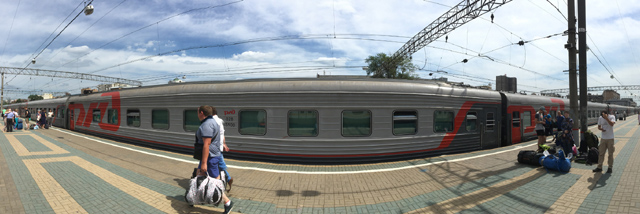
We found the right train soon and it was going to be be our home for next 41 hours! Once our passports and tickets were checked, we got to a same cabin with one young local man while PAC, Paul and Ernie went to the next cabin together.

The train left at 12:50 p.m. and after a couple of short stops the first longer stop was finally in Jaroslav at 5:40 p.m. We had then found the schedule from the corridor and found out that the train was always making longer stops in the bigger cities where we could go out to do some shopping.

There was nothing much to do in the train, so we were discussing, reading, watching the view through window and of course trying to get trip-ticks. Red-backed Shrikes seemed to be very common.

At 7:17 was the next longer stop but there weren’t any shops, just old ladies selling pastries, vegetables, strawberries and so on. The journey continued and we got some more trip-ticks like Green Sandpiper, Black Woodpecker, Honey Buzzard and so on. Finally it was time to try to sleep…

On the 20th of June I woke up at 7. While we were approaching Kotlas, we started to see more birds: Hen Harrier, Greenshank and so on and on the sandy beaches of Kotlas River, we saw Lapwings, Black-tailed Godwit and some of us saw also Little Ringed Plovers. We were supposed to be in Kotlas soon after 9 a.m. but once we stopped, we realized we were on the previous stop and 50 minutes late from the schedule. So on the first stop in Kotlas we weren’t allowed to get out at all even though the train stayed there for some time. But then on the second station we were amazingly on time and got out for 40 minutes to buy some breakfast. After the stop we realized the journey was on the halfway..

About at midday I was helping Ernie to charge his phone when I accidentally noticed a message on his phone screen “Urgent Polar Ural”. It was an email from Oleg’s office and it told they still hadn’t got copies of our registration papers of passports! We had left Kotlas some time ago which was the last bigger city and our phones just stopped working. PAC had a Russian SIM-card on his phone and he managed to contact Oleg for a couple of seconds and tell him that there was nothing we could do anymore; they needed to get the copies from Mandarin from where we had sent them 1.5 days earlier.

We tried to take pictures of our passports and registration papers and send them via different ways but we had no connection. After all trying we knew it was already too late to get the permits so we felt disappointed. It was late when we finally got a message from Oleg that they still hadn’t got the copies so we needed to do all the paper-works next morning in Inta, which meant that we would lose some time. After one 20 minutes stop we started to sleep about at 8 p.m.

Inta

Inta

On the 21st of June we woke up at 5 a.m. and finally we were at Inta at 5:46 a.m. On the railway station we met Natasha and also her companion Sergei. Sergei took our passports and all other papers and left to solve the permits to the National Park and we carried our luggage inside the railway station and found out that we had to just wait there. Our driver had been stuck to some flooding river on the previous evening and Natasha had booked us an another driver who was available only almost 5 hours later. So after all we had plenty of time to get the permits too.

We had been sitting enough so after a breakfast in cafeteria, we asked if Natasha could stay with our luggage and went to a walk outside the station. The railway station situated more than 10 kilometers from the city of Inta, so it was possible to find some birds around.

We walked about an hour and found some Little Buntings, Arctic Warblers, Common Redpolls, a flock of 7 Waxwings, a few Bullfinches, 2 Common Rosefinches and so on. Once we got back to the station Natasha had to leave to sort our foods for the next 5 days, so we promised to stay with our luggage with Hanna, while the rest went back to birding.

Finally at 10:45 a.m. everyone was there. Natasha arrived first and then Sergei came with good news; he had managed to get the permits and soon arrived also our driver with a huge van! While a Bluethroat was singing on the background, we packed our car and our driver Volodja started to drive towards Ural Mountains!

We had thought that there would have been only a driver for us in Inta area, but now we had a driver, Natasha as a guide and translator and Sergei helping with everything else. Natasha and Sergei also were going to cook for us, so we were extremely happy with this situation. We were now able to concentrate only for birding!

Towards Ural Mountains

Arctic Warbler

We we driving along a track that left south-east from Inta. We passed some coal mines and gas factories and reached the forests soon. There we started to make stops. We were sitting on the back where we had a button that told driver if we wanted to get out. On the first stop we heard some Arctic Warblers, a Siberian Chiffchaff and also saw briefly one Olive-backed Pipit that was singing only very shortly.

Siberian Accentor

The second stop was made in more open area in bushy riverside. It looked perfect for a Pallas’s Reed Bunting. So PAC left immediately to walk along the river but while the rest of us were still preparing ourselves for going to the bushes, Hanna heard an accentor singing. And soon I heard it too. It was pretty weak and clear song and clearly different from a Dunnock song. But it sang only once or twice in same bush and then stopped and was quiet until it sang again somewhere else. It took a long time to find the singer but finally Paul found it and it was a Siberian Accentor! Paul shouted and we started running towards him but luckily I understood to check one bird that was perched on the top of one tree – and there it was! Hanna managed to get a couple of pictures before the bird dropped down before Ernie could see it. And then it got quiet again. It took a long time before it sang again and finally Hanna managed to help Ernie to find the bird too. The song was so weak that it was difficult for Ernie to hear it and find the bird. But finally he saw it well too! Soon the bird moved in front of me and Paul and right then PAC also arrived from the bushes, but the bird disappeared too soon. Anyway all of us, who needed the species, had seen it! Paul also got another lifer as we found a couple of Pine Grosbeaks from the bushes.

Little BuntingLong-tailed Skua

On the third stop we found Little Buntings, a Siberian Chiffchaff, some Black-throated Thrushes and heard a couple of Cuckoos. The fourth stop was made to collect some wood but we also heard a Dunnock there. Then we climbed to the mountains where were no more trees, just bushes, small willows and birches. While driving on the mountain we saw Arctic Terns, a Long-tailed Skua, a Willow Grouse, Hen Harriers, a Merlin and Short-eared Owls. After some driving PAC checked that we were as close as possible to a GPS-point that he had and we decided to stop and make a camp. Volodja drove a little bit backwards to get water while we left immediately birding. The GPS-point we had was from Antero Lindholm, who had been here 10 years ago with some other Finnisdh birders and he had found the only Pallas’s Reed Bunting of their trip there.

Little Bunting

The time of the day, late afternoon, was far from optimal, but we walked over the hill and down to the valley where we found very promising bushy areas. We walked quite a lot in the bushes and found some singing and calling Yellow-browed Warblers, 2 accentors that we never saw, but they sounded similar than the Siberian Accentor that we had heard earlier and we also saw a couple of Whimbrels and Bluethroats and Little Buntings were singing. Finally we were in the point of the GPS, but the place really didn’t look good. I remembered that Antero had written that the bird had been with some Reed Buntings but this place was in the hillside where were almost no bushes at all.

The first camp

The weather was hot and there was no wind at all, which meant that there were AMAZING number of mosquitoes! Finally we walked back to the camp and ate borsch-soup with Smetana and mosquitoes. While we were waiting for the soup to cool a little bit there were tens of mosquitoes drown to the soup to give some extra protein. Putting up the tents was quite an experience in that amount of insects, but finally we were ready to go to sleep at 9 p.m.

Pallas’s Reed Bunting

Citrine Wagtail

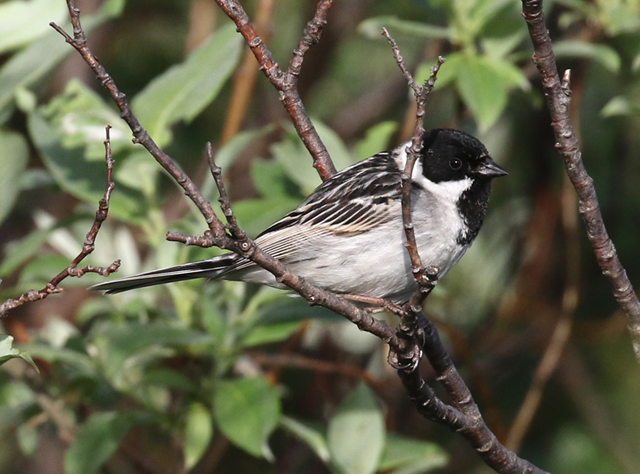
On the 22nd of June we woke up at 3:30 a.m. and after some tea and bread we were walking towards the river. We had found out that Antero’s bunting had after all been along the river, so we walked straight there along the road. When we reached the good looking bushy area we agreed that me, Hanna and Ernie would take another side while PAC and Paul would take the other side. There were some Citrine Wagtail couples singing and calling and soon I saw a reed bunting but too briefly. We tried to relocate it but only Hanna saw it briefly again but she thought it was only a Common Reed Bunting. Then Paul shouted that PAC had found a Pallas’s Reed Bunting! We rushed through the bushes towards PAC and got there in same time with Paul. PAC had seen the bird only briefly after it had been singing once after PAC’s tape. PAC played the tape again but nothing happened. Then after second or third try Ernie saw the bird on the top of a bush but only briefly. Then we waited for some time before PAC played the tape again and suddenly the bird flew to the bushes just in front of us! Amazing Pallas’s Reed Bunting showed very well but was a little bit too active to get any good pictures as it was still pretty dark. But the main thing was that everyone of us got a lifer!
Pallas's BuntingPallas's Bunting

We continued to check the bushes along the river and found more Citrine Wagtails, a couple of Willow Grouses, a Sedge Warbler, a Common Rosefinch, a couple of Bullfinches and I managed to flush a Great Snipe. Of course I hoped it would have been a Pin-tailed Snipe but I saw it too well… While we were walking back to the camp, we heard Golden Plovers calling and over the distant mountain tops we saw a couple of Rough-legged Buzzards. At 8:30 a.m. we were on the camp and had breakfast that Natasha and Sergei had prepared.

Car

At 10 a.m. we packed everything again and continued moving towards the higher mountains. As the weather was perfect, we decided to go to the furthest point that we had planned to visit because of at least now it was possible to cross the big Kozhym River. We could always turn back if the weather would go too bad, but in bad weather we might stuck on this side and never get over.

Hawk OwlGroup

Lady's Slipper Orchid

Before the river crossing Volodja stopped again and more wood was collected. We of course spread to different directions. Paul and Hanna were photographing Lady’s Slipper Orchids that were found next to the road, while Ernie followed some butterfly along the road. The butterfly managed to escape but then Ernie started to follow a Greenshank that was alarm calling very actively. And it wasn’t alarming without a reason – there was a Hawk Owl on the top of one dead tree! It was a good tick for all of us and Paul got one more lifer again. On the same opening we found also a Great Grey Shrike that seemed to have big white patches on its wings, but it disappeared too soon. Maybe it was a homeyri? And once we were moving again we saw another shrike through the windows.

Crossing the Kozhym River was an amazing experience! There was more than 1 meter deep but our van went over it very smoothly. And Volodja was a really good driver! After some more driving on the mountain forest, we stopped along the river to prepare lunch. There was a tunnel where water was disappearing under the mountain. Most of us were swimming on the cold and very rapid river. No wonder the water was cold as there was snow on the tops of the mountains…

Riverside

Siberian Accentor

While we were eating, we heard a familiar song again and found a Siberian Accentor singing on the top of spruce on the other side of the river. We managed to get a couple of pictures of the bird, but it was quite far and disappeared soon. We also saw a Hobby, a Merlin and a Dipper there.

After the lunch we continued a long way crossed many dry river bottoms as many bridges had collapsed and we had to just go up and down over the rivers. Finally we climbed up to the mountain and continued higher and higher along a valley passing a beautiful sacred mountain. Finally we ended up to a quartz mine village where was a tiny hotel for the workers. The place really wasn’t what we had expected it to be when we had been watching it from Googlemaps. Anyway we agreed with PAC and Paul that we would stop for an hour, so our driver could rest a little bit and the rest could have tea with the owner of the hotel. But the place looked too rocky for Pin-tailed Snipes that was our last target now. The place was also too restricted because of the deep mountains and too big river that wasn’t possible to cross by feet.

Anyway we walked a little bit and checked the nearest lakes, but in heat of the midday we saw only some Citrine Wagtails. Hanna was collecting crystal-pieces from the road that was white from them.

In this place we had the only arguments of the trip. One of us couldn’t understand why we had got there at all if we weren’t going to stay there. The rest of us tried to tell that it had been very difficult to plan the trip with Googlemaps as there had never been any western birders in most of the places. And we also didn’t have almost any clue what was the biotope for some of the species we were searching. But now we had a feeling that this wasn’t the biotope for Pin-tailed Snipe. We hadn’t got too many mornings left in Inta area to loose, so this wasn’t the place to camp now.

Holy mountain

The second camp

Anyway we had seen much better biotope on the way to the mining village and soon we were driving about 4 kilometers back until old train carriage that was on the side of the road. There was a perfect looking huge meadow under the mountainsides. It really looked perfect for Pin-tailed Snipe as far as we knew… It was already late when we prepared some dinner, but finally we were all full and happy and waiting keen for the next night as we planned to go birding soon! And that’s why we went to sleep already at 7 p.m.

Pin-tailed Snipes

We woke up at 10:45 p.m. and after some tea and bread, we were ready to go snipe-hunting. We had no idea what was the best time to find Pin-tailed Snipes, so we had to try everything and now we had planned to do birding whole night. Soon we were walking along the riverside towards huge meadows.

The 23rd of June. At midnight PAC and Paul had already disappeared to the horizon as they were walking much faster than the rest of us. At least we Finnish “podiceps” were much slower. Hanna was once again carrying two cameras, binoculars and a huge back-bag that slowed us down even more. After some time PAC and Paul found a Pallas’s Reed Bunting. We got information with walkie-talkies that I had taken with us and given another one for them. Soon we had walked there and this bunting was singing very actively! So we got very good recordings, once we understood to leave the recorder to the ground, spray lots of repellent to it and walk far enough from it with mosquitoes. Some pictures were of course taken too, but it was still pretty dark.

We were enjoying this well showing Pallas’s Reed Bunting for some time and then continued walking. I saw briefly a Siberian Lesser Whitethroat and soon we started to search a place where it could be possible to cross the river and start walking back towards the camp on the other side of the river. After some searching we managed to find a place where crossing was possible with wellingtons.
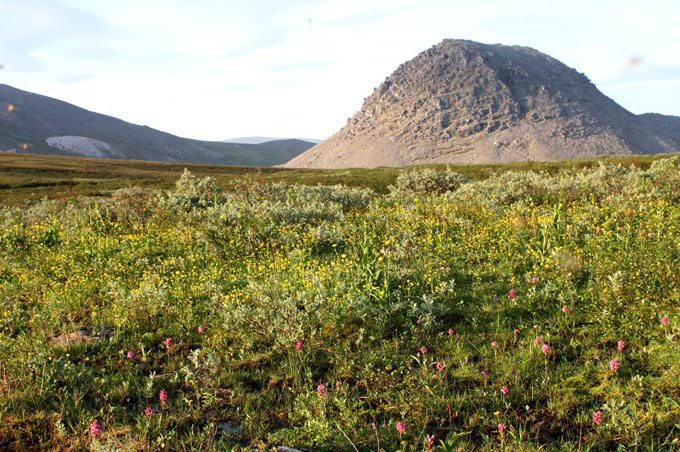
Habitat for Pin-tailed Snipe

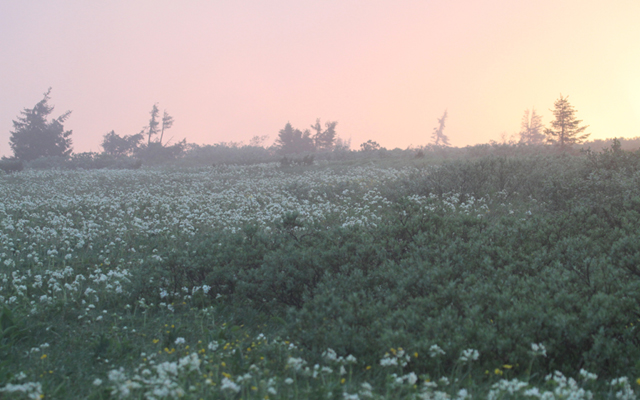
After some walking we found a meadow with globeflowers and the beautiful sacred mountain was well visible behind the meadow. Once again a flock of Common Redpolls was flying over us when I heard some different calls behind the Redpolls. And then the sound got faster and faster and ended to an amazing chatter – a Pin-tailed Snipe! I found immediately 2 birds flying over me and Hanna managed to see and hear the birds too but they continued very quickly far and disappeared against the mountains. Luckily they came back soon with a third bird and also Ernie saw them now. They were flying a big circle and calling all the time, but the calls were very weak. Time to time they dived towards the ground and when they were close enough we heard an amazing sound they made with their tale-feathers!

Pin-tailed SnipePin-tailed Snipe

We called to PAC and Paul with walkie-talkie but they were far. It took a couple of repeats before they understood what we had found. After 15 minutes they arrived but the snipes had been lost already 10 minutes earlier. Or not completely lost as one of the birds had landed to the ground not far from us. But before we started to walk towards it, 2 birds were over us again flying towards the mountains again. After some waiting these 2 birds were displaying over the meadow and flying against the sacred mountain and time to time they came right over us. So we tried to get some pictures and recordings too! We were all extremely happy as our last project-species had been found. And we could happily agree that we had made a right decision in the previous evening.

PAC and Paul had been walking quite far on the mountain-side and they had managed to find a couple of Ptarmigans, one more Pallas’s Reed Bunting and a flock of Two-barred Crossbills. Anyway soon we were all walking back towards our camp which was still quite far.

The morning was getting very warm and my GoreTex trousers started to feel too hot. On the way we heard some Yellow-browed Warblers, one Greenish Warbler and finally saw a couple of Siberian Stonechats too. We had though that Siberian Stonechat would’ve been much more common. Once we got to the camp, we went straight to sleep.

After a couple of hours sleeping, we woke up at 8:30 a.m. when porridge was ready. Then we packed everything again, relaxed a little but as we were in no hurry anymore and then moved on again. After some driving, we stopped at 11 a.m. to a forest where we started to climb to one mountain that Natasha and Sergei had wanted to climb. As we had no birding-plans for the rest of the day, we were soon all climbing up to the mountain.

We were very tired after walking whole night in soft meadows, but anyway we climbed higher and higher. Most of us had nothing to carry, but Hanna was still carrying a lot. So after all everyone else, even PAC who had been extremely exhausted, were coming back from the top before we finally reached it with Hanna.

On the top there was a nice lake and the view to the mountains was very beautiful. But there was also very cold wind, so after some photographing, we also started to walk back down.

Mountain lake

The way down was fast and part of the hillside we were walking on the snow. Natasha and Sergei showed us a distant Narodnaya Mountain that was 1499 meters high and the highest peak of Urals. On the walk we saw almost no birds at all but finally on the forest I found a Pin-tail Snipe flying over us. And once again it was over a globeflower meadow near the hillside.

Soon we stopped on the same swimming place where we ate again. The same Siberian Accentor was seen and heard and also a Goosander and a Goldeneye were added to our trip-list. The weather was extremely hot and there were amazing numbers of mosquitoes, horseflies and other biting insects that made us feel a little bit uncomfortable.

Finally we continued to another place along the river along a very bad ”track”. Actually it was more like a river bottom, but Volodja was driving well again. There we put up the camp again to a beautiful place with river and high and steep rocky walls. I managed to sleep a little bit before the dinner and we were offered even some grayling fish that Volodja had caught. Unfortunately it was offered raw. After the dinner we were walking around the camp and enjoying the beautiful views before we went to sleep at 9 p.m.

Forest birding

Cliff

The 24th of June – Midsummer day. Last year had also been in Russia and Urals on Midsummer day. Then we were in Ural ridge and searching for the same species, Black-throated Accentor, as today.

We woke up at 1:50 a.m. and it was raining a little bit but the wind was strong. Anyway after quick tea and cookies, we started to walk up to the forest along the track. It was crazy to see how bad the track that we had been driving was. Paul was walking fast again and PAC still had something to do in a camp when we started walking. Very soon we found a couple of Pine Grosbeaks but they disappeared too soon. When PAC caught us, we still heard the male singing but it was too windy to get any recordings.

After some more walking Hanna saw a family of Siberian Jays crossing the road and luckily birds stayed next to the road. In same time we heard a Three-toed Woodpecker calling and then PAC decided to go and try to catch Paul – these both species were lifers for Paul. Soon Hanna said that she heard nestlings of Three-toed Woodpecker and disappeared to the forest. And soon she told us that she had found the nest. Soon PAC and Paul arrived and luckily also the Siberian Jays were still around. So Paul got 2 good lifers and he had been lucky to see some Two-barred Crossbills too. We photographed and recorded the family of woodpeckers before continued walking. And soon Hanna heard a distant Red-flanked Bluetail that PAC and Paul left to see this young male bird and so Paul got one more lifer. Soon we heard a couple of bluetails more but they were a bit too distant, so we didn’t try to see them. But once we walked back to the road, we saw one female collecting food along the road.

Siberian JayThree-toed Woodpecker

We continued a little bit more and saw a couple of Siberian Jay families and heard one more Red-flanked Bluetail, but then it started to look like it was going to rain soon. Paul hadn’t got enough clothes so he decided to start walking back along the road and soon Ernie made the same decision. But the rest of us, we decided to walk back towards the camp along the forest. It was a bad decision, as it started to rain almost immediately and this was the first time we were all wearing walking boots and they were soon completely wet! Anyway we managed to find to the camp and there we went straight into the sleeping bags to get warm and soon we were asleep. So it was only after a couple of hours sleeping, when we heard that Paul had seen a Lynx when he had arrived back to the camp! First he had heard harsh cat-like calling and then found the Lynx on the rock on the other side of the river!

After a good breakfast we packed everything again and while visiting a bush I saw one more female Red-flanked Bluetail right behind our tent. Unfortunately the weather was still very bad so once we started driving our car windows were completely misty. And the beginning was very bumpy so soon I started to feel bad. Luckily soon the track got a little bit better but still I was almost throwing up. But anyway we kept on going as the weather was so bad that we didn’t want to stop.

After we had crossed the Kohzym River we climbed to the mountain again and there we finally made the first stop. After the stop I went to sit in front, where I started to feel much better. In rainy weather we saw plenty of Black-throated Thrushes along the road, but only other better bird was a Grey Wagtail.

Hotel

Finally we were back in Inta at 4 p.m. and headed straight to our hotel. It would have been impossible to find this hotel without locals helping. In reception that looked like any office, all our papers were checked and new ones were written and many stamps were given again. Finally we got into our rooms that were surprisingly comfortable. Shower was on the fifth floor while we were on the fourth, but we weren’t in hurry and sooner or later everyone got into shower. Then we put all wet clothes to dry and started to charge all batteries.

At 6:30 p.m. we met Natasha and Sergei and went to eat to a local restaurant. After the dinner we still went to visit Natasha’s and Sergei’s home where we watched a video of their trip with some Italians some years earlier. But at 10 p.m. we had to walk back to our hotel as we had an early wake up again.

To Eletskaya

On the 25th of June we woke up at 5:45 and soon we had packed everything again, even though some of the clothes, especially walking boots, were still wet. At 6:30 a.m. Natasha and Sergei arrived with a couple of their friends and they drove us to the railway station. We had breakfast in cafeteria again and at 7:30 our train arrived. We said goodbye to Natasha and Sergei, carried our luggage to our cabins and after 15 minutes the train left towards Eletskaya.

Cabin

I managed to sleep a little bit while Hanna was making woolen stockings that was her train-project. Surprisingly we got even some food on the train and after all short, only 5 hours trip was going fast. The train was better than the ones we had been before and we also managed to see some birds through the windows; some Heuglin’s Gulls, Short-eared Owls and Wood Sandpipers. We also saw one snipe, Common or Pin-tailed.

At 1 p.m. we were at Eletskaya and soon found our old friend Oleg Demyanenko that was going to participate to this second part of our trip to. It is probable that there will be many groups after us, so it was good for him to see what we are doing here. We also met our driver Sergei and his friend and soon we were driving to an apartment where we met also Eric Didner and Yulia Kharakhasheva, Oleg’s assistant, who had also came to join the trip. Oleg, Yulia and Eric had been flying from Moskow to Salekhardi that was on Asian side of Urals. They had then taken a ferry across Ob River and from Labytnangi they had taken a train to Eletskaya and they had arrived a couple of hours before us.

We enjoyed some tea, candies and even cream-cake as there had been birthday-parties on the previous day. It was interesting to spend some time in local home while Oleg and Sergei were making the last food shopping.

Packing the tank

We also walked a little bit outside but the landscape wasn’t nice at all, old abandoned factory-buildings, and there were not many birds around. Most of the time we were wondering the tank that we were going to use for the next 4 days! We had told we’d use a tank, but we had never understood that it really was a TANK! We had paid quite a lot (230€ per person) to get this vehicle so maybe we should have believed, it really was one…

Finally our food was also packed inside the tank and we climbed to the top of it where were 2 long seats for us. And so the journey towards Polar Urals began!

Towards Polar Ural

Full team

We did the first stop soon after the village when we reached the first good looking bushy area along the river. PAC played a little bit tape for Pallas’s Reed Bunting and immediately one bird was found! This bird was showing pretty well so Eric got an amazing start for the trip!

I must say that after a hard days in Inta area at least some of us might have been ready to take a train back to Moscow already from Inta, but now when we had a tank under us, Eric was full of energy to find some lifers and we were approaching Polar Ural, we were all full of energy again.

When we kept on going, we saw some Short-eared Owls, Rough-legged Buzzards, a Common Snipe but on the second stop along the river, we saw only a Red-breasted Merganser. Then it started to rain very hard and we decided to try to find a place to camp as soon as possible. We passed a small old abandoned factory and climbed to a hill where we found a good spot on the slope along a stream.

Luckily the rain stopped and we soon got our camp up. Then we had dinner which took time and after all we got to sleep after 10 p.m.

Project-species

On the 26th of June we woke up at 2:45 a.m. and soon after 3 o’clock we were walking towards the palsa-bog nearby. Along the ditch we flushed a Common Snipe and once we got to the pool, we found immediately a Pallas’s Reed Bunting. A male bird was moving a lot and really making himself look big with all feathers raised especially from the neck. So it wasn’t a surprise that we found also a female that was hiding well but a couple of pictures were taken of it too. Too soon the birds flew together over one hill and we never found them again.
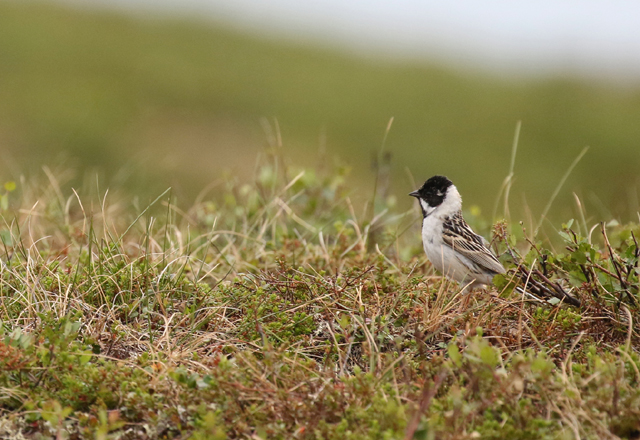
Pallas's BuntingPallas's Bunting

On the pool we saw a couple of Teals and a Black-throated Diver, a Tundra Bean Goose flew over us and we also saw a distant Bar-tailed Godwit. Others had already kept on walking when we started to walk back towards the camp with Hanna.

Rough-legged Buzzard

At camp we only left some clothes off and continued to the other side of the railway. A couple of Rough-legged Buzzards were breeding on the top of one of the pylons but we continued to check the bushes. On the river I saw a Red-breasted Merganser and a Smew and from the bushes we found Eric and Paul that had been listening to one or two accentors, but they hadn’t seen any yet. We tried to help Eric to get one more lifer and I played some calls of Siberian Accentor from my phone. Then I saw a bird right over us and it was a Pin-tailed Snipe! So Eric got a surprise lifer! The snipe disappeared too soon, but soon we heard an accentor again and found it – a Siberian Accentor – another lifer for Eric in a couple of minutes! He had also got all three target species now! And he had got them much too easy as Ernie said…

After all we had 3 Siberian Accentors and we also heard a Siberian Chiffchaff and a Common Rosefinch. When we had walked back to the camp we saw an adult White-tailed Eagle soaring on the sky over the mountains. Then it was time to pack everything again and continue towards the next palsa-bogs with the tank.

Palsa-bog birding

We drove to check 4 different bogs and on the first one we saw a flying Whooper Swan, a Red-necked Phalarope, some Citrine Wagtails, a Yellow Wagtail and some Heuglin’s Gulls that we managed to photograph. The wind was too hard to get recordings.

Palsa-bog
Citrine WagtailRed-necked Phalarope

On the second bog we found a couple of Slavonian Grebes, a couple of female Pintails with small youngsters and a Merlin. On the third stop we saw only a couple of Citrine Wagtails, a Short-eared Owl and a Hen Harrier. When we were approaching the fourth bog, our driver tried to take a shortcut through some bushes, but we made him to stop and luckily we soon found a better way to get near the bog. We didn’t want to destroy any good habitat, but there were no any tracks in this area, so it was best to drive along the low vegetation as it was everywhere and all the birds seemed to be anywhere else than there. Actually old tracks of other tanks seemed to be very good breeding places for many birds like pipits and waders.

Palsa-bog

This last bog looked very good but we only heard a Temminck Stint and on the palsa-wall there was a tiny colony of Sand Martins. A couple of Heuglin’s Gulls were also seen but nothing else.

Heuglin's GullArctic Tern

We started to feel very tired so we continued to the top of the highland from where we saw a group of khanty-people moving towards the mountains with big pack of Reindeers. They were moving higher because of mosquitoes.
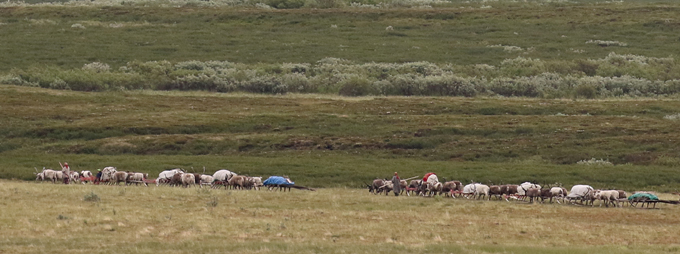
Khanty-people

Finally we decided to camp in a khanty-people old camping place where they had just left. There was a dog left behind probably because of it seemed to be absolutely exhausted. It was just resting and hardly noticed us at all. We were sure they would come back to get the dog soon.

Camping

While a Lapland Bunting was singing in flight and a Red-throated Pipit was collecting food for its nestlings, we put up the camp and soon the food was ready too. Another dog came to see us too from somewhere and they really seemed to suffer from the mosquitoes. Finally we went to sleep at 7 p.m.

Walking on palsa-bogs

On the 27th of June we woke up again at 2:45 a.m. and soon we were walking towards the closest palsa-bog. Right away we flushed a couple of Common Snipes and found a Common Reed Bunting and Citrine Wagtails singing. Soon others had somehow passed us and were walking in fort of us. It was a little bit boring to walk after other birders but pools, bogs and too dense bushes kept us on a narrow area.

Whimbrel

We walked on the area for 4 hours and saw a distant Pin-tailed Snipe against the mountains, a flock of 8 Tundra Bean Goose plus one couple, a Whooper Swan, a Long-tailed Duck that landed calling to one pool, a Wigeon that was with 3 Tufted Ducks, again a distant adult White-tailed Eagle, a sub-adult Heuglin’s Gull, a Short-eared Owl and a couple of Hen Harriers. PAC and Paul were again walking much more and they managed to get Shoveler and Common Ringed Plover as a trip-tick.

After the breakfast omelet we had already packed and continued towards Polar Ural. We were driving pretty long before anything happened, but then PAC jumped down from the roof of the tank almost before we had managed to stop it. If we wanted to stop, we had to bang the roof so loud that Sergei heard us and sometimes it was difficult as the tank was very noisy. But now PAC had seen a family a Tundra Bean Geese crossing the road and somehow he managed to catch one of the young birds. It was a cute little fella but the reason it had been caught, was that PAC took some DNA-samples of it. And soon it was released back to its family.

Then we drove again quite long before we crossed one river and decided to camp right there on the crossing place. There was nice mountain-forest not too far and we wanted to do next morning birding around there. There were ridiculous numbers of horseflies but soon we were having a bath in rapid, cold and only some 30 centimeters deep river. Hanna found a couple of Golden Eagles soaring on the top of the mountain with 2 Rough-legged Buzzards so there was a short pause in bathing.

Lunch

After a bread-lunch we took short naps. Once I woke up everyone else was already birding. I just climbed to the roof of the tank to scan the area and immediately found at least 6 Pin-tailed Snipes flying against the mountain. I walked after them to get some recordings but they stopped the active displaying once the sun was not shining against the mountain anymore. Others had got some good pictures already and we discussed that at least in this place the active display had been about from 6:30 to 7:30 p.m.

Waxwing

Mountain climbing

On the 28th of June we woke up at 2:50 a.m. and I had already heard Tundra Bean Geese and Pin-tailed Snipes while still sleeping. After a slowly start we managed to start walking before 4 a.m. and with Hanna we decided to climb up to the mountain. Yulia had been walking there on the previous evening and she had seen Ptarmigans that we still needed to our Russia-list. It is a different subspecies and we have always tried to see new subspecies, not because they might be species one day, but to see if they are any different. Ernie was following us in the beginning but then decided to follow the forest-line as there were some interesting birds like a couple of Yellow-browed Warblers and a flock of Two-barred Crossbills.

We climbed to the ridge and then to second, third and fourth one before we finally saw the top of this small mountain. On this flat area we saw that PAC was already on the other side of it and we decided to go to see if he had found anything. There was almost no birds on the higher area of this rocky mountain and PAC was also watching only a very distant khanty-village on the other side of the big plateau that was opening on the other side of the mountain.

Ural

Golden Plover

We decided to climb the last uphill to the top of the mountain and PAC started to walk around the plateau. Soon he told with walkie-talkie, that I had just remembered to give to him, that he had found a Dotterel. Anyway we climbed up first, took some pictures and only then went to see if we could find the bird. Surprisingly the Dotterel was flushed already from 100 meters and only I managed to see it briefly. A few Golden Plovers were also there but nothing else was found, so soon we had to start heading back towards the camp as we had promised to be on breakfast at 8 a.m.

We were 15 minutes late but of course it didn’t matter. Others had of course seen Ptarmigans much lower than where we had been and Paul had managed to see Pin-tailed Snipe on the top of a tree and he had got really good pictures too! Finally it was time to pack everything again but it took a little bit longer than usually as the tent that Ernie and Eric had borrowed from Oleg had completely lost the door-zipper. Luckily we managed to fix it, as it would have been hard to sleep the door open with all the insects…

Tank

The journey continued and now when we were getting closer to Polar Ural there were better tank-tracks to follow. While driving on the highland the tank flushed one pipit that looked strange to some of us. Its way of flight and short-looking tail had looked like a Pechora Pipit and so we tried to find the bird but without luck. With Hanna we had seen the bird pretty well too and I couldn’t tell it from a wet Meadow Pipit. PAC and Paul were anyway walking and searching it further than the rest of us and once again they managed to see a trip-tick, a Ruff.

Soon we were walking on another similar wet highland but found nothing interesting. Once we continued a Ptarmigan was running in front of the tank and finally we also got a Russia-tick. Next we stopped to check a couple of bigger lakes and on first one there were lots of ducks. We saw at least 20 Pintails, 2 Wigeons, 2 Long-tailed Ducks and 3 Common Scoters. We also managed to get really good pictures of a Lapland Bunting.

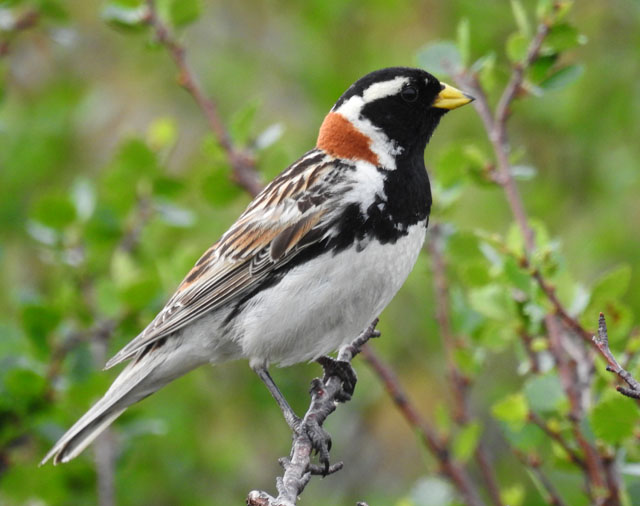
PintailLapinsirkku

Polar Ural

Pretty soon we started to go downhill along a rocky, curvy and very bumpy track and surprisingly soon we were on Polar Ural railway-station. It had just started to rain so it was good to know we weren’t going to get too wet. But Polar Ural railway-station wasn’t exactly what we had expected, or actually the station was, but there was almost nothing else! There were some other buildings and cabins for the workers and the closest building/buildings had just been dismantled and flatted down, so the yard was like a rubbish tip. And that was where we were supposed to camp! Our tank was leaving soon back to Eletskaya so we had to camp somewhere near the station to get our luggage to the train a couple of days later.
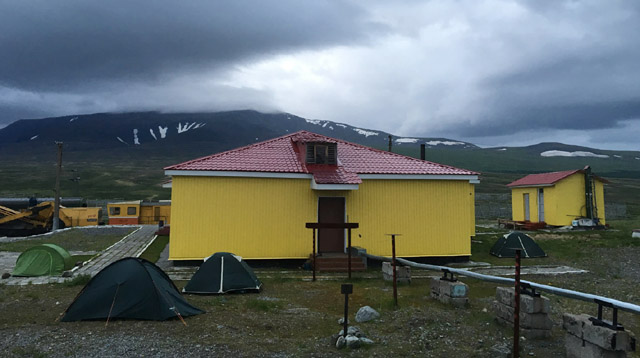
Station

Luckily Oleg and Sergei managed to get us a permit to camp on the backyard, where were tiny patches of grass for the tents. They also got us a permit to spend time inside the waiting hall which was good if it was going to be very rainy, and there was a possibility to charge batteries too. But even better, they managed to get us a kitchen from one of the cabins and we could also carry our big bags there to the hall of the cabin. With Hanna we had all the time had all our stuff in our tent, but the rest had smaller tents, so it was really good!

Red-throated Pipit

Wood Sanpiper

It really looked like it was going to rain heavily, so we did a record of putting up the tents and after a quick bread-dinner we went inside the tents to sleep and then it was already raining hard. There was a diesel-train banging all the time on the station but anyway we slept well.

Birding on the edge – once again

Ural

On the 29th of June the alarm of my phone woke me up before at 3 a.m. again but I shut it down and waited for my watch to alarm a little bit later. Well it never did, but luckily I woke up anyway and it seemed that everyone else had also had a difficult morning as other tents were also just opening at 3:10. The weather had changed and was perfect now. We decided to go to follow the border of Western Palearctic (Europe) and Asia and also PAC came to climb along the ridge towards the mountain. While PAC was staying all the time in Europe, we were ticking birds from Asia too. There were Long-tailed Skuas, Golden Plovers, a Rough-legged Buzzard, Red-throated Pipits and Lapland Buntings seen on both sides of the border while a Velvet Scoter and a flock of Pintails were seen swimming on a lake in WP.

Long-tailed SkuaLong-tailed SkuaLong-tailed SkuaLong-tailed Skua

The border was going along the ridge and it was not easy to follow as we needed to check which direction the small streams were going. After all we turned to follow the mountain-side to Europe and walked quite a lot without new birds. We found some more Red-throated Pipits, Lapland Buntings, Long-tailed Skuas, Golden Plovers and then an Arctic Redpoll that was flying over us a couple of times. While we were walking back towards the camp between the two lakes, we still saw a Common Scoter.

We were at the camp at 8:30 a.m. and until 10 o’clock we had enjoyed breakfast and it was good to go to sleep inside the tent. We were sleeping until 3 p.m. and then I decided to go to have a bath in a pond between the lakes. After that we went to see the border-sign that was along the railway and there we noticed that Long-tailed Skuas and Common Gulls were panicking because of something and found a Peregrine flying low in front of them towards the mountain on Asian side of the border.

After the dinner Oleg had managed to arrange us a possibility to have sauna! I had already enjoyed bathing in ice-cold pool, so I skipped sauna and went to sleep. Anyway I couldn’t sleep before Hanna came back from sauna at 21:30.

Last birding day

The 30th of June was our last day in the field, so we had planned to spend it well. So we woke up at 00:30 a.m. but unfortunately it was raining. So we set the alarms 30 minutes later and repeated this a couple of times, before the weather finally looked like it was getting better at 2:30 a.m. Ernie and Eric had already left towards the mountain-side forest where others had seen quite a few birds on the previous morning.

We walked straight to the same place where we had got the Arctic Redpoll and surprisingly PAC found it again but it disappeared too soon before we or Paul, who needed it as a lifer could see it. We searched it for some time but then with Hanna we decided to keep on walking. Later PAC and Paul luckily found the bird.

We continued straight to the bushy forest and found right away several Pin-tailed Snipes displaying over the bushes and meadows. Also a Common Snipe was heard but we rushed inside the bushes to get some cover from the wind and started photographing and recording. But most of the birds disappeared and the rest moved further so I had to satisfy Yellow-browed Warbler recordings.

Siberian Accentor

We continued further following the upper forest-line and soon the snipes were displaying right over us. I went in the middle of the flowery meadow and finally managed to get perfect recordings! While recording I heard a very strange call and saw a pipit-like bird calling on the top of a bush but straight against the sun. I had never heard the buzzing call it had and once the bird disappeared I called to the others by walkie-talkie that I had got a possible Pechora Pipit.

Globe-flower meadow

When we all were there, the pipit-like bird was gone but we all enjoyed the spectacular Pin-tailed Snipe show! We all got pictures but then suddenly all the birds landed and most of them landed to the meadow where we were standing. But then there was a Siberian Accentor that was showing well and it let us to take some pictures! Only then we listened to some Pechora Pipit tape that PAC had with him, and I must say that I had heard something completely different. The description of Pechora’s calls in Collin’s Guide are all completely wrong. I do have heard the species by myself too, but I expected I might have heard an alarm call or something. Maybe it had been only a strange calling Citrine Wagtail? Alarm calls of Red-throated Pipits had also been something we had never heard before but this one had been much more buzzing and insect-like.

Pin-tailed SnipePin-tailed SnipePin-tailed SnipePin-tailed Snipe

After we had got enough recordings of Pin-tailed Snipes, we still tried to record flush-calls, but all birds we flushed stayed quiet. After that we walked for some time in the bushy forest but found nothing else new expect one more Siberian Accentor that sang only once.

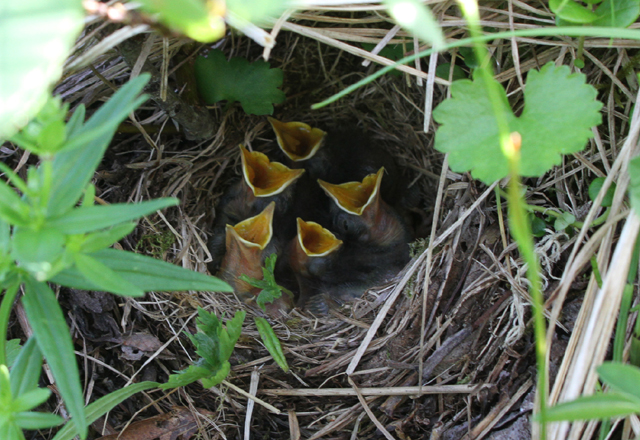
WhimbrelBluethroat

Then on the way back we tried to find a Pallas’s Bunting that Yulia had photographed somewhere between the lakes on her evening walk. She had been on the top of the closest high mountain. I was playing Pallas’s Reed Bunting song from my phone and suddenly we saw a male flying over us and landing to short bushes not far from us. But we never found the bird again! Anyway we had once again seen all the target-species in one day and now found out that it was possible to find all the target-species very close to Polar Ural station too. So the future groups will have lots of decisions to make: Should they go to Inta or Polar Ural, or both?
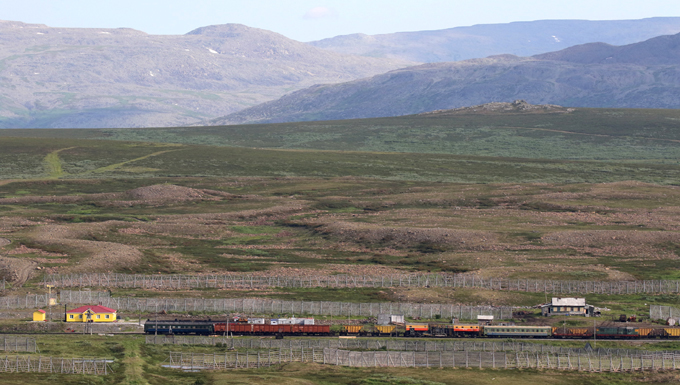
Polar Ural

At 7:35 a.m. we were back at the camp and surprisingly soon everyone else was there too. Breakfast was made from everything we still had left and then we packed everything as well as we could. Luckily the morning had been warm and sunny so everything was dry. Our last bird-observation was a Black-throated Diver that was flying from Asia to Europe while we were already waiting for our train.

A long way back to Moscow

Time-table

Finally at 10:25 our train arrived and it was time to say goodbye to Oleg and Yulia. They were leaving some hours later and their returning trip back to Ekaterinburg was going to be even longer than ours back to Parikkala! We managed to carry luggage to our cabins very quickly as the train stopped only for a couple of minutes. We were together with PAC and Paul while Ernie and Eric had a huge and very drunk Russian in their cabin. Luckily this man was friendly but he kept on talking Russia all the time and of course Ernie and Eric didn’t understand a word. Some his friend were also in the same carriage and one of them was speaking very good English, so we could all relax as he told us to tell him if there were any problems with this drunken guy or with anything else. He also told us that it was extremely rare to see tourists in this Ural-train, and almost everyone else in the carriage kept on asking him, who we were and what he was talking with us.

We were going to spend 42 hours and 25 minutes in the train so soon we were sitting down or lying on the beds. Of course some of us kept on watching through the windows and it was nice to see places where we had been going on last days with a tank. And then suddenly there was a Gyr Falcon perched on one of the pylons! I managed to see the bird well but unfortunately Paul was sleeping so deep that it took a couple of seconds too much before he saw the bird. He just didn’t see it well enough to get a lifer.

It didn’t take long before we stopped in Eletskaya and there we still met a familiar face as Sergei, our tank-driver, was there to collect wellingtons that Eric had borrowed. Soon we were moving again and we all fell asleep and woke up when the train stopped at Inta. We ate again in familiar cafeteria. Once the train continued again some were reading, some sleeping, Hanna was making the stockings and PAC was already listening to his recordings of the trip with his laptop.

Only better bird we saw from the train was a Siberian Stonechat and then the next longer stop was in Pechora. The day was very hot and unfortunately the air-conditioning wasn’t working at all in the train so it was absolutely like in sauna! But once we had crossed Pechora River, we all started to try to sleep.

Buying food

On the 1st of July I woke up completely sweaty at 5 a.m. when we were on a station of some bigger town. I visited outside to cool down a little bit and soon continued sleeping. Finally we all woke up about at 8 a.m. and then just tried to spend time. Some trip-ticks were seen like a Sparrowhawk, a Black Kite, an Oystercatcher on Kotlas River and the first tits of the trip since Moscow, a Great Tit family.

There was nothing more to tell about the day, it was extremely hot and sweaty and after all we tried to sleep again at 10 p.m.

On the 2nd of July I woke up after 3 a.m. and soon the conductor woke up everyone else too. At 4:46 a.m. we were finally at Moscow and once we got out, it was time to say goodbye to everyone! PAC, Paul, Eric and Ernie took a taxi to the airport and we took one to Mandarin hotel. We had booked a room for a day as our train to Finland was in the evening.

Soon we were in Mandarin and we got the room cheaper as the receptionist told us to book it from internet. Then it was great to have a shower and go to sleep to a soft bed!

Kreml

Finally we woke up before at 10 a.m. and took a taxi to Tretjakov Gallery. There we were watching paintings for 1.5 hours and then walked to Red Square again. We also visited Gum shopping center, which was of course too expensive for us – everything shiny was real gold…

Then we took a taxi back to the hotel and we made a mistake as we took the taxi in front of Gum. The driver told that he was more expensive than normal taxis, but it was 10 times more expensive! I was sure that we were robbed, but I was too tired to start arguing.

After some more resting, we visited the shop nearby, ate well in hotel restaurant and at 6 p.m. we took a taxi to Leningradskiy railway station.

We still had to wait for an hour before we got into the train and now we had the first class cabin for us. After all the paper-work the train left at 7:53 p.m. and pretty soon we got a dinner. Soon after that we were ready to sleep.

On the 3rd of July we were woken up at 3:30 a.m. just before we arrived at Vyborg. Next 3 hours were spent in border-crossings and finally at 7:39 a.m. we were in Kouvola. There we were waiting for our last train for an hour which seemed shorter as there was an old train from 1940th century being prepared to leave to Heinola. It was funny to watch the steam-train driving around the station. Finally it left just before our train arrived and left towards Parikkala.

The last almost 2 hours of our trip went fast. Finally we had been almost 116 hours in trains and were in Parikkala railway station. Then we just carried our luggage to home.

Last words:

The whole trip to Sub-polar and Polar Ural was a success. We had no bigger problems, only some with hotel and also with getting permit to Inta National Park, but luckily they were solved easily, thanks to our good guides.

Travelling by train was surprisingly pleasant and trains were always in time. There was enough room to our huge luggage and to spend time and to sleep. As far as the air condition and toilets were working, everything was fine. It’s good to remember that almost no-one speaks English in Russia, only our guides.

The landscape in Inta area was pretty much like in Kuusamo area in Finland. Polar Ural was like northern Lapland. Of course mountains are twice higher. Walking was often very hard; it was soft and wet in bogs and meadows and walking in very rocky terrain is always hard. So after 11 days on field we were all totally exhausted! Rubber-boots were used most of the time, but in rocky terrain we had water-proof walking boots.

HyttysiäThe weather can be almost anything in this north in June. It can be 30 degrees or then snowing. This year the spring had come early and most of the flowers were about 2 weeks earlier than on our previous trip to Middle and Southern Urals one year earlier. This of course affects to activity of many bird-species, but also to amount of mosquitoes. On our trip we had amazing numbers of mosquitoes but also horse-flies and other biting insects. But as many travelling birders who had been in Finnish Lapland know, you just need to wear enough clothes and mosquito-hat to survive. So gloves that are thick enough are must in worst areas. Some of us thought that mosquito-hat does make seeing and hearing birds more difficult and were using only repellents most of the time. In EU-countries repellents are not as effective as they used to be, so they were using Russian version. After all they got so bad skin-problems, that mosquito-hats were uses again. My way was to use mosquito-hat all the time and Finnish repellent on my hands. I needed to put repellent to my hands a couple of times per day, so it worked fine. And of course we used long trousers and shirts all the time. I also added some repellent to my hat time to time and also to my shoulders when I was sweating and insects started to get through my shirt. Even in our trip we had to take antihistamine and cortisone pills (against adder bites) to the worst allergic reactions we got from mosquitoes.

SitruunavästäräkkiBird-life in Inta and Polar Ural were pretty much like in Lapland, but of course there are differences, after all we are some 2000 km east. Arctic Warbler and Little Bunting are one of the most common birds. In forests there are also Siberian Chiffchaffs, Yellow-browed Warblers, Red-flanked Bluetails and occasionally also Olive-backed Pipits. In Inta area Black-throated Thrushes were quite common. In best forest there were also Siberian Jays and Three-toed Woodpeckers. I am sure there are also some owls and grouses to find, but in this time they are extremely difficult. Some common birds were: Willow Warbler, Meadow Pipit, Bluethroat, Bullfinch, Brambling, Common Redpoll and so on. Citrine Wagtail was common in wet areas, Yellow Wagtail was rarer. Some flocks of Waxwings and Two-barred Crossbills were also seen. Siberian Stonechats were seen only in some places. We had thought it to be much more common.

In Polar Ural most of the forest birds were of course missing, but there were also Red-throated Pipits and Lapland Bunting. The most common gull was a Common Gull, but Heuglin’s Gulls were found on palsa-bogs. On lakes and pools there were Arctic Terns and on tundra there were Long-tailed Skuas. Waders and ducks were much less than we expected. Short-eared Owl, Hen Harrier, Rough-legged Buzzard, Merlin and Kestrel were the most common raptors. Many times we had a feeling that there would be more birds in similar place in Finnish Lapland, but then this area is so much more further from the wintering grounds of many species!

Altogether we saw 141 species during the trip. 34 species were seen only in Moscow or from the train.

The must species:

SuippopyrstökurppaPin-tailed Snipes seemed to be in active display only quite short times in early morning and in the evening. We saw single birds, pairs, threes and also flocks of 6 and 7 birds. To find this species you need to find flowering meadows that are close to mountains. Usually there were also mountainside forests and rivers. The best places were globeflower meadows. The calls and display song can’t be heard very far, but the display flight is diagnostic from distance. Birds are flying a big circle, gliding time to time like Woodcocks and then diving almost to the ground when they make the strangest calls of their display.

Siberian Accentor was quite common but not easy to see! They were singing always only a couple of times and then got quiet, until they sand from a different place. They didn’t react to playing their song either. So patience and luck were needed to see the bird. Anyway sometimes they were singing on the top of the highest tree and easy to find and see. The biotope for Siberian Accentor was a “bad forest” or any bushy area, and for us they were often found close to the river, but some were quite high on the mountain-forests.

Pallas’s Reed Bunting was probably the rarest and also most difficult to find. Some birds were found on riverside bushes where were also Common Reed Buntings. But some were found in tundra, in very low willows and quite high altitude. The song was also pretty hard to notice as there were many Little Buntings, Citrine Wagtails and some Common Reed Buntings singing too. Luckily this species seemed to come easily to its song, so playing the tape makes it easier to find.

And thanks

Thanks to all the group we had: PAC, Eric, Paul, Ernie and Oleg and Yulia from Ural Expeditions & Tours and other guides Sergei and Natasha and drivers Sergei and Volodja plus other people who made our trip excellent!

J.A.

Iceland 18th to 25th of October 2015

To Iceland

On Sunday the 18th of October we left to drive towards Helsinki quite early in the morning. There was no reason to stop on the way so finally we were a little bit early Helsinki-Vantaa airway-station carrying our luggage.

Glacier

Our flight to Iceland left on time and I fell asleep almost immediately. Hanna woke me up a couple of times when she was taking pictures of amazing Turku islands, then Skandic Mountains and finally glaciers in Iceland. We even saw Jökulsárlón pretty well from plane.

We landed to Keflavik international airport about 30 minutes early and soon found our luggage. Then we took some money from ATM and tried to find a man from our rental-car company. After a half an hour waiting a man came to pick us up to the office and after he had given a car first to an Asiatic couple, he showed us our VW Caddy and gave us introduction how everything worked as this car had bed, cooker, refrigerator, tap and so on.

Soon we were ready to hit the road and first we stopped in a shop in Keflavik and then even though the sun was already setting stopped on the coast of Njarðvík, so we could plan a little bit how to start checking the coast-line on the next morning. Of course we hoped to find a White-winged Scoter that had already overwintered twice on the coast of Njarðvík and had been seen again some days before the first time for this autumn.

We managed to find some Eiders, Great Black-backed Gulls, Black-headed Gulls and a couple of Glaucous Gulls and Kittiwakes and a Black Guillemot before it came too dark. While searching for a good place to stay overnight, we still saw a flock of Starlings and finally decided to stop to a big parking area on the coast, right behind the shopping street. There we arranged the beds and as it came very dark very soon, we were ready to sleep already at 8 p.m.

On the coast of Reykjanesbær

On the 19th of October we woke up a couple of times too early to realize that it was still completely dark. Finally we started to pack everything ready, changed birding clothes and after a quick breakfast we were ready start birding. While packing we had already seen Herring Gulls, some Gannets and a flock of Turnstones.

American Wigeon

We decided to go to start by the pools that we had seen last evening and after we had parked to the parking place we saw the signs that told that these Njarðvíkurfitjum pools really were a birding place. We found immediately a big flock of gulls with Glaucous and Iceland Gulls. Also Eurasian Wigeons, Mallards and a Shelduck were found and then Hanna found a male American Wigeon. I had read that there had been an American Wigeon somewhere in Iceland but I hadn’t checked the place at all. Later we found out that this was exactly the bird.

On the sea we saw some Cormorants, but then it started to rain so we decided to start searching for the White-winged Scoter. I had got a map-point from Yann Kolbeisson that showed the area where the bird had usually been seen. So we planned to start driving towards north and stop many times and then continue to Garður.

Anyway I still decided to make a stop in a harbor and check the sea there as we could see the southern part of the big bay there. First I found a Razorbill and then a very distant darkish bird with Eiders. The flock was maybe 4 kilometers from us, but I could see that the bill-shape was strange. After some waiting the rain stopped for some seconds and we could see that it was a velvet scoter species with big white streak under the eye and strange looking bill. We had no idea if there were any Velvet Scoters in Iceland so we had to see the bird better.

So we planned to drive to the other side of the bay where we saw a bright yellow house. Birds looked to be quite close to that house. It was a long drive around the bay and while getting close to the yellow house, we a pool with some Mallard and Wigeons but also a big flock of Golden Plovers on the grasses around the pool. Of course we had to check the flock for American Golden Plover but only other bird we saw was a Meadow Pipit.

White-winged Scoter

When we finally got to close to that yellow house we found a track that was on the shore. Soon Hanna found the scoter and it really was the White-winged Scoter! It wasn’t far but again it was raining pretty hard so we couldn’t get very good pictures. It was very active diver too. We also saw a Red-throated and a Great Northern Diver while watching this lifer duck. Also a Wren was hiding and calling a little bit on the walls.

Finally the scoter had swum further and started to sleep so we decided to start driving towards Garður. Now we didn’t make so many stops on the way, so soon we were closing the town where we saw first flocks of Greylag Geese. One flock was feeding on the grass of one house.

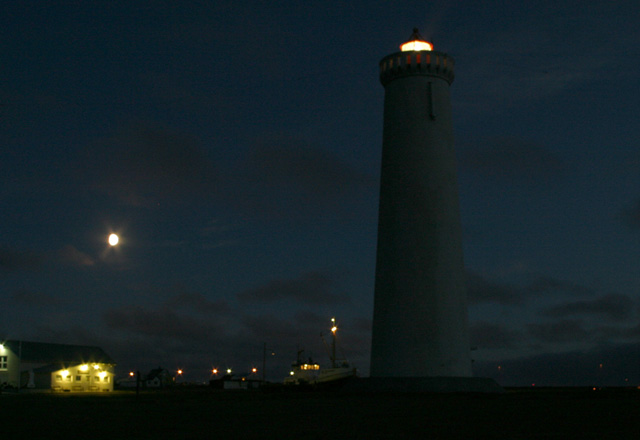
We had got tips to some birding place from Yann and soon we found the pools in Garður.There were lots of Wigeons and Mallards, a couple of Teals and a couple of hundreds Golden Plovers with a single Ruff. While I was scanning the flock in quite heavy rain again, a man with a dog came and flushed all the birds. The plovers landed behind the grassy hills, so we gave up and continued to the northern tip to Garðskagi lighthouse. Later we heard that someone had seen on the very same day an American Golden Plover in the flock that we had missed.

LighthouseWren

In Garðskagi we parked our car next to the lighthouse and soon were scanning the shore, rocks and of course the sea for birds. Eiders, Long-tailed Ducks and a Common Scoter were swimming on the sea, on the rocks we saw a Snow Bunting and some flocks of Purple Sandpipers and on the sea we saw plenty of Gannets, a couple of Red-throated and Great Northern Divers and 3 Fulmars. A couple of Wrens were hiding on the rocky wall again. Then the rain got harder again and we decided to continue along the western coast of the bay towards south. In Sandgerði pools we found again big flocks og gulls, but because of the rain the still weren’t photographed. The first Common Gull of the trip was also seen. From the shore behind the harbor we found some waders: Oystercatchers, 3 Bar-tailed Godwits, a Redshank and a Dunlin.

On the way to Hafnir we saw the first Blackbird of the trip and in Hafnir we drove straight to harbor, where we got shelter from the heavy wind behind the rocky wall. There were lots of birds on the bay and almost immediately we found a flock of 13 Harlequin Ducks! Hanna got a lifer! Lots of Eiders and Long-tailed Ducks were seen but also 12 Great Northern Divers, 3 White-bellied Brent Geese, 2 very distant Slavonian Grebes, 2 Redshanks and a Great Skua that was migrating over the sea.

When the rain got worse again, we started to drive towards Njarðvik. There we went to see if the White-winged Scoter was still present. We found the bird again but it was much further. Anyway the rain had finally stopped, so we still took some pictures. We also saw the first Marlin of the trip.
The weather –forecast was really bad for the next day so we decided to have a museum-day. So we started to drive towards Reykjavik. On the way we saw the first Whooper Swans. But because of the museums were opening only at 10 a.m. we knew that we had some time for birding earlier in the morning. So we headed to Hrauntúnstjörn water-protection area where a Hooded Merganser had been seen in a couple of previous winters.

We checked the tiny lake already in the dark, but saw only a flock of Tufted Ducks. Then we cooked some dinner and while organizing the car again we heard some Redwings and a couple of Common Snipes and at 8 p.m. we were ready to sleep again – well I was still reading for an hour.

Museums and Blue Lagoon

On the 20th of October Hrauntúnstjörn was still without an American merganser, so we soon headed to Lake Elliðavatnin nearby. There were lots of Tufted Ducks with a couple of Scaups, but all the mergansers were Red-breasted Mergansers. .A Great Northern Diver was giving a shy call and the first Redpolls were heard too. Redwings seemed to be everywhere now!

At 10 a.m. we left towards Reykjavik and were surprised how easy the traffic was. Navigator guided us easily to a parking place near Settlement Museum and soon we were wondering this museum that had been built around a 1000th century Viking long-house. When we had seen everything and leaving, Hanna heard that our next target, National Museum was closed because of a strike. So instead we headed to Old Reykjavik where was a small lake with lots of birds. Mallards, Whooper Swans, Greylag Geese, Tufted Ducks, gulls and even a Pink-footed Goose were begging food there. Also some Feral Doves were seen there.

Pink-footed GooseRedwing

The weather that had been surprisingly good in the morning, was now getting really bad, so we headed to Saga Museum where we spent a half an hour listening to stories and Hanna of course watching old clothes. Then we visited a couple of shops, but as it still wasn’t too late, we decided to do still something. So we drove to Blue Lagoon!

Already the walk from the parking place to Blue Lagoon was giving as an idea what it would be. It was extremely windy and sleeting! Anyway Hanna was positive and said that at least we will get a good contrast!

Blue Lagoon

The tickets to Blue Lagoon were quite expensive so we couldn’t just go for a short visit. So we tried to survive the weather and stayed quite some time on the pool, trying to find the hottest and least windy place. Finally we found a good spot and managed to even enjoy the warmth of the water. We of course had sauna too. So it was already evening when we were walking back to our car in a very heavy rain.

We went to stay night to Krysuvík to Seltún geotermic area where we had dinner and soon were ready to go to sleep, again too early.

Lots of amazing places

On the 21st day I woke up at 5 a.m. because I heard something rustling in the car. I woke up Hanna too and she said immediately that we had a mouse in our car. Anyway we made some noise to make the mouse to stop whatever it was doing and tried to sleep again. But soon it was really scrunching something, probably Hanna’s new bag. So we just had to get out, get everything out from the car and then try to catch the mouse. It didn’t take long to find this surprisingly big mouse that was now under the back seat. But catching it was a different thing. Finally Hanna managed to push it out from the door and then I drove immediately further before we carried everything back to the car. Anyway then it was already time to start preparing breakfast.

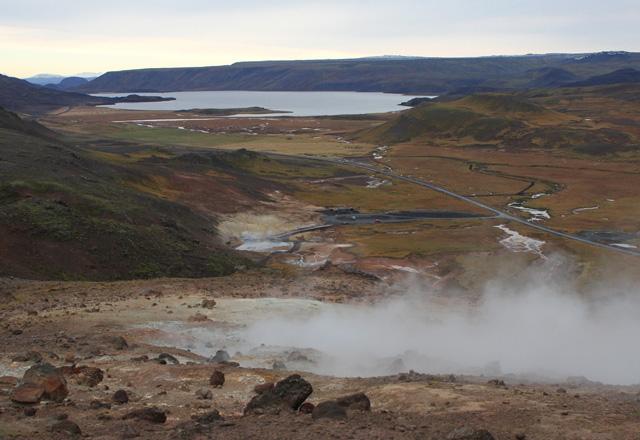
After the breakfast we walked a short track around Seltúnin hot pools. It was even 200 degrees hot under the surface. We also climbed up to the mountain where we found some new pools and nice colors on the ground. We also had a nice view to crater-lake Grænavatn.

Seltún

Wall of lava-tunnel

Once we were back in our car we continued along the coastal road towards our next target-place. In Hliðarvatn we saw Greylag Geese, 30Teals, 100 Tufted Ducks, 7 Scaups and a Merlin and pretty soon we got to parking place of Raufarholstellir. Very close to the parking place started a 1.3 km long cave where we went into wearing head-lamps. We walked some hundreds of meters inside the cave and it was really amazing experience! The colors on the rocky walls were amazing! Anyway we missed wearing helmets and there was also so much water dropping that Hanna started to get worried about her camera. We also had too much clothes, as it was very warm!

Lava-tunnel

Harlequin Duck

Next we headed to River Sog and Lake Úlfljótsvatn which Yann had told to be the best places to find Barrow’s Goldeneyes outside Myvatn of course. Hanna had planned our trip except the birding part, but luckily all the tips I had got were almost exactly on our route and also now we had only a short drive to Sog. Unfortunately the river was mostly pretty far from the road and we could check it only from the couple of places. Anyway we found a female Harlequin Duck and saw lots of Whooper Swans and Greylag Geese migrating against the mountains.

In Úlfljótsvatn we first checked the southern side driving up to the hills, where it was really good to scope all the birds. There were lots of Tufted Ducks, 14 Scaups, Red-breasted Mergansers and a couple of Great Northern Divers. Then we headed towards the northern part of the lake, but still found no Barrow’s Goldeneyes. I even sent an SMS to Yann and asked if there was some place better than the others ora ny other place to try and of course asked and got an answer that both ends of the lake are the best. Then we realized that we still hadn’t check the very northern end of the lake. And that was where we finally found a flock of Barrow’s Goldeneyes! When Hanna was getting her lifer, she first found a goldeneye that didn’t look quite what she had expected. She asked me to check the bird and it was a Common Goldeneye! Anyway there were 10 Barrow’s Goldeneye too, so Hanna got her lifer. We also saw 10 Goosanders and a Slavonian Grebe before headed towards Þingvellir aka Thingvellir National Park.

We had lost too much time while searching for the Barrow’s Goldeneyes, but finally got to Pingvelliri where European and American tectonic plates were moving away from each other. We walked a few kilometers taking pictures and reading stories from the signs. The place had been famous for a long time, already in Viking time. Only better birds we saw were a couple of Merlins.

Tectonic platesBarrow's Goldeneye

As we had still time, we decided to continue on the Golden Circle and continued towards Geysir. But we had to make the first stop very soon when we found a male Barrow’s Goldeneye very close to the shore on Þingvallavatn. It was swimming further but anyway we managed to get some pretty good pictures of this species. The birds in Úlfljótsvatn had been far too distant.

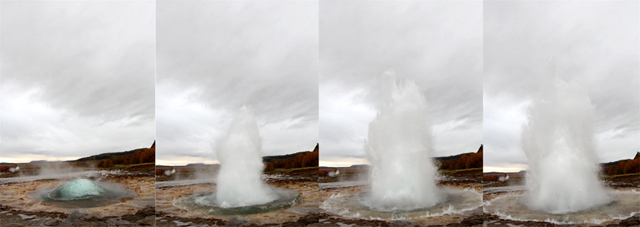
After an hour driving we got to Geysir and walked straight to see active Strokkur Geyser. After a short wait Stokkur erupted very shy small bubble, but soon after that it erupted well towards the sky! Even though it was cold and windy we watched the geysir erupting about 10 times about every 8th or 10th minute and tried to take lots of pictures of eruptions. Some of the eruption were only very little but then the next one was even bigger than normally. A couple of times it erupted twice in a row pretty well. Of course we walked around the park and saw a big Geysir too but it erupts very rarely nowadays.

Geysir

Gullfoss

It was already getting darker when we decided to see the 3rd Golden Circle attraction Gullfoss waterfall. Luckily it was only 10 kilometers drive and soon we were watching this amazing big waterfall. Water was in the air and it was really getting dark, but still we managed to get nice picture of this 32 meters dropping waterfall-complex.

It was dark when we still drove back to Geysir for the best tourist-shop. Anyway we found nothing to buy and soon were ready to go somewhere. As we had been so active and managed to do so much already, we decided to do more – we planned to drive as far east as possible towards Skaftafell National Park. The weather for the next day looked promising and we had some Glaciers to see!

It was a long 309 kilometers drive to Skaftafell so we left immediately. In Reykholt we saw a Short-eared Owl in the head-lights and while Hanna was sleeping I drove as far as it was possible before we had to fill the tank with diesel. Luckily we managed to find a shop and buy something to eat too just before it was 8 p.m. and it was closing.

It was very tiring drive but I still had to stay focused as all the bridges were very narrow and there was room for only one car in time. Finally we managed to get to the parking place of Skaftafell National Park and soon we were ready to sleep.

Skaftafell

On the 22nd of October we woke up when it was raining very hard! It had been raining whole night and it didn’t really look like getting any better soon. There was good place to make some breakfast under a roof while a Redwing was begging for food on the table just half a meter from us (really!) and also a Ptarmigan came to see us. When the rain got a little bit weaker, we left to walk towards a Svartifoss waterfall.

On the tenting area there were several Ptarmigans feeding on a grass, which wasn’t the biotope we had expected to find this species.

Ptarmigan

Basalt-wall

After some walking there was a sign that told that a normal track to Svartifoss was under construction and we had to take a smaller path. It was a longer way and the sign told that it would take at least 2 hours to get there and back. The rain was just getting worse but we kept on going. It took about an hour to get to Svartifoss which isn’t very big waterfall but the black basalt-walls are very impressive!

After we had taken lots of pictures, we continued along the path and the way back was a little bit further but of course now mostly downhill. And exactly after totally 2 hours walking, we were back in the parking area. We visited the information center where I managed to get internet connection and check the recent bird-sights and could see that there weren’t any other rarities than a Red-eyed Vireo that Yann had already sent a message about. We actually had been very close to the place where it had been found but only passing by on the previous evening. Luckily we weren’t on panic to see this species. I also bought an update of the Icelandic bird-book before we started to drive towards Jökulsárlón.

After 45 minutes driving we parked to Jökulsárlón and walked in a rain again to see this amazing glacier-lagoon with many ice-rifts moving towards the sea. It was a high tide so ice wasn’t going under the bridge. We walked on the shore of the lagoon and took lots of pictures of the ice with different shapes and colors.

Herring GullBlue iceFloating ice

We also visited the shore where smaller ice was melting on the black sand-beach and took some pictures towards the lagoon also on the southern side of it before started to drive back towards west.

We still turned a couple of times from the mainroad to photograph the glaciers on the mountainside and then turned towards Fjallsárlónin glacier-lagoon. We ewalked along the shore towards the glacier for more than a kilometer to get better pictures but unfortunately the mountains were still partly behind a fog. Then it started to rain harder again and we hurried back to our car and started along drive towards Reykjavik. Luckily our car had pretty good air-condition and we always managed to get our clothes dry while driving.

The weather forecast was very bad for the next day so we had planned to visit the National Museum in the morning. We had also got information that there had been a Lesser Scaup a week before in a small lake near the city, so we planned to go to sleep somewhere near the lake and once we found the lake from the map, we realized that it was very close to Hrauntúnstjörn and Hooded Merganser place, so we headed there.

While we were finally driving along the motorway towards Reykjavik it started to get cold outside and as our car had very much humidity inside because of our wet clothes, the windows started to get very badly misty. The road had absolutely too many poles and the lines very pretty narrow and there was nowhere to stop. I started to get worried as I could see only through a small hole but finally there was a gas-station where we could stop and wait the window to open. Finally after 370 kilometers driving from Jökulsárlón,, we parked to a familiar spot and were soon ready to sleep.

Museum and geese and more

On the 23rd day I started with checking that there were still nothing else than Tufted Ducks on the Hrauntúnstjörn. Then we drove 5 kilometers to Lake Rauðavatn. But the lake was empty. We were already leaving, when we saw a flock of 20 wigeons landing to the lake and of course checked them. Surprisingly one of them was a nice male American Wigeon! And of course we had to take some pictures of this self-found American duck.

Old buckle

Soon we were parking to the National Museum parking place and then watching all the Iron Age stuff there was. After more than an hour we had seen everything interesting and as the weather was again completely different than the forecast had told, we started to plan what to do next. And soon we were driving towards north and Hvanneyri as I had got some information from Yann about where to find one more interesting bird I wanted to see.

Greenland White-fronted Goose

It took an hour to get close to Hvanneyri. On the way we drove under Hvalfjörður using a 6.3 kilometers long tunnel which cost 1000 krones to use. On the first really good looking area we stopped and started to scan the big open area for geese. And soon I found a flock of very distant Greenland White-fronted Geese. They seemed to be pretty close to the village, so we soon drove there and walked to get closer to the birds. But after some walking we realized that they were still too far from there too. But then we saw another flock of geese landing to the other side of the village. And there on the fields there were lots of them!

Greenland White-fronted Goose

First we photographed one lonely goose on the grass of the church but then moved to the fields where we found altogether 1600 Greenland White-fronted Geese, 50 Pink-footed Geese and 10 Barnacle Geese. Many of the Greenland White-fronted Geese were wearing neck-rings. We took lots of pictures and some videos of these birds that may one day be a full species.

We were happy when we continued towards Grábrók volcanos that were onalu about 30 kiometers from Hvanneyri and along the main-road.

Grábrók

Grábrók volcanos aren’t really big but very classic example of volcanos with lava-fields. We climbed to the top of the closer mountain and got really nice pictures from there. Then we realized that we had done everything that we had planned and planned to do birding on the last day we still had. So we were soon driving towards Keflavik.

Now we drove around a long Hvalfjörður and saw lots of Eiders, Long-tailed Ducks and more than 200 Oystercatchers on the shore.

Majakka

After a couple of hours driving we parked to Garðskagi lighthouse and started to prepare the car for the night. Surprisingly there was warm water on the small campsite building so cooking was easy. And soon we were again sleeping.

Last day

Iceland Gull

On the 24rd of October when we woke up it was very windy outside but big flocks of gulls, mostly Glaucous and Iceland Gulls were flying over us. After a quickly breakfast we were seawatching behind the shelter of the lighthouse. There were lots of birds moving: 80 Kittiwakes, about 100 auks which at least 20 I could identify as Common Guillemots, Gannets, 15 Great Northern Divers, 2 Red-throated Divers and a Fulmar were seen. There were both Cormorants and Shags on the rocks and when we were already stopping I noticed 2 Sooty Shearwater disappearing behind the lighthouse. They weren’t far at all but somehow we couldn’t find them anymore. Luckily after some waiting we could find 2 more lonely Sooty Shearwaters which were much more distant.

Soon we got bored to too hard wind and also it was getting much quieter too. So we headed to Garður pools which were surprisingly empty. On.Sandgerði pools we found again lots of gulls and even more of them were found on the shore behind the buildings which was found to be a very good spot for seawatching too as the buildings sheltered perfectly from the wind. While Hanna was photographing the gulls, I saw a Shoveler flying over me and on the shore there were a Ruff and a Grey Plover. On the sea I saw a few Fulmars, 16 Great Northern Divers and so on. We had already earlier tried to find kumlieni-type of Iceland Gulls and seen a couple of good candidates but now we finally managed to find a couple of clear Kumlien’s Gulls.

GullsIceland Gulls

From the harbor we found again some Oystercatchers, a Redshank and 3 Bar-tailed Godwits, but now there was also a Curlew. In Hafnir the wind was too bad but anyway we managed to see a flock of 11 Harlequin Ducks.

Tectonic plates

Then we headed to Grindavik where had been some pretty good birds on the previous weeks and days like a Surf Scoter and a Canada Goose. We took the coastal road and on the way we found some interesting touristic places too. So we stopped in Miðlína where was a bridge between the continents and in Raykjanes lighthouse from where we could see an island of Eldey that once had Great Auks breeding and still had a huge colony of Gannets breeding. We also stopped to see Gunnuhver hot pools that really smelt bad before continuing to Grindavik.

Amerikanjääkuikka

In Grindavik we really didn’t know what to do. We checked the harbor-pools and found a Great Northern Diver that finally let us to take some pictures but nothing else. Then we couldn’t find out how we could see the bay behind the city well. One pool had a Barnacle Goose that had something wrong with its wing, but after some searching, we gave up and headed towards Blue Lagoon.

Anyway we didn’t go to Blue Lagoon to swim but to a spruce-forest nearby There we hoped to find almost any passerines but found only a Merlin, 2 Redpolls, which were the only ones we saw on the whole trip, a Wren and the last and our 65th trip-tick, a Goldcrest.

Kumlien's Gull

Then we drove to Njarðvík where we still visited the White-winged Scoter place but couldn’t find it and in Njarðvíkurfitjum but also the American Wigeon was gone. Then we went to pack everything to the parking place where we had been sleeping on the first night. And soon we drove to the car-rental office to leave our Caddy. From there we got a ride to Airport Hotel Smári where we had booked a room for the last night. It was good to have a warm shower, eat well on the restaurant and get to sleep on the soft bed.

Towards home

On the 25th of October we woke up at 5 a.m. and a half an hour later we were having breakfast. Son we were carrying our luggage to the airport where was a big mess! All the flights seemed to leave early in the morning and every single person was queuing on one line! A stupid machine gave us the stamps for only one bag and after that we got misinformation and after all we were standing almost in the end of the huge line!

After more than an hour we finally managed to get rif of our big bags but then there was again everyone in one line on the security control! After 15 minutes queuing we had only 7 minutes to our flight and speakers were already calling for us! And of course they took my bag to a drug-test! I was cursing the whole airport and every single worker there as I had never been in an airport that was working so badly, and finally we had to run to catch our plane. After all there was still one couple behind us and once we got into the plane it took anyway 15 more minutes before it moved.

I was watching a movie and Hanna was reading a book on the flight as it was cloudy and no views under us. Finally we landed to Helsinki-Vantaa and after we had found our luggage we took a bus to our car.

On the way to home we decided to drive to Hollola to twitch a Pied Wheatear. Luckily we managed to see the bird easily and very well, so it was easier to drive a little bit extra. Finally we were at home at 8 p.m.and on the next day we had to go to work again.

J.A.

Ural, Russia 6th to 24th of June 2015

Forewords

Ural had long been a dream destination for us. Many birds that are rare in Finland are common there and of course there are also some species that we haven’t got yet. In a couple of last years some groups had managed to visit Urals and they had really did well. In summer 2014 some groups used a local company to arrange almost everything and then one independent group visited also southern steppes and found some very interesting species which made the trip even more interesting. We had planned to make our trip to Urals after a couple of years but our friend Paul French wanted to go sooner and so already in autumn 2014 we contacted the local company and started to plan a trip for summer 2015. Everything was well prepared already in spring 2015 but only disappointment was that the 4th participant had to cancel the plans to join us. We tried to find a new participant but after all decided that it might even be better if there were only 3 of us as then we could fit easily in one car. So after all there were three of us, Hanna and Janne Aalto and Paul French.

To Russia

On the 5th of June we drove from Parikkala to Kirkkonummi. We were there at 7:25 p.m. and after we had eaten well we continued to Helsinki-Vantaa airport.

While we were taking our luggage from my father’s car, I realized that I had forgotten to take any jacket with me. I had planned to wear my gore-tex jacket during the flight as my luggage was already very heavy, but it had been so warm in Parikkala that I had just forgotten to take it with me. It was too late now, but I started to worry that how I could survive in Ural Mountain without a jacket.

Our flight left at 11:55 p.m. and we fell asleep immediately. We woke up when the plane started to land to Ekaterinburg. We landed to Koltsovo airport at 04:20 a.m. which was 1.5 hours earlier than we had thought to land.

After we had found our luggage and after standing in several queues where we had to collect different kind of stamps to our papers, we finally got out from the airport. As we were out much earlier than we had thought, we walked straight to Lainer hotel. Our friend Paul was coming after a couple of hours so we had some time to rest.

It was only a couple of hundreds of meters walk to Lainer but in the reception there was a little bit hassle before we realized that our rooms were booked by Ural Expeditions & Tours Oleg Demyanenko. Finally we got into our room and I sent an SMS to Paul that he comes to wake us up when he is ready.

Airport marshes

I woke up when Paul sent me an SMS that he will come after 10 minutes. At 7:15 a.m. he knocked to our door and it was good to see Paul again! He was tired after a long travelling but ready to go to do some birding anyway!

We walked to the airport and took a taxi that probably wasn’t official one but the driver “Hazi” seemed to be reliable. He didn’t speak almost any words of English but agreed to drive us to the place that we showed from googlemaps and also agreed to get us back after 4 hours. So soon we were driving towards Bolshoy Istok village and Airport marshes that opened behind the village.

Hazi promised to be back at 12 a.m. and of course didn’t take any money yet. Soon we were wearing our wellingtons and walking towards north the marsh.

Airport marshes

The meadow was full of nice birds: Booted Warblers were everywhere and also Blyth’s Reed Warbler was very common. Some couples of Siberian Stonechats were active and soon we heard a singing Siberian Chiffchaff. We followed a path on the western side of the river but after some 45 minutes walking the river turned in front of us and it was impossible to continue towards the bushy area that we wanted to go. Anyway we saw more and more birds like Yellow and Citrine Wagtails, Penduline Tits, Bluethroats, Common Rosefinches and so on. Some Steppe Gulls flew over us and a couple of Black Kites were soaring on the sky, a Corn Crake was calling and Grasshopper and River Warbler singing.

Citrine WagtailSiberian Stonechat

But we had to walk to the place where we had started and there I managed to cross the river along a dam, but it was too dangerous because of the stream and almost broken dam. So Hanna and Paul had to try to find a better way and after all they had to walk to the village where they finally managed to cross the river. But finally we were together on the eastern side of the river and walking towards the bushy area.

Soon we heard a Greenish Warbler singing and then Paul saw the first male Long-tailed Rosefinch but only briefly. It dropped to the bushes too soon for me and Hanna. But after a short wait, it finally flew again and did some kind of display flight over the bushes. And soon after that we found it perched on the top of a bush and finally I could celebrate my WP-tick number 700!

Airport Marshes

We were still pretty far from the bird so we walked a little bit closer. But the terrain changed to most difficult I had ever walked! It also came wetter so after all we stopped close to a reedbed where at least a couple of Paddyfield Warblers were singing. Soon we found the rosefinch again and it landed very close to us to a top of a bush but it was behind some reeds so Hanna and Paul couldn’t get good pictures. And soon it was gone again.

After some waiting we saw a Long-tailed Rosefinch flying pretty far behind us and soon after that two males chasing each others over the bushes – so there were probably 3 different males.

Soon we realized that it was time to start walking back. It was a long way to walk as Hanna and Paul had really had to make a big loop to cross the ditch. We were in the starting place a couple of minutes before the midday and Hazi was already there waiting for us.

Once we were back at hotel we went to sleep right away. At 5 p.m. we had a good dinner at hotel restaurant but as it was raining pretty hard outside, we decided to take it easy for the rest of the evening. Luckily WiFi was working well but then we also found out that the weather wasn’t going to get any better for the next day either. So I spent most of the night watching Champions League final where Barcelona won Juventus 3-1.

Rainy day

Bluethroat

On the 7th of June it wasn’t that rainy during the night, so I woke up before 7 a.m. and even though I hadn’t been sleeping too much because of the football match and some noisy work outside in the hotel backyard, I wanted to go birding. So I woke up Hanna and then went to wake up Paul too. He didn’t hear me knocking the door so I opened the door walked in. It really wasn’t easy to wake him up and he got so scared when it finally worked! And I wasn’t ever cruel at all… Anyway Paul, who had been working too much recently, was still too tired to do anything yet and decided to stay in bed. So together with Hanna we did only a couple of hours morning walk near the airport.

We heard several Greenish Warblers, Siberian Chiffchaffs, Bluethroats and a Thrush Nightingale, a Sedge Warbler, a couple of Common Cuckoos, an Icterine Warbler, a River Warbler, a Corn Crake and saw a Long-tailed tit. But then it started to rain again and we hurried back to hotel to sleep more.

At 11:40 a.m. we walked down to the lobby where Paul was already with his luggage. We still ordered borsch-soup with Hanna and luckily got them in a couple of minutes. Soon Oleg Demyanenko from Ural Tours & Expedition arrived and we filled his 4-wheel drive with our luggage and started to drive through 1.5 million inhabitants Ekaterinburg.

We drove to Ural Tours and Exhibitions office where we did all the paper-work, checked all the gear that we were loaning and of course paid everything to Oleg and then visited an ATM and a shop and then Oleg drove us to the railway station. With help of carriers we managed to get our luggage, which included now also tents, mattresses, tables, stools and all the kitchen stuff, to our cabin and somehow managed to pack them all so that there was still room for 4th person that was already there too. Then at 4:10 p.m. our train left towards south and Orsk.

In our cabin

In the beginning of the long train-trip we were talking and wondering how few birds we saw from the window even though the landscape changed from pine forests to really good looking leaf-tree forests. Finally about at 9 p.m. when we were in Cheljabinsk, we started to sleep. Luckily the train was moving very slowly and steady so we slept very well.

Orsk – lifers

On the 8th of June I woke up early and just watched the landscape from the train window. There still weren’t many birds but it really looked like we were going to see lots of steppes. Some Turtle Doves, Hoopoes and a Red-footed Falcon were seen before we finally were at Orsk at 06:37 a.m. Our driver Alexander was already there together with a group of local journalists that wanted to make some stories about “famous foreign ornithologists birding in Orsk”. Luckily these journalists gave us a hand and helped us to carry everything to Alexander’s Niva which had a handy back-box for the luggage.

After visiting a shop we were soon driving to highlands eastern side of Gaynulino. After some driving we found the first good looking spot which we had also some GPS-spots as the British group that had visited this area last summer had seen some White-winged Larks in this place. Journalists wanted to see us in action and they were filming and photographing when I got my scope ready and almost the first bird I found from the northern side of the road was a stunning male Red-headed Bunting perched on the top of a bush! Journalists wanted to do some interviewing too, but I had done enough and left to see the bunting closer. So Hanna and Paul were giving the interviews…

Red-headed BuntingJanne digiscoping

One of the journalists followed me and videoed me watching and digiscoping my new WP-tick. Soon Hanna and Paul were following me and they got some pictures too. Unfortunately very hard wind made this bird move a lot and even though we soon found at least another male and a female too, we couldn’t get very good pictures. So we planned to walk and check a bigger area before coming back to try to find these birds again.

After we had first found a Siberian Roe Deer and a funny looking Corsak Fox, I found a couple of White-winged Larks flying on the sky. But these birds flew almost immediately very far to the other side of the road. The fox was still chasing some Skylarks and then we noticed that there was still one more White-winged Lark following it. We tried to get closer but even the fox was gone, we heard only the wall of many Skylarks singing. We walked around for quite a long time and saw 7 Black-winged Pratincoles, a Booted Warbler that was in a totally wrong biotope, Ortolan Buntings, Siberian Stonechats, Tree Sparrows, Northern Wheatears, Tawny Pipits, Bee-eaters and so on. When we had decided to walk back to see the buntings, we saw Alexander driving towards us – so we decided to continue somewhere else.

Tawny PipitBooted Warbler

Maruna growing steppe

Alexander didn’t speak many words English but he was a funny guy anyway! Unfortunately he was driving like a lunatic and even though we tried to slow him down a little bit, it didn’t help. Anyway next we asked Alexander to find us a good place to make a camp. We started to feel hungry and we really needed to stop and plan what to do the next 5 days as we had already seen 2 most important species in Orsk area!

We drove to southern side of Gaynulino and from the western side of the river we found a perfect place for camping. While we were putting up the tents, Alexander was cooking a lunch. After a really good food we were ready to go to sleep a little bit at 3:30 p.m.

CampDemoiselle Crane

We slept a bit more than an hour and soon we were walking along the river towards south. There were big meadows on the both side of the river and lots of birds: Ortolan Bunting was very common, some Booted Warblers and Bluethroats were singing a Quail calling and we also found a couple of Red-backed Shrikes, Barred Warblers, Marsh Warblers, Cetti’s Warblers, a Honey Buzzard and a Hobby. The wind was still getting stronger but then we found a Demoiselle Crane landing to a meadow far to the other side of the river. Luckily it was flying again soon and flew over us to the field and there was another Demoiselle Crane too – they were nesting there on the field!

The wind died in the late evening so soon we got some insects, but luckily not too many yet. We ate a good dinner and went to sleep before 10 p.m.

Steppe Marmot

Demoiselle Cranes

On the 9th of June I woke up after 4 a.m. and walked a little bit along the river north towards the village and recorded some Barred, Marsh and Cetti’s Warblers. Hanna and Paul woke up at 5:30 a.m. and soon we were walking towards the Demoiselle Cranes again. We had planned to try to hide to the bushes along the river to a place where Demoiselle Crane had been flying over to the other side of the river for a couple of times in the evening, but after an hour waiting the cranes were still just standing and feeding on their nesting place. So we walked along the old field towards the cranes until we thought we were close enough and took some pictures. Unfortunately there was lots of haze in the air, so the pictures weren’t too good. In the same place there was a colony of Steppe Marmots and we of course took some pictures of these funny mammals too. The young marmots were wrestling almost all the time they were visible. But once we got closer they all disappeared into their holes. Luckily one bigger marmot stayed visible.

We had the breakfast at 9 a.m. and soon we had packed our luggage and driving towards a place that Hanna and Paul had chose from the maps. It was much longer way than we had expected to the steppe area so we made one stop on the way on a rocky hill near a mining area on the southern side of Novorudnyy. Paul saw briefly an owl that probably was a Short-eared Owl and then I flushed a Grey Partridge. On a small pool behind the hill we saw a couple of Ruddy Shelducks and an Eastern Imperial Eagle was soaring on the sky.

White-winged Lark

We continued to a sandy steppe that we had thought to be good for a Black Lark which we were dreaming to find. Once we had started to walk, we immediately flushed a couple of White-winged Larks! But again these birds were extremely shy and mobile so we couldn’t get good pictures. We were chasing these larks for some time and found another pair too, but still they were too mobile.

Soon we continued to a lake nearby on the western side of Novonikolaevka and drove around it even though there weren’t any roads at all. We saw a couple of stunning Pallas Gulls, 2 Steppe Gulls, Great Crested Grebes, a Garganey, a Turnstone, a Ringed Plover, 2 Common Snipes and again 2 nice Demoiselle Cranes. This time we managed to get good pictures of the cranes as they weren’t far from our car.

After all we decided to put up the camp along the lake and after some searching we found a good spot. While putting up the tents and cooking our lunch we saw a couple of Red-footed Falcons that had a nest very close to our camp, a Golden Oriole, Siskins, very southern Fieldfares, a Red-breasted Merganser, Black Terns and so on. We also saw a Steppe Polecat briefly. At 5 p.m. it was time for a nap again.

Demoiselle CranePallas Gull

At 7:30 p.m. we were walking towards the western end of the lake and from the bay we found a Common Teal and a Gadwall but the cranes were much further on the fields. We also saw lots of Musk Rats and the common songbirds were singing well even in the evening.

Once we were back in our camp Alexander had prepared a good dinner and while eating Hanna noticed international space-station flying over us. It was very well visible with a scope. In the evening we were listening to the Red-footed Falcons calling from their nest, Demoiselle Cranes calling further, saw a White-winged Black Tern with Black Terns and then noticed a strange call from the lake. It took some time to realize that the callers were the Steppe Marmots that were chasing a Corsak Fox away from their nest on the other side of the lake! Frogs started to get noisy too and a Bittern was booming when we went to sleep pretty late at 11 p.m.

A couple of lakes

On the 10th of June it was raining during the night and also in the morning. I went to walk towards the eastern side of the lake, but heard only a Greenish Warbler, saw 6 Pallas Gulls and so on, but then the rain got worse and I hurried back to the tent. After a short break the rain stopped and soon we were all walking to the same place where I had already been. We saw a Eurasian Wigeon and Hanna saw a couple of Black-winged Pratincoles and while we were already walking back towards the camp, we found a couple of White-backed Woodpeckers. After the breakfast we packed everything and continued to the next place.

Red-footed FalconWhite-backed Woodpecker

Surprisingly we drove the same road that we had come and in the place where we had seen White-winged Larks, we saw a White-backed Woodpecker, a couple of Steppe Buzzards and 2 flying Ruddy Shelducks. While we were driving towards Malokhalilovo, Alexander told we were on his hunting grounds and he asked if we wanted to see minks, foxes or hares. We were interested to visit the hare place as it was a good looking lake anyway. The lake was on the north-eastern side of Malokhalilovo. Surprisingly Alexander made a U-turn to a deep ditch and we got completely stuck! The situation was so absurd that we didn’t hesitate to take any pictures. There was a turning place 50 meters from us. Somehow Alexander got the car up but then the back-box got stuck and car and the box were in a nice V-letter shape on the bottom of the ditch. But Niva is an amazing car and somehow Alexander drove it up and we could continue to the lake.

We didn’t find any hares on the lake but we saw a Great White-fronted Goose, a Goldeneye, a Pochard, a Smew and a Little Ringed Plover.

Malokhalilovo

Janne and PaulOnce we got to Malokhalilovo we started to walk along the river on the village, but soon we realized that we were on the wrong side of the river. On the southern side we found much better looking biotope while walking north-east and also the GPS-points started to get closer. After the heavy rains at night the steppe was extremely muddy, so walking was very difficult. The day was also getting really hot so soon we were sweating a lot. We saw an Eastern Imperial Eagle, Gold Finches, Yellowhammers and heard a Song Thrush, 4 Siberian Lesser Whitethroats and a Grasshopper Warbler and when we were going to turn back towards the village we found a beautiful male Red-headed Bunting! But it flew very far away before we got almost any pictures.

When we had walked back to our car, we decided to drive back to the bunting place and put up the camp somewhere there. And luckily we found a good spot along the river.

When we had got the tents up, the fish-soup was also ready. The rest of the evening we were just sitting on the camp and watching White-backed Woodpeckers and Greater Spotted Woodpeckers flying over and listening Golden Orioles singing and calling. In the late evening a fire kept insects away. Anyway we went to sleep already at 9 p.m. and at night we got some good thunderstorms.

On the 11th of June I woke up at 5:30 a.m. and walked to record the Red-headed Bunting. Unfortunately my wellingtons were too deep in the too well closed back-box, so I had to go to wet grass with my boots and soon my feet were completely wet. On a small pool I recorded frogs and saw a Redhank, but soon I found the Red-headed Bunting and got extremely good recordings as the bird let me to less than 5 meters. But soon it started to rain again and I hurried back to tent.

When the rain stopped I managed to get my wellingtons and soon we all went back to the bunting place and there it was still. Hanna and Paul got some ok pictures but somehow the bird wasn’t that easy to get close anymore. And again it started to rain so we walked back to the camp.

Red-headed Bunting and Yellow Wagtail

After the breakfast we packed everything again and then left towards a place that we had found to be good-looking in googlemaps. Again the roads weren’t as easy as they had looked, and soon we were driving in the middle of the steppe and trying to cross a railroad. Alexander was driving like a crazy again and I must say that I was really scared at times! After many kilometres we had to give up as the railroad wasn’t possible to cross. So we had to drive back to a bigger road which was just good I think.

road on steppeLittle Bustard

When the road got bigger it was again possible to look through the windows again and we saw 2 flying Ruddy Shelducks on the northern side of Gay and a couple of male Little Bustards south and south-east from Novorodnyy, but got only some flight shots of them. Probably the same Eastern Imperial Eagle was again seen close to the mining area again. We stopped on one small lake west from Gay on the way but there were only some gulls and Coots and some Black Kites on a rubbish tip nearby.

Asia-ticks

Finally we were on the area that we had tried to get south from Kolpakskoye, but it was a disappointment, it was farming land all over. So we decided to skip this place and continued to Kolpakskoye and to Ural River that was nearby. On the way we saw a couple of cute Rufous Susliks. Then on the bridge between Europe (also WP) and Asia we saw an Oystercatcher, a Pallas Gull and also a Levant Sparrowhawk! We walked a little bit in a forest on the WP-side of the border but saw only Bee-eaters and found a nest of a Great Spotted Woodpecker. Then we decided to drive cross the river and go to Asia! We wanted to check if the Asia looked better. We were hoping to find much better steppes for larks.

UralRufous Suslik

It really started to look better almost right away and we saw much more Red-footed Falcons and Bee-eaters than on European side of the river. We continued through Novoorsk and south of the city we saw the first Montagu’s Harrier (and the only ring-tail harrier of the trip) and continued until eastern side of Luzhki and Kemak River where we found again a good place to put up the camp. While a Little Tern was wishing and an Oystercatcher was swimming (yep, you read correct), we put up the tents and soon it was time to eat again.

Kumak river

The rest of the evening we took it easy and stayed close the camp. I even went to swim to the river. We saw a couple of Red-headed Buntings flying over us and the first Curlew of the trip – strange, there had been good biotope everywhere. We also saw a Turtle Dove species in flight but it was too brief to identify. Several thunderstorms were around us but luckily none of them came too close. We went to sleep at 10 p.m.

Red-headed Bunting

On the 12th of June we woke up later, just before 7 a.m. when Black-winged Pratincoles were calling while flying over our tent. First we just walked around the camp and saw a Levant Sparrowhawk.

After the omelette-breakfast we packed our car again and started to drive along the road north towards the endless steppe. After about 200 meters driving we found a Red-headed Bunting perched on the top of the bush right next to the track and finally we got some good pictures!

Searching for larks

On the first stop we made, Hanna and Paul saw a Little Bustard and if in European side we had seen 1 White-winged Lark to 100 Skylarks, now about every fifth lark was a white-winged. But still they were extremely difficult to see well and photograph. They either got up to the blue sky and disappeared or then landed hundreds of meters from where they had been flushed. We also saw 4 to 6 Demoiselle Cranes, a young White-tailed Eagle, a flock of Lapwings that had one leucistic bird which really was thought to be something else first, an Eastern Imperial Eagle, a Long-legged Buzzard, a Caspian Tern, a Lesser Grey Shrike, Red-footed Falcons and so on.

When we were once again walking in one good looking area Paul noticed a big lark flying over us. It was flying straight away but then once turned and showed itself – it was completely greyish without any white on the tail or trailing edge of the wing – it must have been a female Black Lark. It landed a couple of kilometres from us and we walked there but never found it again. After all only good thing in this observation was that we were outside the Western Palearctic. We really would have wanted to see the bird better.

White-winged LarkSteppe continues

After seeing about 25 White-winged Larks, we decided to turn back. This steppe would have ended somewhere in China, but as we were in Asia anyway, we weren’t too keen to keep on going… We still stopped along the river to cook lunch and there were plenty of people swimming and having fun as it was Russia day and people had a long weekend holiday.

After we had eaten we decided to drive south-east over the steppes to see one lake nearby. But again it was much longer way than we had thought and Alexander was driving faster than ever! We really lost the road a couple of times and drove through tens of water-pools that were quite deep, but somehow managed to get close to the lake alive. I had once seen a black lark looking bird from the window but I had been too scared to say anything. Finally we stopped near the lake on the western side of Akzharskoye, when there was a first small pool with a flock of White-winged Terns and a Marsh Sandpiper.

AlexanderWhite-winged Black Tern

Even though it was extremely hot and humid, we walked to see the lake which was really good indeed. 6 Great White Egrets, a family of Black-necked Grebes, 2 Red-necked Grebes, a Gadwall, 2 Pochards, Bitterns calling and also flying, a Little Bittern seen in flight very briefly, Savi’s Warbler, Paddyfield and Great Reed Warbler singing. A couple of Citrine Wagtails were also seen and together with Hanna we saw a male Isabelline Wheatear.

But it was soon absolutely too hot to continue and as we had no more ideas what to do, we asked Alexander to drive to Orsk. After some shopping Alexander dropped us to the railway-station and then it was time to say goodbye to Alexander. Then we had 5 hours before our train was leaving.

At 11:48 p.m. our train left towards Ekaterinburg and after we had managed to squeeze our luggage into our cabin, we were soon ready to sleep.

On the 13th of June I woke up just before 10 a.m. and we had still a long way to go. While talking we saw some Black Kites and Steppe Buzzards and then suddenly on the top of a bush in the middle of a small bog there was an Azure Tit! Paul started to celebrate, but then realized that we were on the wrong side of the border again – but anyway Hanna and Paul got a world-tick. Later we still saw a Greater Spotted Eagle briefly but then the rest of the trip went without any observations.

Relaxing in Ekaterinburg

At 2:11 p.m. we were in Ekaterinburg and Oleg was on the station with carriers. Soon we had everything packed into Oleg’s car and driving towards the Hotel Fort that was close to the city.

The reception didn’t speak any English but otherwise the hotel was pretty good. Unfortunately I didn’t know how to get hot water from the shower but it was good to get even cold water wash done.

Pizza

We loaded all our batteries and just relaxed for a couple of hours. Then we decided to go to eat but there was nothing in English in hotel restaurant, so we decided to walk to a pizzeria that we had seen near the railway-station. Hanna ordered chicken but with Paul we took big pizzas. Once we got them, they were really too big! We had been wondering if the pizzas were eatable at all as there was potato and mayonnaise in all of them – and soon we found out that they hardly were. Anyway we were too hungry so we really tried our best, but it was the first time ever that I had to stop eating after half of the pizza!

We took some of the leftovers with us and walked back to the hotel. There we planned the next couple of days program and then finally went to sleep. And soft beds felt so good after several nights in tent and on very thin mattresses.

Monetnyy marshes

On the 14th of June we woke up a bit too early and at 7 a.m. we were having the breakfast. Then we packed everything again and at 8 a.m. Oleg arrived and we packed his car full again. Soon we were driving towards north-east and Monetnyy. After some shopping in a tiny shop, we tried to find a road or a track that lead east to marshes about 6 kilometers from the main road. We found one good road but it ended to a horse pasture surrounded by big fences. After some trying to get around the fence we gave up and decided to start walking. Oleg stayed by the car and we promised to get back in some hours.

Long-tailed Tit

Common Glider

After all it was clear that we had made a bad decision as the forest came very wet. But after several kilometers walking we just kept on going towards the GPS-points that we had. We heard plenty of Siberian Chiffchaffs and Greenish Warblers and some Green Sandpipers, Long-tailed Tits, Robins, Spotted and Pied Flycatchers, Willow Tits, a Common Crossbill and saw a Jay. After 3 hours walking we decided to take a shortcut and walked to a canal and hoped that it’d be easier to walk along it. But it wasn’t a canal at all but a road! Already in the morning Paul had suggested Oleg to take that road, but Oleg had said it was a canal.

This was the road that British group had used a year before and there was pretty much traffic as several cars, tractors and even a group of motor-cyclist passed us. So soon we were in the right area where the Movetnyy marshes started. But it was already afternoon and very hot, so we didn’t do much birding anymore. We called to Oleg if he could try to find the road and come to pick us up, but after an hour trying he called us back and told that he couldn’t find the way.

So it meant that we had to start walking 6 kilometers towards the main road. Luckily I had the pizza-leftovers with me and we got some energy to start walking again. It was a long and extremely sweaty walk but finally we found the cemetery from where Oleg had called us. But he had been on the wrong side of it and he hadn’t noticed a small track that went to the backside of it and continued then 6 kilometers almost straight to the marshes.

Finally we found Oleg and decided to go shopping and then drive back to marshes to camp. We really didn’t want to give up with this place. So after buying cold drinks, ice-cream and also some real food, we were driving back. In the village we saw an Eastern Hedgehog. The road was in pretty bad shape and it took almost 40 minutes to drive that 6 kilometers but finally we were there and putting up the camp. It wasn’t an ideal place to camp as there wasn’t really clean water at all, but we needed only birds to be satisfied – and also some food, we were really hungry.

In the afternoon we found a stunning Long-tailed Rosefinch very close to our camp but once again it flew away too soon and no recording or pictures were taken. While we were relaxing and sitting in our camp, we heard one very close series of calls of an Oriental Cuckoo!

After the late lunch, we still did a walk nearby and crossed a ditch by a beaver-dam. The road there was in so bad condition that even wellingtons weren’t enough. Luckily the dam was strong enough. We heard some Icterine Warblers, a River Warbler, a Siberian Lesser Whitethroat, a Golden Oriole, some Common Cranes and a couple of Oriental Cuckoos that were now calling very well. Once we were back in the camp a Woodcock was flying around and a couple of Turtle Dove species flew briefly over us but again too briefly to identify them. Finally at 11 p.m. we were ready to sleep.

Oriental Turtle Dove

On the 15th of June it started to rain at 3 a.m. but luckily the rain ended at 4:30 and we were able to go birding. It was a nice morning with a drumming Black Woodpecker, a singing River Warbler and a Lanceolated Warbler just 100 meters from our camp. After a little walk we heard a call of an Oriental Turtle Dove and luckily found the bird perched on the top of a dead tree. Of course it was the first time that I wasn’t carrying my telescope but we could see the bird pretty well with binoculars. We also heard Bullfinches and saw a Lesser Spotted Woodpecker. When we were walking back towards our tent, we heard promising calls of a tit nearby and then saw a pale tit landing to a tree over us. It really looked promising, but right away we realized there was something wrong – the bird had a blue cap and overall the structure was exactly like a Blue Tit – but it had no yellow at all – it was a Pleske’s Tit, a hybrid between Blue and Azure Tit! So Hanna and Paul still didn’t get a WP-tick. Unfortunately the bird was too quick and we got no pictures.

Near the camp I heard flight calls of a Two-barred Crossbill and soon we found a calling Long-tailed Rosefinch on the top of a tree nearby, but again it was too fast and flew away too soon to get pictures or recordings.

Azure Tit

Hanna decided to stay near the camp and wait if the Long-tailed Rosefinch would come back while I and Paul started to walk towards a couple of pools a couple of kilometers north from the camp. The track was in very bad shape after motorcycles and other all-terrain vehicles, and there weren’t many birds on the way but on the pools we found some Tufted Ducks and a couple of Slavonian Grebes. Soon we heard again promising song of a tit in front of us and soon found the bird and this time it was a real Azure Tit! Paul celebrated the WP-tick and then we started to get pictures, videos and recordings as the bird was still singing. Soon I radioed with walkie-talkie to Hanna that we had finally found an Azure Tit, but Hanna was still very far but luckily she had already been walking towards us for some time.

We could watch the tit cleaning itself and singing for more than 5 minutes but all the time it was climbing higher and higher on the trees and once it reached the top, it flew far away along the pool. And of course Hanna arrived only a little bit late. We had promised to Oleg that we would have breakfast at 10 a.m. so Paul decided to start walking back, but with Hanna we had to give some time for the tit. I saw first a Honey Buzzard flying over me and after maybe 5 minutes we heard a promising call and soon Hanna saw an Azure Tit in flight. I played a little bit tape and then the bird landed to a tree pretty far from us, but soon continued and flew straight over us and disappeared. But we were happy as Hanna had got a WP-tick too! When we started to walk back towards the camp, a male Long-tailed Rosefinch flew just in front of us very beautifully!

After 45 minutes later we were in a camp and having breakfast. After that we needed to get some sleep and we agreed that Oleg could go to do some work that he had to do to his office and come back when he is ready. But before we could sleep, we had to kill a hundred mosquitoes in our tent as we had forgotten the zipper 5 centimeters open. But soon the day was warming up too much and it came extremely hot inside the tents! After having a couple of hour’s sauna, some local idiots parked their car just 2 meters from our tent and started to argue about something. Luckily they left soon when I got out and gave them an angry eye and told some English words that everybody understands. But after that I just couldn’t get into the tent anymore.

So we spent the afternoon near the tents as it is not ok to leave anything without a guard in Russia. We just enjoyed a fire that kept mosquitoes and horseflies away a little but until Oleg arrived at 6 p.m. Soon we had packed everything again and were driving along the bad road again.

Searching for new places

We had once again found a good looking spot from the maps north from Kedrovoye and drove towards it. But even though we tried and tried we never found a road towards this place, even though there were supposed to many. We even asked from several locals but nobody could help us. So after all we gave up and decided to drive towards another not that good looking, but ok area pretty near southern side of Lake Shitvskoye. It was again a longer way as the roads were very poor, but finally we were close enough to stop and put up the camp in the middle of the forest. We planned to walk to the area in the morning.

Taiga trees

It was already late and we were extremely hungry but soon raviolis were ready. Mistle Thrushes, a Red-breasted Flycatcher and a couple of Oriental Cuckoos were singing but soon we were listening to them inside the tent. Finally we got to sleep after 11 p.m.

On the 16th of June we slept a little bit too long with Hanna but Paul was still waiting for us near the tent at 5:15. After listening to a Red-breasted Flycatcher and a Brambling we left to walk towards our destination. The track towards the place was horrible, but the forests around were really good-looking. We heard several Oriental Cuckoos while walking and after 15 minutes we were in the place which wasn’t as good as we had hoped as there were no pools but only old abandoned fields. We walked around the area for a couple of hours and found a couple of Long-tailed Rosefinches and finally Hanna managed to get some good pictures! Once again a turtle dove species was seen in flight, we also heard and even saw a couple of Corn Crakes and Booted Warblers and heard quite a few Oriental Cuckoos, but of course the only cuckoo we saw was the only Common Cuckoo of the day.

Long-tailed RosefinchRoad

While we were walking back, I stopped to record one Siberian Lesser Whitethroat and while I was recording an Oriental Cuckoo started to call right behind it. We carefully walked to see it through the trees and managed to find it calling from the top of a tree behind the opening. So finally also Paul could count it as a WP-tick.

I tried to walk along the forest closer to record the cuckoo, but it was too shy and stopped calling when I was still hundreds of meters away. A female Hazel Hen was panicking as I flushed it from the nest, so I gave up and walked back to the road. We still heard a Dunnock and soon we were having porridge in the camp.

After we had packed the car full again, we still decided to go to see the Lake Shitovskoye but it was really difficult to find a way to the shore. So Oleg asked a permit to walk through one fenced garden to see the lake. There were only some Heuglin’s Gulls, 2 Common Sandpipers and a couple of White-tailed Eagles close to their nest but nothing else. We also heard an Olive-backed Pipit singing, which we thought was pretty far south.

After all we started to drive towards Ekaterinburg and we all except Oleg felt asleep on the way. We then spent a couple of hours in Oleg’s office and even visited a sauna that was nearby. At 4:35 our train towards north and Serov finally left.

To north

It was a long train trip to Serov and we didn’t see almost any new birds on the way. But we were all the time again outside the WP anyway. Luckily we managed to sleep a little even though it was very light and hot in the cabin. After 7 hours we finally were in Serov and carried our luggage to the parking place of the station but surprisingly there was nobody picking us up. After 30 minutes waiting I called to Oleg and he promised that there should be someone very soon. And luckily only after some minutes we met Stanislav and a new Oleg who helped us to carry everything to Oleg’s big car and then got a ride to a hotel nearby.

We got very comfortable rooms and because Paul was loading some maps to his phone through WiFi, the internet connection jammed so badly that we weren’t able to do anything, so soon we were sleeping.

To Ural Mountains

On the 17th of June we woke up at 7 a.m. and somehow managed to order breakfast with our 120 rubles tickets. At 8 a.m. Oleg had arrived and we packed his car and after visiting a shop we started to drive towards the village of Pokrovsk Uralskiy near Severouralsk. After an hour or so we arrived to the garden of our driver Leonid, but there was nobody home. Leonid and our cook Galina were still finishing the last shopping. After an hour waiting and a couple of Booted Warblers and Siberian Stonechats and a flock of 7 Nutcrackers, they finally arrived and we started to pack everything into their smaller 4-wheel van. We had more stuff than ever as we had tables and stools that a Polish group had already brought as they had been in Urals just before us. But somehow we managed to squeeze everything including ourselves in and started a slowly drive west towards the mountains.

Siberian Stonechat

Earlier groups had been using a bigger 4-wheel van and the journey had taken 5 hours, but we were so small group that we made it with a smaller car which was quicker. After an hour driving we saw the first mountains and stopped to take some pictures. Some Olive-backed Pipits and Red-flanked Bluetails were singing and we saw a flock of 25 Common Crossbills with 2 Two-barred Crossbills. When we continued the road got worse and we soon saw the first Grey Wagtails. When the mountains came closer we stopped again to take some more pictures, then we heard first Arctic Warblers too.

After a long drive we crossed the border the Europe and Western Palearctic again and finally after 3.5 hours driving we were finally at our Kvarkush camping place. There we met German Felix Timmermann who had been staying in Urals already for a week. It was good to meet this young birder who was working in Helgoland.

NutcrackerUral mountains

While we were putting up the camp we heard an Olive-backed Pipit, a Red-flanked Bluetail, a Brambling, some Greenish and Arctic Warblers, a Hazel Hen and shortly a Three-toed Woodpecker too. We were really in good mood as everything had gone well. Soon Galina had prepared us soup and after the dinner we were ready to go to sleep as we had planned to wake up very early!

Kvarkush

On the 18th of June we woke up very early at 00:40 a.m. when a White’s Thrush started to sing! It was a WP-tick for Hanna. And as we had planned to start early, we got out from the tent and found out that Paul and Felix were already having the breakfast.

At 1 a.m. we started to climb up towards the mountain following Felix who already knew the way up. We were climbing along a track that was actually now a river as snow was melting on the mountain and lots of water was coming down. Felix told us how there had been more than a hundred Russians during the Russian-day holidays driving up and down the mountain with their 4-, 6- and 8-wheeldrive vehicles! This rally had made even the Ravens leave the mountain and they had started to come back on the last days.

Sun risesMountain meadows

Finally we had climbed up to the snowy hillside where the “river” started and it was easier to climb up along the snow. When the snow ended there was a bushy area and soon we heard a Bluethroat singing but behind it there was something else singing as beautifully – it was a Siberian Rubythroat! I soon found the bird singing on the top of a bush and I walked closer to take some recordings. We all had seen the species before, so the rest stayed further as they wanted to come to see the bird when it was lighter. It was still so dark that it was impossible to take any pictures anyway. I had soon got some ok recordings so we continued climbing towards the top.

We continued west over the top into where we heard a couple of Booted Warblers in strange biotope again and towards a valley that was in the middle of the tops. While we were walking down towards the river, that still had big layers of snow on the other side of it, we heard a Golden Plover, flushed a Willow Grouse and finally saw a couple of Black-throated Thrushes that we had only heard calling before. Soon we heard also a Lanceolated Warbler and decided to try to get some pictures as the sun had already got up behind the mountain. After some photographing we continued lower down to the bottom of the valley but Felix decided to turn back and go to photograph the Siberian Rubythroat.

Soon we found more Lanceolated Warblers and there were even 3 of them singing close to each others. We also heard a Corn Crake calling and a couple of Blyth’s Reed Warblers were singing. We turned towards south and kept on going towards a forest in distance and soon heard a familiar song – another Siberian Rubythroat! We tried to get some pictures for some time but even though this bird came very close to sing, it stayed behind the vegetation almost all the time. Anyway I got perfect recordings!

Siberian RubythroatMelting snow

Soon the ground became very wet but we kept on going and finding more Lanceolated Warblers and continued towards the forest as we hoped to find a Black-throated Accentor there.

When we finally got into the forest, it started to rain. There were several real thunder-clouds coming towards us so even though birds were still singing pretty actively, we had to start walking back towards the camp.

While we were hurrying we heard some singing Yellow-browed Warblers and soon already our 10th Lanceolated Warbler of the morning. We were almost running through the highest peak which was the last place we wanted to be during the thunderstorm and then we heard a couple of displaying Great Snipes on one meadow.

Wild PionLanceolated Warbler

Paul

Finally we started to walk down along the snow again and arrived to the Siberian Rubythroat place. Right then the rain stopped and sun started to shine very warm, but we couldn’t see or hear the rubythroat. Then Paul found a snipe in display-flight on the sky but we couldn’t hear anything. Unfortunately it was just a Common Snipe and probably so wet that there was no sound coming from its tail-feathers. And then we saw more clouds coming towards us and decided to start walking down along the river again.

Finally we were back in the camp and we had really been walking a lot! Galina had soon prepared us the lunch and soon it was time to get some sleep.

In the afternoon we did only a short walk along the road with Hanna but found only one new bluetail, Olive-backed Pipits and some Greenish and Arctic Warblers. In the evening Paul saw briefly a hybrid between Chaffinch and Brambling in front of his tent, but the rest of us only heard it calling as it moved further and further. It was calling like a “Karelian” Chaffinch that we have in South-Eastern Finland – “hrrry, hrrry”, but the call was stronger.

While a Mistle Thrush was beginning to sing, we were ready to go to sleep after 9 p.m. A Greenish Warbler did its best to keep us awake as it was singing right above our tent, but we were too tired to listen.

On the 19th of June I woke up once in the middle of the night to record a White’s Thrush that was singing very close to our tent. I didn’t even go out from the tent but recorded it through the roof while lying down in my sleeping bag – at least mosquitoes couldn’t ruin the recording.

Finally I woke up at 3 a.m. and Felix was already having some cold breakfast and soon heading up to photograph the rubythroat again. I recorded some Olive-backed Pipits and tried to get close to the White’s Thrush and managed to get really good recordings but couldn’t see the bird at all. At 3:30 a.m. Galina had prepared us early breakfast. After 4 a.m. we were already climbing up. Paul had still something to do so he was going to follow us soon.

Chaffinch x Brambling

We had walked less than 100 meters when we found the hybrid finch that Paul had seen on the previous evening. It was feeding along the track and calling both “hvit” and “hrrry” calls. Even though it was still not enough light, Hanna managed to get some kind of pictures before the bird moved further above the rapids. There it started to sing and its song was the same “hrrry” but much stronger. Because of the rapids the recordings were pretty poor.

While we were climbing we heard a couple of Blackcaps and saw a few Black-throated Thrushes. Paul had overtaken us while we had been chasing the finch, so Hanna decided to follow him up until the rubythroat place as they hoped to get finally some pictures. I stayed under the snow-level and took some recording of a Grey Wagtail, Olive-backed Pipits and so on.

Siberian RubythroatSiberian Rubythroat singing

I managed to get some recordings and climbed up to rubythroat place where Hanna and Paul had finally managed to get some good pictures! There had been at least 2 males. So soon we continued up towards northern tops.

After some walking we flushed 3 Great Snipes on one wet meadow and after we had passed them, they started to display. We also saw quite a few Common Redpolls, Greenish Warblers and Olive-backed Pipits and also some Yellow-browed Warblers and Little Buntings, even one pair with a nest.

While walking in a small forest I heard 5 tones of a Pine Grosbeak song but we couldn’t find the bird. Even though the day was getting very hot again, we decided to climb up to the rocky top to get some landscape pictures. After some photographing we were getting back down along the rocky hillside and then I heard a Pine Grosbeak again. This time we found a male singing on the top of a spruce and it was good that Paul saw this nice male bird too – unfortunately it wasn’t very close. Soon the bird flew away and we continued down to the valley.

Kvarkush

We continued to walk down along the snowy area and after that I noticed a Golden Eagle flying over us. Unfortunately Hanna was walking a little bit after me, so she missed really nice pictures.

Black-throated ThrushUral mountains

Kvarkush camp

Ural ridge

We were back at the camp at 11 a.m. and after an hour we ate well again. Then we started to pack the camp and after 1 p.m. we started to drive towards Ural ridge that was about an hour backwards towards Severouralsk. There wasn’t much room in our van as Felix was also with us, but luckily we had already eaten a lot, so we managed to get everything in. We stopped once to take some group-photos in the place where was a border-sign between Europe (also WP) and Asia. While driving we saw a couple of White’s Thrushes flushed along the road, nicely one in Europe and one in Asia. Soon we were in our camping place which was a couple of kilometers on the Asian side of the borders.

While a Red-flanked Bluetail, an Olive-backed Pipit and so on were singing on the background, we put up the camp again and soon Galina had prepared something to eat again. Then an Oriental Cuckoo started to call right next to us, but again it stopped too soon to get any recordings. We saw a Sparrowhawk as a trip-tick and then climbed a little bit along the path towards the mountain and heard a couple of Asian Nuthatches. When we were back at the camp we heard a Three-toed Woodpecker drumming but Felix couldn’t find it even though he tried.

At 7 p.m. we ate dinner and after 8 p.m. we were in our sleeping-bags again.

The morning of the 20th of June was extremely cold! I was for once hoping that I’d have taken any jacket with me! Luckily Felix had extra jacket so I could eat the breakfast-porridge without freezing at 3:30 a.m.

RockyValley

After 4 a.m. it was a little bit warmer already and it soon came warm as we started to climb up towards the top of the mountain. After some climbing there was a rocky top in front of us and as we had no idea which was the best way to go, we decided to climb straight towards the top. After some hard climbing we got to the plateau and in the midway of that we knew that we were back in the Western Palearctic again.

RedpollOlive-backed Pipit

Soon we were climbing down towards a big forest area. Greenish, Arctic, Willow and Yellow-browed Warblers were singing and we saw quite a few flocks of Common Crossbills and Redpolls and soon heard the first Dunnock singing. Our project-species here was a Black-throated Accentor that some groups had found in this area in the previous summer. It was the last possible lifer for Hanna and Paul. I had this species already from Finland.

We walked along the forest slowly towards the GPS-points we had and finally at 7 a.m. we were in the right place which was clearly the best looking area. We had heard some more Dunnocks and here we found a couple of them more but we couldn’t find any Black-throated Accentors. We knew that neither the Polish group had found any, but we still needed to try harder.

Oriental Cuckoo

Finally we had to give up and start a long walk back towards the camp as we had ordered the lunch at midday. Luckily we found a track to follow and while we were walking along it, we didn’t need to go up to the rocky area at all. Only better bird we saw on the way back was a female Black Grouse and finally we were at the camp at 11:30 a.m.

The rest of the day we just relaxed. Luckily finally we got some Oriental Cuckoos visible as 2 females were calling actively and a male was following them like a crazy. Hanna and Paul managed to get some pictures and I got some recording even though the birds were very flighty!

Other birds we observed were a family of Nutcrackers and the youngsters were calling almost exactly like a Nightjar, a Great Spotted and Three-toed Woodpecker in flight and of course a bluetail and an Olive-backed Pipit that were singing almost around the clock. After the dinner we were ready to go to sleep at 8 p.m.

On the 21st of June we woke up at 3 a.m. and Galina was already preparing us some breakfast. An Oriental Cuckoo was calling now further so I walked a little bit closer to get some recordings, but it stayed too far to get anything else than some “landscape-recordings”.

The breakfast was ready at 3:30 a.m. and soon we were all walking over the mountain to Europe again. We now used the faster track and soon we were landing towards the forest. Common Crossbills and Siskins were on the move and also other birds were more visible than on the previous morning. Some Nutcrackers were seen and Little Buntings and Yellow-browed Warblers were singing. We also found a couple of Lanceolated Warblers and soon heard the first Dunnock of the morning.

Little BuntingTired birders

After all we walked around the forest for several hours and concentrated mostly to an area where the Black-throated Accentor records were made in the previous summer, but we didn’t find any.

We were absolutely tired when we started to walk back towards the camp. We still saw a couple of Black-throated Thrushes and a Honey Buzzard and finally were at the camp at midday. Galina started to prepare lunch right away and we started to pack our luggage.

After the lunch we packed the rest of the stuff to the van and then it was time to say goodbye to Felix, who was still going to stay in this area for a couple of days. Soon we were on our way towards Severouralsk.

After more than a couple of hours we were in Leonid’s backyard again and Oleg was already there waiting for us. We said goodbyes and thanks to Leonid and Galina and were soon driving towards Serov.

After an hour sleeping in a cool car we were in Serov, where we drove straight to the railway station. Stanislav was there helping us to carry everything to the lobby of the station and now we had all the things that Polish team had brought with us too. We agreed that Stanislav will come back when the train comes and said goodbye to Oleg and then we had 5 hours wait until the train was coming. So we started to delete bad pictures, write trip-reports and so on.

The time was moving surprisingly fast and when the train arrived, Stanislav was there with probably his son and helped us to carry everything into the cabin. There was already the 4th passenger too, but this man was speaking a little bit English and was a very nice guy, so we managed to squeeze everything in pretty easily. Finally at 00:47 a.m. our train left towards Ekaterinburg and soon after we had got our linnets, we were all ready to get some sleep.

At Ekaterinburg again

On the 22nd of June we were in Ekaterinburg at 8:21 a.m. and Julia from Oleg’s office was already there in the station. Oleg was out of the city. With the carriers we managed to get our stuff to the parking place where a big taxi was ready to pick us up. Then we drove to the office where we left all the stuff we had loaned and after we had said goodbye to Julia, the taxi drove us to our hotel Lainer but first we stopped in a shop on the way.

After we had got our room it was already so warm outside and too late to go birding anyway, so we forgot the idea to go to the Airport marshes and took showers and went to soft beds to sleep. Our rooms were too hot too but somehow we managed to sleep. When we woke up, we just took it easy.

During the afternoon and evening we ate twice in the hotel restaurant and about at 8 p.m. we said goodbyes and thanks to Paul who had his flight already early on the next morning.

On the 23rd of June we woke up at 3:30 a.m. with Hanna and after 4 o’clock took a taxi in front of the airport. This time we got a former taxi so we couldn’t order it to come back to pick us up later from Bolshoy Istok where we were dropped. We got a phone-number to the office where we should get a taxi.

Airport Marshes

Soon we were walking towards the Airport marshes and the rubbish tip there. This time it was much quieter than more than 2 weeks earlier. Some Siberian Stonechats, a couple of Grasshopper Warblers, a Lanceolated Warbler, only some Booted Warblers and a few Yellow Wagtails were seen and heard. We walked towards the bushy area and there through the bumpy terrain close to the bushes that the Long-tailed Rosefinch had used on our last visit.

But in more than an hour we didn’t see anything else than some Reed Buntings and a Paddyfield Warbler. Then I walked to the rubbish tip and there I heard a familiar call and soon saw a male Long-tailed Rosefinch perched on a bush. But once again it disappeared too soon and when Hanna arrived, we couldn’t find it anymore.

Paddyfield WarblerBooted Warbler

A couple of Citrine Wagtails were posing well but then we made a mistake and started to walk around the rubbish tip. There was so much glass and other waste that soon we just walked through all the rubbish back to the track.

The day was warming up very quickly and soon I was sweating too much even though we were walking very slowly. At 8 a.m. we had to stop birding as the heat and the humidity were far too high to keep on going! So we walked back to the main road.

We had planned to walk to a shop along the road to call the taxi, but while we were walking along the main road, a car stopped in front of us and a man came out with binoculars – it was Rami Mizrachi, an Israeli birder that had joined the Polish group on their tour and was still around and birding by himself. Rami had also been in Airport marshes but in some other area and he was now driving back to his hotel which was luckily Lainer. So we got a ride and after all found out that Rami was staying in our neighbour room. I had been wondering why there had been someone up very early in the morning when we had woken up.

So soon I was having a late breakfast in our hotel restaurant and then the rest of the day we just relaxed. In the evening we ate very well in the restaurant and then packed our luggage. At 10 p.m. we were ready to sleep.

Towards home

On the 24th of June we woke up in the normal time at 3 a.m. and at 3:40 we were walking with our luggage to the airport. Next hour or so we were queuing, showing our passport, getting different kind of stamps, queuing again, showing passport, getting stamps and so on, until we finally got to our gate. An hour later at 5:50 a.m. our Finnair plane left towards Helsinki-Vantaa.

The flight was over soon as we were sleeping most of the time and at 6:55 we landed to Helsinki-Vantaa. My father was there already waiting for us and after we had found our luggage we were soon driving away from the airport. As we had no more clean clothes, we decided to start driving towards Parikkala right away. So we dropped my father to Tikkurila railway-station and started a long drive to home. In Lappeenranta we stopped in Askola pools but soon we were driving again. After all we were at home very tired but happy – we had once again had a great journey!

Last words

Altogether we had seen 188 bird-species and for me and Paul 4 of them were WP-ticks while Hanna got 8 new ticks. Some of the species we saw only in Asia. Surprisingly we had no problems at all during our trip even though I really had expected some, it was Russia anyway. The schedule had worked perfectly! The biggest thanks go to Oleg Demyanenko and Julia to Ural Expeditions & Tours and of course to our old friend Paul French who was dealing with Oleg and planning everything! Big thanks also to everyone else who helped us: Alexander, Oleg, Stanislav, Leonid and Galina! It was really nice to meet Felix too and do some birding together.

J.A.

Israel 17th to 30th of March 2015

After spending a weekend in Helsinki in Bongariliitto (Twitchers association) 30 year parties and BirdLife Finland meeting, I still did a morning bird-trip to Hanko before in the late afternoon I was heading towards Helsinki-Vantaa airport.

I was going to Israel for 2 weeks and in the mid part of the trip there would be Champions of the Flyway bird-race. Our team Tarsiger – Northern Lights (Mika Bruun, Jan “Jände” Nordblad, Erkki “Eva” Valsta and me) was participating this second international race that collected this year money to stop trapping of migrant birds in Cyprus. We had also managed to collect money pretty well.

I was at the airport after 6 p.m. and I walked almost straight to the gate and soon Mika and Jände arrived too. Eva was coming to Israel a few days later. At 8:05 p.m. our plane left to Tel Aviv. After I had fallen asleep and awaken several times, we finally landed at 00:30 a.m. We found our luggage pretty soon but Europcar office was missing. People in the other offices weren’t really helping neither was angry looking maid in the tourist information. After some more searching Mika called to a number that was found in his papers and a girl that hardly spoke English told us that the car was soon coming to the main doors of the airport. After some waiting a van came and drove us to the office that was about 10 minutes from the airport.

We got finally our came that was a big Mitsubishi Outlander – so much better than VW Passat that we had booked. Finally at 1:30 a.m. we packed our luggage to the trunk while a Stone Curlew was calling on the background, and started to drive towards south. Luckily Mika remembered to put the place of the office to his navigator-app, so we could find back after 2 weeks.

Nizzana

We stopped at a couple of service on the way but they couldn’t or just didn’t understand to sell us anything to eat or drink. It was a long drive before we finally were at Nizzana just before 5 a.m. After some waiting the first larks started to sing even though it was still pretty dark. We were happy that we had come so early before the race as we had no idea what the birds that were singing were.

It was once again really cold in the desert! I was wearing a hat, gloves and long underwear and so on. Luckily it started to get warmer very quickly once the sun rose. We were scanning the desert with our scopes and soon Mika found what were searching for – a Macqueen’s Bustard was displaying on a sand-dune very far on the horizon. Soon a couple of Cream-colored Courser flew over us and a couple of Chukars were found, so we started to get to the right mood. It was good to be back in Israel!

ChucarCrested Lark

It was already very warm when we headed to the village of Ezuz, where we had planned to try to find sandgrouses from the desert behind the village. There was a terrace from where we had planned to scan the desert, but before we got there we saw first a Common Mynah flying over us and then a local woman came to tell us that she had nowadays a bird-watching company in the village and even a hide with a pool where the sandgrouses came to drink. We were starving so we asked if she could offer some breakfast too, and soon we were having really good omelettes and tea on the terrace. When we saw a distant flock of sandgrouses in flight we decided to go into the hide with Mika to wait.

We were in the hide for an hour but only Spanish Sparrows were coming to drink. Also a Black Redstart was seen, but unfortunately we had no more time to spend and wait for the sandgrouses. We still had a long day before we were in Eilat.

Spanish SparrowLittle Owl

We still walked in on bushy desert-area and found some Scrub Warblers, Trumpeter Finches and of course some other trip-ticks before started to drive towards East. We stopped several times to tick some birds and also to photograph some that were close to the road like a nice Little Owl and one of the Southern Grey Shrikes. We decided to drive until Lake Jerokham that unfortunately was full of local people.

Because of too many people but also the hottest time of the day there weren’t many birds to find. We were also pretty tired already, so all better birds we found were a Great White Egret, a Syrian Woodpecker and a Cetti’s Warbler. Of course quite a few trip-ticks were also ticked.

Once we were back on the road again we drove until Mizpe Ramon to photograph the Arava Valley that was opening in front of us. There we saw also a Blue Rock Thrush. It was already late evening when we finally arrived at Eilat. We dropped Mika to Isrotel Agamim hotel that was the main place of the Champions of the Flyway, but it was too expensive for me, so with Jände we continued to a small and very cheap Little Prince motel that looked really bad from outside but was luckily pretty comfortable inside. Our room was sure big enough so we were pretty happy to make it home and soon go to sleep after a long day.

On the 18th of March we started from the North Beach where Pied Kingfishers and a Western Reed Heron were fishing, some Armenian Gulls flying and 2 Pochards flying around the bay trying to find courage to start flying inland.

Mika went to have breakfast to Agamim while we rested in our room before we continued to Holland Park where a Black Bush Robin had been for a couple of days and even on this morning. On the parking place we met a few birders that told us that the bird had been missing for at least an hour, so we decided to start walking slowly up along the wadi to find as many birds as possible, maybe the missing one too?

Palestine SunbirdArabian Green Bee-eater

There were lots of birds in the bushes! Lesser Whitethroat was the most numerous but also plenty of Chiffchaffs and Eastern Bonelli’s Warblers, but also about 10 Rueppell’s Warblers, Blackcaps, Common Whitethroats, Sardinian Warblers, a couple of Eastern Orphean Warblers and even a Eastern Subalpine Warbler. Also Arabian Green Bee-eaters, Sand Partridges, Arabian Babblers, some Penduline Tits, a couple of Bluethroats and a Rufous Bush Robin were found but the black one was missing. The bird had used to be in the last bushes of the wadi, but there I met Hadoram Shirihai who had been photographing warblers there for some time already and he hadn’t seen the bird. Anyway I checked all the bushes very well, but after some time I had to start walking back towards the car. It was already very hot and I was extremely thirsty!

Rueppell's WarblerEastern Subalpine Warbler

In the afternoon we drove to the pools. We started at k19 and then continued to k20 -pools. Many common waders and so on were seen but also 11 Shelducks, a Tufted Duck, a Spoonbill, a Grey Plover and the best bird was a Greater Sand Plover!

Kentish PloverGreater Sand Plover

It was already getting dark when I got an idea to drive back to k-19 pool to see if the Lichtenstein’s Sandgrouses would come to drink to the pool. Once we got there an extremely small Barbary Falcon was hunting there but soon after it left and it came dark, the sandgrouses started to arrive. It was very dark already but I counted 7 different birds visiting the pool. Many egrets and herons were seen and a couple of Egyptian Geese landed to the pool too.

Mika was still participating to a couple of presentation in Agamim and updating Tarsiger blog and so on, when were already sleeping in our motel.

On the 19th of March the morning was cloudy while we headed towards Yotvata to check the famous fields. On the way we saw probably the same Barbary Falcon perched on the electric pole. Soon the clouds moved away and the sun started to burn very hot. Soon raptors were soaring on the sky and we counted 2500 Steppe Buzzards, with 15 Steppe Eagles, 7 Booted Eagles, a couple of Greater Spotted Eagles and Short-toed Eagles, a Long-legged Buzzard and a few Black Storks. From the fields we found a couple of Desert Finches, some Bimaculated Larks that were in a flock of Short-toed Larks and many wheatears that included a few Siberian Stonechats, a Caspian Stonechat and a stunning Cyprus Wheatear. We used our car as a hide and managed to get good pictures of the last one.

Barbary FalconCyprus Wheatear

We continued to the traditional Arabian Warbler place and even though the day was very hot, we managed to find a couple very easily. The birds were very elusive and hiding really well inside the bushes, so we couldn’t get almost any pictures. Also the first Masked Shrike was seen and while driving back towards Eilat, we saw an Eastern Imperial Eagle perched on an acacia next to the road but unfortunately it left too soon so I couldn’t get any pictures.

Arabian WarblerWhite-eyed Gull

In the afternoon we visited the pools again but all new we saw were 6 migrating Cranes. Then we ended the day at the North Beach, where some local fishermen had got lots of fish, so gulls were flying very close to the shore and we managed to get some good shots of White-eyed Gulls.

Ovda

On the 20th of March we left early, while it was still completely dark, towards Ovda. Anyway we were a little bit late as the sun rose before we got there. It was cold again but birds were already active when we started walking through the first bushy area. Scrub Warblers, a Chukar, lots of White-crowned Black Wheatears, Trumpeter Finches and also a couple of Mourning Wheatears were found, but we had hoped to find a little bit more as we had planned to visit this area during the race.

Before the mid-day we walked in the different part of Ovda and saw a very distant flock of two species of sandgrouses, but I could only identify Spotted Sandgrouses from the calls. We walked a lot before we found the next good birds. I flushed a flock of birds but I couldn’t see them, I just heard them and I had no idea what they were. Mika who was walking about 100 meters from me saw me staring at the sky and then he looked up and saw the birds – they were 3 Thick-billed Larks! Unfortunately they flew as far as he could follow them.

Mourning WheatearMourning Wheatear

While walking in another bushy area again, I saw something moving a little inside a thick bush. I walked closer as I thought it was some kind of small mammal. But when I was a meter from it, it attacked a half of a meter towards me – it was a poisonous Palestine Saw-scaled Viper! I jumped a meter further but it followed me again for a half of a meter. Then I decided to get much further without looking back! Mika was keen to get pictures of this snake, but it wasn’t found in that bush anymore.

When we were driving again, we saw a male Rock Thrush, but Neot Smadar sewage was almost empty. We were a little bit disappointed but when we stopped at kibbutz restaurant and got the best ever cheese-cake, we were happy again. In the garden we managed to photograph well a Bluethroat, Yellow-vented Bulbuls and Laughing Doves too.

Yellow-vented BulbulBluethroat

In the evening Jände fell asleep already at 7 p.m. and I followed him pretty soon.

On the 21st of March we had planned to meet Erkki Valsta that had arrived at Tel Aviv at night in k76 area, but and once we got there, “Eva” had already checked the traditional best areas and found out that they weren’t that good this spring. So we decided to move to the ponds nearby but they were also pretty bad. A Couple of samamisicus Redstarts and a Common Nightingale were seen but nothing else. So after all almost the whole morning was lost. So we decided to drive to Yotvata as there were always birds to see.

In Yotvata we found a Stone Curlew under a tree and as usual only flight-shots were got. A Masked Shrike and some Cretzschmar’s Buntings were seen.

Stone CurlewMasked Shrike

We continued to the pools but it was pretty quiet there too. Almost all the same common birds were seen but all the better birds were gone. Only new species were a few Gull-billed Terns and finally first Dead Sea Sparrows. We also found a couple of Southern Grey Shrikes pretty close to the pools which was pretty good for the race, as we had already plans to skip Nizzana completely. Very windy and extremely hot weather didn’t really give us reason to continue birding so we headed to Eilat and were at our motel already at 4 p.m.


FlamingoDead Sea Sparrow

In the evening there were 2 presentations in Agamin that we also went. Most of the teams had arrived and it was good to see many old friends. Especially it was good to see old British RC-team friends Paul French and Micky Maher! The presentations were a bit long and after we had walked back to our motel and were finally ready to go to sleep an infernal bass-rhythm started to break the house to atoms. There was a famous disco downstairs! We finally realized why the motel was so cheap and why ear-plugs were free on the reception.

The 22nd of March. The parties continued until morning and I think the music was loudest when we were leaving towards Ha Mesar plains. Once we got there, we found out that this place was really good! In a small area where we first walked, we found a couple of Temminck’s Horned Larks that were building a nest, Desert Wheatears, Scrub Warblers, a Bar-tailed Desert Lark and a Chukar, a flock of Spotted Sandgrouses flew over us and on the next big area we found a couple of Bimaculated Larks from a flock of Short-toed Larks.

Temminck's LarkNubian Ibex

We continued to Mizpe Ramon where we saw Nubian Ibexes and in kibbutz-gardens a Cuckoo. In Sde Boker, in Ben Gurion we watched for raptors and saw Egyptian and Griffon Vultures and on the garden we found a Semi-collared Flycatcher, an Eastern Subalpine Warbler, a couple of Common Mynahs, heard a Goldfinch and got good pictures of Arabian Babblers.

Semi-collared FlycatcherArabian Babbler

On a sewage nearby we saw a couple of Blackbirds, a Reed Warbler, a Thrush Nightingale, a Chaffinch and a Common Snipe. On the big fields we found a Chukar, a couple of Black-bellied Sandgrouses, Desert Finches and so on. In the evening we still continued to Lake Yerokham, where weren’t too many people this time. We saw quite a few good species there like Sedge Warblers, Syrian Woodpeckers, Great Tits and Mika saw even a Brambling, so we started to think that it was a must place to come in the race. Tristram’s Crackles were posing well so we took some more pictures again.

Cretzschmar's BuntingTristram's Crackle

Once we were back in Eilat it was soon time to head to IBRCE ringing station to the opening ceremony of the race. All the teams were there and lots of speaks were given and then all the teams had to introduce themselves. Mika had decided to skip this and was resting, so somehow I had to say something about our team. I was extremely tired so there weren’t many clever words coming out from my mouth… I hope not too many TV-channels are showing my speech.

We ate very well but it really was too late when we left. Our day had been extremely long and I was completely knocked out when I finally got to my bed – and then the bass rhythm started again…

On the 23rd of March we got a journalist from Maaseudun tulevaisuus -newspaper called Saara to join us for the morning and we really did some too relaxed birding with her. We started at the bushy desert at k26 but saw almost nothing except some migrating birds on the Jordanian side of the border.

Our carDeer

Soon we moved to Eilat Mountains to raptor-watching but there were almost only Steppe Buzzards on the move. Only some Steppe and Booted Eagles were seen. There were again some TV-group interviewing people and I had to give a lecture about Finn-sticks once again. The best birds were Desert Larks, White-crowned Black Wheatears and a beautiful male Hooded Wheatear that came to drink water from a small cup that birders had filled like every morning. These birds had used to photographers so also we got some good pictures.

Hooded WheatearDesert Lark

During the day we were resting at the motel while Mika and Eva surprisingly twitched an Oriental Skylark nearby. I’d have been interested to see it too but at least it was now checked and maybe it’d stay until the race. Anyway I was happy to get some rest too!

In the evening most of the race participants gathered to Agamim and at 3 p.m. to a bus and a long drive towards the Dead Sea started. Jonathan Meyrav was leading the trip to see some owls and nightjars. Only Mika was joining the trip from my team, but there were many other friends. Jonathan and Hadoram were telling some stories and I was talking with “Frenchy” so the time was going fast and in the early evening we stopped to an area with big acacias and started to search for Arabian Warblers.

I had walked only a couple of hundreds of meters from the bus when I saw an Arabian Warbler in a bush just in front of me. It flew to the next bigger tree when some other birders saw it too. Josh Jones saw it also well but then it somehow disappeared. We were searching for it or other Arabian Warblers for half an hour, but only several Eastern Orphean Warblers were found. Jonathan still saw one Arabian Warbler very briefly but most of the birders didn’t see this species at all.

Arabian Warbler biotopeOur bus

It was getting dark when we continued a long way north to our next stop where we walked along a wadi for a couple of hundreds of meters before Jonathan gave us instructions to stay still about 10 meters from the edge and Jonathan, Hadoram and a couple of other local birders went to the edge. After some waiting Jonathan played some calls of an owl and soon we could hear a bird responding! Soon we heard the bird much closer and then Jonathan started to check the cliffs with his flashlight. And when he found the owl, he told us to come to the cliff and there it was – a legendary Desert Tawny Owl! The bird was perched about 80 meters from us but soon it flew towards us and landed only 30 meters from us! I managed to get a couple of pictures through my scope before Jonathan decided that we had seen it well enough and shut the flashlight. It was of course important not to disturb the bird.

Desert Tawny OwlHadoram and Jose Luis

Even the locals were amazed how well we had seen the bird. Hadoram was extremely happy too. This species had been just separated from Hume’s Tawny Owl and it was named after Hadoram as Strix hadorami. And this was the first time he saw the bird after that – and we really saw it well!

We continued towards south again and after some driving we arrived at one kibbutz area where Jonathan and a few other birders continued by car along a field road and we just waited next to the bus. After some time we heard that Jonathan had found the bird that we were searching for and started to walk after them. After some walking we found them but the bird was gone. Luckily when Jonathan started to scan the field with his flashlight, we saw the bird flying above the fields. It’s eye was reflecting the light and it was a small nightjar – a Nubian Nightjar!

The bird landed soon and we walked after it and found it perched on the road. I managed to get it to my scope but when I tried to get some pictures I somehow moved my scope. I soon found it again but then it flushed! It flew behind some green-houses but we didn’t find it again. Because of the cold night moth activity was very low so this was maybe the only nightjar around. Anyway we were extremely lucky that we had seen this rare bird that was already my second lifer in a couple of hours!

On the way back to Eilat I tried to sleep, but it was impossible because of the driver was speaking quite loud. Luckily we were in Eilat already at 1 a.m. and I got a ride to my motel from my British friends. Soon I was sleeping and luckily it was quiet downstairs…

The 24th of March was the last day before the Champions of the Flyway race. We started from the North Beach where a Western Reef Heron was again with some other normal birds. Together with Mika we headed next to Holland Park where weren’t that many birds anymore but some Rueppell’s Warblers, a Rufous Bush Robin and of course many other local birds.

Western Reef HeronRufous Bush Robin

During the day I had to get some sleep as the next day would be 24 hours birding! In the early afternoon Jonathan was giving tips and information about the race for all the teams. Also all teams gave tips to the other which was something very different than I have used to in other bird-races.

Pied Wheatear

In the afternoon with Mika we still drove to check Elifaz pools where were a few Ferruginous Ducks and a Pochard and then we continued to Yotvata where we managed to twitch a Pied Wheatear, but soon we started to feel too tired and drove back to Eilat. We still checked the gulls in IBRCE pools and then went to eat very well to Agamim. And then it was time to go to sleep.

The 25th of March – Champions of the Flyway

After a few hours sleep we were back at Agamin at 11:45 p.m. All the keenest teams were there to begin their race at midnight. Team photos were taken and we also got the species lists and somehow we managed to be the first team to get out at 00:03 a.m.

From the IBRCE pools we managed to see Armenian and Lesser Black-backed Gulls and also an adult Pallas Gull with a flashlight. Heuglin’s or Caspian Gull weren’t identified. Then we continued to k19 -pool where we saw some herons and egrets including a Purple Heron. It wasn’t aloud to go to k20 at night, so we headed towards north. When we were driving the small roads towards the main road a small car started to follow us. And when we were on the main road it came very close and we started to worry what was going on. But then we realized that it was a TV-group that was videoing us.

At Yotvata we started to scan the fields with lights. A Stone Curlew was calling. We drove around the fields but found nothing. One man from the TV-group came to our car for some time and once we had dropped him, soon after that we heard a strange phone calls under Mika’s seat. Cameraman had dropped his phone to our car. Luckily we managed to get his phone back to him pretty easily without loosing too much time.

We continued towards north but saw only some foxes, jackals and several mice. In Mizpe Ramon we finally heard a Scops Owl and in one kibbutz we heard a Long-eared Owl that some other teams had also seen. A Robin was also calling there.

Syrian Woodpecker

Before the sun was rising we were at Lake Jerokham where we started to get lots of new species. From the reeds we heard Sedge, Reed, Cetti’s and River Warblers, several ducks and herons and egrets and 2 Kingfishers were seen and some migrants were flying over us. Syrian Woodpeckers were found easily and Great Tits were singing and the best bird was a stunning Smyrna Kingfisher that flew over us.

All the teams had wireless internet working and a COTF whatsup group was up and it was told to tell all the better observations there. Unfortunately our battery had died and we didn’t get any messages. So we missed some birds that other teams found like a Little Bittern and that Brambling.

Southern Grey Shrike

We got plenty of species like it always happens in a good place in the beginning of the race but after all we stayed for a little bit too long on Lake Yerokham. But finally we started to drive towards Sde Boker but still stopped several times on the way and saw some shrikes and a Long-legged Buzzard and some other species.

From the big fields we found Desert Finches, Skylarks, Linnets and so on and after a long wait we saw a Black-bellied Sandgrouse in flight. On the vulture-feeder we saw Egyptian Vultures but also a Wolf!

Desert FinchBlack-bellied Sandgrouse

All the race-teams were able to get to Ben Gurion Valley free and there we met several other teams. Some team had put out news about a Cyprus Warbler there and we spent some time searching for it but then we heard that it was a mistake, there had been a Cyprus Wheatear and of course it had been in completely different biotope. Anyway we saw a Bonelli’s Eagle easily but a couple of Pale Rock Sparrows that flew over me were too fast and the others didn’t see them. But the time was ticking and no other new birds were seen.

In Midreshet parks we saw some Blackbirds and Song Thrushes and several Haw Finches and so on but we had expected to find more. We spent again quite a lot of time but finally managed to see a Lanner from the view-watching place.

In Mizpe Ramon we stayed far too long time without any good species. We tried to find a Hooded Wheatear that some French birders had seen but saw only a Mourning Wheatear that was already on our list.

We were badly late from our schedule but of course we had to make several stops on the way again. An Eastern Subalpine Warbler was seen but unfortunately a Lesser Grey Shrike that Mika found managed to disappear before we saw it with Jände.

In our well prepared desert place, Ha Mesar was a war going on! Israel army had a big training there and it wasn’t aloud to get out from the main road. So we really missed several species! Luckily we managed to see the same Bimaculated Larks again, before we hurried towards Yotvata – at least we had saved some time…

In Neot Smadar we saw some new species like a Booted Eagle, Meadow Pipits and a Grey Wagtail but in Yotvata we had no surprises as only Red-throated Pipits and Little Ringed Plovers were seen. With some more time there would’ve been more species but we were in a hurry!

Water PipitLittle Ringed Plover

We had hardly left Yotvata when we got once again a whatsup message that told that something had once again been found behind us – but this time it was a Black Bush Robin and in Yotvata sewage! It was a species that really had been difficult for me. We had already tried to find one in Holland Park and I hadn’t seen it in spring 2004 either even though we were in Eilat for almost 7 weeks. It was maybe the only spring in 21st century that this species wasn’t found at all. But now our schedule was too tight – we had to hurry towards Eilat.

We checked k20 pools quickly and found many of the easiest species that we needed and at IBRCE pools we managed to get Heuglin’s Gull, Red-necked Phalarope and Collared Pratincole. It was extremely windy so some species that should have been easy weren’t found. We had to skip Oriental Skylark fields as we had no time to get there and the same happened to Holland Park.

At North Beach we did evening seawatch, but saw only some of the species we had hoped to see. We really had expected to see also Pied Kingfisher, Cormorant and some more ducks. A Temminck Stint, a Rose-ringed Parakeet, a Caspian Gull and also a Western Reef Heron were luckily seen around the canal.

Sandgrouse group

When it was getting dark we headed to k19 pools like almost every other team too. There were really lots of people as there were both international and national teams. Luckily Lichtenstein’s Sandgrouses came very soon and we could really see them well this time. When it was dark, also 2 Egyptian Geese arrived.

After this we decided to go to eat very well to Agamim again. Only after that we headed towards Yotvata again and luckily saw a Quail flying through the lights of our car. Nightjars or owls weren’t found so after a couple of hours trying we had to give up and head towards Eilat again. Mika was extremely tired but managed to drive safely back to Agamim where we gave our species-list to Jonathan. We were already sure that we hadn’t done that well in the race as we had lost far too much time in the beginning and the war in Ha Mesar had really paid us several species. And we didn’t feel that we had been as lucky as sometimes in the race that has gone well.

Soon we took Eva’s car and continued soon to Little Prince to sleep.

On the 26th of March all the teams gathered to the extremely North Beach where lots of group-photos were taken. A hydro-copter was taking videos and pictures while flying over us very low. But somehow the hydro-copter was lost! Strange that nobody really watched where it was going. It was really weird to see the photographers searching for it from the mine-field.

Money was collected to Cyprus

The results of the race were told in Hotel Hilton. There were of course many speeches first and I already wanted to leave to Yotvata sewage where hardest twitchers had already visited early in the morning and confirmed that the Black Bush Robin was still there! I had also woken up at 5 a.m. but felt so bad that I had just turned and continued sleeping.

The winner of the international race wasn’t a surprise. Americans won again but not that clearly as on the first race a year before. They had got “only” 168 species. Another Finnish team – Arctic Redpolls – was the second with 167 species. We were the third together with our Catalan friends Ferran lopez, Jose Luis Copete and Rafael Armada with 164 species.

When the results were given we headed to Yotvata with Mika and Jände. Eva went to twitch a Redwing that was much better Israel-species for him. It was again worst possible time to go to twitch a black bird that likes to hide in the shadows, but once we got to the sewage we met some birders that told that the bird was still there and showing well!

There were some birders about 25 meters from a big acacia-tree waiting for the bird to show up again. And soon we could see it moving under the tree! A huge stone dropped from my shoulders when I finally managed to see this amazing species! It was my WP-tick number 699!

The bird soon flew from the bush to another and went like this around the small pool and then flew back to the same bush. Then a big Dutch group arrived and they were too noisy. I had to tell them to shut up, so the bird might show much better and after a while it came well visible to the road indeed. But then someone started to talk again and it ran back to the shadows. After some more waiting it was back on the road again and finally I managed to get a couple of more focused pictures of it. We spent there more than an hour in very hot weather but weren’t happy to the pictures we had got. So we planned to come back one morning.

Black Bush RobinBlack Bush Robin

Anyway I was happy but also a little bit sorry that Jände was with us and not with Eva who had seen the Redwing that was missing on Jände’s long Israel-list.

There were other birds around the sewage too. A male Citrine Wagtail, Cretzschmar’s Buntings and Eastern Imperial Eagle were seen and a Bluethroat and a Great Reed Warbler were singing.

Citrine WagtailBlack-headed Yellow Wagtail

We drove around Yotvata fields too but saw almost nothing new. I saw a Namaqua Dove in flight but very briefly. Anyway we took lots of pictures of local birds that were showing very well like Black-headed Yellow Wagtail and a Kestrel

In the evening we were at the North Beach again and after that we went to eat together with Arctic Redpolls and BBRC Vagrants. It was a really fun evening and it was very late when we went to sleep.

On the 27th of March we were extremely tired but once we woke up we sent SMS to Eva and Mika – we wanted to go birding! Eva came pretty soon and we headed to Eilat Mountains.

Raptor-watching

It was pretty good migration and altogether 15000 Steppe Buzzards were counted during the morning. There weren’t many eagles but some of the Steppe Eagles came a little bit closer so I took some pictures of them. The same Hooded Wheatear was still showing well too. Somehow we had managed to drive cross with Mika and even though he was also raptor-watching, we didn’t see him at all – he was somewhere higher on the mountain.

It was an extremely hot day, even +39 degrees, so when Mika and Eva went to a late breakfast we fell asleep in our motel – and of course we slept too long! Luckily Mika was ready to pick us up soon after we finally woke up and we headed to the pools. We even tried to find the Redwing for Jände but only a unidentified small thrush was seen and once a promising call heard but it wasn’t enough. An Eastern Imperial Eagle was showing well at the pool and we got good pictures of Cattle Egrets and a Bushchat Shrike.

Bushchat ShrikeCattle Egret

At k19 pool we found a dark Squacco Heron looking heron again. We had seen it only in flight before but this time we managed to get some pictures too. It is probably a strange looking Squacco but a pond heron could look something similar too… A flock of Night Herons was flying around and finally we managed to photograph Dead Sea Sparrows too. There were about 60 of them in one flock.

Squacco Heron?Night Heron

In the evening we were at the North Beach again. It was so quiet that we tried to twitch a Caspian Plover from IBRCE pools but we were some minutes late. It had already headed towards north. Later I went to eat with my British friends and it was very fun evening again.

On the morning of 28th of March we started from the North Beach where nothing new was seen. We continued to the pools and saw a couple of Namaqua Doves at IBRCE pools. At k20 more Marsh Sandpipers than before were seen and also 4 Red-necked Phalaropes and a Broad-billed Sandpiper. At k19 we managed to get pictures of those 2 Egyptian Geese.

Marsh SandpiperEgyptian Goose

Then we headed to twitch Striolated Buntings and Lichtenstein’s Sandgrouses that had been seen nearby. We managed to find the sandgrouses and photograph them pretty well from the car without disturbing them at all.

Lichtenstein's SandgrouseLichtenstein's Sandgrouse

After a short break we continued to Neot Smadar where we checked the pools again but it was very quiet. It was once again very hot day so birds weren’t really showing. At Yotvata we saw plenty of harriers hanging towards north in a heavy northern wind. We counted more than 20 Marsh Harriers and saw the first Montagu’s Harrier of the trip in a half an hour. It was +34 degrees and sand on the air because of the wind so birding was really hard.

In the evening we met a group of Finnish birders at the North Beach. It was a good evening with a 2nd c-y White-cheeked Tern and a Little Tern.

Pied Kingfisher

White-cheeked Tern

On the 29th of March we woke up very early and headed to IBRCE ringing station before the sun was rising. Noam Weiss had asked us to come to visit there and it was a nice possibility to see how much the place had changed in 11 years since I had been there. Unfortunately the weather was really bad. It was windy again but also raining so we opened only a handful of mist-nets. And soon it started to rain more, so when we did the first round, we closed the nets right away. We caught some Lesser Whitethroats, a Reed Warbler and then a very interesting looking Stonechat. It really looked like a female Stejneger’s, but of course none of us had any experience of them. We took lots of pictures and also DNA-samples of it. Noam also alarmed local birders to twitch it. Maybe one day we hear what it really was?

Eastern Bonelli's WarblerSiberian Stonechat ssp?
As there was no ringing in the station we left early and headed to our hotels, Mika and Eva to have a breakfast and me and Jände to rest some more.

After a short break we went to leave Eva’s car to an office as it was ok to leave it here in Eilat. Then we headed to the mountains again. The migration was pretty good and this time raptors were in good light so we got more pictures than earlier. About 7000 Steppe Buzzards were seen but also even 75 Steppe Eagles and some other eagles and so on.

Steppe EagleBooted Eagle

At midday a big storm arrived from Egypt and it was lightning even in the mountains! It was a chaos down in the valley where Rafael Armada was in big problems while birding on the pools. It was flooding there and he had only a small car.

When the rain stopped we went to see if there were new birds on the pools. The roads were extremely slippery and it was really flooding by the pool, but luckily we had a good car. We found a nice flock of 85 Collared Pratincoles but not many other new birds.

Spur-winged LapwingCollared Pratincole

After we had checked also IBRCE pools we ended the day at the North Beach.

GarganeyWestern Reed Heron

On the 30th of March we started a long day very early. We packed our luggage to the trunk and drove to Ha Mesar plains. The place that we had missed in the race was a little bit quieter than we had expected but still we found easily a Bar-tailed Desert Lark, Scrub Warblers and a flock of Spotted Sandgrouses. The nest of Temminck’s Horned Larks was now ready and there were 3 eggs, but the birds had probably escaped when we arrived. We also saw a big brown falcon, but too far in the desert. Also a Wild Ass was found from the desert while scanning with the scope.

In Mizpe Ramon we tried to find an Eastern Black Redstart that had stayed around small football stadium for 6 years. Mika and Eva had seen it shortly in the race, but not third of us. We were checking every corner of the stadium but couldn’t find it. 2 Semi-collared Flycatchers were found on the park nearby.

In Wadi Negarot we found a drinking place for birds after some searching. We stayed there for some time but saw Sinai Rosefinches only in flight. They didn’t land to drink, but at least we saw a couple of these rare birds.

Ben Gurion valley

In Sde Boker we headed to Ben Gurion Valley with Mika while Jände and Eva stayed raptor-watching up on the view-watching place. With Mika we paid the ticket and drove down to the bottom of the valley and then walked along the valley and once we found the right place we stopped to wait. After a half of an hour a Bonelli’s Eagle arrived and soared in perfect light over us. Then it landed to its nest. We waited for some time to another bird to arrive. After we had got pictures of a Gyps Vulture too, we had to give up and start walking back to our car. Of course soon after that another bird arrived. Luckily the pair didn’t fly together so we didn’t miss amazing pictures.

Bonelli's EagleGriffon Vulture

Eva and Jände had already stopped raptor-watching and were waiting for us on the cafeteria. Soon we were on the road again and headed towards Ashkelon that was along the sea. We found pretty easily to Ashkelon National Park where we bought the tickets to get inside and soon found some birders there. The bird we were searching for had just flight down to the bigger trees that were inaccessible from where we were. So we just had to wait. Soon a local birder saw the bird in flight and coming towards us and landing to the bush right in front of us. Almost immediately we could hear strange whistling song from the bush – a Grey Hypocolius was singing actively! With Mika we managed to see the bird inside the bush and soon it jumped very well visible and I managed to get first pictures of it. Jände and Eva were on the wrong side of the bush so they still missed it but luckily after some waiting hypocolius perched to the top of the tree and everyone saw it very well. It was the first Israel-tick for Jände during the trip – but Eva had seen also this species earlier!

Grey HypocoliusGrey Hypocolius

We stayed in the park for more than an hour and met a couple of local birder friends and helped them to see the bird too. Then we packed everything ready and left the park right after 6 p.m. The park was just closing and we were lucky to meet a guard on the gate that had just been locked. He let us go out. No idea what would’ve happened if we had come 5 minutes later?

Pretty soon we were closing Tel Aviv and Mika managed to get his phone-navigator work and we found easily to Europcar office. Soon we were in a van driving towards the airport. There we had hours to spend so we ate well and did some shopping and when the check in started we were queuing for a couple of hours. I don’t know why, but again I was checked in every single point extremely well, as has happened in every flight to and from Israel. And I hate to pack and unpack my back-bag that is extremely full.

Our flight left finally at 1:20 a.m. and I was sleeping almost the whole flight. In Helsinki-Vantaa we got our luggage easily and it was time to say goodbye and thanks to everyone. Soon I was sitting in my dad’s car and heading towards Kirkkonummi. And there I ate some breakfast and left birding! In the afternoon after a couple of hours sleeping, I started a long drive back home to Parikkala.

After all I had once again had amazing trip! I had seen altogether 222 species which about 20 of them were new Israel-ticks and 3 lifers – Desert Tawny Owl, Nubian Nightjar and Black Bush Robin. Thanks to Eva, Jände and Mika that you asked me to join you and to Jonathan and many other local birders that made a huge work to make everything to happen in Champions of The Flyway!

J.A.

Azores 7th to 25th of October 2014

During the whole year 2014 I hadn’t been travelling abroad at all so my WP-list hadn’t got any bigger. It was already early autumn and I still had no ideas what to do on my summer holiday. I had been asking if there was any room on Corvo, Azores, but it seemed that there was no room in Comodoro or any rooms that Finnish birders had. So I ended up to ask if any of my foreign Facebook friends knew any place where to stay there. It was a nice surprise when a Swedish birder Stefan Ettenstam, who I had met first time on my previous trip to Corvo, contacted me and told that he had room in a double-room that he had booked!

Everything went fast after I had contacted Stefan. He had planned to stay on Corvo from the 8th until 21st of October so soon we were booking flights. I had some holiday more so after all I booked my flights to Corvo from 8th to 24th. From Sweden there were direct flight to Sao Miguel so we planned to fly there and then to Corvo – luckily it happened to be the cheapest choice for me too. I also thought that I had already been twice on Terceira, it wasn’t necessary to go there. I hoped there might be something to twitch on Sao Miguel.

Finally when the trip started to get close a Willet was found on Sao Miguel. So we just counted days and it looked good that the bird was staying there for long enough.

Holiday

On Monday the 6th of October after my work, I packed my car and drove to Kirkkonummi. It was a long drive and I did stop on the way to try to see some Pomarine Skuas in Taipalsaari Kyläniemi without luck, but finally at 9 p.m. I was with my parents. And I had to go to sleep early as I had an early wake up.

Finally on Azores

Willet

On the 7th of October I woke up at 3 a.m. and soon I was in Helsinki-Vantaa airport where my dad drove me. Once I got to the right gate I met Markku Santamaa, the Finnish WP-lister nr 1, who had the same flights to Sao Miguel. Our flight left on time at 5:30 a.m. and I slept almost the whole time. We landed to Lisbon where on the next gate we met Dutch Thierry Jansen and Belgian David Monticelli. Finally at 11:55 a.m. (local time) our flight left to Ponta Delgada, Sao Miguel.

After landing to Ponta Delgada Thierry left immediately to twitch the Willet, but the rest of us had to get our luggage first. But soon we were taking a taxi and heading toward the ETAR, where the bird had been. First we stopped to Davids hotel where we also could leave our luggage with Markku. Then it was only 100 meters walk to ETAR. And once we got there Thierry was also just getting out from his taxi, he had got a slowly driver.

We met a couple of French birders that had stayed on Sao Miguel for longer and they had already seen the Willet on the previous day. So we followed them as they knew the places better. And soon they found the bird with their telescope about 400 meters from its usual place. We all watched it through the scope and then started to walk closer. A lifer! The bird was sleeping on a rock just about 10 meters from a walking way. So soon we were photographing the bird very close! It did wake up for a while and cleaned its feathers but only some seconds every time. In almost a couple of hours we stayed there, it flew only a couple of times from a rock to another one and than we could see the beautiful wing-marks it had. Other bird we saw on the shore were a couple of Knots, a Dunlin, a Little Egret and a Kestrel that was migrating over us.

WilletWillet

Finally we had good enough pictures and with Markku and Thierry we walked to a harbor and to a cafeteria to have lifer-beers. David still stayed photographing the bird.

Once we walked back to ETAR, Willet had moved to its usual place and was feeding along a small smelly river. David had followed it and was now photographing it on the rocky shore. Thierry had to continue to the airport as he was flying to Terceira, but with Markku we walked to David’s hotel to pick up our luggage and luckily got a ride from the owner to our own hotel Alcides.

Willet twitchETAR

In Alcides we found out that it was completely full, so Markku had to move to the another hotel. I had already booked a room with Stefan Ettenstam and Seppo Haavisto, who were coming in the evening. After some relaxing we met with Markku again in Alcides restaurant and enjoyed really good steaks. Stefan and Seppo arrived late at night as their flight had been almost 2 hours late. I was already sleeping then. The rest of the night I was listening snoring of these too tired men.

To Corvo

On the 8th of October we woke up at 7 a.m. and even though it was raining we decided to skip the breakfast and headed straight to ETAR. It was 10 minutes walk from our hotel and once we got there we couldn’t find the Willet. We soon spread around the area where the bird had been seen but we couldn’t find it. When we all were walking back to the smelly river, we saw it in flight and landing to its usual place again. It was a WP-tick for Stefan and Seppo. We watched the bird feeding for some time but then the rain started to get worse so we decided to go to have our breakfast. After the breakfast we took a taxi back to ETAR and the bird was still there, but on very bad light. Stefan decided to walk down along the river and managed to get to good light after all. Other birds there were the same Knots, a Dunlin, Turnstones, a Little Egret, a couple of Sanderlings and a Ringed Plover. But then our taxi-driver came back earlier than he should so pretty soon we drove back to hotel, picked up luggage and headed to the airport.

At 1:20 p.m. left our plain to Faial, Horta where the plane got full of birdwatchers! There were my old friends Petri Kuhno, Tero Toivanen and Janne Kilpimaa, WP-lister nr 1 Ernie Davis and many other old friends and also some that I didn’t know yet. Soon we continued to Corvo where some birders had already been for a week and birders would stay until the end of October. I was going there for 16 days!

Our apartment

At 15:25 we landed to Corvo and it was really strange that there was no bird to twitch right away. It was the first time even for Seppo that there was no hurry from the airport. It had been so quiet on Corvo that quite many birders were leaving to twitch a Short-billed Dowitcher from Terceira and Willet from Sao Miguel! And they all knew the first rule of birding on Azores – “Never leave Corvo!”. Well because of we weren’t in a hurry, we took our luggage and got a ride to our apartment that was close to the church. With Stefan we got a tiny room and a couple of German birders got much bigger ones alone, which was strange. Our host Fernando didn’t speak any English and her daughter Vera seemed to be in a hurry, so there was no point to say anything – we were just happy to be on Corvo! We had no idea if we were going to have a breakfast and Vera wasn’t really helping. She just said that we should go to Comodoro to have breakfast. It didn’t sound good for us, so after all we walked to Comodoro and discussed with Kathy “Katt” Rita and hoped she could talk to our hosts about it. Then we went shopping something to eat and drink. Only birding we did, was a short walk through the Middle fields and a twitched Spoonbill from the beach. At 8 p.m. we gathered to a big building close to a rubbish tip and had a good dinner. It cost only 10 € including drinks too – so it was really good! Like Janne K said: “We can drink our food cheap”.

Tanager

On the 9th of October we woke up at 7 a.m. and as we had no idea if we had a breakfast or not, we were planning to walk to taxis to Comodoro before 8 a.m. When we were leaving, Fernando came out and asked us to come in to downstairs and there was a surprise – we had a breakfast after all! We ate traditional bread, ham and cheese and were happy to make a couple of breads with us too. Then we had to hurry to get to taxi.

At Comodoro there were many birders already and soon 3 Hiace-taxis arrived. So everyone could get either to upper road to Reservoir or Caldeira, middle road until Lighthouse valley or lower road until Cantinho. We, like many other, headed to Lighthouse valley where an exotic visitor, a Snowy Owl had stayed for a few days.

We walked up and down the valleys before the Lighthouse valley as the Snowy Owl had been there but unfortunately we couldn’t find it. After all we started to walk back along the road with mostly Finnish birders. It was raining so we walked until Da Ponte which gave the best shelter from the rain. I had already walked until the bottom of the valley, when we heard from our walkie-talkies that there was a Scarlet Tanager found in Tennessee valley! I didn’t remember how to get there so I decided to climb back up and follow Seppo as he had already started walking there. It was raining pretty much when we walked along the road but luckily we got a ride from Comodoro’s owner Manuel. It was a wet ride on a pickup, but soon we were above the village Vila Nova and Miradouro view-watching place. From there we took a path up to the valley. It was a hard walk as I followed Danish Christian Leth and Petri who were almost running. So soon we saw a group of birders above us and thick blackberry bushes. We tried to get through the bushes but it was impossible! So soon we decided to go around them. Once we got to other birders we were told that the bird had been missing since it had started to rain, but luckily the rain had just stopped. And soon Christian found the bird! He was watching the bird just 10 meters above me but I couldn’t see it. I had to climb through some more blackberry bushes and a big stone wall but somehow I managed to get to Christian and soon found the bird! Scarlet Tanager was perched almost on the top of a bush but it wasn’t easy to find, so when many other birders came to us, most of them couldn’t find it before it dropped inside the bushes. But luckily it was active and came close to us when we played a tape for it. And finally even Petri managed to get his 700th WP-tick!

Scarlet TanagerCelebrations

More and more birders were still coming to see the Scarlet Tanager that was showing well, when we decided to start walking down to the village. My shoes were completely wet, so I went to change dry shoes and then walked to harbor to digiscope a White-rumped Sandpiper and a Little Stint that were there. I still went to evening seawatch but all I saw were 3 Common Dolphins and lots of Cory Shearwaters.


Bosse photographing in harborWhite-rumped Sandpiper

After the dinner we both, me and Stefan, started to feel very sick. Our stomachs were really bad and after all I started to throw up. And I was very sick for whole night!

Dinner

Offline

10th of October. I had slept maybe 15 minutes and still felt really bad but Stefan had managed to sleep and he had been less sick, not throwing up at all. Anyway we went to breakfast but I was mostly only looking at it. Then we walked to taxis but there we decided to stay down anyway. After we had walked a little bit, I started to feel too bad again and I had to give up and walk back to bed. Luckily nothing was found during the morning, so I could sleep pretty well. During the day I did a walk around the airfield but it was almost too much. I felt so tired on the halfway that I almost called a taxi! So soon I was back in the bed and trying to sleep. When some birders had already walked down to village and also plane-twitchers and some new arrivals had came too, walkie-talkie started to tell me about very nice birds here and there! A Rose-breasted Grosbeak, an Indigo Bunting, a Red-eyed Vireo, a Bobolink, a Scarlet Tanager and so on, but luckily I had seen all the species already and I didn’t have to go twitching. Of course I wanted, but I was just too sick to do anything, so I just tried to sleep more in my hard and noisy bed. In the evening I managed to join the dinner and even ate something, but anyway I had to go to bed as soon as possible.

Philadelphia Flyer

On the 11th of October I woke up feeling much better but still weak. Anyway after breakfast we walked to taxis and I got out from a taxi in upper Poco da Aqua with Kalle Larsson and Seppo Järvinen who had arrived on the previous day. We walked downhill along the dry river and stopped to check every single bush very carefully. We were almost on the Middle road when we met Danish Jens Hansen and Tommy Frandsen who were climbing up. I told them not to find anything as I was still too weak to run uphill. And after a couple of minutes we heard Tommy from the walkie-talkie – they had seen a Philadelphia Vireo on the bushes that we had just been watching last 45 minutes! We ran up and found Jens and Tommy soon but the bird had flight to a big bushy area a little bit lower. We walked there and soon there were many birders checking the bushes but the bird wasn’t found. We waited and waited, played the tape, but nothing. I saw very briefly a yellowish-green bird flying over us and Mika Bruun saw it too a little bit lower along the road and managed to see that it was another Scarlet Tanager!

Finally we gave up and planned to walk to some of the ribeiras that are closer to the village. We were on the road when we heard a message in walkie-talkie, but all we could hear was that there was something in Fojo. I started to walk there immediately and when I got there, there were already many birders. Probably the same Philadelphia Vireo had been seen there! Seppo H played tape and soon Stefan noticed that there was some bird moving in the bush just in front of us. And there it was – a Philadelphia Vireo! It came very well visible in front of us and we could see it extremely well! Soon it flew to the trees behind the small open area but it still stayed there so everyone managed to see it very well.

Philadelphia Vireo placeBobolink

Once I had been watching the Philadelphia Vireo for long enough, I started to walk together with Hannu Palojärvi towards the village. I visited the shop again and then walked a little bit around the fields and managed to twitch a Bobolink that had been found once again, this time near Cape Verde fields. In the evening we had dinner and it was great to eat well again. Anyway I went to sleep early as I was extremely tired.

The day we have been waiting for

On the 12th of October I got out from the taxi together with Seppo J and Kalle near Do Vinte. Once we finally found the right path to the forest we stayed there for some time but then it started to rain very much. We still climbed on the slippery hillsides for some time but it really wasn’t worthy. Only Blackbirds, Canaries, Azores Chaffinches and Blackcaps were found. When the rain had stopped and we were having the second breakfast along the road, we heard that there had been a possible Northern Parula seen in Fojo. I left immediately there and soon I was in the picnic-area with many other birders. I walked a little bit in the forest where on Polish birder had seen the bird, but then went to sit on the bench and wait if the taping would attract the bird visible. Nothing happened so some gave up but I decided to stay there as long as someone is still trying. Seppo H was once again playing the tape when I heard a chip-call above me and saw a tiny bird flying over us. I saw to which tree the bird landed but couldn’t see it. Luckily Kalle found it soon and there it was – a Northern Parula! Kalle managed to get a couple of pictures of the bird before it flied over us again and landed to the trees where it still was visible for some time before it disappeared into the forest. Unfortunately it wasn’t found again so quite a few birders missed it.

Picnic placeNorthern Parula

While we were still waiting a parula to come back we saw already second time a snipe flying over us. It really looked dark and it had no white trailing-edge on the wing. Surprisingly it landed to the road just behind us and we all could seen that it really was a Wilson’s Snipe! Some managed to get good pictures of it before it flushed again and then Stefan got a couple of good flight-shots too.

After some time I left together with Seppo J to walk towards the village. We still got down to the lowest part of Poco de Aqua but couldn’t find anything. When we had climbed back to the road and got a connection to mobile-net, I got a message that a possible Common Yellowthroat had been seen in tamarisks South from the airfield. Together with Seppo and old Italian friend Daniele Occhiato we started to walk quickly towards the village hoping to get a lift from any car. There was no traffic at all so it was a long 45 minutes walk to the tamarisks where we saw other birders. But we couldn’t find the right path inside the tamarisks and we walked a long round around the area before we finally found the right path. And once we got there all the birders had moved a little bit. The bird had just been seen again for the first time for almost 2 hours and it had really been a Common Yellowthroat! We had missed it while walking around the tamarisks! Anyway we now knew where the bird might be and just stopped and started to wait. And once again the tape worked and the bird soon flew just in front of us! Cameras were busy while the (for us not so) Common Yellowthroat was showing extremely well just some meters from us! Then after a couple of minutes it moved into the bushes and disappeared. And nobody saw it later in that afternoon and evening.

Common Yellowthroat placeCommon Yellowthroat

We left others to wait if the Common Yellowthroat would show up and walked together with Markku and Hannu through the fields and saw a young Lesser Black-backed Gull flying towards the rubbish tip. In the evening we ate again well and soon after that I was ready to sleep. It had been a day with 2 lifers!

Parties

The morning of the 13th of October was misty but anyway we took the taxi to Cantinho, where while waiting the sun rise we stayed on the bridge and waited and listened if there were any calls. Then I walked up to climb the upper side of Cantinho from where I landed down to the lower part before continuing to the lower part of Canselas. But all I could find were Azores Chaffinches and Blackcaps. Then I continued to Fojo and climbed up the northern side for some time but soon I realized the fog was coming lower so I walked back to the road. There I met Swiss Jerome and together we walked to Da Ponte where we met Seppo H, Bosse Karllson and Pierre-André Crochet. After some quiet listening PAC found a Red-eyed Vireo and we could see Pierre watching the bird which of course disappeared before we saw it. So all we could do was to wait it to come back. Most of the American passerines seem to make a round on the forest and come back sooner or later. And it didn’t take too long when Thierry, who had also came there found the bird. We could all see it well and once it came to the tree tops just above us, we realized that there were two Red-eyed Vireos together!

ViewsDa PonteParties


After some time I walked back down to the village together with Hannu and Kari Haataja and after some rest I still went to seawatching. The western wind was very promising, but all better I could see were two Great Shearwaters. After the dinner we all gathered to Comodoro where we celebrated 10-years birding on Corvo birthday – the first birder to visit Corvo in autumn, Peter Alfrey, had arrived and we had a surprise parties for him. It was very nice, but anyway I left to sleep pretty early as I had an early wake up to work.

Repeats

On the 14th of October I headed to Fojo by taxi and from there I walked to Canselas together with French birder Daniel Mauras. But soon we heard that another Scarlet Tanager had been found in Cantinho so Daniel hurried there. I climbed up until the middle-road and then walked back down to lower-road through Southern Fojo. But all I saw were 2 Woodcocks. On the road I met Stefan and while we were walking near the picnic-area, we saw a snipe flying over us. It was clearly a Wilson’s Snipe again! We told about the bird to walkie-talkie and surprisingly Josh Jones had seen it landing near the crossroad above us. We climbed there and soon saw the bird hiding in a grass while a couple of photographers were taking pictures of it. But when more photographers arrived, the bird got enough and flight too far to see it landing. It was a mistake as many birders still missed this species, but luckily we soon saw it coming back and landing to a field above us. We sent messages about the bird and after some time everyone had arrived. Then photographers went to walk to the field while the rest of us waited on the road to see it flying again. The bird was flushed a couple of times and everyone saw it pretty well after all. So everyone was happy – I think even the snipe when it was finally let alone.

Photographing Wilson's SnipeHappy twitchers

Together with Stefan we continued to Da Ponte again where we stayed for more than an hour and saw the Red-eyed Vireo again. Then together with Janne K, Tero and Petri we started to walk back towards the village. We had planned to rest on the Lapa-bridge but there we met Pierre-André who had just seen and heard a small warbler in flight. We followed PAC up along the river, but lost him soon as he was going really fast. And of course soon he walkie-talkied that he had found the bird again and it was a Northern Parula. I was the only one of us who had seen the first parula so it was a lifer for Janne K and Tero so we continued walking higher. Soon we found PAC but the bird was missing again. Many birders were coming soon and most of them followed the river higher and some decided to stay where the bird had been seen last time. So I decided to walk back where the bird had been found. There I sat down to a rock and started to check a sheltered bottom of the river with nice hortensias and soon saw a tiny bird landing to a bush. All I could see were feet and white stomach, but it was enough, I walkie-talkied everyone to come and soon the bird was showing extremely well to everyone! I watched the Northern Parula for maybe 5 minutes and then decided to start walking again. While walking back to the road we saw another dark looking snipe again in flight.

Parula placeParula photographing

In the village I visited another shop that was close to our place and once I was back in our room I heard that another Wilson’s Snipe had been found in the harbor. I decided to go to try to get some digiscoping pictures. But when I got there, the bird was already flying far over the sea.

Seawatching

In the afternoon I still went to seawatching with Hannu and we saw a couple of Great Shearwater, a Black-headed Gull and 3 White-rumped Sandpiper that came from the sea. In the evening we managed to move to a bigger room downstairs. This room had been empty all time, so we asked Fernando if we could move there as the room we were was absolutely too small. We should have asked about this much earlier! After the dinner I was ready to go to sleep again before 11 p.m.

Climbing

ViewsFojo

The 15th of October. We had agreed that taxis would leave 15 minutes later as it was still quite dark when we got up. But I think no-one had told it to our driver Joao as the first taxi had already gone when we got to Comodoro. There were several birders waiting for the next taxi but it didn’t come. We tried to call Joao but he didn’t answer. Finally after more than an hour waiting he came and we got up. With Kalle and Seppo J we went to Cantinho where I went first to lower part but found only plenty of Blackbirds from a big pear-tree. Then we climbed together on the upper parts, but found out that it was impossible to climb until the middle-road because of too many fallen trees. So we walked back to lower-road and until Fojo picnic-area. Then we heard that there had been a flock of 3 vireos, 2 Red-eyed and a Philadelphia Vireo in Northern Fojo, so we climbed there. We stayed there for some time but managed to see only those 2 Red-eyed Vireo briefly. I must say that after seeing Red-eyed Vireo now quite many time, even a singing Willow Warbler on the background was a better bird.

Black-and-white Warbler twitchBlack-and-white Warbler

After a couple of showers, I started to think we were too lazy and walked to the middle-road and there I got an SMS that a Black-and-white Warbler had been found in Da Ponte already more than an hour ago. While walking there I met a couple of birders that had already seen the bird and even managed to get amazing pictures – with using the tape of course. Once I got to lower Da Ponte the bird had already been missing for 45 minutes, but luckily we found it again soon! The Black-and-white Warbler was still showing well but now only pretty high on the trees. It had probably heard enough tape already?

Petri and Kalle

Then I decided to walk down to the village even though it was still quite early. Together with Hannu and a couple of British birders we went to seawatching but there was nothing happening. So I just went to rest a little bit. After the dinner we gathered to Finnish birders house where we celebrated Petris 700th WP-tick with Finnish and Swedish team.

Too windy

Again pjotographers

On the 16th of October I got out from the taxi near Do Vinte and climbed up to the higher part of the forest. The weather was really good in the beginning and Canaries, Azores Chaffinches and Blackcaps were really active but then it started to blow so hard that I was afraid of trees to fall over me. So I walked back to the road and then down to Pico. There I followed a path until lower Da Ponte where the Black-and-white Warbler was still present. But the wind was getting so strong that birding even in Da Ponte wasn’t clever anymore, so I started to walk towards the village earlier than ever. So I was by the shop already before it opened at 1:30 p.m. In the shop I met Ilkka Sahi and Jouni Riihimäki who had just arrived which was a miracle – no-one really thought a plane could come in this weather! Then we heard that Daniele had seen a Catharus-thrush in tamarisks near the Common Yellowthroat place and we hurried there. Soon we were watching into a big bush with many other birders and together with Jouni and Seppo H we saw too briefly a bird in flight that might have been the right bird, but after that it was never seen again even though we stayed there for hours. When most of the birders had already given up, I found the Common Yellowthroat again, but it disappeared inside the bushes too soon before Jouni and Ilkka managed to see it.

Vila NovaWindyPAC

In the evening I was relaxing because of it had started to rain too much. After the dinner PAC showed us pictures from his trip to Western Kazakhstan. It really looked interesting and the areas were inside Western Palearctic.

Caldeira

On the 17th of October the morning was still very windy and some showers moved over the island. Taxis had again left already at 8 a.m. so we were late with Stefan. We decided walk around the airfield and then go to see if there were still people searching for the yesterdays thrush. There were some birders and also we stayed there for an hour or so before I found again the Common Yellowthroat. Once again it was really fast and only a handful of birders managed to see it, and again Ilkka and Jouni missed it. I decided soon to go to walk to Middle-fields and heard later that they had soon after I had left finally seen the bird. And after that they had really managed to see almost everything else too that still was on the island.

After 10 a.m. we took a taxi up to Caldeira with Kalle and Seppo J. On the way I finally saw a Collared Dove. 3 Collared Doves had been on the island all the time but I just hadn’t seen any yet. Once we got up to the crater the wind was extremely strong. We hoped it would be better inside the crater but surprisingly the wind only turned from the walls and it was eastern wind down on the bottom.

CaldeiraRaining

We started to walk around the lakes and tried to find a flock of 5 Buff-bellied Pipits that had been there. After we had flushed some Common Snipes it started to rain very hard but luckily it didn’t last too long as there was of course no cover at all. There were quite a lot of birds but just all the same – Azores Chaffinches and Canaries. We just couldn’t find the pipits.

After some walking we found a Pectoral Sandpiper and soon after that 3 White-rumped Sandpiper. I tried to do some digiscoping but it started rain again so I had to give up with the pictures. When the rain stopped again, we found 4 Teals and probably another Pectoral Sandpiper. A couple of Black-headed Gulls were flying over the lake. Finally when we had walked back along the neck of land which goes between the lakes, we climbed to one hill and saw a flock of Mallards, hybrids and dark American Black Duck -type of ducks. They flushed once again too soon and I managed to see them pretty well with my scope and I would say that there was at least one real Black Duck. After some flying around the flock of ducks landed up to the cliffs!

Pectoral SandpiperLake Caldeira

Once we had climbed back up, we called Joao to pick us up. The weather was still bad, but luckily he came soon. We then drove back to the village where we did some shopping, had muffins in Bomberos -cafeteria and then I still walked a little bit above the village checking the fruit-trees. Then I was just too lazy to go to seawatching which I should have gone as there were 2 Grey Phalaropes and a Storm-Petrel seen. In the dinner there were almost only Nordic birders eating in our ordinary place, other had moved to more expensive restaurants that were still open.

Caldeira

The first for WP

On the 18th of October we went early to taxis as they still seemed to come at 8 a.m. Together with Stefan and some others we drove until Lighthouse valley where we first tried to find a Redpoll that had been seen on a couple of days before, but it wasn’t in ordinary junipers. Then we walked down to the valley but found nothing. We were already climbing back up when we met Jens who was going up faster than we did as we still tried to find something from the bushes. Soon Jens told in walkie-talkie that he had found a Great Grey Shrike! He was some hundreds of meters above us so we started to climb there. While we were climbing he told that he thought that the bird was “only” a European bird and he had even checked it from a couple of pictures that he had managed to get before the bird had flight up behind the hills. Of course it was still the first Great Grey Shrike for Azores, but I wasn’t very keen on climbing after it. At least because of it started to rain really hard! Soon there were a couple of twitchers more and when the rain stopped they started to climb after the bird. With Stefan we decided to stay where we were as it was probably the best place to scan the valley if the bird was coming back down. But soon Jens walkie-talkied that they had found the bird again a couple of hundred of meters above us. So we had to start climbing again.

Lighthouse ValleyFlowering valley

When I had finally climbed to Jens, David and Daniel and got the bird to my binoculars, my first worst were: “That has nothing to do with a European!”. The bird was darker – especially on the head, really scaly on its breast and flanks, mask was weak, tale was short with white only 2 outer feathers and the closed wing didn’t show any white at all. Azores Chaffinches were attacking it but anyway it was calling and even singing and I could say that calls were also clearly different from North European race “excubitor”. It was clearly a “borealis” – Northern Shrike from Canada – soon a split and the first for WP of this sub-species!

Northern Shrike

Finally the shrike got enough from the Azores Chaffinches attacks and flew over us, hovered a couple of times and showed its tiny white patches on the wings. Then it flew fast down along the valley and disappeared behind the hills. There weren’t many birders yet so others left after it but with Stefan we had got enough of Lighthouse valley and started to walk towards the road. We walked again a little bit on the Redpoll place but couldn’t find it. Soon other birders started to arrive and we had good news as the shrike had been found again. But it had soon disappeared again after some time so not all saw it.

We continued to Canselas and right after it we took a path through the fields down to lower-road. Then we went to Fojo but in an hour we couldn’t see anything better. Stefan stayed still there and hoped to photograph some vireos, but I left to walk along the road were I met Kari and together we decided to walk up to Reservoir. It was a hard walk but we could see that there was a group of birders above us so we walked to them and there was a Dotterel that had been found on the previous day. I was wondering why these birders were watching a Dotterel when there was the first for WP on the island, but anyway I was happy to add this northern bird to my Corvo-list this easily. After some waiting another good wader which had been wandering around the area for some time, a Golden Plover landed to the fields too. Kari left to walk towards Tennessee valley, but I wanted to keep on going high up to the Reservoir.

Lesser Yellowlegs poolReservoir

It was really windy and it started to rain very hard, but once I got to the top, the rain stopped. I found a long-staying Lesser Yellowlegs and a couple of White-rumped Sandpipers. Then I still walked a little bit around before headed towards Tennessee valley. I managed to follow the right valley down to Miradouro and soon I was back in the village.


On the topTennessee valley

After some shopping I still went to seawatching, but already at 6 p.m. I went to Comodoro to check emails and so on. After the dinner I was very tired, I had been walking quite much today.

A good double

19th of October. We started the morning with a funny episode. While having a breakfast we locked the door and the key was outside in a lock. A British Stew decided to climb through a tiny window and ended up hanging head towards the ground while Fernando was holding from his feet. Somehow Stew didn’t hurt himself and got the door open.

Breakfast action

The wind had now turned and was from East, so we headed to Lighthouse valley again. All birders that hadn’t seen the shrike were also going there. With Stefan we checked the Redpoll place again and this time we managed to hear it a couple of times but couldn’t see it at all. We also walked through almost whole Lighthouse valley but again saw nothing. When we were already walking back to the road we heard that Northern Shrike had been found from Caldeira and again by Jens! So we jumped to the taxi that soon arrived and got a ride until Do Vinte. I climbed up to the forest again and I was just checking the highest area when I heard from walkie-talkie that Pierre-André had found a Black-throated Green Warber from the lower Poco da Aqua! I stopped for a second and decided that I am not going to twitch as I had seen the species already on the previous autumn. It was a good bird and a beautiful too but I really wanted to check Do Vinte if I could find something by myself. I walked around the forest quietly for 20 minutes but when I heard that the warbler was still showing very well, I had to give up and go to see it.

Black-throated Green Warbler

Soon I had walked down to Poco da Aqua where I could see the Black-throated Green Warbler immediately. And it was showing really well indeed! It was the first “real” lifer for many and the funniest thing was that Mika and Markku had taken some cake with them from previous dinner so they could celebrate Markkus first lifer of the trip! When the warbler had been hiding for some time, I decided to go on birding. Luckily the bird stayed there in small area for the rest of the day and almost everyone managed to see it.

Black-throated Green Warbler placeMika and Markku

I walked again along the path from Pico to lower Da Ponte and from there I continued together with Hannu and Petri to wet Lapa fields. A Corn Crake that Hannu had seen earlier wasn’t found, just some Common Snipes. Petri also dipped his shoe pretty well. Then we still walked down to rubbish tip, where had been a Buff-bellied Pipit twitchable for the whole day. It was still showing extremely well so I decided to get my scope and camera. Luckily the pipit was still there and I got really good pictures and videos of it. When I left and had walked a couple of hundreds of meters I heard the pipit calling and flying high on the sky towards the Miradouro. Maybe the cats that were living on the rubbish tip had flushed it, or then it was just going to sleep somewhere else? After the dinner I fell asleep very soon while Stefan was still packing his luggage.


Rubbish tipBuff-bellied Pipit

What a day

On the 20th of October after breakfast I said goodbye first to Fernando. I had decided to move to a Finnish apartment where was space now. I wasn’t happy to pay 30€ per night from the first week that we had stayed in tiny room without a single nail on the wall to put wet jacket or so on. I happily paid it from the second week room even though it was still more expensive than Comodoro. Then I said goodbye to Stefan who was leaving. Then I headed to taxi. Together with Kalle and a few Swedish birder that had missed the Black-throated Green Warbler on the previous day because of they had been up in Caldeira watching the shrike, we got to Poco da Aqua. After some waiting we heard clearly some chip-calls of a warbler with Kalle but couldn’t see the bird. After some more waiting we heard it again and soon the Black-throated Green Warbler flew over us and landed to the top of trees. But it really stayed on the top all the time and only me and Bosse managed to see it well before it flew again back down to the unreachable bottom of the ribeira.

After some time we decided to give up and continued with Kalle to Do Vinte which I hadn’t managed to work well enough on the previous visit. But we got only to the road, when we got a message that there had been a Blackpoll Warbler near the village! We walkie-talkied the message so also Swedish friends got it and then waited for Bosse and Jesper Segergren to join us. Even Bosse needed this bird – he had missed it several times before. After some tries we finally contacted Joao and soon he came to pick us up. When we were driving above the village we could see some birders between the road and the rubbish tip. We headed there and soon were on the place where the bird had been seen last time. We heard that the bird had been extremely mobile and had been seen only a couple of times before it had disappeared. But everyone who had been on the village had seen the bird – even those who were now sitting on a plane in the airfield! Or everyone except Kari who had forgotten his walkie-talkie to his apartment. So together with Kalle, Kari and Swedes we started to search for the bird. We walked around and of course watched all the bushes where the bird had been seen, but it really started to feel hopeless after more than an hour. I still sat on the place where it had been seen last for a half an hour and then heard on walkie-talkie that Mika said in Finnish: “We are coming there”. I asked what was going on and heard that Jouni had seen a possible cuckoo-species in the tamarisks near the Common Yellowthroat place. Petri translated the information in English to walkie-talkie and soon everyone was hurrying towards the tamarisks.

Once we got to the tamarisks Jouni told that they had seen the bird landing to the last tamarisk closest to the road. I planned to wait for everyone to arrive, but Kari was already going into the bush. And soon he shouted that: “Here it is, coming towards the top of the tree!”. I had no idea which side of the bush to go if the bird flushes! Then I decided to run to the road, which was at least the highest place. And luckily the bird had stopped almost to the top and was well visible from the road – it was a Yellow-billed Cuckoo! Soon there were people coming but luckily the bird stayed on its place. It really looked tired. But this was the bird that many of us had hoped to see. Of course many had seen it before as it wasn’t really that rare on Azores, but us who hadn’t – we were really happy!


Yellow-billed Cuckoo twitchYellow-billed Cuckoo

After some time I started to think if the bird would stay on its place so long that I could get my digiscoping equipment. I already took a couple of steps but then heard on walkie-talkie that Blackpoll Warbler had been found again – I just couldn’t hear where it had been found. But I saw Kalle and Kari running already and I followed them as fast as I could. We ran around the airfield and luckily after 400 meters running I saw it wasn’t going to be a marathon – there were birders looking down towards the airfield just 100 meters from us. And once I got there I saw the bird already while running – a Blackpoll Warbler! The bird stayed next to the wall on the bushes, cut branches and on the ground for about 10 minutes and everyone who was down managed to see the bird really well!

Blackpoll Warbler twitchBlackpoll Warbler

Happy twitchers

When the warbler had flight to the other side of the airfield and gone missing again, I decided to go to get my scope and camera. Then I walked quickly back to see the cuckoo but it was gone. And it was bad news as at least Richard Ek had stayed up with the Black-throated Green Warbler as he had seen a Blackpoll Warbler before and he we didn’t know if he even knew about the cuckoo yet! Luckily the cuckoo was found again and I saw Richard walking towards us on the other side of the airport. I hurried to see the cuckoo too and hoped to get some pictures but photographers were there already. So I saw only backs and heads through my scope while photographers were going closer and closer to the bird. And then the bird flushed again – just before Richard arrived. But luckily there were birders already on the other side of the tamarisks and they saw it landing to a bush behind the fields and it was visible even from the road. So Richard finally got it too! The bird was inside the bush so it wasn’t really photographable anymore but I wanted to get at least some kind of pictures. And after all I managed to get close enough (it’s not needed to get very close when you are digiscoping) and got pictures that I was happy.

After shopping I moved to the house next to Comodoro and got a comfortable room by myself. The cost was 25€ breakfast included. On the dinner there were only Nordic birders, but happy Nordic birders – it had been a great day!

Almost

The 21st of October. Previous day had been so good that we were hopeful when we got to Cantinho where we walked together with Kalle first on the hill-forest and then got down to the lower parts, while Mika was doing the same round opposite way. Anyway nothing was found. After 11 a.m. we continued to Fojo where we sat down in the open area in the middle of the huge forest. There were also a couple of Germans and after a half an hour or so they started to talk something that had a word “vireo”. We watched if they were watching somewhere and realized that they were indeed watching a bird. With Mika we turned around very quickly and managed to find a bird that they were watching. But once I got it to my bins it flew down behind the bushes. All I saw were bright yellow breast and white stomach! We ran after the bird but couldn’t relocate it. So we climbed back to ask what the Germans had seen and now they were talking about a Northern Parula. But I was thinking that I had seen a little bit bigger and different-shaped bird and Mika thought so too. Mika and Germans had also seen two white wing-bars, and Mika said it could have been a Yellow-throated Vireo. Germans checked the book and said it really could have been it, after all they said they were 99% sure about it. We of course kept on searching the bird and also walkie-talkied about it and soon there were everyone searching for it, but it was not found anymore.

I gave up after a few hours but some stayed searching for the bird until 5 p.m. On the walk back towards the village I saw a Collared Dove. While I was shopping I heard that a Yellow-billed Cuckoo had been found somewhere but I understood that it was somewhere near the Miradouro. After all it had been somewhere close to the shop, but it had been flushed by a photographer so almost everyone missed it anyway. On the dinner the atmosphere was quiet, everyone had expected the day would have been better.

Mika and SendariVillage from harbor

Foggy

On the morning of the 22nd of October a wet foggy cloud was covering the higher parts of the island. Anyway we headed straight to Fojo where we hoped to see the yellow-breasted bird again. After an hour waiting the weather cleared a little bit, but unfortunately only for an hour. Then the fog came even lower and I decided to move and climbed for some time on the Southern part of Fojo but the forest was so wet that I gave up soon. I was completely wet when I got to the picnik-area where I met Darryl Spittle and together we walked towards Lapa. I had decided to walk down to Lapa but because of the fog I somehow though I was already there when I got off the road and walked along a river-bottom towards a small forest. Soon I realized that I was somewhere else which was Do Cerrado das Vagas that was impossible to check very well as the cliffs were too steep. Anyway I checked the places that were possible and then continued to Lapa which I walked down and back up but once again couldn’t find anything. With very wet boots I finally walked together with Mika and Kalle to the village where I did some shopping again and then went to have a muffin to Bombeiros.


Fog in FojoArt from Yellow-legged Gull

In the afternoon we still did a short walk around the fields and somehow I managed to hit an electric fence with both my legs. Nice! Once I got back to our apartment I met Janne Riihimäki who had arrived for the late season trip. In the evening our dinner was excellent!

Last day on Corvo

23rd of October. It was my last full day on Corvo so I really had planned to try hard. The weather looked ok when we left up by taxi but soon we realized that the fog was even worse than on the previous day. So with Kalle we got out already in Pico and we walked down to check the forests there. But the forest was again so wet that soon we continued to Da Ponte. But nothing was found and soon my shoes were wet again. So we started to walk back down early. The weather was still much better near the village so we walked a lot checking all the fields and I also continued to the rubbish tip and around the airport but found absolutely nothing.

After a short break I still continued to seawatching and it was a surprise that I was there by the windmills alone. Soon I found a Cory Shearwater chasing a small, pale bird very far on the sea. They were coming closer all the time but I lost the smaller bird many times behind the waves but luckily the shearwater kept on chasing it so I found it always soon. After some time they were so close that I could identify the bird as a Grey Phalarope! But right then it disappeared behind the waves again and the Cory Shearwater stopped chasing it. I walkie-talkied about it anyway as I thought it could be found when it gets up again. About 10 twitchers arrived but only 1 had a scope. After some time Peter Alfrey found surprisingly 2 Grey Phalaropes but they landed to the waves right away. Then I found one bird swimming, but it also disappeared when the first twitcher tried to see it with my scope.

Our apartment and Comodoro

After some time I gave up and left walking around the airport. Soon after that the twitchers saw a Spotted Sandpiper coming towards me, but it also got lost somewhere. Then Petri saw 3 Grey Phalaropes from the camp-site but again the birds disappeared and they weren’t seen after that at all. In the evening I packed my luggage and at 8 p.m. we had the dinner again.

Sao Miguel

On the 24th of October I and several other birders that were leaving went to say goodbye to all the birders that were going up by taxis at 8 a.m. The weather was still bad but I went to walk around the airfield one more time. I heard a Willow Warbler singing on the tamarisks but that was the only bird found. After all I had to go to get my luggage and at 10 a.m. we got a ride to the airport.

After we had said goodbye to some of the birders and other people that were at the airport our plane left at 10:55 a.m. to Faial, Horta. There we said more goodbyes to some birders that were still going to Terceira and soon got back to the plane and continued to Ponta Delgada, Sao Miguel. There we got our luggage, rent a car with Kalle and dropped Petri to twitch the Willet that had still been in ETAR and continued to search our hotel Alcides. Unfortunately I couldn’t remember how to drive there but finally after some searching we found it with help of my phones navigator. We dropped our and Petris luggage into our rooms and soon hurried towards the eastern parts of the island.

Kalle was hoping to get lifer of the only endemic of Azores, Azorean Bullfinch – and I had nothing else to do so I had promised to join him. Of course it was good to go birding by a car. Kalle had got driving instructions to the last place where Finnish birders has seen the bullfinches, but they were through Povoacao. Se it meant that we weren’t driving the easiest and fastest roads. After many Common Buzzards and some U-turns we finally made it through Povoacao and found Serra do Trangueira road. Clouds were hanging low while we were driving slowly along this forest road which is the only place in the world to see Azorean Bullfinches. After about 5 kilometers I started to think that we were near the places where we had seen some bullfinches at 2011. And right after that I saw a bird just in front of our car on a dry branch. Kalle stopped and soon found the bird too! We got out and managed to get some pictures of the bird too, before it flew up to the tops of the trees. We walked around a little bit and found easily four Azorean Bullfinches but they were mostly calling from the tops of the trees. They landed to the hillside a couple of times but too far to get any more pictures. Other birds we saw were Goldcrests, Robins and lots of Goldfinches, Canaries and Azores Chaffinches. Then it started to rain very hard, so we decided to continue driving to Nordeste from where we continued along the motorway towards Ponta Delgada.

Azores BullfinchHappy Kalle

We drove straight to our hotel and soon Petri, who had already been celebrating his Willet-tick for a couple of hours, arrived too. Then it was time to go to eat well. We found a nice Swedish-owned 27 restaurant and luckily met also Kari there. It was nice to have a really good dinner in a good company! But soon we were too tired and had to go to sleep.

Back to Finland

Mosteiros

25th of October. With Kalle we woke up at 7 a.m and left to Mosteiros. Once there we tried to find a Double-crested Cormorant which had been seen there in many autumns but not in this autumn. But all we saw were 3 Manx Shearwaters. At 10 a.m. we continued backwards and to Lagoa Azul. There we met Swedish team, Bosse, Jesper and Richard who had already been birding there for whole morning. So we just checked the best place and saw 11 Coots, a Moorhen and 4 Common Waxbills as trip-ticks.

Soon we continued to Ponta Delgada where we still visited ETAR where we met Richard Bonser who was still waiting for the Willet to show up. Richard was again going to Corvo for the late season. But Soon Kalle had to drive me to the airport. My flight to Lissabon left at 3 p.m. After a long flight I had to do some souvenir-shopping in Lissabon airport but I had almost 4 ours time so it was not a problem. Finally at 10:10 p.m. (local time) my flight left to Helsinki. A long and boring flight was over at 3:45 a.m. (local and winter-time that had just changed) and my father was picking me up. In Kirkkonummi I was able to go to sleep some more.

Afterwords

The trip was after all very good, event though the autumn was one of the worst ones in 10 years birding history of Corvo. I got 7 WP-ticks and even though they weren’t super-rare birds, I had hoped to see at least some of the most common species missing from my list. My another goal was to find something good by myself but I failed on that. When there is only one bird found every day and even 43 birders searching you really need also luck to find it. I would say that I was trying enough. Anyway I was many times very close when the bird was found, so at least I was birding in right places. It was good to see most of the birds very quickly and then keep on trying to find something new.

It was also good to visit Corvo on the peak-time when it is really full of birders. I had heard rumors of fights between birders but luckily everything went pretty smoothly. Of course information about rare birds could go much better and everyone aren’t best friends. But I got many new friends and of course it was nice to see many old friends too. Special thanks to Stefan Ettenstam and Kalle Larsson for giving me some bird-pictures that I am using in this report.

J.A.