Author Archives: admin

Fuerteventura, Canary 24th to 31st of December 2017

Christmas Eve traveling

We spent our Christmas Eve less traditionally by travelling very early in the morning to Helsinki-Vantaa airport. On the last days it had been quite a storm but luckily roads were in surprisingly good shape even though it had been snowing a lot.

Our flight was a little bit late but left at 11:50 a.m. towards Fuerteventura. We managed to sleep a little bit in the beginning but the rest of the flight we were watching landscapes as we flew over Alps, Pyrenees and Atlas Mountains. Finally we had managed to catch the schedule and landed in time to Puerto del Rosario airport.

Passport weren’t checked at all during the whole trip so soon Hanna was collecting our bag while I went to get our car that we had pre-booked from PayLess. We got a Jeep Renegate 4 wheel-drive which had been much cheaper on this company than on others. And we were happy to find out that it was even almost a new car.

Birding right away

After I had managed to put the right place to my navigator, we started driving. The traffic was easy so we could make the first bird-observations soon. Rock and Collared Doves, Yellow-legged Gulls (atlantis), Berthelot’s Pipits and Southern Grey Shrikes (koenigi) were seen before we parked along a road to rubbish tip. We unpacked a little bit and soon we had everything ready for serious birding.

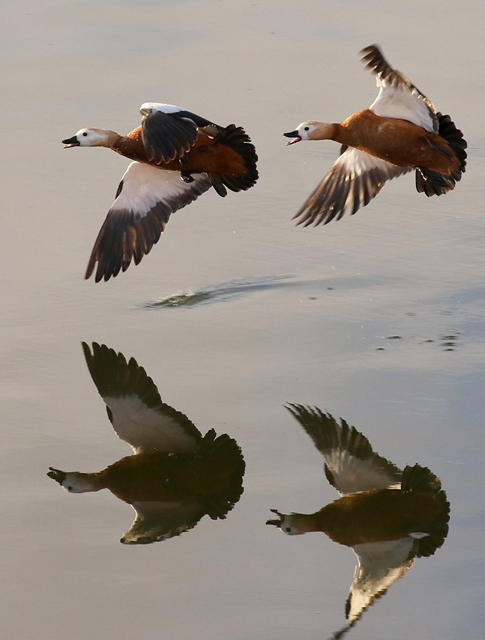
We walked through a semi-desert area to Barranco de Rio Cabras and while walking saw our first Ravens (canariensis) (the birds seen until this were the most common ones on this island), Trumpeter Finches (amantum) and a couple of Egyptian Vultures that were soaring high on the sky. When we reached the cliff we could find Spanish Sparrows and then saw that there was a pool on the bottom of Barranco. Black-winged Stilts, a couple of Ruddy Shelducks, 2 Grey Herons, 2 Moorhens, 2 Little Ringed Plovers, 2 Common Snipes and a Green Sandpiper were all shy and flushed when they saw us walking down. When we reached the bottom, we saw an Osprey flying over us.
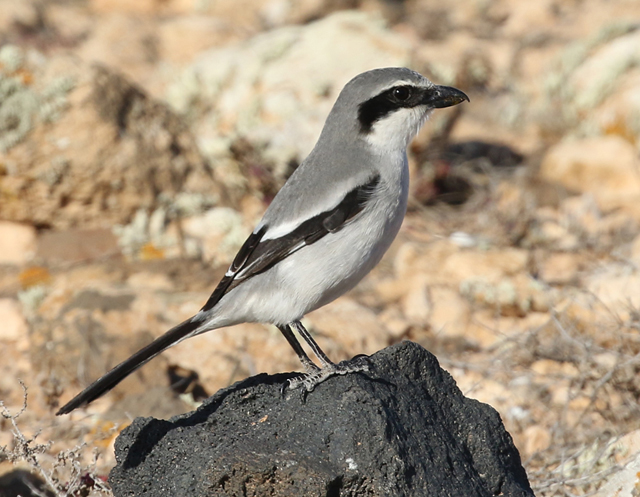
Southern Grey ShrikeEgyptian Vulture

We were searching for a huge rarity – a Dwarf Bittern that had been found 3 weeks earlier and like ordered 2 days after we had booked our trip. Luckily there had been lots of reports from twitchers since that and the bird had been seen still at least a couple of days earlier. I had also got an exact GPS-point to the place, but not much other information about how the bird had been acting or how it was supposed to find. And now when we saw how big the area was it started to feel that finding a tiny bittern could be more difficult than we had been told.

Barranco de Rio Cabras

I did one mistake and hadn’t got my GPS yet with me do I couldn’t check the exact spot for the bird, but we thought that this pool and its surroundings should be the place. It just looked perfect especially above the dam where was a stream with several small pools under the bushes. So we decided to stay on the dam and watch to both sides of it, to the pool and to the stream.

We waited for almost an hour but didn’t see the bittern. Other new birds weren’t seen many either, but a couple of endemic Fuerteventura Chats that were moving quickly on the rocks higher in the cliff were good to see this early on the trip. Also a couple of Chiffchaffs and Hoopoes, a Greenshank and of course some more of the species that we had already seen earlier were seen.

Soon the sun started to set behind the cliffs, so we decided to walk around the bushes if the bittern was hiding somewhere under them. The bottom of the valley was muddy and soon we had muddied our shoes and I had managed to get my trousers muddy too. But the bittern wasn’t found! I still decided to walk to upper side of the pool to check if there were more pools and found out that there was quite a good-looking stream and a couple of small pools right under the next dam. But Dwarf Bittern wasn’t there either. So it seemed that we had missed the bird, but of course we were coming back!

While we were climbing up, I already sent a couple of SMS to a couple of Finnish birders that I had recently found out that they had been twitching the bittern. Even though it was Christmas Eve both Hannu Palojärvi and Seppo Järvinen answered soon and they told that Dwarf Bittern had mostly been right under the upper dam that I had visited only briefly in the end.

It was already getting dark when we drove towards Lajares. We hoped to find an open shop or service to buy something to drink and also to eat on the field. We had prepared that there might not be anything open during Christmas holidays and had food for several days with us. Luckily there was a service open in La Oliva and we managed to buy some drinks and snacks.

At 7 p.m. we were in Lajares where Hanna had booked an apartment for us. It was a little bit like former garage, but very comfortable. The owners were living just behind the wall. Soon we had carried our luggage in and after we had unpacked and put everything necessary ready, we started to prepare delicious can-food Christmas-dinner.

At 9 p.m. we were ready to sleep, but as expected our neighbors hadn’t got the same plan for their Christmas Eve evening. So we were listening to their celebration for some time before we luckily managed to fell asleep.

Christmas celebrations

On Christmas Day we woke up at 6 a.m. and soon we were in dark parking place packing our car. A Stone Curlew (insularum) was calling somewhere nearby.

We headed first to La Oliva plains where still was quite dark and all we saw were a couple of Rabbits crossing the road. Soon the sun started to rise but only a couple of Berthelot’s Pipits and a small flock of Linnets (harterti) were seen. So soon we decided to continue to Tindaya which was our main target-place in the morning.

In Tindaya we drove through the village and continued to the desert towards the sea. We were driving slowly and scanning the desert and stopped pretty often to check it more carefully. We soon saw a couple of flocks of Lesser Short-toed Larks which landed pretty close to the road but they were camouflaged so well that we couldn’t find them before they were flying again, so only poor pictures were got.

After about 15 minutes searching Hanna noticed the first African Houbara! And behind it there were 2 more! Two of them walked soon further and disappeared but one was walking slowly from bush to another and feeding something from the bushes.

We managed to get slowly closer to the bird by car and then stopped the engine and started to take pictures. Soon the bird turned straight towards us and kept on walking towards a bush that was just next to our car! It was on halfway, less than 10 meters from us, when it decided otherwise and continued towards another bush on the same distance from us. We got really good pictures and soon when the bird kept on walking; we drove in front of it to another road that crossed nearby. It walked just in front of our car and stopped to another bush on the other side of the road. So we managed to get pictures n different light and angle.

African HoubaraAfrican Houbara

Finally we left the bird to feed and continued the “main-road” towards the sea. But quite soon the road got worse and we decided to turn back, as we didn’t want to get flat tire, at least not yet.

When we had driven back to the same crossroads again, we found one more Houbara which was walking quite far on the desert. Then we decided to turn to this smaller road that seemed to go through the desert to Faro de El Toston lighthouse on the North-Eastern corner of the island.

The track was in good condition so 4 wheel-drive wasn’t needed. But there weren’t many birds – just some Ravens, Yellow-legged Gulls and Berthelot’s Pipits.

In Faro de El Toston there were quite a lot of tourists watching the sea and lighthouse and visiting fishing museum. We were walking a bit on the black rocky shore and found a few trip-ticks: a Whimbrel, a couple of Ringed Plovers and a Little Egret.

Then it was time to head towards Barranco de Rio Cabras again. On the way we saw the first Kestrel (dacotiae) of the trip in Tetir and after some more driving we parked to the same spot as on the previous afternoon.

Now there were much more birds on the rubbish tip; mostly Yellow-legged Gulls, but also some 20 Common Buzzards (insularum) and 8 Egyptian Vultures. Once we reached the cliff, we decided to stay up and scan down where we could now see quite big area, but not until the upper-dam. We had got information that the Dwarf Bittern had usually been above the upper-dam in the afternoon, so we didn’t need to hurry to get there. Instead we decided to wait if we could spot it on its other favorite spots and someone had even seen it flying from distance to the dam, so not all its visiting places were known at all.

Fuerteventura Chats were now performing well and we managed to get some pretty good pictures of one couple. Down by the pool we saw a couple of Moorhens, Black-winged Stilts, a Black-headed Gull, a White Wagtail and the same waders again. Trumpeter Finches and Spanish Sparrows were flying in small flocks and a Spectacled Warbler was calling on the bushes.

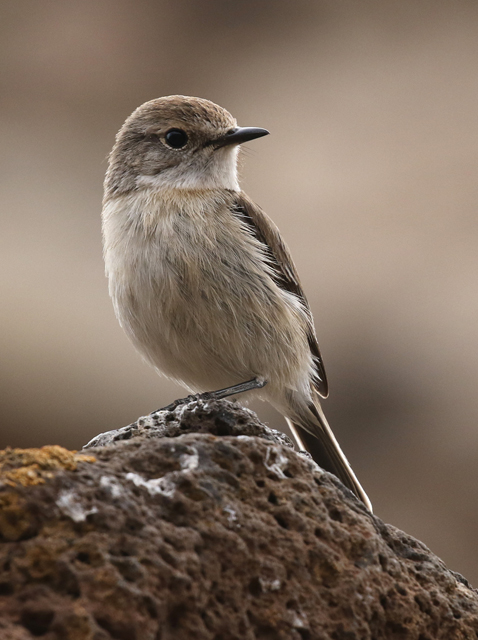
Fuerteventura ChatFuerteventura Chat

About after an hour waiting we started to plan what to do next. Of course we needed to go to check the surroundings of the upper dam, but should we go there by walking on the cliff and then climb down or follow the Barranco along the stream? Then suddenly Hanna said: “There!” And less than 10 meters from us there was a tiny bluish bittern flying high but still against the cliffs towards the upper dam! Dwarf Bittern was still around and it was a huge relief to finally see it!

Dwarf Bittern

It seemed that Dwarf Bittern had landed somewhere near the upper dam so we decided to walk along the cliff to the other side of the dam and then climb down. There we walked slowly closer to the dam and then crawled the last meters and there it was right under us feeding on the pool!

Unfortunately the bittern saw movement and flew inside a bush next to the pool and disappeared inside the bush, but Hanna had already managed to get a couple of pictures.

We decided to lie down on the dam and wait if the bittern comes back to the pool. But the bird was extremely shy and it took more than 30 minutes before it started to move under the bush and after 15 more minutes it finally climbed to a rock and was showing extremely well! Then it started to move again and came to the stream and started fishing and our cameras were clicking! We were following and photographing the bird for almost 30 minutes and then my muscles started to hurt too much as we were laying on very hard dam. So I had to move back and again the bittern got scared and moved to the bush.

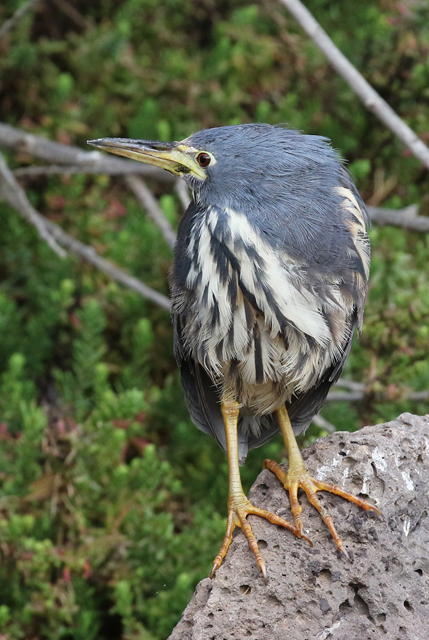
Dwarf BitternDwarf Bittern

Hanna decided to stay with the bittern and climbed down under the dam and hid behind the rocks but I decided to go to see what I could find up from the upper-dam?

I hardly took 20 steps when I heard tit-like calls from the nearest bigger bush and after some whistling an African Bluet Tit (degener) came visible. But it was moving too fast and always inside the bush, so I couldn’t get any pictures. There was also its couple but it didn’t bother to come visible almost at all.

I did walk a couple of more dams higher along the now completely dry stream and found a couple of pairs of Fuerteventura Chats and some Spectacled Warblers, Chiffchaffs and Common Buzzards but nothing else.

When I had walked back to so called upper-dam the bittern was still hidden inside the bush, so Hanna also gave up. We still walked along the stream to the pool, where a couple of Fuerteventura Chats were showing extremely well! Then we were happy enough and decided to climb up and walk back to our car.

Plain Swift

When we were at our car I noticed a couple of swifts that were flying above the gate of the rubbish tip. We drove a little bit closer and managed to see and photograph these birds and even though they were both molting their tail-feathers, we could identify them as Plain Swifts.

Cream-colored Courser

It was still just early afternoon so we decided to drive back to Tindaya as we had heard that African Houbaras often gathered to bigger flocks in the afternoons. We drove again the same road but managed to find only one African Houbara that quickly walked further to the desert. We still made a couple of stops and on one stop we found 2 Cream-colored Coursers (bannermani). They were also quite mobile but Hanna managed to get a couple of pictures before they had moved too far from the road. Not many other birds were seen, so we decided to continue towards La Oliva.

Barbary Partridge

In La Oliva we checked another site than in the morning and found a flock of about 50 Lesser Short-toed Larks but nothing else. Then we still stopped at Malpais de La Arena lava-rock area. We had planned to search for some endemic plants but after all most of the area was fenced and private. But behind some rocky fences we could hear a couple of Barbary Partridges calling. I took my speaker and played Barbary Partridge from my phone and soon one of the birds came visible, but it disappeared behind the rocks too quickly so no good photographs were got. While we were walking back to our car we still flushed one Stone Curlew. And soon we were back in Lajares.

In the evening I went jogging while Hanna prepared some can-food again. It was nice to run in warm temperature with normal shoes (not ones with spikes like I use in Finland in winter). I also saw some birds: a Sardinian Warbler, a Chiffchaff, a Hoopoe and a Kestrel and heard some Stone Curlews.

A tour to western side of the island

On Boxing Day we woke up very early. While Stone Curlews were calling we drove through Lajares and then stopped to an open area without any lights nearby. Hanna had once again checked the schedules of ISS and after some waiting the space-shuttle came visible over us. Hanna took some pictures while a couple of Barbary Partridges started to call on the background.

The sun was rising when we passed La Oliva and Tindaya and continued south-east. After some more driving we turned toward Los Molinos dam. We stopped at a goat-farm where some Trumpeter Finches and Spanish Sparrows were perched on the fences but soon continued to the dam where we parked the car. Los Molinos reservoir was told to be the best birding place in Fuerteventura and already before we had got out from the car, we saw a Fuerteventura Chat perched on the fence on the dam.

Soon we were walking along the reservoir and I was of course carrying a telescope. From the banks of the reservoir we soon found about 20 Little Egrets, some Grey Herons, Black-winged Stilts, Common Sandpipers, Common Snipes, Greenshanks and White Wagtails. On the water there were lots of Ruddy Shelducks and Coots, about 20 Teals, 3 male Mallards and a female Tufted Duck. A Black-headed Gull was flying around and soon we heard the first Black-bellied Sandgrouse calls from the sky and saw a flock of 4 birds flying over us. Later we heard lots of call of sandgrouses but didn’t find them from the sky or flying against the surrounding mountains.

Ruddy ShelduckBlack-bellied Sandgrouse

Soon we saw a Cormorant flying over us and it landed to a rock on the reservoir. While I was scoping the lake again I found 4 Spoonbills and a female Garganey. A lonely Black-tailed Godwit was also found and while I was scoping the bushes there was a Common Stonechat and some Linnets.

We walked until the end of reservoir where we still found a couple of Little Ringed Plovers and then something flushed all Ruddy Shelducks from the bigger goat-farm that was further on the desert. Soon all Ruddy Shelducks landed to the reservoir and there were at least 200 of them! Some flocks of Yellow-legged Gulls also arrived to the pool to bath and there was one Lesser Black-backed Gull with them. After some more checking we decided we had seen all the birds on the reservoir and decided to keep on driving south.

Our next stop was in Betancuria where the road dropped steeply to a valley from the mountains. Old town was quite scenery and there were lots of green trees and bushes. So it wasn’t a surprise that after some walking we found some African Blue Tits, Sardinian Warblers, Blackcaps and a Robin. Pretty soon we again continued as we wanted to go birding somewhere with less people and noise.

So soon we were in Vega de Rio Palas where we started to walk along a dry stream. Luckily the place started to look better after some walking and even though it was already early afternoon, we soon found several African Blue Tits, Sardinian Warblers and a Robin again. Then suddenly we flushed a couple of black thrushes from one bush and we of course thought that they were Blackbirds first, but when we soon flushed a couple of birds more, we realized that they were all Ring Ouzels! We hadn’t expected to find these birds here, but soon we had seen at least 6 Ring Ouzels in different plumages. Also a Song Thrush was found as a trip-tick and after some more walking we also found a Grey Wagtail. Other birds seen were only some Spectacled Warblers, Kestrels and a Common Buzzard, but it had been a nice walk.

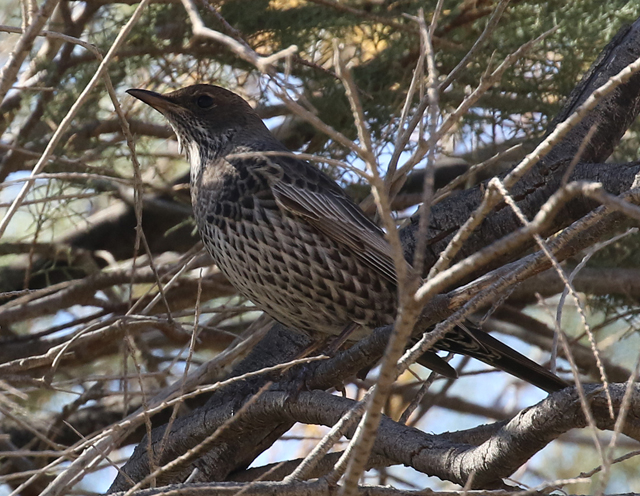
African Blue TitRing Ouzel

Soon we were driving again along a narrow mountain-road south towards Pajara. There we parked next to the church and we had got information that there was one more surprise-species wintering on the trees around the church. After some searching we heard a familiar call and saw briefly a Yellow-browed Warbler moving on the top of the trees. It was really crazy to see this Siberian species here!

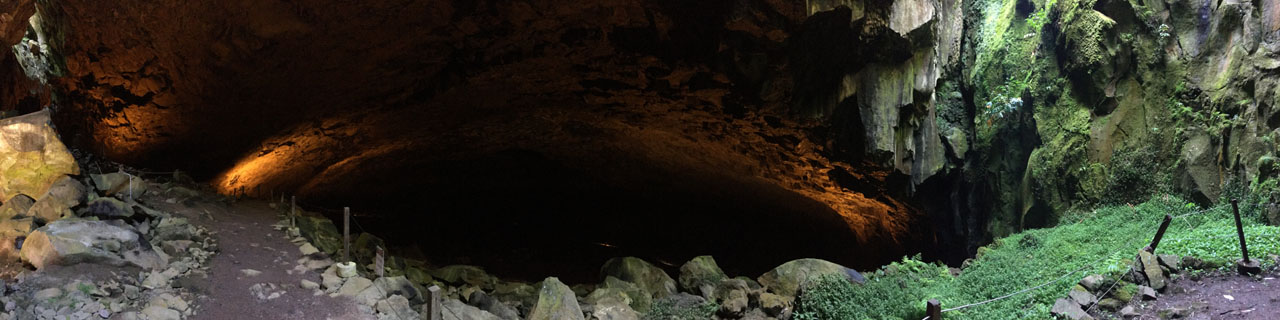
Unfortunately neither the Yellow-browed Warbler nor African Blue Tits were co-operative and we didn’t get any pictures in this very busy area. So we soon continued to Ajuy caves, where were lots of tourists. We walked until the end of the view-track where the steps led into a cave on the shore. It was possible to go inside so we of course went to take some pictures of the cave.

Cave

After some landscape-photographing we still watched to the sea for a couple of minutes and saw some hunting Gannets, but then it was time to get away from other tourists which most of them seemed to be British and German. So soon we were driving along the narrow and curvy road back.

Yellow-browed Warbler

We decided to eat in Pajara where we went to a restaurant next to the church. And while we were eating the Yellow-browed Warbler came to the closest tree where we could see it very well. So after we had eaten Hanna again tried to get pictures of it and after quite a long trying she finally managed to get some.

As we had no hurry we stopped on the view-watching places where were very tame Barbary Ground-squirrels on the first one and then on the next one extremely tame Ravens and Berthelot’s Pipits. The Ravens were funny. Tourists were giving them many kind of food and they opened nuts so easily that it was clear that they had got a lot of experience.

RavenBerthelot's Pipit

Owling

Finally we turned again towards Vega de Rio Palma where we continued almost until the end of the road and parked to the valley. I had now my GPS on and we were exactly on the right place this time. The sun wasn’t set yet so I was photographing a Southern Grey Shrike and a couple of distant Barbary Partridges and Hanna was collecting handful of cochineal bugs that can be used as source of bright red dye.

Vega de Rio Palmas

Finally the sun set and I took my speaker and soon there was a horrible screaming playing on the valley. There had been an endemic subspecies (Slender-billed) Barn Owl (gracilirostris) a week earlier.

I was playing the call for a while and then we were listening and scanning the area but all we saw in the beginning were a bat and a mouse. This mouse wasn’t the brightest animal as it really wanted to climb to my shoe – while I was playing Barn Owl! It was already dark when we saw an owl silhouette flying across the valley. It was quite distant but we thought it had been too big for a Barn Owl. And soon we heard clearly an Eagle Owl calling from the cliffs! It sounded like a normal Eagle Owl not a Pharaoh Eagle Owl which is breeding in Morocco, not so far. I managed to get some poor sound-recording with my phone, but it was too distant to get anything good as I didn’t have my recording-equipment with me.

After some listening I played the Barn Owl call again and then we first heard a strange call on our right side and in same time we saw a ghostly pale owl coming straight over us! It was a (Slender-billed) Barn Owl. It was flying a couple of rounds above us but then glided towards the dry stream where we had been walking earlier. But the strange caller was still on the trees right from us and then I realized it was a Long-eared Owls call. So there were 3 species of owls together!

Soon the Eagle Owl had come closer again but still it was too far to get any better recordings. So we decided to drive up to the cliffs and try to get better recording from one of the view-points. We had no idea if there had ever been an Eagle Owl in Fuerteventura, so we had to try!

So we drove along the narrow roads up to the second view-point and there we walked with headlamps on towards the edge. It was extremely windy up on the top of the mountain, but soon we heard the owl again. I managed to get much better recordings while staying between some rocks. But then we decided to walk until the last cliff as the bird wasn’t very far. We thought that we might even see it. When we reached the edge we could hear the owl calling from the next mountain, so with our headlamps we tried to scan the rocks but it was just a little bit too far.

So after all we gave up as it really didn’t matter if we see a silhouette or not. So we walked back to our car and started a long way back to Lajares. When we were back in our cottage, I first played some eagle owl calls with poor WiFi-connection and it was clear that the bird had been an Eagle Owl. Then I did contact Eduardo Garcia del Rey, a birder who has sites for birding in different Macaronesia islands on Facebook. He answered soon that we should have contacted him immediately to save lots of efforts – our Eagle Owl was an escape from zoo…

Easier day

On the 27th of December we planned to take a little bit easier after 2 hard days. We woke up early again but the sun was already rising when we got out.

We drove just out from Lajares to a couple of volcanoes and started walking towards them. Hanna had been choosing which one to climb from the satellite-pictures, but after some walking we could clearly see that the first one didn’t have a crater at all. So we continued towards the next one and after some 30 minutes climbing we were finally on the top. And the views were really good! Not only there was a stunning crater in front of us, but behind the whole volcano there was a view to neighbor-island Lanzarote!

On vulcano

After we had walked back to our car we decided to drive to see the northernmost part of the island. In Corralejo there was again a view to Lanzarote. We walked there for some time on the rocky shore and found Whimbrels, Ringed Plovers, a Greenshank, a Turnstone, a Kentish Plover, 3 Grey Plovers, 7 Common Sandpipers, 4 Sandwich Terns and a couple of Little Egrets.

Dunes

Next we continued to Parque Natural Corralejo, which is a beautiful dune-area. But we were there too late in the morning, there were already too many tourists walking on the dunes and writing and drawing to the sand. Luckily after some driving we found a spot where the dunes were not only bigger but also cleaner with fewer footsteps. We were walking on the dunes and taking some pictures for some time before we continued along the road that went through the whole dune-area towards south. On the way we saw hundreds of tourists on the sand-beaches where red flags were indicating that it was not allowed to swim – people were just burning their skins.

We did a short stop on El Jablito harbor where we saw only a couple of Little Egrets and a Sandwich Tern and then decided to drive once again to Barranco de Rio Cabras.

Our parking place had already 2 cars, so we had to park a bit further along the road. While walking towards the Barranco we met a couple of Dutch birders which had already contacted me in Facebook as they hadn’t seen the Dwarf Bittern on Christmas Day. Now they had done exactly how we did and after some waiting the bittern had flight to the upper-dam where they had seen it very well. They also told that there were 3 Belgian birders now photographing the bittern and actually these Belgians were the main reason why we were there.

When we reached the Barranco we decided to let Belgians keep on photographing and climbed down to photograph Fuerteventura Chats. But chats weren’t performing well and there weren’t many other birds showing well either. Maybe it was siesta-time?

After 30 more minutes we decided to walk slowly towards upper-dam and surprisingly we found no-one. But then we saw Belgians hiding under one bush. They showed us to get there slowly and we did our best, but right when we were taking our last step, the bittern flushed and flew under the upper-dam again. But now we could start talking with these Belgians which 2 of them were my old friends from Corvo – Davis Monticelli and Vincent Legrand.

Fuerteventura Chat

After some talking we went slowly to upper-dam and there the bittern was again right under the dam. But once again it flushed a bit lower when it saw some movement. David still followed the bird but the rest of us stayed under the dam where a Fuerteventura Chat was now performing well.

The bittern had soon hidden again so we gave up photographing and walked back to our cars. Over the rubbish tip there were again lots of gulls, Common Buzzards and some Egyptian Vultures. Belgians were in a hurry to get their accommodation, so we said goodbyes and then decided to drive to north-east and to Faro de El Toston.

Great Skua

We were at the lighthouse too early as there were still lots of tourists and usually the best time for seawatching starts from the last hour before the sunset. Anyway we walked to the shore and started scanning the sea with scope. I had expected that there isn’t much movement on the sea in mid-winter but I had never expected it to be so empty! But when I found the first 2 birds they were Great Skuas! They had even bigger white patched on their wings than usually but unfortunately they were too far on the sea so I couldn’t see much else. Hopefully they weren’t Southern Skuas?

After an hour more seawatching we had seen only a handful of gulls and 2 Gannets. On the rocky shore and islets we saw 3 Spoonbills and of course some common waders which a Dunlin and a Redshank were trip-ticks.

We stopped seawatching a bit early as it was too boring and started driving back to Lajares. Just when we were coming to the town, a huge bird flew in front of our car! First second we had no idea what the bird was, but after all it was easy to identify – it was an African Houbara. It was even stranger-looking bird in flight!

In the evening I went jogging again and after that we went to eat to a restaurant in the town. We had really good food and huge portions!

Jandia

On the 28th of December we were full of power after an easier day and we woke up already at 5 a.m. Soon after a quick breakfast we were driving towards south. We were early as we wanted to be in our target before the tourists. My navigator told that it was more than 2 hours driving to western tip of Jandia and it wasn’t lying.

When the sun was rising we were in Punta de Jable and our first bird-observation of the day was strange as we saw a flying flock of 16 African Sacred Ibises. I knew that somewhere on the island there was a population of this species, but as we aren’t very interested of category-species, I hadn’t checked where to see them. Anyway we were quite happy to see these birds flying over us. But then this was only the beginning…

Hadada Ibis

We drove only a little bit further and noticed several Hadada Ibises perched on the top of the posts. When we got out of the car we heard and soon also saw lots of Monk Parakeets. It wasn’t a surprise that there was a closed zoo nearby. Before we continued we also saw several small flocks of Cattle Egrets.

Soon after Morro Jable the road continued as a sandy track. Even here the road was in very good condition, even all the books and trip-reports have told otherwise. So the view was changing quickly while we were driving in Jandia peninsula. Finally we could see the westernmost point with Faro de Punta Jandia lighthouse, but we turned before it towards Faro Punta Pesebre where we parked next to small beacon.

We had once again information about some rare birds for Canary Islands and Macaronesia. There had been 3 Hoopoe Larks and a female Desert Wheatear for some. We knew they had been extremely difficult to find but these Dutch birder we had met had sent me coordinates where someone else had just seen these birds on the previous day.

We saw that the GPS-point was quite far from the beacon but anyway we decided to start walking towards the lighthouse. We walked quite a lot before we saw the first bird which wasn’t a surprise –a Berthelot’s Pipit. Soon after that Hanna found a very recently dead Short-eared Owl!

We kept on walking and walking and finally I saw something flying quite distant behind some rocks. I raised my binoculars but didn’t find that bird but saw another one flying towards the road and this one was easy to identify as a Hoopoe Lark. We hurried after the bird and soon were on the place I thought it might have landed, but we couldn’t find anything!

So we kept on walking around the area and then I found the bird I had first seen flying – it was the Desert Wheatear. We photographed this very flighty bird for some time and then continued walking around the other side of the road but found nothing else.

Finally I decided that I will walk back to get the car so Hanna can still stay searching for the Hoopoe Larks. It was a long way back to the car but once I was driving back to Hanna, she had already walked a long way towards me and she had 2 Hoopoe Larks running and feeding in front of her!

So we managed to get some nice pictures of these beautiful larks too before we drove to the lighthouse. There were already some tourists now and from the rocky shore we found some common waders and on the islets there were 5 Cormorants. Soon there were more and more tourists coming with different kind of noisy vehicles, so we decided to start driving back.

Desert WheatearHoopoe Lark

Jandia Thittle

The next stop was made after some driving where in a valley there were lots of endemic Jandia Thittles growing. It was a beautiful cactus-like plant and there were lots of them. While we were photographing the scenery our Dutch friends stopped by and they were going to try to find Hoopoe Larks and Desert Warbler already for the second time. I gave them very fresh GPS-coordinates but later I heard that they had found only the wheatear even though they had been searching for several hours!

Monk ParakeetRose-ringed Parakeet

When we were back in Punta del Jable we were walking a little bit outside the closed zoo and found lots of Monk Parakeets, some Rose-ringed Parakeets and again some Hadada Ibises. Near the lighthouse we saw a couple of swifts in flight by they disappeared too soon.

In Morro Jable we saw a couple of Black-headed Gulls in the harbor and in Playa de La Barca we went to see a lagoon that was in the middle of huge sand-beaches. There were far too many people but we managed to see 15 Dunlins, 4 Sanderlings, 20 Ringed Plovers, 5 Kentish Plovers and an Egyptian Vulture.

Some Siberian birds again

Soon we continued to our next target which was a Park in Costa Calma. I had once again a GPS-coordinate to the Park but as I didn’t have any maps on my GPS, we happened to park our car a bit far. Anyway soon we were walking towards the park and already found a Song Thrush on the way.

It was already afternoon and there were lots of people in the park, but anyway we managed to find soon a good place where birds came to drink to a hose. There were lots of Spanish Sparrows and a couple of flocks of Linnets and Goldfinches (parva) and some Chiffchaffs and Blackcaps. Also at least 4 Red-vented Bulbuls were seen, which was one more category-bird that we knew were somewhere on the island – and only now we knew where.

After some waiting Hanna noticed 3 Olive-backed Pipits walking on the shadows under one of the bushes. They were hiding very well so we couldn’t get any better pictures until something flushed them to the trees. I managed to find one bird from the tree and got some better pictures but soon they landed to the ground again and even though we saw them several times, we couldn’t get any better pictures.

Red-vented BulbulOlive-backed Pipit

Little Bunting

So after all we gave up and started walking towards north and after a couple of hundred meters we found a female Chaffinch feeding on the ground. It was nominate subspecies from Europe. Next to the Chaffinch there was a flock of Linnets that flushed soon as they always did, but one bird was left behind – and it was a Little Bunting!

The Bunting also got scared when someone was walking past us, but it landed to a bush in front of us. Then we realized that there were several of these buntings calling around us. We found at least 3 of them but probably heard a couple of more – there had been 5 earlier but only one birder had seen these birds before us. After some waiting a couple of these Little Buntings were feeding shortly on the ground but they were also all the time in shadows so we didn’t get very good pictures, but at least we had found both species we had been searching for.

Finally we started a long drive back to north. We stopped on the way still in Salinas del Carmen where we didn’t see a single bird and then nearby in Barranco del Torre. It was possible to drive in barranco but the place didn’t look too promising. We stopped a couple of times in the places with more palm-trees and found 2 Egyptian Vultures, 2 Common Buzzards, a flock of 20 Starlings, lots of Collared Doves, 4 Laughing Doves and a flock of 6 Barbary Partridges. The Barranco was big but it was already getting late, so we didn’t continue further.

We still had a long drive to Lajares and it was already completely dark when we finally were back there. We ate once again can-food and went to sleep very early!

Checking some places again

On the 29th of December we woke up early but still while having breakfast we didn’t know what to do during the day. We knew that we had been birding in the most important areas of the island and then we had also heard that some of the places that we had planned to visit didn’t exist anymore. Some pools were now completely dry.

I already joked (half-seriously) that we could visit neighbor-island or even Gran Canary where the most serious twitchers had been ticking a new split Gran Canary Blue Chaffinch. Some birders had recently been on Canary Islands only for a couple of days and ticked Dwarf Bittern and this chaffinch. Anyway we had a very comfortable apartment and perfect car booked here so of course we decided to make another trip to Gran Canary somewhere in the future. But as Hanna wanted do to some more photographing; we decided now to go to a place where are lots of birds. So we were soon driving towards Los Molinos.

When we were passing the goat-farm there were again some Trumpeter Finches and Spanish Sparrows on the fences. But soon we were walking along the reservoir where were mostly the same birds as on our previous visit. Hanna climbed down to the shore to do some photographing but I continued to the end of the reservoir and still walked a bit along the Barranco, where I found some more waders and Teals.
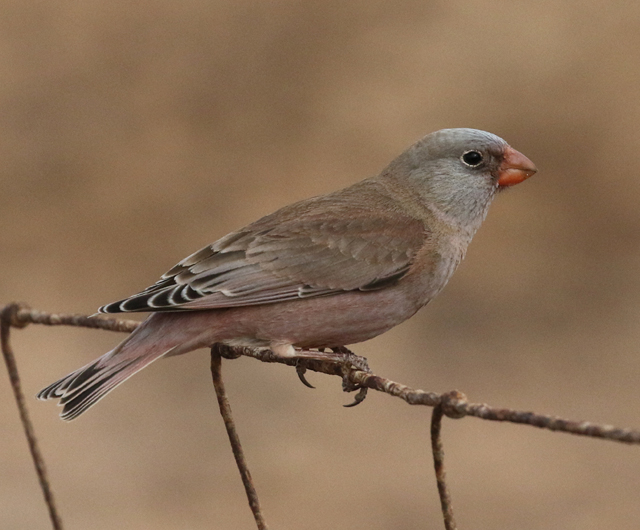
Trumpeter FinchSpanish Sparrow

Ruddy Shelduck

I counted the birds now more carefully and altogether we saw 300 Ruddy Shelducks, 3 Mallards, 32 Teals, a Garganey, a Tufted Duck, 35 Little Egrets, 3 Grey Herons, 4 Spoonbills, 63 Coots, 40 Black-winged Stilts, a Little Ringed Plover, 2 Kentish Plovers, 2 Greenshanks, 4 Common Sandpipers, 3 Common Snipes, 2 Black-headed Gulls, 40 Lesser Short-toed Larks, 20 White Wagtails, 100 Trumpeter Finches, 2 Spectacled Warblers, 2 Chiffchaffs, a Fuerteventura Chat and a Common Stonechat. Flocks of Black-bellied Sandgrouses were flying around most of the time and we managed to see about 50 birds and of course heard even more. Some sandgrouses were seen feeding with goats, buzzards and some Egyptian Vultures in a bigger goat-farm.

Hanna wasn’t very successful with photographing so pretty soon we continued to Los Molinos village. There on the mouth of Barranco were some Muscovy Ducks but not a single real bird with them. But the landscape was very nice.

After some planning, we decided to drive north along north-eastern tracks towards Faro de El Toston. There were lots of surfers but also some waders on the rocky shores. We counted 20 Kentish Plovers, 25 Ringed Plovers, 10 Sanderlings, 3 Dunlins, 8 Whimbrels, 3 Grey Plovers, 5 Turnstones, a Common Sandpiper, 2 Greenshanks, a Redshank and the only new trip-tick for the day – a Curlew. Also 8 Little Egrets, 4 Sandwich Terns and a Lesser Black-backed Gull with of course many Yellow-legged Gulls were seen.

We were again at the lighthouse too early and again there was nothing moving on the sea even though the wind was now stronger. But we met Daniel and his friend again, Vincent had already left home. After talking with our Belgian friends we still stayed seawatching for some time until we got bored and decided to drive back to Lajares. I went running again while Hanna prepared some food.

On the 30th of December we decided to go to walk more to Barranco de Rio Cabras. We knew it is possible to walk until the airport, so maybe there was still something new to be found?

On the way we saw a couple of Fuerteventura Chats in Tetir and when we had parked to the same place again, I noticed 2 White Storks on the rubbish tip with flocks of gulls.

Two couples of Ruddy Shelducks were chasing each others over the Barranco and now there were 3 Black-headed Gulls flying over the pool and stream. When we had climbed down, we started to walk down along the stream. The same waders were found again but soon we started to find new couples of Fuerteventura Chats too.

We walked about 30 minutes or so until there started to be more rubbish than birds on the Barranco. We still found a Meadow Pipit and a Grey Wagtail, but then we decided to start walking back as the view wasn’t so pleasant anymore.

Dwarf Bittern

When we were back by the pool, we decided to walk until the upper-dam where the Dwarf Bittern was found again. It was now feeding quite openly along the stream and climbing on the rocks, so maybe last days photographing had made it a little bit more used to twitchers? We were photographing it for almost an hour and then we were sure that we wouldn’t get any better pictures of this bird with our equipment. While we were climbing up, a Laughing Dove flew over us.

We didn’t have idea what to do next, so we decided to go to check one pool that was mentioned in one of our books and that we thought nobody else had visited recently. Surprisingly this Rosa de Taro pool still existed and it was easy to observe along the road. We found 2 Ruddy Shelducks, 2 Teals, a female Tufted Duck, 6 Moorhens, 2 Common Snipes, a Common Sandpiper and on the reeds we saw a couple of Chiffchaffs and some Linnets. Some flocks of Yellow-legged Gulls came to bath to the pool and there were 2 Lesser Black-backed Gulls with them.

We drove back to Lajares along a new road for us and saw a Catlle Egret in Casillas del Angel. We were back in Lajares already in early afternoon and decided to spend the rest of the day there. So I went running again and Hanna was searching for lizards (which we had hardly seen at all during the whole trip) and plants and so on from the back-yard of our apartment which was already half-desert. In the evening we went to eat to the restaurant which we really enjoyed.

The last day

The last day of the year was also our last day on Fuerteventura. We had already packed most of our things in the evening so after early breakfast we were ready for some birding. We decided to head once more to Tindaya where we drove 3 different roads towards the sea and back and found 5 African Houbaras but they weren’t very photographable this time. One of the birds was already very active and running across the desert but unfortunately not displaying yet. Some flocks of Lesser Short-toed Larks and Trumpeter Finches were also seen but nothing else. We also visited the shore which was the first time that our car was a little bit tested but still 4 wheel-drive wasn’t needed.

Tindaya

Red-throated Pipit

Next we headed to La Oliva fields which we thought to be very dry. But surprisingly behind the school there was a sewage-water pool with very good surroundings too. We found 4 Ruddy Shelducks, 36 Moorhens, a Grey Heron, 5 White Wagtails, 10 Spectacled Warblers and on the small fields nearby we saw 5 Meadow Pipits and a Red-throated Pipit. A Corn Bunting was also seen flying past us and a flock of 5 Black-bellied Sandgrouses was flying in distance. So after all this had been a worthy place to visit.

Once we were back in our apartment we packed the rest of our things and ate the last food. Then we just relaxed and a Redwing that flew over our house was the last trip-tick number 82.

Finally it was time to drive to the airport where we had a couple of hours wait before our flight back to Finland. Our flight left a little bit late but because of the back-wind we landed in time. It was 00:40 a.m. but unfortunately it was so cloudy that we saw only a couple of fireworks.

When we got our luggage we got a ride to Lentopysäköinti where we had only a short drive to a hotel which we had booked. On the next morning we had an early wake up to twitch some First of January -ticks!

J.A.

West-Kazakhstan 7th to 13th of June 2017

On the 6th of June we had been already a couple of days in Southern Finland. We’d been shopping, birding and just relaxing. We’d stayed in Hotel Pilotti and the last we had early dinner with my parents in Kirkkonummi before we headed to Helsinki-Vantaa airport.

At the airport we met Kari Haataja who had asked us to join him to Western Kazakhstan already in the last autumn. He had been contacting to our Russian contact Denis Lebedev who lives in Samara which is quite far from Western Kazakhstan, but anyway he had been guiding a few Western Palearctic ticker-groups in the last few years. A couple of Finnish groups had also been there already so we had got some tips from them.

Finally at 8:55 p.m. our Aeroflot plane left towards Moscow, where we landed to Šeremetjevo international airfield (Аэропорт Шереметьево) after a couple of hour flight. Then after 2.5 hours waiting the next flight left to Atyrau.

On the 7th of June we had managed to sleep a little bit during the flight and finally at 5:40 a.m. we landed to Atyrau. Locals rushed to passport-control and while queuing we had to fill small papers. It took some time but finally we were the last ones to get out from the airport and luckily we found Denis Lebedev soon. He had already been worried if we had lost the plane or something.

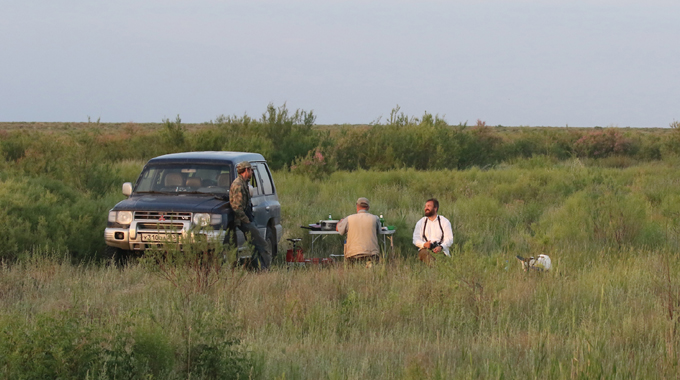
We changed some money with Kari even though we had no idea what was the currency of local Tenge. Soon we were packing our luggage to Denis’s Pajero and that’s when I noticed a strange passerine perched on a wire – it was a female Desert Finch, a new European-tick for us! Also Caspian Gulls and some other species were seen around the airport so Kari started to keep record of species and also some numbers to his quite big log-book.

HaarahaukkaSoon we were heading towards north and right away once we got out of Atyrau, we were on steppes So most birds were steppe-species, except the most common ones which were everywhere – Rooks. Isabelline Wheatears, Ruddy Shelducks, Black Kites, 2 Eastern Black-eared Wheatears, a Roller, a Steppe Eagle, some Long-legged Buzzards and so on were seen.

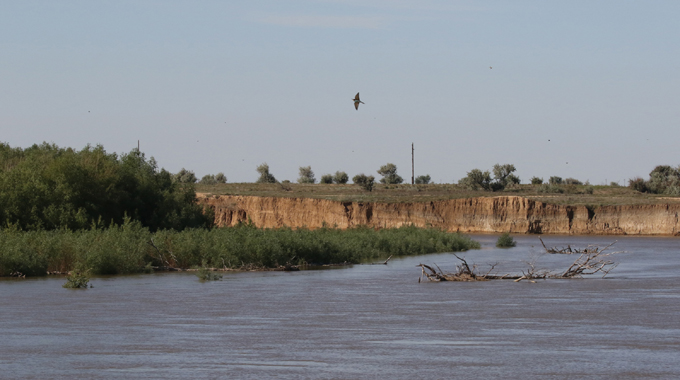
We did the first stop after about 150 km driving along River Ural. Already while we were parking we saw a male Black-headed Bunting on the top of a bush. Soon we were walking along the river-bank and almost immediately I flushed a huge bird – an Eagle Owl! Luckily it landed to Asian side of the river so we managed to watch it well with my scope. Then we spread around to bushes and I soon found the first Red-headed Buntings. I went to find Kari as it was a lifer for him and luckily one of the birds was still singing on the same place. With Hanna we had already seen Red-headed Buntings on our trip to South Ural in Russia a couple of years earlier. Actually this Orsk Area wasn’t too far from where we were now – only some hundreds of kilometers North-East.

UraljokiHuuhkajaHietatiira

The first walk was pretty good and we found some Little Ringed Plovers, a Long-eared Owl, a Great Spotted Woodpecker and a Blyth’s Reed Warbler and Kari managed to see a Pallas’s Gull flying by. Soon we drove a little bit and stopped again in a more wet area where the river was flooding. So it wasn’t a surprise that we found a Caspian Penduline Tit and also a Cuckoo, Golden Orioles, a Chaffinch, a Lesser Grey Shrike and saw 4 Gull-billed Terns flying over us. We also heard a Moustached Warbler singing in a thick reedbed. After these visits in the bushes we found lots of ticks from our clothes! They were found still on the next day, but probably they were all from this place.

ValkosiipitiiraWe filled the tank near Inderbor and saw a male Eastern Black-eared Wheatear and a couple of Crested Larks around the station. Soon we turned to steppe and started to follow a tiny track towards Dzhangala that was about 100 km North-West. Actually the track had been used a lot as it was the only road to this quite big village from East, but still it was good we had a proper 4-wheel-drive and Denis was driving very well!

At midday it was 32 degrees so we didn’t bother to stop, we just kept on going and tried to see as many birds as possible from the car that was moving a little bit too fast. Anyway we saw plenty of Calandra Larks, Isabelline Wheatears and Short-toed Larks, even 80 White-winged Larks, and some Turkmenistan Short-toed Larks. When there were some pools on the way, we made some brief stops and saw Great White Egrets, Ruddy Shelducks, Red-crested Pochards, a Demoiselle Crane couple with 2 youngsters, Little, Black, Whiskered and White-winged Terns, Caspian Gulls, a Lapwing, a Green Sandpiper, Little Stints, Steppe Eagles, Long-legged Buzzards and even 15 Montagu’s Harriers but no Pallid Harrier at all. In a couple of reedbeds we heard Great Reed Warblers and saw the first Yellow-headed Wagtail (lutea).
ArokiuruKiuru

Finally at 4:30 p.m. we stopped in the middle of steppe in the same place where Denis had been staying with our friends David Monticelli and Vincent Legrand on the previous week. While we were unpacking the car I saw the first male Black Lark in flight! It was a WP-tick for us all and so Kari left immediately to take some pictures. We still chose a good place for our tent and then left after him. Kari had found altogether 3 males and a female Black Larks but only one male was still there. While getting closer we found a couple of Syke’s Warblers which was a lifer for Hanna, so Hanna stayed photographing them while I managed to get some pretty good pictures of the Black Lark.

Aroa

aavikkokultarintamustarkiuru

RuskopääsirkkuWe still walked around the camp in the evening and about 1 km away we found an old graveyard. There had been a family living still some tens of years ago. We saw some Sand Martins, Skylarks, a Tawny Pipit, a Northern Wheatear family, a Willow Warbler and a few Red-headed Buntings. When the sun was already setting, we still photographed Red-headed Buntings and Syke’s Warblers and found also a family of Twites which was a big surprise for us.

It was already quite late when Denis had prepared a tasty dinner and then we still had to put up our tents. Then it was nice just to sit down and talk with Denis and enjoy the quietness of the nature. It finally started to feel that we might really enjoy this trip! We had already seen the target number one – Black Lark, so everything else would be just extra.

kansainvälinenavaruusasemaHanna still photographed, 3rd summer in a raw on Urals, international space-station that was flying over us while Nightjar and Stone Curlew were calling on the background. It was already 11 p.m. when we finally went to sleep – we had really had a long day!

485A0557On the 8th of June we woke up at 4 a.m. and at 5:30 we were walking around the camp again. All the Black Larks were still around but they were very shy and didn’t let us to get close at all. Also all the other birds were the same as in the evening, only new bird was a Syke’s (beema) Yellow Wagtail.

We had breakfast at 8 a.m. and soon the car had been packed again and we headed towards Dzhangala again. Soon we had seen a male and a female Black Lark, a few Montagu’s Harriers, 5 Steppe Eagles, 3+2 Demoiselle Cranes and a couple of Black-winged Pratincoles.

NeitokurkiArohiirihaukka

Finally we were in Dzhangala area where were several lakes, so we had to start stopping again. There were lots of birds around and some of the better ones were 2 Dalmatian Pelicans, Common Shelducks, Gadwalls, Shovelers, Teals, Garganeys, Great White Egrets, a Purple Heron, a Spoonbill, Cormorants, Lapwings, Kentish Plovers, Redshanks, Ruffs, Black-tailed Godwits, a couple of Curlews, a few Black-winged Pratincoles, a Pallas’s Gull, of course Caspian Gulls, a Gull-billed Tern, Whiskered and Little Terns, a couple of White-winged Larks, Black-headed (feldegg) Yellow Wagtails, Caspian (fuscus) Reed Warblers and once we had hit the road again we saw one more Demoiselle Crane, a Red-headed Bunting, a Black Lark and a Short-toed Eagle.

AropääskykahlaajaKiharapelikaani

MustakiuruKiharapelikaani

When we reached the second bigger lake (Kapzhasar), we decided to put up the camp. It was very hot again so it was not worthy to go birding, so we tried to sleep a little, but it was impossible because of the heat. So soon we were walking along the shore and counting birds. There were 25 Dalmatian Pelicans, Wigeons, a Cuckoo, Turkmenistan Short-toed Larks, 5 Caspian Reed Warblers, a calcarata-Citrine Wagtail and several normal ones, different kind of Yellow Wagtail, a Caspian Stonechat, a Bluethroat, a couple of Syke’s Warblers and Red-headed Buntings and lots of other ducks and waders.

SitruunavästäräkkiIn the evening we were still scoping to the lake from the camp and saw more than 50 Pochards landing and a flock of 700 Starlings flying over a distant overgrown reedy lake. I still went to try to sound-record Caspian Reed Warblers but they had stopped singing. It was nice to follow a flock of 8 Spoonbills feeding on the shore. After the dinner we were very tired and went to sleep soon.

On the 9th of June at night I woke up a couple of times and heard a Spotted Crake and a Bittern calling. The alarm woke us up at 5 a.m. and soon we were all walking along the shore again. We spread around as Kari was walking faster and Hanna wanted to photograph almost everything again. We counted even 85 Dalmatian Pelicans which most of them were in flight and moving to other lakes already very early in the morning. I counted 50 Great White Egrets with my scope while a Demoiselle Crane was calling in distance.

Soon we had found also Wood Sandpipers, Little Gulls, Bearded Reedlings, a couple of Reed Buntings and Kari had seen a flock of Spotted Redshanks and I found a Pacific Golden Plover flying over me and luckily Hanna wasn’t too far, so when I shouted to her, she could see it too. Hanna was photographing Reed Warblers and she also photographed a Moustached Warbler.

After some more walking I saw Kari and soon he shouted that he had found some geese that were so distant that my scope was needed. They were 3 Eastern (rubrirostris) Greylag Geese that were resting with gulls and Ruddy Shelducks.

Once Kari had already continued towards the camp, I still scanned the lake with my scope and found about 30 very distant Red-necked Phalaropes. Soon Hanna caught me and we continued together towards the camp. On the way we found a couple of singing Syke’s Warblers that were showing extremely well. So we took pictures and also recordings of them.

Aavikkokultarinta

Rytikerttunen

Once we reached the camp we still saw 7 Pintails flying over us and the same Short-toed Eagle that we had seen in the evening leaving the post where it had stayed for night. The last scanning to the lake was still worthy as a Red-necked Grebe and 2 Tufted Ducks were seen. Soon the camp had been unpacked again and we headed towards the next lakes.

While driving through Kapzhasar village along a bumpy track, we noticed a family of extremely pale sparrows – Rock Sparrows! In the village we did some shopping – no beer was found but we got ice-cream.

After some more driving we were finally in Dzhangala, which was surprisingly big city. We had to buy some ice-cream again, but soon we hit the track again. We drove through the city and continued towards the lakes that were north from the city. We had decided to drive to the main road and then around the steppes back towards Inderbor. It meant that we wouldn’t see more Black Larks which sounded a little bit weird for me, but at least we would see some places that other groups hadn’t visited. Actually it was much longer way along the main roads but in time the way was about the same.

The first lake after Dzhangala was very good and we saw Kentish Plovers, Little Stints, Black-winged Pratincoles, a Marsh Sandpiper, a few Ringed Plovers, 2 Curlew Sandpipers and surprisingly also 4 Sanderlings. Other birds than waders were 200 Red-crested Pochards, 100 Coots, 2 Spoonbills, a Black-necked Grebe and a singing Savi’s Warbler.

järvi

After 11 a.m. we started driving towards North-East and in the beginning we still saw a couple of lakes with a Dalmatian Pelican, a Purple Heron, 2+2 Demoiselle Cranes, 2 Common Cranes, more Black-winged Pratincoles, 3 Avocets, Little Terns, some White-winged Larks and close to the last quite urban lake we saw a Rosy Starling in a flock of Starlings.

ArokotkaBut then there were more villages and the steppe was farmed. So there weren’t many birds except raptors. But raptors were exactly what we had hoped to see, so we were happy to see quite a few nests of Steppe Eagles and Long-legged Buzzards and even a nest of an Eastern Imperial Eagle! We also saw some White-tailed Eagles and Black Kites, some Hobbies, a flock of 13 Common Cranes, some White-winged Terns and Lesser Grey Shrikes and an Ortolan Bunting.

The last part of the main road to Chapaev was in very bad shape but finally at 3 p.m. we were there and turned towards South to much better road. We still saw some White-tailed Eagles, Steppe Eagles, Long-legged Buzzards, Rollers, the first Red-footed Falcons and a White-winged Lark.

MerikotkaKeisarikotka

PunajalkahaukkaThe road was extremely boring as there were no curves (and of course no hills) at all, so after a long drive everyone except me started to fall asleep – even Denis who was driving. So we had to stop so those who really needed could get some sleep. While Denis and Kari were sleeping we were photographing nesting Red-footed Falcons in a small forest along the road. After 45 minutes we continued toward South again.

I had started to think that if it was possible, I still wanted to see some more Black Larks. Luckily it wasn’t a problem to anyone else either, so once we finally were back in Inderbor at 5:50 p.m., we took another sandy track to steppe again. And it was worthy as we had been driving only about a kilometer when we flushed a male Little Bustard that landed back to the ground visible. When we were photographing it, a White-winged Lark started to attack it and these two amazing birds gave us a funny show!

While driving towards west we still saw lots of Short-toed Larks, Calandra Larks, Turkmenistan Short-toed Larks, White-winged Larks, Skylarks, Isabelline Wheatears, some Syke’s Warblers and again a stunning Short-toed Eagle.

Arotasku

Pikkutrappi

SiiseliKäärmekotkaWhen we had been driving some tens of kilometers Denis started to worry why we hadn’t found any Black Larks. Along this road there should’ve been lots of them. He started to drive faster and faster and as this was once again very bumpy road, it wasn’t very funny on the back-seat where we were hitting our heads to the roof and our bags and everything in the boot was flying.

MustakiuruFinally we found the first Black Lark and this male was posing extremely well! So we got some good pictures from the car already. Denis continued a little too quickly but soon more larks were found. We also saw the first Steppe Grey Shrike. Finally we found a place where several male Black Larks seemed to be on their territories, so we decided that it was our next camping place.

After we had chosen good places for tents we spread around to check what birds we could found nearby. But unfortunately we soon found out that Black Larks weren’t that easy to approach by feet than they had been by car. So after all we managed to get only some pictures of them and other birds found were only some Syke’s Warblers and a Black-bellied Sandgrouse that flew over us calling.

While having dinner a Nightjar started singing and when Kari had already gone to sleep, a family of Red Foxes came to search food from the camp. After some searching they got some sausage with them.

The 10th of June. Night was extremely cold! It was about 5 degrees and as the weather forecasts had promised minimum 17 degrees at nights, I had only very thin sleeping-bag with me. So once again I was freezing while Hanna was enjoying in her warm sleeping-bag.

After very badly slept night we woke up at 6 a.m. and soon we were photographing and sound-recording Black Larks again. We managed to get some pretty good pictures and I managed to record song from both perched and flying birds. Usually when one Black Lark was flushed, it started to sing and soon one or two other males joined it, then they were chasing each others for some time before landing again one by one to different places. Altogether we saw about 10 Black Larks which only 2 were females, only other better birds were a flock of 3 Black-bellied Sandgrouses.

Janne kuvaa

Mustakiuru

Finally we had breakfast and packed everything to the car again and about at 9 a.m. headed towards the main road again. On the way we took some landscape pictures on the sand-dunes and saw again lots of different kind of larks. Then near Inderbor we filled the tank again and saw a family of Pied Wheatears and a couple of Crested Larks. Then we headed towards Atyrau.

Denis was driving fast as we finally were in a good road, so not many birds were seen: A couple of White-tailed Eagles and Steppe Eagles, some Red-footed Falcons, 2 Wood Pigeons and a couple of Red-headed buntings were seen.

In Atyrau we headed straight to Hotel Laeti where we had booked rooms. We had a quick shower and rested an hour or so and then went to eat to a restaurant nearby. Unfortunately it was weekend and the restaurant didn’t have their lunch-offer which Denis knew was good, so we had to order from the list. They didn’t have some food we would’ve wanted so we just took something simple. It took ages and when we finally got our food, it wasn’t very good and for sure it wasn’t enough – and after all it was quite expensive too. So we decided that this was the last time we ate in this restaurant.

PussitiainenIn the afternoon we drove to Victory Park that was very close to our hotel. This was the place where our friend Ilkka Sahi had found a Long-tailed Shrike on the previous summer. And this bird ha later got a female too and in early autumn fledlings had been seen there too! Earlier groups hadn’t seen the shrike but we knew that they might arrive very late, so we had to give it a try. But we found only some Red-backed Shrikes, a small flock of Green Finches, a Red-headed Bunting and some Pallas’s Gulls that flew over the park. It was nice to see local families spending their time in the park where were lots of activities for children.

Next we drove to walkway that followed Ural River and where were lots of bushes where Penduline Tits were breeding. They were very easy to attract with the tape so we had a good opportunity to photograph several Caspian Penduline Tits, but we also saw several European -type of birds. We hoped to find a Black-headed Penduline which had been recently split and rumored to be possible to find around Ural-delta, but unfortunately we couldn’t find any. It was good to see and photograph also some Blue-cheeked Bee-eaters. We also saw some Collared Doves, I saw briefly a Marsh Warbler and when it was getting late a Night Heron was flying over us.

In the evening we headed to another restaurant which was excellent! The owner lady seemed to like us and so we got plenty of extra things to taste. It was already late when we walked back to our hotel to sleep and it was awful to find out that our room was really hot.

On the 11th of June we woke up before 6 a.m. again and soon were packing our car again. The weather was surprisingly cloudy and soon when we were driving towards west, it started to rain.

We had already in the beginning had a plan to go to eastern part of Volga-delta to see Pheasants that were A-category birds, not typical plastic-birds that we have everywhere in Europe. But in the beginning of the trip Denis had told that he wasn’t very keen on going there again as the roads are in extremely bad shape. So we had made new plans and added also Steppe Horn Larks to our to-do list. So after we had been driving along the main road for about 40 minutes and seen once again plenty of larks, we turned towards inland and to steppe. It was good to get out from the main road where the locals were driving like maniacs! The road was full of holes and usually there was only a narrow line where it was OK to drive, but there was traffic to both directions! So some locals were just driving as fast as their cars were moving without caring about anyone else! So we really had to drive off the road a couple of times when some lunatic was driving on the best line straight towards us when the best line was on our side of the road! Well Denis was also driving pretty fast so we were happy to get to softer but at least as bumpy steppe-track. At least there weren’t much traffic!

It was once again quite a ride and the worst places where crossroads. The road that had been driven more on the wet conditions was deeper, so sometimes even the smallest crossing track had very deep trails and when we drove to those trails about 80 km/h it was quite an experience.

TunturikiuruFinally Denis told that we were on the area where Horned Larks but also Caspian Plovers were possible to find. Once Hanna saw a plover-like bird flushed in front of us but when we stopped, we couldn’t find it again. Then it still took quite a long time before I finally noticed a  Steppe Horned Lark perched on the road in front of us. Unfortunately we tried to get too quickly too close to the bird so we didn’t get any pictures. After some driving we found some larks more but the approaching ended with the same result. Finally we found one family of larks and flushed only 3 of them while one young bird still stayed there for us. But soon our car was moving again and it seemed that we were already driving towards the main road again.
Suolajärvi
We still saw some Blue-cheeked Bee-eaters, a Little Owl, some Steppe Grey Shrikes and on the wet roads altogether 40 Black-bellied Sandgrouses but unfortunately we were driving so fast that we just couldn’t stop before these shy birds were always flushed.

MustapäälokkejaFinally we were back on the main road and we just drove over it and continued towards Caspian Sea. Once we reached the shore there were immediately big flocks of gulls. They were mostly Pallas’s Gulls but also many Caspian Gulls and a big flock of Black-headed Gulls were seen. On the sea there were some gulls also swimming and we found a few Slender-billed Gulls and Russian (heinei) Common Gulls. Also some Caspian Terns were seen and on the sandy shore we saw a Turnstone and some Kentish Plovers. We drove along the shore a little bit and soon found a big flock of terns where were 5 different species and also some Little Gulls. On a small puddle there were about 100 Greenshanks, 70 Ruffs and a Marsh Sandpiper.

We still kept on going along the shore and found lots of pratincoles that were actually identified only from the pictures as we just photographed them from (almost moving) car, but at least one of them was a Collared Pratincole while there were also Black-winged Pratincoles.  More than ten White-tailed Eagles and more and more gulls were also seen. Finally all the tracks ended and we had to start finding a way back towards the main road. It took some time but finally we made it and then kept on going towards west on a bumpy main road.
KaspianmeriPääskykahlaajaRistisorsa

Finally after 3 p.m. we turned towards South and the eastern edge of Volga-delta. We drove through bushy area along one more very bumpy track and saw on the way a Steppe Buzzard. Then we finally stopped to a place where Denis had been with other groups earlier. We put up the tents right away and decided to try to get some sleep.

LeiriIt was extremely hot again in the tent so it was impossible to sleep. When I got out from the tent at 6 p.m. Kari was already out and scanning the surroundings with his binoculars. Suddenly he said: “There is a Pheasant!” I hurried to next to him and soon found the bird that was climbing to the bank – a darkish red male Pheasant! Hanna managed to get out from the tent soon enough too before the bird disappeared behind a bush. Soon we were walking towards the bird hoping to get some pictures. We climbed to the bank of the river and started walking slowly towards the place where the bird had disappeared. But it had been walking a little bit towards us and flushed surprisingly just in front of us! So only a couple of flight pictures were got. But it was really amazing that we had got this A-category pheasant to our lists so easily! A couple of groups had been here before but only a couple of persons had seen the birds at all – others had only heard them.

FasaaniFasaani

We celebrated a little bit and then I suddenly saw another Pheasant flying across the river quite distant. But then we walked around the bushy area for a couple of hours but didn’t see any more of them – just heard one bird a couple of times. We found some Red-headed Buntings, a few Corn Buntings and surprisingly a couple of Menetrie’s Warblers which was a Europe-tick for us.

While we were having the dinner we still saw a Night Heron and soon heard again Nightjars. There were lots of mosquitoes but we were accompanied with a flock of about 30 dragonflies that were catching all the mosquitoes even when they had already landed to stick us! It was very funny experience! But when the sun set, the dragonflies stopped flying and we had to escape the mosquitoes into our tents.

On the 12th of June I woke up a couple of times to listen if the Pheasants were calling but heard a couple of Grey Partridges calling somewhere quite distant.

Finally we woke up with Hanna already before 5 a.m. and went walking to the bushes. We heard a Pheasant calling once in every 30 minutes but other better birds were only a couple of Syke’s Warblers and Red-headed Buntings which one of them was very yellow-headed, probably a young male. A couple of Lesser Grey Shrikes were breeding in the same tree with Hobbies.

At 7:30 a.m. we were back in the camp where Kari was just leaving to the bushes. So we also decided to cross the river and walk a little bit more but nothing new was found – Kari just heard another Pheasant. After the breakfast we started a long way back towards Atyrau. The only plan was to survive from the bumpy roads.

TunturikiuruDenis wanted to avoid the horrible main-road so we planned to drive as much as possible on the steppe again. So pretty soon we were driving towards the Horned Lark area again. This time we really tried to find Caspian Plovers and it seemed that we checked every single spot where Denis had seen them with groups before as he was driving with his laptop (with satellite-pictures) and GPS all the time. Actually these both were needed most of the time outside the main roads anyway as there were plenty of tracks going on steppe and in every cross it was worthy to check which way to continue.

This time we saw plenty of Steppe Horned Larks, about 40 birds and finally managed to get a couple of pictures of adults too. But we just couldn’t find any Caspian Plovers. Of course we had seen this species before but not in Europe. Also Blue-cheeked Bee-eaters, Steppe Grey Shrikes and a couple of Northern Wheatears were seen, and of course plenty of Isabelline Wheatears and common larks. When we were heading back towards the main road again we ended up driving along wrong track which had no crossroads and all, so we just had to follow it for a long time to get away from it. It took really a long time before we could cross the gas-line and the railroad back to the main road.
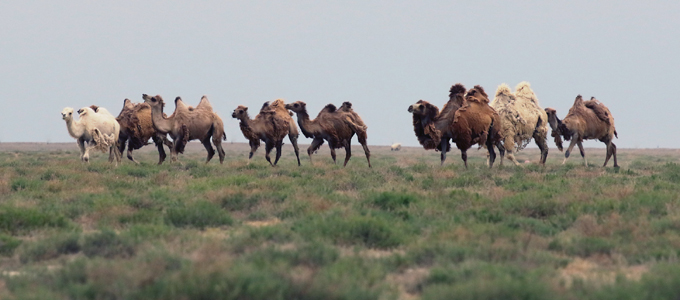
Kamelit

Driving on the main road was again awful but as we knew it was our last long drive and the car and all the passengers were still OK, also Denis was much more relaxed and we had really good time talking about birding and guiding groups and so on. So it didn’t take long before we turned to Atyrau wastewater lake that really looked like an amazing birding place! It was easy to just drive around the lake along the bank and stop every time when there were birds to check. And there really were lots of birds! We counted 10 Glossy Ibises, 20 Ruddy Shelducks, 90 Common Shelducks, 10 Black-necked Grebes, 2 very dark morph Marsh Harriers, some Moorhens, 150 Avocets, 9 Curlews, 5 Whimbrels, 10 Black-tailed and 4 Bar-tailed Godwits, a Water Rail, 15 Little Stints, a Ringed Plover, several hundreds of Caspian Gulls, 8 Pallas’s Gulls, 3 Gull-billed Terns and so on.

RuskosuohaukkaAroharmaalokkiKeltavästäräkkiPronssi-iibis

Jätevesiallas

Finally we drove back to our hotel where we got the same rooms that we had had earlier. After a quick shower we rested a little bit. Luckily Kari, who had managed to lock his phone to PUK-code condition, was able to go to internet with WiFi as he found out that the Swedish WP-year-lister group had managed to find a Black-headed Penduline Tit in Atyrau! He even managed to find out the exact coordinates to the place so it was easy to decide what we would do on our last day!

In the evening we ate in the same restaurant but the owner lady wasn’t at work so we had to satisfy to ordinary portions, which were really good anyway. When we were back in the hotel, we were extremely tired but still made the days log before going to sleep.

On the 13th of June we woke up again early and at 6 a.m. we were leaving towards Ural delta National Park. After 30 minutes driving we parked next to the gate of the park and found immediately the big tree left from the gate where the Black-headed Penduline Tit had been seen. We walked a little bit around and tried to find out which side of the tree was the best for us to observe as most of the tree was still in shadow. There were so many mosquitoes that we really had to use repellent for the first time, Hanna even used net.

When we had found a good spot Denis started to play tape and almost immediately I found the Black-headed Penduline Tit from the tree! It really looked good! We had been checking every possible picture in internet and also read the Central Asia bird-book that I had with me and this bird really looked promising! But it seems that not enough is known about this species yet…

Macronyx-pussitiainenMacronyx-pussitiainen

The tit was very mobile and flew several times to the reeds along the river to collect food and then flew back inside the big tree. We stopped playing the tape and waited for some 10 minutes and then played the tape again – and after we had repeated this a couple of times, we had managed to get good enough pictures and even some sound-recordings.

Other birds seen were a couple of Blue-cheeked Bee-eaters, a Night Heron, a Syke’s Warbler and a couple of Red-headed Buntings. When we left the place we still saw a Little Owl. We still drove around the area along the tracks for some time but found nothing else than some Lesser Grey Shrikes.

The next stop was made in a small forest along the road where Red-footed Falcons had a colony. These birds were good to photograph from the car when they were still perched on the wire, but when we got out they were just flying around and never came very close. On the same forest we saw also some Collared Doves and Lesser Grey Shrikes.

PunajalkahaukkaPunajalkahaukka

After a quick breakfast in Burger King, we decided to make another visit to Victory Park. But again we found only 3 male and 1 female Red-backed Shrikes.

We really didn’t have any idea what to do next, so we decided to drive to the Asian side of Ural River. But the city continued there and further there were big industrial areas. We saw in distance a lake that we tried to reach but after all it was just a wastewater from the factories and it was very well fences. It also seemed that there weren’t many birds, so we stopped trying to see it better. But anyway driving around was worthy as we found about 20 Pied Wheatears in one cemetery and then in small pool right next to one big fenced factory area there were 2 White-tailed Plovers with Black-winged Stilts. We managed to get some pictures of the lapwings even though Denis was a little bit worried as we were so close to the guarded gates.
NunnataskuNunnatasku

SuohyyppäAs it seemed quite pointless to continue in the midday, we decided to drive back to Europe and visit one more park along the Ural River. On this place there were plenty of Great Reed Warblers in the reeds and we also saw a Syke’s Warbler and some Pallas’s Gulls.

Then we just drove back to hotel and paid everything for Denis and let him start his long way back his family to Samara. We were ready to go to sleep for some time.

In the afternoon we did some shopping and walked a little bit in the city before we went to eat to the same restaurant again. The owner was there again and we got really good food once again. Then we walked back to hotel and went to sleep early as we had an early wake up.

Kaupungilla

MoskeijaOn the 14th of June we woke up at 4 a.m. and soon we were in a taxi that we had pre-booked and drove 10 minutes to the airport. We waited for a couple of hours for our flight to Moscow which left in time.

In Moscow we couldn’t find any info about our flight but then we realized that our boarding passes were already marked to a different flight that was leaving an hour later than our cancelled flight. So we had to wait for our flight for 4 hours!

Finally our flight left to Finland and luckily we managed to sleep most of it. We landed to Helsinki-Vantaa at 1:30 p.m. and my parents had wanted to come to see us to the airport, so we still went to eat all together. Then we still had a long drive back to Parikkala.

It was good to be back at home quite early in the evening, so we still went to ring a couple sets of Pygmy Owls and then to sauna to Tarvaslampi.

J.A.

Thailand, Phetchaburi 25th of February to 7th of March 2017

Forewords

In early winter Tero Toivanen sent us an email and asked if we’d like to join him and Janne Kilpimaa and go somewhere far and warm. The first suggestion was Thailand and Phetchaburi area, where for example Mika Bruun had been a couple of years earlier and written a blog to Tarsiger. It really seemed to be an interesting area to go, so soon we were booking flights, accommodations and a car and so on.

After all our plan was to fly to Bangkok, take a taxi to Hua-Hin where we’d take a 4-wheel car and then do birding first 2 days in Laem Pak Bia and Pak Thale wader places, then continue to Kaeng Krachan National Park for 4 days, then spend 2 days around Phetchaburi fields before taking a taxi back to Bangkok.

On Saturday the 25th of February our Finnair Airbus A350 left towards Bangkok at 6:15 p.m. It was a long, almost 10 hours flight, but there were pretty new movies to watch and of course we also tried to sleep.

Asian Openbill

Finally we landed to Suvarnabhum airport at 9:15 a.m. and after we had found our luggage, we found our Thai Happytaxi driver and soon were driving towards Hua-Hin (2300 Baht). On the way we of course saw some birds but most of them were left without identification as there weren’t many species we were familiar with. Anyway Asian Spotted Dove, Red Turtle Dove, Asian Openbill and some other common species were seen. It took a bit more than 2 hours to get to Hua-Hin airport where we got our big Isuzu and soon Janne K. was practicing driving on the left side of the road. We drove a little bit back towards North and pretty soon were in Cha Am where we parked to Eurasia resort where we had booked rooms for next 2 nights.

Eurasia resort was really good looking bird wise, so we decided to start birding there as the hottest time of the day wasn’t the best time to go anywhere. We hoped to get familiar with at least some common species. Right away we found lots of Streak-eared Bulbuls, which was surprisingly the only bulbul-species we saw on the coast. On flowering bushes there were Olive-backed and Brown-throated Sunbirds and Scarlet-backed Flowerpeckers. A short walk around the resort was really good as we found Oriental Magpie Robins, Pied Fantails, Zebra Doves, a couple of Freckle-breasted Woodpeckers, Indochinese Rollers, Crested Mynas, Siamese Pied Starling, Edible-nest Swiftlets, a couple of Plain-backed Sparrows, a Plaintive Cuckoo and a couple of Ruddy-breasted Crakes that were flushed from one ditch.

Freckle-breasted WoodpeckerZebra Dove

In the afternoon we headed to Laem Pak Bia salt-pools and saw a couple of White-shouldered Starlings on the way. From the pools we found lots of waders and mostly they were familiar species for us, but of course it was good to see Pacific Golden Plovers, Lesser and Greater Sand Plovers too. But the best ones for us were Red-necked and Long-toed Stints and even 300 Great Knots, which was the only lifer for us all. We also found a flock of greenshanks, but too late when it was already getting dark, so we couldn’t identify them surely as Nordmann’s Greenshanks! Anyway a briefly seen Eastern Yellow Wagtail was a lifer too.

PoolsGreat Knot

We also visited Mr. Deang and booked a boat-trip to sand-spit for the next day. On small pools around his village, we saw a Black-capped and several Collared Kingfishers and a huge Asian Monitor Lizard.

In the evening we ate in the only restaurant in the resort which was noisy, expensive and pretty bad. Anyway it was nice to see Tokee-geckos on the roof of the restaurant. It had been a long day so after we had written down the bird-log, we were ready to go to sleep.

Waders and Egrets

On Sunday the 27th of February we woke up before 6 a.m. and once we got out we heard strange calls from the woods – it was a Large-tailed Nightjar. Soon I was driving (my turn) towards Pak Thale wader place. Once we got to the pools, there were lots of people from the village. They were carrying salt from one pool that was full of big piles of salt.

SaltWaders

We saw a couple of flocks of Painted Storks before we started to scan the pools for waders. The first pools didn’t have too many birds so we soon walked in the middle of the pools. It was allowed to walk along the bigger roads. Soon we found big flocks of waders; lots of Red-necked Stints and plovers. After some searching I found what we were looking for – a Spoon-billed Sandpiper! It was a little bit behind a sand-wall but Hanna managed to see it through my scope. But then a motorcycle drove towards it and flushed all waders. And right after that it started to rain so we had to get to shelter. The rain made the sand extremely slippery and muddy and soon we had a thick mud-layers on our shoes. Luckily the rain stopped soon and the waders had landed back to the same pool. And after some searching I found the “spoonie” again and also Janne K. and Tero managed to see this dream-bird! It had really been the target nr. 1 on our list!

Spoon-billed SandpiperSpoon-billed Sandpiper

We were scanning the wader-flocks for some time and Janne K. found another Spoon-billed Sandpiper which had color-rings. It was maybe from Russian breeding programs, so it had been good to see also the unringed bird. Soon after the second “spoonie” we decided to move on and continued to the shore to check some mangroves.

We passed some pools that had only some waders and parked to the end of the road and walked to a shelter that was on the shore. Soon we saw lots of wader-flocks that were passing us. Tide had probably made them fly to somewhere else. We saw Curlews, Whimbrels, Bar-tailed Godwits, Grey Plovers, Great Knots and even a pure Terek Sandpiper flock. Soon we saw the first Far Eastern Curlew in a flock of Curlews and later 2 more birds were seen. On the mangrove we saw some Golden-bellied Gerygones and I saw a lonely Asian House Martin flying over me.

MangroveMudskipper

On the hottest time of the day we stopped to eat on a small restaurant along the road. The food was really cheap and good. Soon we had to hurry to Mr. Deang to catch a boat to the Sand Spit. And soon we were sitting on a smallish motor-boat that Mr. Deang was driving along a river between mangroves towards the sea. Lyle’s Flying Dogs were hanging on the tops of trees and plenty of Asian Monitor Lizards were swimming on the river. Soon Mr. Deang showed us the first better egret – a Chinese Egret! This species is extremely rare with less than 1000 birds in the whole world!

Chinese EgretPacific Reef Egret

Finally we were on the sand spit and after we had seen another Chinese Egret, we started to walk on the shore. There were immediately some Malaysian Plovers but we had to walk quite a lot before we finally found one White-faced Plover! On the rocky reef, we found a dark-morph Pacific Reed Egret and on the tern flocks there were Crested Terns, 1 Lesser Crested Tern, White-winged Terns and also a Pallas’s Gull.

Malaysian PloverWhite-faced Plover

After the trip we paid 1000 Bahts from the successful trip and continued to King’s Project (Environmental Research and Development Project initiated by H.M King Bhumibol), which had good pools with quite a few pond herons and finally there were a couple of birds in breeding plumage and they were easy to identify as Javan Pond Herons. Otherwise the hot afternoon wasn’t good for birding but anyway some Dusky Warblers were found. A couple of Asian Monitor Lizards were seen almost too close…

Javan Pond HeronAsian Monitor Lizard

Nordmann's Greenshank

Next we continued to Laem Pak Bia again and hoped to find the flock of greenshanks again. But pools where the flock had been on the previous evening were almost empty. We had seen big flocks of waders on the way along the main road so drove back there. There were about 400 Great Knots and behind them we saw altogether 43 Nordmann’s Greenshanks! Now they were easy to identify with their short and yellow legs.

It was already dark when we drove back to Eurasia resort and stopped almost at the gate where both a Large-tailed and Indian Nightjar were calling actively. We still went to eat with Hanna and of course the log was made before we went to sleep.

More pools

Oriental Reed Warbler

On the last day of February we headed early to so-called abandoned building and we were there when the sun was rising. Right away we heard several warblers “tacking” and soon saw one and confirmed the identification as Oriental Reed Warbler. On the sky there were all the time both Little and Indian Cormorants flying over us. On the small rubbish tip we found a couple of rarities; 2 Brahminy and 2 Rosy Starlings. There were also a couple of Indochinese Bush-larks, a couple of Black-headed Munias were seen briefly and soon we continued to check the pools. There were lots of waders and better ones were 20 Red-necked Phalaropes, 80 Broad-billed Sandpipers and a flock of 35 Asian Dowitchers! And when we were already leaving I found 2 Oriental Pratincoles flying over us.

Brahminy Starling

Long-toed and Red-necked Sandpiper

Oriental Pratincole

We still stopped at Wat Komnaram which had some a little bit wet fields. A couple of Oriental Skylarks were singing and there were some Oriental Pratincoles to photograph.

The next stop was made in Cha Am where we ate again while Hanna visited a pharmacy and finally managed to find fuel to his cooker. Hanna is allergic to almost everything that people eat in Thailand (or actually anywhere, but especially in Thailand), so she had planned to cook her own food. Well Hanna’s luck wasn’t too good after all; first she got Asian Openbill shit to her jacket when a flock was flying over us and when we went to get money from ATM, the machine ate her credit card! Luckily the rest of us got some money so after the card had been redeemed, we continued towards inland.

Our next target was Kaeng Krachan National Park which wasn’t as easy to find as we had expected. We found the information center easily and walked a little there and heard a Lineated Barbet and saw some Paddyfield Pipits, but almost nothing else. But when we continued towards the National Park, there were soldiers blocking the road. Of course they didn’t speak any English, but when they pointed to our targeted direction and said “shooting, shooting”, we decided to try to find another road. Luckily we found another road easily and pretty soon we parked to Ban Maka from where we had booked rooms for next 2 nights.

Ban Maka

We carried our luggage to our rooms and changed to long shirts and trousers as there are mosquitos that carry malaria and dengue-fever in the area. Then we found familiar faces from the parking place; our very good friends Mikko Ala-Kojola and Antti Peuna, who had already been birding in Northern Thailand for more than a week. They had almost similar plans with us for the rest of their trip. They had booked rooms from Samarn Bird Camp which was closer to the National Park. And that’s where we were going to stay the last 2 nights on our stay in Kaeng Krachan.

Mikko and Antti comingLake Ban Maka

The surroundings of Ban Maka were perfect for afternoon birding, so soon we were all walking around and searching for birds. We soon found some Black-crested Bulbuls, Brown-cheeked Sunbirds, an Oriental Pied Hornbill and a Pale-legged Leaf Warbler. A short walk along the road produced also a Dark-necked Tailorbird, a calling Chinese Francolin and Sooty-headed Bulbuls.

Brown-throated SunbirdSooty-headed Bulbul

In the evening a couple of other groups of birders arrived to Ban Maka and Mikko and Antti had met them earlier in the North. We ate together in the restaurant and heard a Collared Scops Owl calling. We got plenty of good tips to the National Park. Anyway we had booked a guide for the next day so I just wrote the tips down in a hurry, but didn’t really study them as I thought our guide would know most of them anyway. I was really hoping that the next day would be my best birding day ever!

Up and down Kaeng Krahan

On the 1st of March we had breakfast at 5:30 a.m. and soon we met our guide. He didn’t speak any English but we had been warned about it. We climbed to his Hiace and were soon at the gate of the National Park. The guide collected money for the tickets and paid them and soon we were in.

Sun was rising when we parked after we had been driving about 9 kilometers. This are was exactly the are where an Elephant had killed a couple of tourists earlier. And this very same Elephant was still hanging somewhere there. We really had hoped to see an Elephant, but not necessarily this individual. But there was quite a lot of Elephant shit on the roads.

In this open area we experienced something that I hadn’t been expected – the monkeys – White-handed Gibbons were singing and loudly! We also heard Green-legged Partridges funny calls and also Greater and Common Flamebacks were noisy but also showing well. A Large Hawk-cuckoo was seen in flight briefly and with many Oriental Pied Hornbills we saw also 2 Tickell’s Brown Hornbills. Then our guide was worthy for the first time when he showed us an Asian Barred Owlet. We had hoped that he’d tell us what were all the voices, songs and calls that were coming from every direction, but after he had shown us the owl, he just concentrated to photograph it.

Oriental Pied HornbillAsian Barred Owlet

Well at least one of the calls was easy to identify – a Red Junglefowl, but we also identified Green-eared Barbets and found 2 tiny Black-tighted Falconets. Soon Mikko and Antti also parked there and they told that they had seen already lots of species on their many stops. With them we still saw our first Stripe-throated Bulbuls, but then our guide wanted to move.

We didn’t understand why our driver wanted to hurry as we knew that from the first camping place, Baan Krang, the road continued only one way and the direction was changing up only at 1 p.m. But anyway soon we parked to Baan Krang and our guide marched inside the restaurant to order food to himself!

So we had no idea what to do. We knew there were plenty of target-birds around and I had even got instructions how to find some nests, but I hadn’t got them with me. So we just started walking around the camp and try to find birds by ourselves. Soon we found some Thick-billed Green Pigeons, a Hainan Blue Flycatcher, a Rosy Minivet, a Two-barred Warbler and Flavescent Bulbuls.

Rosy MinivetHainan Blue Flycatcher

After some walking we saw a small group that had also a local guide watching something behind a couple of tents. Surprisingly our own guide was also there and already photographing something! When he saw us coming he waved us to get there and there was an amazing looking Orange-breasted Trogon perched very close to them.

Orange-bellied TrogonSilver-breasted Broadbill

We of course started to take pictures too and while others were still photographing I found another target-bird – a Silver-breasted Broadbill! And even though there were a couple of these broadbills, they weren’t very co-operative, so we didn’t get very good pictures of them.

Then our guide started to be a guide and wanted to take us to a short forest-walk. We knew it was going to be quiet as it was the hottest time of the day, but we hoped that he had at least one good bird somewhere on the way.

Sun was shining very hot and cicadas were extremely noisy – and there were almost no birds at all! We had been walking quite a long already, when our guide asked us to get closer to him and he pointed a bird from a bush – and it was a Streak-eared Bulbul – the only bird that was common everywhere!

Luckily we soon found a Square-tailed Drongo Cuckoo and when we arrived to Youth Camp, I found a Himalayan Cuckoo perched on the top of the tallest tree. Hanna almost stepped to a poisonous snake, but at least she got good snake-pictures.

Asian Emerald CuckooSiamese Cat Snake

Once we were back in the camp, Mikko and Antti had also arrived and they had seen so much more! They had been stopping many times on the way and really enjoyed their morning! We weren’t too happy for their success…

We still saw Grey-eyed Bulbul, Large Woodshrike and together with Hanna we saw 2 Hill Mynas flying over us. Anyway the rest of the mid-day we were sitting in the shadows and waiting for some birds to come to the only fruiting tree of the area that was in front of the restaurant. Of course we visited a river that was almost completely dry, with only some tiny pools, but there were amazing number of different kind of colorful butterflies. And we also photographed monkeys, Dusky Leaf Monkeys, that were relaxing close to the restaurant. We also saw a quite a big deer running across the camping area.

Dusky Leaf MonkeyDusky Leaf Monkey

Finally it was 1 p.m. and we started driving up again. But again we were just driving! We passed the first and second river-crossings that we knew were one of the best birding places and kept on going! We started to get afraid that our driver was going to drive straight up to the second camp too, so I forced him to stop on the 3rd river-crossing. Once we had stopped, I tried to ask him to tell what were the birds that were calling around us, but only thing he could tell was that one of the calls was a barbet – luckily there were only 6 possible species… So again we started to try to find the birds by ourselves.

We had been listening to some recordings at home and with Tero we both had lots of recordings loaded on our phones, but there were just too many different kind of unfamiliar calls everywhere all the time – it was very confusing! We did identify a Blue-throated Barbet but then we found 4 Great Slaty Woodpeckers on one dead tree and all the other voices were forgotten! These huge woodpeckers were closest to a pterosaur what we have ever seen! Then we still found 2 Dollarbirds perched on the next top of trees, so it started to feel that maybe this day wasn’t going to be that bad after all!

Great Slaty WoodpeckerOriental Dollarbird

Mountain Hawk EagleBut soon our driver was in a hurry again and then we drove again for a long time until he stopped under a couple of huge trees and pointed up and there was a nest of a Crested Mountain Eagle and there was even one bird at home! What a nice surprise!

The next stop was made in 27 km, which we knew had plenty of target birds. It seemed that our driver (we didn’t think he was a guide anymore) knew at least one of them, as he walked straight to one pool where were 2 nests hanging over it. He even started to play the call of the bird from his phone, so again he surprised us. And right away a couple of Long-tailed Broadbills arrived to build the nest!

Long-tailed BroadbillLong-tailed Broadbill

I remembered that I had got several other tips to this place too, but it seemed that our driver didn’t know them, so we started walking up along the road. We found some Ochraceous Bulbuls, a Vertider Flycatcher and heard Blue-eared Barbets and a Moustached Barbet, but many other calls were still not identified.

27 kmAshy Drongo

Buff-rumped Woodpecker

After some time we found our driver again and he had probably got some tips from other guides that had passed us and he showed us a tree with a woodpecker nest – and there was a Buff-rumped Woodpecker just visiting the nest!

We still spent some time on the area as we weren’t in a hurry to get to the next camp, where we would be stuck again before it was allowed to drive back down. We still found a Sulphure-breasted Warbler and identified some common callers, when we finally saw them, as Pin-striped Tit-babblers and Rufous-fronted Babblers. But soon our driver came with his car and asked us to get in and so we were driving up again.

We found a possible Chinese Blue Flycatcher while driving and saw a Common Emerald Dove flying across the road but soon we parked to the top to Khao Panoen Tung camp. Again our driver disappeared inside to restaurant and we had no idea what to do. So we started just behind the restaurant-building where opened a pretty good view to the hillside. Right away I found maybe the most searched species of the whole park – a Ratched-tailed Treepie! This bird really had a strange tail! On the next tree there was a Black-winged Cuckoo-shrike and soon we saw and heard a flock of small birds flying over us. I was the only one to run after them and saw to which tree they landed. But only one bird was visible on the top of the tree while all the other birds were inside the tree. This one bird was a white-eye with almost white flanks and stomach and huge ring around the eye. I thought it was an Oriental White-eye, but later I heard that there had been some Everett’s White-eyes with a flock that was mostly Chestnut-sided White-eyes. Once the flock had moved on too fast again Janne K. found a Streaked Spiderhunter which was luckily easier to identify.

Ratchet-tailed TreepieBlack-winged Cuckoo-shrike

But then we again had no idea where our driver was. We didn’t know if he wanted to continue further as the road still continued several kilometers to the other side of the top. Finally he came out and showed us to follow him to the next hilltop. This was the place where we should have walked already much earlier as the view was amazing! There was strange calls coming from the opposite hill and once again our driver surprised us and used Tero’s telescope to find some Great Hornbills. We were scanning the tree-tops and sky for some time and found a Black Eagle and a Rufous-bellied Eagle, also Vernal Hanging Parrots were seen briefly.

Rufous-bellied EAgleGreat Hornbill

When we were walking back towards the camp-buildings, Hanna who had left a little bit earlier called us to get down quickly! She had found a flock of 3 Common Green Magpies! These birds were just amazing, but unfortunately mostly hiding well and moving too quickly. So we saw them well only for a couple of seconds before they were gone. And right away after that we found a couple of White-browed Shrike-babblers, which were also really nice birds.

Common Green MagpieWhite-browed Shrike-babbler

Once we were back at our car, we probably would have left back down immediately, but I realized that I had lost my back-bag. After some searching I knew I had left it up to the top of the hill, so a couple of us climbed back there. But it was good, as once the bag had been found, we found a Velvet-fronted Nuthatch which seemed to be a new species to our driver as he started to take pictures of the bird and didn’t seem to stop photographing at all. While standing there next to our car, we saw a bird flying past us and hit straight to the window of the restaurant. With Hanna we hurried to see what had happened and there was a Common Emerald Dove on the ground. It had got some damage but we moved it to shadows to rest, so maybe it still survived?

Common Emerald DoveVelvet-fronted Nuthatch

We were already late as cars were supposed to leave from the top at 5 p.m. but our driver was still chasing the nuthatch. Finally he had got enough and we left to downhill at 5:40 p.m. We had hoped to stop in some places that we had been passing on the way up but now it was too late. It takes more than an hour to drive back to the gate and it was closing at 7 p.m. And once the gate is closed there is no way out!

Kalij PheasantSo we were driving down pretty fast, but luckily we were the only car on the road this late and that’s why there were some birds on the road! We saw some Red Junglefowls and 1+3 beautiful Kalij Pheasants!

Once we had driven through the lover camp we found Mikko and Antti waiting for us. It came dark very quickly and soon we saw the first nightjars on the road. We had some difficulties to make our driver to understand that we wanted him to use long lights. It seemed that he wasn’t going to stop to watch any nightjars, we didn’t want to kill any of them. But them he also noticed the birds and started to stop. Unfortunately all the birds we checked were Long-tailed Nightjars.

Collared Owlet

Finally we were outside the National Park at 6:53 p.m. and drove straight to Ban Maka. There we paid our driver and luckily he wasn’t very expensive, 1200 Bahts. We wouldn’t have paid the price that we had heard was the price for real bird-guides. Anyway after all we were very happy as the afternoon had been really good! Then we of course ate together with Mikko and Antti and made the bird-log together again and changed tips with them and with other groups too. There was one new group from Hungary and they made us to stop our dinner for a good reason when they found a Collared Scops Owl perched on one tree close to the restaurant.

On the lower part of the park

On the 2nd of March we met Mikko and Antti at the National Park gate at 6 a.m. and soon continued until km 9. There were already lots of birds awake, but mostly the same species as on the previous morning. A couple of Great Hornbills were seen and a Collared Owlet was heard. We walked in the area for some time and still found a couple of Crimson Sunbirds that were seen briefly. A White-bellied Erpornis was heard in a flock of many other birds that were at least mostly bulbuls.

Streak-breasted Woodpecker

The next stop was made when we heard a woodpecker calling. When we got out, there were several woodpeckers around us and soon we found a Streak-breasted Woodpecker and also a Grey-headed Woodpecker. We also saw a Green-billed Malkoha and again 2 Great Slaty Woodpeckers.

Then we had to hurry so we could pass the first camping site before the gate was closed at 9 a.m. It was really annoying that the road was changing the direction all the time. We were all the time in a hurry!

Black-and-yellow Broadbill

Finally we stopped at the 1st river-crossing and there Antti found an amazing looking Black-and-yellow Broadbill! It was seen only pretty briefly but luckily I got one pretty good picture before it disappeared. Soon we continued to the 2nd crossing and there we had good notes how to find the next broadbill as we knew the nest. We walked about 100 meters and already then heard Dusky Broadbills calling. Soon we found them and it was really another ridiculous looking bird again. While photographing Dusky Broadbills Antti was again the sharpest of us and picked up a different looking broadbill from the tops of the trees – there were also 2 Banded Broadbills! Amazing!

Dusky BroadbillDusky BroadbillBanded Broadbill

And it really started to feel that Antti was our guide when he still found a Raffle’s Malkoha, which disappeared too soon to get any pictures. Also Greater Yellownape was seen only briefly but it was heard very well. Also an Eastern Crowned Warbler was seen, so we had got a great start for the day!

Blue-bearded Bee-eater

Mikko and Antti continued until the top where they hadn’t been yet, but we had to stay lower as we had booked a hide outside the National Park, close to Ban Maka, in the afternoon. So pretty soon we had driven back down to the camping site where I noticed a Blue-bearded Bee-eater perched on one tree. While we were having cold drinks, we could again take pictures of many species that were visiting the fruiting tree. The best bird there was a Blue-winged Leafbird.

Ban Son Nok hide

Once we had picked up our luggage from Ban Maka, we continued to Ban Son Nok hide. We paid 200 Bahts per person to an old lady who was owner of this place and were soon sitting inside the hide. There were already Streak-eared, Stripe-throated and Black-crested Bulbuls, an Asian Spotted Dove and a White-rumped Shama visiting small pools.

HideStripe-throated Bulbul

And after some waiting we heard something walking in the bushes and a few Bar-backed Partridgs came to drink. Soon after that we heard a noisy flock of birds coming and 7 Greater and 2 Lesser Necklaced Laughingthrushes came to feed right in front of us. These birds were really funny but they disappeared quite soon.

Asian Spotted DoveBar-backed Partridges

Lesser Necklaced LaughingthrushGreater Necklaced Laughingthrush

Next visitor was a single Green-legged Partridge and also a Black-naped Monarch and a Common Emerald Dove were showing very picturesquely!

Black-naped MonarchGreen-legged Partridge

Common Emerald DoveSiberian Blue Robin

A Pale-legged Leaf Warbler was showing pretty well soon and then after some waiting a female Siberian Blue Robin arrived, and a male soon after that and still a young male. They weren’t showing too well, but they were just stunning birds with short tale and long pale feet. It was already getting dark when babblers started to make visits. We saw some Brown-cheeked Fulvettas, Puff-throated and Rufous-fronted Babblers and also one Abbott’s Babbler but also a couple of Indochinese Blue Flycatchers.

Pale-legged Leaf WarblerIndochinese Blue Flycatcher

When it was too dark, we said thank you to the owner and drove to Samarn Bird Camp where we had rooms for next 2 nights. We ate again with Mikko and Antti who had stayed inside the park until the last minutes. We changed the tips and made the log again.

To the top again

On the 3rd of March we had breakfast at 6 a.m. and after that Mikko and Antti headed to another hide, Lung Sin Waterhole, but we were soon buying the tickets to National Park again (1000 Bahts for 4 person + 30 Bahts car).

We stopped again at 9 km but had nothing new there, a couple of Dollarbirds which we had seen quite a few already. Hanna managed to find a Porcupine that we saw running to the bushes, it was surprisingly big.

Black-and-red Broadbill

Then we walked a couple of hundred meters to a small pool where we knew people had seen the last broadbills that we still hadn’t seen. Mikko and Antti had tried to see them for a couple of times but only heard some calls, so it wasn’t easy. Anyway I walked closer to the bushes and played the tape and soon had an answer from the bushes behind me. I kept on playing and finally one bird flew cross the road while another one started calling too. After some searching we finally found a Black-and-red Broadbill visible and altogether there were 3 birds. It was already the 6th broadbill-species for us – and maybe the most beautiful!

Tero got an inspiration from my tape-luring and played Sultan Tit from his phone and right away a Sultan Tit came to see us! We also saw a Great Iora passing the road and from the tops of some dead trees we found 4 Golden-crested Mynas.

Sultan TitGolden-crested Myna

Jerdon's Baza

Soon several big cars parked next to us and it was Kontiki group with our good friend Tero Linjama as their leader! There were a few familiar faces on the group and together we saw a strange raptor flying over us, and later it was identified from the pictures as a Jerdon’s Baza! We gave plenty of tips to Tero before we decided to keep on going as the group was far too noisy.

Mountain Hawk Eagle

After a short drive we saw a Blue-bearded Bee-eater perched on a tree and we had just started to use our walkie-talkies so we could possibly contact to this Finnish group and so they managed to see it too. Then we drove again a little and decided to walk along the road for some time. We saw briefly a Grey-rumped Treeswift and then alarming Oriental Pied Hornbills showed us a Crested Mountain Eagle that showed extremely well! Janne K. managed to see a couple of new Black-and-red Broadbills too.

The place where we had got several woodpeckers on the previous morning was quiet, but after a short drive we found once again a calling Great Slaty Woodpecker which we also managed to tell to the group.

Once on the lower camp, we bought cold drinks and surprisingly Mikko and Antti came there already. They had driven straight to there after the morning on the hide. Soon we continued together higher and on the first river-crossing we saw a Greater Yellownape.

Black-and-buff Woodpecker

We did some stops on the way but finally stopped to 27 km. We had got instructions to Black-and-buff Woodpecker and after we had found the nest, it didn’t take long to see the bird coming out from the hole. Unfortunately it flew straight down to the forest.

We walked in the area for some time and heard some Mountain Bulbuls and wondered what the bird that was singing almost like a Greenish Warbler was? Later we managed to find out that they were Claudia’s Leaf Warbler.

TreesIn the park

Dark-sided Flycatcher

Soon we continued higher and twitched a couple of Dark-sided Flycatchers that Mikko and Antti had seen on the previous day. They were both on the same branches again! And again after a short drive Tero found a Pale Blue Flycatcher from a moving car.

White-browed Babbler

We didn’t stop at all on the top but continued along the road than continued after the camp. The road was very narrow and curvy and after one curve there was the Hungarian group in the middle of the road. They had just experienced a big wave of birds and luckily we managed to see part of the wave. There were a few Ratched-tailed Treepies, a Collared Babbler, a White-browed Scimitar-babbler and a Yellow-bellied Warbler.

After a few kilometers we found a couple of places where was a good view to the hillside-forests and we tried to scan the treetops for Wreathed Hornbills, but we weren’t lucky. We saw a Rufous-bellied Eagle carrying a prey. And soon we were in a hurry again to drive down.

But short stops on the way towards km 27 were good as we found a Golden Babbler, heard a Brown-browed Flycatcher singing and saw a female Oriental Paradise-flycatcher briefly.

Tenting

Finally we were on the lower camp and Hanna had booked a tent for us two for the next night. We said goodbyes to Mikko and Antti who were going to continue to see Spoon-billed Sandpiper and other waders on the next morning and then we planned the next morning with Tero and Kilpimaa before they continued downwards. Our tent had been put up already so we still had a little bit time for birding and surprisingly I saw a Wedge-tailed Green Pigeon on a top of one tree. But soon it started to get dark.

Brown Hawk Owl

The Hungarian group was also tenting on the camp and they had been there also on the previous night, so we joined them when they left to listen to some owls. The leader of the group was surprisingly our old friend Istvan Katona, whom we had met in Madeira almost 10 years earlier. We walked behind the camp and soon heard a Brown Hawk Owl calling. And it didn’t take long when they found it perched on one tree. Soon we heard also a couple of Mountain Scops Owls but they were a bit too distant to try to find visible.

We did the log with Hungarians but both groups in our own languages. But then I gave them quite a few tips how to find broadbills. They had also some tips for us but we had only 1 morning left in the National Park, so none of the tips were on our way.

Behind the restaurant there was a feeder where were several Porcupines and a Rhesus Macaque eating whole evening. We also heard a Brown Wood Owl calling distant and later when we were already in our tent, we heard a Collared Scops Owl too. We hoped to hear some mammals like Elephants, but heard only one call that was like a huge cat, maybe a Leopard or some other big cat? There are several big cats in the park.

Porcupine and Rhesus MacaqueHaving dinner

At midnight we woke up to horrifying shouts – I had never heard anything like that! We could hear that people had awakened in every other tent too and I am sure a couple of trousers were changed. It must have been some big deer – there are at least Gauris in the park.

And to 27km again

On the 4th of March when we woke up Brown Hawk Owl and Collared Scops Owl were still calling. We ate warm breakfast that Hanna prepared and soon Tero and Kilpimaa arrived. It was again my turn to drive, so I let Kilpimaa to the backseat and soon we started driving up. We stopped on the first river-crossing where we soon heard a Grey Peacock Pheasant.

Butterflies

We continued up to a dam where we found a couple of Scarlet Minivets. We also photographed again butterflies. There was again lots of different kind of butterflies around the small pools. Once continued up again, we saw a Hill Blue Flycatcher that was singing also very nicely. Kilpimaa also found a Wild Boar while we were driving up, but it disappeared to the shadows before we managed to get any pictures.

Mountain Imperial Pigeon

At 27 km there was again a hide in the same place where we had seen it before. Now we knew people were photographing Red-breasted Trogons from the hide. The birds were shy and moving only very low so they were difficult to see without the hide. We let the photographers alone and went to check if there was something around the pool. Kilpimaa found a Speckled Piculet which was interesting species for the photographers too so they came to twitch it. We also saw a flock of White-browed Scimitar-babblers and Hanna managed to photograph a Mountain Imperial Pigeon too, which came to drink.

We climbed back to trogon place with these 2 Thai-looking photographer women and they were just explaining how the trogons were impossible to see without the hide, when I found it – a bright red Red-breasted Trogon was perched openly on a branch not far from us. But somehow all of us didn’t see it before it dropped down to the bushes. These women were kind and offered those of us who had missed the bird to get into their hides, but after all Hanna who had already seen the bird went to another hide. But soon the bird was seen again and after all both male and female were seen outside the hides. Now we had seen all the birds I had hoped to see in this trip! Only must-species had been Spoon-billed Sandpiper, but I had dreamed of seeing 6 broadbills and both trogons, which I knew had all been seen pretty recently. But I really didn’t expect us to see all of them! And maybe the 10th target-species had been Great Slaty Woodpecker…

Red-bellied TrogonRed-bellied Trogon

We still climbed a bit higher and managed to find a couple of calling Ahlström’s Warblers, but only I managed to see one bird very briefly. There was also a big flock of Sulphur-breasted Warblers and also a couple of the most beautiful bulbuls, Ashy Bulbuls, were seen.

Grey Peacock Pheasant

But after all we had to start driving down as we had to empty our rooms at 2 p.m. While driving down we saw a couple of Shrikras or Beshras or whatever too briefly and finally saw also a Chestnut-winged Cuckoo crossing the road right in front of us. Then on one stop we still saw a few Swinhoe’s Minivets later we were still once lucky when there was a Grey Peacock Pheasant on the road.

Finally we were back in Samarn Bird Camp where we just relaxed a little bit and also ate, before left driving towards Phetchaburi fields.

Evening trip to Phetchaburi fields

After about one hour driving we arrived to the field-area. Along the canal-road we found both Asian Golden Weavers and Baya Weavers and after a short driving around, we stopped to check one good-looking pool. Kilpimaa went to walk along the pool and flushed immediately several Yellow and Cinnamon Bitterns and a Watercock, which everyone else missed. Luckily he stopped and waited for us to follow him and we still found a Black-browed Warbler, a Yellow-bellied Prinia and more bitterns. An Asian Pygmy Goose and both Bronze-winged and Pheasant-tailed Jacanas were swimming on the pool and a flock of Garganeys flew over us. Several Pink-necked Green Pigeons were also seen and one male Eastern Marsh Harrier was seen quite distant. Once we walked back to our car, we still found a flock of Yellow-vented Bulbuls.

DarterStejneger's StonechatYellow-bellied PriniaYellow-vented Bulbul

We still drove a little bit around and tried to get familiar with the area. We still found several Stejneger’s Stonechats, but soon it started to get dark again. So we drove to Phetchaburi city to our Sun hotel where we had booked rooms for 2 nights. We still went to shopping and eat before we were ready to go to sleep.

Phetchaburi fields again

On the 5th of March we had breakfast at 6 a.m. and it was very strange to eat Thai-food as breakfast. Most of the food was far too spicy too.

Soon we were driving towards the fields again and on the way we finally saw a breeding-plumaged Chinese Pond Heron. We stopped again a couple of times along the canal ad found a couple of Bluethroats, again Asian Golden and Baya Weavers but also Streaked Weavers. And once we reached the field area a female Pied Harrier flew straight over our car.

Asian Golden WeaverWatercockWhite-browed Crake

We went to walk around the same pool as on the previous evening and luckily saw the Watercock again. A flock of Red Avadavats and flying flock of Lesser Whistling Ducks were also seen. From the pool on the other side of the road I found a White-browed Crake with a tiny chick.

Then we headed to big open fields and stopped when there were some Black-eared Kites flying. We found soon some Greater Spotted Eagles perched on the palm-trees and pretty soon they were all flying. We saw also several harriers, which one of them looked like a Pied Harrier, but then a couple of birds were very weird-looking. They must have been Eastern Marsh Harrier but they had pretty clear white patch on their rumps. A couple of easier Eastern Marsh Harriers were also seen.

With Black-eared Kites and Greater Spotted Eagles saw also a couple of Eastern Imperial Eagles and a Booted Eagle. We also met a Finnish birder who had been living in Thailand for 17 years. He was now trying to find a Steppe Eagle that had been seen on the area as he really wanted to get pictures of it. He told us that female Pied Harrier was easy to identify from white rump, but we didn’t buy that explanation.

FieldsEastern Imperial Eagle

When it started to get too hot and quiet, we continued to some bigger pool nearby. The road was too narrow, so we couldn’t stop to several places where we’d have wanted but finally on the best looking place the road was a little bit wider.

There were lots of egrets and heron, also Painted Storks, about 10 Black-headed Ibises, lots of waders which included 5 Asian Dowitchers and a couple of big flocks of Caspian Terns and so on.

Steppe Eagle

PoolsPainted Stork

Pretty soon we drove back to the fields and almost immediately found the Steppe Eagle. Luckily the Finnish guy came soon too and after some searching we found the eagle again and even got it photographed pretty well. Then we continued to a place where were signs Nong Pla Lai Raptor Watch Point. There were plenty of local photographers with huge objectives, but none had binoculars or telescopes. From the field we found several Black-shouldered Kites and later harriers started to arrive to their roost. But even though we saw quite a few of them, they were all Eastern Marsh Harriers.

PhotographersPurple Heron

The long evening in the hot weather was very tiring and as we didn’t see anything new, we were a little bit disappointed for the whole day in Phetchaburi fields.

One more forest

The 6th of March was our last birding day. We had already in the previous afternoon started to think that we should do something else than go to the fields again. So Tero had told us about one forest that he had read from some trip-reports. So after the breakfast we headed to Wat Khao Luk Chang forest which we found easily but then we had no idea how to do birding there as it seemed to be some kind of place for priest. Anyway we just parked our car and started walking around the place where still were quite a lot of buildings with priests with their orange clothes on the gardens.

There weren’t many birds around but the selection of species was good. We had walked only a little when we found a Racquet-tailed Treepie and a Tickell’s Blue Flycatcher.

We kept on walking along one small road and headed to some kind of meditation area where one woman came to ask us to leave. She didn’t speak any English but was very kind and when we didn’t understand her, she asked Hanna to follow her and showed her a monk or a priest meditating. So we quietly walked back to our car.

Different kinf of forest birdingLineated Barbet

But there we decided to follow another road which headed to a huge statue of laying priest, but there weren’t any people. And soon we saw lots of raptors flying over us. They had been roosting somewhere in the forest and now continuing their migration. We saw altogether 20 Grey-faced Buzzards, 4 Black Bazas and a couple of Oriental Honey Buzzards. Also a couple of Shikras were seen. We also found a Lineated Barbet that was showing well and 3 Red-breasted Parakeets flew over us. We still found a couple of Purple Sunbirds and 3 Rufous Treepies before walking back to our car again.

Oriental Honey BuzzardShikra

Grey-faced BuzzardBlack Baza

We still drove along one road a couple of kilometers inside the forest but headed to some kind of zoo. There were too many people, so we decided to start driving back towards Hua-Hin where we were supposed to leave our car before 1 p.m.

To Bangkok

After filling the tank in Hua-Hin we parked to the airport and soon got rid of our car. Then we asked the car-rental officer to call us a big taxi. It took quite long before the taxi arrived and it was quite expensive, but maybe it was just because of we hadn’t booked it earlier.

The taxi-driver was watching music and playing with his phone and talking to another phone all the time while driving. But anyway some of us managed to get some sleep. We were back in Bangkok after more than a couple of hours driving and found our hotel which was very close to the airport.

House Swift

Bangkok

In the afternoon we relaxed and visited a shop before climbing up to the roof of the hotel to see the airport marshes. Also Kontiki group was there and together with them we still saw some House Swits, 2 Eastern Marsh Harriers, a Plaintive Cuckoo and a Red-whiskered Bulbul. In the evening we had the most expensive dinner of the trip and finally got to bed early enough as the next day would be long.

Back to home

On the 7th of March we had breakfast at 5:30 and it was very expensive. At 6 a.m. we packed our luggage to a bus with many other Finnish birders. And after 15 minutes driving we were in the airport.

At the airport we were shopping and spending the rest of our Bahts. The flight was again long, more than 10 hours, but again I watched a couple of movies and even managed to sleep a little even though it was difficult in day-flight.

Finally we landed to Helsinki-Vantaa at 15:05 p.m. (local time) and after we had found our luggage, we went to have pizza to a restaurant. Kilpimaa had to leave almost immediately to catch his bus and after we had eaten Tero had to hurry too. We sent an SMS and soon Lentopysäköinti-bus came to get us to our car. We were back at home early in the evening.

J.A.

Ireland 2nd to 8th of January 2017

To Ireland

On the 2nd of January my father drove us to Helsinki-Vantaa airport and at 7:50 a.m. our Finnair plane left towards Dublin. The weather was really freezing, so the wings of the plane were well washed before we left.

We were sleeping most of the flight and finally at 8:55 a.m. local time we landed to Dublin. We found our luggage and walked to Sixt office to do the paper-work. We also rented a WiFi to our car as I couldn’t get internet work to my phone. Then we got very Irish accent instructions how to find our car. So we didn’t understand most of it and after some searching in parking halls, we realized that there was a Sixt shuttle outside that took us to another parking place that was a few kilometers from the terminal. There we found our Toyota Yaris and soon hit the road.

Towards Galway

It was horrifying to drive on the left side of the road and there were lots of roundabouts but finally we made it to motorway and then it was easy to start driving towards Galway.

There were quite a few birds, mostly thrushes, corvids, Starlings and Skylarks flying over the road and Common Buzzards were perched on the fences and poles very close. Most surprising bird was a Green Sandpiper that was flying above one field.

After some 1.5 hours driving we turned towards Loughrea and visited a serving station to buy something to eat and we also bought a good road-map of Ireland. We had been quite lazy planning this trip and we had only planned to do birding around Galway for 2 days and then the last 2 days of the trip we would stay in Dublin without a car. But in between we still had a couple of days to do something. Of course we had Lonely Planet Ireland and Finding birds in Ireland books with us too.

Loughrea

Anyway our first target was Loughrea where a Lesser Scaup and also a Ring-necked Duck had been in flocks of other ducks for some time already. I had joined to Twitter to get some Tweets from local Irish birding groups and so I knew the Lesser Scaup had been seen on the SE corner of the lake in last 2 days. We parked our car to the only place where the Lough was well visible and started scanning the lake. There were huge numbers of Pochards and Tufted Ducks far on the opposite side of the lake but also about 100 birds on the SE-corner. This smaller flock was in very bad light but anyway we started scanning the birds very carefully. After some searching I found the Lesser Scaup! It was surprisingly easy to identify but it took some time before Hanna also found it as it was swimming all the time and also diving a lot. We followed it for some time until it swam close to the reeds behind some sleeping Tufted Ducks and swimming Coots and Little Grebes.

And then we found the Ring-necked Duck too, which was only some 20 meters from the Lesser Scaup. Unfortunately both of these birds were so far and in so bad light that we didn’t even try to get any pictures of them. Anyway we had got the first lifer of the trip and at least my target had been 2 lifers for whole trip, so the beginning had been great!

We continued to Turlough Rahasane which was pretty difficult to find but finally we managed to find a place where we still had to go to a pasture to see this very good flooded field which had amazing numbers of birds! There were also some other people walking with dogs, so we thought it was OK to stay in this place and soon we met one of the land-owners who was very kind and told that he had never seen so many Whooper Swans there before. There were about 150 Whooper Swans, but for us much more amazing was the number of ducks! There were hundreds of Shovelers, Wigeons and Teals and also quite a few Pintails and 3 Gadwalls. On the shores there were lots of waders and while someone was canoeing on the other side of the “lake” big flocks of Dunlins, Lapwings, Black-tailed Godwits, Curlews and Redshanks were in flight. We also saw several Grey Herons and 2 Little Egrets and a Long-tailed Tit came to catch some insects right above our heads.

Turlough Rahasane

Whooper SwansBirds

But when the flocks landed they were mostly behind small grassy hills, so soon we decided to continue to Galway city.

Nimmo’s Pier

We drove through Galway city to famous Nimmo’s Pier. I had got information that there had been 2 Ring-billed Gulls and at least one of the birds was the same that had been there for many years. I had got instructions to get some bread with us and throw it for the gulls and usually this Ring-billed Gull is the first one to arrive. So Hanna started throwing bread and suddenly there was one bird landing right in front of our feet while all the others were flying, it was an adult Ring-billed Gull!

Ring-billed GullRing-billed Gull

We were photographing the gull for some time and found also a young Ring-billed Gull, but there weren’t many big gulls at all, just some Herring Gulls. We had hoped to see white-wingers, but it seemed they hadn’t arrived yet. So soon we walked to the tip of the pier and started scanning the sea. We knew there had been reports of a Forster’s Tern around the bay and I hoped it might arrive to roost somewhere close to the pier.

Ring-billed GullRing-billed Gull

The visibility to the calm sea was amazing and we of course got lots of trip-ticks. Great Northern Divers, alcids, Cormorants, female Scaup and so on were seen before I found 4 or 5 terns that had arrived feeding close to one lighthouse. They were far but it was easy to say that there were both adult and young Sadwich Terns but one of the birds looked different. We hadn’t really studied how to identify a distant Forster’s Tern in flight so I opened my Collin’s App and after some 30 minutes we had seen the bird well enough to say it really was a Forster’s Tern! Unfortunately it never came closer so we couldn’t see the color of its feet, but everything else fit perfectly!

Our hotel

Soon the light started to get worse so we left the terns and started driving towards Barna. Hanna had checked that there was a hotel Twelve close to the shore there and once we got there they had only one double room left, so we took it even though the price was a bit expensive for us (115€).

We ate in the hotel restaurant which was extremely crowded! But the food was delicious and it was nice to see locals enjoying their evening with their families while eating and having the first Guinness of the trip.

Once we got into our room, I found out in Twitter that someone had photographed the Forster’s Tern somewhere in Galway Bay earlier during the day. I tried to get more info about where it been, but not even a couple of contacts I had couldn’t tell me more than probably it had been somewhere close to Nimmo’s Pier.

Birding around Galway Bay and other places nearby

On the 3rd of January we had a huge breakfast which was for me of course “Full Irish”. Then we decided to stay in the same hotel for another night too as we really enjoyed the place and the food. After all we were on holiday!

Barna Pier

We started birding on Barna Pier which was very close to our hotel. Forster’s Tern had been seen also in this place earlier. We had decided to start checking the whole bottom of Galway Bay during the day.

The weather was again amazing and the sea was completely calm! Barna Pier was an excellent place to start as there were lots of birds. Already on the pier we saw some Pied Wagtails, a small rarity a Black Redstart which we didn’t know it had been found a couple of days earlier, some Stonechats and lots of Rock Pipits.


Stenochat
Rock Pipit

On the sea we saw several Great Northern Divers, alcids, some very distant Gannets, 2 Kittiwakes and so on. Along the shore there were some flocks of waders and Hanna found a Purple Sandpiper that was in one flock of Dunlins. Also a Common Sandpiper was seen shortly.

Silverstrand

Next we continued to Silverstrand where we took some view photos before started scanning the sea. With Comrorants there were quite a few Shags and on small rocks there were some Bar-tailed Godwits, Grey Plovers and a couple of Knots.

In Salthill the sea opened very well and we found lots of Great Northern Divers and some Red-throated Divers. After some scanning I found a diver that immediately looked like a small Black-throated Diver while it was swimming together with a Great Northern Diver. It was extremely far but the visibility was perfect, so we could see it seemed to be thick and short-necked, smallish-billed and it clearly had no obvious 3 white flank-patch like Black-throated Diver. But we had to follow the bird for a long time before we finally saw it really had some thin dark collar on its neck – it was a Pacific Diver! This bird had been reported only once more than a month earlier! I hadn’t really dreamed to see this bird even though I believed it is somewhere in the bay as it had been wintering there for several years already. The bird was swimming slowly further and it was clearly behind the Tawin Island where we were going later during the day, so we hoped to see the bird better later. We still saw it swimming together with a Red-throated Diver and it wasn’t any bigger.

Anyway we decided stay in our plan and headed to Lough Corrib which is the biggest lake of the republic. It was difficult to find a way to the coast but after some searching we managed to get to the southern shore. There were lots of birds but they were all too far and mostly seen only when in flight. We saw hundreds of Pochards and Tufted Ducks, 2 Scaups, 10 Goldeneyes and some Moorhens but nothing better really.

Lough Corrib

Pale-bellied Brent Goose

So we decided to continue straight to Tawin Island. It was a long and narrow road which went past some nice birdy bayous and a couple of pastures before we had to park our car and started walking to the shore. But unfortunately it had started to wind pretty much and we could found only some Great Northern Divers behind the waves. A flock of about 250 Pale-bellied Brent Geese were seen in flight shortly and a Peregrine was chasing wader-flocks.

We were a bit disappointed as we had seen both of the rarities so badly, so we decided to drive to Nimmo’s Pier for the evening hoping to see the Forster’s Tern better.

Feeding gulls

There were no Ring-billed Gulls this time so we went to scan the sea. We found soon a couple of Sandwich Terns perched far on the bay, but they weren’t flying at all. The tide was rising and after 30 minutes waiting the terns were in flight, and soon there were 10 of them flying around. After some checking we found the Forster’s Tern again and even though it was much closer now, it was impossible to see its feet. We were following it for a long time and slowly it came closer. I tried to compare it with the Sandwich Terns and it was easy to see that when Sandwich Terns were getting up from the water after a dive, the feet were completely black, but in this bird they looked just dark. It was already getting darker when a couple of tern started to fly straight towards us and luckily another one was Forster’s Tern! I was watching it with my scope while Hanna followed it with her camera. After a couple of dives I could clearly see the red feet and surprisingly they were visible also in some Hanna’s pictures!

Forster's Tern Forster's Tern

In the evening we met Harry Hussey who was my Facebook friend and quite famous birder. We met in Eyre Square and it was nice to chat about Irish birds and also about everything else too. But pretty early we were back in our hotel and after a great dinner we were ready to go to sleep early again.

Jay

Bull Finch

Coal Tit

On the 4th of January after the breakfast we headed to the SE side of Galway Bay to Coole Park. We walked through a nice forest until a Turlough but there weren’t many birds at all. But the forest was really nice! There were lots of Bullfinches and Long-tailed Tits and also exactly those birds that we had hoped to see local sub-species of Coal Tits and Jays.

Next we drove to Kinavara where from the pier we tried to twitch a Green-winged Teal that had been there for some time. There were some Teals but some of them were sleeping in that kind of position that it was impossible to identify them. And as it wasn’t in our top-priorities to find this American duck, we soon continued to Traucht. We hoped this beach to be the place to see our Pacific Diver better.

The sea was again completely calm and we found amazing numbers of Great Northern Divers. I counted 80 of them in one count and there were 22 in one flock! I also found a flock of 5 Black-throated Divers and the looked much slimmer than the bird we had seen earlier. I once found a small diver swimming far on the bottom of Tawin Bay but it was too far to say anything and it disappeared too soon after it dived.

Great Northern DiverGreat Northern Diver

On Flaggy Shore we were on County Clare, but the birds were still the same, lots of Great Northern Divers, but also a flock of 4 Black-throated Divers. We also saw a flock of Common Scoters but there were no other scoters with them. A Long-tailed Duck was seen in flight and a Common Sandpiper was seen again. The visibility was so good that a Grey Heron was possible to see from Galway which was more than 10 kilometers away!

Calm sea

In Bell Harbour we saw 15 Shelducks, but soon we were continuing along the shore towards Black Head. While driving we could see more and more Great Northern Divers all the time! In Black Head we were watching a real Atlantic Sea and there were lots of alcids, Gannets, seals and porpoises.

Cliffs of Moher

Then we drove a bit longer to Doolin where we saw there was a parking place to Doolin Cave. We had no plans to visit this place but as it was so close, we went to ask, if it was possible to visit the cave. Unfortunately the next guided tour was at 3 p.m. which was too late as we had to hurry to the Cliffs of Moher.

There had been a Snowy Owl in Doolin but as we didn’t know the exact place and we didn’t see it from a moving car, we continued straight to the parking place of the Cliffs of Moher.

We walked past the information center and turned towards the cliffs on the left when a Black Redstart jumped in front of us to the fence. Later we heard it is a rare bird in Clare. From the cliffs we saw a couple of Fulmars flying against the sea and on the grasses there were 2 Choughs with Rooks.

Cliffs of MoherCliffs of Moher

We also climbed to see the views from the cliffs on the other side of the information center and I must say that they were spectacular!

Cliffs of Moher

Our hotel

We drove past Liscannor Bay when it was already getting dark and continued inland to search a place where to stay. It took some time as most of the hotel and B&B’s were closed and one that was open was full. After all we had to drive to Ennis city and big Temple Gate hotel which was once again a bit too classy to our taste (109€). We went to eat to a kebab-place nearby where local teens were so noisy that owner had to kick them out so we could enjoy our food.

I the evening I found out in Twitter that the Pacific Diver had been seen during the day from Tawin Island. I sent messages to a couple of contacts and Niall Keogh gave us instructions where the bird had seen and it wasn’t a surprise that it had been less than a kilometer from where we had seen it.

Clare places

On the 5th of January we started in Ballyallia Lake where were quite a few Little Grebes, 3 Gaddwals and the first Reed Bunting of the trip. Then we went to check a couple of other lakes Lough Atedaun and Inchiquin Lough which the first one was pretty good. We saw 17 Gadwalls, a female Scaup, a Goldeneye and a female Hen Harrier.

Then we drove a longer way to huge Fergus Estuary which we had decided to check from Ing. We had timed our visit well as the tide had just made all waders to move to the grassy area that was in front of us. There were a couple of thousand Golden Plovers and hundreds of other waders, but once again the place where we were was on pasture and we weren’t sure if it was OK to look for birds there.

Fergus Estuary

Waders

Anyway all birds were again very far, so we decided to skip a couple of other places in Fergus Estuary and drove straight to Shannon Airport Lagoon. Unfortunately the traditional parking place had been blogged, so we had to park to golf parking and walk along the shore-bank towards the lagoon. But the reedbed was just too thick and wide so we couldn’t see the lagoon well at all. And there weren’t many birds at all. It was again pretty windy too so it was pointless to start scanning the empty looking sea either.

We were a bit disappointed to the places we had visited in Clare, so we decided to drive straight back towards Galway. At least it was easy driving along the motorway which of course started close to the airport.

Again in Tawin Island

And so after an hour of driving we were back in Tawin and driving towards the island. On the way we saw a Kestrel and a male Pheasant and soon we were walking towards the tip. Unfortunately it was quite windy and for some reason we found only a few Great Northern Divers, most of them must have been swum further to the sea.

After some scanning I found a young Glaucous Gull that was swimming with a couple of Herring Gulls. It was the first Glaucous Gull for the autumn in Galway. Soon after that we found an Iceland Gull flying with other gulls behind a fishing ship.

We were accompanied with a Paidi Cullinan who had been trying to twitch the Pacific Diver already during the morning for 4 hours without luck. We were scanning the sea and we should have found much more divers but they were somewhere else. A couple of small flocks, together 7, Long-tailed Ducks were seen but no Pacific Diver.

After a couple of hours Paidi decided to give up and he had walked already 50 meters when I found a diver swimming behind the tip. It wasn’t far and I clearly saw it was a Black-throated Diver type of bird. But it was swimming away all the time. I shouted Paidi back and soon we were all looking at the bird. It wasn’t diving at all but swimming away all the time! In about 15 minutes it turned only a couple of time and with Hanna we could see pretty clearly the neck-collar, but Paidi had no zoom in his scope so he suffered not to see it. Of course everything else fitted to Pacific Diver too, but anyway I let him to look at the bird with my scope. It had been swimming away for a long time already and was quite distant but finally it turned for a couple of seconds again and also Paidi could see it well. It was a lifer for him too, so the atmosphere was great!

We were talking with Paidi while walking back to our car and he told that he had seen a couple of Spotted Redshanks on the bayous along the road. It was already dark when we stopped there but with scope we could easily wind them as a trip-tick.

Hanna found with her phone a possible place to stay and soon we parked to Oranmore Lodge hotel parking place. Again the room was a bit too good, but soon we were ordering dinner in a restaurant. I must say that this place is in very good location for birders.

Towards Dublin

On the 6th of January the weather was windy and also rainy. In the morning we visited Belclare Turlough where we watched a flooded field from the hide but there wasn’t enough water yet. There was no flock of Greenland White-fronted Geese with a Canada Goose either that had been seen there a couple of times. There were lots of ducks but they weren’t well visible from the ditches.

So we continued soon to Loughrea to try to see the scaups better but once we got there it was raining very hard. I quickly checked but there were almost no birds in the SE corner at all, so we decided to move on towards Dublin.

Brú na Bóinne

On the way we decided to drive to Meath to see one of the most famous tourist-places of Ireland Brú na Bóinne. It was still raining when we got there but at least there weren’t too many other tourists. So we managed to get to the first shuttle that drove us to Newgrange tomb. This 5000 years old large circular mound has an inner stone passageway. The entrance is aligned with the rising sun on the winter solstice, when sunlight shines through a “roofbox” and floods the inner chamber.

Brú na Bóinne

From Brú na Bóinne we drove to the ring-road and to the airport where we parked to the rental car park. There we found out that we should had checked the car with an officer before we had left there, but when we told that we had taken photographs of every corner of the car and there were no new scratches, we were soon free to go. Luckily the rain had also washed the car…

From the airport we took a bus to Dublin city and got out in St. Stephen Park where we had booked a hotel already before the trip. Stauntons on Green was an old hotel very close to the city center, so soon we were walking along the main shopping streets and found a good restaurant.

In Dublin

On the 7th of January we slept longer and after a huge Irish breakfast we walked to National Museum where we saw lots of golden and other treasures. Then we visited also Natural History Museum where the best find was an Eskimo Curlew!

During the day we rested a bit and then decided to go twitching again! I had got perfect instructions to twitch a local subspecies of Dipper from Niall Keogh, so we took a green line tram from St. Stephen Park and got out about 10 minutes later in Milltown. There we walked to Dropping Well Pub and behind the pub there was a streaming river. We walked to a bridge nearby and immediately found a Dipper and a couple of Grey Wagtails! Hanna got good pictures of the Dipper and we also saw a strange looking wagtail that is maybe a hybrid between Pied and Grey Wagtail. Soon we were going back towards our hotel as the pub was a bit too crowded to visit.

Strange wagtail Dipper

In the evening we went to eat to the same restaurant again and then it was time to go to sleep very early as we had really early wake up.

Back to home

On the 8th of January we woke up before 5 a.m. and a half an hour later we were sitting in a bus that drove us to the airport. Our flight left at 8:55 and I was a sleep already before the takeoff!

We landed to Helsinki-Vantaa at 14:40 local time and my parents were there already waiting for us. We ate well in a restaurant in the airport and as my parents had decided to continue to some museum by train, we were soon driving towards Parikkala.

We were finally at home in the evening and I must say that once again we had been very lucky on our trip! And for once we had also been resting enough on our holiday!

J.A.

Azores pelagic 28th of August to 3rd of September 2016

Slowly travelling

I had been dreaming for years of joining a pelagic trip to somewhere far WP corner. I had always enjoyed seeing sea-birds and I still had some species missing on my list. Autumn pelagics have been arranged from Madeira, Lanzarote, Graciosa on Azores, Northern Spain, Portugal and Scillies in England. Azores trips have been organized by Archipelago Choice and my friends Rich Bonser and Peter Alfrey which was one of the reasons to join it. Of course one reason was that there had been some incredible rare birds like Swinhoe’s Storm-Petrel every single year and even one South Polar Skua. And the third reason was that on Graciosa there was possible to see and study Band-rumped Storm-Petrels that will be split soon to several species. It is possible to see Graciosa endemic summer-breeding Monteiro’s and winter-breeding Grant’s Storm-Petrels side by side. So I booked myself in already in early spring and the whole trip was paid before summer. So it was good to wait for the early autumn.
Finally the long waiting was over and I was waking up in Kirkkonummi where I had been already for more than a day.

The 28th of August. I hadn’t been sleeping almost at all when I woke up at 2 a.m. Anyway I had planned to sleep in the plane. Soon we were driving towards Helsinki-Vantaa airport with my father. On the way I got a text-message from TAP that my flight would be late and it was possible to check more information from their sites, but there was nothing there. So we continued driving. My father dropped me to the airport and there I soon found out that the flight had been delayed for a couple of hours. So it seemed that I would miss my second flight to Terceira which was leaving almost the same time when the first flight was landing to Lisbon.

After 4 hours trying to get any sleep on very uncomfortable benches my flight finally left, 20 more minutes late. So I had to hope that the strike, that TAP security persons had been having on early morning, was delaying also my second flight.

I was sitting in the middle seat so even though I fell asleep already before the plane took off, I woke up immediately as there was nothing to lean to. Finally I managed to get some sleep when I turned my bench as back as possible, but when I woke up, my neck hurt very bad.

When the plane finally landed to Lisbon, I opened my phone immediately and received an SMS from TAP that told my second flight was also late, but only for 20 minutes, so it was just leaving…

So in the airport there was an officer collecting all the people together that had missed their flight and we were given new tickets to next flights and 10 € food-tickets. Hooray! My flight was after 8 hours, so I had a long wait again…

I wondered around the airport and spent time and tried to sleep again a little, but without success. Only funny moment was when I realized that I was sitting next to a King! A legendary football player Eric Cantona was waiting for his flight to Paris!

I ate in Pizza Hut and walked more around, but I wasn’t able to buy anything as I was really out of money after buying a new car a week earlier.

Finally the boarding started and it wasn’t a surprise that also this flight was a little bit late. I was again sitting in the middle but managed to sleep some more and once I woke up my neck was even worse.

Twitching right away

Finally the plane landed to Terceira and after I had found my luggage, I took a taxi to Hotel Teresinha where our group was staying. We had planned to meet the leader of the tour, my old friend Josh Jones, in the hotel at 6 p.m. but it was already 8 p.m.

I got a comfortable room from the hotel and then sent once again an SMS to another old friend Pierre-Andre Crochét with whom I had planned to do birding for whole day. I should have been on Terceira already 11 a.m. and we were supposed to go birding with “PAC”, Hugo Touze and Josh.

After sending a message I went to lobby to see if there were any other from our group and found Swedish Bosse Carlsson, Hans Rudhe and Luxemburgish Guy Mirgain. They were about to go to eat something and I planned to join them as it was already getting dark outside anyway.

Long-eared Owl twitch

We walked around the pool of Paul do Praia and saw some Coots and Moorhen and also a Glossy Ibis that was walking on the grass on the shore of the pool. Then we stopped to see a couple of Long-eared Owls that were roosting on a tree in the backyard of a kindergarten.

But then PAC called me and told that they were watching a Sandwich Tern in the harbor and right away my alarms went on; that was a bird I should see! I asked if they had watched it carefully as American Cabot’s Tern had recently been splitted as an own species. And PAC told that they of course been thinking of that possibility and they had plenty of pictures and there was probably something strange in this tern. So PAC promised that they would pick me up from the hotel where they hadn’t been at all yet. And soon PAC, Hugo and Josh had taken rooms, dropped their luggage and we were driving to the harbor.

Belgian David Monticelli, who had accidentally booked a room from a different hotel, had also arrived to the harbor, but also too late. The bird wasn’t there on the wire where it had been perched together with many Common Terns and a couple of Roseate Terns. It wasn’t found from the harbor at all, so once it was getting too dark, we decided to give up. Only other birds to mention were some distant Cory’s Shearwaters and a Whimbrel.

So we visited our hotel briefly, took relaxing showers and left to search for a restaurant. Unfortunately Pescadore, which we knew was good, was closed on Sundays, so we had to continue to another one where Bosse, Hans, Guy and David were already. They had been waiting for their foods for ages already and after all it took amazing long to get anything also for us. But at least we had time to check Hugo’s tern-pictures and check everything that was possible to find about Cabot’s Tern on internet. And the bird really looked like a Cabot’s! There were only two previous records of Cabot’s Tern in Western Palearctic and they had both been found dead. Both had been ringed birds, of course ringed in America, and one had been found in UK and another one in Holland. So there were 3 happy persons in my table and one not so happy – thanks TAP!

After all some of us had really difficulties to get any food and at least one got too raw fish, but at least the octopus I had was really tasty!

It was too late when we finally walked back to hotel and got to sleep. I was too tired!

Successful morning

On the 29th of August we woke up early and headed to the harbor already at 6:30 a.m. Josh drove us, who hadn’t seen the tern yet, to the harbor first and then left to pick up the rest. With Bosse, Hans and Guy we started to scan the terns that were already visible sitting on the wire even it was still quite dark. Unfortunately they were all same size, Common Terns and a few Roseate Terns again.

We were wondering where David was when Bosse said: “The tern is there now!” It had managed to come to the wire without any of us noticing. I had been watching so many pictures of this bird, so it was easy to see darkish tertials, narrow white edges on the primaries that didn’t go around the tip of the feather, almost completely black cap-patch with only very little white in it and the size of the bird as it wasn’t much bigger than the other terns. Soon the bird was flying and we could see the darkish secondaries too.

Cabot's TernCabot's Tern

We were watching the tern for about 15 minutes and tied to call David, and finally he arrived. But then the tern was in flight again and didn’t land back to the wire but flew far towards the sea. Luckily David managed to see it well enough to tick it. But I must say that we all need to wait for the absolutely sure Cabot’s Tern tick, as the species is not very well known yet. But if the id-criteria that is now known is right, our bird fits very well!

We had really had perfect morning so we could happily drive back to the hotel to enjoy good breakfast already at 7:30 a.m.

Day-trip on Terceira

Cabo da Praia

HarborBlack-tailed Godwit

After the breakfast we met the rest of our group that had started the tour already on the previous day on Sao Miguel, where they had been birding with local guide Gerby Michielsen. I didn’t know British Brian Gregory, Dutch Barti Brieffes or Canadian Heather Pantrey before, but they all seemed to be very keen travelers. Heather was an older lady who wasn’t really a birder but had been travelling very much with nature-people in recent years, but anyway I had a feeling if she knew where she was joining as birders pelagic-trips are quite extreme birding trips. Luckily the beginning of the trip was something else than swinging on a smelly boat in the middle of the sea.

Soon our drivers arrived and we got into a van and a 4-wheel drive and of course headed once again back to the harbor first. But there were almost no terns at all, so soon we continued to famous Cabo da Praia quarry which has really good pool for waders.

There were quite a few waders in Cabo da Praia but not as many as later in the autumn in October when there are lots of American vagrants. Anyway we found 4 Semipalmated Plovers, which 2 of them were adults, a Ringed Plover, some Kentish Plovers, Sanderlings, a Curlew Sandpiper, a Little Stint, a Knot, a Ruff, Turnstones, 2 Grey Plovers, a Whimbrel, 5 Black-tailed Godwits, a Redshank and 2 Common Snipes. Quails were calling, Collared Doves flying around, a few Blackbirds and a couple of Blackcaps and Grey Wagtails, and a flock of Waxbills were also seen. The weather was perfect and I started to feel that I had packed too many warm clothes with me. Anyway you never know how much the weather can change when you are in the middle of the sea…

After we had been watching for the waders enough, we continued towards inland and made the first stop in Cabrito artificial pool. There were Azorean Yellow-legged Gulls like almost everywhere in the coast too but also a Lesser Black-backed Gull, a Black-headed Gull and a Tufted Duck. There was also a very strange duck, but whatever it was, it was a domestic “plastic duck”.

Then we headed towards the volcanic mountains and walked a little bit on one hillside where Azores Chaffinches were calling very strangely and a couple of bigger bats were hunting over the field. Soon we continued higher to the end of the road and walked on the meadow and tried to find an endemic butterfly-species. Soon we found plenty of these Azores Greylings (Hipparchia azorina). It was a greyish-brown butterfly that was always flying too fast with the wind and landed with wings closed. So at least I didn’t get any good picture of it. Next to the parking place there was a pool where we found plenty of American damselflies Citrine Forktails (Ishnura hastate). They were tiny dragonflies, only 2 centimeters long and I would have never found them as they were flying so low between the grasses. All Citrine Forktails on Azores are females and reproduces by parthenogenesis, making this the only population of Odanata anywhere in the world known to reproduce by this means.

YHighlands

Hipparchia azorinaIshnura hastata

We had planned to visit Angra do Heroismo too, but we had spent so long on the meadows that we decided to drive back towards Praia de Vitoria. We stopped to see a Goldcrest which is a different subspecies, inermis, than what some of the group had seen on Sao Miguel on the previous day.

Ship to Graciosa

Finally we were back at the hotel where we just picked up luggage and continued to harbor to wait for the ship to Graciosa. There was a mess in the harbor and it was impossible to find any info about the ships that were leaving. Actually there was no ship at all after an hour waiting when the ship was supposed to leave, but we didn’t worry as there were so many other people too. Finally there were 2 different ships coming and the bigger and much older one was ours. Finally soon after 6 p.m. it left, more than an hour late and we of course climbed up to the deck to watch seabirds.

ShipsOn the deck

Bulwer's Petrel

In the beginning there were only some Azorean Yellow-legged Gulls, Common Terns and Cory’s Shearwaters and once we got to the sea, there was almost nothing at all. I saw briefly some flying fishes, but it really seemed that the weather was too good and the sea too calm for seabirds. Anyway we kept on trying and finally saw a couple of Sooty Shearwaters, one too distant small shearwater and then also a Bulwer’s Petrel. We also saw some whales that were jumping very far, but from the pictures we could identify them as Sowerby’s Beaked Whales (Mesoplodon bidens).

We were closing Graciosa and it was getting dark when we saw the first Band-rumped Storm-Petrel. Soon we found a couple of birds more and one of them was seen a bit closer so we could see that it was molting and therefore most probably a Monteiro’s Storm-Petrel. These Monteiro’s Storm-Petrels are breeding in two islets close to the shore of Graciosa and it is still not known, if they are the only Monteiro’s Storm-Petrels of the world or if they are breeding also on other island and islets around Azores.

Finally we were in Graciosa, in Praia harbor, where we met our contact Rolando. His friend was speaking very good English and they had arranged us a late dinner in a restaurant nearby. Normally all the restaurants were closing very early and as our ship had been late for an hour; it was good to know we had a reservation. First we drove to Santa Cruz to our hotel where we didn’t have as many rooms as we expected, so we took a double room with Josh. After dropping our bags to our rooms, we drove back close to Praia to restaurant Green Light.

The chef in Green Light was a funny man and after welcoming drinks we ordered fish. We enjoyed really good dinner and had fruits as a dessert, before drove back to the hotel and finally got to sleep about at midnight.

The first pelagic day

Our boat

On the 30th of August the breakfast was at 7:30 and after some relaxing in our rooms, we took a van we had got in the evening and left towards the harbor nearby. There was not enough space for all of us, so Josh drove the first group to the harbor, where we met Rolando. But Rolando was surprised to see us as he wasn’t going to the sea with us and we were supposed to leave from Praia harbor! We had no idea about that, but luckily Rolando helped us and drove that part of our group that didn’t fit to the van to Praia, so we made it there in time.

But in Praia harbor we still had to wait for some time before our boat arrived and we met our captain, a young assistant and his girlfriend. Soon we had carried our equipment to the boat and left to the sea.

Common Bottlenose Dolphin

First we saw only the same gulls, terns and Cory’s, but after about an hour we saw the first Great Shearwater and soon also a Bulwer’s Petrel and some Band-rumped Petrels. But we didn’t want to stop yet and continued towards Bank of Fortune, a huge shallow area about 34 kilometers from Graciosa. But soon we saw a couple of dolphins which made us to stop as they were too close not to take photographs. We followed these Common Bottlenose Dolphins (Tursiops truncatus) for some time before we continued again.

Soon we had the first sea-sick on the board, but surprisingly it wasn’t any of our group but the assistant’s girlfriend. So the chumming was started a bit earlier than we had thought. None of us hesitated to tell her that luckily there were only 8 or 9 hours to survive…

Finally we arrived to Bank of Fortune where is an underwater volcano and therefore a shallower sea which is for some reason a good place to see seabirds. Especially storm-petrels have always been seen in this area. Rolando and co. had arranged us a big tub full of chum, which is fish-parts in oil and bread and anything that floats. Josh and PAC started to throw this chum to the sea and soon there were the first Band-rumped Storm-Petrels coming close to us! This chum smelled incredible bad which was of course good as seabirds have really good sense of smell. Unfortunately our chum wasn’t floating very well but mostly sinking straight away. Anyway there was soon a big oil-slick around our boat. And the slick was getting bigger and bigger all the time when we were floating with the wind and waves. I must say that of course our chum was fully organic and we weren’t polluting the sea at all.

ChummingChum

Finally a couple of storm-petrels arrived nearer to the boat and we started to take pictures. Birds didn’t come as close as I had expected; mostly they were flying around and just flying quickly over the slick and picked very quickly something from the surface in flight, but always quite far from the boat. Sometimes they just quickly flew past the boat and then cameras were clicking. But the boat was of course bobbing on the waves and there were many photographers with long tubes, so it was extremely difficult to get any good pictures of these fast flying birds; at least for a beginner photographer who had his wife’s camera.

After seeing some storm-petrels, we were sure we had seen both molting and fork-tailed Monteiro’s and fresh-looking a bit paler greyish and square-tailed Grant’s Storm-Petrels. There was a slight difference in wing-length and the way of flight too but mostly we were just taking pictures and had no idea what we were photographing. We just hoped to get some sharp pictures from where we could maybe identify the birds later. But these birds are still not very well known, so for sure there can be some mistakes still found even on pictures of this story.

Monteiro's Storm-PetrelGrant's Storm-Petrel

Every now and then a Cory’s or Great Shearwater past the boat and cameras were clicking again. After some time we had floated away from the slick and we drove back to the beginning of the slick to float through it again while photographing the birds again; and this was repeated about every 30 minutes.

It was already late afternoon when once again all the birds had been missing for some time and we decided to drive around a little bit and try to find some birds. But we found nothing and soon came back to the ordinary place to the slick. The weather was incredible good, wind was mild and sun was shining hot. So PAC and Josh, who had been doing the hard and smelly job with the chum and even without any other protection from the sun than sun-cream, were swimming a couple of times. In one more quiet moment pictures were taken from a Lesser Black-backed Gull that came to the chum, but then suddenly I found a dark-looking storm-petrel flying quite distant past the boat. It took some time before the others found it, but we all thought it was completely dark and clearly a storm-petrel. But it never came any closer and soon disappeared behind the small waves. We just didn’t see it well enough to identify it 100% sure as a Swinhoe’s Storm-Petrel!

After a frustrating dark storm-petrel it was again quiet for some time, before PAC finally shouted: “Wilson’s Storm-Petrel!” I found the bird immediately and there was a shorter-winged storm-petrel with a bigger white rump and long feet flying low towards us. It soon turned around and disappeared, but soon it was flying past the boat but quite distant. And in the same time there was also a Sooty Shearwater flying past the boat! I had got a lifer that I had been expecting.

Wilson's Storm-PetrelSooty Shearwater

After some more Band-rumped Storm-Petrels PAC found another dark-looking bird that was flying away from us. We tried to catch it but it was impossible. We managed to follow it for some time, but never got any closer. Hugo managed to get a couple of pictures and it seemed to be a Bulwer’s Petrel after all.

It was already getting late, so we had to start driving back. We still stopped to take pictures of a swimming Great Shearwater and then suddenly saw some big blows not too distant! We drove closer and found a couple of Sperm Whales! We followed these big whales, which can be even 16 meters long, for some time and it was amazing to hear the blows! And still it was not enough as we soon found also a couple of Cuvier’s Beaked Whales and again got also pictures.

Sperm WhaleSperm WhaleLesser Black-backed Gull and Great ShearwaterCuvier's Beaked Whale

Close to Praia we still drove around the Praia Islet a couple of times and tried to find a Sooty Tern that has been breeding on the island for years, but we saw only plenty of Common Terns and some Roseate Terns. After all we were back in the harbor after 9.5 hours on the sea and we had seen 15 Great Shearwaters, 4 Sooty Shearwaters, 5 Bulwer’s Petrels, 6 distant smaller skuas, a Wilson’s Storm-Petrel and about 30 Band-rumped Storm-Petrels. From the harbor we drove straight to Green Light to have dinner. This time we had delicious meat. After the dinner it was good to get to the hotel and go to sleep a little bit earlier.

Second day pelagic

On the 31st of August we had planned to leave to the sea earlier, but again we had some misunderstandings and we weren’t sure to which port we were supposed to go and how we could all get there with one car. Luckily everything had been arranged for us and Rolando’s English-speaking friend arrived to the parking place and we all got a ride to Praia, from where we were leaving.

Long-tailed Skua

The wind was now much harder so we drove around Praia Islet only once and still saw no Sooty Terns. Then we continued straight towards the Bank of Fortune. Already on the way we saw quite a few Great Shearwaters and also a nice Long-tailed Skua flying over us.

Our chum was now much better; it smelled much worse and it floated well, as it had much more bread and also popcorn in it. Maybe it was the bad smell together with very bumpy driving that made me feel pretty bad. I had survived the previous day extremely well as I had been using a transdermal patch behind my ear. It was supposed to last for 72 hours but anyway I decided to take some extra medicine and took also pills for sea-sickness. But after some time I still didn’t feel any better. I started to look so bad, that Guy noticed my condition and offered me also ginger-pills; and maybe it was the triple-medication or then the sea just got a little bit less rough, but I started to feel better soon. Or maybe the main reason was that we finally arrived to Bank of Fortune and started to see storm-petrels immediately once we started chumming.

It didn’t take long before there were several Band-rumped Storm-Petrel flying around the chum but now the photographing was even more difficult as the waves were big and it was very difficult to stand on the boat. Soon another Long-tailed Skua was seen and right after that Hugo spotted a stunning Fea’s Petrel flying behind the boat. Luckily it flew once very close by the boat and we all got pretty good pictures. Soon one more Long-tailed Skua was seen and after some Band-rumped Storm-Petrel photographing we noticed 2 Wilson’s Storm-Petrels that were showing us their beautiful dancing on the sea-surface. We really were enjoying the species-selection!

Fea's PetrelFea's PetrelWilson's Storm-PetrelWilson's Storm-Petrel

In the best time there were about 10 Band-rumped Storm-Petrels and Great Shearwaters were flying past the boat quite often. So cameras were clicking and even though the boat was swinging a lot, I didn’t feel bad at all anymore.

Short-beaked Common Dolphins

We also saw a pack of Short-beaked Common Dolphins that dived right under our boat. But then it was a short gap without any interesting records, until Josh shouted: “Swinhoe’s Storm-Petrel!” We all found the bird easily flying straight towards us but it turned behind the boat and only I and Hugo managed to get some kind of pictures. I took mine while I was sitting behind someone and just reached my camera around him and pointed it towards the bird. Surprisingly the bird was in almost every picture and even almost sharp in a couple of them! But even though the bird disappeared very soon, the atmosphere in the boat was high! We all had got a lifer and Swinhoe’s Storm-Petrel had after all been the target number one for probably all of us, as it had been seen in every Azores Pelagic before and always in Bank of Fortune!

Swinhoe's Storm-Petrel

For some time there were too happy birders in the boat to concentrate to find more new birds, but soon we were all again scanning the sea and checking every single storm-petrel and shearwater that was flying passing the boat. And again many Band-rumped Storm-Petrel pictures were taken before one Great Shearwater landed next to us and after we had taken really good pictures of it, we were ready to start a long way back towards Praia.

Great Shearwater

The Bank of Fortune had offered us about 40 Band-rumped Storm-Petrels, 55 Great Shearwaters, 10 Sooty Shearwaters, a Bulwer’s Petrel and all the candies already mentioned. And one more candy was seen on the way back, when I spotted a distant petrel that was barely possible to identify a a Fea’s Petrel.

The wind was still so hard that we checked Praia Islet only briefly and were back in harbor soon. We had planned to relax a couple of hours and then head back to the sea in the evening. On the way to our hotel, we made a brief visit in Praia town and on the only fresh-water pond of the island we saw a long-staying Mandarin Duck.

In the evening the wind had dropped and the sea was calm again, so we drove around Praia Islet several times and checked all terns. We had got information that the pair of Sooty Terns hadn’t been breeding this year, but at least one bird had been seen still one week earlier, but all we found were Common Terns, some Roseate Terns, Turnstones and a Grey Heron.

We headed back to the harbor before 8 p.m. and soon were back in our hotel, where we had dinner. The food wasn’t really good and there was only one choice of meat and fish to eat. Luckily after all we all got our portions and the hunger was moved again to the future.

It was good to relax in the evening and to go to sleep a bit earlier.

3rd pelagic day

On the 1st of September Josh drove us all to Praia harbor, which meant he had to drive there twice. This time we made it to the sea in time and the rarity-hunt was on again.

Praia and Pico

The sea was very calm again and it was very warm already. Also the visibility was incredible and we could see 4 Azores islands when even Pico was clearly visible behind Sao Jorge.

On the way to Bank of Fortune we saw almost nothing but when we got there, the first Band-rumped Storm-Petrel was seen immediately. And once we started chumming, there were soon more of them flying around the boat.

Once again we managed to get pictures of both Monteiro’s and Grant’s Storm Storm-Petrels, but of course only very few birds were possible to identify in the field. But almost no other birds were seen, so we had time to photograph young Azores Yellow-legged Gulls and Cory’s Shearwaters too.

Monteiro's Storm-PetrelGrant's Storm-PetrelAzorean Yellow-legged GullCory's Shearwater

We were enjoying the sun and filled our memory-cards with too many storm-petrel pictures. But then together with March, we noticed 2 storm-petrels and another bird looked completely dark – “Swinhoe’s Petrel!” I shouted, and this time the bird was flying past very nicely and all of us managed to get pictures. This time the bird stayed on chum for some time and we managed to follow it for some time and even moved a little bit closer once but then it once again disappeared like all the storm-petrels always somehow did.

Swinhoe's Storm-PetrelSwinhoe's Storm-Petrel

We saw also less Great Shearwaters than on the previous day, but again one of them landed next to our boat and started to follow us. After all we were feeding it from about 1.5 meters!

Great ShearwaterGreat Shearwater

Striped Dolphin

When we thought we had got enough pictures and too much sun, we started to drive back. Altogether we had seen about 20 Band-rumped Storm-Petrels, 10 Great Shearwaters, 2 Bulwer’s Petrels, which another one was seen on the way back. During the day we had also seen a Blue Shark briefly and a pack of Striped Dolphins (Stenella coeruleoalba) jumping quite distant.

Close to Praia Islet we found incredible flocks of Cory’s Shearwaters swimming and while driving around the flock, we were able to get really good pictures of them. Then we drove around the islet once again but still found no Sooty Terns. We were back in harbor at 2 p.m.

Cory's ShearwaterCory's Shearwater

Once back in the hotel, I did a short walk in Santa Cruz and managed to find cold drinks from the third shop I visited. But soon we were heading back to the harbor again. We were going to check the islets once again. When we were back in the boat, we noticed that there was no chum at all, but luckily we managed to get lots of small fish with us.

The sea was still very calm and it was nice to drive around Baixo and circle around on the sea, but only birds were completely missing. Our target was to find a place where Monteiro’s Storm-Petrels were supposed to arrive before they head to these breeding islets, but we saw only 1 storm-petrel and 1 Great Shearwater. So in the end we headed to Praia Islet to try to find Sooty Terns.

Baixo

Praia

PAC and Josh were doing the dirty job again and cutting the fishes in pieces with their bare hands and throwing them for terns. And soon we had plenty of Common Terns with a couple of Roseate Terns catching their share, but no “sooties”. We had heard that the pair hadn’t been breeding this year, but at least one bird had been seen still at least one week earlier. But we had no luck. Soon our fish-box was empty and we headed back to the harbor.

We had dinner in Green Light again, where we were once again warmly welcomed. We got some drinks while we were waiting for our food which was once again good and too much. After all Rolando came once again to help us all to get back to hotel. He also brought some bad news as the weather-forecast promised storms for the next evening. It seemed that he didn’t want to take any risks and go to the sea at all on the next day. Anyway it seemed that we would meet him again on the next morning to find out what happens. Once we were back in our hotel, I was soon ready to sleep.

Graciosa sightseeing

On the 2nd of September we thought that we’d meet Rolando after breakfast. But after 30 minutes waiting we started to worry. After 1 hour waiting, Josh called him but his wife was answering and telling that Rolando had gone diving! We were a bit confused, as the weather still looked perfect to go to the sea. We had told that if it was impossible to go to the sea, we’d get another car so we could all go together somewhere in the island, but there still was no sign of anybody bringing it for us. But after 30 minutes more waiting, we somehow found out that there had been all the time a car for us in the parking place!

So we left to see what kind of island Graciosa was. We did a couple of stops on the shore nearby, but saw only some Turnstones and a Whimbrel and of course black rocky shore. Then we stopped in the lighthouse in Farol da Ponta da Barca, before we headed inland to the volcano. We drove through a tunnel to Furna Do Enxofre Caldeira and found out that it was extremely green inside the crater. There was supposed to be a small lake too, but it was now completely gone. Anyway we saw plenty of Azores Chaffinches, Goldfinches and Canaries, some Blackbirds and Wood Pigeons and heard some Robins too.

Shore

Caldeira

The most important sightseeing was a cave that was behind the information center. Most of us bought the 3.5€ ticket and climbed a long way underground to see the cave. The cave was nicely enlightened and there was also a small fumarole that of course smelt bad. Anyway I think the cave was really worth a visit.

CenterUnder ground

Cave

After I had climbed back to the center, we just relaxed a little bit after continued driving around the island. After all the small island of Graciosa was soon driven around and we had seen a few new island-ticks like Grey Wagtail, Common Buzzard and Collared Dove.

Then it was time to head to the airport. Josh went with a couple of other friends to collect our luggage and soon we were all waiting for our flights.

The plane left after 6 p.m. to Terceira where we landed very soon. There it was time to say goodbye to all those who were continuing with the same plane to Sao Miguel.

In Terceira airport Bosse and Hans, PAC and Hugo and also Marc had booked rental cars, so with Guy we didn’t need to do it anymore, there was enough space in the other cars. So we joined Marc and headed straight to the harbor once again. And once we got there, we found a familiar tern perched on the familiar wire once again. But once we got out of the car, the bird was already in flight and soon flew far to the sea and it didn’t come back in about 30 minutes that we still stayed there.

Messing up

It was already dark, when we headed to our hotels. Swedes and Guy were staying in Teresinha again but the rest of us had booked rooms in a hotel Branco nearby, which was a bit cheaper. I had booked a room with help of Marc while waiting for our flight. But once we got there to Branco, there was no room for me at all! We found out that we had accidentally booked a room from hotel Branco II and it was quite far from Praia de Vitoria! Luckily the owner was from the same family as the owners of this Branco I, and we could sort out that I went to the room with French, as they luckily had a third bed in their room.

After some refreshing in our rooms, we headed to restaurant Pescadore where PAC had booked us a table for 7 persons. The Swedes and Guy were already there and soon we had ordered food. We were already eating our delicious portions when PAC’s phone rang and someone was asking, where were we? PAC soon understood the call was from the restaurant and they were still keeping a table free for us and they had been turning other customers away from the door already as the restaurant was completely full. PAC tried to explain that we were inside and already eating. But then everything cleared, PAC had called to another restaurant called Pescadore; there was still an empty table for us on Sao Miguel! We were quite embarrassed!

Well the most important thing was that at least I got one of the best dinners I have ever had, and soon it was good to go to sleep next to my full stomach.

Moring birding around Praia de Vitoria

On the 3rd of September we woke up after a hot night and soon met everyone in the familiar place in the harbor. We were a little bit late and there were only a couple of terns left. They had gone fishing already.

It was windy and rainy weather so we went to have morning coffee to Café Europa nearby, before headed to Cabo da Praia again.

It was soon clear that there were more waders now and among the closest waders there were a Lesser Yellowlegs and a Pectoral Sandpiper. I counted 50 Sanderlings and there were also quite a few Ringed Plovers, Turnstones and so on but also a couple of new Semipalmated Plovers, 4 Semipalmated Sandpipers and 2 White-rumped Sandpipers with many birds that had already been there on our previous visit.

Lesser Yellowlegs ans Pectoral SandpiperSemipalmated SandpiperSemipalmated PloverSanderling

With Guy we had a flight in the afternoon, so Marc who still had a couple of days in Terceira, promised to drive us to the airport. We still had some time, so we visited the other parts of the harbor, swimming beach, Paul do Praia and went to twitch the Long-eared Owls, before Mar dropped us to the airport.

Paul do Praia

Praia de Vitoria

Our flight to Lisbon was in time (it was the only flight that was not organized by TAP but SATA). In Lisbon I said goodbye to Guy who had only an hour before his flight to Brussels, while I still had 3 hours to wait. I ate again and walked a lot around and even bought some souvenirs, before my flight to Helsinki finally left at 9:25 p.m.

I was in Helsinki at 3:30 a.m. 30 minutes earlier than in the schedule, but luckily my father was there already. We drove to Kirkkonummi where I went to sleep and woke up in midday. After a relaxed day, I still did some birding before started a long drive to Parikkala where I was in the evening. And on the next morning I had to go to work…

J.A.